Note: This website was automatically translated, so some terms or nuances may not be completely accurate.
 The Relationship Between Gacha Business Popular Among Adults and Inbound Tourism [1/2]
The Gacha Business Popular Among Adults: Five Key Commitments That Created Hits
With the government aiming for 40 million international visitors to Japan by the 2020 Olympics and Paralympics, the inbound business is booming.
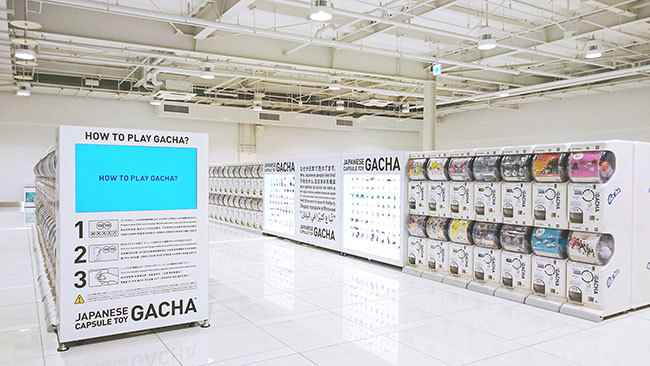
Amid this, the "JAPANESE CAPSULE TOY GACHA" by the gacha brand "Panda no Ana," developed by Dentsu Inc. Tech and Takara Tomy Arts, has become a huge hit among foreign tourists! Sales are 3 to 5 times higher than usual, media coverage is flooding in, and events for the "Panda no Ana" gacha brand are being held overseas – its momentum shows no signs of stopping.
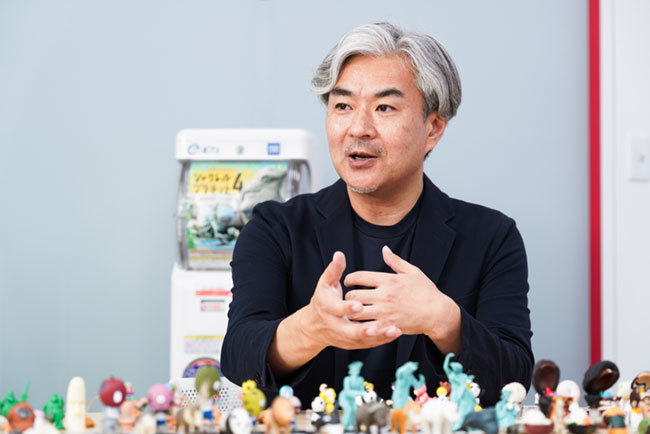
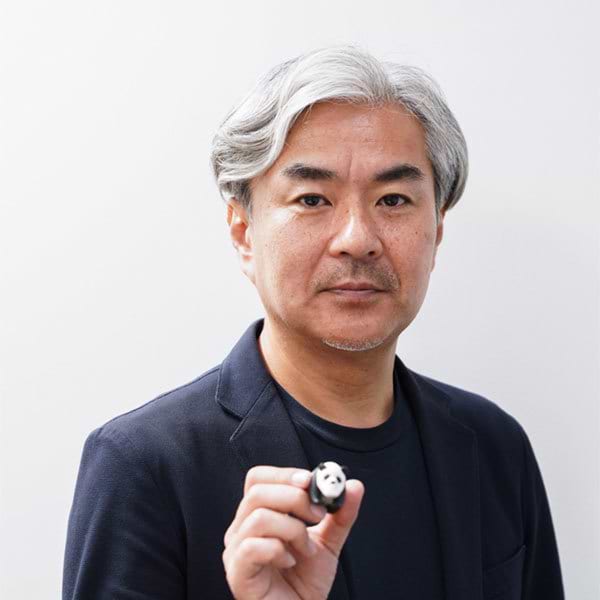
Why has it gained such popularity? We asked Masami Iida, Senior Creative Director at Dentsu Inc. Tech and the mastermind behind JAPANESE CAPSULE TOY GACHA.
The Gacha Business Focused on "Spare Change"
With the increase in foreign tourists expected by 2020, airport users will naturally grow too. "JAPANESE CAPSULE TOY GACHA" was born from the perspective of seizing this opportunity to establish a business.
The hook was the small change foreign tourists carry home. Assuming ¥1,000 per person, this amounts to approximately
¥1,000 × approx. 28 million (2017 foreign tourist count) = approx. ¥28 billion
. We thought that by appealing with a 200-yen gacha machine saying "Turn your leftover change into toys!", we could generate sales.
When we installed gachapon machines at airports as a limited-time event in June 2016, we saw not only sales but also significant media coverage, giving us the feeling that this could really work.
Currently, we've expanded to 20 airports nationwide. Furthermore, our overseas recognition is growing—this June, a major event like the "Panda Hole" exhibition was held in Taiwan.
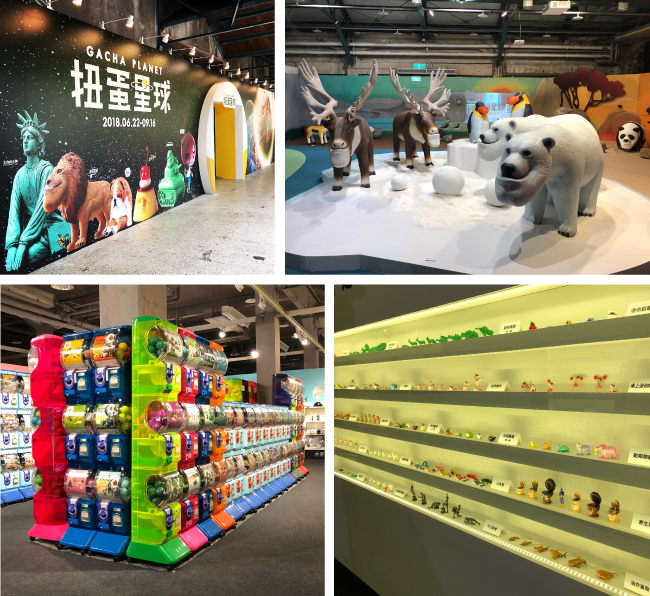
From June 22 to September 16, the "Gachaplanet" character exhibition for "Panda Hole" was held simultaneously in Taipei City and Kaohsiung City. Combined attendance at both venues reached 59,850 people (as of July 15, 2018), confirming its popularity in Taiwan.
Five Key Focus Areas Behind the Hit
The target audience this time was foreign tourists using the airport. However, most foreigners either don't know about gachapon or, if they do, have the image of it being "cheap toys for kids." Therefore, various efforts were made to ensure they wouldn't just walk by.
1.Creating a sense of novelty
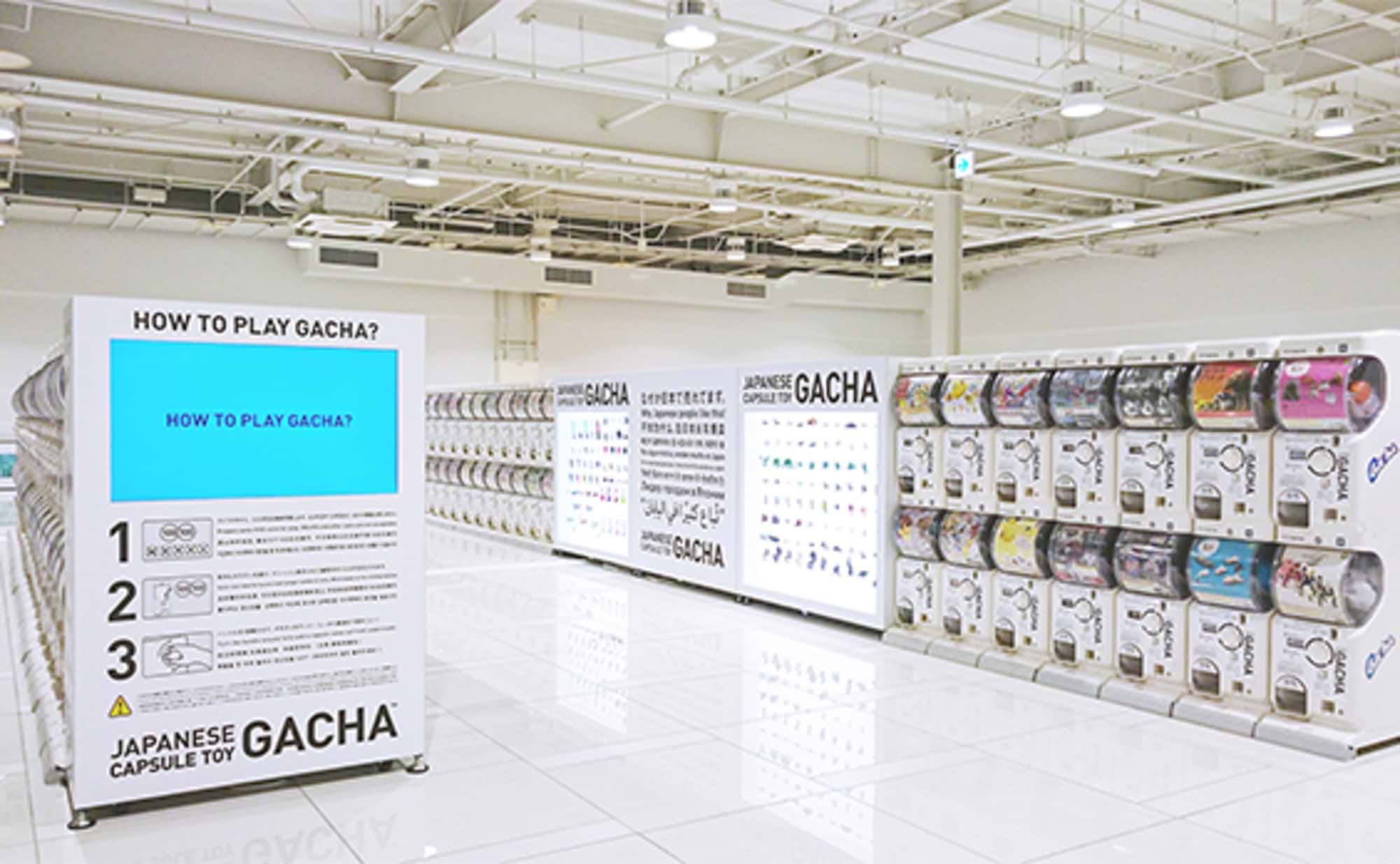
First, we needed people to notice the gachapon machines. To achieve this, we came up with the idea of lining up multiple machines in a row, rather than just one. Since airports are public spaces, having unfamiliar objects taking up space creates a sense of incongruity. This naturally draws the attention of passersby, making them wonder, "What on earth is that?"
2.Communicating in multiple languages
Next, to ensure proper communication with those who approached, we designed messages like "Turn your spare change into toys!" and "Somehow, it's selling well in Japan" in various languages. When abroad, people naturally notice their own language, so we knew this would definitely catch their eye.
3.Designing for adults
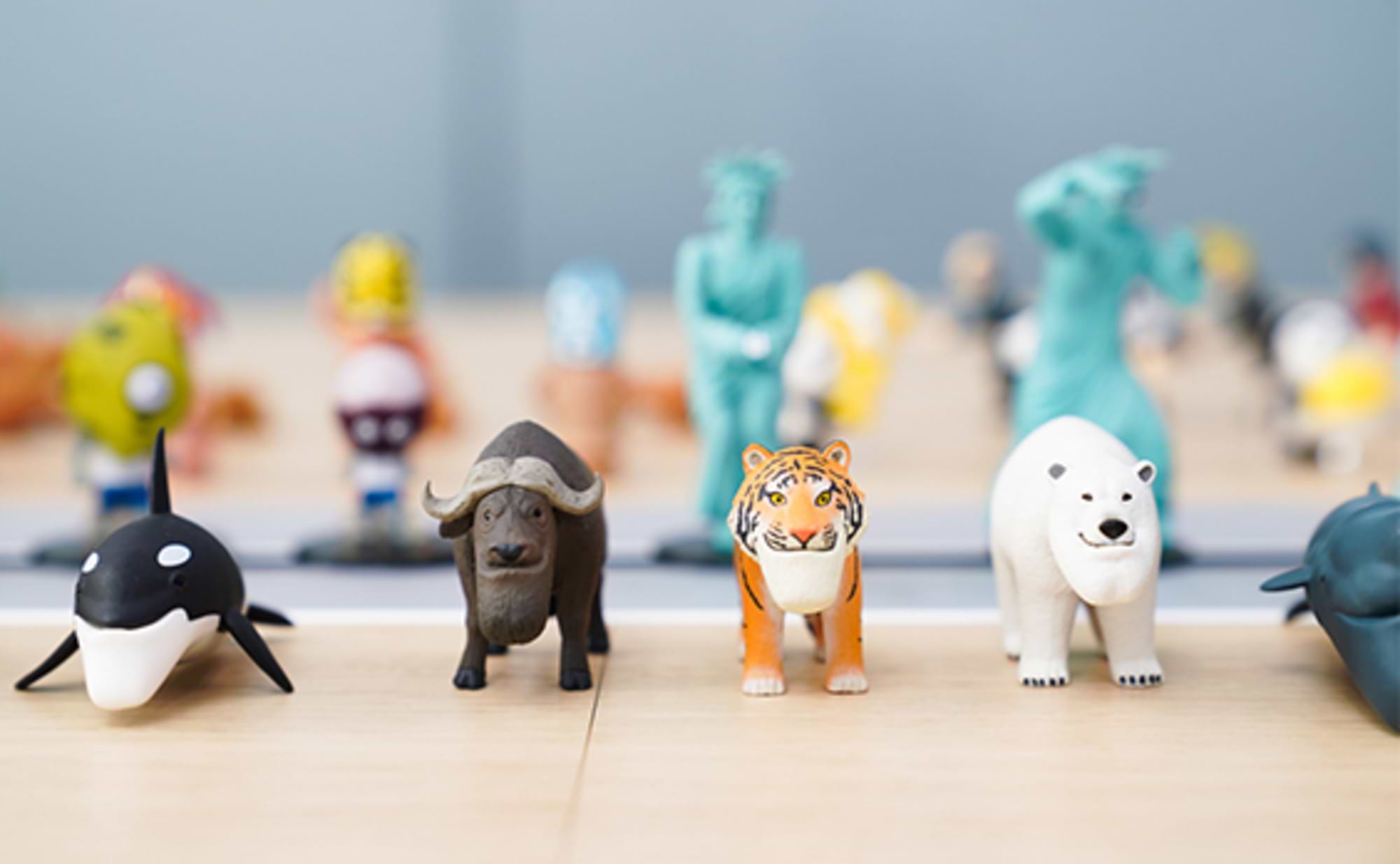
Since airports have many adult users, I realized the only way to change the gacha's image as cheap, childish toys was to showcase the products themselves. Therefore, I designed the display fixtures to resemble a small art museum, making the products look like art pieces.
We unified the color scheme in monochrome and used plain fonts for the multilingual messages mentioned earlier, consciously ensuring adults wouldn't feel embarrassed looking closely at the gacha machines.
4.Creating the "Wow, this quality for 200 yen!" gap
Furthermore, upon closer inspection, we aimed for the gap where people discover, "These are unexpectedly well-made and interesting." Details about the quality will be covered in the second part, but honestly, finding this level of quality for 200 yen is rare anywhere in the world.
5.Leveraging social media virality
With no advertising budget, we knew from the start that spreading awareness through SNS was our only option. We posted photos on the SNS accounts of "Panda Hole." Beyond the initial response, foreign customers who purchased the gacha also started posting on SNS one after another, naturally driving the spread.
Riding the wave of the SNS boom was also a major factor. Especially in Taiwan, taking photos is hugely popular. At events, I witnessed people constantly snapping photos and posting them immediately, which made me realize how well this concept meshed with gachapon.
This way, I feel our initial dedication and ingenuity led to the hit. Furthermore, the airport market was a hidden gem. It's open 24 hours, and people there are waiting for flights with time to spare, so they look closely. Plus, they often have spare change – ideal conditions.
Moreover, the joy of gacha is universal. The fun of turning the handle and the thrill of not knowing what will come out remain the same regardless of country. It seems people enjoy not just buying the product, but the act itself.
A convergence of various mechanisms and circumstances led to the massive success of JAPANESE CAPSULE TOY GACHA. In the second part, we'll cover the commitment to quality that underpinned this hit and future prospects.
■Dentsu Inc. Tech Official Site "Panda no Ana"
https://www.dentsutec.co.jp/next-products/panda-no-ana/
■Dentsu Inc. Tech Content Media BAE: Why Do Foreign Tourists Buy Gacha at Airports?
(4-part series)
http://bae.dentsutec.co.jp/Articles/gacha-01/
Was this article helpful?
Share this article


Newsletter registration is here
We select and publish important news every day
For inquiries about this article
Author
Masami Iida
DENTSU PROMOTION PLUS INC.