Note: This website was automatically translated, so some terms or nuances may not be completely accurate.
 Innovation in Sports! SPORTS TECH TOKYO [3/8]
Startups from around the world have come to Tokyo.
This is Yakushiji from Dentsu Inc. CDC.
April. We invited global startups participating in SPORTS TECH TOKYO to Tokyo and conducted a simultaneous business support initiative. (Reference article: SPORTS TECH TOKYO Kicks Off! Global Sports Tech Companies Gather in Tokyo )
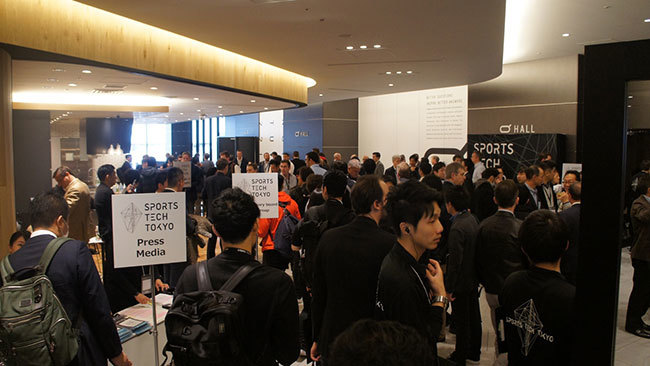
Since many may still be unfamiliar with SPORTS TECH TOKYO itself, this article introduces both the initiative we implemented—"Kickoff Conference"—and the event.
<Table of Contents>
▼SPORTS TECH TOKYO Kickoff!
▼Startups Come Seeking Connections
▼Creating the Foundation for Connections: "Roundtable Discussions"
▼ "Pitch" & "Reverse Pitch": Showing What You Bring & What You Seek
▼Massive Scheduling of 1-on-1 "Matching Meetings"
▼The magic of matching between order and chaos
SPORTS TECH TOKYO Kicks Off!
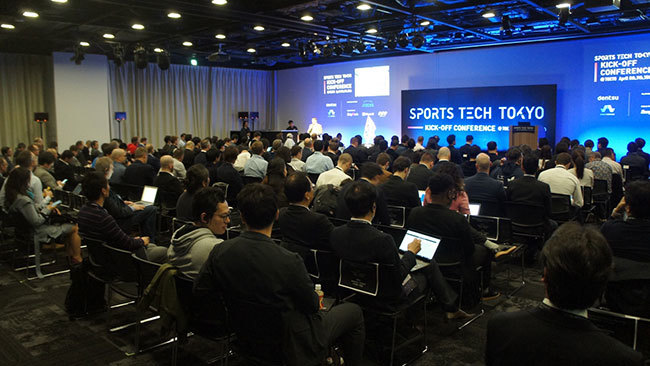
SPORTS TECH TOKYO is an acceleration program by Dentsu Inc. and Scrum Ventures.
An acceleration program is an initiative that recruits startups with outstanding technology, products, or business ideas and provides various forms of support to accelerate their business growth.
In recent years, many companies in Japan aiming for open innovation have begun implementing such programs. Among them, SPORTS TECH TOKYO is characterized by its focus on the sports tech (sports × technology) domain, as its name suggests.
Launched last October, it simultaneously began recruiting startups. For the 10-20 slots available for final selection, approximately 300 companies applied from 33 countries worldwide. This Kickoff Conference brought the startups that passed the initial screening to Tokyo. There, they met with various other stakeholders participating in SPORTS TECH TOKYO while also receiving business support.
A total of 104 startups from 19 countries participated, along with approximately 500 attendees from other companies, sports teams and leagues, venture capital firms, and media.
Startups come seeking connections
This time, startups traveled all the way to Japan to participate in this kickoff conference. While their commitment to SPORTS TECH TOKYO is certainly a factor, their primary goal is finding business partners.
Business partners vary by startup—they could be investors, companies for business alliances, joint research partners, or product sales channels—but they are essentially the entities startups want to team up with to expand their business in Japan.
Generally, for startups with a limited number of employees, finding business partners independently is not easy. Therefore, events like this Kickoff Conference, where they can meet various players and stakeholders all at once, become valuable. Moreover, with approximately 500 participants this time, expectations are high.
However, a large number of participants also means encounters can easily become superficial. Simply gathering everyone and then saying, "Well, you all figure it out," won't work.
The organizers face the challenge of ensuring both the quantity and quality of these encounters within the limited timeframe (three days this time).
Creating the Foundation for Connections: Roundtable Discussions
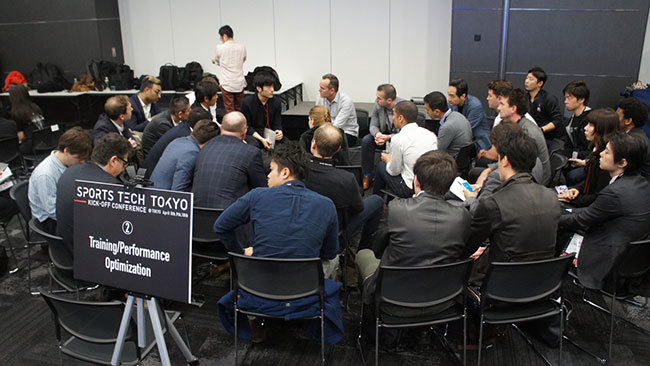
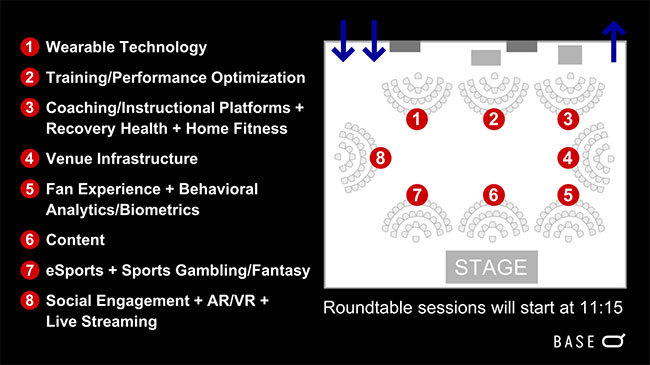
The first activity was the roundtable discussion.
This involved creating eight islands in the venue (see diagram above) corresponding to sports tech categories like "Wearable Technology" and "Training Improvement Technology," where interactive discussions took place. Two facilitators were assigned to each island to lead the discussions.
While the stated purpose of the roundtable discussions was to debate each topic, there was another objective: to create a manageable community of familiar faces early on.
At the start of the event, participants are largely unfamiliar with each other. Rather than having everyone expand their network individually from there, establishing a manageable community of 20-30 familiar faces at the outset significantly accelerates subsequent network growth. It's about laying the groundwork for meaningful connections early on, connections that will pay dividends later.
Roundtable discussions are unfamiliar in Japan, and during planning, there were concerns about whether the intended interactive atmosphere would materialize. But once we got started, lively exchanges began right from the opening, and some tables even continued their discussions well past the scheduled end time, right into lunchtime.
Observers from the Japan Sports Agency remarked, "This is a very interesting approach. We'd like to try it at our events too."
"Pitch" & "Reverse Pitch": Showing Possessions and What You're Looking For
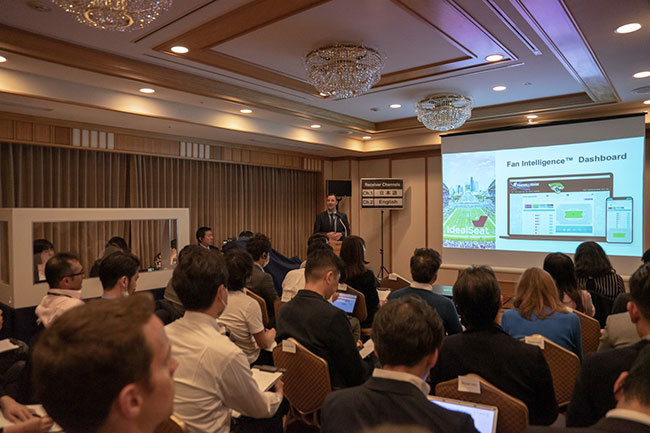
With the groundwork laid for expanding networks, the next step was a pitch session involving all participating startups. This was a space for each startup to present their "possessions"—their technology, products, etc.—alongside their "wants"—future plans and the resources needed to achieve them.
For this kickoff meeting, each startup was given 2.5 minutes. We divided them into three rooms based on their sports tech category and ran the session in parallel (even so, it took about 3 hours to complete).
It's absolutely essential that not only the startups, but also the potential business partners, present their "assets and needs" in these pitch sessions at events aimed at business matching. This is often called a "reverse pitch." Doing so allows the startups to consider potential collaborations with these partners. When exploring collaborations that are still in the early stages, having more people involved in the search is definitely advantageous.
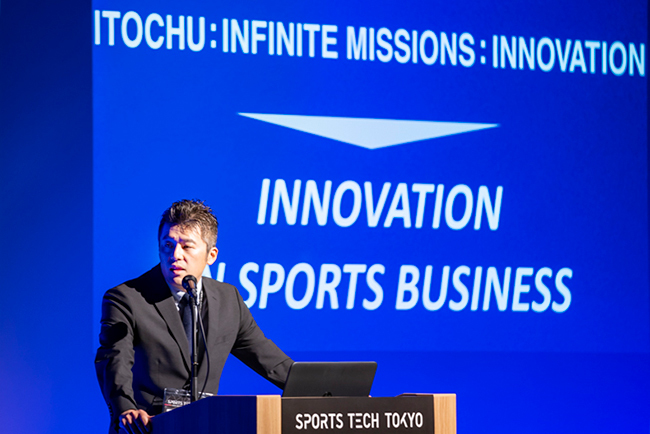
This time, presentations were given by business partners including SPORTS TECH TOKYO program partners Itochu Corporation, Microsoft Japan, and CBC; sports teams and leagues such as the Japan Football Association, B.League, Pacific League Marketing, Hokkaido Ballpark, and Tokyo Verdy; and sports business players including deltatre, , and DAZN. Naturally, Dentsu Inc., the program organizer, also delivered a pitch.
Massive number of 1-on-1 "matching meetings" scheduled
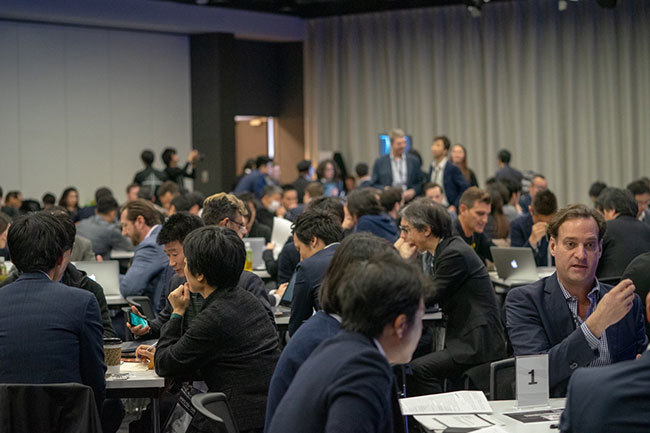
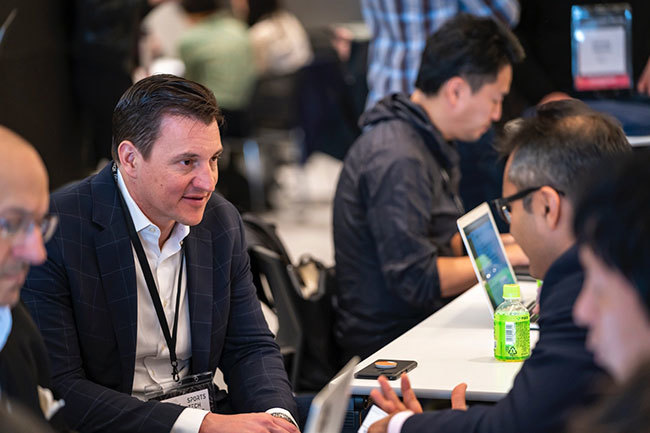
On the final day of the event, we held the climactic "Matching Meetings." This program brings startups and business partners together for one-on-one, concrete business discussions. Think of it like the old-fashioned arranged marriage where they say, "Now, it's just the two of you..."
103 startups participated. On the business partner side, 50 companies were involved: SPORTS TECH TOKYO program partners, sports teams and leagues, and major media outlets with broad potential for collaboration with startups. Each of these 50 companies was assigned a table. Pre-assigned startups rotated in and out of these tables in sequence.
With the groundwork laid over the previous two days, it was now a numbers game. Using a speed-dating format with 14 sets of 20-minute meetings, we facilitated a total of 568 matching meetings in a single day.
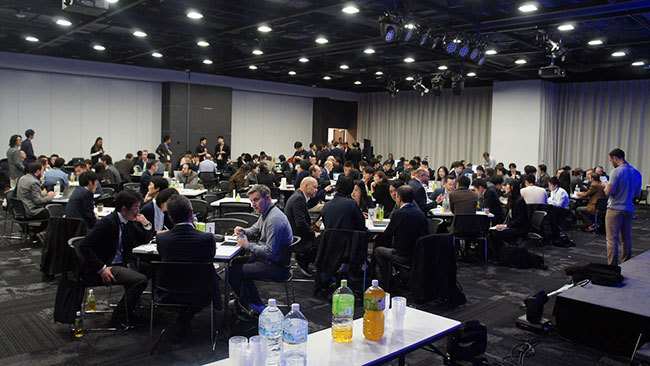
Incidentally, we, the organizing committee, decided which startups would be matched with which business partners. While we considered both parties' preferences, matching 103 companies with 50 companies simultaneously without overlap meant not every request could be fulfilled. However, leaving slots empty seemed wasteful. So, we also matched startups we thought would be a good fit, even if they weren't the partners initially requested. This unexpected approach led to something surprising.
Companies that spoke with 20-30% partners outside their initial preferences ended up with higher satisfaction levels post-event than those who only met their preferred partners. You'd expect satisfaction to rise with a higher percentage of preferred matches, but that wasn't the case.
This likely reflects that while matching with preferred partners delivers satisfaction within expectations, greater satisfaction often comes from unexpected sources. This tendency may be particularly pronounced in situations like this one, where exploring future business with previously unknown partners is the goal.
For us as event organizers, this requires two things: the knack for finding those "slightly unexpected matches just around the corner" that participants themselves can't see, and the trust-based relationship that allows us to say, " " even if it might not be exactly what they hoped for.
The Magic of Matchmaking Between Order and Chaos
This grand "matchmaking event," attended by nearly 500 people over three days, remained chaotic throughout. Beyond the sheer numbers, each participant moved with their own stance and purpose (or perhaps ulterior motives?). Yet, what became clear through this experience is that encounters and chemical reactions born solely from this chaos hold true value.
The concept we introduced last—creating unexpected encounters—was only possible because of the messy situation where various players and their intentions intermingled.
Of course, mere chaos would make the event chaotic, so an orderly framework is necessary. However, within that framework, we deliberately leave room for things to get messy. It seems there's a sweet spot between order and chaos where the unexpected and unforeseen become allies, and skillfully designing for that spot is the true art of matching.
Now, we've introduced the "Kickoff Conference," but the main event for SPORTS TECH TOKYO is just beginning. We're accelerating rapidly toward the "Demo Day" results presentation event, scheduled for August 20th at Oracle Park in San Francisco (home stadium of the Major League Baseball team, the San Francisco Giants)!
Was this article helpful?
Share this article


Newsletter registration is here
We select and publish important news every day
For inquiries about this article
Back Numbers

Author

Hajime Yakushiji
Dentsu Inc.
Business Transformation Creative Center
Planner