
Note: This website was automatically translated, so some terms or nuances may not be completely accurate.
 LGBT Survey 2018 [3/4]
Local Government Initiatives and Regional Differences in LGBT Public Opinion

Yoshimoto Taeko
Dentsu Inc. Diversity Lab, which researches the field of Diversity & Inclusion (an approach that respects each person's diverse individuality and aims for the social participation of all), announced the results of its large-scale survey on sexual minorities, including LGBT individuals, titled "LGBT Survey 2018"* in January 2019.
This survey collected 120 responses per prefecture to compare public opinion across Japan. In this third installment of our series analyzing the "LGBT Survey 2018," which encapsulates the latest public sentiment surrounding LGBT issues, researcher Taeko Yoshimoto from the lab analyzes local government initiatives and LGBT-related public opinion.
Point 1: Local Governments Expand Institutional Support for Same-Sex Partners
The same-sex partnership system began in Shibuya and Setagaya wards in 2015. The significance of these wards issuing certificates recognizing relationships equivalent to marriage was profound, serving as a major catalyst for advocating the importance of local government action in creating livable, equitable communities.
Four years later, the number of local governments establishing partnership declaration systems has steadily increased. By April 1, 2019, the system had expanded to 20 local governments, including nine cities that launched their systems simultaneously: Edogawa Ward, Toshima Ward, and Fuchu City in Tokyo; Yokosuka City and Odawara City in Kanagawa Prefecture; Sakai City and Hirakata City in Osaka Prefecture; Soja City in Okayama Prefecture; and Kumamoto City in Kumamoto Prefecture.
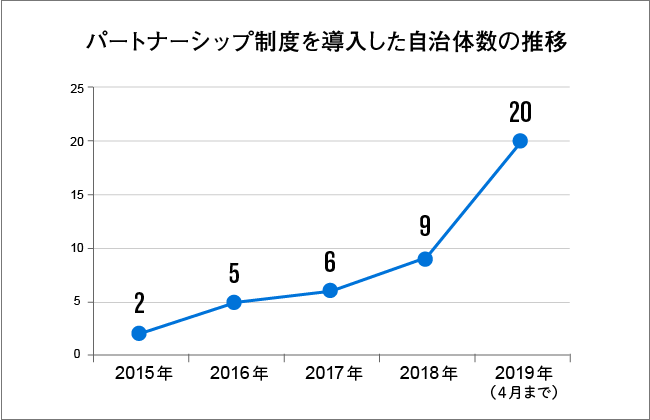
In Tokyo, a Human Rights Respect Ordinance prohibiting discrimination against sexual minorities was passed and enacted in October 2018. Furthermore, beyond partnership systems, regulations against hate speech and ordinances prohibiting discrimination based on gender identity or sexual orientation are also being institutionalized, led by various local governments.
Point 2: Local Government Support and Regional Public Opinion Are Related
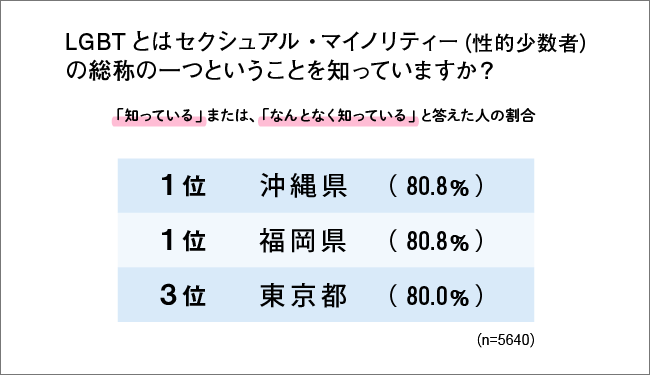
First, regarding the question to heterosexual respondents asking if they knew that LGBT is one term for sexual minorities, the highest combined percentage of "I know" and "I vaguely know" responses was in Okinawa Prefecture and Fukuoka Prefecture, followed by Tokyo.
All three exceeded 80%, significantly higher than the national average of 68.5%. These top three prefectures included municipalities that were pioneers in establishing partnership systems at the time of the survey in autumn 2018 (Naha City, Okinawa Prefecture / Fukuoka City, Fukuoka Prefecture / Shibuya Ward, Setagaya Ward, and Nakano Ward, Tokyo).
Furthermore, Okinawa Prefecture hosts the LGBT event "Pink Dot Okinawa," and Naha City has declared itself a "City Respecting Sexual Diversity" (commonly known as Rainbow Naha), leading to active local movements supporting LGBT individuals.
Such local initiatives are likely raising awareness and leading to a more accurate understanding.
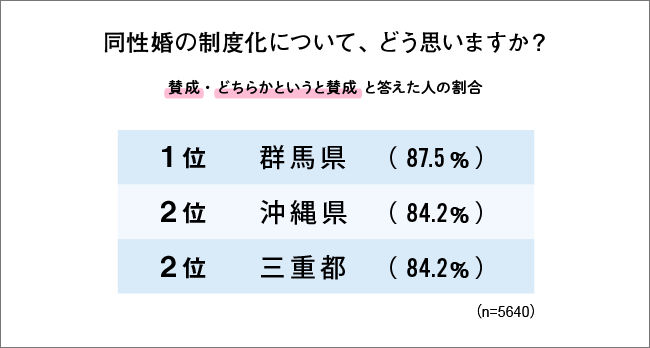
Regarding the question "What are your thoughts on institutionalizing same-sex marriage?", the national average approval rate among heterosexual respondents was 78.4%. However, Gunma Prefecture ranked first at 87.5%, followed by Okinawa and Mie Prefectures tied at 84.2%.
In addition to the previously mentioned Okinawa Prefecture, Gunma and Mie Prefectures are also home to municipalities that have established same-sex partnership systems (Oizumi Town in Gunma Prefecture and Iga City in Mie Prefecture).
It can be said that these local-level support activities promote residents' understanding, and as understanding deepens, momentum builds to respect diverse sexual identities.
Point 3: Are urban areas more livable for LGBT individuals?
Next, we compared responses from LGBT individuals living in urban areas (defined here as Tokyo, Kanagawa, Chiba, Saitama, Osaka, Kyoto, Nara, Hyogo, and Aichi) with those in other regional areas.
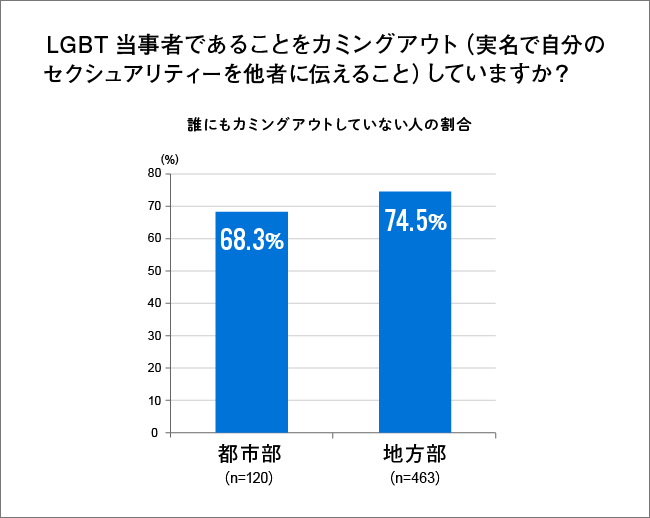
When asked, "Have you come out as LGBT (disclosed your sexuality to others using your real name)?" 68.3% of respondents in the nine metropolitan prefectures had not come out to anyone, while in other regions, this figure was higher at 74.5%.
In less populated rural areas, communities are smaller, and once someone comes out, rumors can spread quickly, making it difficult to live there. Such factors may be contributing to hesitation about coming out.
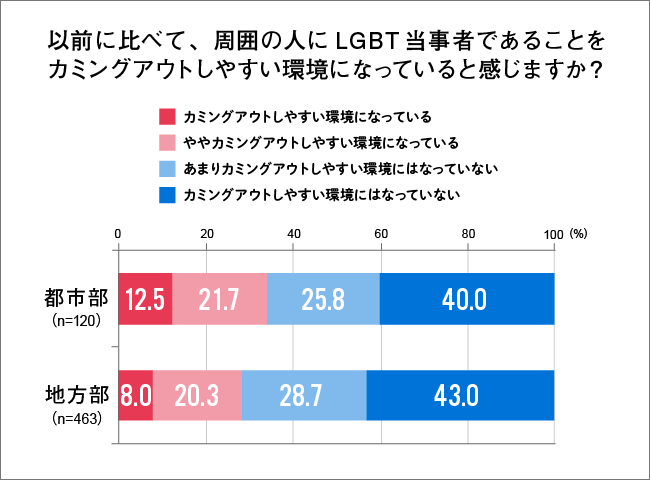
Furthermore, when asked, "Do you feel the environment has become easier for you to come out as LGBT to those around you compared to before?", 34.2% of urban respondents answered that the environment has become easier or somewhat easier to come out. In contrast, only 28.3% of rural respondents felt this way. Compared to the gradual improvements seen in urban areas, progress in rural areas appears slower.
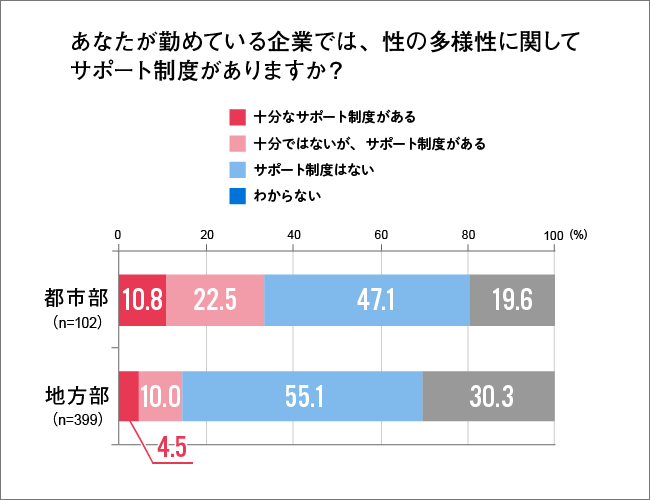
Finally, regarding the question "Does your company have support systems for sexual diversity?", while 33.3% of urban respondents indicated some form of support exists (albeit insufficient), only 14.5% of rural respondents reported the same, revealing a significant gap between urban and rural areas.
Amid the serious issue of population decline in rural areas, respecting each individual's diversity and creating livable communities is a critically important initiative. While national-level institutionalization lags, local governments that establish equitable systems and support programs for the LGBT community demonstrate a commitment to valuing each resident. This could make them appear more attractive and desirable places to live compared to other local governments.
<Preliminary Screening Survey Overview>
・Survey Participants: 60,000 individuals aged 20–59 ・Survey Area: Nationwide
・Survey Period: Friday, October 26, 2018 – Monday, October 29, 2018
・Survey Method: Online survey
<Dentsu Inc. LGBT※1 Survey 2018 Overview>
・Survey Participants: 6,229 individuals aged 20–59 (589 LGBT individuals / 5,640 straight individuals)
・Survey Area: Nationwide
・Survey Period: Friday, October 26, 2018 – Monday, October 29, 2018
・Survey Method: Online survey
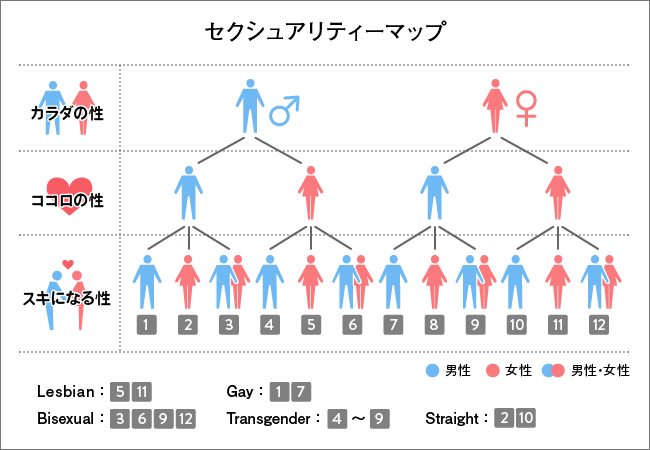
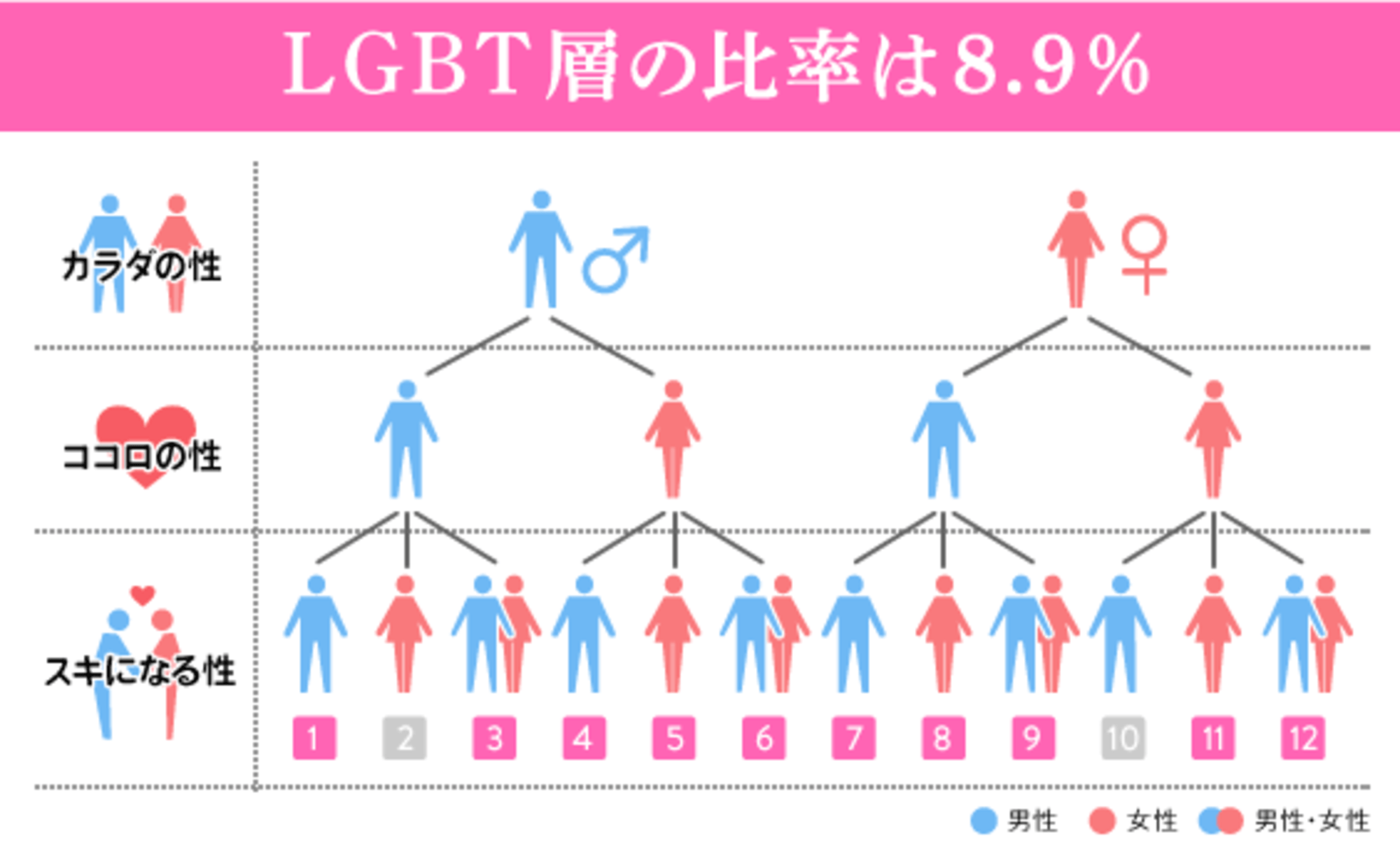
*For convenience, Dentsu Inc.'s Diversity Lab refers to individuals who identify as LGBT or other sexual minorities as the "LGBT group" in its "LGBT Survey." This defines the LGBT demographic as individuals who do not fall into categories 2 and 10 of the "Sexuality Map" (which categorizes sexuality based on biological sex, gender identity, and the gender of the person one is attracted to). The "8.9%" LGBT segment includes individuals who are "Questioning (Q): those who cannot or have not determined their gender identity or sexual orientation" and others. In this sense, the "LGBT Survey" conducted by DDL in 2012, 2015, and 2018 can be considered, in essence, LGBTQ+ surveys.
Was this article helpful?
Share this article


Newsletter registration is here
We select and publish important news every day
For inquiries about this article
Back Numbers

Author