
Note: This website was automatically translated, so some terms or nuances may not be completely accurate.
 LGBT Survey 2018 [2/4]
The Power of Media to Foster Understanding of LGBT

Yoshimoto Taeko
Dentsu Inc. Diversity Lab, which researches the field of Diversity & Inclusion (an approach that respects each person's diverse individuality and aims for the social participation of all), announced the results of its large-scale survey on sexual minorities, including LGBT individuals, titled "LGBT Survey 2018," in January 2019.
This series delves into the "LGBT Survey 2018," packed with the latest public opinion surrounding LGBT issues. Part 2 focuses on the "influence of media" on people's awareness and understanding.
In Europe and the US, the media's push for diversity has recently become a major movement, contributing to greater LGBT understanding. This is seen in LGBT characters appearing in movies and Netflix dramas, and LGBT-themed content receiving numerous nominations at the Academy Awards and Emmy Awards.
Furthermore, at the "International Women's Conference WAW!" held in Japan in March 2019, the producer of the anime "Pretty Cure" took the stage for a panel discussion titled "Media Content that Cultivates Diversity," highlighting the growing attention in Japan to media's role in promoting diversity.
Here are four key points to note about such influential media, revealed by the survey analysis results.
【Table of Contents】
▼Point 1: Media has the power to change attitudes toward LGBT individuals
▼Point 2: Having LGBT Characters is "Perfectly Natural"
▼Point 3: Media can also potentially hurt people
▼Point 4: Celebrities wield significant influence
Point 1: Media has the power to change attitudes toward LGBT individuals
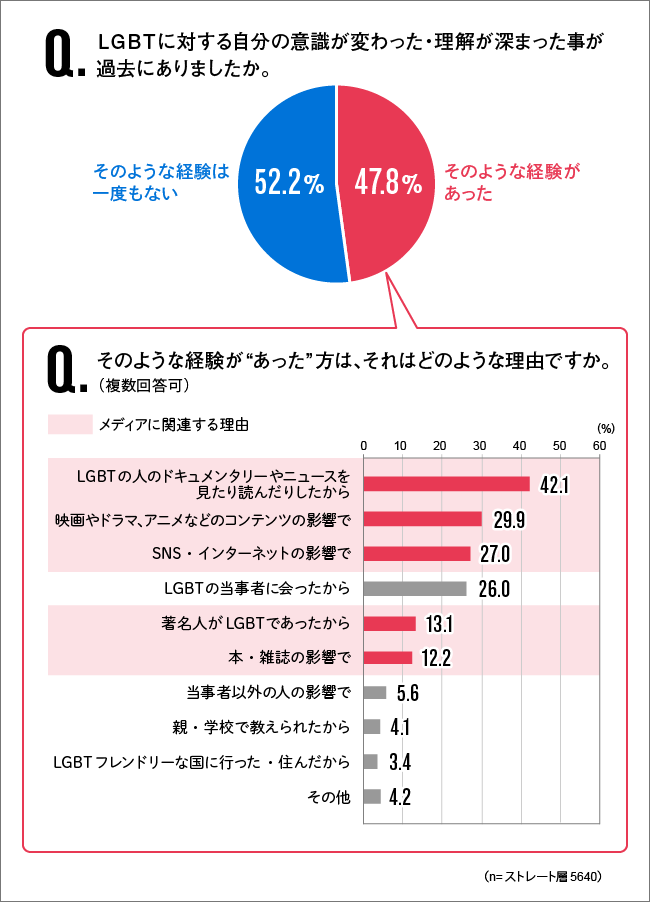
When asked what prompted a change in their awareness or deeper understanding of LGBT issues, the most common response was "documentaries or news about LGBT people" (20.1%). This was followed by "the influence of entertainment content like movies, dramas, or anime" (14.3%), and then "the influence of social media or the internet" (12.9%). The top three responses were all related to "media influence."
This shows that media not only raises awareness about LGBT issues but also has the power to deepen understanding and change attitudes toward them.
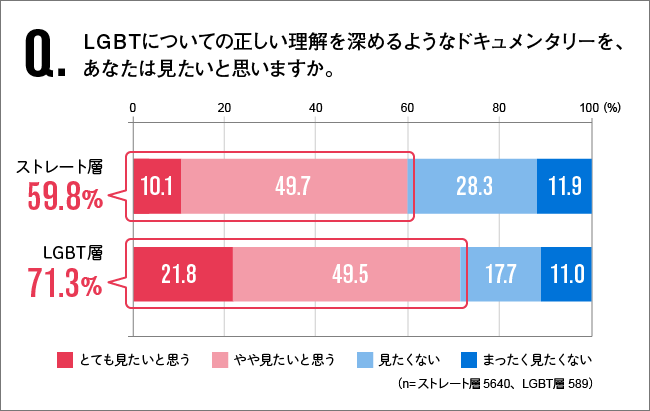
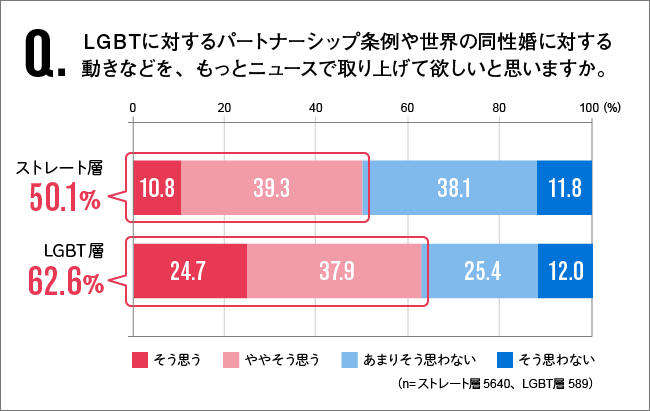
Regarding news and documentaries, which had the greatest influence, when asked "Would you like to see documentaries that deepen accurate understanding about LGBT issues?", 71.3% of the LGBT group responded affirmatively. and 59.8% of the straight group expressed interest. Furthermore, when asked, "Do you want news to cover LGBT partnership ordinances and global same-sex marriage movements more?" 62.6% of the LGBT group and 50.1% of the straight group answered "Yes."
With awareness of LGBT issues growing, even among straight people who "vaguely know about it but don't really understand," over half seem to want the media to cover it more to gain a proper understanding.
Point 2: Having LGBT Characters is "Perfectly Natural"
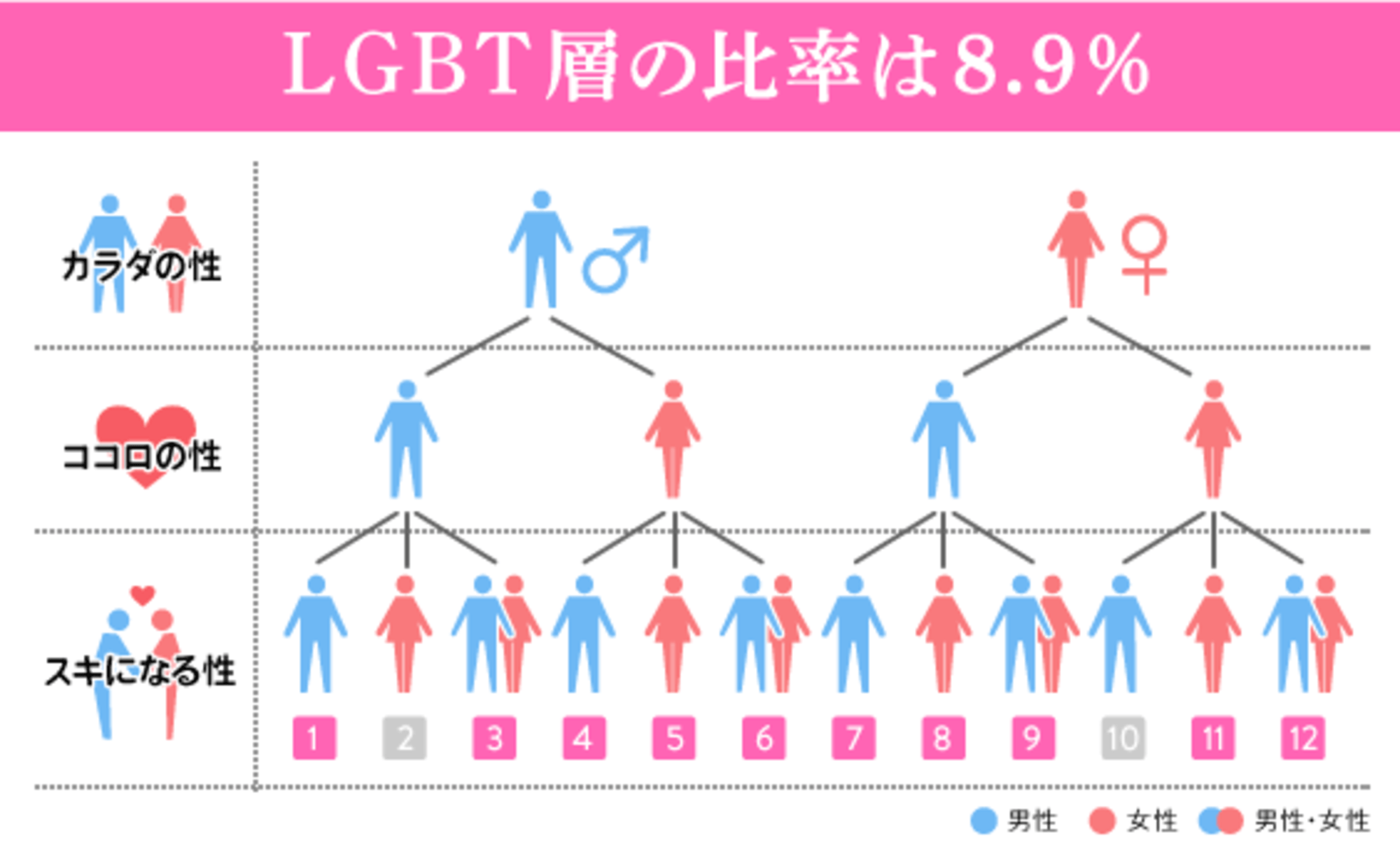
When LGBT characters appear in dramas, movies, or anime, it often becomes a special topic of discussion. However, as mentioned in Part 1, 8.9% of the population—roughly 1 in 11 people—identify as LGBT※1. Therefore, having LGBT characters among the many characters is a perfectly natural proportion.
※1 This includes not only L, G, B, and T, but also questioning individuals, non-binary people, asexuals, and other sexual minorities.
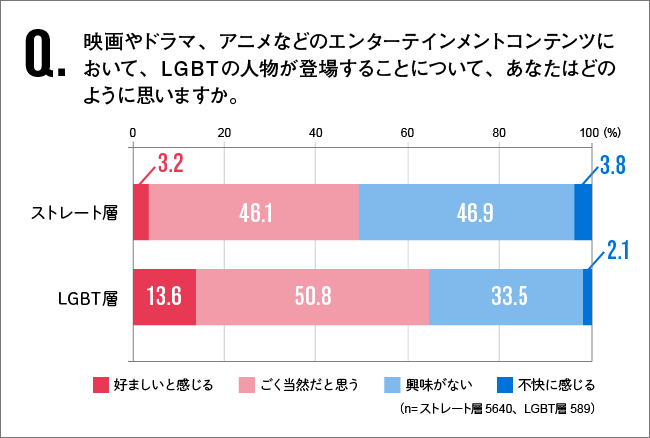
In fact, when asked, "How do you feel about LGBT characters appearing in entertainment content like movies, dramas, and anime?", about half of respondents—both straight and LGBT individuals—answered, "I think it's perfectly natural."
While content featuring LGBT characters is still relatively scarce in Japan, it seems the idea that depicting LGBT people is perfectly normal has become widely accepted.
Point 3: Media can also potentially hurt people
On the other hand, influential media can sometimes have negative effects.
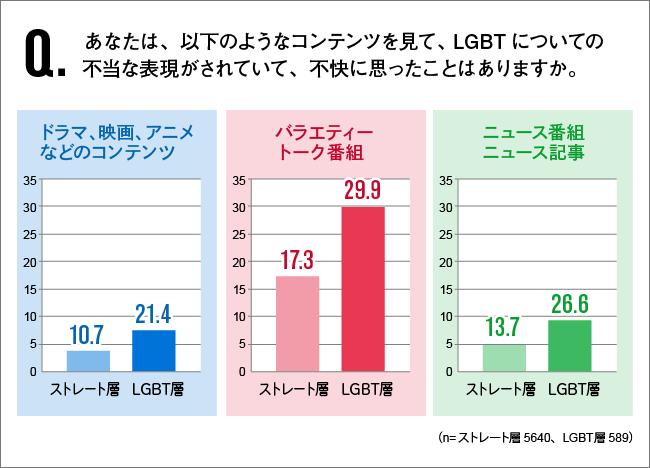
When asked, "Have you ever felt uncomfortable seeing unfair representations of LGBT people in the following types of content?", broken down into "dramas, movies, anime, etc.", "variety/talk shows", and "news programs/articles", LGBT individuals reported experiencing discomfort about twice as often as straight individuals across all genres.
It is crucial to be mindful that expressions which straight individuals may not notice or find objectionable can be perceived as offensive or hurtful by those directly affected.
Point 4: Significant Influence of Celebrities
Finally, consider the influence of celebrities. Looking at LGBT issues globally, numerous examples exist where celebrities have changed societal perceptions.
In the United States, a major turning point came in the 1990s when popular comedian and actress Ellen DeGeneres came out as a lesbian on her own television show. Similarly, in the UK, Freddie Mercury of Queen, whose story was recently depicted in the hit film Bohemian Rhapsody, publicly announced his HIV status in 1991. This was another major catalyst for changing public consciousness.
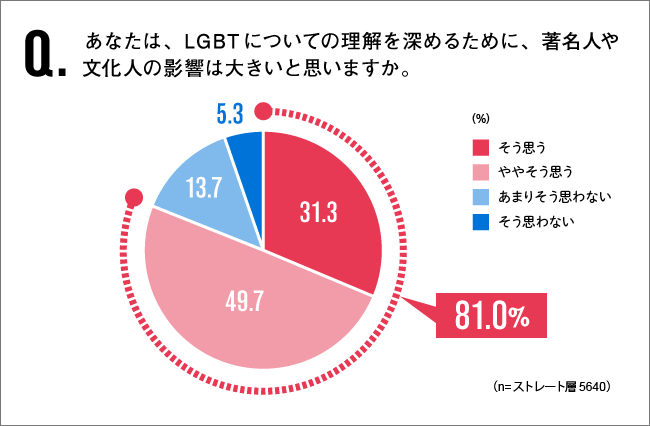
In the survey, when asked, "Do you think celebrities and cultural figures have a significant influence in deepening understanding about LGBT issues?", 81% of straight respondents answered "Yes" or "Somewhat yes."
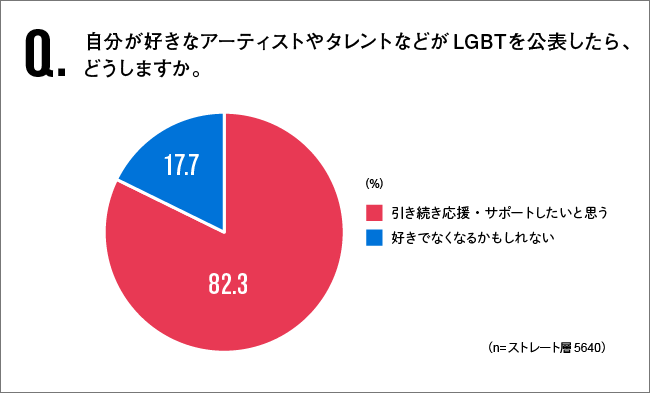
Furthermore, when asked, "If an artist or celebrity you like came out as LGBT, what would you do?", 82.3% of respondents said they would "continue to support them."
Japan has entered a phase where awareness of LGBT issues is becoming commonplace, and understanding must deepen from "vague knowledge" to "accurate comprehension." This survey revealed that media has considerable power not only to "spread awareness" but also to "deepen understanding."
In Japan, shows like Ossan's Love (TV Asahi) and Joshi no Seikatsu (NHK) have been hits, suggesting a rapid increase in LGBT representation in media over recent years. However, it's crucial that more content emerges to help drive this shift in awareness from mere "recognition" to genuine "understanding."
<Preliminary Screening Survey Overview>
・Survey Participants: 60,000 individuals aged 20–59 ・Survey Area: Nationwide
・Survey Period: Friday, October 26, 2018 – Monday, October 29, 2018
・Survey Method: Internet survey
<Dentsu Inc. LGBT Survey※1 2018 Overview>
・Survey Participants: 6,229 individuals aged 20–59 (589 LGBT individuals / 5,640 straight individuals)
・Survey Area: Nationwide
・Survey Period: October 26 (Fri) to 29 (Mon), 2018
・Survey Method: Online survey
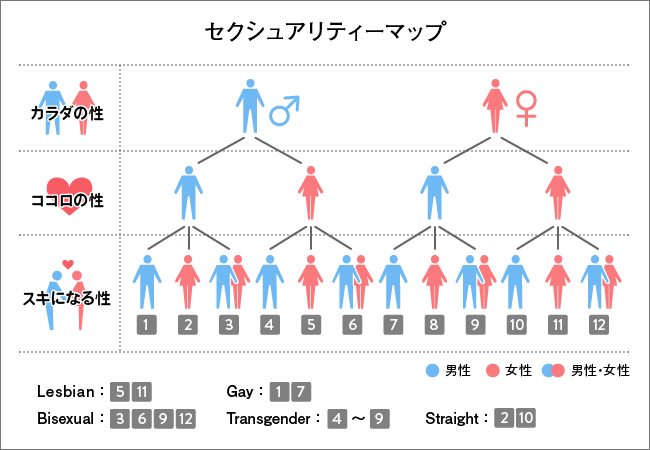
※1For convenience,DDL's "LGBT Survey"refers toindividuals who identify as sexual minorities (including LGBT)as the"LGBT group". Thisdefines individuals as those outside categories2 and 10on the "Sexuality Map" (which divides sexuality into biological sex, gender identity, and the gender of the person one is attracted to).This "8.9%"includes individuals who are"Questioning (Q): those who cannot or have not determined their gender identity or sexual orientation" and others. In this sense, the"LGBT Survey"conducted byDDLin 2012,2015,and 2018can be considered, in essence,LGBTQ+ surveys.
Was this article helpful?
Share this article


Newsletter registration is here
We select and publish important news every day
For inquiries about this article
Back Numbers
Author