Note: This website was automatically translated, so some terms or nuances may not be completely accurate.
 A new era of audio ads has arrived! [1/2]
Why does advertising through "sound" hold value today?

With the rise of music streaming and internet radio, the value of audio advertising is gaining attention. Against this backdrop, the Dentsu Group has launched its audio advertising service, " Premium Audio Advertising."
We explain how the audio market is changing and the role Premium Audio Advertising plays within it.
The Audio Market is Rapidly Growing with the Online Shift of Audio Content
When you hear "audio advertising," you might think of radio ads, but in reality, it is now being reborn in a completely new form under the name "audio ads." First, let's examine the evolution of audio content that underpins this trend.
Background ① Music consumption shifts from CDs and downloads to streaming
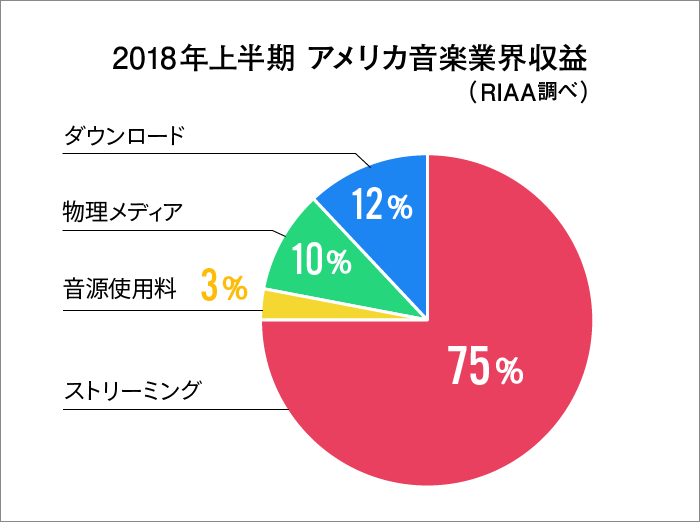
Music consumption styles have shifted from CDs to download formats as communication environments expanded, and streaming via online distribution is now the mainstream format. According to a survey by the RIAA (Recording Industry Association of America), streaming formats account for 75% of music content revenue.
Music streaming services like Spotify, which let users enjoy music anytime, anywhere, are rapidly increasing their user base in Japan too.
These services insert audio ads between tracks, returning the advertising revenue to the rights holders—the music labels and artists. This creates an ecosystem where artists who provide their music to the platform are evaluated based on how much their content is enjoyed and receive revenue accordingly.
Background ②: Online Expansion Revitalizes Radio Advertising Market
Traditional radio broadcasting is also facing opportunities for market expansion through online transformation.
The habit of listening to radio in cars while commuting or at home existed worldwide, particularly in the US. However, the proliferation of communication environments and devices has made radio more accessible regardless of location, leading to a surge in listeners.
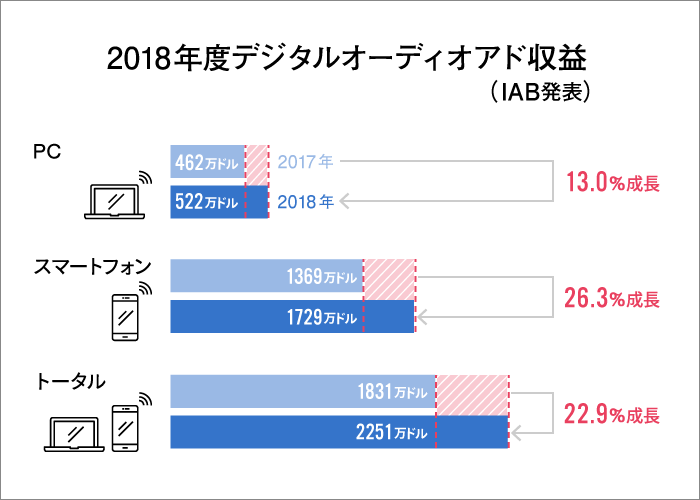
Consequently, digital audio ad revenue has been steadily increasing globally. In Japan, the service "radiko" (ラジコ), which allows easy access to radio broadcasts, has become established, creating a new advertising market.
Background ③ News and English Conversation – The Emergence of Podcasts Unbound by Format
Podcasts, which have gained significant presence in recent years, are also noteworthy. They enable easy distribution of audio programs over the internet, allowing listeners to check out programs of interest via smartphone apps.
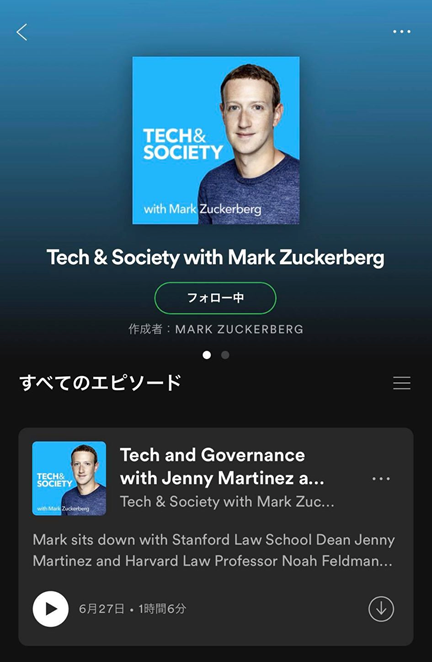
Some podcasts feature celebrities or corporations. Recently, Mark Zuckerberg and the content production company launched by former U.S. President Barack Obama and his wife announced they would begin providing podcasts. Major music streaming service Spotify is also focusing on this area, having recently acquired two podcast companies.
Furthermore, Google released its podcast app in June last year, and reports indicate Apple is also producing original programs, with companies investing heavily to enhance their content offerings. In Japan, new initiatives are gaining momentum, such as "Voicy" partnering with Nikkei Inc. to co-produce the audio program "Nikkei While You're Doing Other Things."
Background ④: The Spread of Listening Devices and Global Platform Players' Moves
The environment for consuming audio content continues to evolve.
Voice-operated "smart speakers" like Amazon Echo and Google Home have become established as new touchpoints for consumers. In the US, one in three people owns one, and one in four people is exposed to audio ads through them.
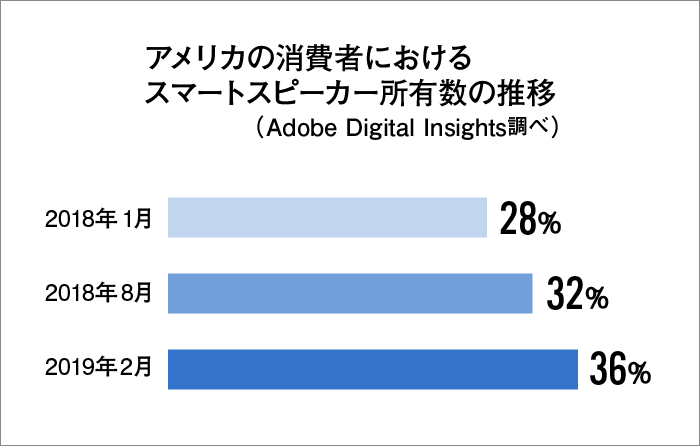
Voice commands are considered more effortless than typing, meaning voice data can capture consumers' more genuine preferences and behaviors. Consequently, major global platform companies are beginning to invest heavily in installing sensors along previously offline consumer touchpoints to gather marketing intelligence.
For example, Amazon offers a perk to people who sign contracts through its real estate information service "TurnKey": free installation of smart speakers like Echo Dot or Echo Show, and smart doorbells like the Ring Video Doorbell, worth tens of thousands of yen in total.
The trend of capturing offline interactions with consumers as data to formulate effective marketing strategies will likely accelerate further, not just among major platform operators.
Audio ad branding utilization is accelerating!
Against this backdrop of changing "media" and "listening environments," the audio ad market is showing signs of growth.
The 2019 Cannes Lions festival perfectly illustrated this market shift. In the Radio & Audio category, HBO's campaign for its popular sci-fi drama "Westworld," utilizing Amazon Echo, won the Grand Prix, surpassing traditional radio ads.
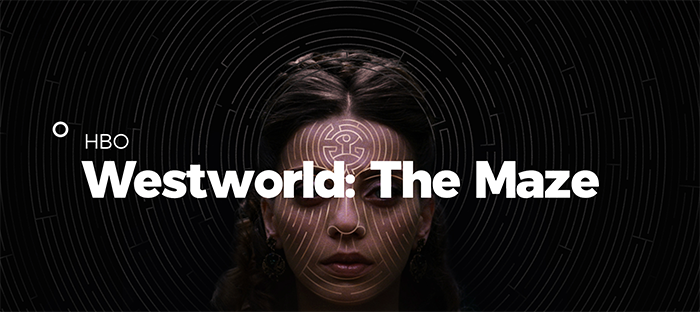
This interactive initiative allowed users to speak to Alexa, initiating conversations in the voices of "WEST WORLD" characters. With 11,000 distinct lines of dialogue, it offered 60 different story paths to explore.
This campaign presented a new approach for audio media: "enhancing user engagement through voice interaction."
What's noteworthy here isn't just the interactivity of the campaign, but its high level of immersion.
Audio is a medium with condensed information, a kind of "two-dimensional" medium. Therefore, it provides users concentrating to understand the content with a unique "sense of immersion" and an "intimacy" as if the story is unfolding right beside them.
Summary so far
The background behind the rapid growth of the audio market is...
- Background ① The shift in music consumption from physical media to streaming, eliminating location and spatial constraints
- Background 2: The existing radio market has also been revitalized by going online, with new players emerging.
- Background 3: News, English conversation, and unconventional podcast formats emerged, further increasing listening time.
- Background ④ Global platform players began serious capital investment in listening device proliferation and content production.
Next, let's examine why audio advertising deserves attention going forward and specifically explore Dentsu Inc.'s Premium Audio advertising, the latest audio ad delivery service.

Premium Audio Advertising currently partners with radiko and Spotify to deliver audio ads.

Reasons to focus on audio ads going forward and Dentsu Inc.'s Premium Audio Ads
・Reason to Watch ①: It enables reaching "multi-tasking users"
First, audio represents a "new contact point." While video and banner ads compete for visual attention, audio can reach users engaged in other activities like reading, housework, or driving.
This means you can achieve a "net increase" in reach opportunities beyond video and banners. Even when users are walking with their phones in their pockets, audio allows contact in various situations.
・Reason to Note ② Unique Branding Effect of Audio
Banner ads rely solely on images, offering limited information for branding purposes. Video ads provide more content, but they require sustained focus and individual interpretation based on where viewers focus.
Audio ads, however, can deliver branding impact. Even playing a company's sound logo for just 3 seconds can trigger recognition: "Oh, that's that commercial!" By leveraging the familiarity and memorability unique to sound, audio ads can fill the previously unaddressed "middle layer" of user engagement.
・Reason to Pay Attention #3: User Listening Attitude
Platforms like radiko and Spotify are media where users tend to listen "actively." Research shows that ads heard on such platforms are less likely to evoke negative feelings. Premium Audio advertising allows you to deliver ads exclusively on these premium media.
・Reason to Note ④ Targeting and Effect Measurement
As a digital programmatic ad format, Premium Audio ads enable precise targeting and performance measurement.
For example, you can target ads to "users currently listening to 90s J-POP" or "users commuting by train." Furthermore, using statistical and anonymized data, you can analyze effectiveness—such as "how many times does the same commercial need to be shown before users show interest?" or "when will they consider purchasing?"
Furthermore...
- Target ads to users with high smartphone app engagement
- Change the ad creative delivered to people listening to the same program based on their attributes and preferences
- Retain users who saw a TV commercial by playing the company's sound logo during periods when the commercial isn't airing
Depending on the combination, this enables unprecedented media planning.
Of course, beyond user data, targeting can also be developed by combining external data such as time, location, and weather.
・Reason ⑤ Platform Safety and Quality
In recent years, the unintended placement of ads on sites or content violating public order and morals has become a social issue.
Premium Audio advertising ensures safety and quality by delivering content in environments approved by broadcasters (e.g., radiko) or music labels (e.g., Spotify), safeguarding advertisers' brand value.
Summary so far
Reasons to focus on audio ads and Premium Audio ads going forward
- Reason ①: Enables reaching "multi-tasking users"
- Reason 2: Controlling information volume enables branding effects unique to audio
- Reason 3: Reaches users with a positive listening attitude who actively enjoy content
- Reason ④: Enables targeting and effectiveness measurement
- Reason 5: Platform safety and quality are maintained
In summary, Premium Audio advertising enhances the potential and value of audio ads, driving greater effectiveness. This is made possible by the distribution platform built by VOYAGE GROUP, the newest addition to the Dentsu Group.
Next time, VOYAGE GROUP will introduce the technology supporting Premium Audio advertising.
Was this article helpful?
Share this article


Newsletter registration is here
We select and publish important news every day
For inquiries about this article
Author

Ayaka Tanaka
Dentsu Digital Inc.