
Note: This website was automatically translated, so some terms or nuances may not be completely accurate.
 JINS' Think Lab Shiodome: Uncovering the Secrets [2/3]
The Birth of "Think Lab Shiodome." What was the catalyst?

Kazutaka Inoue
Think Lab Co., Ltd.
This series, titled "Work Style Reform Isn't Just About 'Time'! A 'Concentration' Seminar to Improve 'Quality'," re-edits the content of a lecture given by Mr. Kazutaka Inoue, Director of JINS Inc.'s Think Lab. It unravels the secrets of "concentration" – something modern people tend to lose or have taken away from them. You're sure to be surprised by the many eye-opening insights from Mr. Inoue.
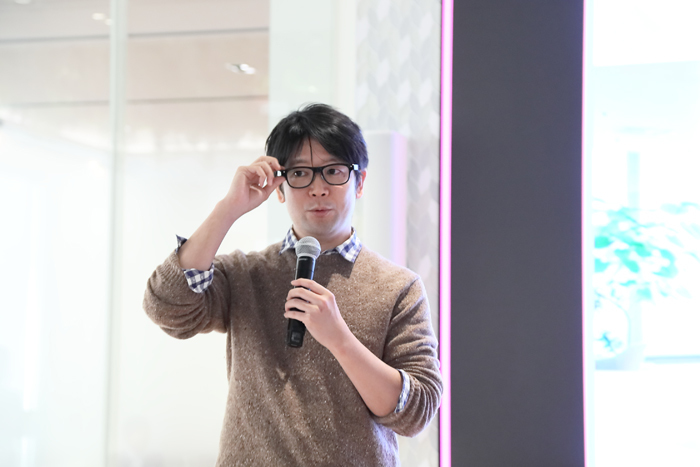
Inoue: One-third of Japanese people wear glasses, and another third use contact lenses outdoors and glasses at home. That means two-thirds of Japanese people touch glasses at least once a day. You could say that wearing glasses is the second most intimate thing we do with our bodies, right after wearing underwear.
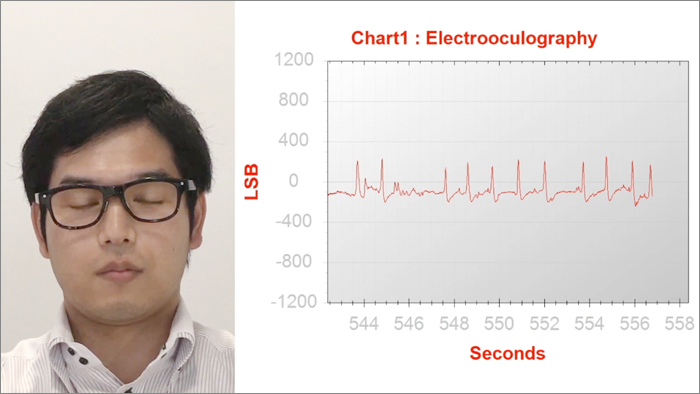
That discovery was the very beginning. I wanted to measure the "quality of human concentration" by sending data from glasses—eye movements, blinks, posture—to smartphones.
Concentration is an act that enhances the density (i.e., value) of time, equally granted to all. Unraveling this mechanism could provide significant insights for the "workstyle reforms" companies seek and
and the "happy work style" individuals seek.
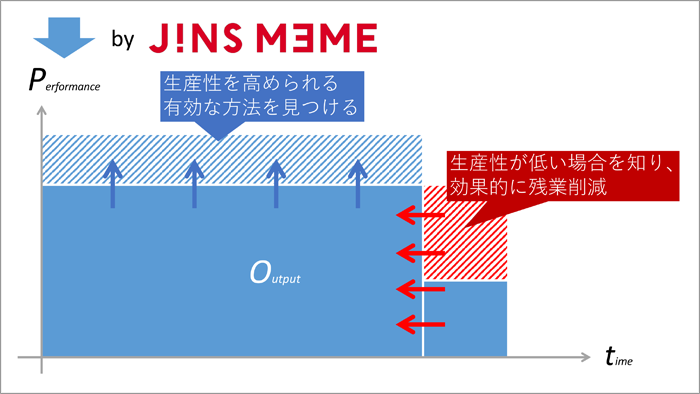
Quantitative data on "work styles" can fundamentally only be measured in "time." Consequently, reducing overtime hours tends to be the primary focus. However, it's not just time; time multiplied by performance should determine work output. Therefore, if we could measure performance, we could identify and reduce low-performance situations while building reproducibility for high-performance states. Only then could office workers achieve higher-quality work.
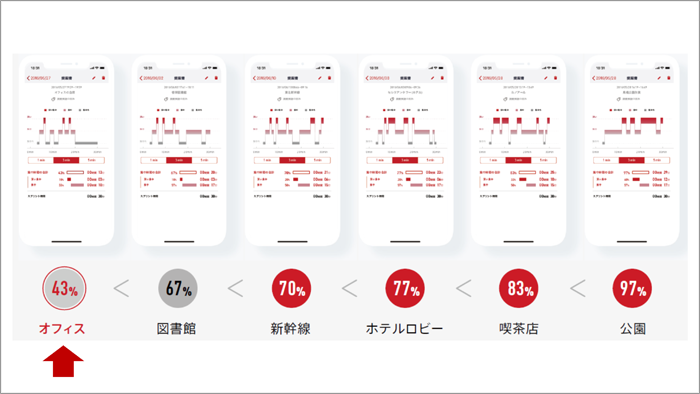
While terms like "morning person" and "night owl" are widely used, the time when an individual's "performance" peaks varies greatly from person to person; it's something encoded in our DNA. On the other hand, data shows there is no significant individual difference in the places where people can concentrate best. In fact, compared to places like parks or coffee shops, the office is actually the least conducive place for concentration.
The primary factors hindering concentration in daily life are "colleagues and smartphones." It's said that people need 23 minutes to enter a deep state of concentration. However, in the office, every 11 minutes, someone is either approached by a colleague or receives an email. Under these conditions, it's impossible to perform concentrated work or deep thinking.
To enhance "knowledge," two elements are essential: "exploration" (communication with colleagues or searching for information online) and "deepening" (solitary, concentrated reflection). Traditional office spaces have been designed primarily for "exploration," neglecting the necessities for "deepening." In an era demanding original ideas, securing the time and space for individuals to "create" alone is absolutely essential.
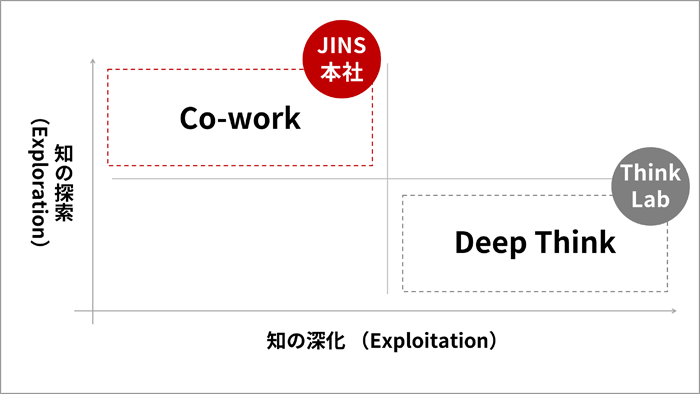
Deepening knowledge requires a state of profound individual concentration. To concentrate, people must simultaneously maintain two opposing states: tension and relaxation. When heightened tension enables deep immersion, a person's blink rate dramatically decreases. However, tension alone cannot be sustained long-term, making relaxation equally crucial. This relaxed state manifests in the variability of blink strength. When the mind is stable, blinking becomes stable too.
Could this data be captured "quantitatively" using glasses? The project began four years ago. Data from over 10,000 people was collected. As a result, a series of highly intriguing findings emerged.
For example, when examining the "blink frequency and intensity" data of veteran craftsmen versus novice craftsmen with the theme "Can sustained concentration be achieved?", a clear difference was observed. However, simply concluding "Experience really is crucial" would defeat the purpose of advancing this project.
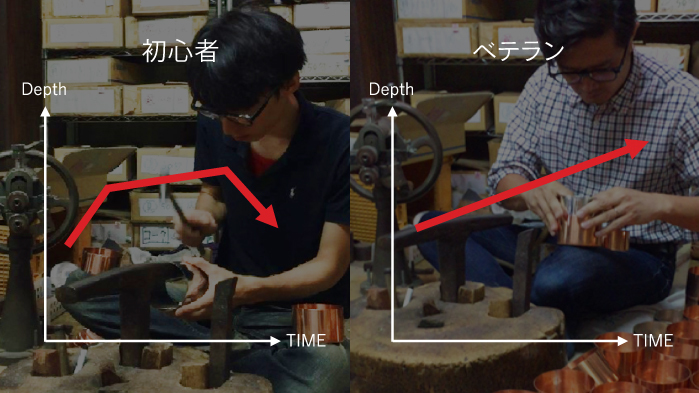
The crucial point is that reaching a state of "being able to concentrate" involves numerous factors. Temperature, humidity, air pressure, sound, light, scent... After analyzing all these factors, three key points for enhancing concentration became clear.
1) Fulfill as many "elements" as possible
2) Prepare an accessible "structure"
3) Make the necessary "preparations"
For example, regarding "preparation": While managing and sharing schedules using PC software has become common lately, don't we tend to label the time between meetings as "free time"?
What this means is: "We make reservations for communicating with work partners, but we don't reserve time for solitary, focused thinking."
We neglect the "preparation" needed for concentration. To secure focused time, preparation is essential: "when, where, and what to do."
The "elements," "structure," and "preparation" for concentration. In the final installment next time, we'll delve deeper and explain these points more concretely.
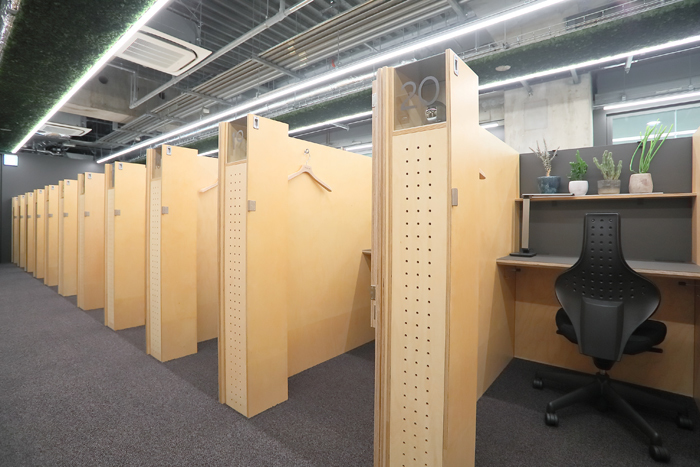
Was this article helpful?
Share this article


Newsletter registration is here
We select and publish important news every day
For inquiries about this article
Author
Kazutaka Inoue
Think Lab Co., Ltd.
Director