
Note: This website was automatically translated, so some terms or nuances may not be completely accurate.
 JINS' Think Lab Shiodome: Uncovering the Secrets [3/3]
What is the scientific basis behind the design of "Think Lab Shiodome"?

Kazutaka Inoue
Think Lab Co., Ltd.
This series, titled "Work Style Reform Isn't Just About 'Time'! A 'Concentration' Seminar to Improve 'Quality'," is a re-edited version of a lecture given by Mr. Kazutaka Inoue, Director of JINS Inc.'s Think Lab. It unravels the secrets of "concentration" – something modern people tend to lose or have taken away from them. You're sure to be surprised by the many eye-opening insights from Mr. Inoue.
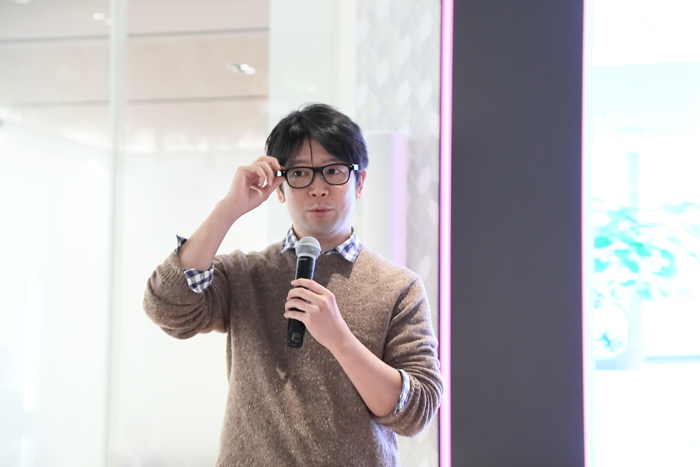
Inoue: Last time, as key points for generating concentration, we discussed:
1) Fulfilling as many "elements" as possible
2) Preparing an accessible "structure"
3) Making the necessary "preparations"
In this final installment, I will explain in detail the design features implemented at "Think Lab Shiodome," which grand opened on February 3rd, based on these three points.
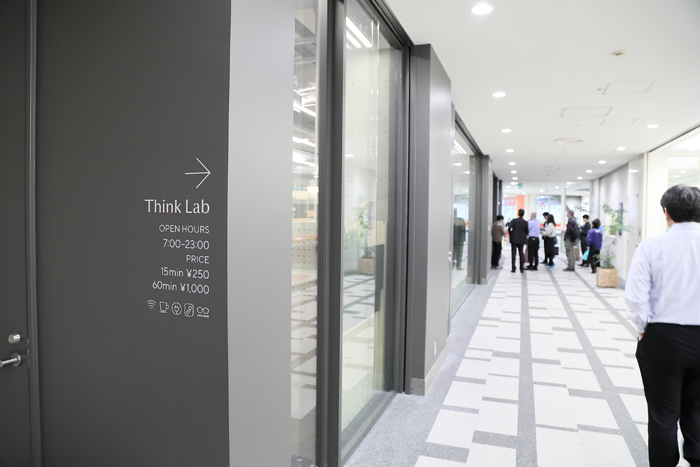
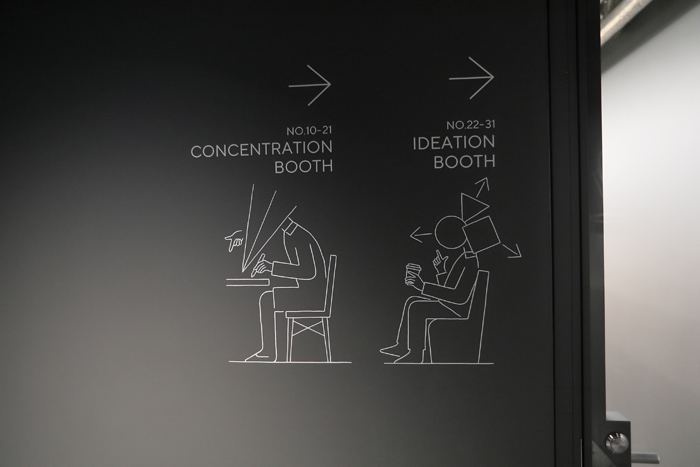
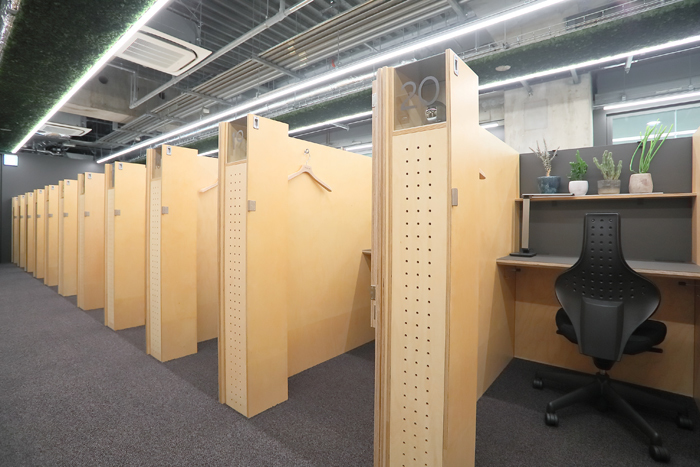
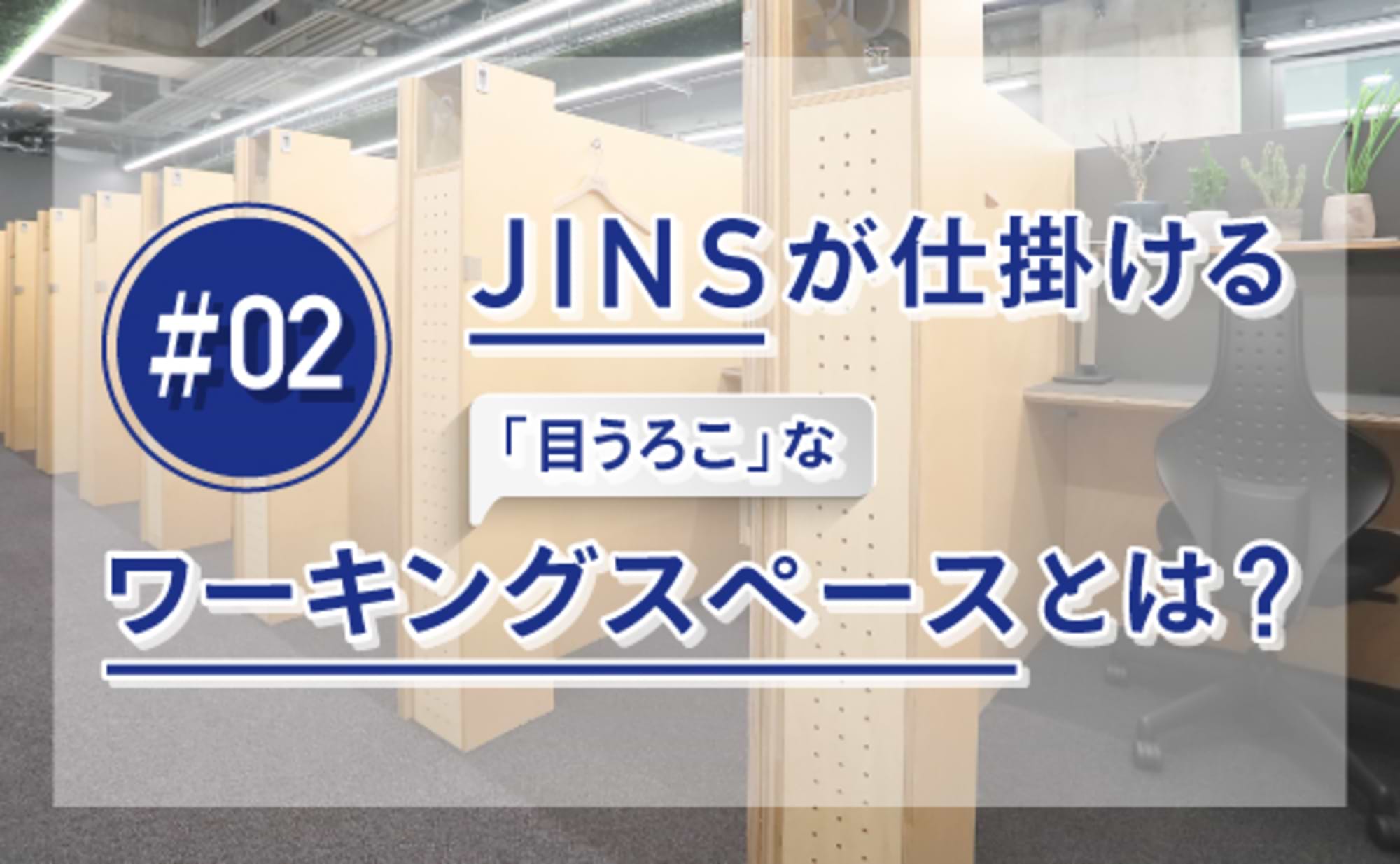
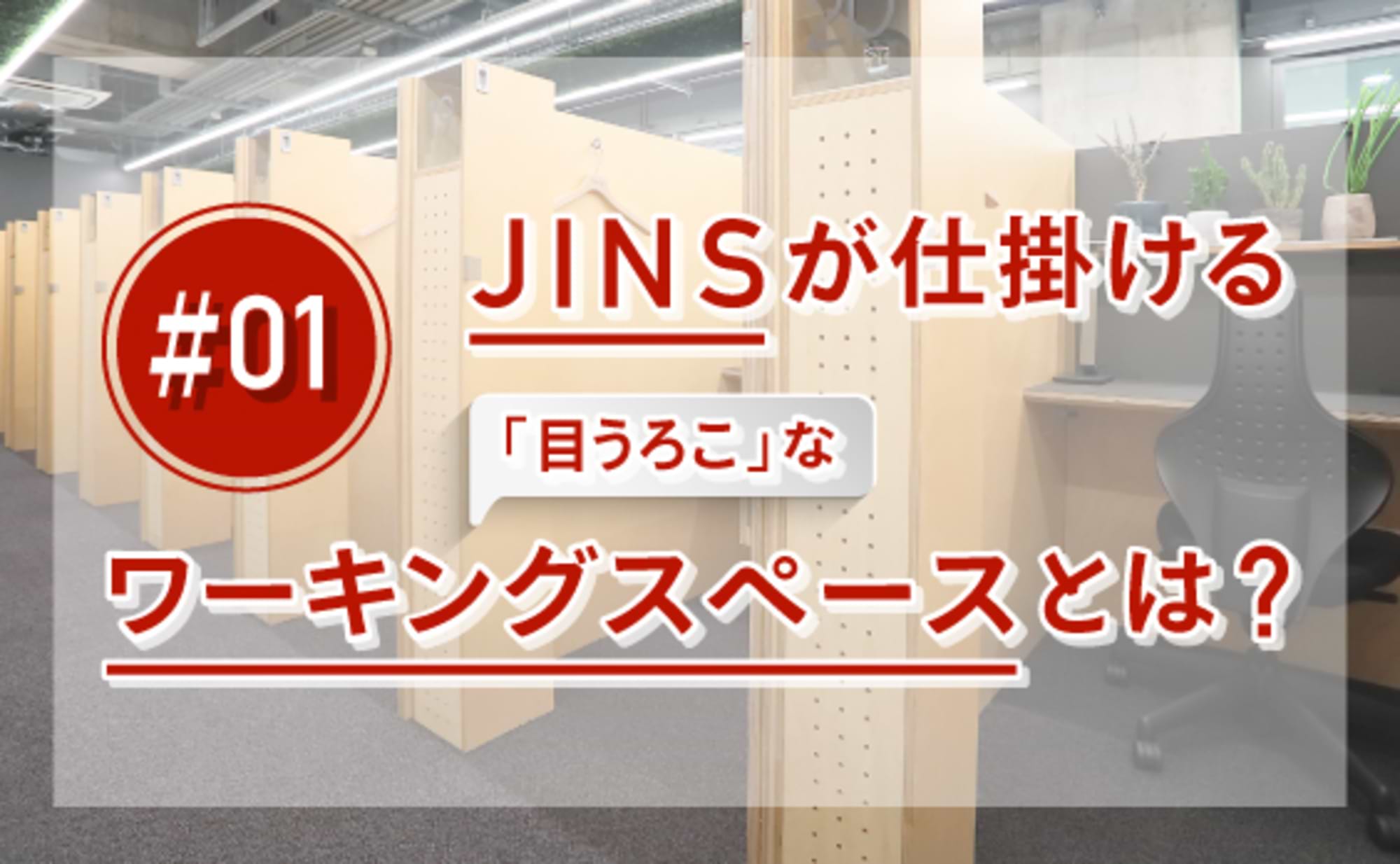
When you hold your smartphone up at the entrance, a pitch-black space appears. Guided by the pleasant aroma of essential oils, you proceed to find a small reception area. Beyond it, two types of compact booth clusters await in orderly rows. The "CONCENTRATION BOOTH" and "IDEATION BOOTH" are arranged like three tiers of a tiered platform. The former is designed solely for deepening "logical thinking," while the latter is for deepening "creative thinking" – both intended for solitary use.
The "dark space" before reaching the two booths was also intentional. It was envisioned as the dark approach path connecting the torii gate to the main shrine along a single path. We found a hint for enhancing concentration in the fundamental structure of shrines and temples.
Indeed, the motto for creating "Think Lab Shiodome" was "Let's build Koyasan in Tokyo!" First, create tension, then release it. This "structure" prepares the ground for sharpening concentration.
The traditional "right-brain" and "left-brain" classifications in neuroscience are now considered outdated. For "logical thinking"—like structuring a presentation narrative—a proactive, forward-leaning concentration is required: organizing and synthesizing information, following the logic of "this is why, therefore, this."
In contrast, "creative thinking" requires a concentration that allows images to expand freely. Naturally, the scenery that catches the eye should also be open and expansive.
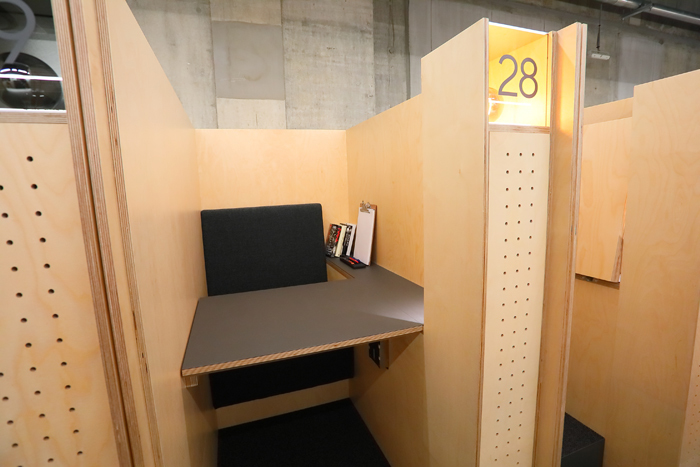
At the front of the booth,
free drinks (coffee, tea, green tea, etc.) are provided, along with
evidence of concentration benefits.
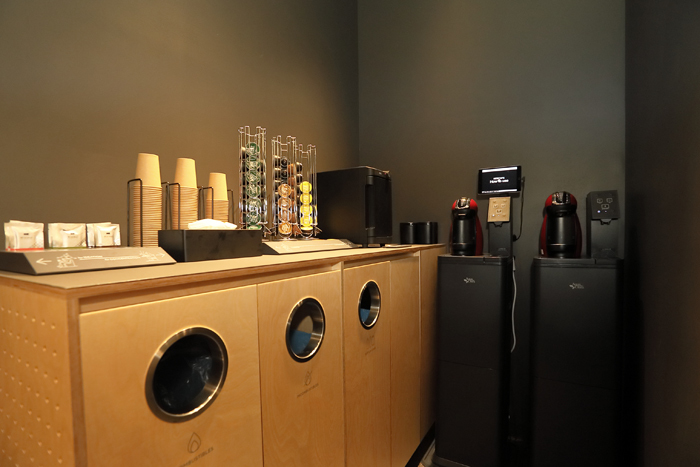
Coffee contains caffeine to aid logical thinking, while black and green tea contain theanine to stimulate creativity. The warmth felt from the towel and the aroma stimulate the brain's hippocampus, further preparing you for a period of concentration.
Upon entering the booth, warm lighting, the faint sound of a babbling brook and birdsong,
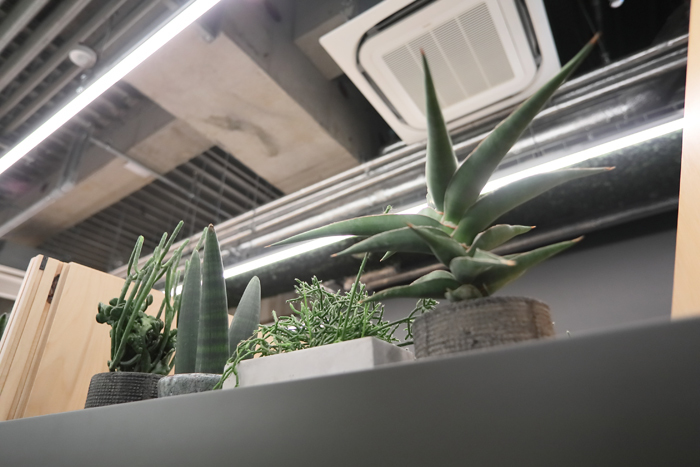
and plants placed throughout the space.
Blue light triggers the brain to associate it with daytime. This is why using smartphones before bed is considered unhealthy—the blue light inhibits the secretion of melatonin, the sleep-inducing hormone. Unnecessary excitement is counterproductive to concentration.
The lighting inside the booth is designed to provide a comfortable warmth. The soothing sounds and greenery are all elements carefully chosen to enhance concentration.
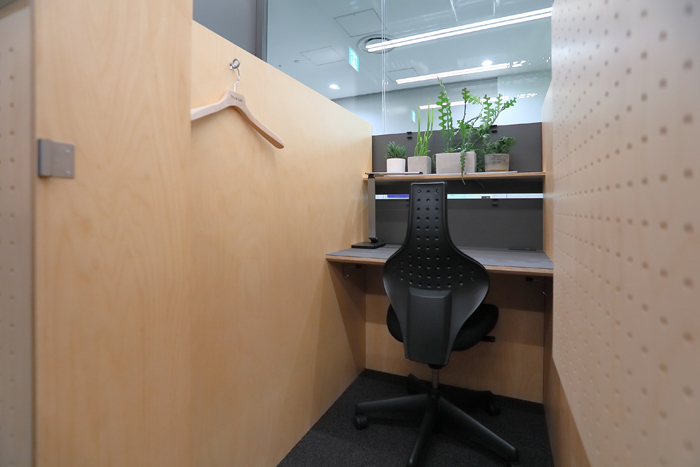
The 96-centimeter-wide desk also holds a secret. A standard 120-centimeter width actually diminishes concentration. The meticulously calculated partition height—neither too high nor too low—is equally crucial. Too low, and you can't focus. Too high, and it creates a manga cafe-like atmosphere where
causing you to relax too much, which also hinders concentration.
Even the gently cushioned chair incorporates subtle refinements. Westerners have stronger back muscles. That's why Western-style chairs are designed to push forward. Standard chairs are made for this Western physique. For Japanese people with weaker back muscles, such chairs cause back fatigue. Even in a single chair, elements that hinder concentration are hidden.
These mechanisms and devices, backed by scientific evidence, deliver an unprecedented level of concentrated focus. We sincerely hope you'll visit Think Lab and experience for yourself how your concentration deepens.
(Editor's Note)
This series has detailed the content of Mr. Inoue's JINS lecture titled "Work Style Reform Isn't Just About 'Time'! A 'Concentration' Seminar to Enhance 'Quality'." What was most fascinating was the attempt to scientifically analyze concentration—a topic often reduced to mere "mental attitude" talk.
Everyone has experienced sensations like "entering the zone" or "Ah, I'm being healed right now. Every nerve in my body is heightened." By analyzing these experiences through the tool of eyewear, they demonstrate how to "recreate" them as a tangible device.
In Mr. Inoue's trial, I saw the dazzling potential for "workstyle reform."
Was this article helpful?
Share this article


Newsletter registration is here
We select and publish important news every day
For inquiries about this article
Back Numbers
Author
Kazutaka Inoue
Think Lab Co., Ltd.
Director