
Note: This website was automatically translated, so some terms or nuances may not be completely accurate.
 Business Solutions for an Ultra-Aged Society [3/4]
Exploring business ideas to solve challenges in a super-aged society!
Tetsu Saito
In the past two installments of this series, "Business Solutions for an Ultra-Aged Society," we explained the importance of problem-solving businesses and how to discover and develop them. In this third installment, I would like to introduce several specific examples of businesses addressing challenges in an ultra-aged society.
Sound Accessibility for the Hearing Impaired
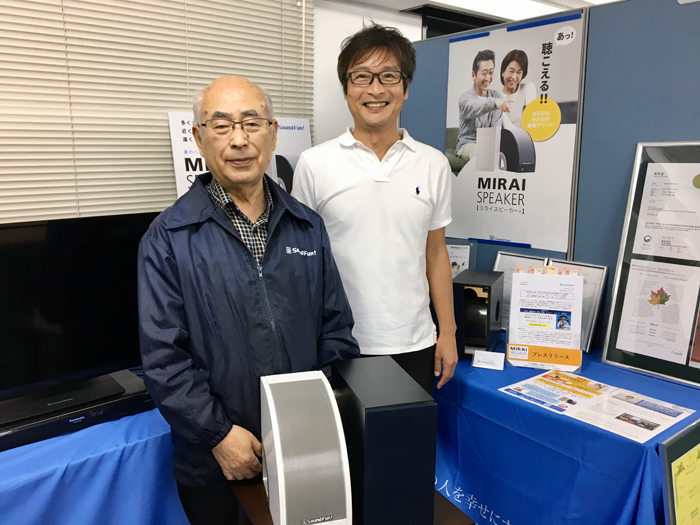
First, we present a case of products addressing "physical changes." Difficulties in hearing, memory, and fatigue—various declines in physical function that come with aging—will eventually affect everyone. Many seniors strive daily to maintain their independence as long as possible by paying attention to their diet and health. However, some inevitably face challenges in their daily lives despite these efforts.
Take "hearing difficulties," for example. It's estimated that 14 million people in Japan currently experience some form of hearing impairment. While hearing aids exist to support hearing, issues like discomfort or difficulty with tuning mean that only about 14% of those affected actually use them.
The "Mirai Speaker" is a speaker designed to alleviate the hearing difficulties faced by such individuals. Developed based on the observation that "the sound produced by a phonograph is easier for the hard of hearing to perceive," it utilizes carbon materials and features a curved shape. It produces high-energy sound waves that maintain volume even at a distance. Currently adopted by many financial institutions, securities firms, railway stations, and airports, it is also increasingly offered to the general elderly population via a subscription model.
While hearing difficulties generally increase in the late elderly stage (75 years and older), demand for such solutions is expected to rise significantly after 2025, when the baby boomer generation enters this stage.
Smile-Inducing Cooking Day Service
What image comes to mind when you hear "day care service"? Most people probably think of a morning pickup by car, followed by meals, bathing, and recreation activities at the facility.
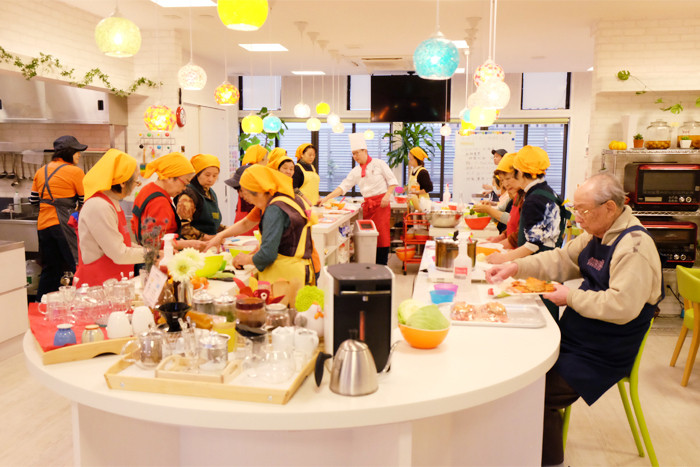
Nanairo Cooking Studio is a stylish day service that overturns that conventional image, centered around the theme of "cooking." The way people spend their time here involves everyone working together to prepare authentic Western or Japanese cuisine, culminating in enjoying the meal together. While daily meals are familiar territory for many senior women, French or authentic Japanese cooking is new to many. They can enjoy cooking with a fresh perspective.
Furthermore, while respite care is the primary goal of typical day services, here, the act of cooking and the cooking process itself provide a certain rehabilitative effect. Enjoying the food together creates a positive cycle that leads to daily joy. Michiko Kaminaga (Unimat Retirement Community), who conceived this business idea, states, "The post-war generation, led by the baby boomers now entering their senior years, are people accustomed to choosing products for themselves." Nanairo Cooking Studio was born to anticipate the needs of such individuals.
A service that gives you "another mother" in Tokyo
It has been many years since the thinning of community ties became a widely discussed issue. With the shift from three-generation families to nuclear families and then to single-person households, many people likely find themselves unable to rely on or consult someone casually in daily life, leading to ongoing worries.
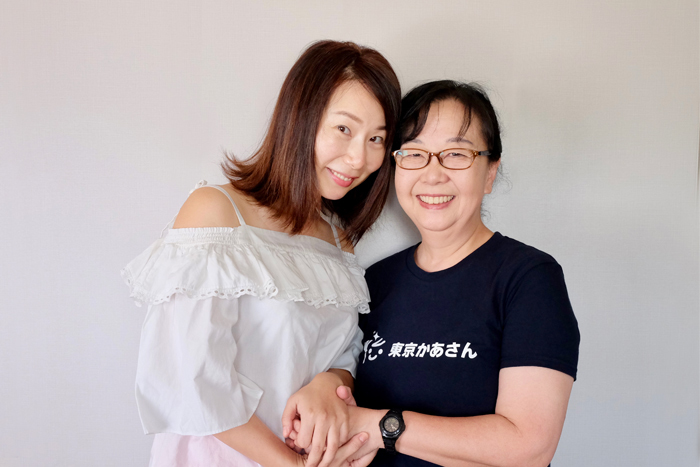
"Tokyo Kaasan" is a service that provides such individuals with a "surrogate family." While typical housekeeping services focus solely on household tasks, treating them strictly as "work" to be efficiently completed, "Tokyo Kaasan" goes beyond that. Users can essentially ask for anything—housework, childcare, life advice—and the "Kaasan" will do her best to meet their needs.
While many users are mothers in their 30s and 40s raising children, the "mothers" themselves are typically in their 60s to 80s. This makes it a highly meaningful business model from the perspectives of senior women's employment and intergenerational exchange.
I've introduced several examples of problem-solving businesses addressing challenges in our super-aged society. My book, Creating Problem-Solving Businesses to Reduce the Troubles of a Super-Aged Society, features numerous additional case studies. I hope you'll have the opportunity to take a look.
Was this article helpful?
Share this article


Newsletter registration is here
We select and publish important news every day
For inquiries about this article
Back Numbers

Author