Note: This website was automatically translated, so some terms or nuances may not be completely accurate.
 Future Shopping District SKETCH [1/2]
Consulting on lifestyle transformations "The Neighborhood Textile Bar"
Future Shopping Street Sketch is a project exploring new ways of living and lifestyles for the future, valuing not just "consumption" but also "creation." Based on future trends, Dentsu Inc. planners and external experts co-create plans for "shops we wish existed."
This session's theme was 'Textiles (Fabric)'. Textile designer Masaru Suzuki, along with Yasushi Kobayashi and Mana Kobayashi from design firm ima, joined Dentsu Inc.'s Noritaka Obuse (Head of Dentsu Inc. Communication Planning Center) and Takaaki Koshiba (Dentsu Inc. Business Design Square) to discuss 'The Ideal Textile Store for the Future'. Based on these discussions, the final ideas were summarized in sketches.
※This article was based on interviews conducted on February 6, 2020.
"Both Artwork and Material." Why We Were Drawn to Textiles
Koshiba: I believe we're seeing a growing "de-sensitization of daily life" – cashless payments, one-click shopping, and so on. As a reaction to this, I predict a rising demand to bring "warmth" and "tangibility" back into our lives. That's why we focused on "textiles" this time.
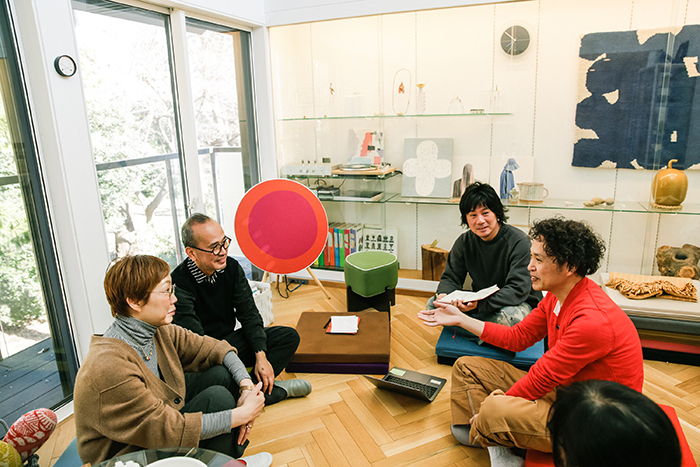
Everyone here today has a deep connection with textiles. Before we think about future stores, I'd like to ask what initially drew you to textiles. Masaru Suzuki, you're active as a textile designer, working on designs for marimekko (the long-established Finnish textile brand), among other things. What led you to deepen your involvement with textiles?
Suzuki: I started textiles because it was the only field I got into during university entrance exams (laughs). But once I began studying, I found it fascinating and got hooked immediately. What particularly drew me in was its versatility. It's not just for decoration like a painting; it can become curtains, cushion covers, tablecloths. A single piece of fabric holds various colors and designs, existing as a product without a specific purpose. That intrigued me.
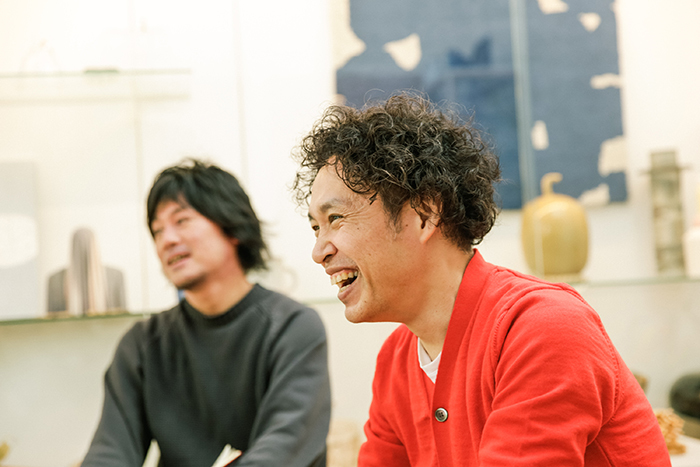
Obuse: In a way, you could say it's "not a finished product." The textile itself isn't complete; it holds the potential to become many different things.
Suzuki: Exactly. When you see the fabric, you think, "What should I make with this?" or "What can I use it for?" I think that's a unique feeling born from textiles.
Kyō: I totally get that. It's both a work of art and a material. For example, you could cut out just your favorite part of the design and make it into a cushion. That freedom is what makes it interesting. You can't do that with a painting. Being able to think, "I'll cut out this part and make something," is a characteristic of textiles.
Koshiba: At the design firm ima, you incorporate textiles into your designs quite often, right? Was there a particular reason for that?
Mana: I think it all comes down to designing the marimekko stores and their interiors. It started around 2006, I believe. I spent about half a year intensively studying textiles, and it was incredibly fascinating.
For example, in Finland, they sometimes hang curtains with the pattern facing outward toward the street. Normally, you'd hang the pattern facing inward, toward the room, right? The reason they face it outward is to brighten up the streets and neighborhoods.
Kyō: Finland gets really dark in winter, right? So, they use this curtain trick to brighten up the town atmosphere even a little. And it's the citizens who do it.
Mana: Of course, many European homes are filled with their favorite textiles too. Curtains, cushions, tablecloths. They incorporate their preferred colors and designs everywhere. Seeing rooms like that really lifts your spirits (laughs). Even just hanging textiles as a simple room divider completely changes the room's impression.
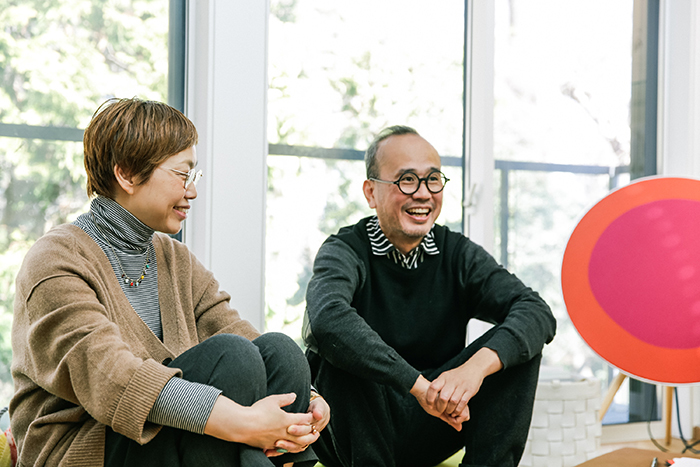
After all, people are wrapped in cloth from the moment they're born!
Koshiba: That ties into what we were just talking about. What do you think are the key benefits and charms of textiles?
Kyō: I think it's the freedom to incorporate your favorite designs and colors into the space of a room. Textiles are just so easy to change, you know? Whether it's a tablecloth or curtains, you can swap them out easily to match the season or your mood.
Mana: I also keep several pieces of fabric I love stored on a shelf. Just thinking about how I'll use them—like "I'll use this fabric as a tablecloth from spring through summer" or "I'll use it as a little room divider"—is fun in itself.
Obuse: Making your favorite designs and colors part of your daily life. That richness might be at the core of textiles.
Suzuki: Plus, changing them doesn't take much effort. It's nice to switch things out when you start feeling the warmth coming.
Kyō: Earlier we mentioned Europe, but Japan has also had a long-standing culture of incorporating color into daily life. The white and blue checkered pattern used on the sliding doors at Katsura Imperial Villa is a classic example. Arranging flowers or hanging scrolls might also be part of that culture of embracing color.
Suzuki: Remember that event at Dazaifu Tenmangu where Kobayashi-san and others exhibited textile art? I went to see it too. The textiles were displayed in the room like hanging scrolls. It was a Japanese-style room, but they matched perfectly. I think just hanging textiles casually in a room, like a hanging scroll, can transform the space significantly – not just using them as curtains or tablecloths.
Kyō: The folks at Dazaifu Tenmangu were also surprised by how well the textiles complemented the room (laughs).
Koshiba: Hanging paintings or other art in a room can feel like a high hurdle, but with textiles, it might be easier to decorate based on your own sensibilities. Like you said, just hanging them in the room is perfectly fine.
Kyo: In that sense, they might be the most accessible art pieces. Plus, the beauty of textiles lies in their texture. Each fabric—cotton, linen—feels different against your skin. No matter how digital our era becomes, that tactile sensation and texture can't be experienced virtually. That's the unique charm of cloth.
Suzuki: After all, humans are wrapped in cloth within 10 seconds of birth and continue to live surrounded by fabric. That's probably why we feel such a special connection to cloth itself.
It would be great if there were micro-shops recommended by the master.
Kobayashi: Based on what we've discussed, what kind of textile shop do you think would be ideal for the future?
Obuse: The idea of displaying textiles like hanging scrolls is interesting. Since they're easy to change, you could match them to the season or your mood. It would be cool to have a shop where you could freely choose such textiles for everyday use.
Kyō: Textiles really have so many uses, and just one idea can open up endless possibilities. There are infinite types, right? On the flip side, there are so many that it would be great to have a shop where experts could recommend fabrics and usage tips. Like getting recommendations from a sommelier or bartender.
Obuse: You could just pop in and ask, "Got any textiles that'd work for the coming season?" (laughs).
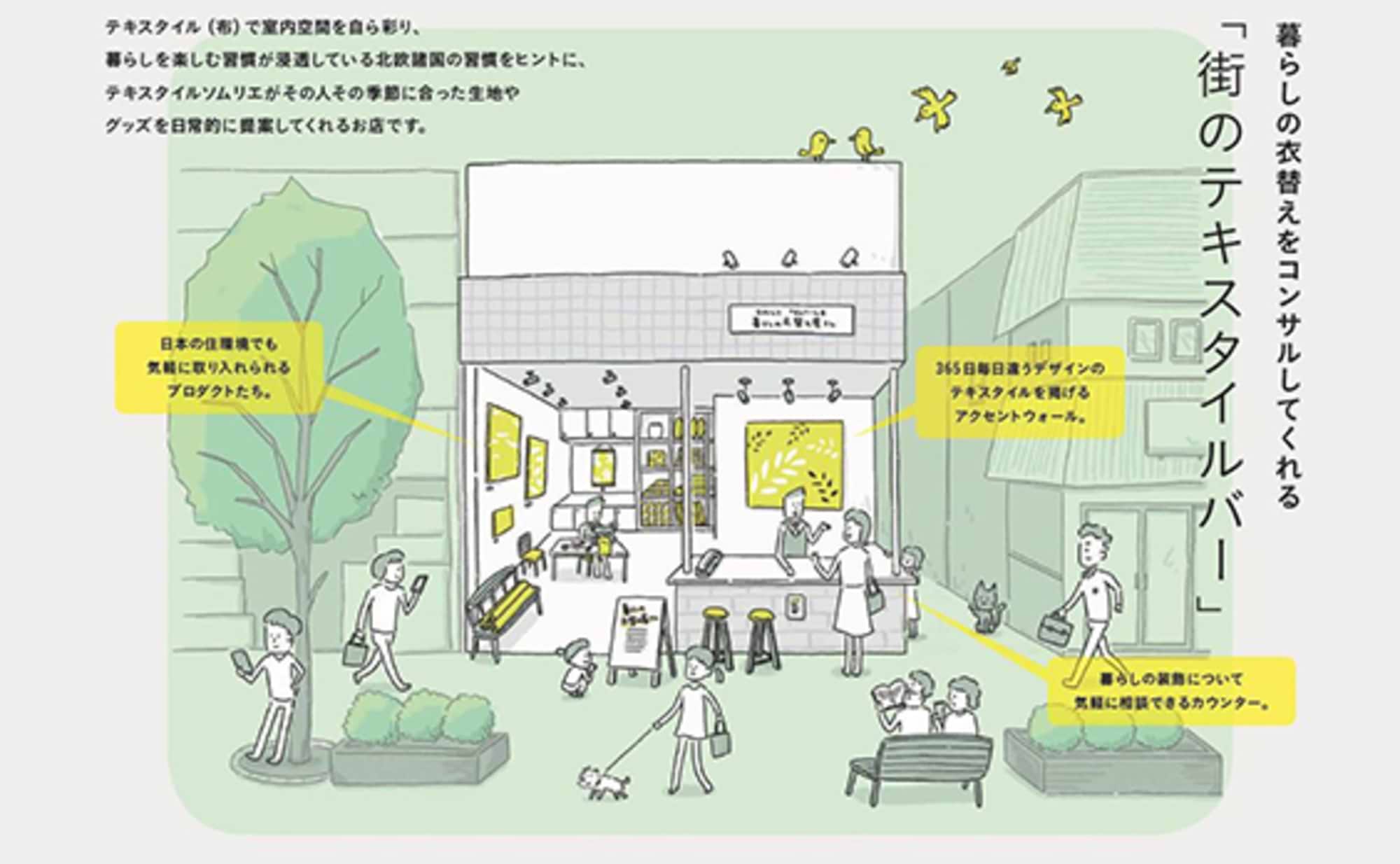
Kyō: Exactly. Small coffee stands are popping up everywhere lately, and a shop that size might work perfectly. You'd have a master who advises on textiles, listening to the customer and suggesting, "For that room, how about this?" while pulling out recommended fabrics.
Mana: Like a micro-shop. The textiles would be stored on shelves in the back, and each day, just one carefully selected piece would be displayed at the front, matching the mood or season. It would be wonderful if they displayed something different every day, like how a bar or cafe master chooses music, saying, "Today, I'll play this record."
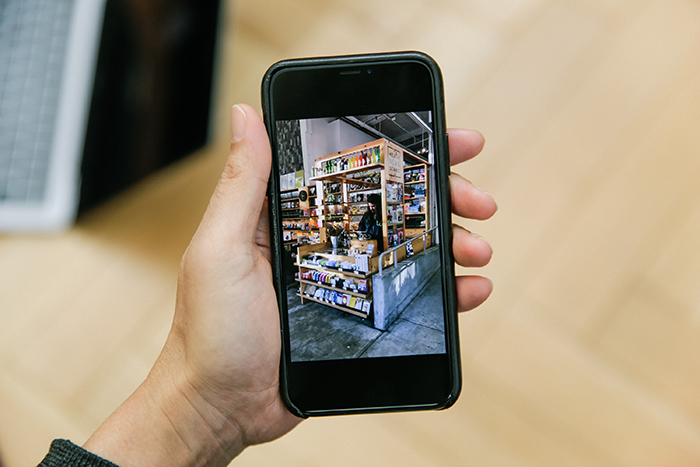
Koshiba: And then, using that fabric as a starting point, the master would chat with you and recommend a special item.
Suzuki: I search for textiles daily too, but communication is surprisingly important. Sometimes, just seeing the fabric isn't enough—hearing the explanation or story behind it makes you suddenly want it.
Mana: That element of communication is absolutely essential. If the master has good taste, trust builds, and more people come to buy. That's true not just for textiles, but for any shop.
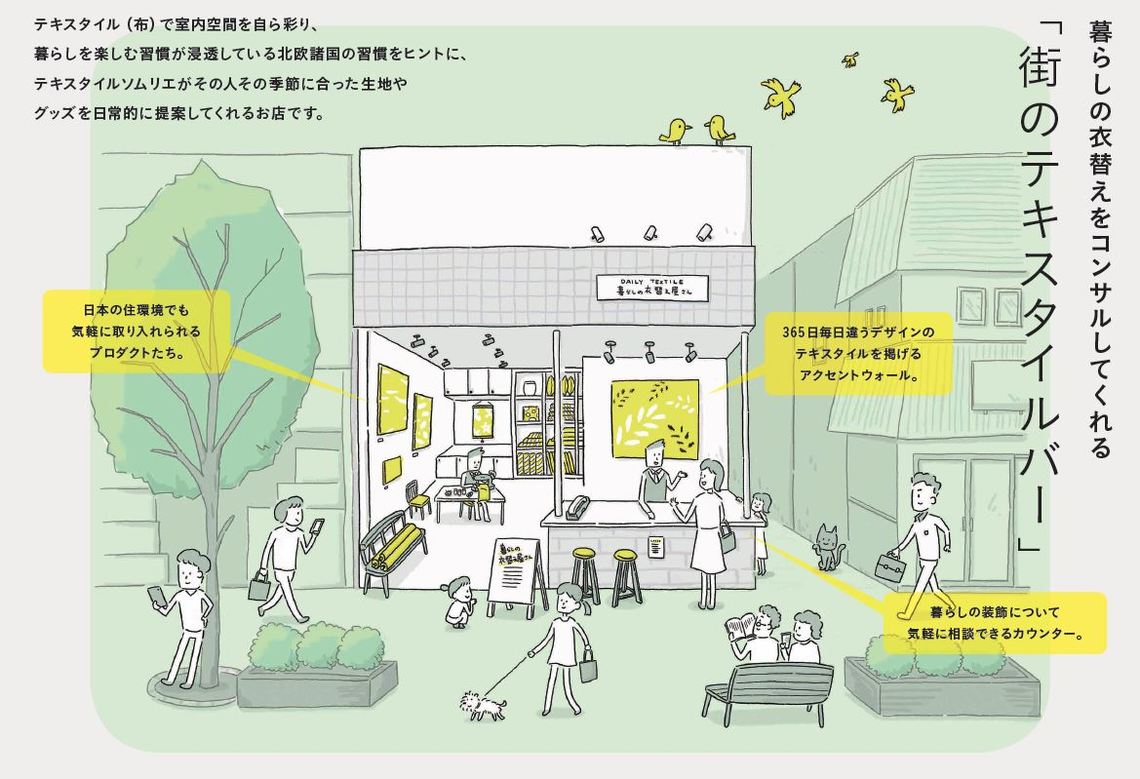
Kyō: Imagine a really small shop, maybe the size of a station kiosk, with a master you can consult. One large textile hangs in the front window, while shelves behind hold a variety of textiles in storage.
Suzuki: If that one piece, changed daily, looks cool, it'll definitely catch people's eyes and maybe bring in more visitors.
Obuse: A "Textile Bar in the Town" where a different textile is displayed like a hanging scroll every single day of the year, and the master is there to offer advice on all sorts of things. I'd love to see a shop like that.
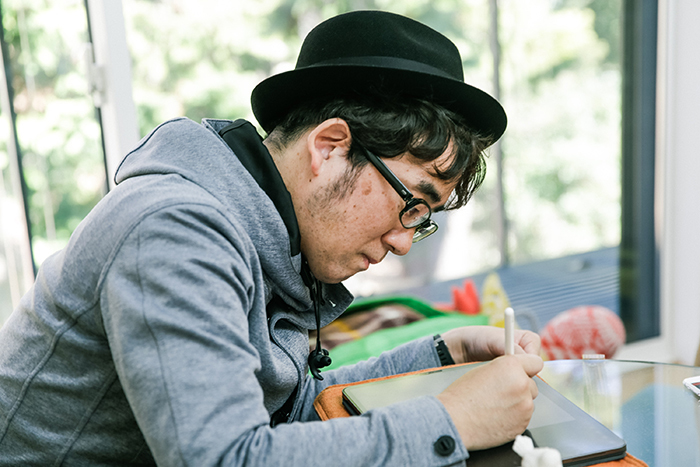
And the sketch born from the roundtable discussion is...!
Was this article helpful?
Share this article


Newsletter registration is here
We select and publish important news every day
For inquiries about this article
Author
Noriyuki Obuse
Dentsu Japan / Dentsu Inc.
Dentsu Japan Growth Officer / Future Creative Center Director


Takaaki Koshiba
Dentsu Inc.
フューチャークリエイティブリード室
クリエイティブディレクター
Hitoshi Nakao
Dentsu Creative X Inc.
Web Director, Illustrator, Graphic Recorder