
Note: This website was automatically translated, so some terms or nuances may not be completely accurate.
What We Saw in Team B: "Love" is the Source of All Ideas
Dentsu B Team: a creative collective formed by Dentsu Inc. employees whose "B-side" pursuits—hobbies beyond mere hobbies, side gigs beyond side gigs, or uniquely unconventional previous careers—stand in stark contrast to their main jobs (= their A-side). In its sixth year, two books about this B Team were released almost simultaneously—by chance(!)—thanks to publishers and editors who took notice.

Recognizing the rarity of such an opportunity, we gathered the newly released books and held a passionate (remote) discussion on "Why is Team B needed now?" with Yasuji Watanabe, the editor who planned the Shoeisha book; Masaharu Fujiyoshi, Editor-in-Chief of Forbes JAPAN, who co-created the Concept Collection series; and Hidetoshi Kurashige, the man who founded Team B.
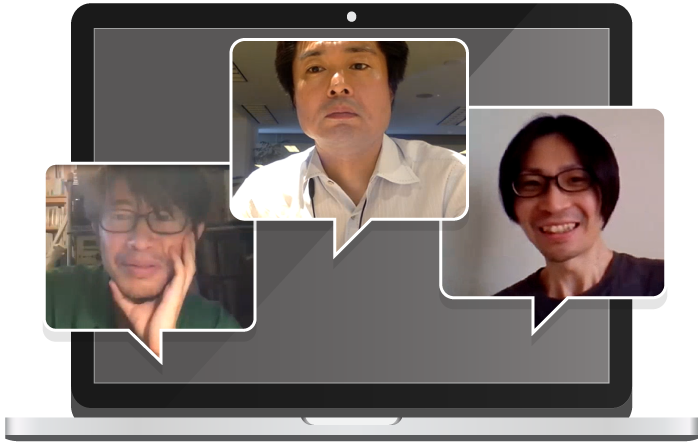
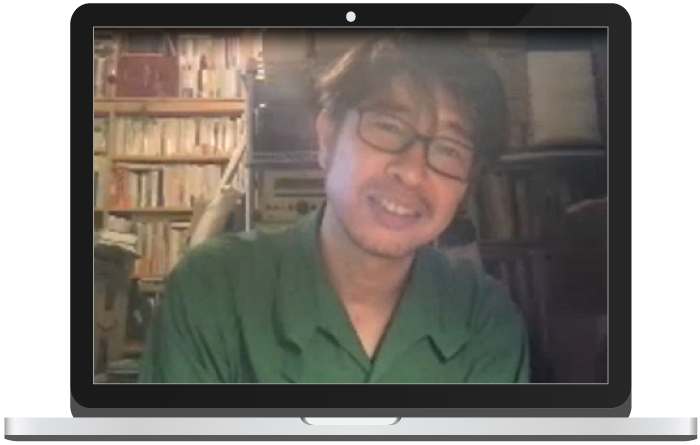
From left: Team B's Mr. Kurashige, Forbes JAPAN's Mr. Fujiyoshi, and Shoei-sha's Mr. Watanabe.
Discovering Your Identity: 'Mixing "Love" into Your Work.'
Kurashige: Two books from Team B were released around the same time. I'd like to ask both editors what they thought of each other's books. First, Mr. Fujiyoshi, Editor-in-Chief of Forbes JAPAN, what were your impressions after reading Shoeisha's "Mixing 'What You Love' into Your Work"?
Fujiyoshi: It discusses finding your B-side, and reading it made me feel like I was being asked, "What is my identity?" I used to think a B-side only exists because there's an A-side, but it made me realize humans are actually formed by balancing A and B, like yin and yang.
Even people who usually spend most of their time on their A-side can gain clarity about their identity – "Who am I?" – by deeply understanding their B-side. This sharpens life goals and conversely reveals things you don't need to do, creating breathing room in life. It's a book that makes you think so deeply you can't help but ask, "Who am I?"
Watanabe: Thank you for delving deeper than we even intended with the project. "It forces you to wonder, 'Who am I?'" – that's practically philosophical territory. It's both surprising and gratifying to see that when readers engage with it, they can interpret it at such a profound level.
Fujiyoshi: Also, the book includes the idea of "forming a B Team." Even when read from the perspective of someone managing an organization, the insights in this book are incredibly useful and resonate deeply.
For example, when restructuring an organization, managers tend to think in terms of "first string" and "second string" based on staff's surface-level performance. But doing that inevitably leads to breakdowns. I realized that if you build the organization with balance, considering things like people's hobbies – their so-called "B-side" – it actually works better.
For instance, side hustles are often discussed today. While side hustles are typically seen as something that exists only because of a main job, applying the B-team concept to organizations made me feel there might be a different way to build organizations and establish their core principles.
Kurashige: Ah, yes. The B-team is precisely a revolutionary unit trying to find new solutions by combining the A-side and B-side. We tend to think of the A-side as just the A-side and the B-side as just the B-side, but the fact that it's fundamentally an organization that "combines the A-side and B-side to create something new" is something that's quite difficult for the world to understand.
Fujiyoshi: So, Team B, composed of people with their own B-sides, is itself a process for initiating projects. What I mean is, I often use the example of "Momotaro." He has this identity of being "born from a peach," and he attracts companions like the dog, monkey, and pheasant, drawn to his rice cakes, all heading toward the grand goal of "Oni Island." I think this storyline is exactly like Team B.
Kurashige: That's an interesting way to look at it (laughs). The B Team, being a place to utilize one's talents, is like the "rice cakes" for its members. The fact that DJs with their own identities gathered there, architects gathered, Instagrammers gathered, and a team formed – that's probably exactly right. Now, Fujiyoshi-san, who's read it that deeply, what part did you like most in "Mixing 'Love' into Your Work"?
Fujiyoshi: Page 113, "Responding to Orders and Consultations," was extremely insightful. That is, the B Team approach to "accepting work." At my company, LinkTies, we handle various projects besides Forbes JAPAN magazine and its web version, like corporate promotion support. Every time new work comes in, our office always descends into chaos (laughs). But Team B has prepared several work patterns that leverage their B-side strengths. They proactively propose these, saying, "We can handle this kind of thing."
This workflow might seem obvious, but it made me realize, "Why haven't we been doing this?" The B Team methods described here—like "meet first" and "instantly assemble the strongest team by pairing the right people"—were incredibly concrete and useful references.
Kurashige: Well, in this book, Watanabe-san talked me into spilling quite a few of my secrets, and the team's secrets too (laugh).
Watanabe: Not at all (laughs).
Fujiyoshi: There's more. In the section on team management tips, it mentions the special practice of "giving nicknames," right? I thought that was incredibly important. Actually, last year, we did something similar for all the web editors at Forbes JAPAN – we gave everyone a "nickname." Giving someone a nickname means you have to really see their essence, their identity. Plus, since it's a nickname, it has to be funny (laughs).
Watanabe: How many editors were there?
Fujiyoshi: It was during a drinking party, so maybe 5 or 6 people. Then the next day, the web editor-in-chief sent a serious email saying, "Giving nicknames is really important." That's the kind of thing – solutions to problems we struggle with daily – that this book casually mentions several times (laughs).
At Team B workshops, participants often ask us, "How can we generate ideas?" Everyone attending probably feels pressured, thinking they have to think really hard. But actually, as this book shows—naming being a good example—when you implement seemingly obvious team management practices, ideas surprisingly start flowing.
When you go to a bookstore, there are tons of books on organizational management. What's amazing about this book is that it truly contains "things you can start doing today." And what's fantastic is that these are all crucial things. Each point is incredibly sound, and I was impressed by how well they managed to organize it all.
Kurashige: That's all thanks to Mr. Watanabe's passion (laughs). He patiently pushed me, repeatedly asking, "Is there more?!" "Is there more?!" and I just kept writing. Everything in this book is something the entire B Team, including me, has actually done, so there's no "fake" stuff here.
When we first decided to make this book, Watanabe-san created a questionnaire called "Questions for the B Team from Struggling Young People." All 56 members answered questions like "What is your B-side?", "When did it start?", and "How did joining the B Team change you?"
Watanabe: I think incorporating these "raw responses" from the B Team members throughout made the book feel very approachable.
Kurashige: Because the questionnaire dug into things from so many angles, the 56 members' words feel real. For example, Yamada Akane, our beauty researcher who also works as an Instagrammer, was asked in the survey about "her scale for what she loves."
"Why am I wasting my time on such pointless things?!" She had this sudden realization, and it's the kind of thing you just want to tease her about. But that seemingly "pointless thing" has a very high potential to become a B-side.
Her response made me think, "Saying 'the things I find myself spending time on might be my B-side' is a great way to put it" (laughs).
On the other hand, Ayaka Asami, a diversity researcher, responded to the question "How do you blend your main job with your B-side?" by saying,
First, focus on excelling at your main job.
It's not just about doing work you enjoy; I believe there are conditions for gaining support from others. That is, you must be properly handling your core main job.
Her answer comes from her own experience and feels very real.
I think the reason we were able to create such "practical and honest" content was by having 56 people each answer this question about "young people" that Watanabe-san posed.
The New Concept Encyclopedia: A compendium of immediately applicable life concepts
Kurane: Next, let's hear from Watanabe. You originally read through the Forbes JAPAN serial "NEW CONCEPT Collection" edited by Fujiyoshi and others really thoroughly, then reached out to Team B, right? So I assume you're familiar with all the concepts featured from Team B. What are your thoughts now, reading it again as a compiled book?
Watanabe: Come to think of it, I went to meet Kuranari-san carrying a stack of printed copies of "NEW CONCEPT Collection" (laughs). Since I'd been looking forward to it since the serialization, this KADOKAWA book edition offered excitement in two ways. One was the creator's perspective—as an editor, I was curious to see how that serial would become a single volume. The other was simply the anticipation of what kind of experience gathering all those concepts together would provide.
Regarding the first point, the "editor's perspective," it was fascinating to see the framework they provided that I hadn't considered myself. They organized all 50 concepts under the theme
- "What 'Personal' Creates"
- "Crossing & Breaking 'Walls'"
- "Taking the 'Opposite' Path"
- "Maximizing the Potential of the 'Existing'"
This categorization was excellent. It provides a starting point for asking, "What do I want to do now?" making it easy to find concepts that interest you.
And another point: what kind of experience comes from encountering a "collection" of concepts in book form? Reading it, I felt this book is "a concept swatch book." What kind of chemical reaction happens when you run your current work projects or ideas through each concept in Team B? It's fun to keep testing them in your head, one by one (laugh). You can run one idea through, get inspired, then try another idea – it's a book you can revisit again and again.
Kurashige: That's exactly what Mr. Fujiyoshi and I aimed for when starting the Forbes JAPAN series. We decided on the rule: to produce concepts immediately applicable to practical learning and business, and to ensure the series wasn't just an end in itself—it should be a starting point for readers to activate these concepts in a multidimensional way.
We offer the born concepts to companies as talk sessions or workshops, or readers apply them to create actual products. Many companies now seek innovation, so we often get requests like, "We need help generating ideas." In those cases, we say, "We have this many concepts published in Forbes JAPAN—which one should we use?" And new projects or products are actually born from those concepts.
Fujiyoshi: I personally thought this was a groundbreaking series. In journalism, it's not uncommon for things to end with just the publication. But Team B's series is designed for "social implementation." The concepts published here must serve as a foundation for creating "things." In other words, it's not just about readers reading and moving on; it's about having readers "experience" the concepts firsthand. So, when we started, I thought, "This is a huge responsibility."
We properly named B Team's concepts and offered them to the world, and people would use those blueprints to create things. So we couldn't take it lightly. But once it started, far more people put them into practice than we expected. I think it worked because it was a collaboration with the advertising industry – they were looking for a place to generate ideas.
Kurashige: As a longtime Forbes JAPAN reader, Watanabe-san, what are your top three concepts from the New Concept Encyclopedia?
Watanabe: I like "Prototype for One," "The Obvious Method," and "4-Dimensional Open Innovation." "Prototype for One " is great because it's such a straightforward concept. Dedicating that level of passion to creating something for just one person – I don't think there's another approach to making things that can match that intensity.
The "Common Sense Method" really resonated with me because of its absurdly fun appeal. Personally, I write haiku as a side hobby, and I was struck by Hatano Sōha's
A bird enters a bird's nest
. Don't you think it shares something with the "Common Sense Method"? "A bird entering its nest." It's so commonplace that no one ever put it into words, yet it's not trite at all. What I like about the "Common Sense Method" is that sense of classic excellence found in something no one was paying attention to.
"4-Dimensional Open Innovation" really made me realize how blind I was to the idea of "collaborating with the past." The naming itself is interesting too. While terms like "inheriting legacy" are straightforward, using "4-dimensional" instead of "past" or "history" feels incredibly compelling. Most importantly, this approach showed me that hints for weaving concepts are actually everywhere around us.
Kurashige: That's quite a good selection. "Prototype for One" has been commissioned by many companies for workshops, and actually, numerous new products have already emerged from those. "4-Dimensional Open Innovation" also has quite a few fans, and practical examples are starting to appear. "The Obvious Method" is still in its early stages. I hope we can do something with it.
Watanabe: I think this book would be especially interesting for people in planning roles. The concepts featured have already been proven effective by Team B members in real-world applications, making it an excellent resource for conducting virtual experiments in planning.
At the core of Team B is caring for others—in other words, love!
Kurashige: Having two team books released simultaneously is quite rare, but right now, more companies are saying, "We want to create a B Team too," and we're getting a lot more inquiries.
Especially during this pandemic, everyone spent a lot more time at home, right? There's definitely been a rise in people discovering new things they love or deepening their passion for things they already enjoyed. I suppose we've reached the point where people are ready to leverage that 'B-side' into their main careers. Do either of you have any thoughts about these books coming out right now?
Fujiyoshi: We gathered great concepts and were able to publish them as books through KADOKAWA. I sincerely hope they spread across Japan. I truly believe it could change society. Team B embodies that "love" aspect—the question of "who are we creating for?"—which traditional marketing often overlooks. Compassion and kindness might seem unrelated to business at first glance, but if such feelings start to take root, Japan could transform. At its core, the B-side is about love. Wouldn't it be wonderful if this spread and we built a society rich in kindness?
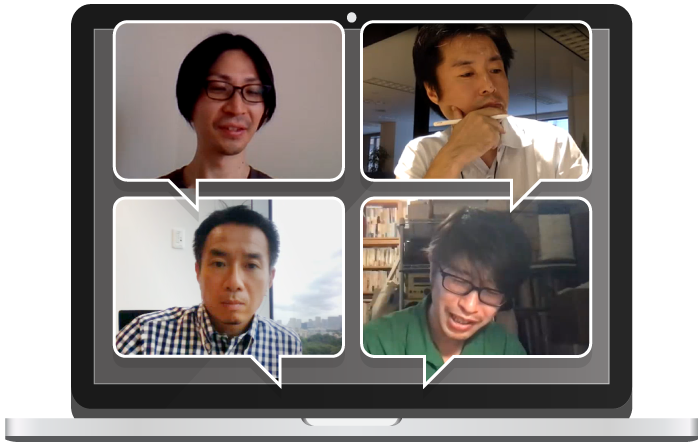
Watanabe: Yes. I think the beauty of Team B is that your daily actions make you feel a little happier (laughs). That's something I was seeking, and I think it's what people are seeking.
Kurashige: Five years ago, I had a serious illness. Facing the probability of death made me think, "What am I working for again?" Money, status, and honor can't be taken to the afterlife. But I realized memories like, "Even if it wasn't mainstream, I'm glad I got to work with that team," could be taken to heaven.
That's precisely why I sometimes feel anger when people only think about their own position or their company's profits, failing to utilize "talent" – humanity's greatest treasure. So, I decided my mission is to get as many people as possible up to the plate. Within Dentsu Inc., when I saw someone struggling in their main role but possessing great potential in another area, I'd have them train in the B Team. Or we'd combine different talents to create new concepts for the world. That's how the current B Team came to be.
Kurashige: "We want to create a B Team," many companies say. Some tried copying us but failed. There's only one key to success: Can you mutually step up to the plate for your teammates and create opportunities for them? Dentsu Inc.'s B Team consists of 56 people who genuinely recognize others' talents and can step back to prepare the batter's box.
I think we reaffirmed this by creating these two books with different directions almost simultaneously. Thank you very much!
Fujiyoshi &Watanabe: Thank you!
Web Dentsu Inc. News Serial: "Dentsu Inc. B Team's Alternative Approach"
https://dentsu-ho.com/booklets/301
Was this article helpful?
Share this article


