
Note: This website was automatically translated, so some terms or nuances may not be completely accurate.
Why the "B Team Mindset" Might Just Help Humanity Evolve a Little.
If their main job is considered the "A-side," Dentsu Inc.'s B Team (hereafter referred to as the B Team) treats each employee's private activities, previous jobs, academic majors, and hobbies as the "B-side," aiming to leverage these in their work. They provide the world with different approaches (= Plan B).
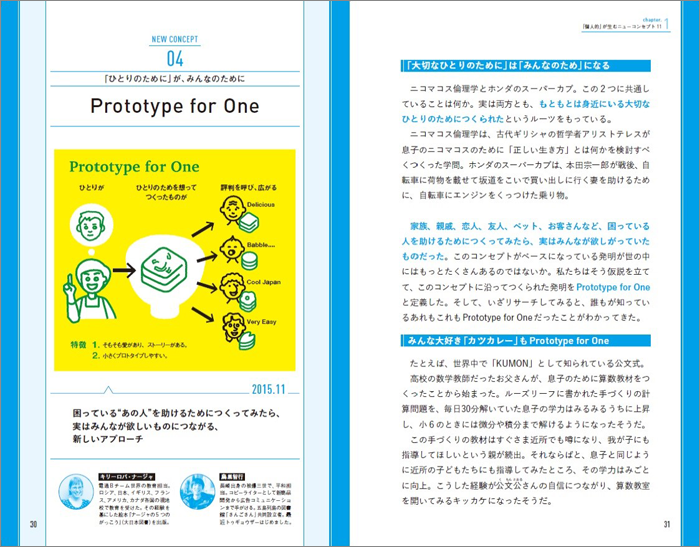
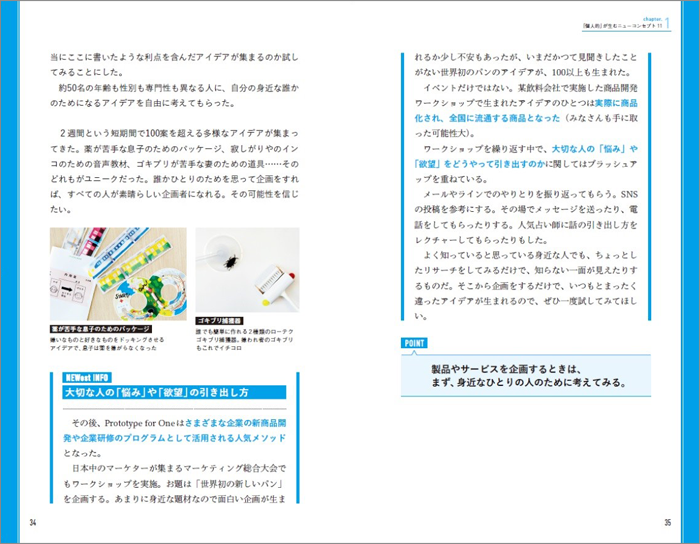
To introduce the unique concepts created by this B Team, applicable to solving all kinds of challenges, 'Dentsu Inc. B Team's NEW CONCEPT Collection' has been serialized in Forbes JAPAN magazine for five years. This series has now been re-edited from a fresh perspective and compiled into a comprehensive book!
The New Concept Encyclopedia: 50 Ways of Thinking That Spark Work Ideas (KADOKAWA) goes on sale July 17.
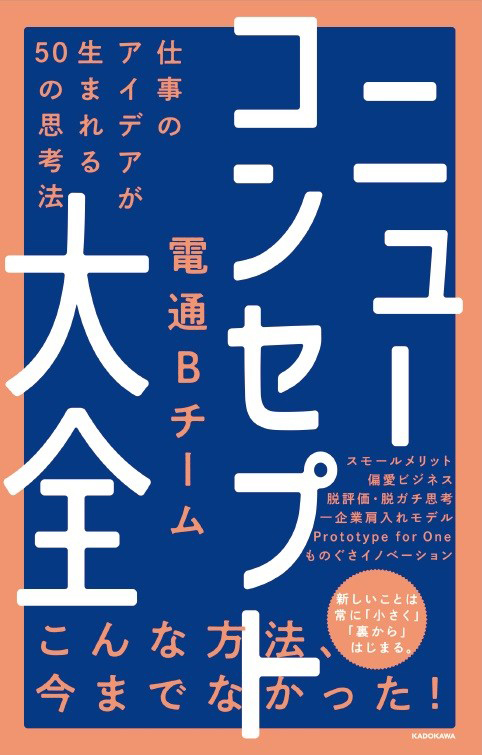
296 pages, ¥1,800 + tax, ISBN: 9784046043801
Incidentally, this book seems a bit different from other idea generation books out there. For those curious about what kind of book it is, we are publishing the "Afterword" by Masaharu Fujiyoshi, Editor-in-Chief of Forbes JAPAN, exclusively on Web Dentsu Inc.
※This column is a reprint of the afterword from the book "The New Concept Encyclopedia: 50 Thinking Methods for Generating Work Ideas."
"Dentsu Inc. B Team's NEW CONCEPT Collection." As the editor in charge of this unique series that began in Forbes JAPAN in 2015, I actually kept something from the authors.
Each time, I'd meet with the authors, brainstorm to expand ideas, and upon receiving the manuscript, act as the first reader—criticizing or praising it while considering the illustration style. But afterward, I'd secretly copy their ideas multiple times. You might say, "Don't brag about such thieving behavior," but I want to explain my reasons with complete sincerity.
Working on this series was always fun, full of discoveries, and broadened my perspective. Before I knew it, I naturally started speaking with a "B-Team mindset" in other planning meetings and discussions too. Proposing ideas from the B-Team perspective got people excited, and sharing B-Team anecdotes in lectures without revealing their source made the audience laugh. The more it worked, the more my brain and attitude fully transformed into B-Team mode.
Furthermore, after my book was translated into Korean and received acclaim locally, I began traveling to Korea frequently for lectures. There too, I found myself speaking with a B-Team mindset. Even when audience members raised their hands to ask questions, I found myself giving B-Team-style answers. This, too, was met with amusement. In other words, I became convinced that the B-Team mindset transcends borders and ethnicity, working universally across the world.
Occasionally, I felt a twinge of guilt, wondering, "Isn't this just someone else's material?" But more than that, I pondered the reason for its effectiveness. There are countless books out there on how to generate ideas or develop plans. Every one of them contains valuable insights; I'd stick Post-it notes and underline passages, but I'd usually forget them and never actually use them.
For instance, there's a research book detailing the rules for creating hits in Hollywood, the pinnacle of commercial entertainment. It states that concepts must be "simple, concise, and clearly explained." It also emphasizes that the essence of a hit concept lies in how well the story is condensed. Yet, I wondered why I couldn't master these excellent books.
The answer to this mystery came during a workshop I conducted with the B Team. The venue was packed with people from corporate new business divisions, and I stood on stage alongside the members of the B Team featured in the book. I've often felt my spirits rise during these workshops. For instance, I was once asked this question right at the start:
"We're implementing innovation techniques at our company. We set aside time to ask our superiors questions to identify problems. But we don't know what to ask." Such a complex question left me speechless. Yet, once we started using the "Miracle Word Cards" with the audience, ideas began flowing freely, blowing away those worries. Concepts emerged that made me think, "If we pull this off, it'll be a huge hit."

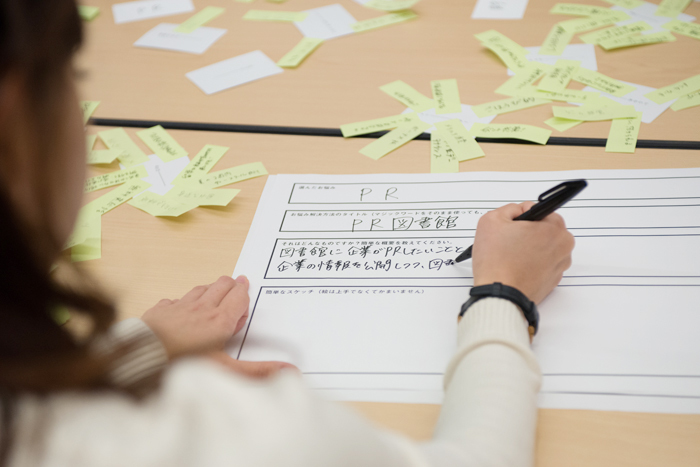
The hint was simple. When Team B said, "Imagine someone important to you—your parents, spouse, children, anyone—and think about what you'd like to do for them," relatable, laughable anecdotes flowed out one after another. These were then multiplied by the method.
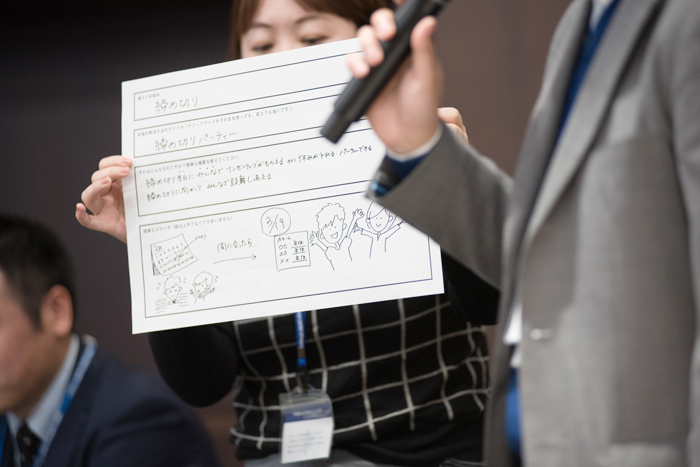
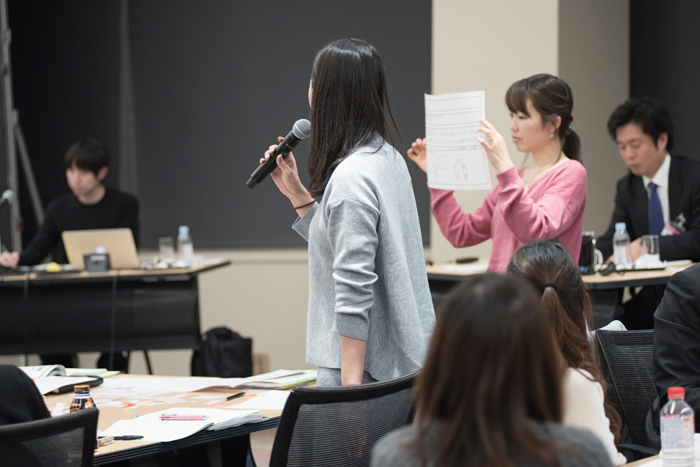
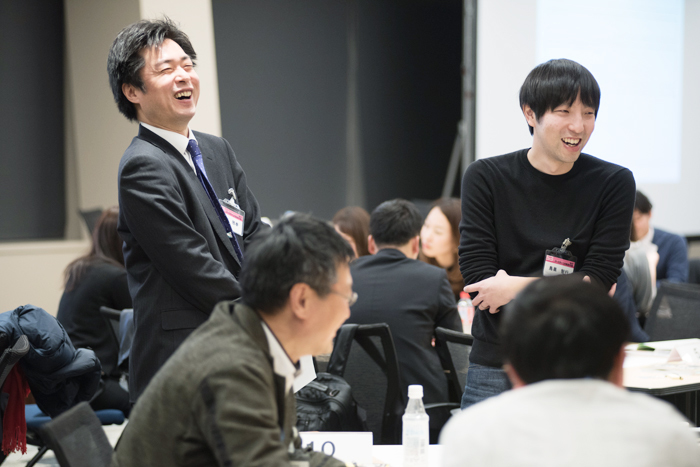
Listening to the presentations, I sometimes found myself saying, "You're a genius!" And I became certain: what unlocks human potential is love. The B Team method resonates because it stems from a deep desire to bring joy to others. That's why it worked everywhere, in every situation, for everyone.
A method anyone can use with just a little affection and consideration. If this spreads across the Earth, humanity might evolve a little more. Perhaps it's the "Team B mindset" that fuels such dreams.
Was this article helpful?
Share this article


