
Note: This website was automatically translated, so some terms or nuances may not be completely accurate.
 Why Japan Needs a Book on "B Teams" Right Now. [1/4]
Why not mix some ambition into your work?
Watanabe Koji
Shosho Publishing
If your main job is your "A-side," then Dentsu Inc. B Team (hereafter, B Team) proposes treating each employee's private activities, previous jobs, academic majors, and hobbies as their "B-side" and leveraging these in their work. They offer the world a different approach (= Plan B).
In summer 2020, two books featuring Team B will be published. In this series, we ask the masterminds behind each book why they chose to release "Team B books" now and hear their thoughts as editors.

208pages,¥1,600 + tax,ISBN:978-4798164663
Released on June 8th , "Incorporating Your Passions into Work: Tips for Leveraging Your 'B-Side' in Your Main Job" (Shoeisha) is a slightly unconventional business book aimed at all business professionals and organizational leaders . It explores the diverse possibilities that emerge when you harness your "B-side" in your work. Shoei-sha editor Watanabe Koji introduced it to us.
The project's origin lies in a childhood fascination with warlords
When I was in second grade, my father caught a cold from playing the Super Famicom game "Romance of the Three Kingdoms III" too much.
"What kind of game could possibly get a grown man so hooked he catches a cold?"
That curiosity, looking back now, became the origin of this book's concept.
The "Romance of the Three Kingdoms" series is a historical simulation game where players become rulers, enriching their nation while expanding its territory, with the ultimate goal of unifying the realm. While slightly complex for an elementary schooler, the cool generals that appeared made it impossible to stop playing.
Like pulling on a string of potatoes, I encountered Nobunaga's Ambition, a game sharing the same concept as Romance of the Three Kingdoms. Before I knew it, I was waking up earlier on weekends than weekdays, becoming the kind of elementary school kid who grabbed the controller before even washing my face.
From then on, throughout my teenage years, whenever I was daydreaming, I'd usually be tripping out to 2nd-3rd century China, the setting of Romance of the Three Kingdoms, or to 16th-century Japan's Warring States period, where Nobunaga and others lived.
In both "Romance of the Three Kingdoms" and "Nobunaga's Ambition," each warlord had parameters like military strength, political skill, and intelligence assigned to them, quantifying their individual traits.
For example, in battles, generals with high "Military" stats (like Zhang Fei, Zhao Yun, or Sanada Yukimura) would excel, while for developing territories, generals with high "Politics" stats (like Zhuge Liang, Akechi Mitsuhide, or Ishida Mitsunari) would achieve great results.
I was captivated by the generals beyond these parameters.
The work generals perform based on these parameters—battling or land reclamation—can be seen as their main profession, their "A-side." But as I wondered why Sanada Yukimura had high Military Strength and Ishida Mitsunari high Politics, and began researching, I realized there was a human being behind each number, a story that couldn't be fully captured by statistics.
Behind what the game simplifies as a "military strength" number, there must have been each individual's "special skills," "talents," and "passions." This corresponds to the "B-side" possessed by the B-team members.
Thinking this way, I could almost hear voices saying things like, "Let this humble spear-wielding warrior take the rear guard!" or "Leave the land survey to this one skilled in arithmetic, and I shall estimate the rice yield precisely!" This only deepened my immersion.
The world of warring states was surely much simpler than our modern age. You achieved results in your work because you did what you were good at and loved. Or rather, it was a world where you couldn't survive unless you fully utilized your true strengths and passions (your "B-side") in your main occupation (your "A-side").
A drama featuring compelling characters who lived through the warring states period, dedicating their entire being—without separating what they loved from their work—to the struggle. Imagining that very existence was, for me, the true essence of the Sengoku simulation game.
What I sensed in Team B was a "real-life Nobunaga's Ambition."
My youth was immersed in these warlords, but after moving to Tokyo for work and joining an organization, I gradually forgot about them amidst the daily grind.
Quantifiable surface-level metrics like academic rankings, annual income, and popular company rankings, along with industry conventions, assigned departments, and job titles—these organizational norms drifted into our minds like haze, obscuring our own talents, strengths, and passions. Accessing vast amounts of information via smartphones seems to have accelerated this trend even further.
Even if we could see our strengths and passions, bringing them into our work or saying "Let me try that" requires courage, confidence, and comes with responsibility.
"Is it really okay to just keep doing the work I'm given?"
"I want to change, but I can't."
I began to sense these feelings, akin to small groans, not only within myself but also among those close to me.
Then one day, my heart raced when I learned about the 'Dentsu Inc. B Team' through a web article. The B Team, which incorporates 'things they're good at' and 'things they love' into their main work, felt like they embodied a natural way of working that left no room for that vague unease.
By fully utilizing what you're good at and what you love, you achieve results at work. Even if results don't come, you can still see it through. This simplicity felt like the world of "Real Nobunaga's Ambition." Could it hold the key to breaking through our sense of stagnation? Above all, I wanted to experience that worldview firsthand again after so long.
I promptly emailed Mr. Hidetoshi Kurashige, Team B's representative at the time, asking, "What exactly is Team B? Please tell me." We met, and true to Team B's style, things progressed smoothly. The result is this book.
Team B = Sanada Maru Theory
During the bookmaking process, as I attended B Team meetings and met with many members, one hypothesis crossed my mind.
The "B Team = Sanada Maru Theory."
Sanada Maru refers to the fortified outpost, like a protrusion, that Sanada Yukimura (the later name of Sanada Nobushige), a Toyotomi general, added to the south side of Osaka Castle during the Winter Campaign of Osaka in 1614.
During the Winter Siege of Osaka, the Toyotomi forces adopted a "siege strategy" against the advancing army of Tokugawa Ieyasu. However, Yukimura independently built Sanada Maru, keeping the possibility of launching an attack against the Tokugawa forces as his "Plan B." He also gathered ambitious rōnin from across Japan to form a distinct force. This "super-eclectic group led by Sanada Yukimura" became the legend of the "Sanada Ten Braves" through later storytellers, enduring in folklore.
- Gathering eccentric members,
- with Plan B in sight.
This is why I'm taking the liberty of proposing the theory that Team B = Sanada Maru.
Sanada Maru shared the fate of the Toyotomi clan in the Summer Campaign of Osaka in 1615. Yet, 400 years later, it became the subject of an NHK Taiga drama, proving the strength of its ideals.
I also quietly infuse this book with the thought that it might be interesting if more unique "protrusions" like Team B = Sanada Maru appeared within various organizations in Japan.
The activities of modern B-teams, akin to Sanada Maru, may transform and drive change in the distant future, perhaps around the year 2400.
A book packed with how to find and nurture your B-side, and how to build a B-team
So, what exactly is in this book? Mr. Kuranari, the representative of B Teams, introduces the B Team's work philosophy and methods, weaving in quotes gathered from surveys of over 70 B Team members throughout.
If the former is the warp, the latter is the weft, weaving together into a large textile—a book like a flag—created by the entire B Team. This is that banner.
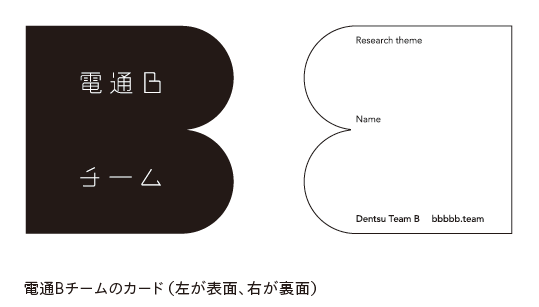
Under this banner, 56 members currently gather and develop B-side genres like these.

It's overwhelming to think they're applying such diverse B-sides to their work! But actually, not everyone in Team B had a "B-side" from the start. Some members didn't even realize they had a B-side until they joined Team B.
That's precisely why this book offers guidance for those who think, "I don't have a B-side," helping them discover their own. It also proposes ways to nurture that B-side once found, ensuring it's never lost.
It also generously shares insights on introducing a "B Team" into organizations that don't have one, and on managing a B Team within an organization.
You don't have to turn your passion into your job, but you can "mix" your passion into your work
Observing B Teams made me realize that while turning your passion into your job isn't something everyone can do, mixing your passion into your work is actually something anyone can do. That's why I chose this title for the book.
What all B-team members share is cherishing the time spent with their B-side. They are not rushed, not driven by purpose, but simply engrossed.
Your B-side is something passionate for everyone. Even if it seems seemingly useless at first glance, that B-side—which simmers and rises from deep within your core—holds the potential to change yourself, change those around you, and ultimately change the world little by little.
Modern times aren't as simple as the era of warlords who devoted 100% to their ambitions. Few people today live like those warlords, fully unleashing their strengths and passions in their main careers.
Yet, even for us living in this modern age, there must surely be a "B-side" where we can unleash 100% of our potential. And if we can blend that passionate energy for our B-side—that ambition worth staking our entire life on—into our main work, couldn't we live as compellingly as those admired warlords? That's the sentiment I've poured into this book's title.
Why not use this book as a catalyst to discover your own hidden "ambition" and blend it into your work? The world will surely become a little more interesting.
Was this article helpful?
Share this article


Newsletter registration is here
We select and publish important news every day
For inquiries about this article
Author
Watanabe Koji
Shosho Publishing
Book Editorial Department