Note: This website was automatically translated, so some terms or nuances may not be completely accurate.
 Why Japan Needs a Book on "B Teams" Right Now. [4/4]
Shibutsu's Famous Manager: The Secret to His Planning Power Lies in His Ability to "Zapping" Through Others' B-Sides
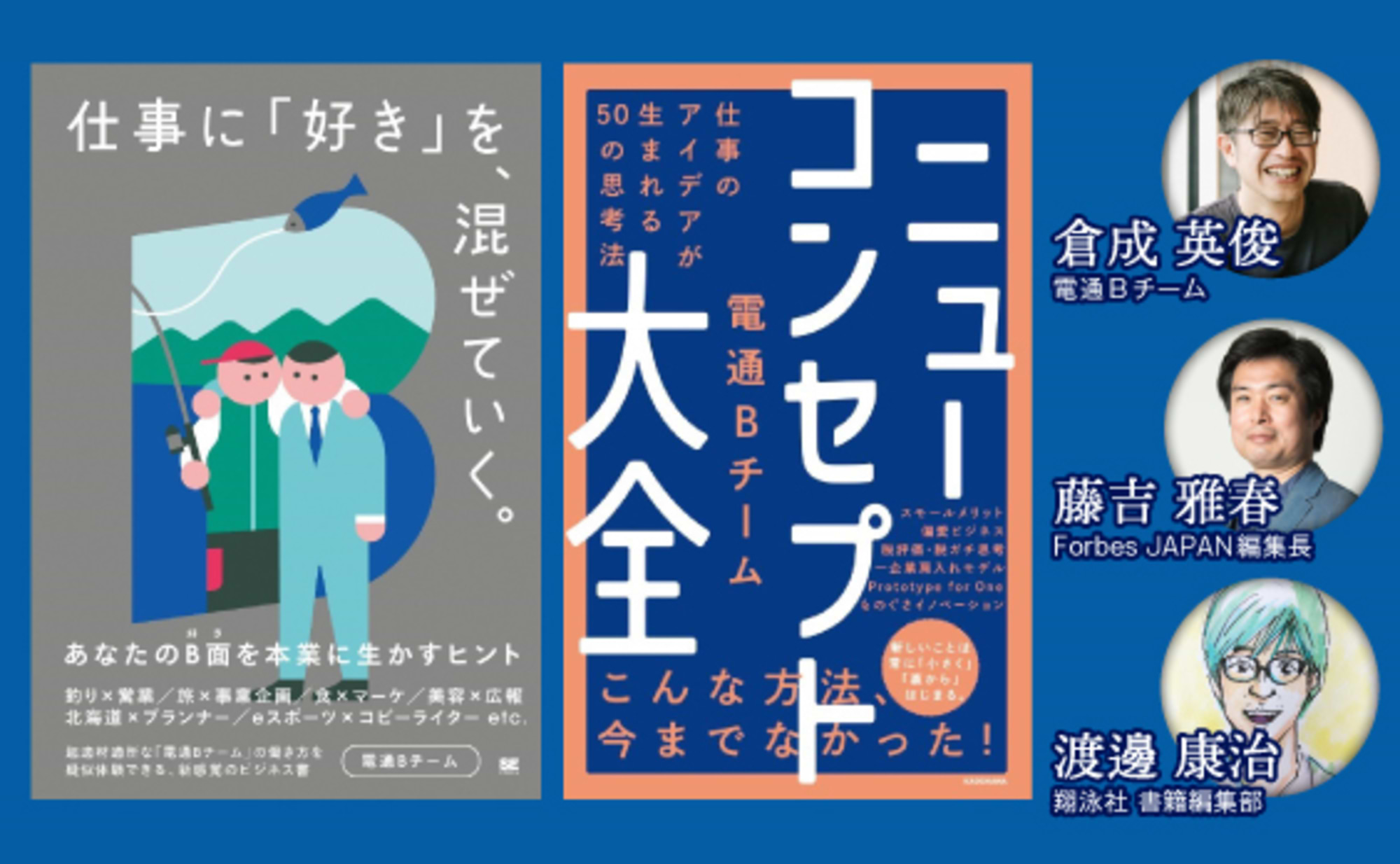
The Dentsu Inc. B Team is a creative group composed of Dentsu Inc. employees who possess a "B-side" completely distinct from their main profession (their "A-side"). In the summer of 2020, coincidentally during their sixth year, two "B Team books" were released around the same time.

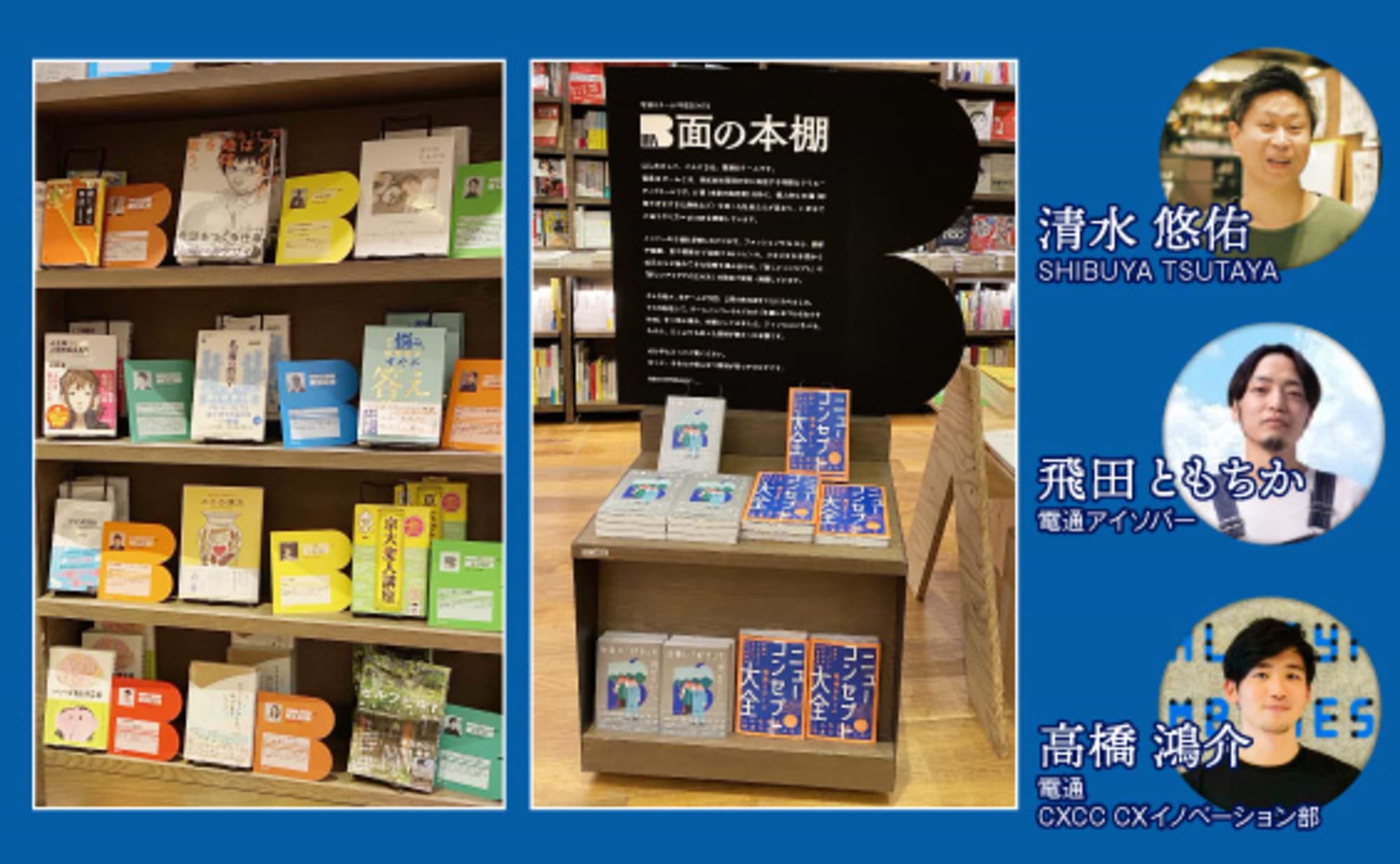
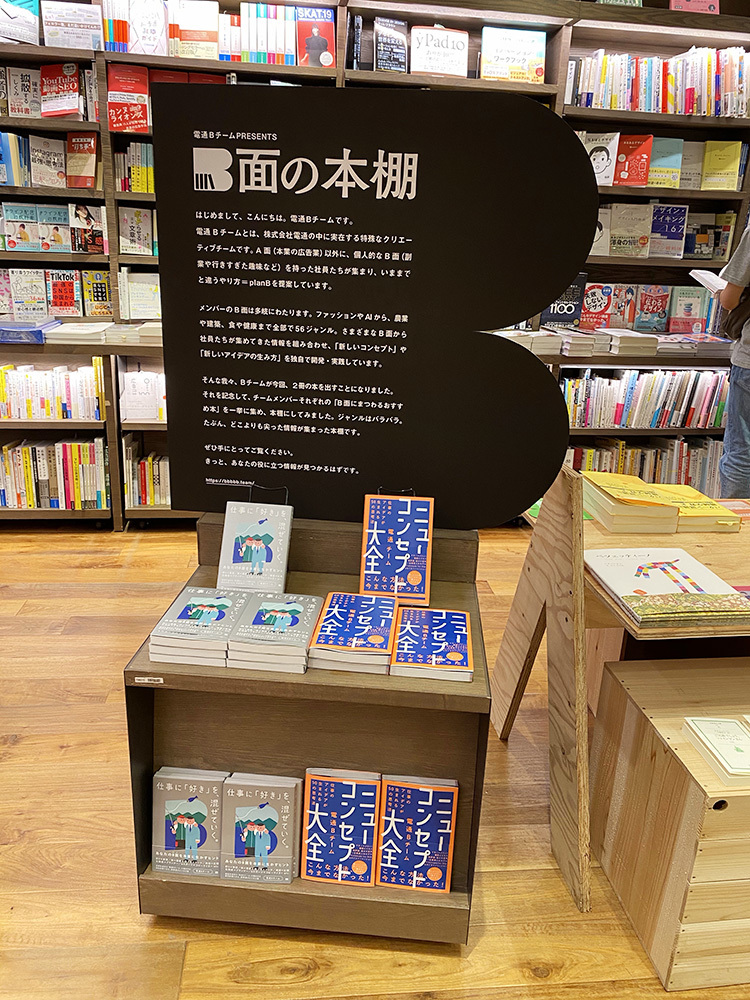
To commemorate these releases, a special corner called "The B-Side Bookshelf" was set up at SHIBUYA TSUTAYA, a landmark in Shibuya—a city that continues to reflect the changing times. It featured recommended books related to each B Team member's own "B-side" (closed in October 2020).
Team B researchers Tomochika Tobita (specializing in vintage clothing) and Kosuke Takahashi (specializing in invention), who conceived this project, passionately discussed the theme "New Things Emerge from the B-Side" (via remote meeting) with Yusuke Shimizu, the renowned manager of SHIBUYA TSUTAYA, who readily agreed to host the event.
<Table of Contents>
▼ "B-Side Bookshelf" Instantly Realized as "Interesting" – Media Buzz Followed!
▼Shimizu's B-side was his "channel-surfing power"
▼ Compelling Projects Are Born from "Passion First"
"A-drawers"enrich-side activities
▼The Original "A-Side" Transforms into "B-Side"!? B-Team Making Techniques That Spark New Ideas
"B-Side Bookshelf" was instantly realized because it was "interesting," and it even got media attention!
Tobita: When we first pitched the "B-Side Bookshelf" project, what was your initial impression?
Shimizu: Simply, "That's interesting" (laughs). I also thought the B Team members were fun people, including their creativity and planning skills.
Tobita: For me, what really stood out during that first meeting was how you immediately said, "Alright, let's do it." I was surprised, thinking, "It's going to happen this easily⁉" That quick response and decisiveness made me feel a real kinship with Team B's vibe.
Takahashi: SHIBUYA TSUTAYA feels uniquely distinctive as a bookstore because it can effortlessly plan and execute out-of-the-box projects like fashion shows or "New Shibuya Paradise," a project exploring Shibuya's future and new ways of working. Is there a strong desire within the store to constantly try new things?
Shimizu: Yes. We're truly in an era of individuality. I believe that both individuals and companies need to fully express themselves to be noticed and supported. As a single store, we also feel we must "continually refine our individuality," so we're building up through small initiatives.
Takahashi: How was the response to the "B-Side Bookshelf"?
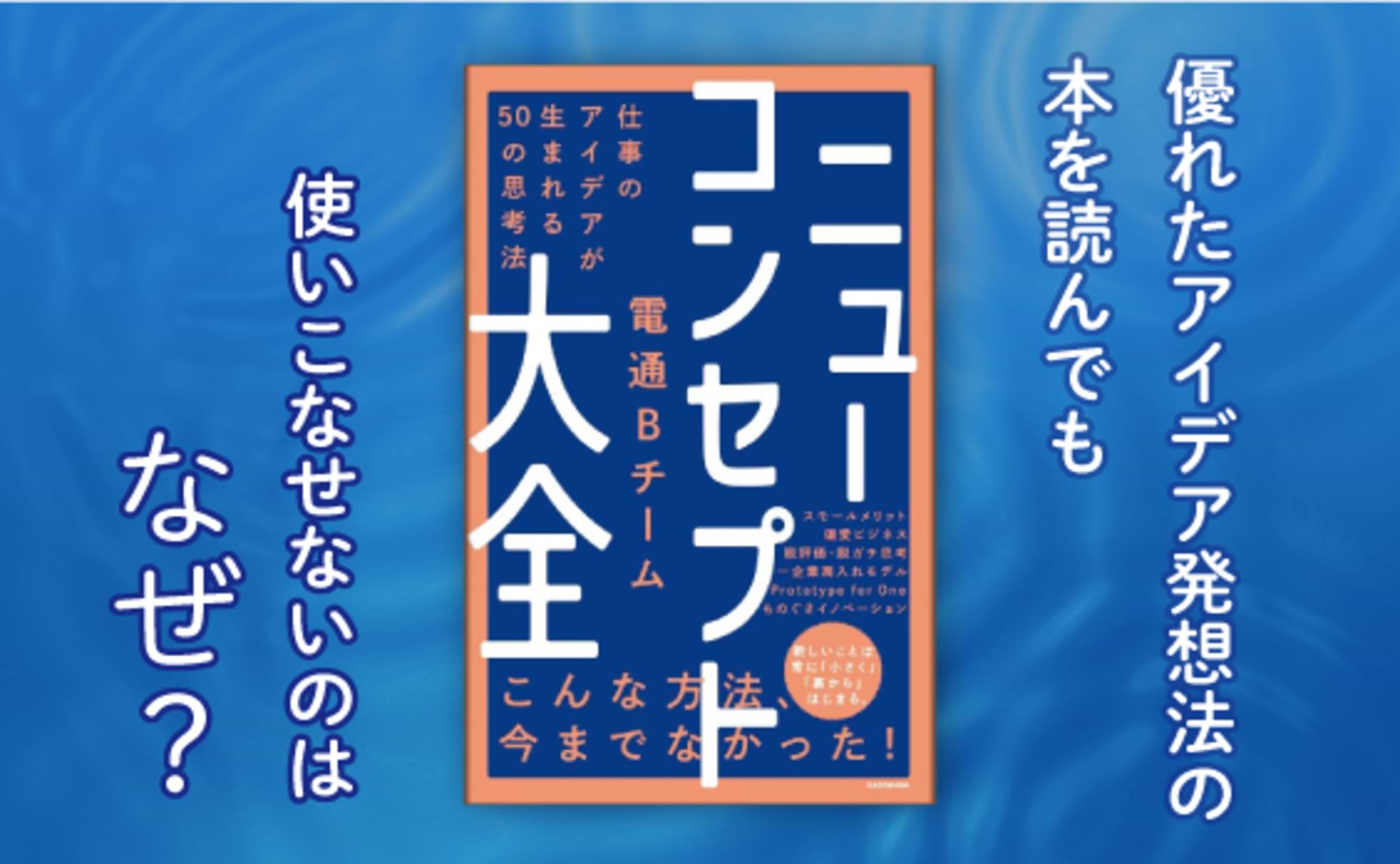
Shimizu: Sales-wise, the entire corner sold over 100 copies. First, "The New Concept Encyclopedia" ranked #1 on SHIBUYA TSUTAYA's business book chart for two consecutive weeks. Plus, the display itself was featured on "King's Brunch," making it a project that also resonated well with the media.
Tobita: Among the books selected by Team B members, which one was the most popular?
Shimizu: The top seller was "Science Night Talks in a Corner of the Galaxy," selected by Shunsuke Nakatani (B Team researcher in charge of "Future Predictions"). Second place was "That Worry? Philosophers Already Have the Answer," selected by Shohei Kobayashi (researcher in charge of "Philosophy"). Overall, books on philosophy and architecture were popular. SHIBUYA TSUTAYA is strong in self-help books, so maybe there's a connection between that and philosophy.
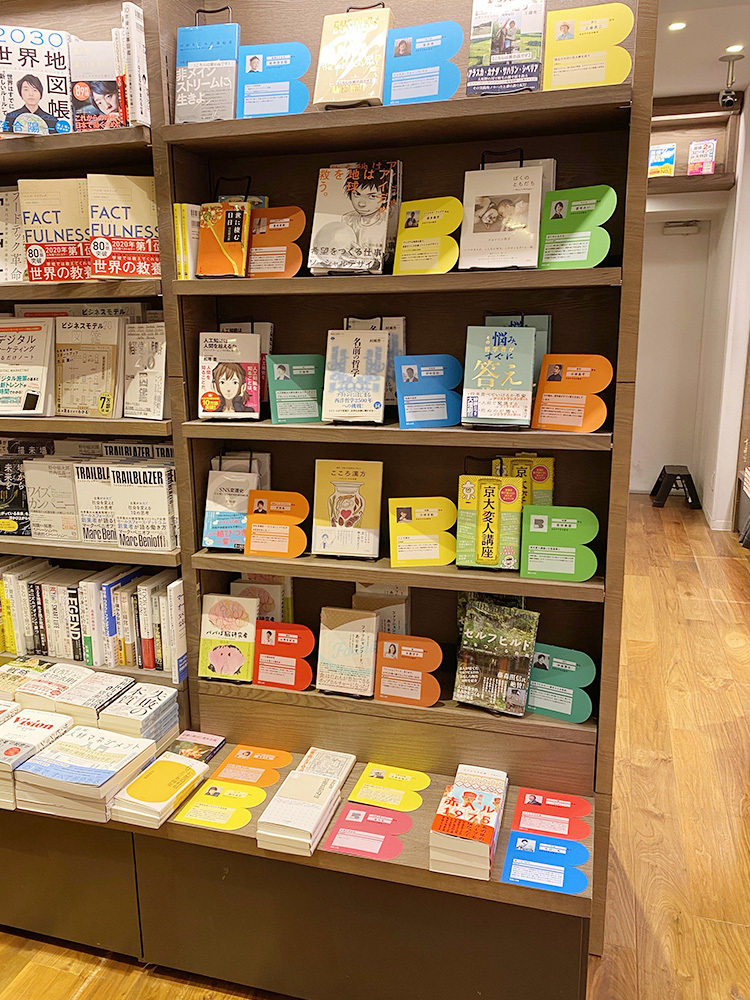
Takahashi: What was interesting about this project was how the descriptions for each book placed on the sales floor were written with Team B members' "B-side perspective." For example, when Keisuke Okuno, the architecture researcher, introduced the book "The New Book of Staircase Space," it was impressive how he wrote about the highlights in a way that was understandable even to people unfamiliar with architecture.
Shimizu's B-side was his "channel-surfing ability" that could be put to use in Shibuya.
Takahashi: Do you personally have a B-side, Mr. Shimizu?
Shimizu: In my case, it's all work, so I don't really have a distinct B-side. But I'm interested in everything. For example, right now I'm totally hooked on the Shiki Theatre Company. That interest also started because of work. A little while ago, I got really intrigued by erotic and fetish stuff, so I went to "Department H," Japan's largest fetish event held in Uguisudani.
Tobita: What kind of situations flip that interest switch for you?
Shimizu: It's definitely when I'm talking to people. That's the only way.
Tobita: So, did someone who seemed like the embodiment of eroticism and fetishes just appear in front of you then? (laughs)
Shimizu: Exactly, exactly. While talking about work, during a tangent from the main topic, they mentioned, "Oh, that world exists?" and I went right away.
Tobita: Shimizu-san, you might have this kind of fluid "B-side" that follows people's hidden aspects. It reminded me of that character in the manga "HUNTER×HUNTER" who could copy people's abilities. Like you absorb the B-side of whoever you meet and gradually make it your own (laughs).
Shimizu: (laughs)
Takahashi: Definitely. The "B-side" often carries this sense of "I have to decide on something," but listening to you, Shimizu-san, makes me think maybe it doesn't have to be just one thing. I'd love to hear about a book you're currently recommending, given your fluid B-side.
Shimizu: Right now, I'm recommending "The Complete Guide to Self-Study: 55 Techniques for Those Who Absolutely Refuse to Give Up on Learning." It's like knowledge zapping.
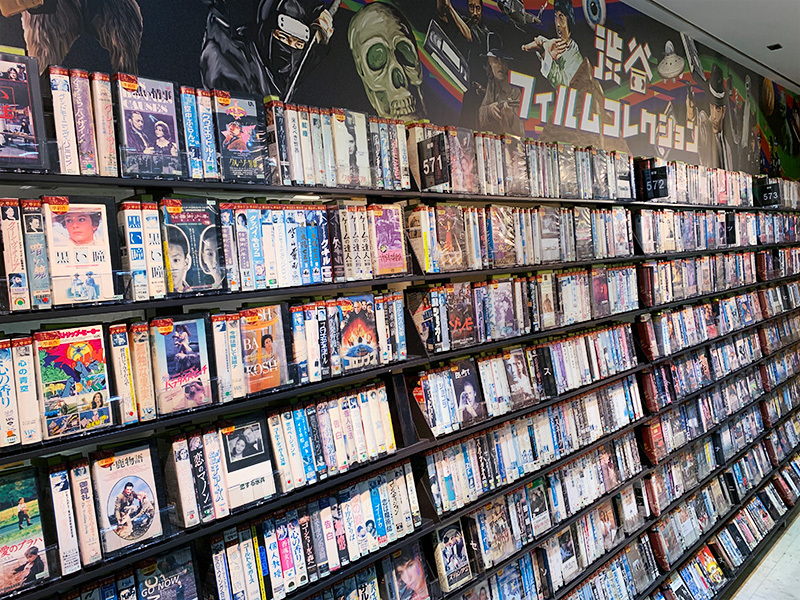
Takahashi: "Zapping" sounds just like you, Shimizu-san. Talking to all kinds of people, zapping through their B-sides, and constantly coming up with new ideas. SHIBUYA TSUTAYA always has all kinds of projects going on, right? Like the "Shibuya Film Collection," where you displayed VHS tapes of movies and dramas in-store, or the "Shibuya Cinema Navi" project collaborating with local theaters, featuring a section curated with "films to watch before or after seeing the main feature." Are those projects based on whatever interests you and the staff have at the time?
Shimizu: The VHS project was more of a means to an end—specifically, how to better serve TSUTAYA's core mission of "enhancing the movie-watching experience." Since we have many movie-loving staff members, we got everyone involved.
Takahashi: What's fascinating about Mr. Shimizu is that when he finds something interesting, he just goes, "Okay, let's try it," and makes it happen with this incredible speed. Is there always this mindset of putting things into practice immediately once you decide to do something?
Shimizu: That's the mindset. You have to take action and get results—good or bad—to grow. Shibuya is full of customers looking for something interesting, and it's also full of people wanting to challenge themselves here. I wanted to use the store to match those seeking fun with those wanting to try something exciting.
For example, there's this guy called "O-Koto-kun" who says, "I want to do a Budokan live show with just my koto!" He often plays the koto right in front of the shop. You just have to ask, "Why are you doing that performance here?" (laughs). It's a city where curiosity never runs dry – "Why?" – and you meet so many people. Of course, it's a business, so we have to make a profit ( ), but even within that, I want to challenge as many interesting things as possible.
Attractive projects are born from "passion first"
Tobita: When someone brings you a project from outside, what criteria do you use to decide, "Let's give it a shot"?
Shimizu: There are roughly three. First, whether the people bringing the project have passion themselves. It's crucial that they genuinely want to do it and are enjoying it. Second, the perspective of whether customers will be happy. I imagine which customer segments are likely to enjoy it. Third, I consider the "risk of operating at a loss" from a profitability standpoint before making the final decision.
Takahashi: I really liked that the profitability discussion came last (laughs).
Tobita: I was also really struck by how you started with passion.
Takahashi: It just naturally flowed that way, didn't it? I feel like these three criteria could also be seen as a mindset for leveraging people with B-sides within an organization.
Tobita: The reason all SHIBUYA TSUTAYA's initiatives feel so edgy and interesting is because they prioritize the passion of the planners above all else. Passion first, you could say.
Takahashi: Passion first! Absolutely!
Shimizu: By the way, I think "making money" and "creating something interesting" are completely separate skills. The root of a content's appeal is that it's "interesting for the customer." That comes first. As for how to monetize it, smart people can figure out plenty of ways. I think it's okay to separate those two to some extent.
Takahashi: Huh, interesting! So it's not just that there's a market, so we come up with interesting ideas. It also works the other way around: " " "This is fun, so let's figure out how to monetize it somehow."
Building a Strong "A-Side" to Support B-Side Activities
Tobita: May I ask what your impression of Dentsu Inc. B Team is, Shimizu-san?
Shimizu: As a premise, their level of skill, experience, and resources on the A-side is high, and on top of that, they're seriously committed to the B-side too. That makes them a rare entity.
Remember when we had a session with Team B to brainstorm ideas on "How can we make SHIBUYA TSUTAYA more interesting?" They first objectively explained "This is where SHIBUYA TSUTAYA's value lies," then proposed methods to communicate the store's appeal to a wider audience.
They possess a wealth of A-side expertise unique to an advertising agency, while simultaneously offering numerous B-side perspectives like, "If it's interesting for customers, here's another angle." Whatever we threw at them, the responses always felt spot-on.
Tobita: Are there any projects within SHIBUYA TSUTAYA that originated from the staff's "B-side" approach? Since it's TSUTAYA, I suppose many people see the "A-side" work—movies—as also being their "B-side"...
Shimizu: It's true, many staff members have their B-side become their A-side. Consequently, they tend to be pretty bad at business (laughs). They'll create displays thinking, "I love this movie, I want to share it!" and that becomes their A-side work. Conversely, the people who really focus on "What will definitely sell?" end up being the B-side presence at SHIBUYA TSUTAYA.
Tobita: You launch so many projects. How do your planning meetings actually work?
Shimizu: Most often, we just throw out a "theme" to the staff and then decide the details through sessions with me. For example, "We obviously can't make official Johnny's merchandise ourselves, but how about finding a way to create goods that Johnny's fans would buy, without going the conventional route?"
Tobita: That's an excellent theme to start with! (laughs)
Shimizu: We have many staff members who are huge Johnny's fans. We've always worked hard to recommend Johnny's merchandise as a store, and phenomena born from SHIBUYA TSUTAYA's projects have been featured extensively in the media. So, I wanted to create something that would delight Johnny's fans even more while also being commercially viable, which is why I pitched it as a theme.
Tobita: When ideas for the theme come from staff, picking which ones to implement is tough. Do you have criteria for what ideas to keep, Shimizu-san?
Shimizu: I'd say it's about seeing a potential "winning edge," even if it's small. Ultimately, we want to connect it to business. We consider things like whether it has the potential to grow significantly or if it smells like money.
Takahashi: Beyond just being interesting, the perspective of "Will this actually make money?" is incredibly important. The B-side is passion, but the A-side needs the ability to land properly as a business.
Tobita: What's enviable about SHIBUYA TSUTAYA is that it's a workplace where everyone's passion becomes their core focus. They can channel that passion directly.
Takahashi: Whether it's movies or Johnny's, it's precisely because these workplaces gather staff with diverse passions that having someone like Shimizu-san handling the zapping ensures it ultimately translates into business. And perhaps because the manager of has such broad interests, they can skillfully combine them to come up with projects from various angles.
The Original "A-Side" Becomes the "B-Side"!? The B-Team's Method for Creating New Ideas
Takahashi: Finally, could you share your thoughts on the theme of this series: "Why Japan Needs B Teams Now"?
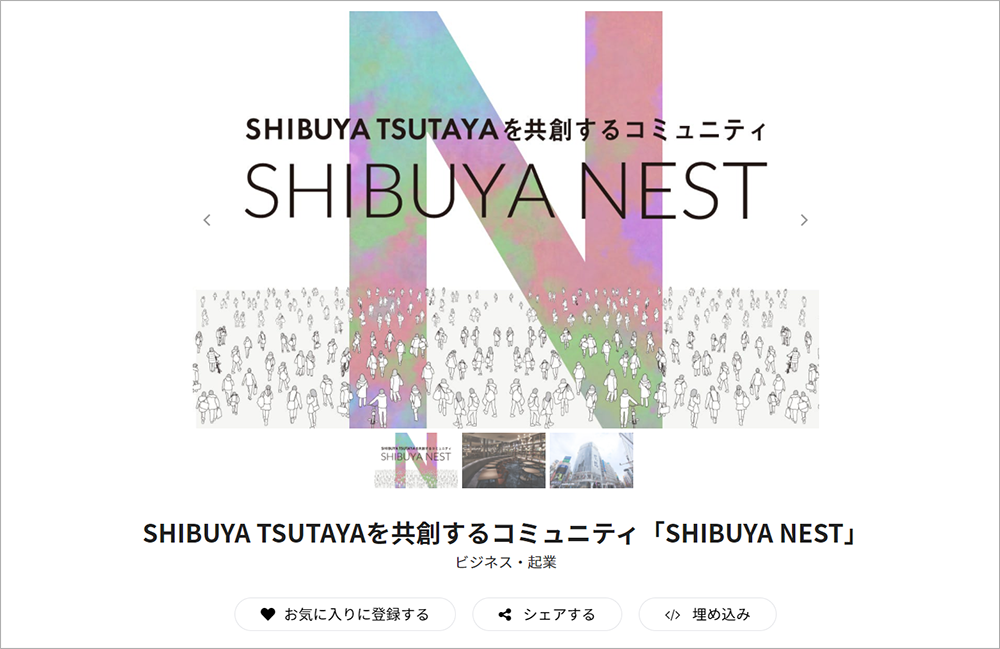
Shimizu: The B-team mindset is absolutely essential. There's no doubt about that. In terms of our project, we launched an online community called "SHIBUYA NEST" in August 2020. Under the catchphrase "Make Shibutsu your own," about 30 members are actively participating within the community. Members include a vegetable sommelier living in Itoshima, Fukuoka; an esthetician from Nagoya; people in government; designers; hairdressers... People from all over Japan and various professions have joined, and this has sparked ideas we've never had before.
For example, around the same time, we also launched a YouTube channel called "Shibututa Channel." But when our staff tried to come up with content for it, we found ourselves stuck by this weird internal hurdle: "We have to protect the TSUTAYA brand," "It has to be cool or we can't release it." We couldn't move forward at all. But when we created the "SHIBUYA NEST" channel and asked community members to come up with content, interesting ideas started pouring in. It made us realize, "Let's drop those weird barriers and just try it."
SHIBUYA NEST became the "B-team" for SHIBUYA TSUTAYA, solving problems we couldn't tackle with our A-side, conventional approach.
Tobita: So, the "A-side" work of community members like farmers and hairdressers became the "B-side" within the SHIBUYA NEST space, giving birth to entirely new ideas. This structure, where the original A-side becomes the B-side by gathering in a specific space, felt like a new way to build a B-team.
Takahashi: I think the key word in the SHIBUYA NEST case is "personalize." It's like a rallying cry that makes everyone want to pour their passion into it. It's truly fascinating how B Teams formed under that banner and actually produced new projects and content.
The word that stuck with me most today is "passion." When you try to make something your own, your passion seems to intensify. Building teams that way creates something new. I learned so much (laughs).
Tobita: It's like, instead of each person searching for their own B-side, if you create a shared A-side during team formation, the original A-side of the people who gather naturally becomes their B-side. I thought this was a great example of how to build an interesting team that could spark all kinds of new ideas in Japan. Thank you for the fascinating discussion!
Shimizu: Thank you so much!
Was this article helpful?
Share this article


Newsletter registration is here
We select and publish important news every day
For inquiries about this article
Back Numbers
Author

Yusuke Shimizu
Culture Convenience Club Co., Ltd.
SHIBUYA TSUTAYA Store Manager

Tomochika Tobita
株式会社電通
5CR Planning Bureau
CMプランナー