
Note: This website was automatically translated, so some terms or nuances may not be completely accurate.
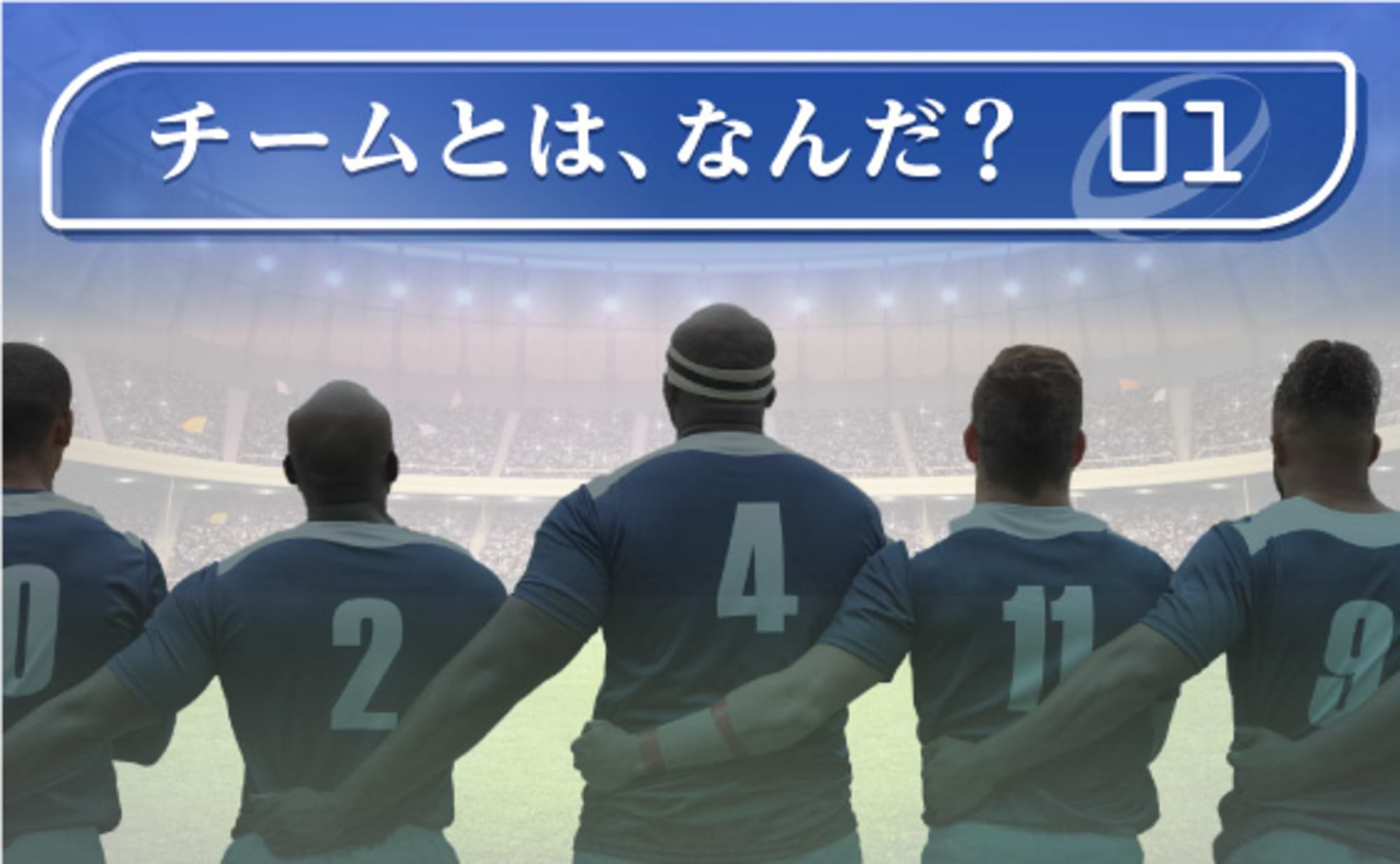
 What is a team? [2/6]
Collaboration is born from communication.

Toshiro Murase
Waseda University
This series asks Professor Toshiro Murase of Waseda University about the essence of communication. In this industry, terms like communication, collaboration, relationship, and engagement often appear as foreign words, but what exactly are they? Professor Murase provides a clear explanation.
The Workplace Should Be an "Interesting Place"
Murase points out that becoming engrossed in something makes the workplace and work interesting. "Companies often say things like 'Achieve results' or 'Don't work overtime,' right? But that's not interesting. If it's not interesting, then neither loyalty to the company nor motivation for work will arise."

Associate Professor, Waseda University School of Commerce. After graduating high school in 1997, he moved to the United States. Earned his Ph.D. in Industrial and Organizational Psychology from the University of Central Florida in 2011. Served as a postdoctoral researcher at Northwestern University and Georgia Institute of Technology before teaching at Roosevelt University in Chicago. Assumed his current position in September 2017. Specializes in leadership and teamwork research.
We often hear discussions about what leadership and followership should be. But when you put it this way, it really clicks: "I don't think followership is just about being a good little follower and not disrupting team harmony. It's about telling people in other departments, 'This is what I'm passionate about,' and spreading that sense of shared purpose. Don't you get excited when the dots connect? I think we should spread that kind of excitement much, much more."
Everyone thinks—or rather, has always thought—that companies are entities that provide a place and bind people with salaries and benefits. Being bound is restrictive, yet it offers a certain sense of security. Honestly, when told "Alright, let's transform! Transform now!" within that security, it's confusing. But when someone says, "Let's all do something exciting together!", doesn't it bring back that childhood sense of excitement?

Diversity is making work harder
Mr. Murase points out that the biggest problem with diversity is that it makes work harder. "I don't think the old way of working was perfect, but it's true that the environment and the way people worked were aligned. Of course, there were issues like power harassment or sexual harassment, but the direction everyone should move in was clear. However, when we start prioritizing diversity, everyone loses sight of the shared direction we should be aiming for. It's like too many cooks spoil the broth. Of course, diversity is important, and I want women and younger generations to thrive. Mid-career hires and foreigners should also be given opportunities. But we haven't yet found the ideal way to leverage that diversity."
According to Mr. Murase, establishing "role models" is crucial. It might sound like some old-fashioned idea of "forcing people into molds," but it's not. "Increasing entry points is easy. For example, saying 'We're actively hiring women,' or 'We've increased the ratio of female executives.' But things that aren't established as a system don't last. Women start thinking, 'What? It's still just the old guys calling the shots?' and they drift away."
Murase points out that we should create systems to harness diversity. This really struck me. You're good at drawing, aren't you? You're good at writing, aren't you? You're good at calculations, aren't you? So just do your own thing? We won't bother you. This approach creates nothing. No collaboration happens. Because there's no communication. Diversity is difficult. But precisely because it's difficult, when it comes together, it sparks unprecedented revolution.

What does "spark" mean?
When asked by the author, "What makes a bad team?", Mr. Murase answered: "In a word, it's when the goal isn't clear." It means only individual responsibilities are defined, and there's no shared goal everyone can commit to. "Workplaces usually have certain habits – customs, rules, things like that. I think everyone gets 'sparked' when you break through that pattern."
It's been a while since I heard the word "bounce," but it feels fresh. A leader within an organization gathers the "breath" of each team member and brings it to "bloom." To achieve this, create a "playground" – a "frame" – and within that frame, let them do whatever they want to their heart's content. I know that sounds like I'm writing from a superior position, but if someone told me that, wouldn't I want to bounce right back? I realized anew that if you just show up on time every day and operate on unspoken understanding with a "count on me," well, you're not going to bounce.
Companies often demand innovation, but when someone says, "Let's try it! Let's play around!", it somehow sparks motivation. "If we all just aim for 80 points, we'll never achieve innovation. Sometimes we'll hit 30 points. But occasionally, we'll get 120 points. That's innovation. Even consistently hitting 70 points is fine. Creating that kind of environment is the most important role of executives and managers." (Continued in #03)

[Editor's Note]
The term "work-style reform" has been bandied about for quite some time. But how should we actually reform? We can spout endless platitudes about creating sustainable societies and companies by boosting efficiency, eliminating all discrimination, leveraging digital tools, fostering creativity, and ensuring everyone finds meaning in their work... Yet when asked, "So what should we actually do to achieve that?" both people and companies suddenly fall silent. That's because reform itself has become the goal, lacking any vision for what comes next.
Mr. Murase taught me the perspective that we should focus on these very points. For example, gender-free itself is a good thing. But gender equality isn't the goal. It's about men and women interacting and working on equal footing. What matters is what kind of future we can create beyond that. Too often, the conversation ends with something like, "We've achieved over X% female executives and managers. Therefore, our company is a cutting-edge organization. End of story." What's crucial is what comes next. My anticipation grows for Mr. Murase's clear explanations in this series themed around "team."

Was this article helpful?
Share this article


Newsletter registration is here
We select and publish important news every day
For inquiries about this article
Author
Toshiro Murase
Waseda University
Associate Professor, School of Business
Associate Professor