
Note: This website was automatically translated, so some terms or nuances may not be completely accurate.
 What is a team? [3/6]
Between Online and Offline (Part 1)

Toshiro Murase
Waseda University
This series asks Professor Toshiro Murase of Waseda University about the essence of communication. In this industry, where terms like communication, collaboration, relationship, and engagement often appear in succession, what exactly are they? Professor Murase provides a clear explanation.
The advantage of offline communication: Starting from "6"
This series delves into "the essence of teams" from a communication perspective. In #03 and #04, we explore the advantages and challenges of real-world versus remote communication. First, we asked Mr. Murase about the benefits of real (offline) communication. "To put it simply, it's about being able to start talking from '6'. By '1 to 5', you already understand each other. 'So, how's that thing going?' 'Yeah, right.' You know, all sorts of things. 'Wanna grab drinks tonight and talk?' That kind of thing. Conversations that wouldn't fly online at all move things forward. This, for better or worse, is the characteristic of real communication."
Murase's analogy of "starting from 6" means that both parties already understand each other—knowing each other's strengths and weaknesses. In soccer terms, it's like knowing to pass the ball this way to your teammate while you run that way.
To put it in technical terms, it's "tacit knowledge." This concept of "tacit knowledge" tends to be dismissed outright in modern companies. Companies relying on tacit knowledge are seen as doomed to fail. Just do it right, okay?" Bosses who give instructions like this are seen not just as useless, but as actively detrimental to the company. But Mr. Murase argues that this kind of communication is important.
"When you can't predict the other person or your partner's actions, people become guarded. This applies to both the one giving instructions and the one receiving them. It might sound paradoxical, but the act of predicting is passive. It's a sense of being moved by the other person—thinking, 'They'll probably move like this, so I'll move like that.'"
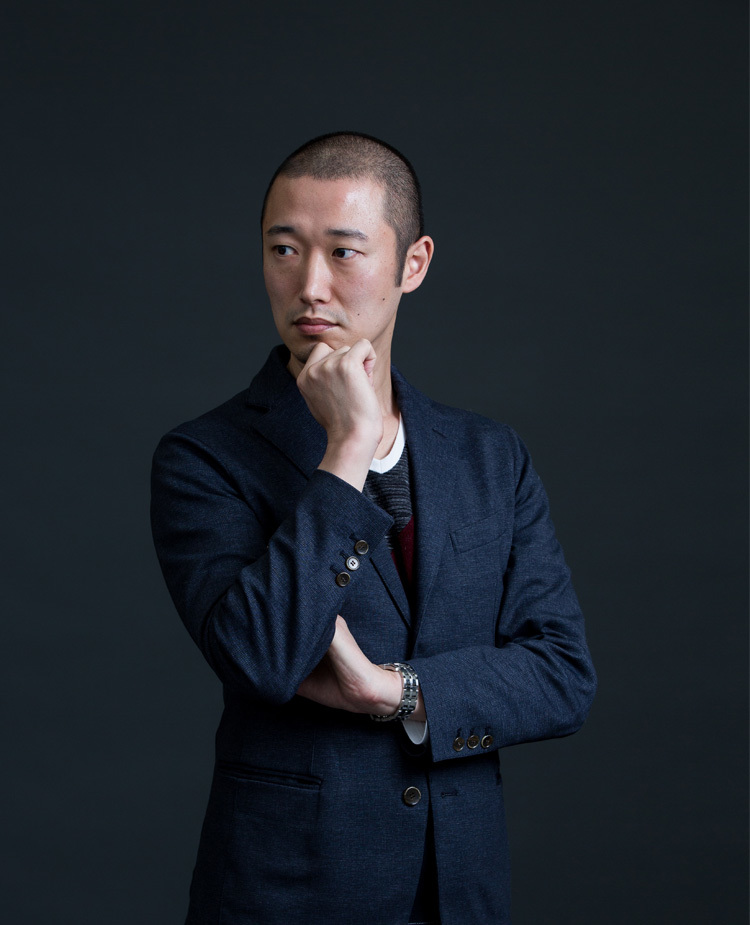
Associate Professor, Waseda University School of Commerce. After graduating high school in 1997, he moved to the United States. He earned his Ph.D. in Industrial and Organizational Psychology from the University of Central Florida in 2011. Following postdoctoral research positions at Northwestern University and Georgia Institute of Technology, he taught at Roosevelt University in Chicago. He has held his current position since September 2017. His research focuses on leadership and teamwork.
Murase points out that the key feature of this passive communication lies in its "three-dimensional" nature. It conveys all sorts of information—a person's character, background, past failures, and more—in a way that information from a computer screen simply cannot. It is precisely this three-dimensionality that enables communication like "Let's work together again this time" and "Leave it to me."
Social skills aren't that necessary on social media
On the other hand, Murase states that remote (online) communication certainly has its advantages. "I believe the greatest advantage is that social media can specialize in information sharing. While SNS and email etiquette are often discussed, compared to real-life communication, they are incredibly superficial. Precisely because they are superficial, they can easily hurt others' feelings, but they don't convey things like how someone holds their chopsticks or wears their clothes. In the old way of speaking, it's like revealing one's true nature. In face-to-face communication, you're constantly nervous and tense about things like the timing of a bow or the angle of a bow. Social media weakens those constraints on interaction."

I see, I thought. In real-life interactions, you exchange business cards, maybe arrange a meal together, and only once you've broken the ice do you finally get down to business. But in remote meetings, even with someone you've just met, you can immediately get comfortable and dive right in with "Let's get started." Even a new employee without established social standing can freely voice their opinions. Business opportunities can spring from that.
When I hear "social media," as a 53-year-old writer, I tend to get nervous, thinking it's bound by rules and etiquette and prone to causing harassment. But that's not the case.
"Face-to-face interactions involve various factors like social status, appearance, and mannerisms, making it take time to gain acceptance from the other person. Only after that can you voice your opinions or showcase your skills. Online communication allows for extremely efficient interaction without that time and effort. I believe this is the greatest advantage of online communication." (Continued in #04)

[Editor's Note]
It feels embarrassingly old-fashioned to say things like "I miss offline, real face-to-face communication" or "That was good." On the other hand, the sense of unease surrounding online communication is something people likely feel regardless of age. You might be hurting someone without realizing it, or you might be carrying emotional wounds without even noticing.
The more diverse and advanced our means of communication become, the more people struggle. Digital tools, meant to be convenient, often create extra work. You might spend half a day organizing files scattered across your computer screen. This leads people to focus their energy on processing information. They want to avoid contact with others and eliminate unnecessary tasks. But that approach can never foster rich communication.
The purpose of this series isn't to acquire "communication techniques." It's to explore the "team strength" that rich communication brings. I'm already looking forward to the insights Mr. Murase will share in the next installments.

Was this article helpful?
Share this article


Newsletter registration is here
We select and publish important news every day
For inquiries about this article
Back Numbers
Author
Toshiro Murase
Waseda University
Associate Professor, School of Business
Associate Professor