
Note: This website was automatically translated, so some terms or nuances may not be completely accurate.
 Behind the Scenes of the Blockbuster Film "10 Years to Live" [2/2]
Behind the Scenes of "10 Years to Live" (Part 2)

The highly talked-about film "10 Years to Live" (released March 4, 2022) has surpassed 2.25 million cumulative admissions and is nearing ¥3 billion in box office revenue, making it the top-grossing live-action Japanese film released this year (as of early May).
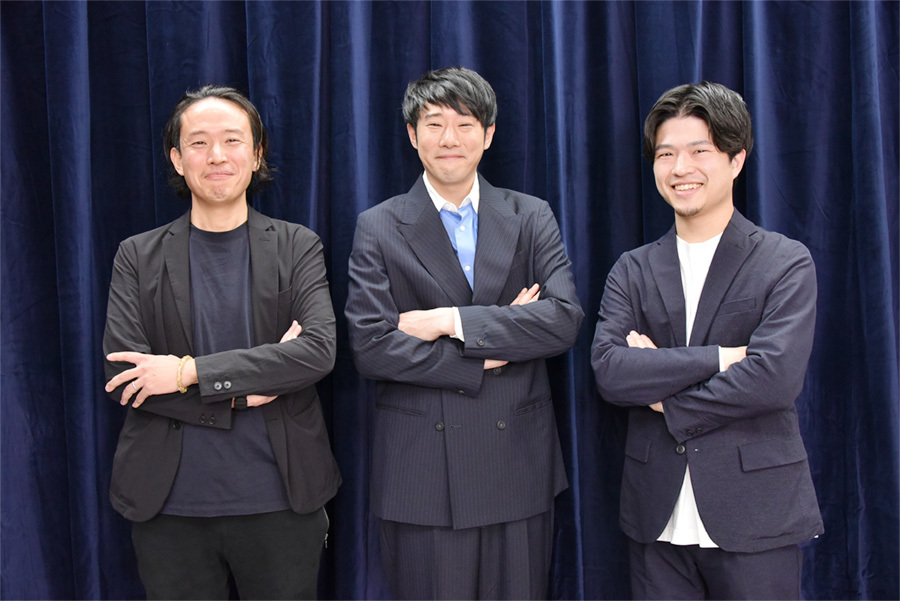
Director Michinori Fujii, who won six Japan Academy Film Prize categories including three top honors and is considered one of Japan's busiest directors for his combination of skill and popularity, along with Dentsu Inc.'s Shinjiro Kawai, who secured the film adaptation rights and served as producer, and Dentsu Inc.'s Koya Kitagawa, who supported the project as part of the production team, discussed their passion for the film and behind-the-scenes stories.
They discussed not only the behind-the-scenes of making "10 Years to Live," but also the potential that arises when an advertising agency—often associated with creating 15-second and 30-second commercials and managing sports events—joins a film production. These "comrades" who sweated together on set spoke at length about these topics.
You can't create anything without the resolve to let go of something
Kitagawa: Let me change the topic a bit. Director Fujii, you've also worked on corporate advertising like commercials. Are there moments when you feel that experience comes alive in filmmaking? Also, while making corporate commercials and making films are obviously completely different creative endeavors, what do you think is the biggest difference?
Fujii: There are many ways I feel my commercial work feeds into filmmaking. In my twenties, I couldn't make ends meet, so I also worked as a making-of director on commercial sets. It paid better than regular jobs, and I made a living doing making-ofs and editing. By my late twenties, I started getting opportunities to direct TV commercials. You spend a tremendous amount of time, redoing things over and over, being relentless. It's about that one frame (a 1/30th of a second image) being different. Like, "We're shooting in Hawaii, but the sky doesn't look Hawaiian—change it." I understood what he meant—he wanted those puffy Hawaiian clouds. From that, I learned this kind of obsession, this resolve not to compromise on things. I bring that to filmmaking too, and I want to embody that sensibility myself.
Kitagawa: Many people working as commercial directors today share the same dream as Director Fujii did back then—they aspire to become film directors someday. Hearing your story must have been really encouraging for them.
Fujii: Actually, I turn down almost all commercial offers now. Becoming a film director isn't easy. The idea that you can't make a living from films, so you make commercials to support yourself while pursuing film, is pretty widespread these days. But I still think you need the resolve to give something up.
Fujii: For example, there's mutual bias between commercial directors and film directors. Like, "That commercial director's wearing nice clothes, while we're working in rags." But that pride is uncool; we should all work with genuine respect for each other. How can we create an environment where we can bridge that gap? I talk about these things with cameraman Imamura too.
Kawai: I see. That's an area where companies like ours, not traditional film studios, might actually be able to make a difference.
Fujii: Exactly. With big companies—Warner, Toho, wherever—I want them to be big. I want them to be inclusive. So if they say, "We're big, we've got this," I can go, "Alright, leave it to us." Rather than hearing, "We don't know, we can't do it," if they say, "We're Dentsu Inc., we've got this," it feels cool—like, "Alright, count on you." For writers, it all comes down to one movie defining them. If they fail, there's no next time. It's like walking a tightrope. For me, the more reassurance I have, the bigger the gamble I can take.
Kawai: At the director's first promotional meeting, he said, "This absolutely has to be a hit. If it doesn't, it's meaningless. I can't let down the Fujii crew." I felt that determination and intensity, and of course, I felt it too. I think everyone there felt the same way.
Fujii: It's all about equality. The staff, the director, even the newcomers – we're all on the same level. If you think only the director matters, or that it's fine as long as the production company makes money, that mindset leads to cultural decline. We absolutely have to make it a hit and give back to the team. That's what I'm focused on.

Kitagawa: Thank you.
Does the work contain an "invention"?
Kitagawa: Director Fujii, what kind of film projects would you like to tackle next? What would you like to work on with Dentsu Inc., or what do you expect from Dentsu Inc.?
Fujii: I have one expectation. We creators inevitably grow up in a domestic environment. If you're a big company doing something as glamorous as advertising, a company representing Japan, I really want you to take us overseas more. If you suddenly throw us little guys out there, we'll get crushed. Let's do something like Stranger Things! I mean, a big project on a scale that represents Japan. I'm hoping for that kind of coolness. That would really move the times forward. People would think, "Oh, Dentsu Inc. is doing this kind of thing." Then next, we'd be like, "Us too! Us too!" It would create a flow showing that Japanese creators can properly build IP, that we can create interesting things from scratch ourselves. That's what I'd like to see from your company.
Kawai: Dentsu Inc. has 60,000 employees worldwide. I'd love for us to collaborate globally on something original and on a truly massive scale, like Stranger Things.
Fujii: This is something I learned from advertising seniors, and it's something I still value deeply: <WOW>. Just <Huh~> isn't enough—it's ordinary. It's not about routine work; it's about how to create <WOW>. I always think about what the invention is in each piece.
This time, the invention was capturing the four seasons. I'd be thrilled if we could achieve that sense of "We did it!" or "They pulled it off!" together. I don't see the point in just doing what everyone else is doing. People often talk about "rice work" and "life work," but honestly, who has time for lame "rice work"? I hope that one day, when you look back, your "life work" has become your "rice work." Having lived through lean times, that's how I feel.
Kitagawa: "No time for day jobs" really hits home for us salarymen, haha. We're so worried about what the company, our bosses, or our families think that we inevitably end up doing work just to get that paycheck. I'd never even considered the idea that your life's work might just become your day job without you realizing it.
Being a "cool industry" cultivates talent
Kitagawa: This is our final question: What are your current goals, Director Fujii?
Fujii: I love Akira Kurosawa, and as the Kurosawa bot mentioned, the old Japanese film industry was called a "dream factory." Everyone wanted to get into it—they heard the pay was good, there were stars, and it provided family security. Now it's the complete opposite: tough, low-paying, and dirty. I really want to change that.
For example, even a film director should wear stylish clothes. How can you decide what others should wear if you're not dressed well yourself? Or giving hair and makeup instructions with messy hair? That's not good. It's a comprehensive art form, so the director needs to study the most. If it's a cool industry that makes people want to join, then talent will grow within it. We won't make the working environment exploitative. And we'll let them create freely, play around. Work while you play. Plus, in the film industry, you get breakfast, lunch, and dinner! Ha ha. No other industry does that, right? Your work reaches your family back home in the countryside. I want to tell them straight up: there's no job more fun than this. Personally, I want to be someone who pushes more and more overseas works, Japanese works, Made in Japan, out into the world.
Kawai& Kitagawa: Thank you very much for today.

[Editor's Note]
At the very end of the three-way conversation, we were given just two minutes to ask questions. I hesitated, wondering what to ask Director Fujii. But from the questions I had prepared beforehand, I settled on this one: "The title '10 Years to Live' really resonated with me. Awareness of life is heightened these days—natural disasters, war, COVID-19. While we hear about '100-year lifespans,' we can't even see six months ahead. In this context, being told '10 Years Left' somehow really hits home. What thoughts did you put into this title, Director?"
Director Fujii's answer to this Zen-like question was clear. "What I wanted to convey through this film is 'live in the present.' It's paradoxical, I know." Rather than harboring vague anxieties or fears about tomorrow, ten years from now, or twenty years from now, it's about striving to live joyfully in the present. "Even if people assume from the title that it's a tearjerker, that's fine. Come to the theater ready to be moved," Director Fujii says. Of course, there are many scenes that will make you cry. But the moment you step outside the theater, I believe many people will be filled with the feeling: Ah, what a wonderful 'now' is right here.

Was this article helpful?
Share this article


Newsletter registration is here
We select and publish important news every day
For inquiries about this article

Author
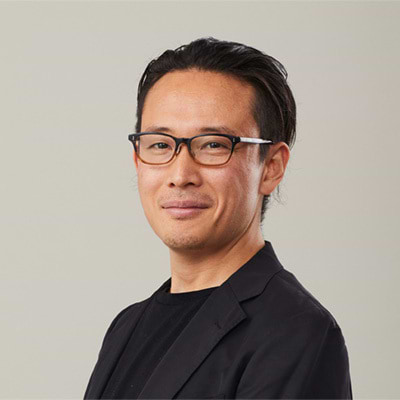
Shinjiro Kawai
Dentsu Inc.
エンターテインメントビジネス・センター IP・事業開発部
ゼネラル・マネージャー / 部長
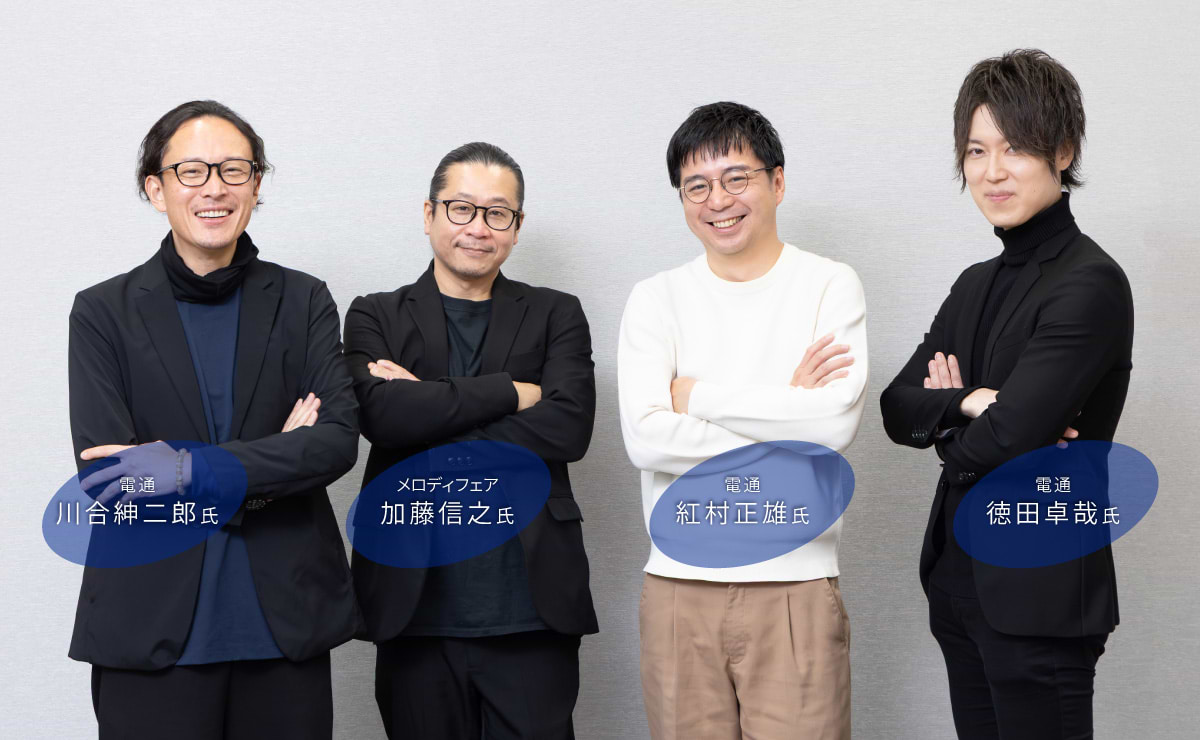


Kitagawa Kimiya
Dentsu Inc.
Content Business Design Center
Producer
