
Note: This website was automatically translated, so some terms or nuances may not be completely accurate.
 The Potential for New Urban Development Driven by Live Entertainment [2/2]
Nakano Unites as One! Entertainment Connects Us: Community Development for the Future
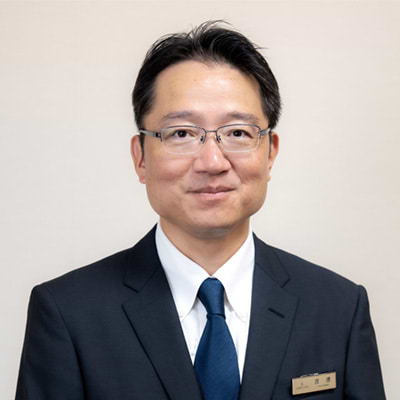
Takeo Watanabe
Nakano Sunplaza Co., Ltd.

Goka Kōjin
Nomura Real Estate Development Co., Ltd.
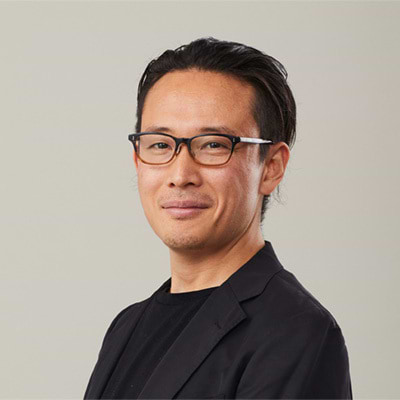
Shinjiro Kawai
Dentsu Inc.

Kitagawa Kimiya
Dentsu Inc.
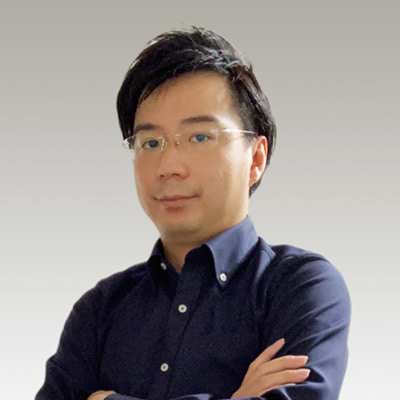
Masuo Benimura
Dentsu Inc.
For approximately two months starting in May 2023, the large-scale music event "Farewell Nakano Sunplaza Music Festival" was held to mark the end of Nakano Sunplaza, an icon of Nakano Ward beloved for 50 years.
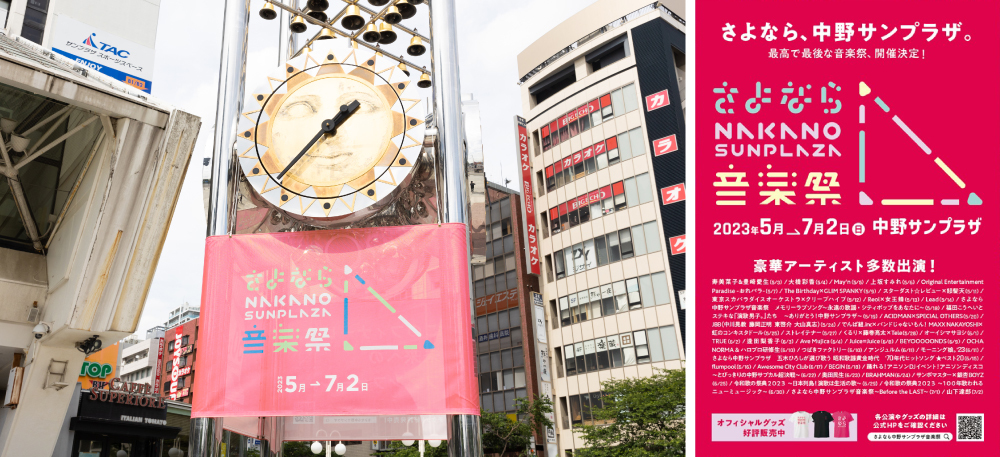
Over 200 artists participated, performing a total of 37 shows. During the event, extensive PR campaigns were conducted in collaboration with Nakano Ward Office and the four shopping districts surrounding Nakano Station. How was this event—which drew approximately 60,000 visitors by engaging not only artists and music fans but the entire community, fusing entertainment with community development—planned and brought to fruition?
Continuing from the previous installment, we speak with Shinjiro Kawai and Tomoya Kitagawa of Dentsu Inc., who served as overall producers for the festival; Masuo Benimura from Dentsu, who served as the festival's overall producers, along with Takeo Watanabe, Executive Officer and Head of the Administration Division at Nakano Sunplaza Co., Ltd., and Takanoori Goka from Nomura Real Estate Development Co., Ltd.'s Nakano Project Promotion Department, the lead company for the redevelopment project "(Provisional Name) NAKANO Sunplaza City" scheduled to open in 2029. They discussed the behind-the-scenes efforts and the potential for community development centered around entertainment.
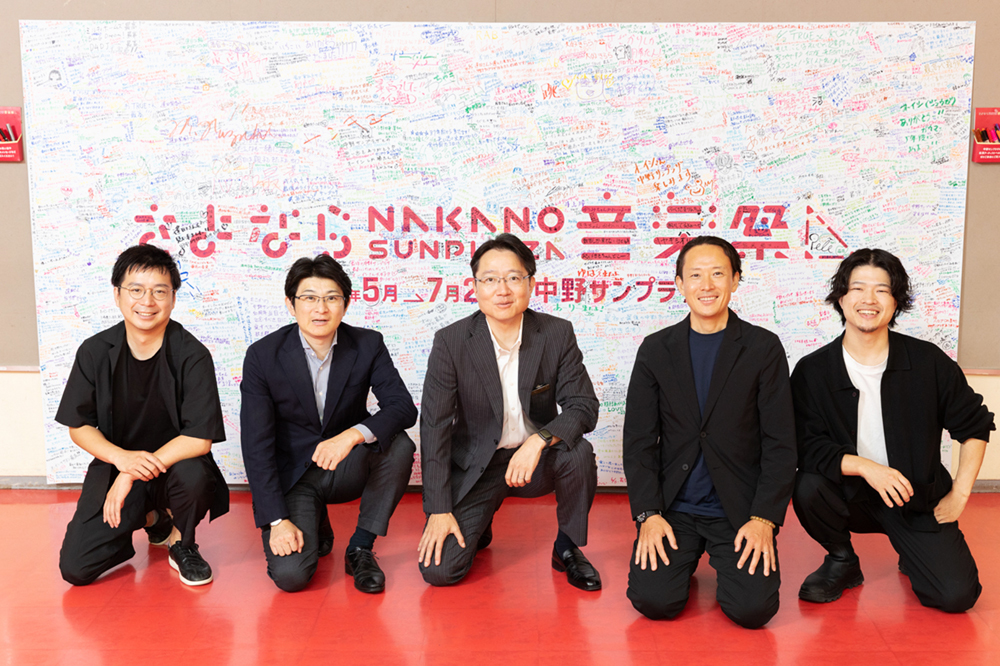
Four shopping districts team up for the first time to promote! An event bridging the gap between facilities and the town
Kitagawa: A key point for this event was the concept of "together with the city." Mr. Benimura and Nomura Real Estate approached the shopping districts for cooperation. What were your impressions after actually talking with them?
Goka: Based on the relationships we'd built with everyone beforehand, I felt from the start that the shopping district representatives would surely understand and be willing to join us. Precisely because they were looking forward to the new "(Provisional Name) NAKANO Sunplaza City" and the new town, I felt they would cooperate with the event.
Benimura: This time, we essentially took over four shopping districts near Nakano Station to display various OOH ads, and everyone was incredibly cooperative. They found the art graphics created by our creative team—modelled after Sunplaza—and the over 30 copy lines like "Goodbye Triangle, until we meet again" and "Every day, a divine episode."—really interesting and received them very positively. I truly felt the immense power of creative work.
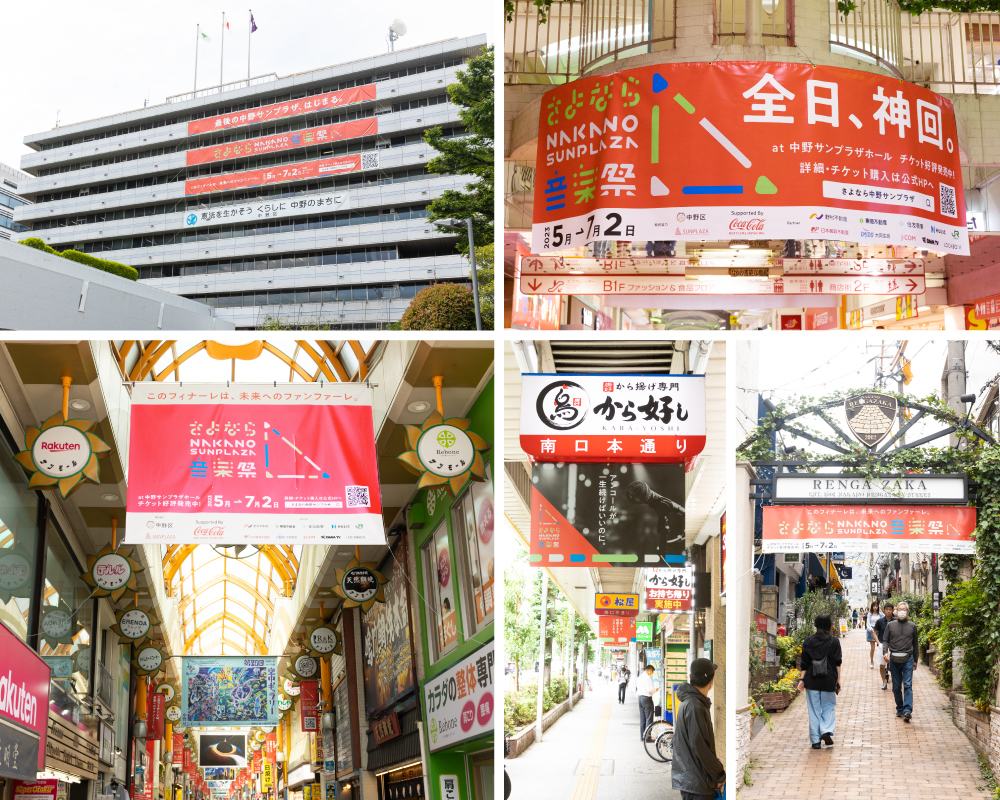
Benimura: According to the Mayor of Nakano Ward, this was the first time Nakano Sunplaza and the four shopping districts collaborated on something together. The shopping districts also wanted to support Nakano Sunplaza's final days and actively discussed what they could do. For example, they offered small discounts to customers presenting their festival ticket stubs. During the event period, the Nakano Sanmore Shopping District voluntarily played music by the performing artists, which seemed to be well-received. I think this initiative, which generated economic ripple effects not just for the artists themselves but also for the town and surrounding areas, aligned with what the local residents themselves wanted to do.

Kawai: Creating a virtuous cycle where the entire town unites around entertainment seems incredibly promising for the future. This time, as a way to give back to the local community, we invited several residents to nearly every performance. This initiative was only possible thanks to the cooperation of many players: the town, Nakano Sunplaza Co., Ltd., Nakano Ward, and the artists themselves.
Benimura: From the shopping district perspective, many said they knew Nakano Sunplaza as a place for meals or coming-of-age ceremonies, but had never attended a concert there. We received numerous comments like, "Finally getting that chance, participating in the live event was fun and made for great memories." I think narrowing the gap between the facility and the local community, even a little, in this way was a significant achievement.
Over 200 performing artists gathered, saying "Thank you for inviting us."
Watanabe: What was the feeling like for Kitagawa-san when negotiating with the artists?
Kitagawa: Since it was the first event, we had no established foundation. At the initial stage, we were approaching artists without knowing who else would perform, so there was anxiety. Yet, even so, many artists said, "We'll perform." I believe that was because of their affection and attachment to Nakano Sunplaza. Even without knowing what kind of event it would be, the cooperation of those who thought, "If it's to mark Nakano Sunplaza's final event, I'll participate," is what brought together over 200 people, I think.
Watanabe: From our perspective, it was truly moving that nearly every artist expressed gratitude for being invited. On stage, they shared their feelings about Nakano Sunplaza and memories from the past. They also included songs connected to Nakano Sunplaza in their setlists, even ones from their amateur days. That sense of specialness clearly delighted the fans too. The closure itself became widely recognized through the event, making it a truly excellent music festival.
Kitagawa: Ultimately, we were able to feature a wide range of artists, regardless of music genre—including enka and kayō music artists like Saburō Kitajima and Hiroshi Itsuki, figures from the anime and anime song culture that fits perfectly with this subculture town, and rock artists like Tamio Okuda and Straightener. Furthermore, there were unique collaborative live performances only possible here, like "Tokyo Ska Paradise Orchestra × CreepHyp" and "Sambomaster × Gingko BOYZ." Some stages even had the entire audience in tears, didn't they?
This year's tagline was "This Finale is a Fanfare for the Future." While the event's role in connecting to the future was an important theme, it was also great to see many first-time visitors drawn to the festival by this very event.
New possibilities for town development centered around the hall and entertainment
Kitagawa: The event concluded on July 2nd, and we now look ahead to the opening of the new facility, (tentative name) NAKANO Sunplaza City, in 2029, six years from now. We were able to hold a music festival worthy of bidding farewell to this hall with its 50-year history. I believe this event, centered on entertainment, served as the spark for the rebirth of Sunplaza.
Finally, could you share your outlook for the future development and operation of the NAKANO Sun Plaza, centered around the hall, for the city of Nakano itself, and what you consider important for entertainment-based urban development?
Goka: Through this music festival, I gained a tangible sense of what it means for a hall to become one with the city. I feel compelled to embody that vision in the new facility as well.
At Nakano Sunplaza, the hall was completely enclosed within the building, making it impossible to tell from outside who was performing. Therefore, for the new NAKANO Sunplaza, we want to implement initiatives where the hall's presence "seeps out" into the entire Nakano cityscape, as we saw this time. While the hall is the main focus, we want to make it a facility that serves as a hub for "broadcasting" in some way. For example, we could have the deck used by "Heaven Artists" (Tokyo Metropolitan Government's official street performer certification system and its license holders), or sometimes involve the hall itself to hold events for the entire neighborhood. In that sense, it would be great if we could continue working with Dentsu Inc. not just on hall operations, but also on promoting area management together.
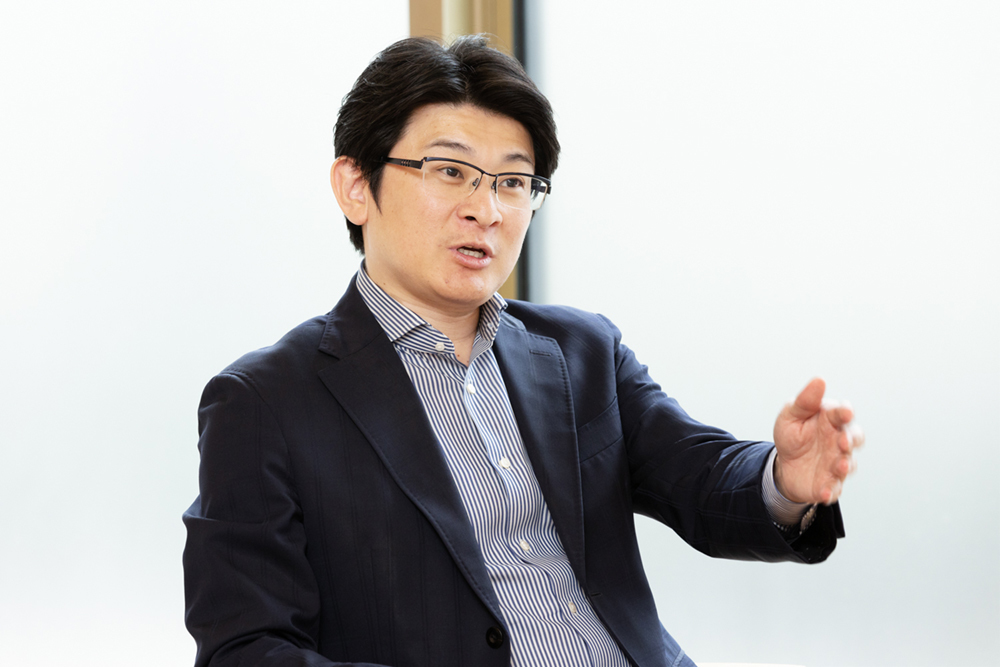
Benimura: Initiatives where the hall "spills out" into the city are crucial considerations for ensuring the continued importance of such a facility being located in front of Nakano Station. We need to keep thinking about this, both in terms of content and how to approach the physical structure of the facility itself.
Kawai: We definitely want to advance initiatives where the hall and entertainment contribute to the town. As Benimura-kun mentioned, if concertgoers don't just watch the stage and leave, but instead spend time exploring the town, eating, and drinking before and after the show, the significance of having the hall changes significantly.
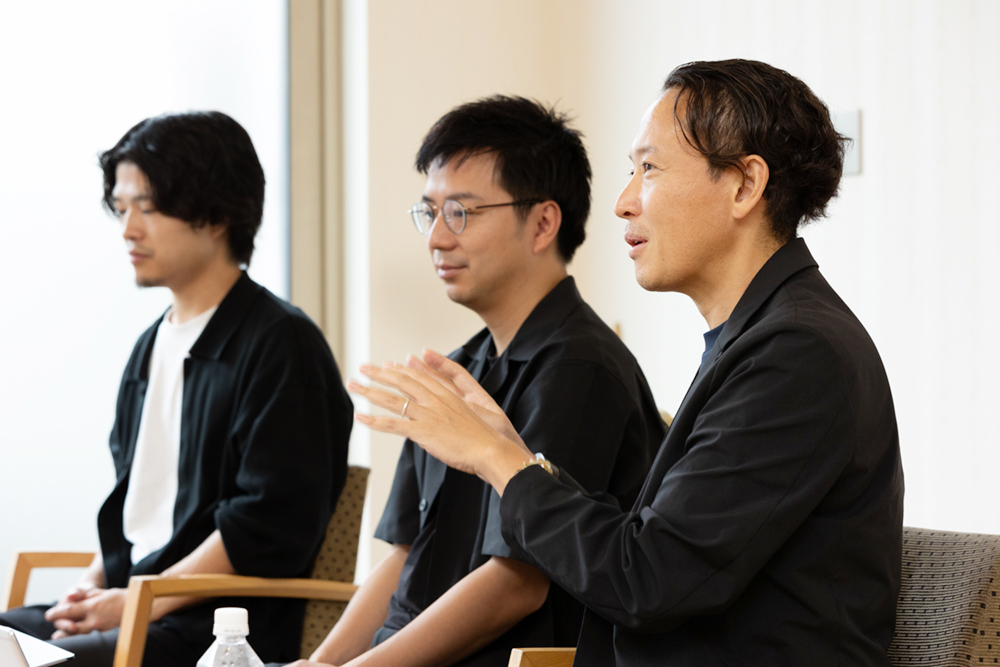
Kitagawa: Interestingly, many of the performers this time actually used to live in Nakano. I don't think that's a coincidence. It's a town where diverse people gathered and cultivated a unique culture, which is probably why so many artists and performers lived here. This isn't limited to Nakano, but for future town development and event planning, I think it's crucial to foster an approach where people with a deep connection to the area's unique culture and the land itself gather. That's how you create vibrancy and spark movements that spread outward.
Benimura: Additionally, this project addressed a local challenge: the closure of a facility that was an icon of the town, which was expected to temporarily reduce visitor numbers. By holding this music festival, we could leave behind a kind of legacy and communicate that the new Sun Plaza would carry this forward, building a community centered around the hall. I feel this perspective of solving each area's specific social challenges is crucial as a theme, even when working in other locations.
Kawai: The key point for this music festival was also approaching it from an urban development perspective. Seeing how many visitors shared their impressions of the city's OOH displays on social media, saying things like "The fanfare for the future is great, isn't it?" and watching it spread, really gave me a tangible sense that "entertainment can become a new starting point for urban development." Also, on the final day, July 2nd, many local residents naturally gathered in front of Sunplaza, reluctant to say goodbye.
Seeing this, I felt that committing long-term to a crowd-drawing facility as a starting point for town development requires crucial collaboration with the local community from an economic impact perspective. It's an important project that carries responsibility beyond that of an individual, but as a company. Moving forward, I want to create mechanisms where the "town," the "hall," and "entertainment" can become one. By gathering people and co-creating with them, I aim to advance initiatives that generate a virtuous cycle.
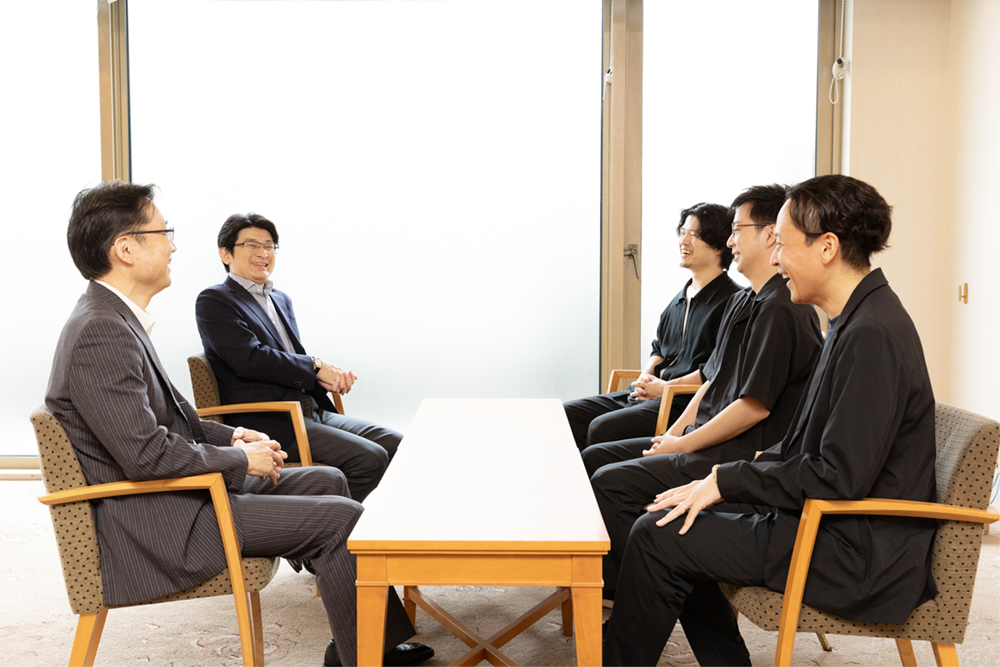
"Farewell Nakano Sunplaza Music Festival" Overview
● Event Period: May 2023 – July 2, 2023
● Venue: Nakano Sunplaza
● Number of Performances, Total Artists: 37 performances, over 200 artists
● Attendance: Approximately 60,000 people
● Outreach: Official Twitter impressions exceeded 7 million, trended on social media, and featured numerous artist posts. Covered by TV, newspapers, and other media outlets.

Was this article helpful?
Share this article


Newsletter registration is here
We select and publish important news every day
For inquiries about this article

Author
Takeo Watanabe
Nakano Sunplaza Co., Ltd.
Executive Officer, Head of Administration Division
Goka Kōjin
Nomura Real Estate Development Co., Ltd.
Business Creation Headquarters Nakano Project Promotion Department
Deputy Director and Business Division Manager
Shinjiro Kawai
Dentsu Inc.
エンターテインメントビジネス・センター IP・事業開発部
ゼネラル・マネージャー / 部長
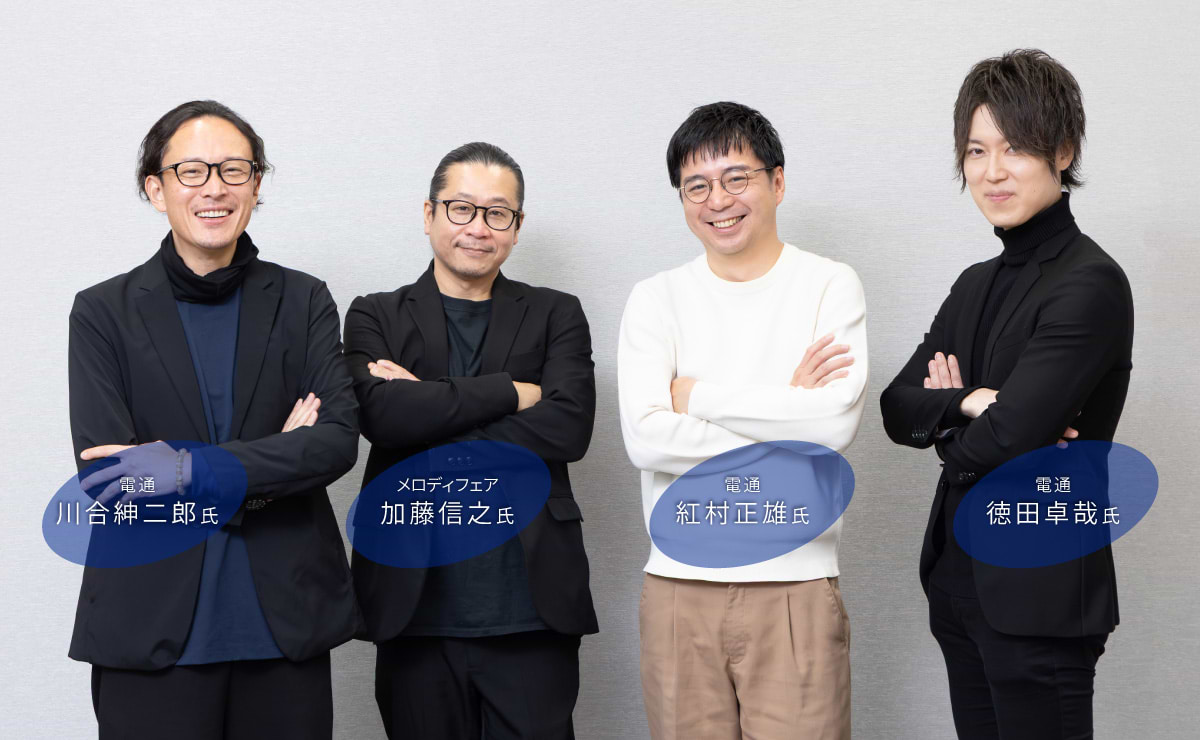

Kitagawa Kimiya
Dentsu Inc.
Content Business Design Center
Producer
Masuo Benimura
Dentsu Inc.
エンターテインメントビジネス・センター アリーナ事業部
Producer