Note: This website was automatically translated, so some terms or nuances may not be completely accurate.
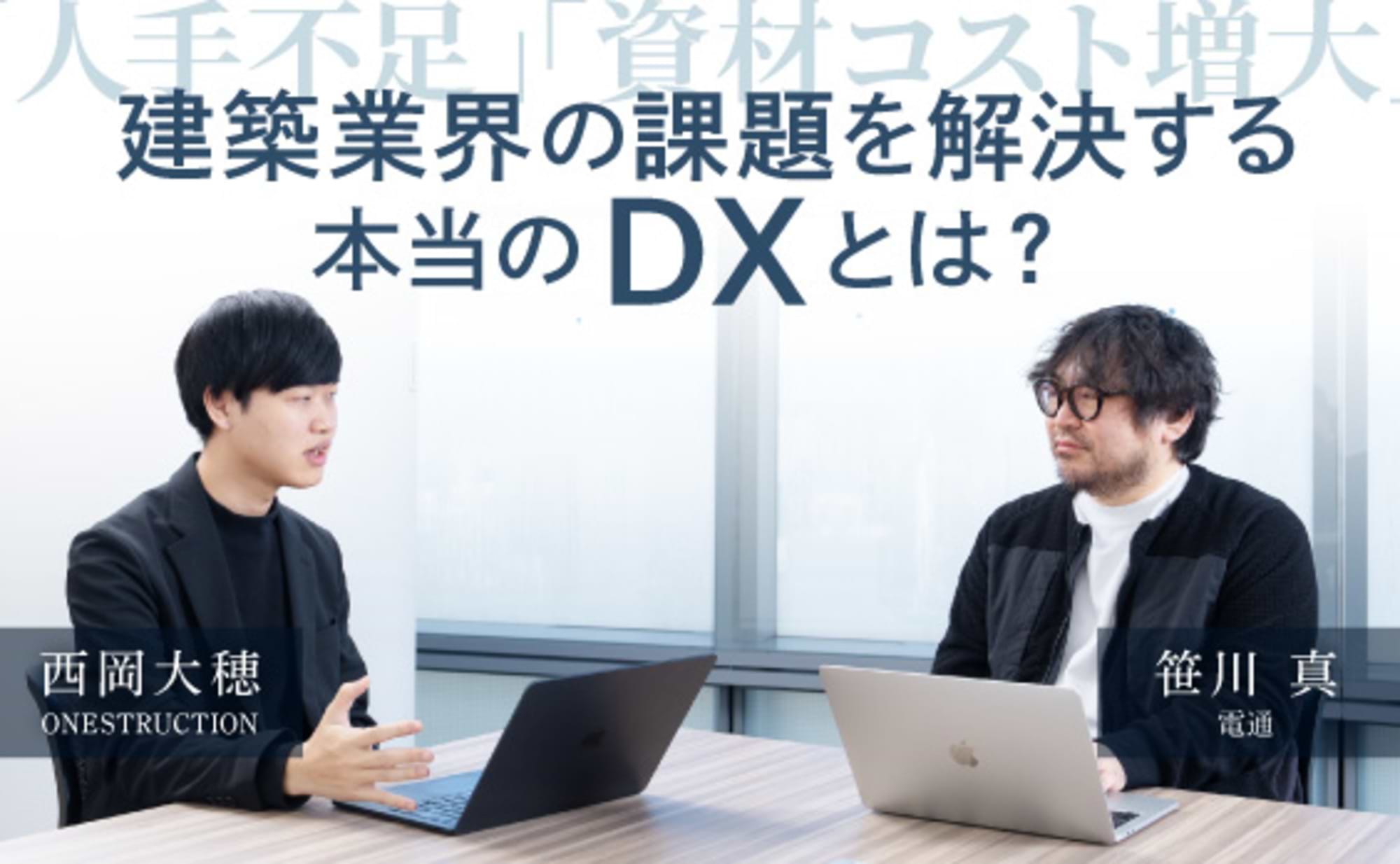
 Japan's "Small Giants": Small Companies That Triumph Against the Odds [6/7]
The president tackling cow urine fermentation learns the vision for "capital investment" from the COEDO Beer president.
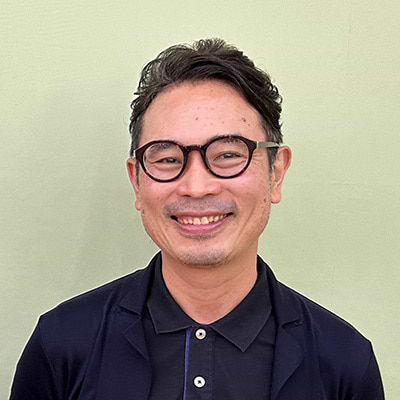
Shigeharu Asagiri
Kyodo Shoji Co., Ltd.
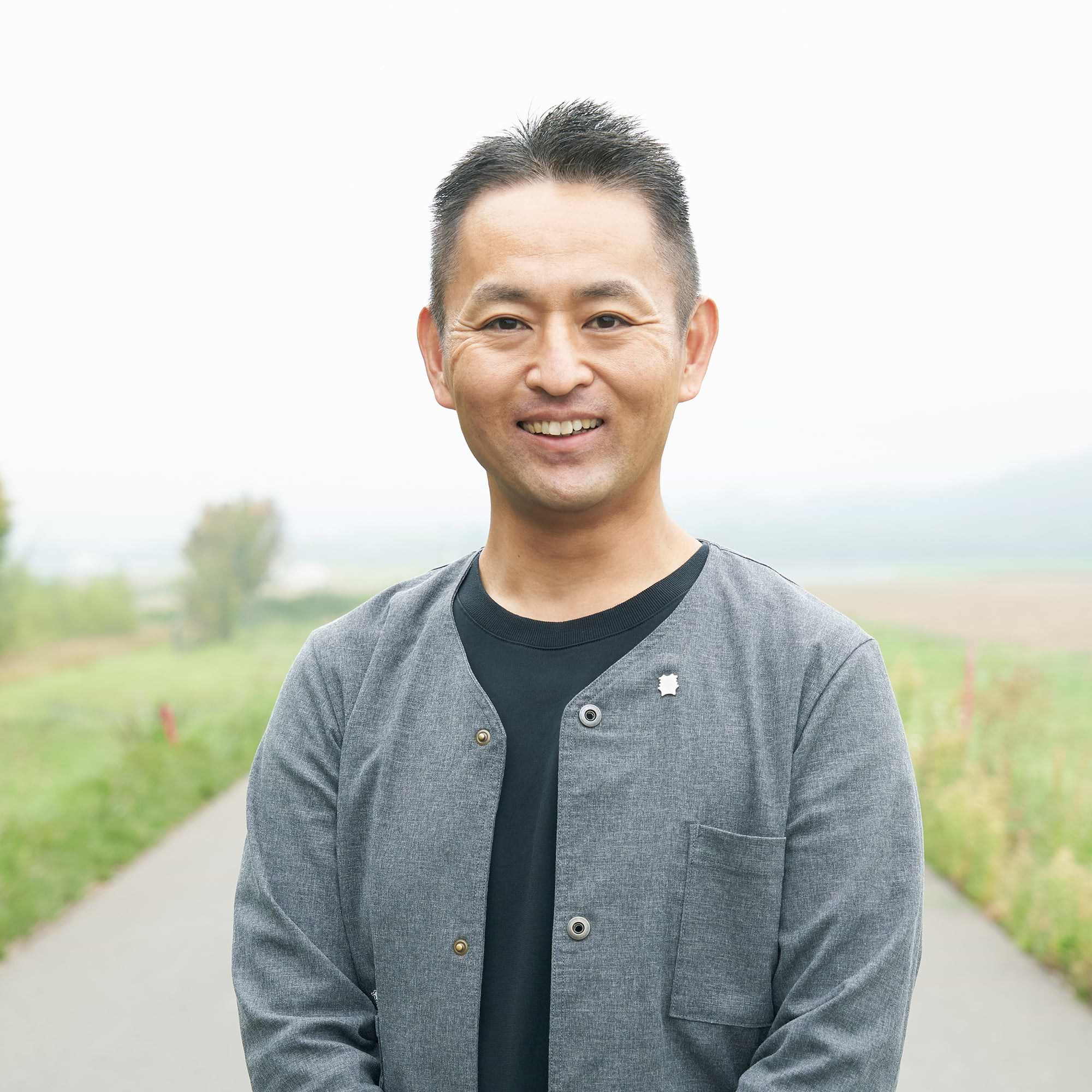
Makoto Kubonouchi
Environmental Daizen Co., Ltd.

Akari
Forbes JAPAN
Sasagawa Makoto
Dentsu Inc.
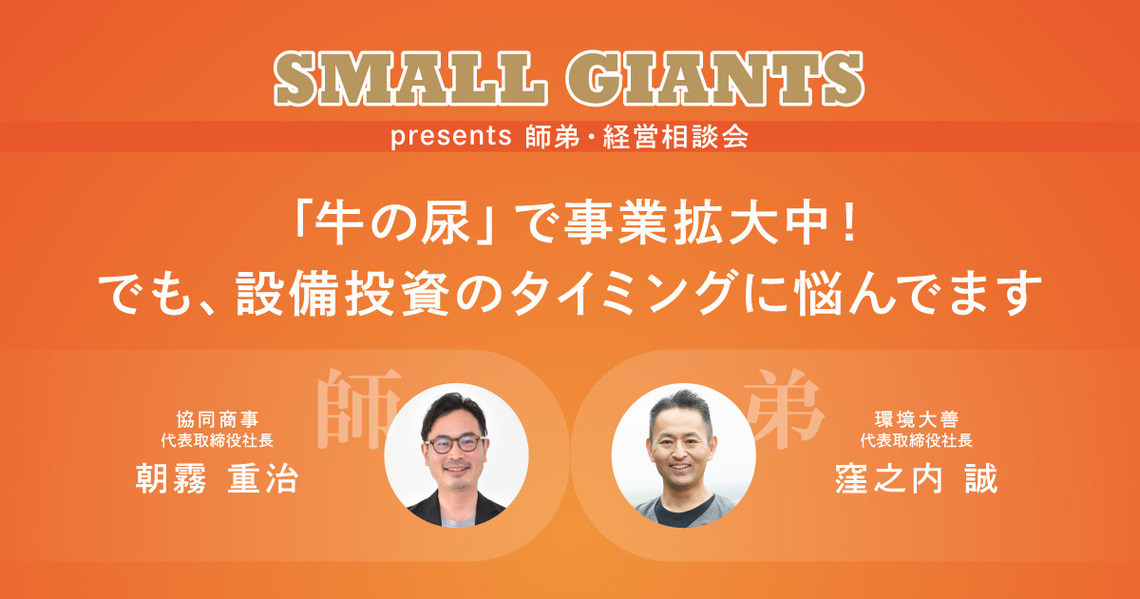
The "Small Giants" project, launched jointly by the global business magazine Forbes JAPAN and Dentsu Inc., seeks to discover companies across Japan that, though small in scale, are poised to take flight globally.
At the 6th Small Giants Award 2022-2023, "Kankyo Daizen" from Kitami City, Hokkaido, won the "Local Hero" award. This company pioneers an unprecedented upcycling business, using cow urine as raw material to produce deodorizing liquids and soil conditioners. However, President Makoto Kubonouchi faces a specific challenge.
It's the question of " How to time scaling up and equipment investment as the business expands? "
To address this common challenge faced by many Small Giants, Forbes JAPAN hosted an "Online Mentor-Protégé Consultation Session." The mentor was Shigeharu Asagiri, President of Kyodo Shoji (Kawagoe City, Saitama Prefecture), the company behind COEDO Beer, whom President Kubonouchi deeply respects as his "master."
Cow urine and beer—a combination that sounds dangerous. Yet the conversation between these two presidents, united by the common ground of "agriculture" and "fermentation," took an unexpected turn.
【Environmental Greatness 】
Aiming to improve water pollution and odor damage caused by dairy farming, a major industry in Hokkaido, the company neutralizes cow urine through fermentation processing and manufactures and sells "Good Bacteria Activated Water" utilizing the functional properties contained in the fermented liquid. Since 2019, under the banner of "Fermentation Management," it has been working to improve the global environment through a sustainable upcycling-based circular system.
【Kyodo Shoji】
Based around Kawagoe City, Saitama Prefecture, it operates a craft beer brewery producing the "COEDO Beer" brand and conducts business as an agricultural trading company. Considering the entire process from cultivation to logistics, sales, and food processing as integral to agriculture, the company engages in all aspects of the food cycle originating from agriculture. This includes organic produce cultivation guidance, processing, sales, logistics, beer production, food imports, and waste recycling technology R&D, operating as a comprehensive food enterprise.
"Fermentation" as a Bottleneck for Production Expansion
President Kubonouchi of Kankyo Daizen (hereafter Kubonouchi): I first met Mr. Asagiri in person at the Forbes JAPAN GALA party in December 2022. But when I started branding my own company, I was deeply impressed by the book "How to Start a Brand," co-authored by Mr. Atsushi Nakagawa, the 13th head of Nakagawa Masashichi Shoten, and Mr. Akihiro Nishizawa, who designed brands like "COEDO" beer. For me, Mr. Asagiri is such a significant figure that I could almost call him my "mentor."
President Asagiri of Kyodo Shoji (hereafter Asagiri): I wouldn't go so far as to call it a master-disciple relationship, but the roots of craft brewing are also in "agriculture." Your company handles fertilizers and soil conditioners, and livestock farming isn't that far removed from our business either. At the after-party for the GALA event, we were seated next to each other and had the chance to talk about many things.
Kubonouchi: I read in "How to Start a Brand" how you branded COEDO and tripled its sales. Our company also underwent a three-and-a-half-year rebranding process, followed by product renewals in 2021 and 2022, which have thankfully led to strong performance. However, I have one lingering concern.
It's about the timing for scaling up our operations and making equipment investments. We have plenty of cows and plenty of liquid. But like beer, fermentation takes time. I heard COEDO Beer had a doubling plan – when did you get your production system ready?
Asagiri: Our commonality is "fermentation," isn't it? As you say, it takes time. That becomes the bottleneck; no matter how well it sells, the capacity of equipment like fermentation tanks determines the upper limit of production capability.
Actually, back when the previous owner ran the business, during the craft beer boom when production couldn't keep up, they took a gamble on the business opportunity and invested in equipment to expand capacity twentyfold. Ultimately, that decision became the primary reason the beer business fell into hardship.
We realized we shouldn't have done that. But it's precisely because of that scalability that COEDO exists today. From that bitter experience, I've come to value "scalability." There's no need to double or triple capacity all at once. Instead, we can steadily invest in 20% capacity increases. That way, we can scale up steadily without overextending ourselves, matching our business growth. In your case, sourcing ingredients probably isn't an issue, and the packaging process could likely scale up smoothly too, right? If you optimize it, like running it continuously?
Kubonouchi: That's right. Currently, manual labor is very high, so we can adapt as needed—introducing line fillers or increasing personnel through a labor-intensive approach. As you pointed out, we also have fermentation tanks, and their capacity determines our total sales volume. Since the previous generation, we've struggled to commit to bold equipment investments...
Ensuring "scalability" to accommodate expansion
Asagiri: That approach is sound for fermentation. First, determine whether dedicated buildings are necessary or if outdoor fermentation tanks suffice. If indoor fermentation control is required, a simple, cost-effective building structure is acceptable—even a temporary structure like a temple hall for the time being. Then, as the business scales up, gradually fill the building with fermentation tanks to ensure "expandability."
Kubonouchi: Until now, plants attached to dairy farms were the main setup. However, partly due to receiving subsidies in 2022, we built four 400-ton plants on our own site. But snow accumulation makes winter operation difficult, leading to discussions about whether to build new facilities or operate by breaking the ice.
During snowy winters in Hokkaido, demand for soil conditioners drops significantly, leading to a major sales slump. Fortunately, demand at home centers west of Honshu remained nearly unchanged, allowing us to temporarily activate the new plants to meet that demand.
Asagiri: That's good to hear. In 2016, we moved from the previous factory to our current brewery to transition to the next phase. We started by securing a large site. When even a 20-30% production increase plan becomes overwhelming, the time comes to make a leap. I believe it's crucial to do this at a level that won't become a burden for the next generation.
Equipment investment also requires "vision"
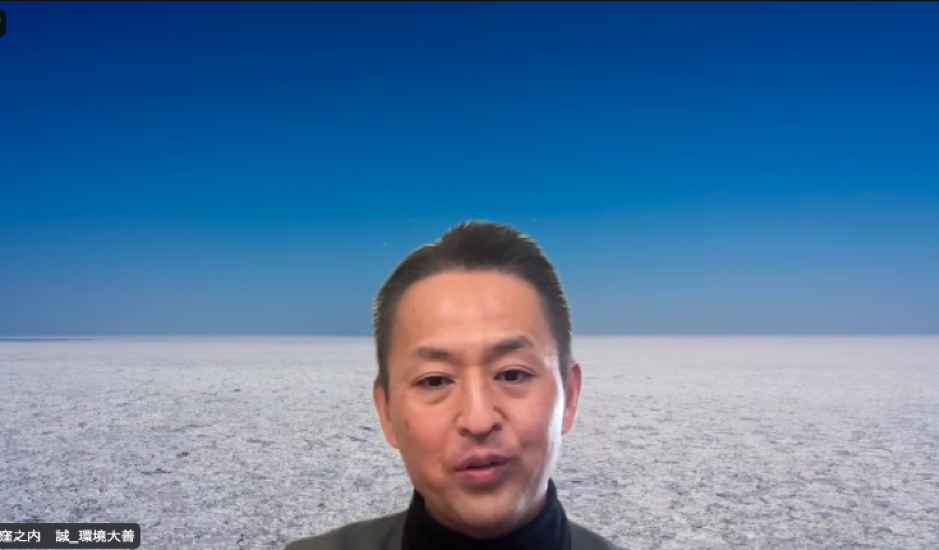
Kubonouchi: When did the plan to relocate the brewery to a new facility first emerge?
Asagiri: It took about five years to complete the move. Real estate isn't something you can just find immediately when you want it; finding an ideal property is pure luck. It's almost like a luxury item. In our case, location is integral to our branding. We sought a property not in an industrial park, but in a naturally rich environment with mixed woodlands and farmland.
On the other hand, if you're not particular about location or surroundings, you could also accept an invitation from a municipality and utilize industrial land.
Kubonouchi: Our headquarters is right in the middle of a residential area, yet visitors always remark, "I don't smell anything inside the building." This is despite having 100 tons of cow urine sourced from dairy farms stored there constantly. It really made me realize how important location is.
This spring, our new plant began full-scale operations, and demand is expected to grow further. However, this also brings the challenge of how to handle our material storage. As market demand increases, we're reaching a stage where the scale of capital investment is daunting, creating internal conflict.
Asagiri: I believe the key lies in how we allocate funds. Rather than pursuing an in-house approach for everything, we need to consciously differentiate our use of resources—like renting external warehouses to control cash outflow. If we're committed to investing for the next 100 years, owning our own property could be an option. Crucially, we must maintain the flexibility to hit the brakes quickly if things go wrong.
Kubonouchi: Vision is crucial for capital investment too.
Asagiri: This area doesn't yield immediate profits or results. However, I believe equipment is tied to our very reason for being.
We must discern what we should do, what we don't need to do, and what we want to do. For small companies like ours, choosing what not to do is particularly crucial. It's what you might call "selection and concentration."
Deliberately choosing not to do something can attract business opportunities.
Kubonouchi: By the way, what are some things your company deliberately chooses not to do?
Asagiri: We brew craft beer, but in recent years, there's a trend toward crafting all kinds of foods. For example, chocolate and coffee. In the alcohol industry, there's also a craft movement in gin and whiskey.
Honestly, whiskey would be an easy business for us to enter. Distillation equipment isn't that expensive, and we could prepare the barrels for aging. But when asked, "What kind of business are you?" we don't need to fill every spot in our portfolio. There's value in choosing not to do certain things.

Asagiri: Instead, we support those making craft whiskey. We've actually established global connections with an Irish whiskey company, and a collaboration is underway. If we were making whiskey ourselves, it would become a competition, and such collaborations wouldn't happen. I don't think choosing not to do something is always a sacrifice.
Kubonouchi: We also get asked, "If you use cow urine as a raw material, why not cow manure?" However, this field is already well-utilized, with research advancing on converting it into fertilizer. On the other hand, research examples using urine are still scarce. If we can effectively utilize it, we can return it to the earth, creating significant social impact. So, we simply discarded the "cow manure" idea.
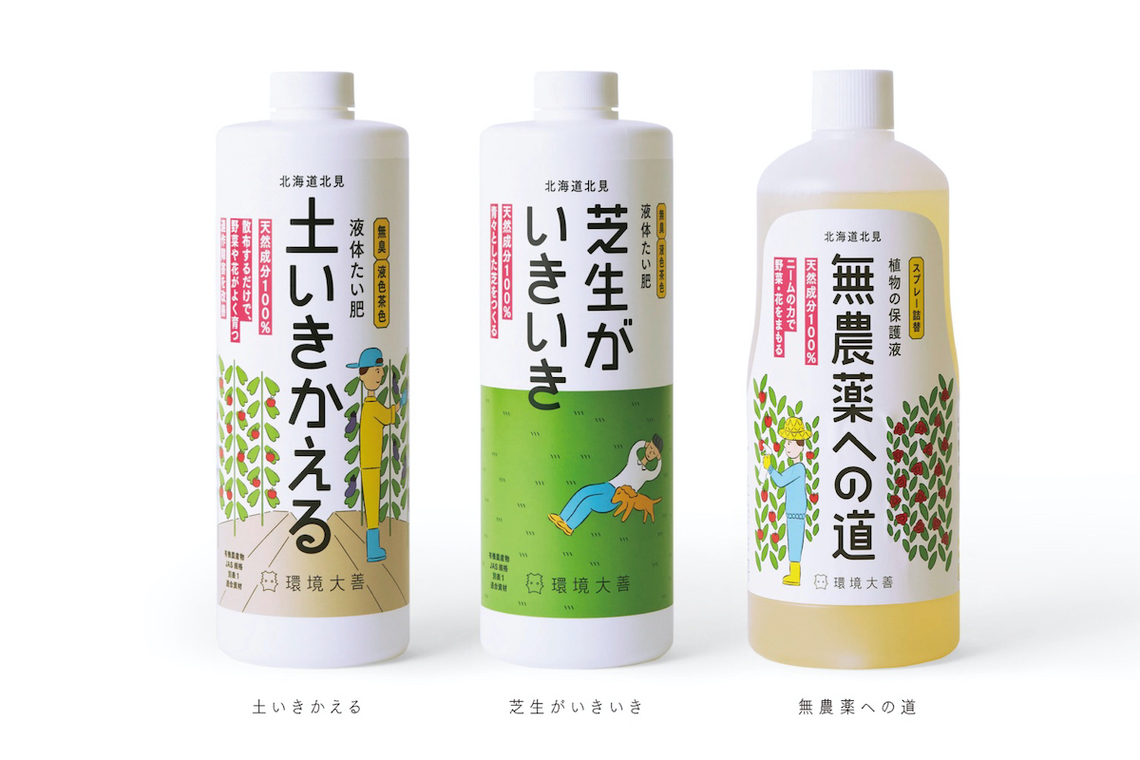
Then, a compost manufacturer approached us wanting to create compost using our product "Liquid Compost: Soil Revitalizer." This led to the creation of "Soil Revitalizer Compost," which sold 10,000 units of 40 liters each. If we had pursued "cow manure," we would have competed directly with the compost manufacturer, making collaboration difficult. This experience reaffirmed that boldly pivoting our business toward "cow urine," driven by a sense of romanticism, can attract new business opportunities.
While we've done OEM work based on past relationships, moving forward we want to focus on building our brand. We aim to choose methods that better convey our worldview—whether using our own name, launching new products with co-branding alongside partner companies, or other approaches.
[After the Online Mentor-Mentee Consultation]
Words from the Mentor (President Asagiri)
The waste industry has traditionally been viewed as a "vein industry," but for Environmental Daizen, "cow urine" is an "artery industry." Even when this is prominently featured, the products still convey a clean, orthodox impression—this demonstrates the effectiveness of your branding.
Starting from the significant concept of "cow urine" and pioneering a new field means you'll be presenting new value rather than just responding to existing needs. Just as we've made craft beer enjoyable in a way no one expected, our concept is "Beer Beautiful" – not just refining the service itself, but spreading the idea that the beer at its core is truly wonderful. As we scale up, the seeds for overseas expansion will naturally spread without us consciously creating borders. Let's definitely operate globally.
Lessons from the Junior President (President Kubonouchi)
President Asagiri's words were clear and very easy to understand. Dairy farming is truly difficult, and there's the current reality of vast amounts of milk being discarded. Even close to home, I've seen many dairy farms shut down due to production adjustments, making me worry about the future of Japan's food supply. To help supplement the income of dairy farmers facing such hardships, we're developing a business that buys cow urine. This experience reaffirmed that by believing in our vision and persisting with single-minded dedication, global markets will inevitably open up. I look forward to future opportunities to delve deeper into agriculture with President Asagiri.
Text by Akari Toku / Planning by Makoto Sasagawa (Dentsu Inc.)
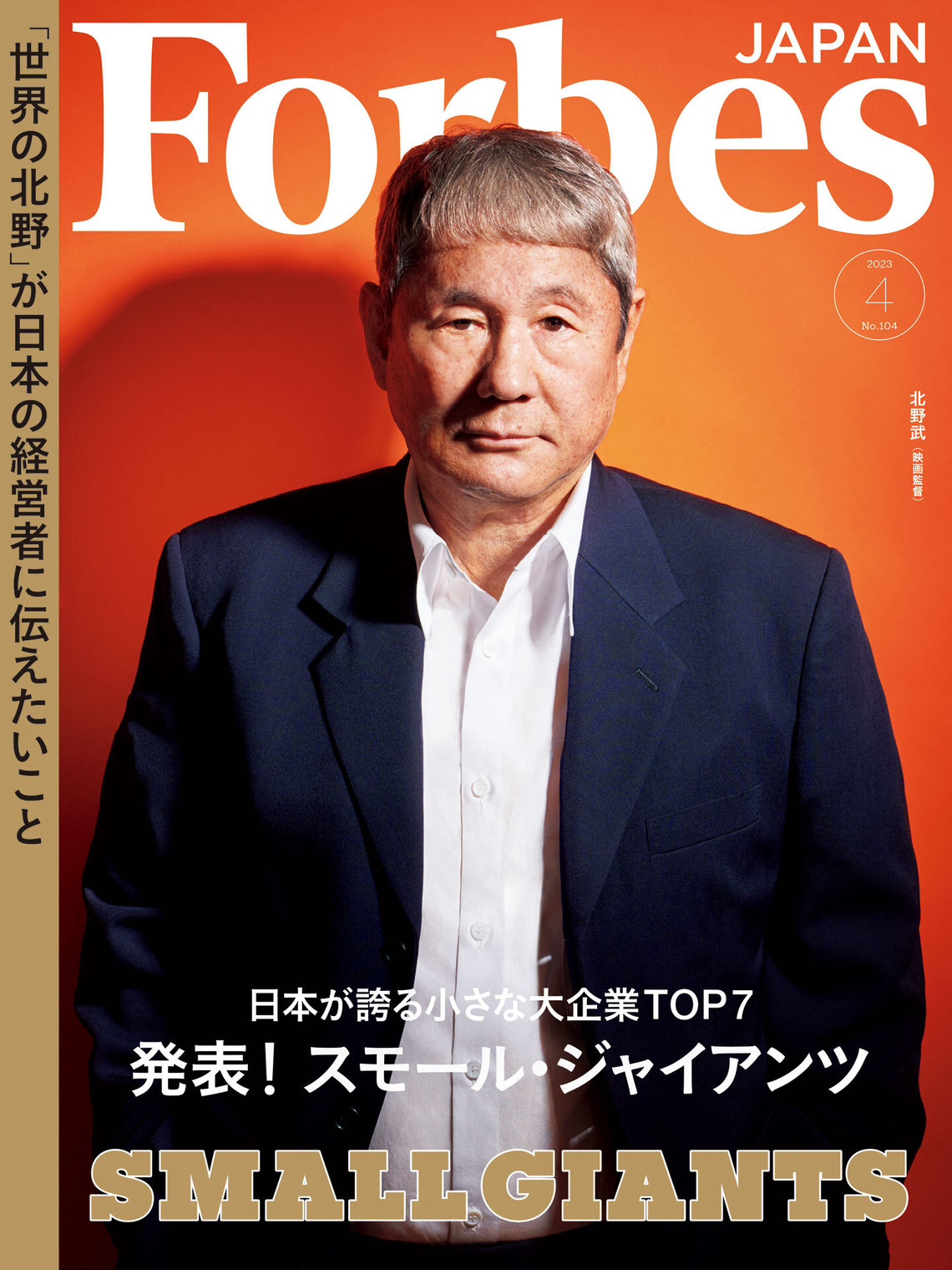

Forbes JAPAN's February 25 issue features Japan's world-class "Small Giants"! We introduce seven SMEs that conquered the global market. While SMEs often evoke tales of hardship, please take note of these Japanese companies gaining worldwide popularity through their cutting-edge technologies and business models!
https://forbesjapan.com/magazines/detail/155

Was this article helpful?
Share this article


Newsletter registration is here
We select and publish important news every day
For inquiries about this article
Back Numbers
Author
Shigeharu Asagiri
Kyodo Shoji Co., Ltd.
President and CEO
Makoto Kubonouchi
Environmental Daizen Co., Ltd.
President and CEO
Akari
Forbes JAPAN
Web Editorial Department
Sasagawa Makoto
Dentsu Inc.
Marketing Division 8
Creative Director