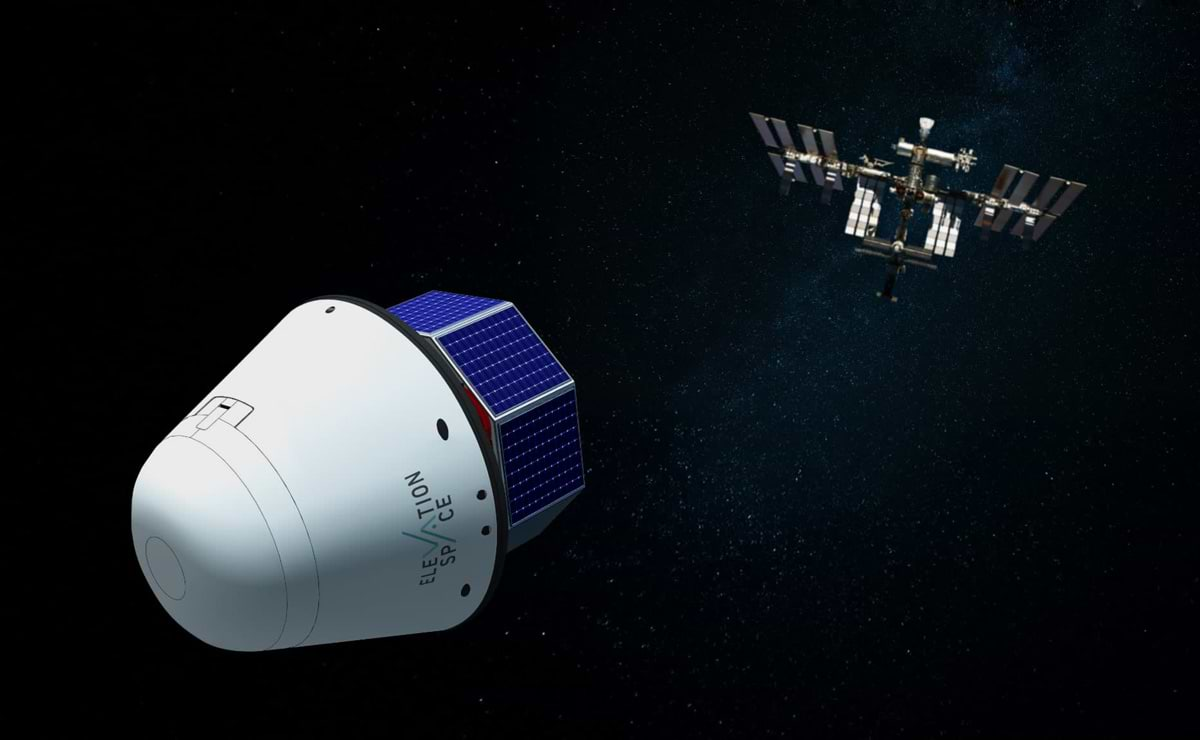
A company specializing in the "return journey from space" is based in Sendai City. It's ElevationSpace, a space startup originating from Tohoku University.
Anticipating demand following the impending retirement of the International Space Station (ISS) in 2030, the company was founded in 2021. Starting with the small, unmanned space experiment recovery vehicle ELS-R (Japan's first private satellite capable of conducting experiments in space and returning to Earth), it envisions five projects using the same core technology, culminating in "manned return."
In the highly challenging and uncertain space industry, the company's business plan's soundness is evident from its selection twice in national public tenders by November 2025.
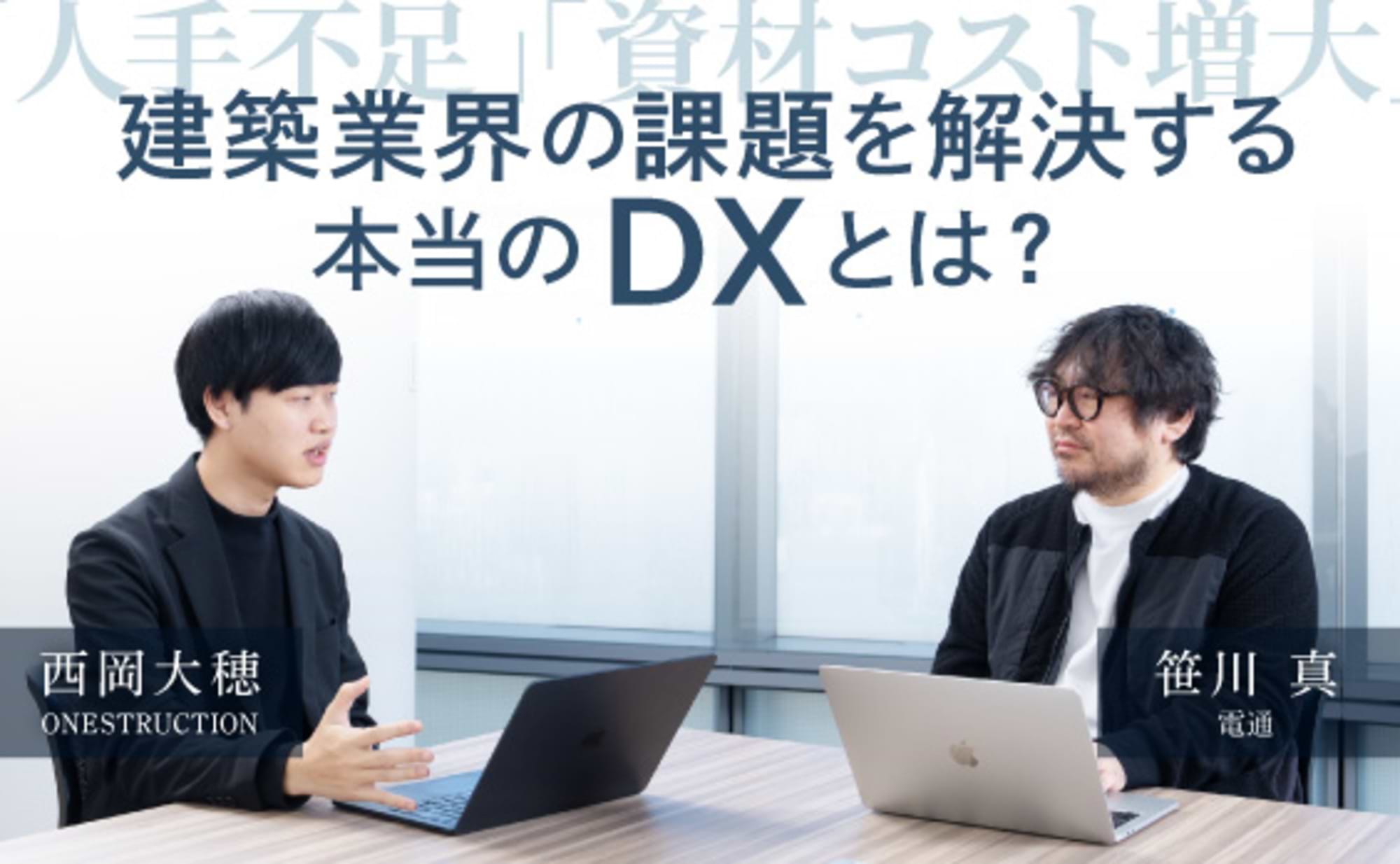
Recovering materials from space. And then, manned return. Dentsu Inc.'s Makoto Sasagawa spoke with CEO Ryohei Kobayashi, who is pioneering a new path home from space.
Sasagawa: First, congratulations. You were selected as the implementing organization for two consecutive national projects: the "High-Frequency Material Recovery System Technology" and the "Innovative Future Space Transportation System Research and Development Program." The former is a 3-year project worth 2.5 billion yen. And both selected only one company, right?
Kobayashi: Thank you. It feels like everything is finally clicking into place and starting to move forward significantly.
Sasagawa: When I first spoke with you, Mr. Kobayashi, I was struck by Elevation Space's unwavering focus—identifying the opportunity in the "return journey" to space and mapping out a clear roadmap all the way to 2040.
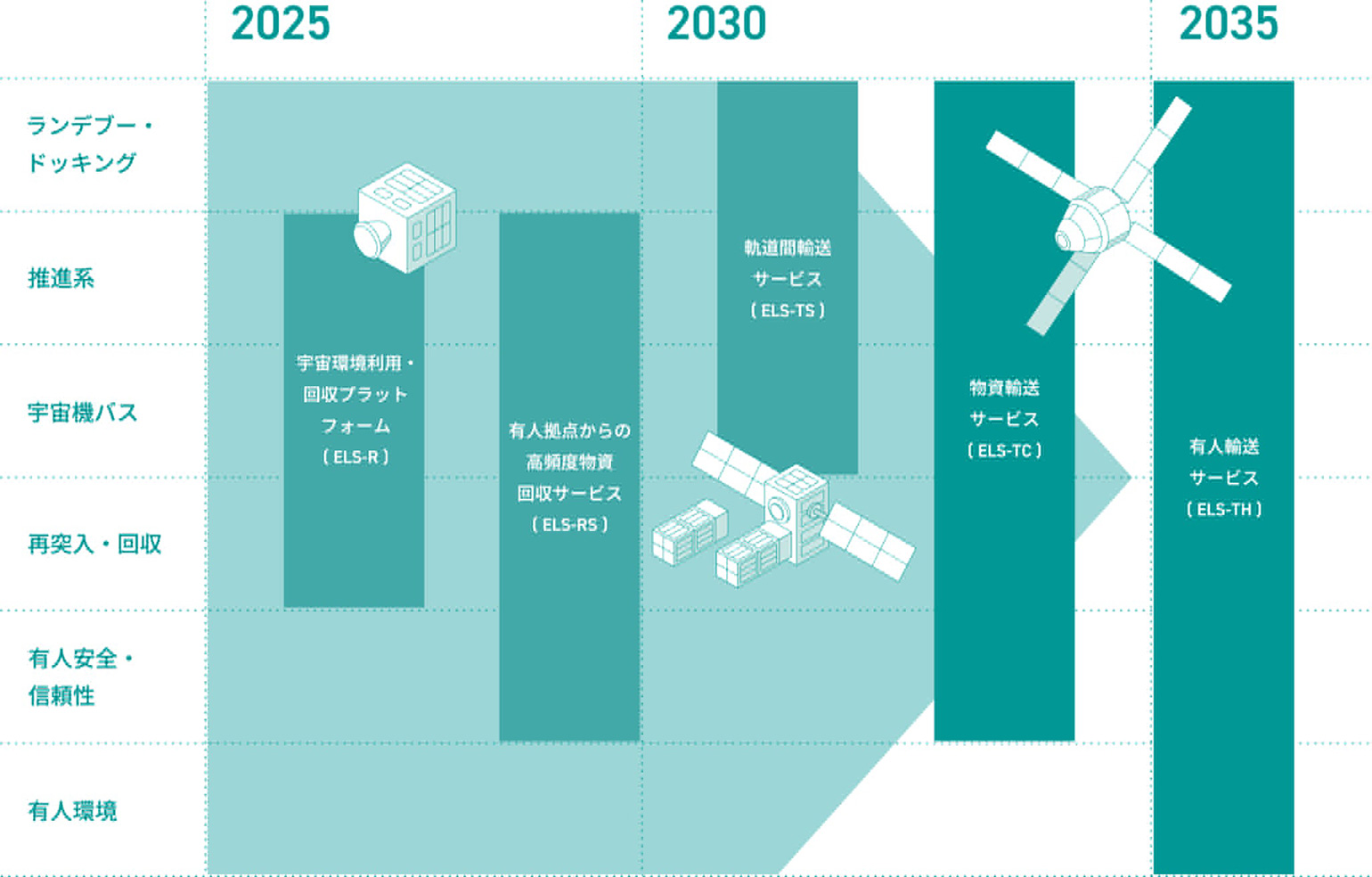
Elevation Space's Roadmap. Phases 1 through 5 are planned as projects.
Kobayashi: Industry veterans often tell me, "You picked a good spot," but for me, it wasn't so much choosing a business I wanted to do. It felt more like I eliminated other options one by one, and this was the last one standing.
Sasagawa: You started your business while pursuing your master's degree at Tohoku University, right?
Kobayashi: Yes. I aspired to become an architect after witnessing disaster recovery efforts. At 19, while attending Akita National College of Technology, I encountered space architecture. Transferring to Tohoku University completely changed my life.Ever since winning first place in Japan and second place globally in a space architecture competition, I've been relentlessly focused on creating "a space environment where humans can operate." Living, growing, manufacturing, transporting—I spent a year and a half mapping out the sequence for establishing industry in space as a comprehensive value chain, envisioning a future where all industries expand into space.
Sasagawa: Within that comprehensive vision, what was the decisive factor in choosing your current business?
Kobayashi: Discussions with my co-founder, Professor Satoshi Kuwahara. Through ongoing dialogue, I rigorously honed my "eye for technology" and my "eye for industrial structure." This revealed the overlap between "what I wanted to do" and "areas where Japan could still win, even starting now."We realized Japan's competitive space domains are far more limited than imagined. Our strength lies not in getting to space, but in getting back. Therefore, specializing in the return journey made perfect sense.
Sasagawa: That focus on reentry technology is fascinating, isn't it?
Kobayashi: Another major factor was the 2030 retirement of the ISS—the space industry's "2030 problem." When the ISS, a government-led experimental platform, transitions to a private-sector-led space utilization platform, demand for experiments, manufacturing, and logistics will skyrocket. To be ready for that, starting the company in 2021 was the only option.
Sasagawa: I've never heard of a space startup founded specifically to anticipate demand and ensure it wasn't missed.
Kobayashi: If we'd had more time, I doubt we would have started as students. Our initial vision was developing a new space station, and companies pursuing that are emerging in the US. But the technical hurdles to pull that off in Japan were simply too high. So what about an unmanned space station? Even unmanned, recovery remains a major bottleneck. Therefore, we decided to create alternatives for the services the ISS has provided—and that led us to "ELS-R."
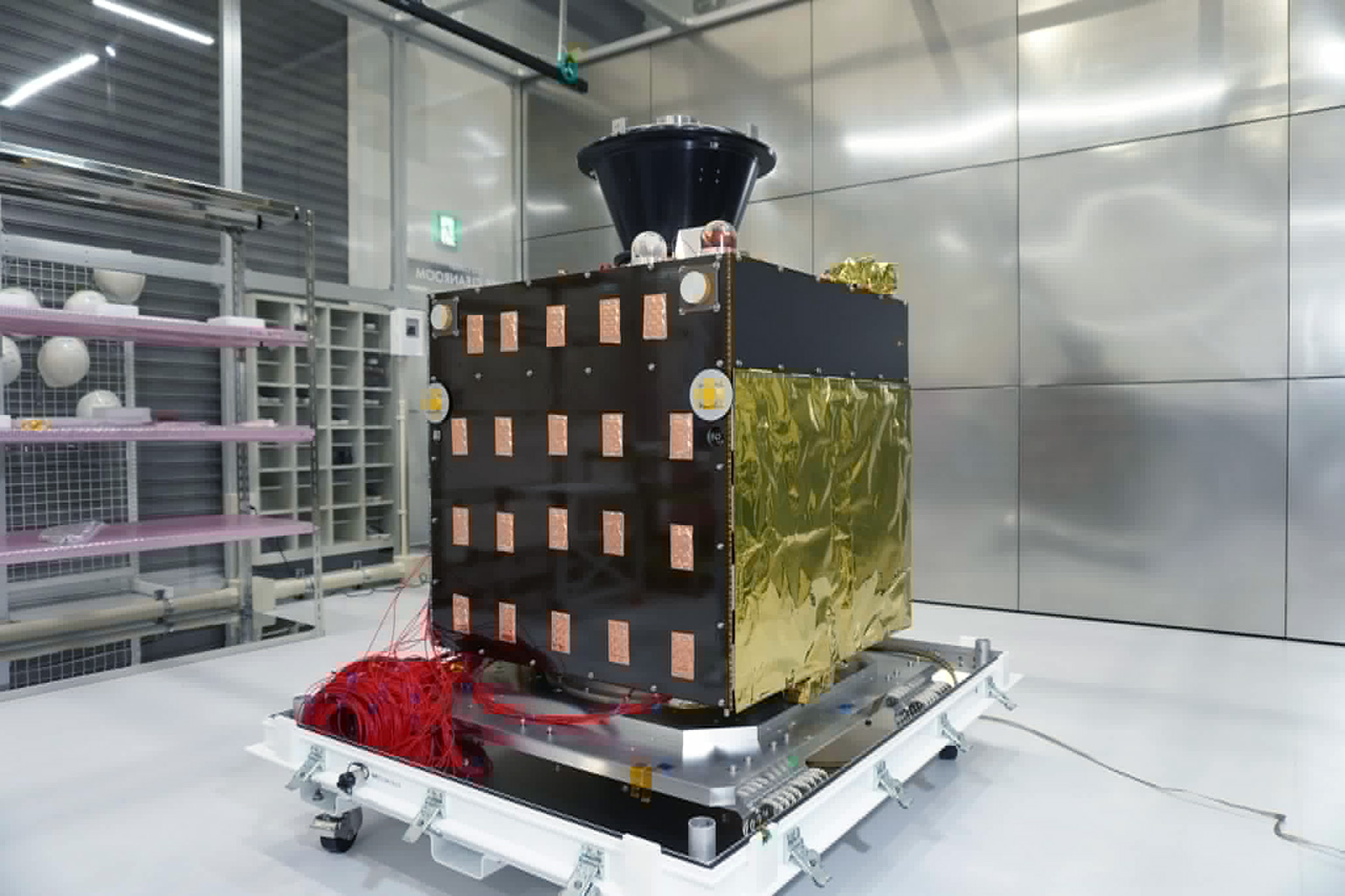
Ground test model of "Aoba," the first unit of the ELS-R (Earth-orbiting Launch and Recovery System).
Sasagawa: That's the first project in the roadmap, the unmanned, small-scale space experiment recovery platform.
Kobayashi: A year after founding the company, similar businesses began launching in the US and Europe. That confirmed my reading of the market wasn't wrong.
Sasagawa: Back in 2021 when you started the company, there were already several space startups in Japan, right? Were there any companies you used as benchmarks?
Kobayashi: We currently reference companies like ispace and Astroscale for aspects like establishing overseas bases. However, the selection of our business domain itself was built from scratch through discussions with Professor Kuwahara.
Sasagawa: That level of resolve is unusual for a student entrepreneur, isn't it?
Kobayashi: Not at all. In my case, it wasn't that I was absolutely determined to start a company and do something in space. Initially, I thought staying at the university to do research was also an option, or even if I did start a business, I figured a small business would be fine. If I hadn't met Professor Kuwahara, I might not have even started a company.
Business models are harder than technology
Sasagawa: To clarify, your company is "Japan's only private enterprise aiming to acquire atmospheric re-entry and recovery technology." Could you tell us again about your first product, "ELS-R"?
Kobayashi: "ELS-R" is a small, unmanned space experiment recovery vehicle, defined as a space utilization and recovery platform. It's Japan's only unmanned service capable of conducting R&D and manufacturing in space and returning the results to Earth. Experiments on the ISS involve astronauts, leading to heavy safety constraints, resulting in high costs and requiring several years before experiments can begin.In contrast, an unmanned, small-scale, and recoverable structure reduces safety constraints by an order of magnitude, enabling diverse experiments at low cost and high frequency. This capability is rare globally, and we are the first private operator in Japan.
Sasagawa: It seems like things are progressing according to plan. How is it actually going?
Kobayashi: We've faced challenges on the business side. For instance, while most of the space industry currently relies on government demand, we were overly focused on future private demand. We've now shifted our approach: concentrating on government demand while simultaneously nurturing the long-term private market to drive our business forward.
Sasagawa: That's a reality only someone directly involved would notice.
Kobayashi: What I constantly realize in space is that the business hurdles are higher than the technical ones. Much of the technical foundation—structures, attitude control, thermal management, re-entry—is common across any stage of the roadmap, and technology advances as we build upon it. But when the market will take off? No one can predict that.
Sasagawa: That uncertainty is the biggest hurdle, isn't it?
Kobayashi: Exactly. Orbital Transfer Vehicle (OTV), which is in Phase 3 of the roadmap, shares about 70-80% of its technology with Phases 1 and 2. Yet, no one can definitively say whether it will become a viable business in 2030 or 2040. It's an essential step for humanity, but the timing for commercialization remains shrouded in fog.
Sasagawa: It's a question of how the future will take shape.
Kobayashi: We realized the principle: rather than shaping the future at our own pace, we must run alongside this industry's "unique way of taking shape." That's precisely why building up government demand is especially crucial during periods when the future remains unclear.
The problem of no "return route" for domestic production
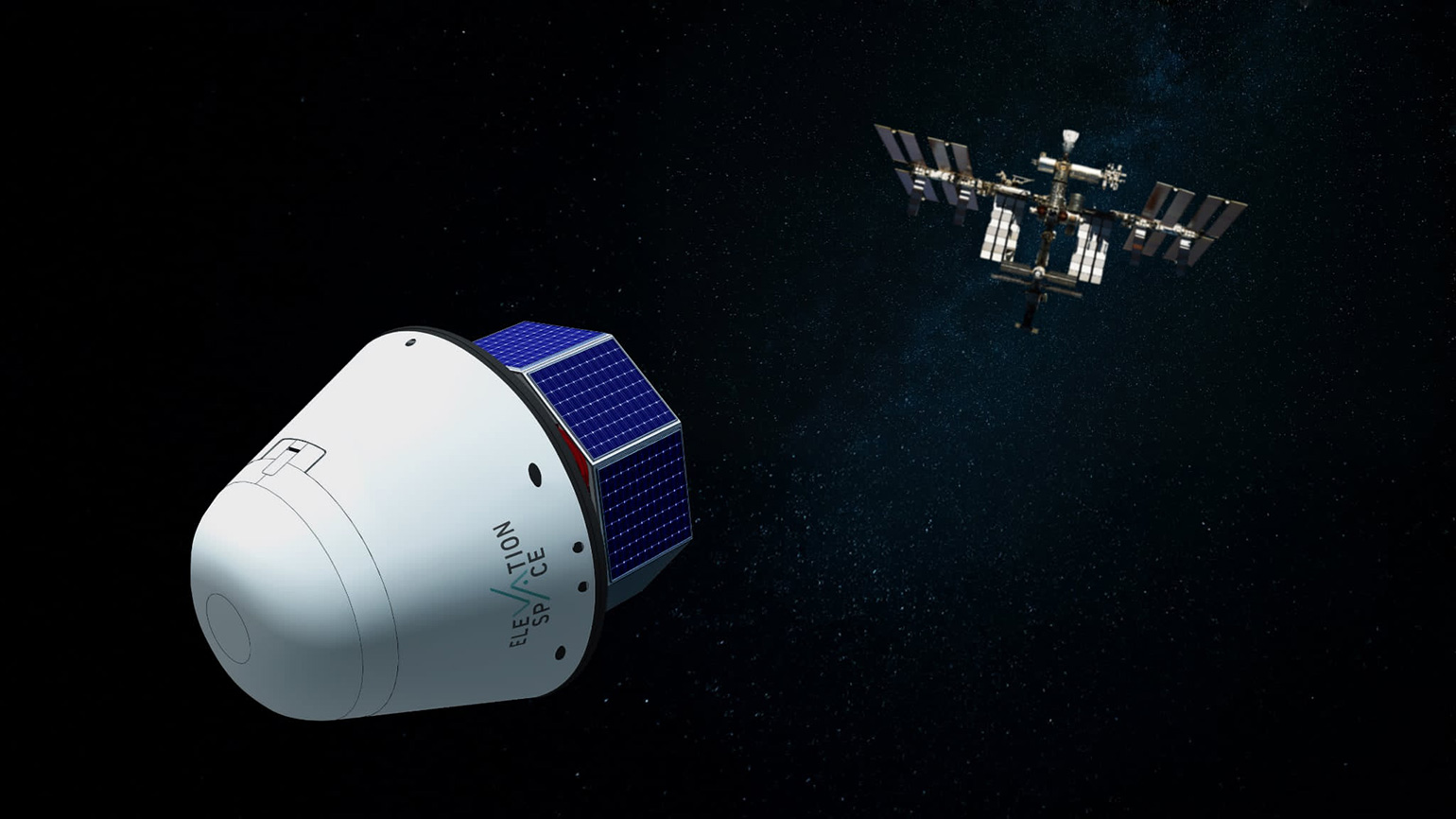
The ELS-RS high-frequency cargo recovery service from manned bases, selected for the Space Strategy Fund project.
Sasagawa: I understand the space industry has a unique "takeoff method," which is precisely why the weight of government demand is so important. Speaking of government demand, being selected for two public projects simultaneously—the Space Strategy Fund's "High-Frequency Material Recovery System Technology" and JAXA's "Innovative Future Space Transportation System R&D Program"—is a major achievement. In your company's roadmap, that corresponds to Phase 2 and Phase 5, right?
Kobayashi: The common premise underlying both is that Japan still lacks its own "return path from space." Neither bringing cargo back to Earth nor returning astronauts from space is something Japanese companies can accomplish entirely on their own. This is despite Japan's strength in the core technologies needed for that return path. These two projects represent our challenge to fill this massive gap, a distortion that has been neglected for far too long.
Sasagawa: The fact that our return path to Earth has relied on other countries was a blind spot. And we're targeting demand in a clearly emerging market. Among space startups, I agree with Kobayashi-san that this is a "solid approach." Could you explain each project?
Kobayashi: The "High-Frequency Material Recovery System Technology" project establishes transport infrastructure to "safely and frequently return" experimental results and necessary supplies from future space stations after the ISS to Earth. This represents the second phase of our company's roadmap.
Our co-creation activities (J-SPARC※2) with JAXA on "return flights from the space station," initiated in 2023, have truly kickstarted this field. While this area wasn't heavily considered by the government at our founding, its inclusion in the government's space technology strategy, the budgeting for this project, and its selection are significant milestones—not just for our company, but for the nation as well.
※2 J-SPARC = JAXA Space Innovation Partnership. A group of projects where JAXA forms partnerships with private entities and others with business intent to jointly create innovative space-related ventures.
Sasagawa: So you were among the first to seize the moment when the future of the space industry began to take shape!
Kobayashi: Exactly. The challenge is how to build up government demand and then establish the resulting private demand as viable business. We see this project as laying that initial foundation.
Sasagawa: And it's exciting that you can already begin work on Phase 5—the manned return project. While Phases 1 to 4 appear continuous on the roadmap, the difficulty level for manned missions is on a completely different scale.
Kobayashi: It's a whole different dimension. Above all, Japan has no experience developing full-fledged manned spacecraft, either nationally or privately. Japan's Space Technology Strategy includes multiple references to manned transportation, and several symbolic projects are starting up, pointing the nation toward "cultivating Japan-originated space transportation technology." This project is one of them. It's not the goal; it's the start. From here, Japan will seriously debate "which future to choose" in the realm of manned spaceflight.
That said, technically, the foundation for reentry and recovery largely overlaps. Precisely because of this, building it reliably through unmanned missions is the shortest route to manned flight. Personally, the manned spacecraft I've always wanted to challenge myself with—well, it just makes my heart race in a different way.
Sasagawa: It's impressive how quickly you've delivered results since deciding to focus on government demand. I sense a strong confirmation that your roadmap isn't just a pipe dream, but is beginning to solidify as a feasible blueprint for building a "return path to space."
A corporate culture born from having the youngest employee as CEO
Sasagawa: Listening to you today, it's clear that beyond the resolution of your business plan, you possess a calmness uncommon for a student entrepreneur—one that extends to your business planning and groundwork.
Kobayashi: Imagining what comes next and envisioning "this kind of world will emerge" is something I'm good at, or rather, I simply enjoy it. However, things rarely proceed as planned, so I adjust according to the situation. Possibly, having a relatively realistic mindset is part of who I am.
Sasagawa: Earlier you mentioned that "the space industry is harder on the business side than the technical side." That's where your unique strengths really shine through. That said, your background in science and engineering gives you a solid grasp of the technology too, which is a real advantage.
Kobayashi: I grasp the broad technical concepts. But when it comes to understanding specialized space technology down to the minutest details? Of course not. That's precisely why I'm always discussing things with our in-house engineers.
Sasagawa: Looking at the company website, there are many experienced, older members.
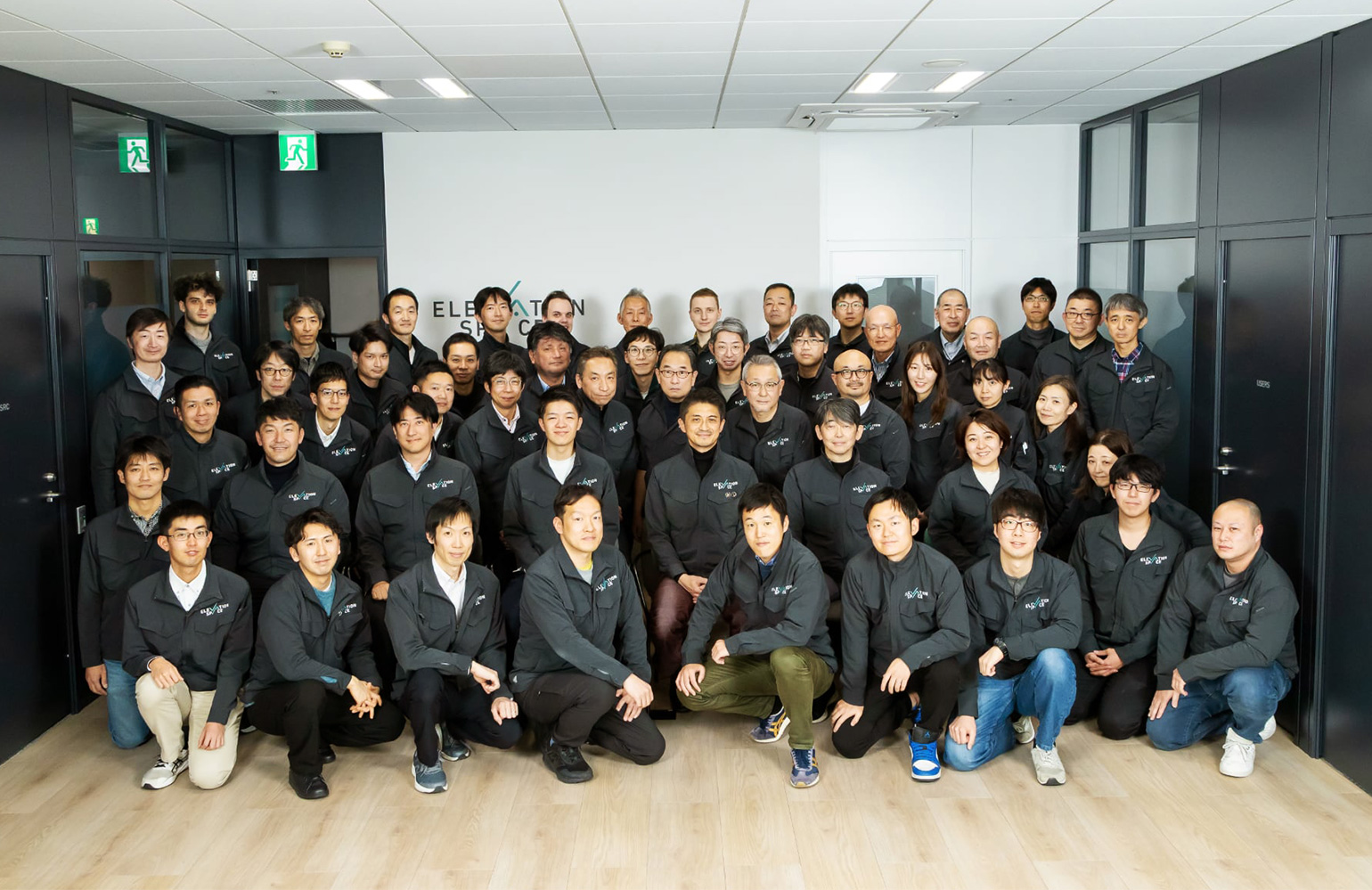
Kobayashi: That's right. The average age in the company is 45, and until recently, I was the youngest. In hindsight, that might have been a good thing. The atmosphere is the complete opposite of top-down; candid opinions fly freely. I think we've built a flat relationship where we can build discussions on any topic.
Sasagawa: Compared to when it was just you and Professor Kuwahara, the organization has grown significantly.
Kobayashi: As I mentioned earlier, for the first year after founding the company, it was truly just Professor Kuwahara and me. Then, pro bono engineers and business members joined us. After our funding round in March 2022, we were able to welcome even more members. By 2024, we reached 30 people, and accelerating hiring from 2025 brought us to around 60 members.
What remains unchanged is our culture of thoroughly discussing and deepening understanding before making decisions. Even as we continue to grow, I believe my crucial role moving forward is to maintain this culture and keep creating an environment where members' abilities and motivation are maximized.
Sasagawa: Managing an organization is a completely different discipline from technology or business, isn't it?
Kobayashi: I truly agree. I've always enjoyed launching new projects or organizations, even before starting my company, and I consider myself relatively good at it. So, the entrepreneurial lifestyle suits me well. However, with the increase in employees and the broadening range of stakeholders, I often think lately that I've reached a phase where I need to transition from being an entrepreneur to a manager.
The demands are naturally different between the "stage of building projects and organizations" and the "stage of strengthening the organization itself." It's about moving forward while embracing that difference. I feel like I'm right in the middle of that transition.
Sasagawa: The fact that we could talk about this in Dentsu-ho at such a timing itself hints at some new developments. It also seems like we'll have more to discuss from different angles.
Kobayashi: Yes, I agree. I'm looking forward to what comes next.
Sasagawa: Me too. Looking forward to continuing our work together.
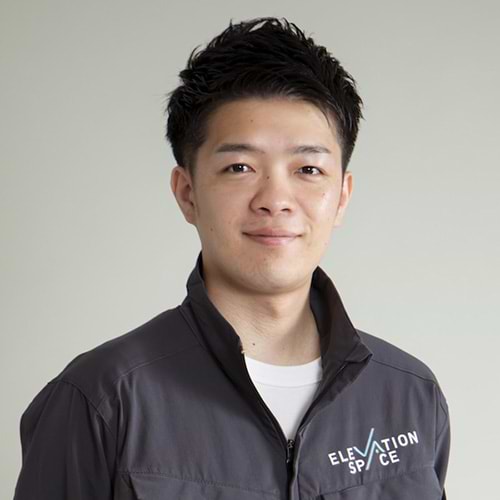
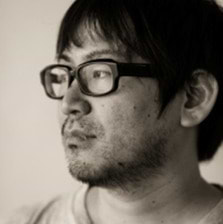
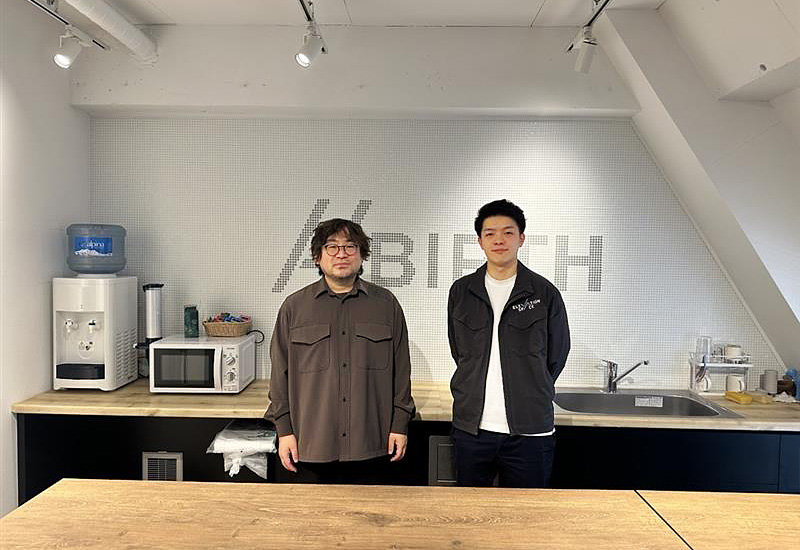
Dentsu Inc. Sasagawa and Elevation Space Kobayashi, Representative
At age 19 while attending Akita National College of Technology, he encountered space architecture and his life changed. He later majored in architecture and aerospace engineering at Tohoku University, earning a Master of Engineering degree.During university, he worked on satellite development projects and research into next-generation space structures, winning 1st place in Japan and 2nd place globally in space architecture competitions. After internships at multiple companies, including space ventures, he founded ElevationSpace. He was selected for Forbes 30 UNDER 30 Asia as a leader under 30 changing the world from Asia. He received the "Special Award for Regional Contribution" at the 23rd Japan Venture Awards.
Sasagawa Makoto
Dentsu Inc.
Marketing Division 8
Creative Director
After joining Dentsu Inc. as a new graduate, I built my career in creative and business design. Alongside supporting executives in their growth journeys, I worked on startup support, transforming technology and corporate activities into solutions to solve challenges for large corporations. I aim to champion talent and vision that society should recognize, ensuring they receive the spotlight they deserve. Key initiatives include: ispace (lunar exploration venture), #dearMoon (private lunar orbit project), Kabu & Peace (Yusaku Maezawa's "National Shareholder" concept), Forbes SMALL GIANT AWARD (new pitch event for SMEs), and KIRIN Camp (development camp where Japan's national soccer coach directly trains junior high students). 365 Series (original concept planning for El Golazo annual compilations). Capital and business alliance with Fulla (app strategy partner). Toranomon Hills "Boku, Tora no Mon." (symbol creation in urban development). MIT Technology Review "Innovators Under 35" Ambassador. Part-time lecturer at Hitotsubashi University and Kaishi Professional University.

 People who bring NEXT and NEW to society. Seed Growth Team [4/4]