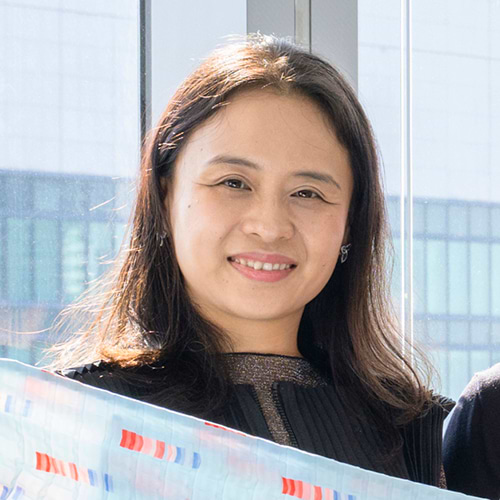
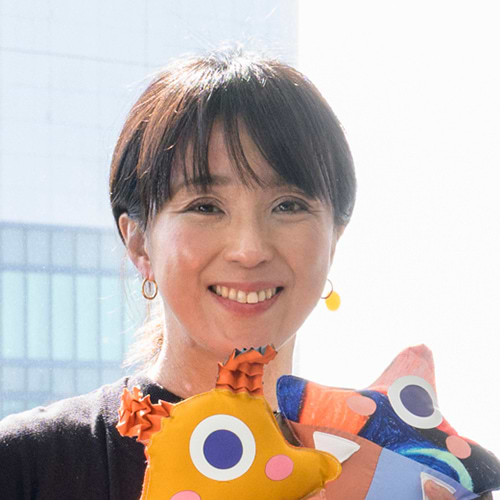
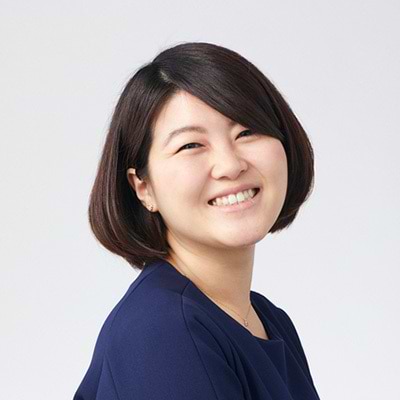
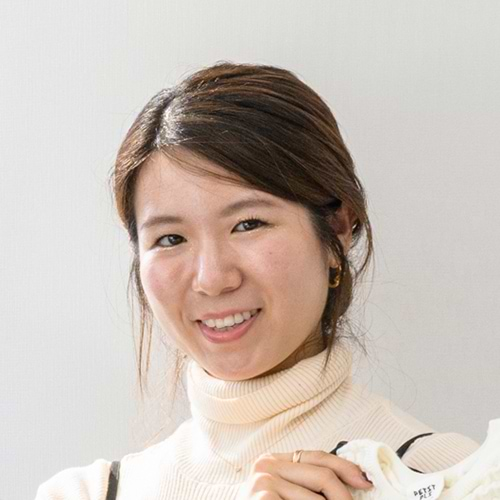
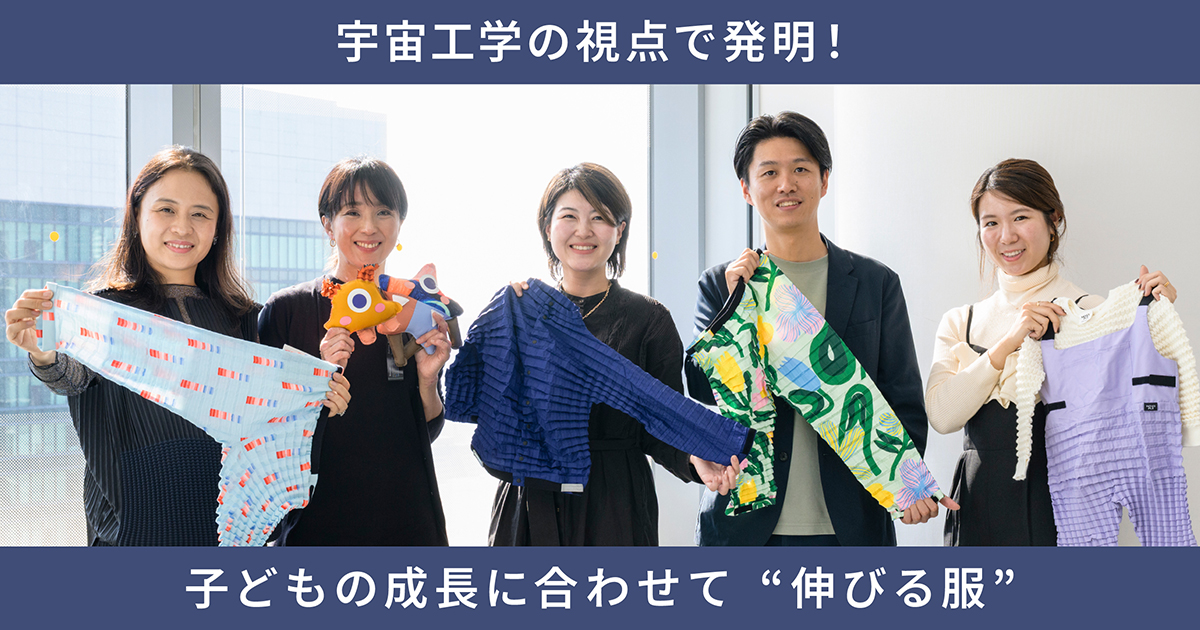
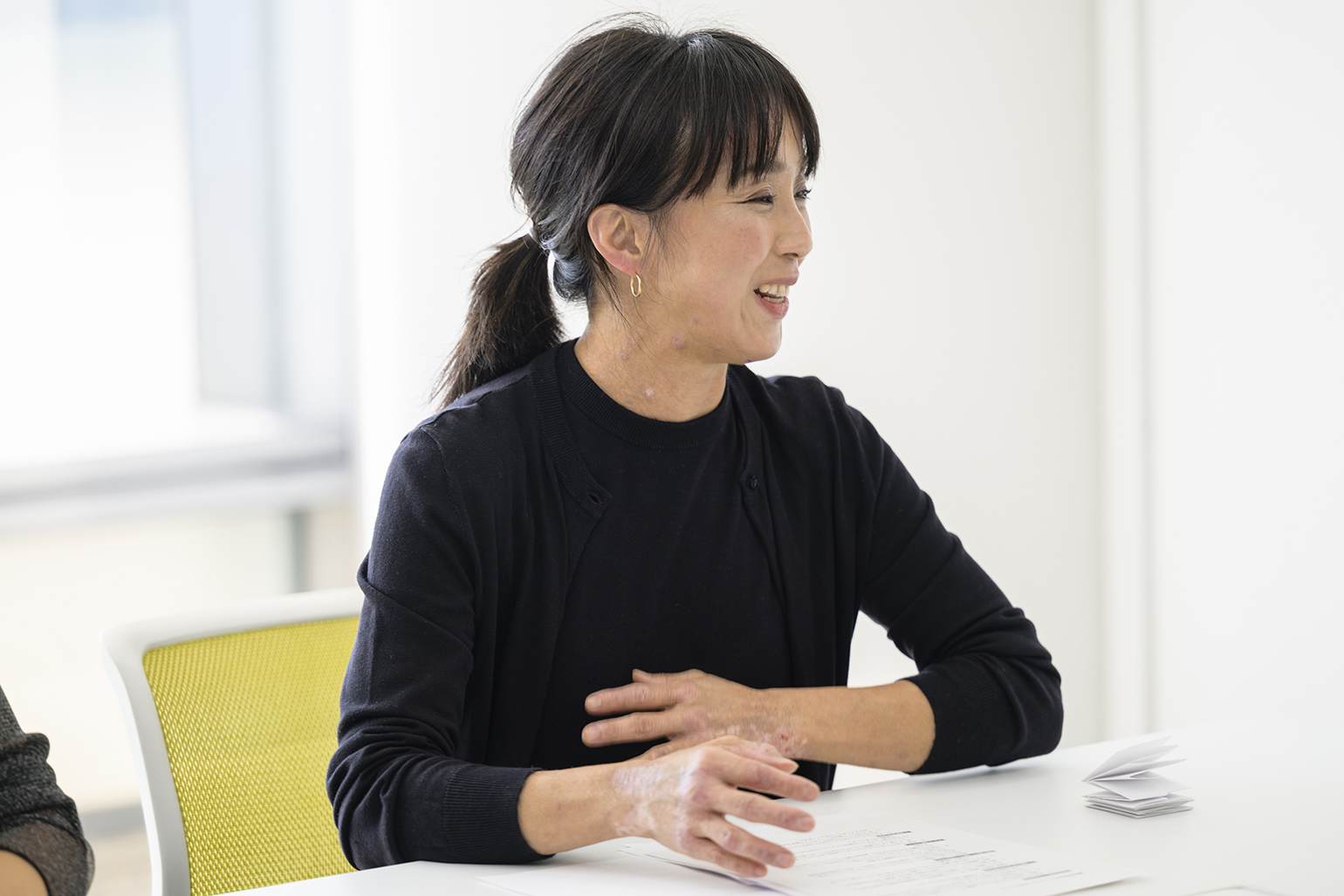
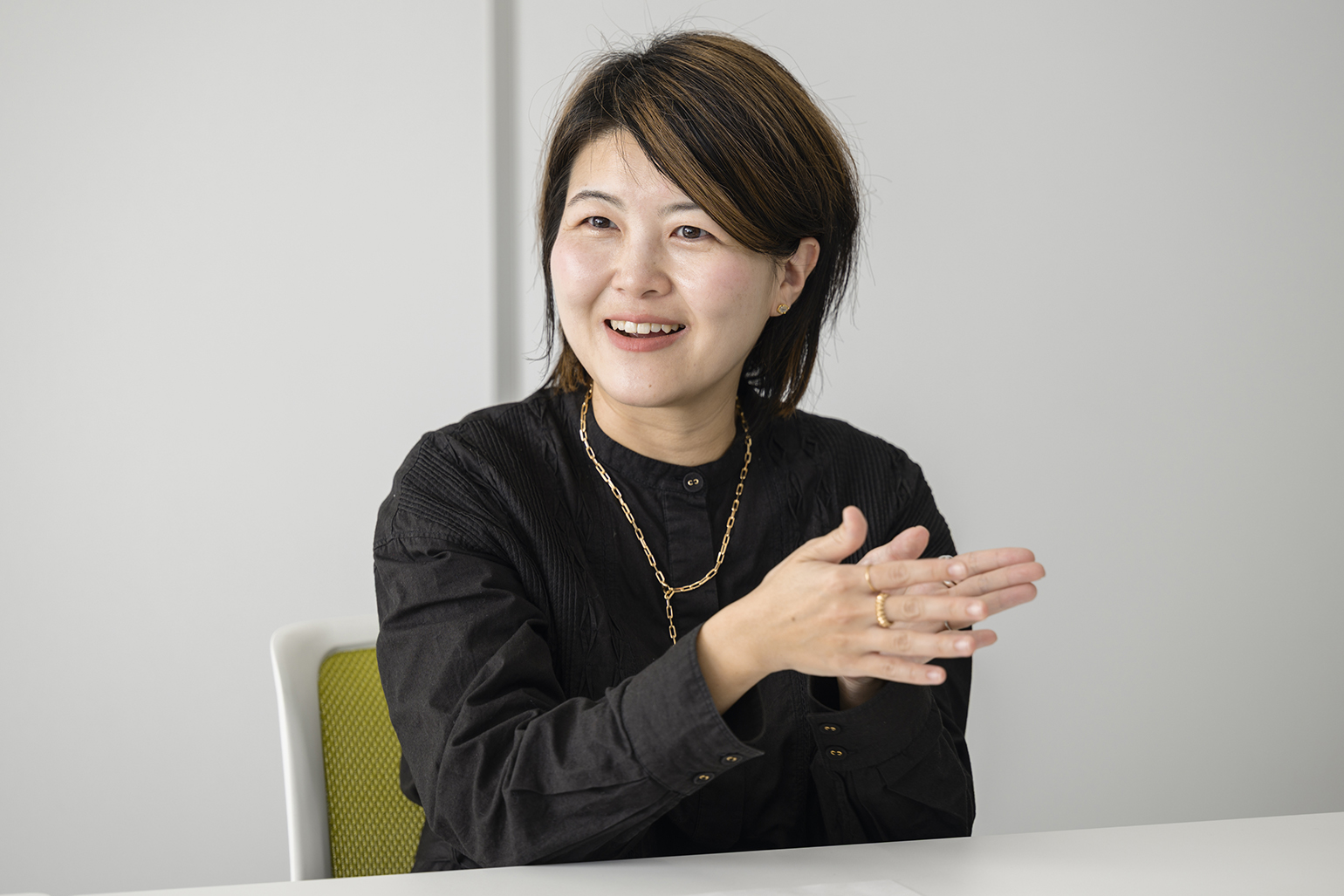
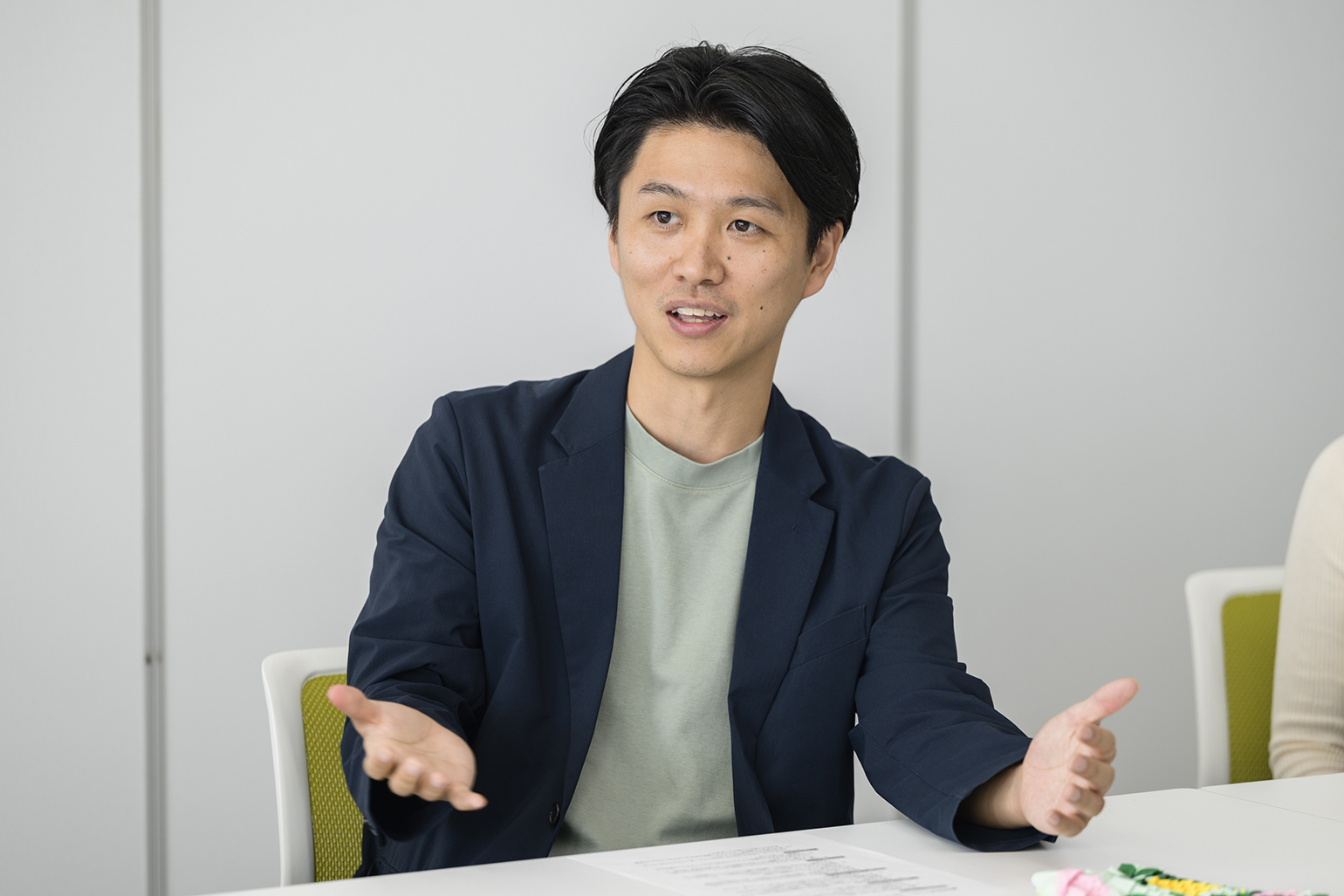
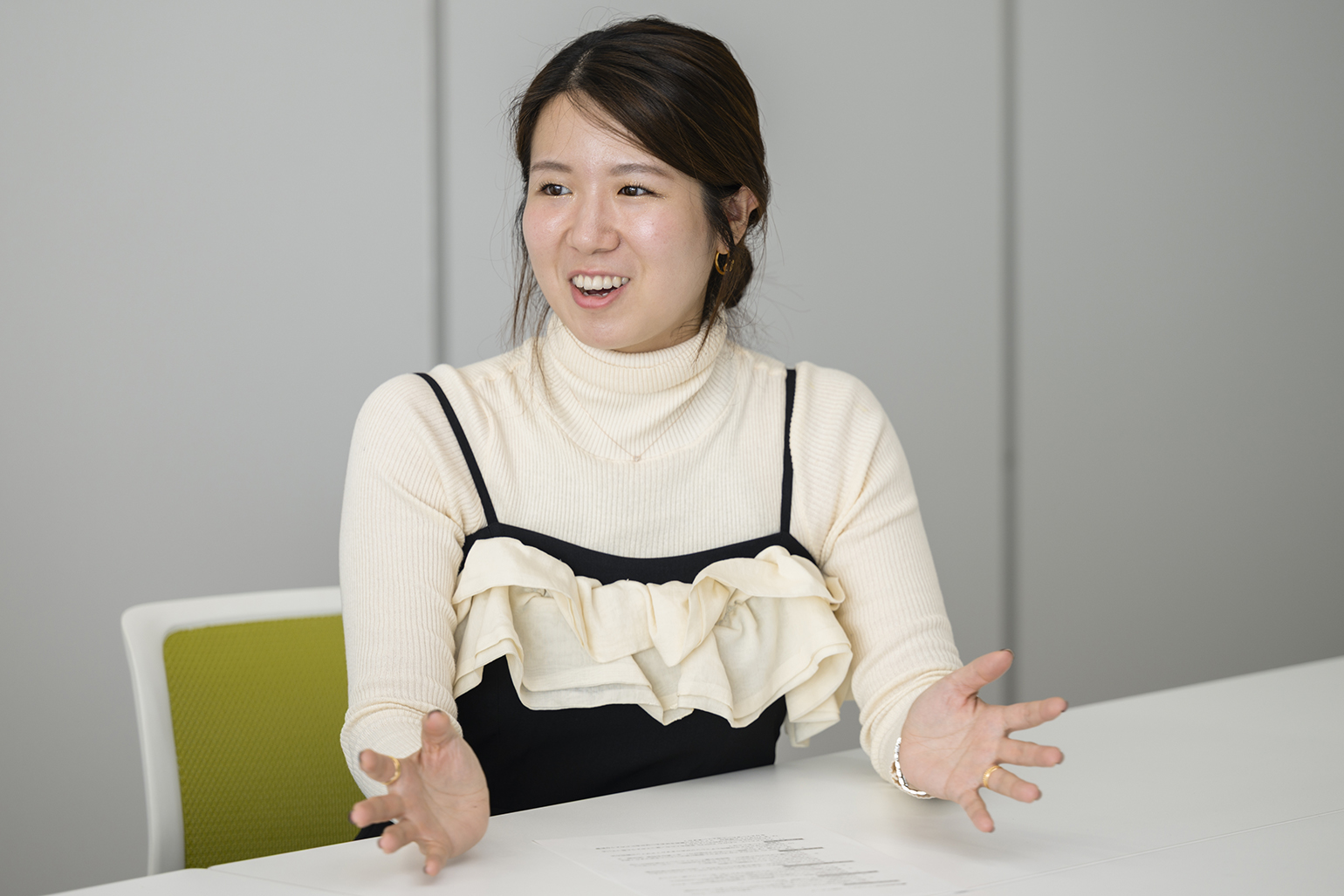
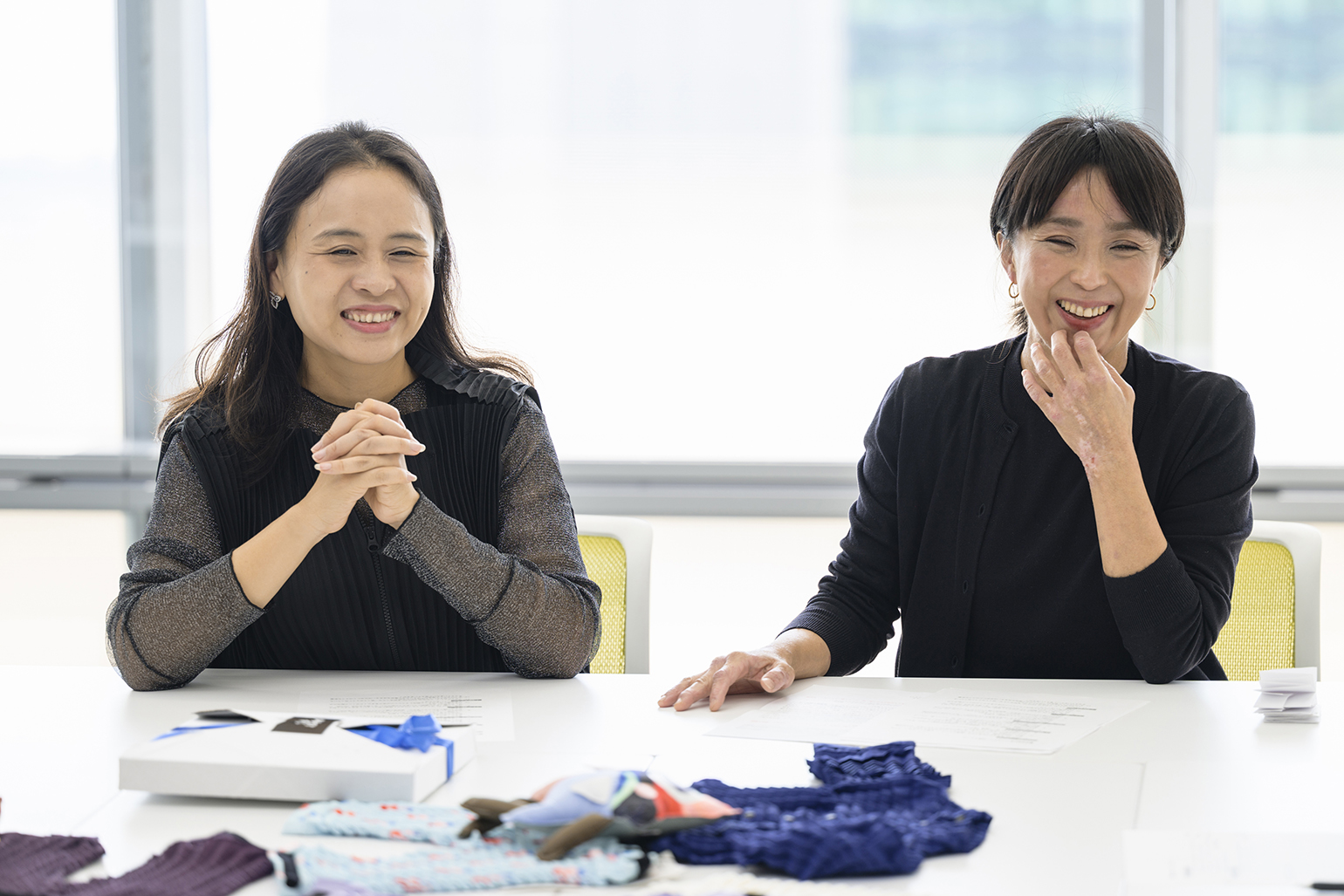
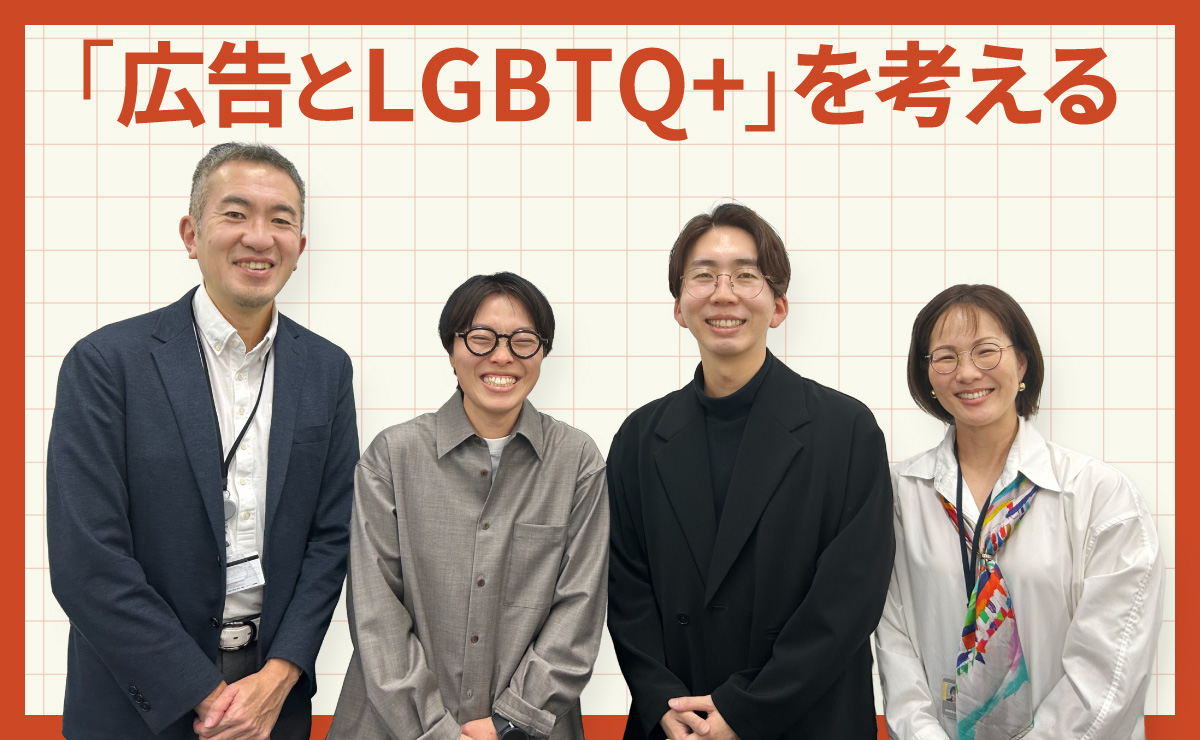
From left: SKY's Sun Di Rui and Chihiro Yoshida; Dentsu Inc.'s Yoko Iinuma, Shosuke Yamamoto, and Nozomi Fujii. What is the origin story and potential of Petit Pli, the "growing clothes" that evolve with children?
As children grow, they need many clothes, but most outgrown clothes are destined for disposal.
The mass production and mass disposal of clothing worldwide causes various environmental problems, including CO2 emissions.
To address these challenges in the apparel industry, a "material that stretches as children grow" was developed. This led to the London-based children's clothing brand " Petit Pli," which utilizes this innovative material.
In this article, Dentsu Inc. planners Yoko Iinuma, Nozomi Fujii, and Shosuke Yamamoto interview Michie Sun and Chihiro Yoshida of SKY LLC, the company bringing Petit Pli to Japan.
We discussed the brand's founding story, its concept and mission, real customer feedback, and future plans.
What is the "Clothing That Grows with Children" invented by the founder of the Space Engineering Department?
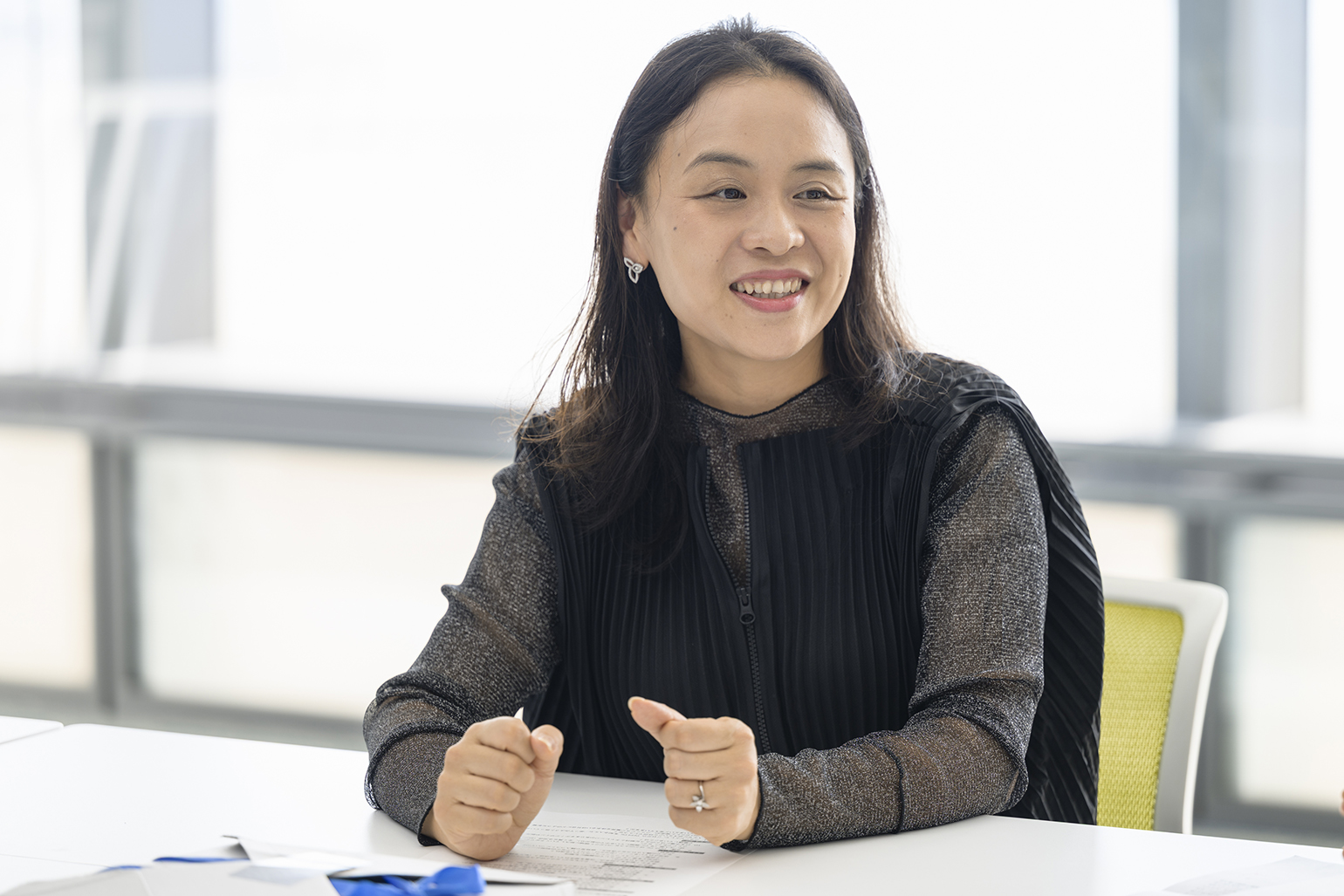
SKY's Sun Di Rui
Iinuma: Today, we're interviewing two representatives from SKY LLC, which brings the London-born children's clothing brand "Petit Pli" to Japan. We're three Dentsu Inc. planners who are also parents, and we'd like to hear your story. I'm Iinuma, a planner at Dentsu Inc. I'm also a mother of one.
Yamamoto: I'm Yamamoto, also a planner. I'm a father of one child.
Fujii: I'm Fujii, also a planner. I returned from parental leave at the end of 2024.
Son: I'm Son, CEO of SKY LLC. We're launching Petit Pli in Japan as a new venture. I'm also a mom of three children.
Yoshida: I'm Yoshida, managing Petit Pli Japan. I handle operations and planning.
Iinuma: Could you tell us what inspired the founding of Petit Pli?
Son: Ryan Mario Yasin, the British founder of Petit Pli, gave children's clothes as a gift to celebrate his nephew's birth. However, by the time they reached his nephew, they were already too small.
He was struck by how quickly children grow and also recognized the environmental burden of discarded clothes that no longer fit. Drawing on his expertise in aerospace engineering, he sought a solution. After hundreds of tests, he invented the mechanism for "fabric that stretches with the body's growth" – the Petit Pli children's clothing.
Iinuma: The concept of "growing clothes" is unique. Petit Pli's technology, where a small garment stretches to a larger size when pulled and compresses back to its original size when pushed, utilizes aerospace engineering expertise. How did it evolve into its current form?
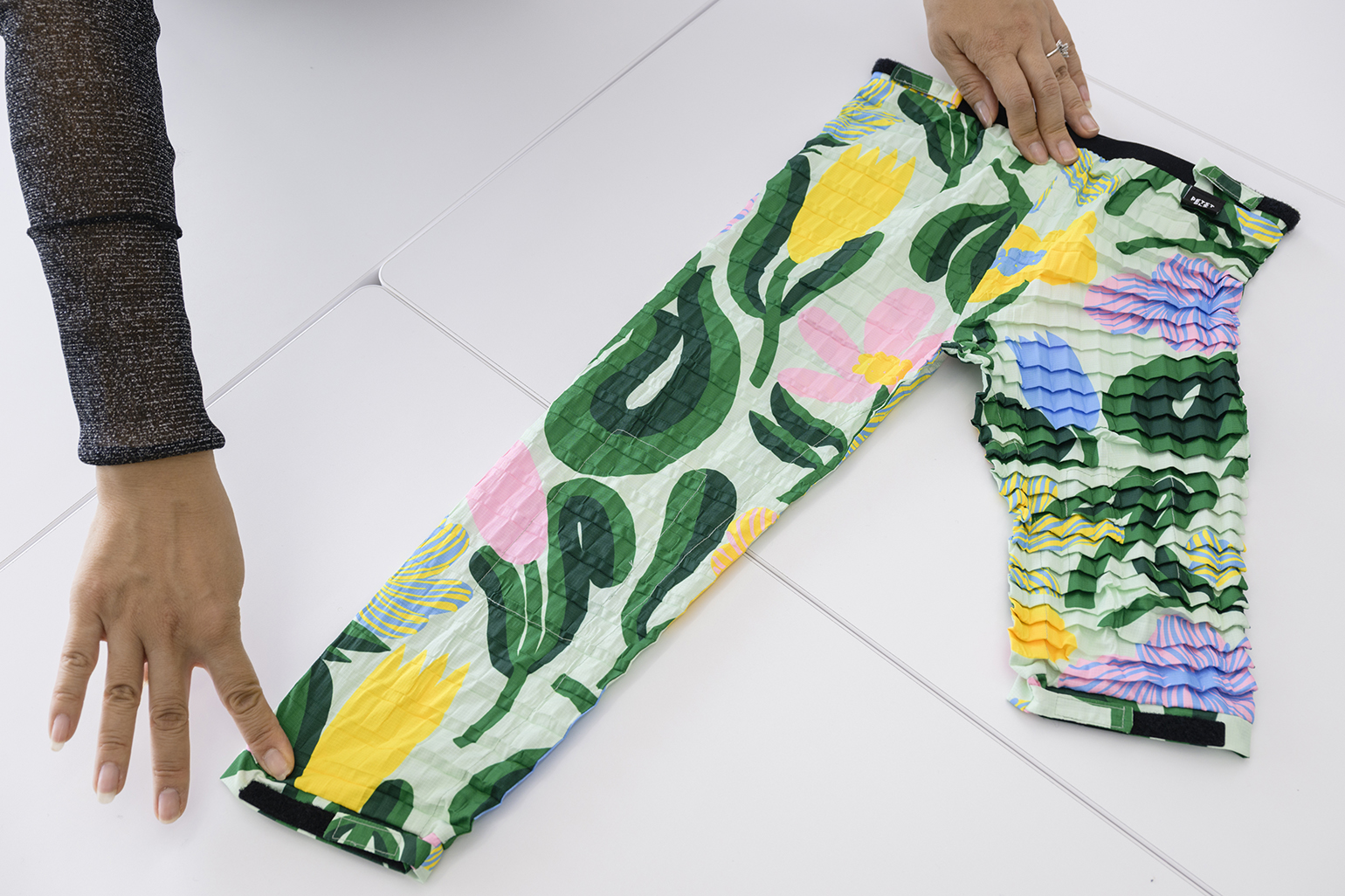
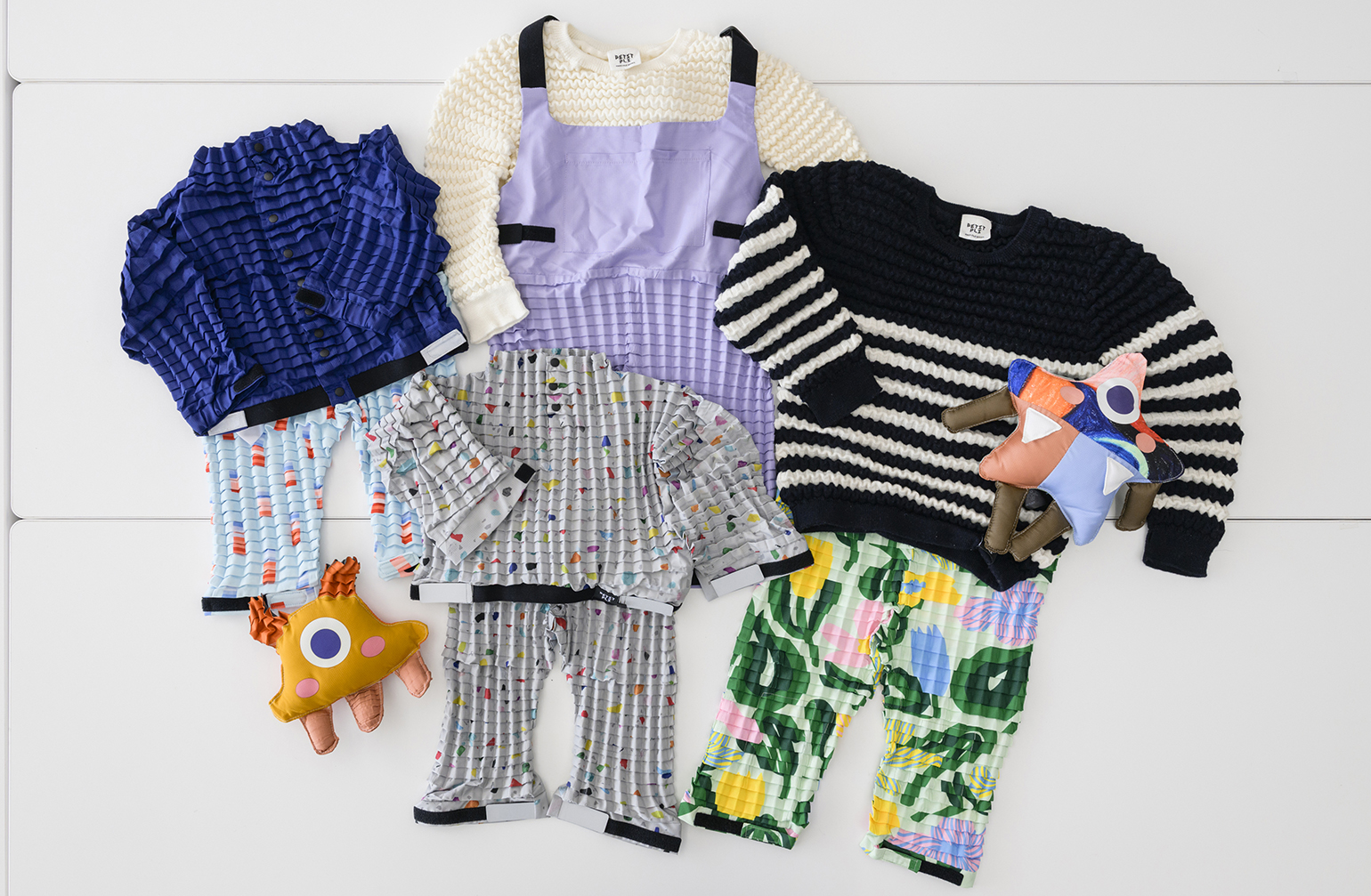
Petit Pli garments, featuring intricate "folds," expand both vertically and horizontally when pulled, and return to their smaller size when compressed. They also offer sufficient durability.
Yoshida: Ryan says he considered the challenges facing the apparel industry and thought about where his learned skills and knowledge could fit. He felt the "folding" techniques he acquired studying aerospace engineering were a perfect match. Two folding techniques are used in Petit Pli's fabric.
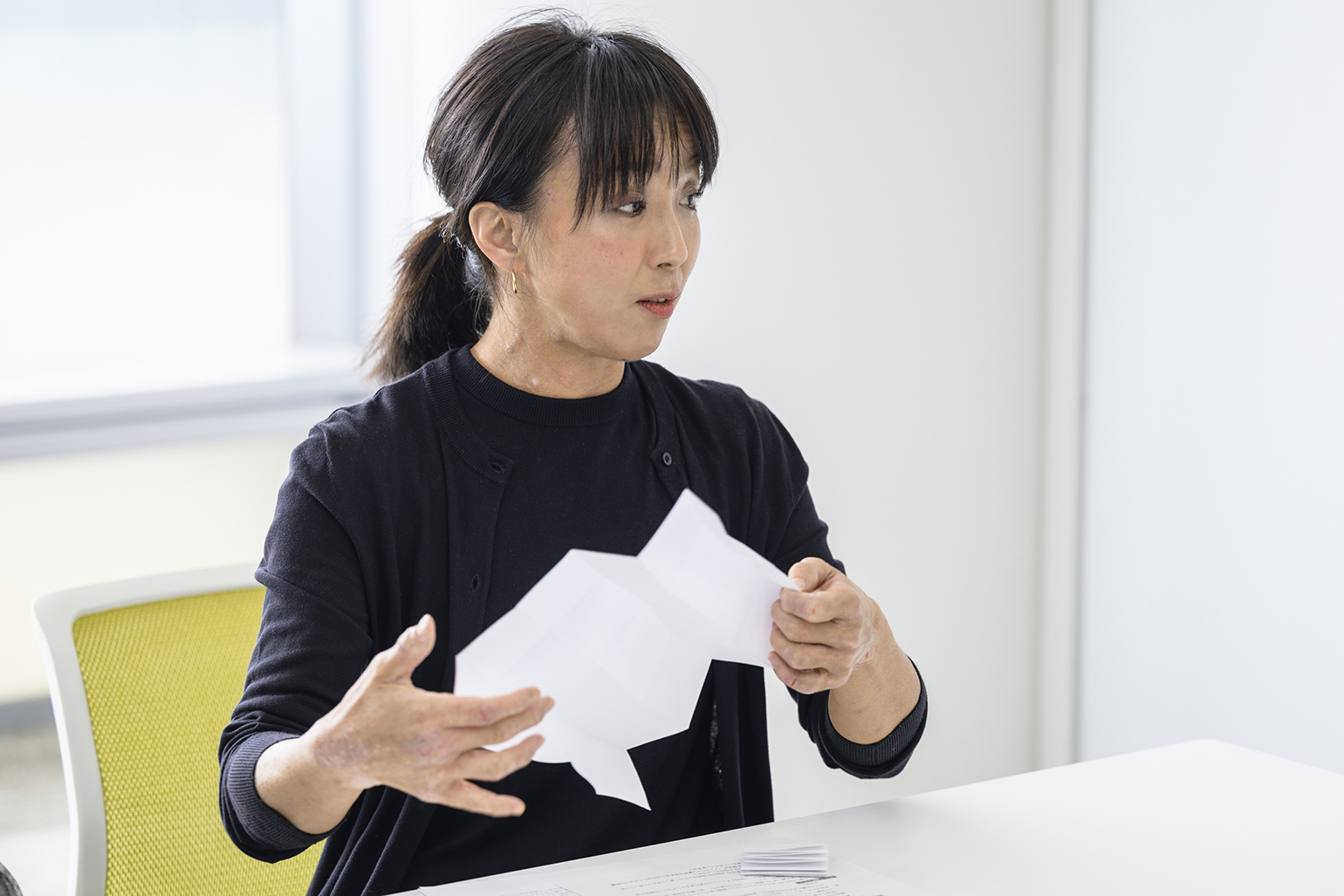
The first is the "Miura fold," invented by Professor Emeritus Kousuke Miura of the University of Tokyo. This fold expands when pulled diagonally but folds back neatly when released. It's the same fold used in mountain maps. Ryan was already aware it was used in satellite solar panels and saw its potential for creating stretchable materials.
The second is the "orthotropic structure." Typically, materials stretch in the direction they are pulled while becoming thinner. However, when fabric incorporating an orthotropic structure is pulled, it expands and stretches both vertically and horizontally. Conversely, when compressed, it shrinks both vertically and horizontally. This unique phenomenon is termed "negative Poisson's ratio" in technical terms.
Incidentally, Petit Pli clothing uses "folds" as its stretch mechanism. This means the printed pattern looks different when the fabric is folded versus when it's stretched out. I think it would be fascinating to photograph children wearing the clothes in each state, capturing how the garment's appearance changes over time.
Iinuma: When you stretch it out, you might discover, "Oh, this print was actually tulips!" (laughs). How fun! The prints, colors, and designs are also distinctive.
Yoshida: The brand's core theme is "space," incorporating colors found in the cosmos. For example, we have a color called Kelvin Blue. Kelvin is the unit for a light source's color temperature, derived from the blue light emitted at high heat.
We also have colors like Astronaut Orange, reminiscent of the hues worn by NASA astronauts. Children are said to be very conscious of "colors right before their eyes." We also want children to play in a world full of vibrant colors.
We hope they gain insights by cherishing and wearing their favorites for a long time.
SKY Chihiro Yoshida
Iinuma: It's fascinating how Ryan's spirit, shaped by his studies in aerospace engineering, permeates every detail of the product. How is the brand's mission defined?
Yoshida: In a word, our mission is "to create items that are used for a long time and cherished." For children, wearing clothes is their first experience with design and consumption. Ryan says, "I want them to learn to treat things with care by wearing them for a long time," and "I want them to value each consumption experience, starting from what's close to them, and gain some kind of insight."
Yamamoto: Watching children, you see them start to develop preferences when choosing clothes. I think picking out clothes is often one of the first choices children make based entirely on their own will.
Fujii: When my child picks out outfits, they might choose a bright blue top with pink bottoms. An adult wouldn't pick that and would worry about others' opinions, but children can express their sensibilities 100%. I want to cherish that feeling.
Dentsu Inc.'s Yoko Iinuma
Iinuma: I truly felt this was their first design experience and consumption experience, including the parent-child interaction. What materials are used for the clothing?
Sun: We primarily use recycled polyester made from recycled PET bottles. Theoretically, wearing a top and bottom set means recycling 11 PET bottles from the world. We hope that by experiencing the entire process—wearing, consuming, and eventually letting go—they'll learn about the environment, design, and materials.
Iinuma: It creates an opportunity to become aware that one's consumption activities are part of a larger eco-cycle. Next, please tell us about how you and Ryan met, which led to launching the Petit Pli brand in Japan.
Sun: Due to my husband's work, I had the chance to go to the UK. While packing our belongings, I found a huge pile of children's clothes that had been outgrown. That's when my eldest son, who loves coming up with ideas, asked, "Isn't there a way clothes don't outgrow us?" This sparked a family brainstorming session, and the idea "We should just make clothes that stretch" emerged.We were discussing "But how do we stretch them?" when, the very next week, I spotted a display in a UK shopping mall featuring clothes that were actually stretching and contracting as they were displayed. That was my first encounter with Petit Pli.
Iinuma: The very next week! It feels fateful.
Mago: Exactly (laughs). We visited the shop three days in a row after that. When I told the designer who was there, "I'd love to meet the person who created these clothes," Ryan actually met with us just three days later. We hit it off immediately, and I brought up, "Would you consider expanding to Japan?"
Once I decided to handle sales in Japan, I started telling everyone, "There's this amazing brand!" That's how I connected with Isetan's children's wear buyer. They really resonated with Petit Pli's concept, and we ended up doing a pop-up store at Isetan Shinjuku. It started from my own enthusiasm, but I'm glad we managed to build something from nothing with that momentum.
Lightweight, quick-drying, and compact. "I want them to wear it on adventures!"
Shosuke Yamamoto, Dentsu Inc.
Iinuma: The path leading up to this meeting feels incredibly guided. And Mr. Son's own child actually used the product, right?
Sun: Yes. The delivery box itself was fun—when you open it, you can make crafts. First, the child reacted to the box, saying "What's this?!" and started crafting. They were also fascinated by the stretchy clothes, saying "I can't wear clothes this small!" but actually could, and looked incredibly excited.
Since it's a bit pricey, I originally planned to save it for special occasions. But when I saw him running around happily at the park wearing Petit Pli, I changed my mind. The material doesn't cling to the body and is really easy to move in. Since then, we've been taking it to the beach and mountains too.
It's lightweight, quick-drying, doesn't take up much space, and can handle a little rain, so in our house, it became the "adventure companion" outfit. As a friend for our child's adventures, it grew with us over several years.
Iinuma: It's true—you can roll it up tight in a backpack without wrinkles. The fabric is durable, snag-resistant, and hard to damage, making it easy to carry around.
Yamamoto: I really like the word "adventure." Wearing it for mud play seems to make them feel more daring. Or it could be an adventure that sparks intellectual curiosity—like wearing it to a piano recital.
Yoshida: Exactly. Ryan says, "Everything around a child is an adventure." It embodies the wish for the clothes to walk alongside them on their adventures.
Iinuma: Hearing the underlying philosophy, you can feel a consistent ethos from the materials to the design. If Petit Pli's clothes, along with the brand's philosophy, are passed on as hand-me-downs, I think the next owner would be delighted.
Yoshida: It's wonderful how Japan's unique "hand-me-down culture" allows different children to wear the clothes, creating new family stories. Petit Pli's fabric itself is durable and rarely tears unless something extreme happens. However, in the UK, they offer a repair service for issues like buttons coming off or defects. That's also part of their everyday sustainable practices.
Fujii: My child still prefers clothes that are snugly fitted, but I feel that being able to wear something like Petit Pli for a long time helps cultivate a deeper attachment to the garment and a more mindful approach to caring for possessions.
Dentsu Inc., Fujii Kimiko
Iinuma: Petit Pli clothing is also an easy choice for gifts. For example, when selecting a gift for a boy, designs often feature cars or dinosaurs, while for girls, they might have frills, be pink, or have strawberries printed on them—many are quite gender-specific. This can make choosing gifts confusing. In that regard, Petit Pli's gender-neutral designs feel like an excellent option.
Yoshida: Thank you! Regarding print patterns, for the first few years after launch, we had very few options and truly focused on genderless designs. However, some customers do seek designs aligned with gender, so recently we've gradually started introducing more easily recognizable, gender-specific lines.
That said, this genderless aesthetic is unique, so I don't think Petit Pli needs to actively pursue it.
Iinuma: I also think it's great that Petit Pli's clothes create opportunities for consumers to become aware—whether it's sparking environmental consciousness or realizing, "Just because I'm a boy doesn't mean I have to choose vehicle designs."
Yamamoto: By the way, do you also offer adult clothing?
Sun: Yes. The clothes I'm wearing now are Petit Pli maternity wear, and they're incredibly stretchy. I've seen men wearing them in the UK. They're super convenient and useful for flying or when you want to cover your figure.
Iinuma: It's rare to find clothes adults of both genders can share. It's interesting that this isn't just for kids, but adults too.
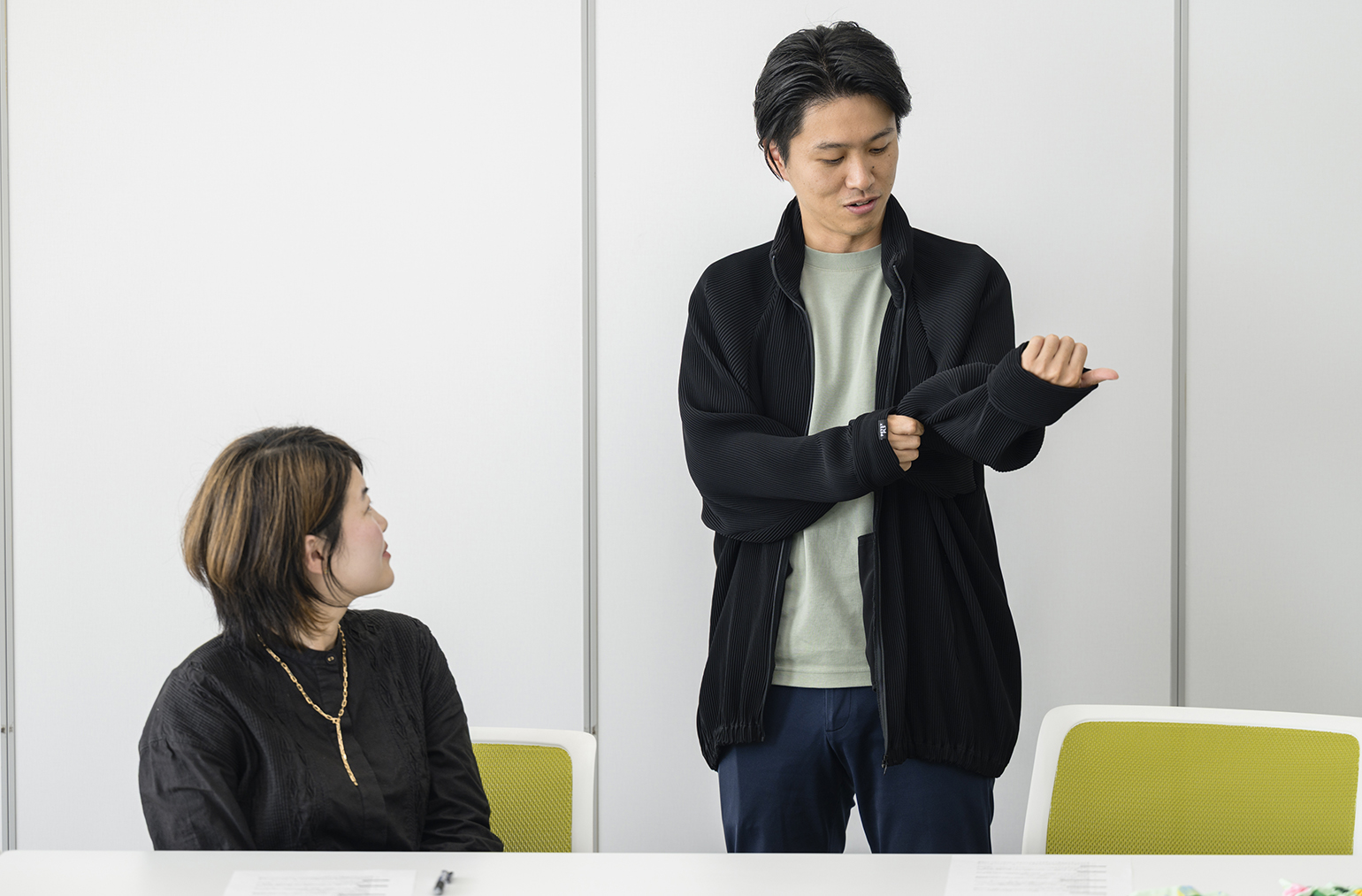
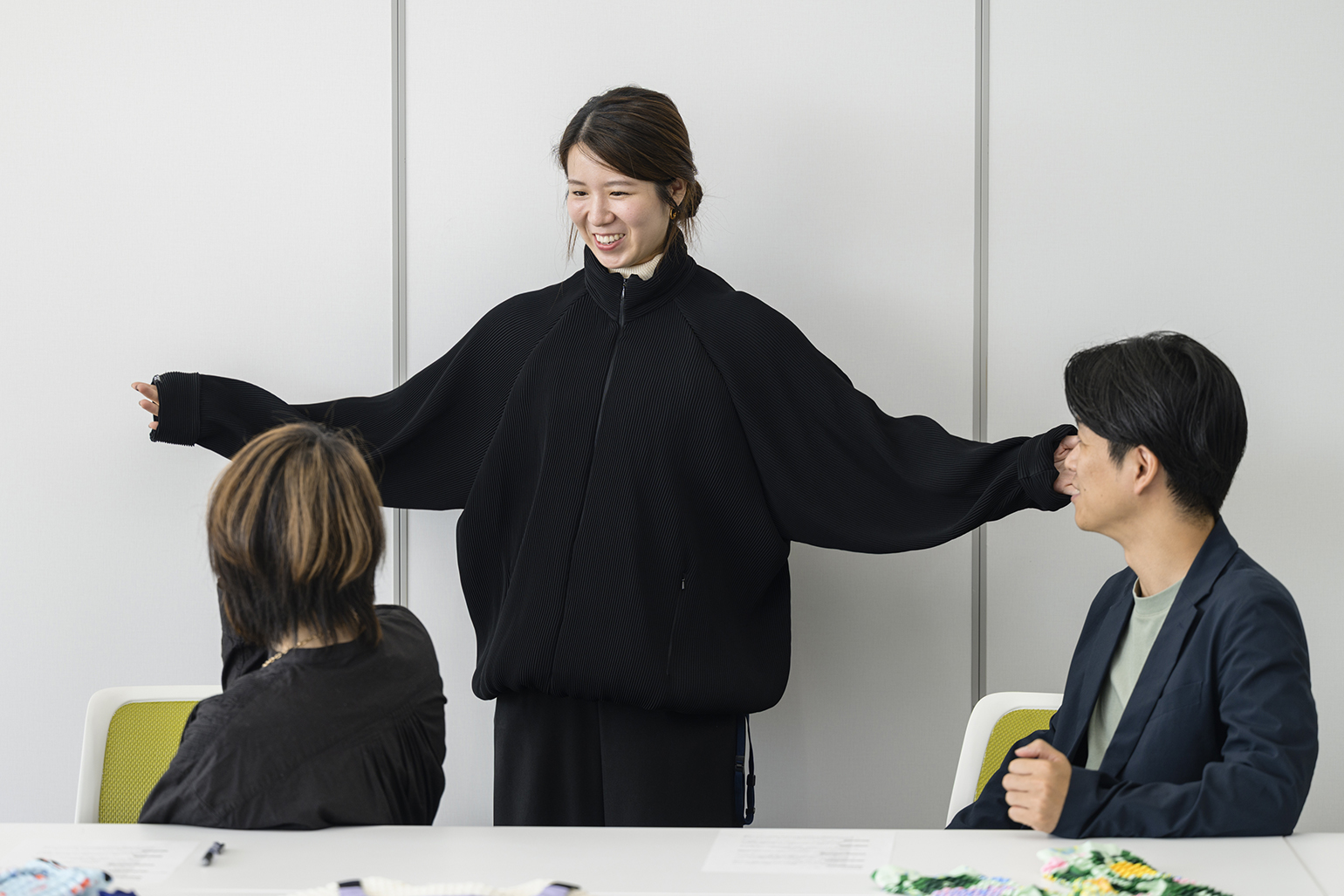
Yamamoto and Fujii try on Petit Pli's adult jacket. Like the children's clothes, it stretches and shrinks, with a gender-neutral size and design that suits anyone.
With the patented "stretchable material," we also envision expansion into multiple fields.
Iinuma: Regarding future product development, do you have any ideas in mind?
Yoshida: Products leveraging Petit Pli's technology could include compact emergency shelters or disaster shelters usable during crises. They'd also be great for outdoor activities.
We're also considering applications in healthcare and nursing. We hope to provide easy-to-wear solutions for those with limited mobility due to physical changes or illness, and develop products that fit people of all ages.
Son: At Petit Pli, more than just design, we want to maximize the potential of this material. The structure itself, which pursues "folding," is very unique and patented. We'd be thrilled if new developments emerged, for example, through collaborations with other companies that incorporate our fabric.
SKY: Mr. Yoshida is holding paper folded using the Miura fold. This technology, also used in satellite solar panels, is a major source of inspiration for Petit Pli.
Iinuma: As you prepare for full-scale expansion in Japan, what kind of growth do you envision?
Yoshida: I hope the idea of "nurturing" clothes together with children spreads as people wear Petit Pli garments. I want families to weave their own stories and grow alongside the clothes.
Fujii: The theme of "nurturing" feels very compatible with Japanese culture. For example, Japan has a culture of repairing broken pottery with kintsugi and continuing to use it. That act itself feels like "nurturing."
Yoshida: Japan has a culture where value is created through continued use—like turning used dashi stock into tsukudani or maintaining a nuka bed for long-term use. Ryan also deeply resonates with Japanese culture.
Yamamoto: Earlier we talked about reuse. I think it would be even more wonderful if, after wearing Petit Pli for a long time and moving on to the next stage, you could have it remade into something like a bag, or essentially purchase "the next experience."
Iinuma: For example, there are services that transform school backpacks into other goods. It's about them accompanying you on your adventures until the very end.
Sun: We could consider remaking something from the clothing itself, utilizing this material. In fact, the stuffed animal I brought today is made using Petit Pli clothing and is available for sale. We could also make charms using fabric scraps.
Yamamoto: It would be great if, after being recycled, it could be used again in services by different companies, circulating within society. I'd love to see developments like a PET bottle becoming Petit Pli clothing, then transforming into something else... and ultimately returning to space to go to Mars!
Petit Pli clothing and stuffed animals made from fabric scraps.
Concerned by the reality of children's clothing quickly becoming too small and discarded, she introduced the UK-born brand "PETIT PLI" to Japan as a sustainable alternative. After launching overseas businesses at Recruit and working in investment banking at a major securities firm, she graduated from Waseda Business School. Guided by the motto "Focus on how to make it work, not why it can't," she proposes new choices to society while balancing parenting and business.
Chihiro Yoshida
SKY LLC
After graduating from university, he worked across a wide range of roles—from planning and sales to operations and design—at a paper specialty trading company and a lifestyle brand. In 2023, he joined Petit Pli upon its Japan launch, drawn to its worldview. Leveraging experience cultivated in product creation and brand building, he now oversees overall operations and handles business development.
Yoko Iinuma
Dentsu Inc.
Marketing Division 8
Planner
After handling mass communication, product development, and PR strategy production in the Sales Division, she worked as a planner developing communication strategies, PR strategies, and product branding across diverse industries. As Deputy Representative of dentsu DEI innovations (formerly Dentsu Inc. Diversity Lab), she covers and disseminates information on various diversity-related themes including gender, generations, disability, and multiculturalism, while also promoting DEI both within and outside the company.
Since joining the company, has been responsible for marketing and communication strategies primarily for national clients in the food and consumer goods sectors. Subsequently gained experience in government and local authority/organization projects within the sales division. Currently serves as a CX Planner in the integrated communications domain.
Shosuke Yamamoto
Dentsu Inc.
Marketing Division 8
Planner
After serving as a Project Manager and IMC Planner at advertising production company AOI Pro., joined Dentsu Inc. Currently engaged in marketing communications strategy development, brand building, customer and employee experience improvement, and product/service development support. Also promotes hospital design projects aimed at solving hospital challenges.

 People who bring NEXT and NEW to society. Seed Growth Team [3/4]