Note: This website was automatically translated, so some terms or nuances may not be completely accurate.
Establishing a New Model for Hiring People with Disabilities! 32 Companies Unite as One Team to Challenge Social Awareness
Promoting employment for people with disabilities has become a critically important theme for companies striving to realize an inclusive society. The Corporate Accessibility Consortium (ACE) is an organization established by the leaders of like-minded companies committed to tackling this challenge.
Guided by the principle of "People-Centered Social Change," dentsu Japan—which has pursued diverse employment approaches including direct hiring within its core business, special subsidiaries, and agriculture-welfare partnerships—endorsed this initiative and joined ACE in 2023. Since then, it has collaborated with the consortium to establish new models for disability employment.
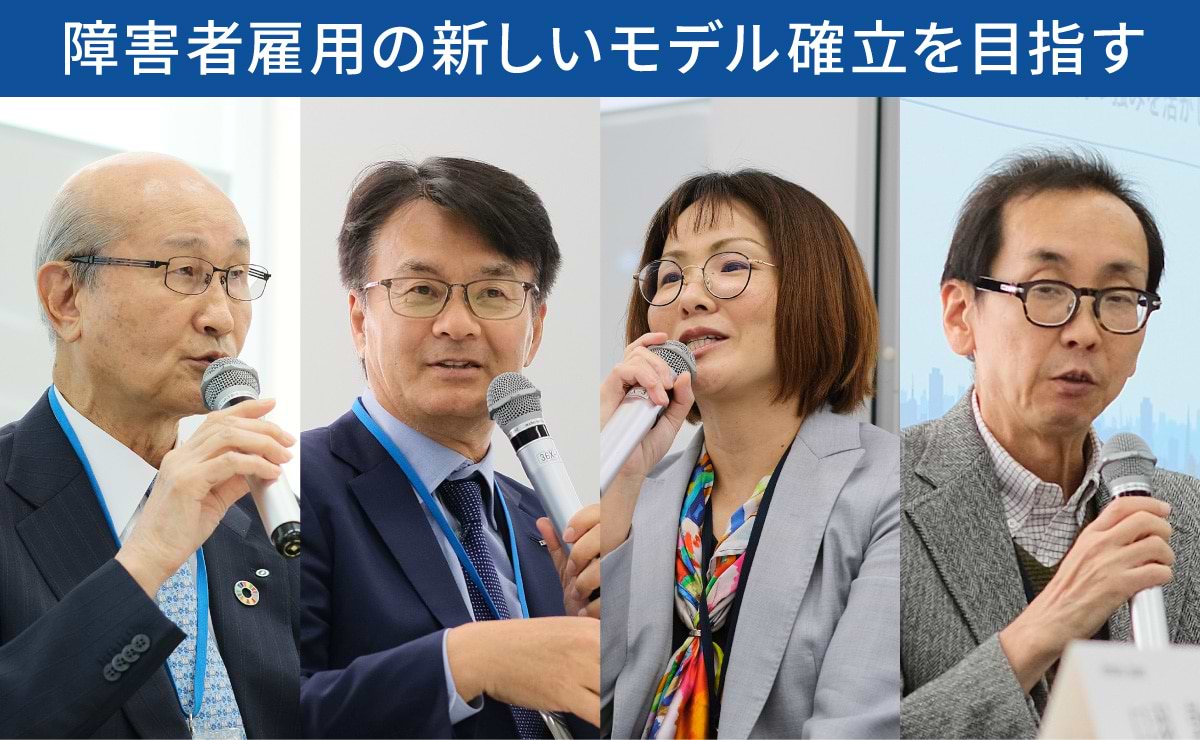
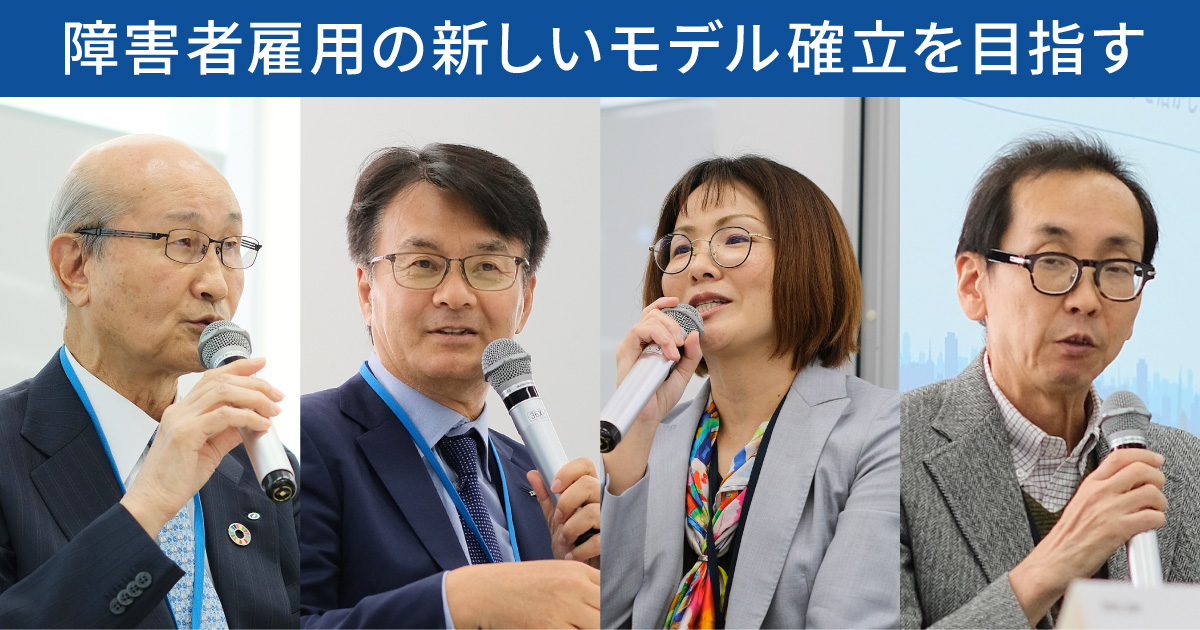
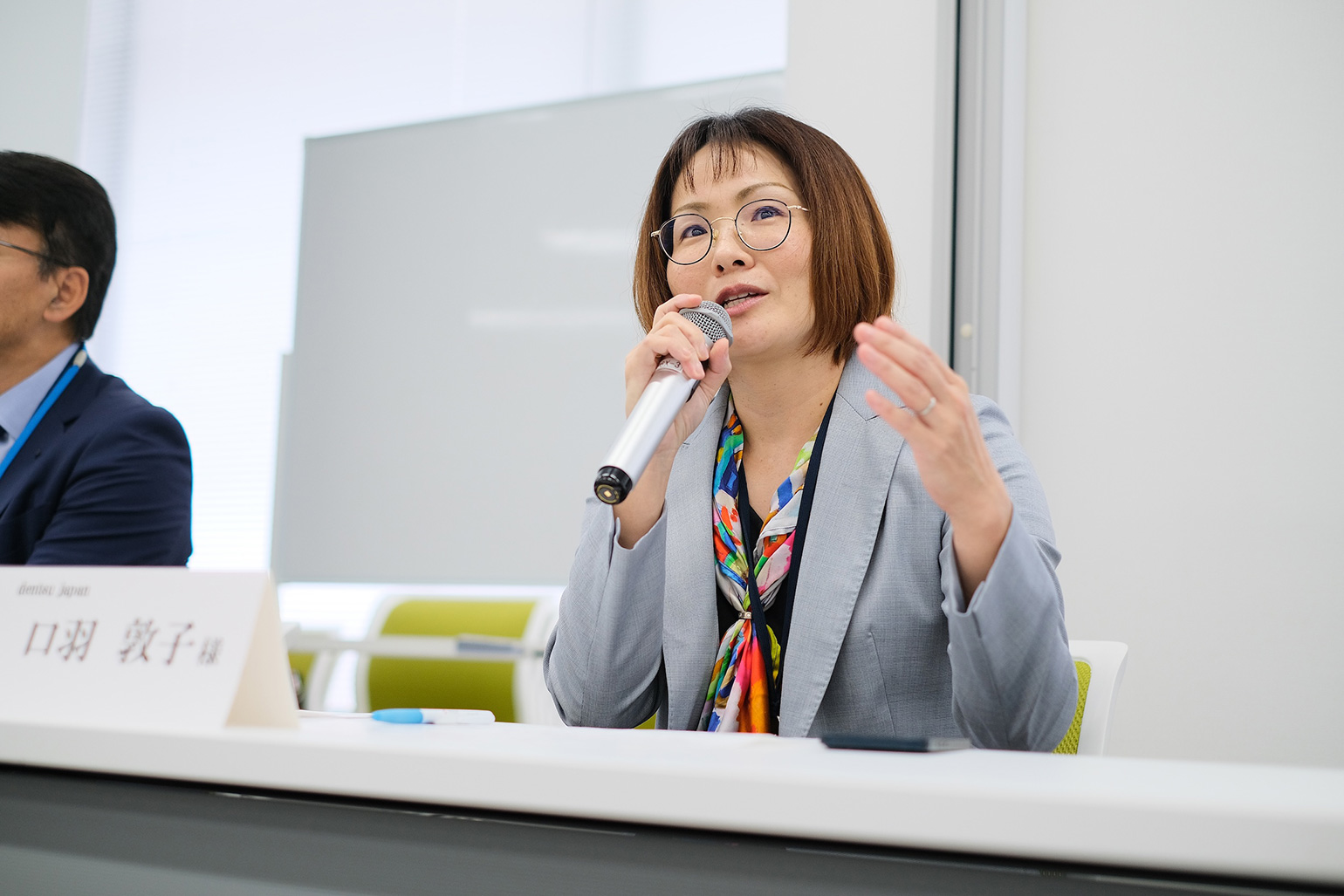
The ACE-hosted panel discussion held on November 10, 2025, featured Mr. Akio Yamaguchi of IBM Japan, who leads the organization as ACE's Representative Director, Mr. Yoichi Miyamoto of Shimizu Corporation, who serves as a Director, and Ms. Atsuko Kuchiba, Chief Diversity Officer at dentsu Japan.Nobuhiro Hamasaki, also from dentsu Japan and responsible for DEI promotion, served as moderator. They discussed the current state and challenges of employment for people with disabilities, as well as the direction ACE should take.
About the Corporate Accessibility Consortium (ACE)
Established in September 2013 by 24 major companies across industries and business models, united by the goal of "establishing a new model for hiring people with disabilities." As of September 1, 2025, membership stands at 32 companies. Led by representatives from member companies, ACE works to create role models among employees with disabilities, holds seminars to support the careers of students with disabilities, and collaborates with executives, relevant government ministries, and educational institutions to make proposals to society.
<Table of Contents>
▼Continuing to tackle the challenging goal of realizing a society where everyone lives together
▼The Potential of School Education to Support Social Participation for People with Disabilities
▼Connecting Education and Employment Challenges: Building a System for Society-Wide Solutions
▼Engaging Corporate Leaders Through Repeated Experiences and Discussions to Foster Personal Ownership
▼Sustainable Growth Through Sharing Diverse Experiences Across Companies
▼ACE is one "team." Through active exchange of ideas, we create significant social impact
Continuously tackling the difficult challenge of realizing a society where everyone lives together
The session began by revisiting ACE's founding principles.
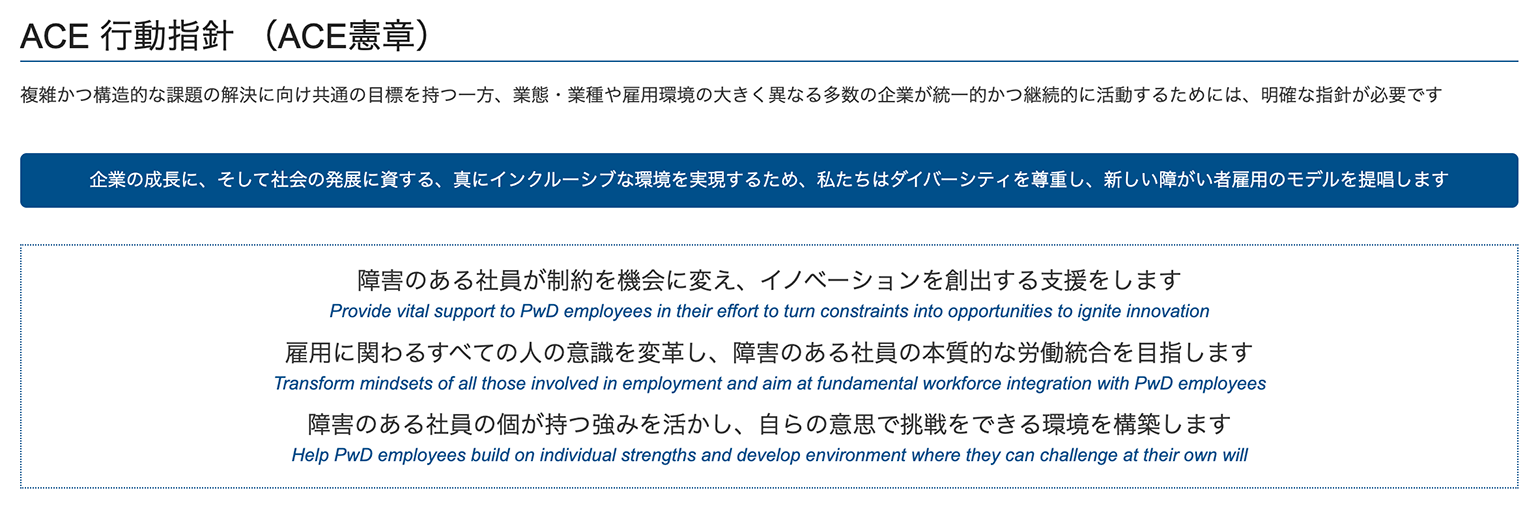
Mr. Hamazaki posed a question to the three panelists regarding the ACE Action Guidelines (ACE Charter): "Although formulated about 10 years ago, the content aligns with the challenges we face today. Were we looking ahead to the future even at ACE's founding? Or is our own evolution lagging behind? What are your thoughts?"
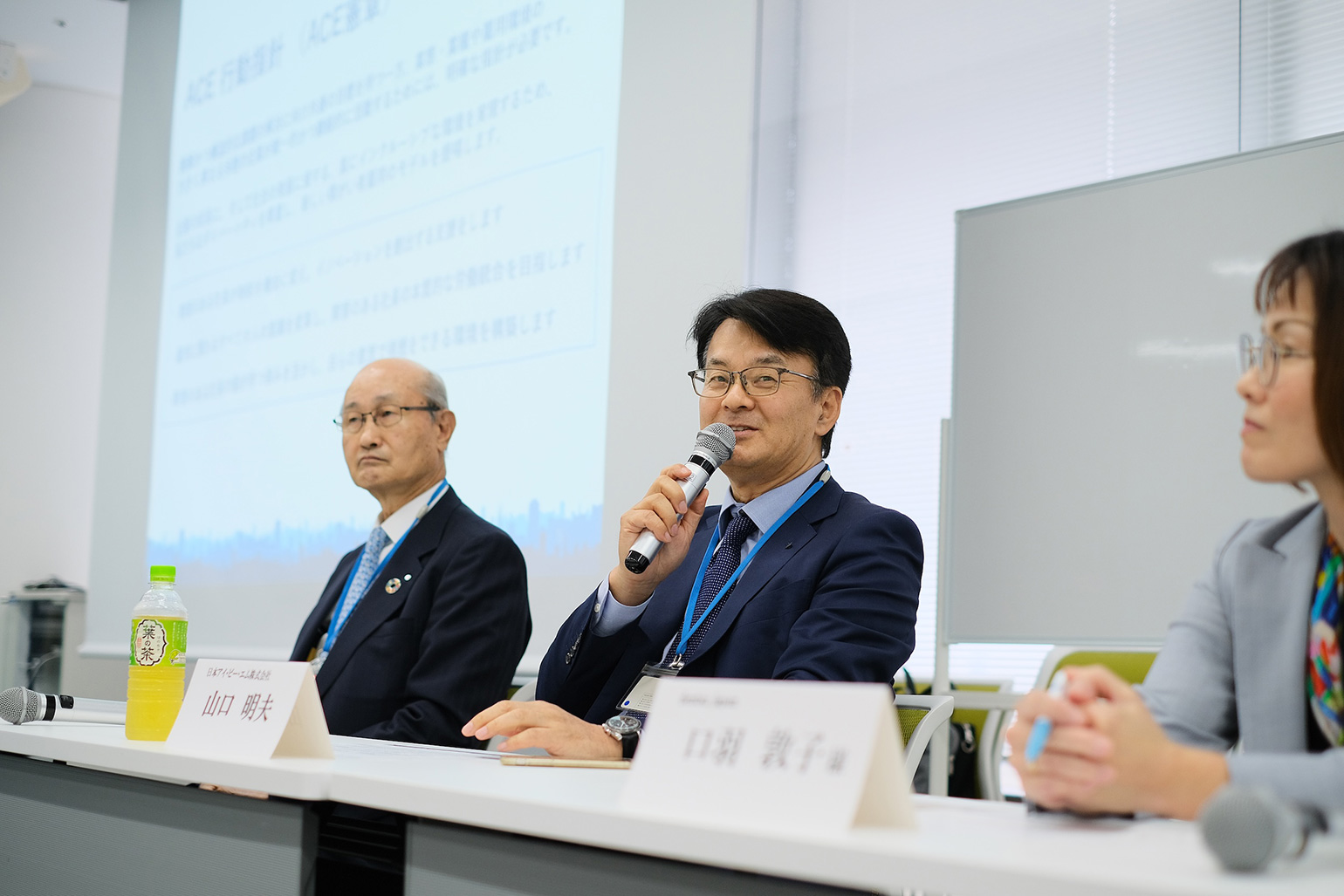
In response, Mr. Yamaguchi stated, "The ACE Charter captures the essence. Personally, I have continued my activities driven by the desire to 'realize a society where everyone lives together, regardless of disability.'" He expressed his resolve toward ACE's activities.
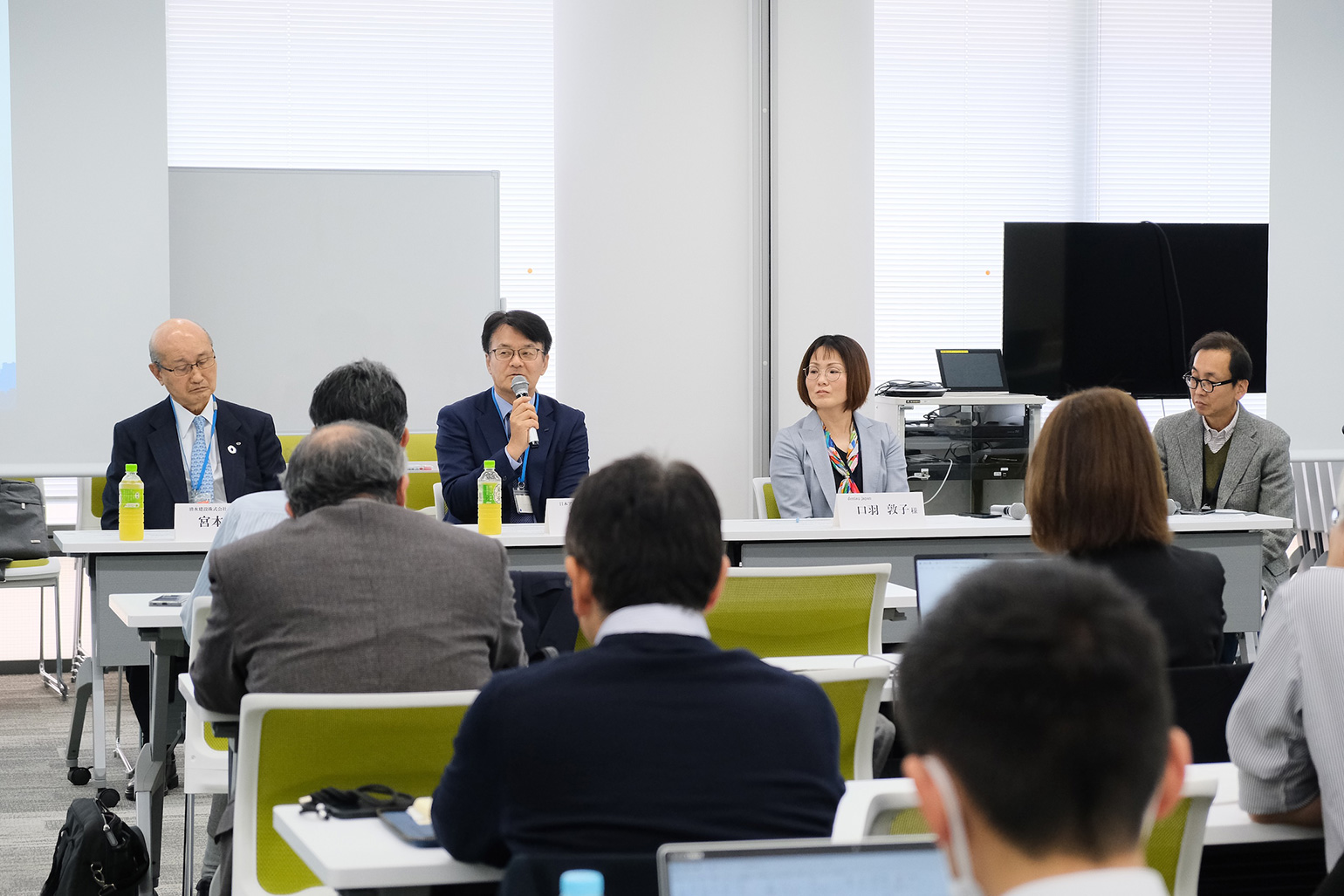
Mr. Miyamoto followed, stating, "We cannot yet say we have achieved this goal. I feel we are facing an extremely difficult challenge. We want to remove various barriers and realize a truly inclusive society as soon as possible."
Kuchiba introduced the example of Dentsu Solari Inc., a Dentsu Group subsidiary specializing in employment for people with disabilities, which has expanded its operations from cleaning to agriculture and cafes. He commented, "What struck me most was the phrase, 'We propose a new model for disability employment.' I sensed a strong will to 'change society.'"
The Potential of School Education to Support Social Participation for People with Disabilities
So, what challenges exist in realizing a "society where everyone lives together"? Mr. Yamaguchi emphasized that the nature of school education is a major point.
"Currently, approximately 11 million people with disabilities live in Japan, yet only about 2.4% are employed, and only about 1.7% are students in higher education institutions. This reality is very low. For people with disabilities to connect with society with peace of mind, we need to create mechanisms for them to connect with society through education starting from elementary school," (Mr. Yamaguchi)
Furthermore, many companies express concerns like, "We lack staff to support people with disabilities due to labor shortages." To address these challenges, Mr. Yamaguchi stated, "We aim to engage not only companies but also relevant government ministries and agencies, and if necessary, take the step of making policy proposals."
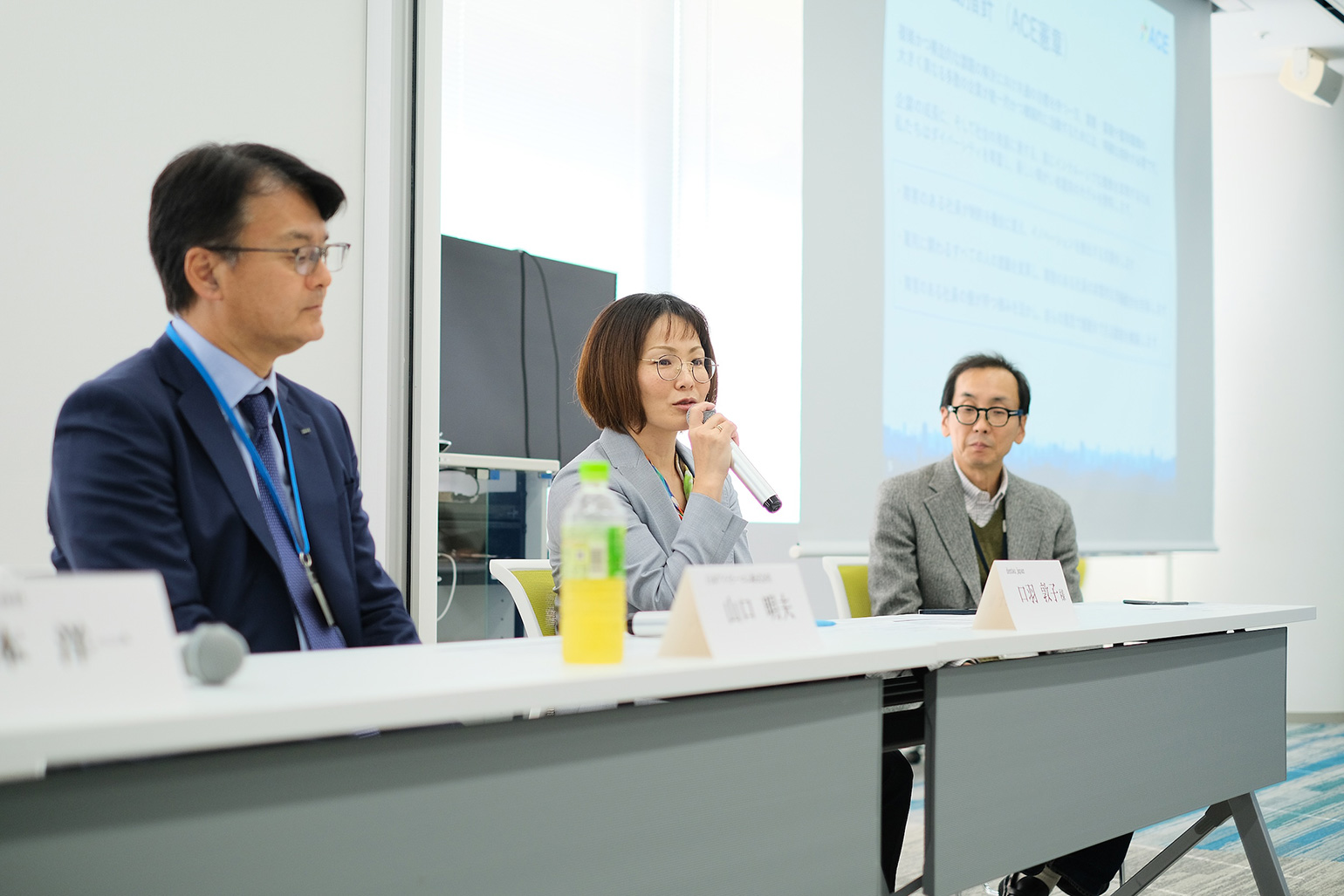
Responding to this, Mr. Hamazaki, who also leads the ACE Academic Collaboration Subcommittee, addressed the significant struggles faced by people with disabilities themselves. He noted hearing many voices expressing, "I cannot accept my disability," and "I face prejudice and discrimination due to my disability, preventing me from starting my career."
Mr. Yamaguchi further highlighted the current situation where many young people avoid applying for disability certificates to conceal their disabilities. He shared his own experience of advising an employee who applied for a certificate for the first time upon starting a job: "Regardless of whether you have a disability, various support systems exist in society. You should confidently utilize the benefits of these mechanisms."
Connecting education and employment challenges to create a system for society-wide solutions
What specific initiatives are needed in school education?
Mr. Miyamoto stated, "It's crucial to promote education from elementary school that naturally fosters the ability to provide reasonable accommodations for people with disabilities. Doing so can also be expected to increase the rate of people with disabilities advancing to higher education institutions."
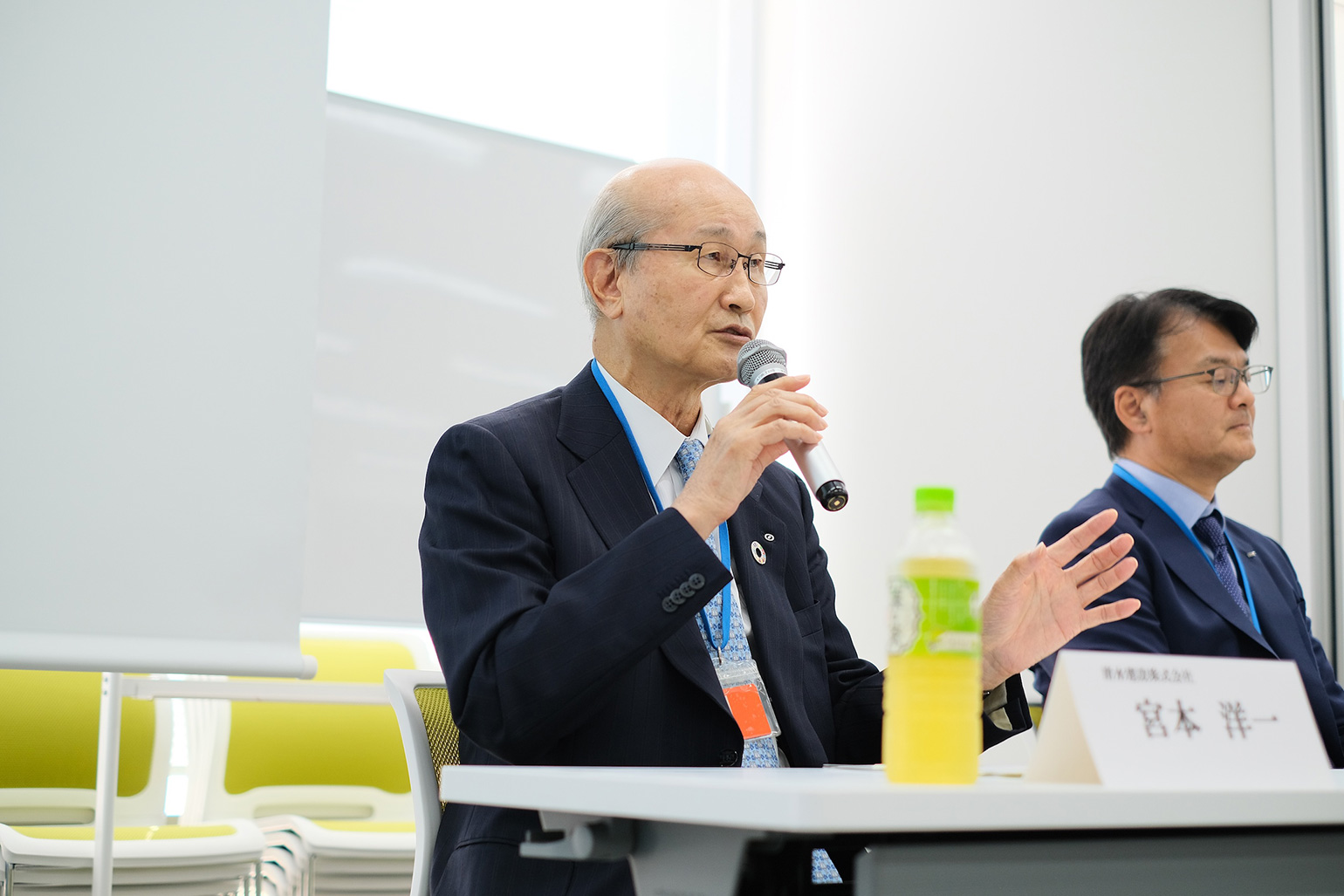
He further emphasized the need to explore 'new models' for creating employment opportunities, alongside lobbying government and collaborating with educational institutions. While the statutory employment rate for people with disabilities is gradually increasing, a challenge arises: even companies enthusiastic about hiring people with disabilities see their relative employment rate drop when they actively recruit general employees.
Citing companies developing education systems tailored to each student's individual needs, Mr. Kuchiba stated, "Just like in education, companies are also required to adopt an individualized approach toward people with disabilities. It is crucial to bridge the disconnect between education and employment settings and solve these challenges as a society."
Engaging corporate leadership through repeated experiences and discussions to foster personal ownership
Mr. Hamazaki posed the question: "What kind of leadership is needed within companies to promote the employment of people with disabilities?"
Mr. Yamaguchi responded, "It's crucial to recognize the challenge of realizing an inclusive world and to involve executives in repeated discussions," introducing IBM's initiatives.
"At IBM, we refer to people with disabilities as PwDA (People with Diverse Abilities). A volunteer group called the 'PwDA+ Community' is active. Many concerns unique to those directly affected are shared there, but these voices won't reach management unless action is taken. That's precisely why executives themselves must proactively seek information, rather than being passive," (Yamaguchi)
Reflecting on his experience at Shimizu Corporation, Mr. Miyamoto added, "Promoting employment for people with disabilities requires that supervisors and management understand its necessity.Sharing experiences is a powerful way to achieve this." He cited his participation in the ACE Forum and the "Dialogue in the Dark" workshop (where groups enter a completely darkened space and explore it guided by visually impaired attendants, experiencing various scenarios) as key motivations for joining ACE.
Mr. Kuchiba also stated, "A major factor in moving executives' hearts is how many opportunities we can create for them to understand the perspective of people with disabilities." As an example, he introduced an experience where about 15 executives rode electric wheelchairs around the office, personally experiencing the perspectives of users regarding corridor widths and door weights, then discussed solutions. "I truly feel the importance of co-creating with various stakeholders," he remarked.
Furthermore, Mr. Yamaguchi stated, "Forums where executives themselves can discuss are also vital. I want to continue dialogue with the many executives who share a vision for ACE's activities."
Sharing diverse experiences across diverse companies for sustainable growth
"We are tackling an extremely challenging endeavor," said Mr. Hamazaki, "but precisely because we are an organization with diverse companies participating, there must be things we can achieve."
Responding to this, Yamaguchi stated, "We want to create systems that support not only people with disabilities but also their families," sharing an episode from IBM's internship program for people with disabilities. He recounted receiving reports from participants who expressed immense joy not only from entering the workforce but also from being able to say "I'm off" and "I'm home" to their parents every day. This reaffirmed his understanding that the daily lives of people with disabilities are made possible by their families' support.
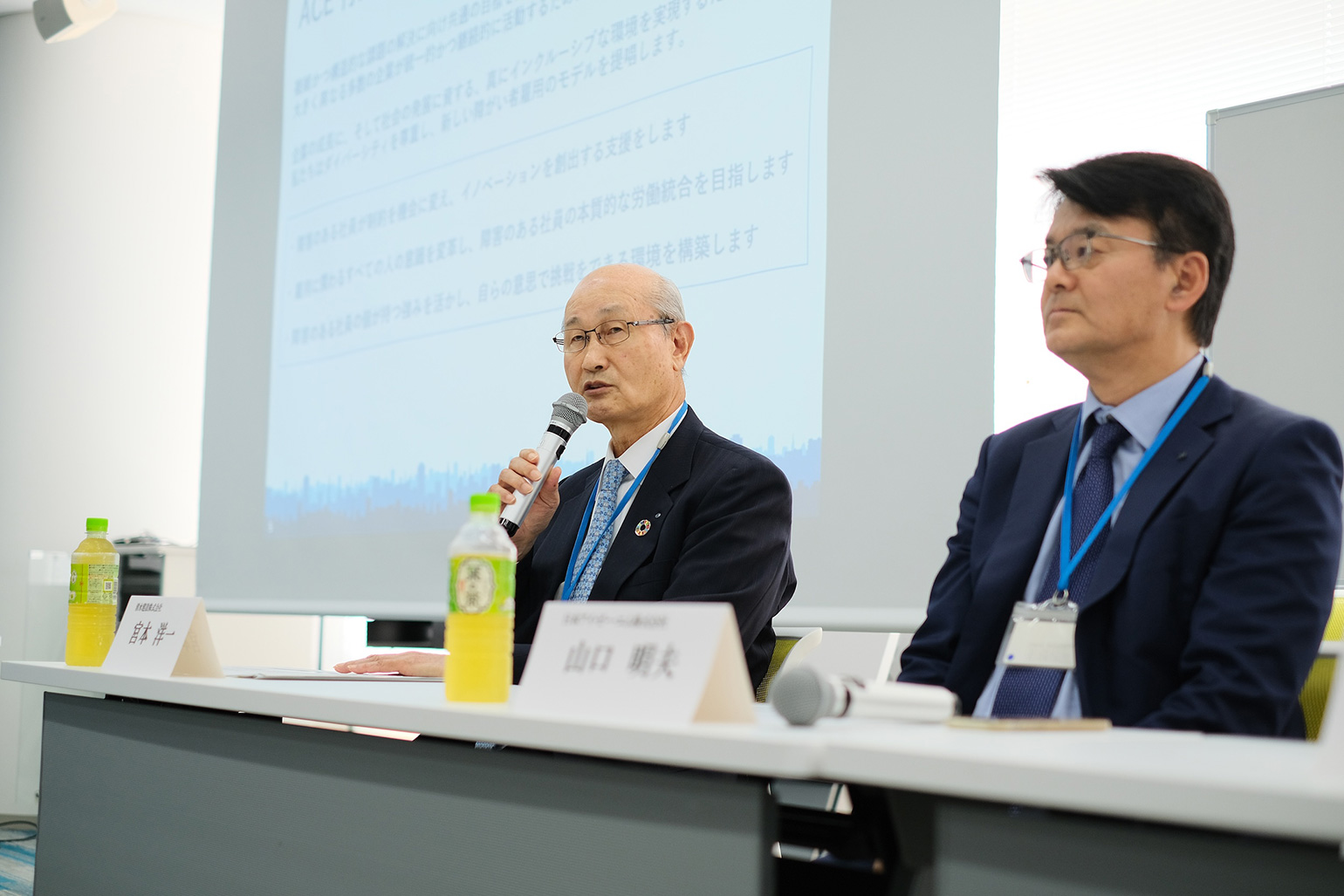
Mr. Miyamoto emphasized, "It's crucial to recognize the abilities of people with disabilities," and again shared his experience at "Dialogue in the Dark." He recounted how the person with disabilities who guided him, despite being in complete darkness, could discern his height from the direction of his voice and the spaciousness of the room from the resonance of his voice.
"Each person possesses unique strengths. By harnessing this diverse range of abilities within corporate activities, people with disabilities and those around them can join hands to build a single organization. I believe it is precisely such companies that achieve sustainable growth," stated Mr. Miyamoto.
ACE is one "team." Through active exchange of ideas, we aim to create significant impact on society.
During the Q&A session, when a representative from a member company stated, "I sense a growing awareness in society that organizations must seriously consider hiring people with disabilities. I myself want to continue activities to raise awareness within my company," Mr. Yamaguchi responded, "As long as we operate under capitalism, businesses are expected to deliver results. However, we should be warm and kind to people, creating an environment where everyone is accepted. I want to continue dialogue with managers who think this way."
Additionally, Mr. Miyamoto introduced the "Challenge Forum" held annually at Shimizu Corporation. He explained that through this event, aimed at promoting the active participation of people with disabilities and enhancing employee understanding of disabilities, the mindset of expanding employment opportunities even to construction sites where accommodating people with disabilities is challenging is steadily permeating the company.
Following this, the three panelists delivered messages to the audience.
Kuchiba commented, "I felt the passion and strong will of the companies supporting ACE. While there are forums where management gathers to discuss women's advancement, I believe ACE can fulfill that role for disability employment. If discussions among business leaders expand, it should create an even greater impact on society."
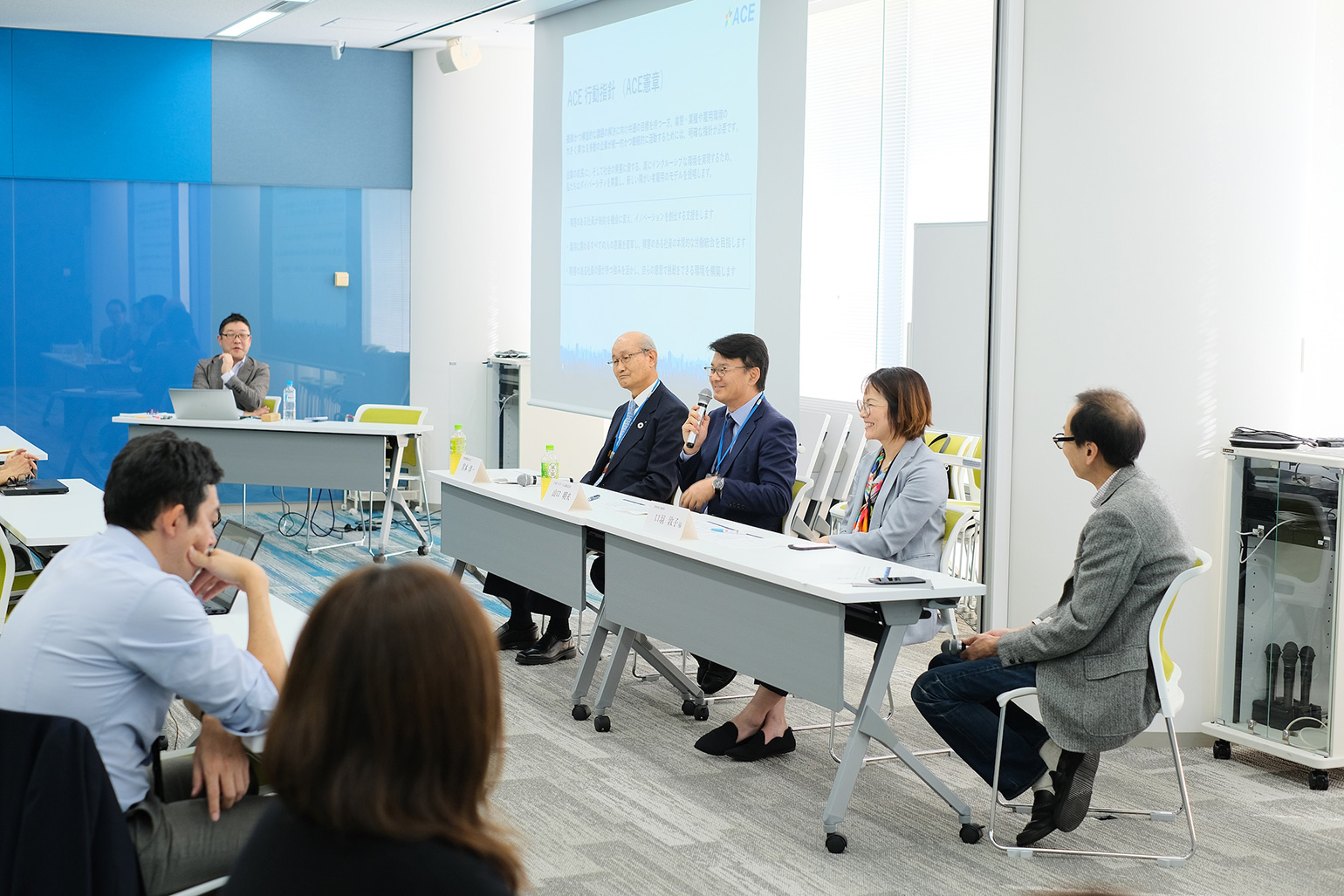
Mr. Miyamoto addressed the audience: "I believe that when ACE member companies share their perspectives and take these ideas back to their respective organizations to advance disability employment, such activities become the driving force that moves society as a whole. I look forward to continuing this work together with everyone."
Finally, Mr. Yamaguchi concluded the session, stating, "Some may perceive today's discussion as idealistic or theoretical. However, I believe these are not only crucial activities for companies to undertake but also fundamental responsibilities we should all consciously embrace as human beings. I am confident that by advancing as one team with the companies who share ACE's vision, we will surely open new breakthroughs."
ACE has continuously explored mechanisms where employees with disabilities transform constraints into opportunities, and all employees collectively pursue corporate growth and societal development. Great expectations rest on its future activities toward realizing an inclusive society where everyone can unleash their individual potential.
The information published at this time is as follows.
Was this article helpful?
Share this article


Newsletter registration is here
We select and publish important news every day
For inquiries about this article
Author

Yoko Iinuma
Dentsu Inc.
Marketing Division 8
Planner