
Note: This website was automatically translated, so some terms or nuances may not be completely accurate.
 UX: The Revolution That's Right Before Our Eyes [4/7]
UX companies and companies that have begun to focus on UX

Tsuyoshi Mizukawa
Some companies have lived and breathed UX (user experience) since their inception, while others have only recently begun to focus on it. The quintessential example of a company defined by UX is Google, known to everyone. The service homepage of this globally renowned company is the page featuring Google's search box, recognized by people worldwide. The reason this simple search box took the world by storm is clearly because its UX was outstanding.
Not only Google, but Yahoo! too can be considered a company born from UX. People visit portal sites, and corporate services begin where those people use them, so they have continuously focused on UX to this day. The banner ads there are no exception. As communication lines became faster, richly expressive banners became commonplace.
For companies that existed before the internet, not just these IT firms, how should they approach UX to gain an advantage?
Consider a food company. While UX is crucial when selling products via e-commerce on their own website, prior to UX considerations, they likely need to organize and adjust aspects like the division of labor between retail store sales and e-commerce sales, as well as pricing strategies.
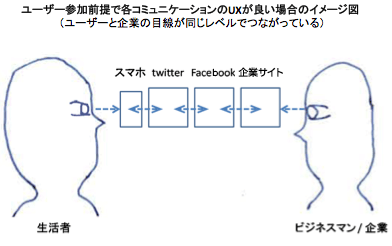
 Taking a beer company as an example: when offering unprecedented added value—like a limited-time campaign gifting factory-direct beer or selling that beer instead of giving it away—the UX isn't just about building a website. Designing a system that sustains that special experience can encourage repeat business from users.
Designing a fan site on social media that shows the production and direct shipping process via video, cultivating anticipation until the next direct shipment period, is another approach.
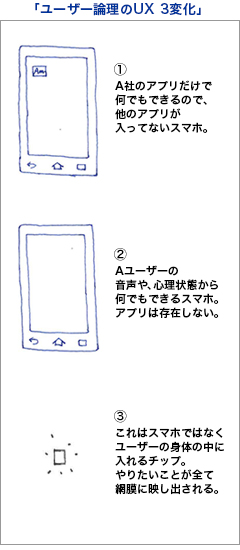
However, when you really delve into UX thinking, it shifts from the company's logic to the user's logic. Using factory-direct beer as an example, if the user experience is cultivated around the "factory-direct" category itself, it might be better for users to have a dedicated platform for factory-direct (or even farm-direct) products. Or perhaps it's simply a matter of having a factory-direct product category within Amazon.
When big business considers UX, it ultimately converges on people's smartphones. The sight of people operating their smartphones has become commonplace. Whether on trains or in parks, many people face their smartphones, performing some kind of operation. We don't know what they're doing. Yet within this ordinary scene, even if someone is doing something previously impossible, we wouldn't notice. Even the person performing the operation might go about their life unaware that what they're doing was once impossible.
This Week's Insight:
When you pursue UX thinking to its logical conclusion, it shifts from corporate logic to user logic.
Was this article helpful?
Share this article


Newsletter registration is here
We select and publish important news every day
For inquiries about this article
Back Numbers

Author