
Note: This website was automatically translated, so some terms or nuances may not be completely accurate.
 UX: The Revolution That's Right Before Our Eyes [3/7]
Corporate Communication UX with Consumers

Tsuyoshi Mizukawa
When companies communicate with consumers, they use various methods ranging from mass advertising like TV commercials and newspaper/magazine ads to email newsletters, direct mail, outdoor advertising, and Facebook. Many of these methods have become interactive.
While companies have media they can control to some extent, consumers can freely and independently spread any topic related to that company. In short, two-way communication between companies and consumers is already a given.
This is true not just for specific companies, but for all companies in the modern era. Some might think this is obvious, but let's pause and consider it.
While it's obvious, the nature of this two-way communication isn't the same for every single company. Each company interacts with consumers differently.
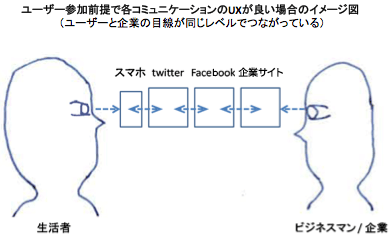
For example, one company consistently updates content on Facebook at a good pace, encourages followers to post on specific themes, maintains active engagement, and grows its follower base.
Conversely, another company might update content on Facebook, but the gaps between updates become too long. From the perspective of waiting users, this leads to disappointment, and eventually, they may stop visiting altogether. This is a classic example of how the difference in UX (user experience) stems from the difference in mindset: the half-hearted approach of "let's just have a Facebook page for now" versus the genuine commitment to observe subscriber reactions and gradually cultivate true fans.
Additionally, companies sometimes provide apps to consumers as part of their communication strategy. In this case too, it's crucial that the design and functionality are properly considered as part of the UX.
This consistency in UX should fundamentally be maintained across all communication initiatives, whether it's Facebook, apps, or other channels. Even if a company excels on Facebook, having a buggy or poorly designed corporate app creates a disjointed brand image.
Ideally, UX should be consistently considered across all corporate communications. This enables confident promotion not only on Facebook but also on apps and other initiatives, while also creating an environment where users can provide feedback on areas needing improvement. In fact, communication designed with user participation as a given is preferable.
Key Takeaway:
The ideal communication strategy for companies involves designing with user participation as a fundamental premise.
Was this article helpful?
Share this article


Newsletter registration is here
We select and publish important news every day
For inquiries about this article


Author