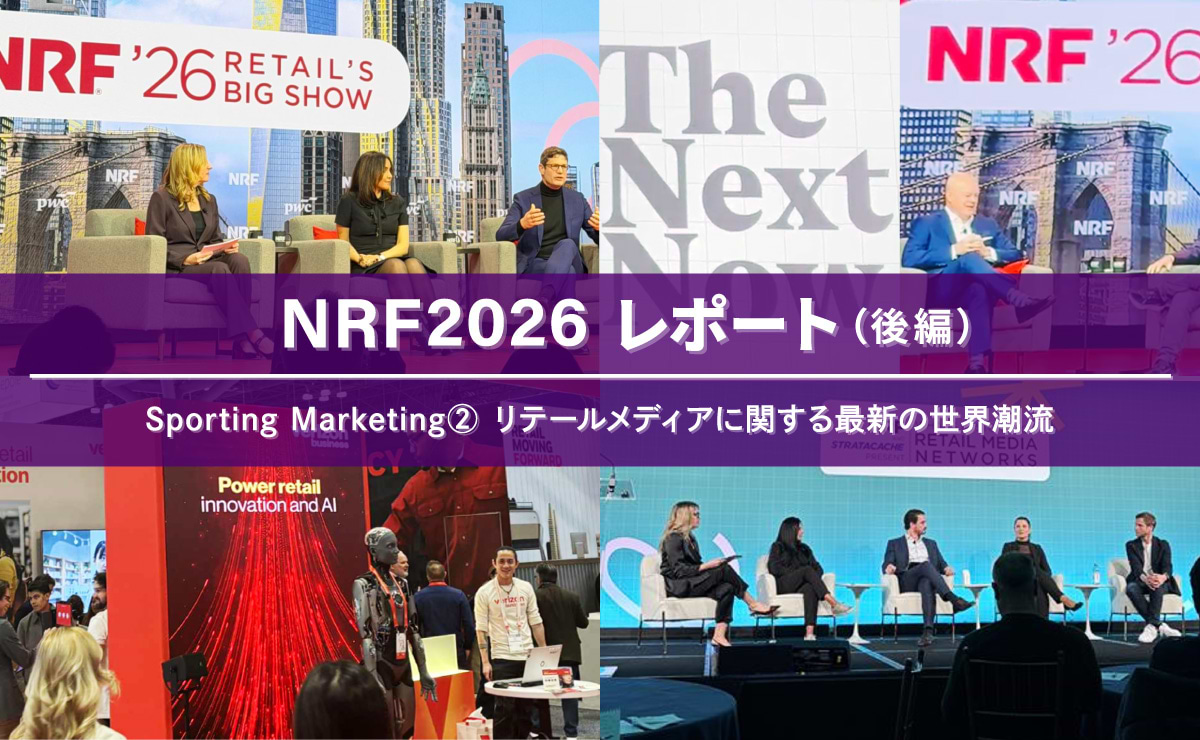
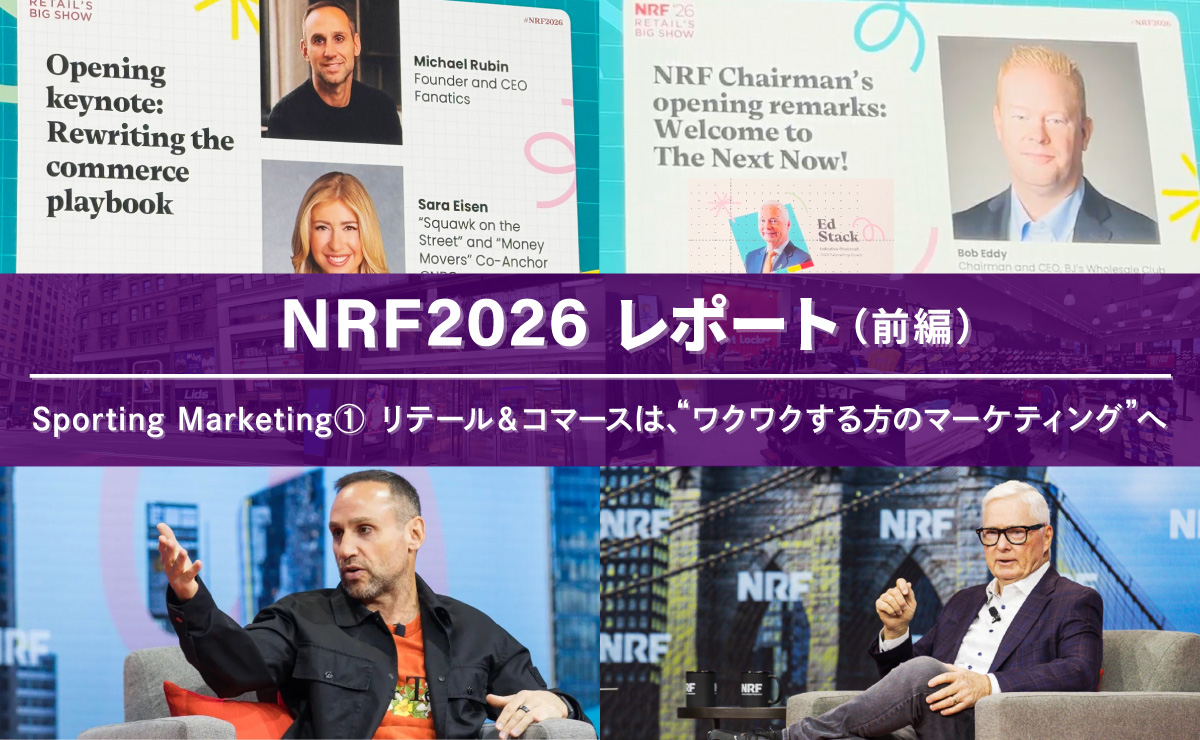
Note: This website was automatically translated, so some terms or nuances may not be completely accurate.
 NRF2024: Latest & Cutting-Edge Reports in the Retail & Commerce Sector [1/7]
Brand, Store, People: The new post-pandemic shopping experience begins with these three pillars.
NRF 2024: Retail's Big Show, the world's largest convention in the retail sector hosted by the National Retail Federation (NRF), now in its 113th year. The three keywords for 2024 are: "Begin with Brands," "Start with Stores," and "Play with People." How will marketing utilizing retail distribution and retail media change? Mr. Noriaki Kimura, who supports BX and DX for the retail distribution industry at Dentsu Inc., delivers the latest topics and trends only possible to grasp by being on-site, in a report format.
For this inaugural installment, we deliberately begin with a "special edition summary" to grasp the broader context. We will structure our discussion by reviewing the "Retail Agenda" at NRF over recent years, which the Dentsu Group has been consistently monitoring.
<Table of Contents>
▼Evolution of Retail Agendas and Keywords at NRF (2018–2024 )
▼Shifting Relationships Between Retailers and Customers (2019–2022)
▼The "Hidden Agenda" Revealed on the Final Day
Evolution of Retail Agendas and Keywords at NRF (2018–2024)
Since 2020, I have attended NRF and observed global shifts in this field. Based on these records, I independently compiled the evolution of the "retail agenda" at NRF from 2018 to 2024.
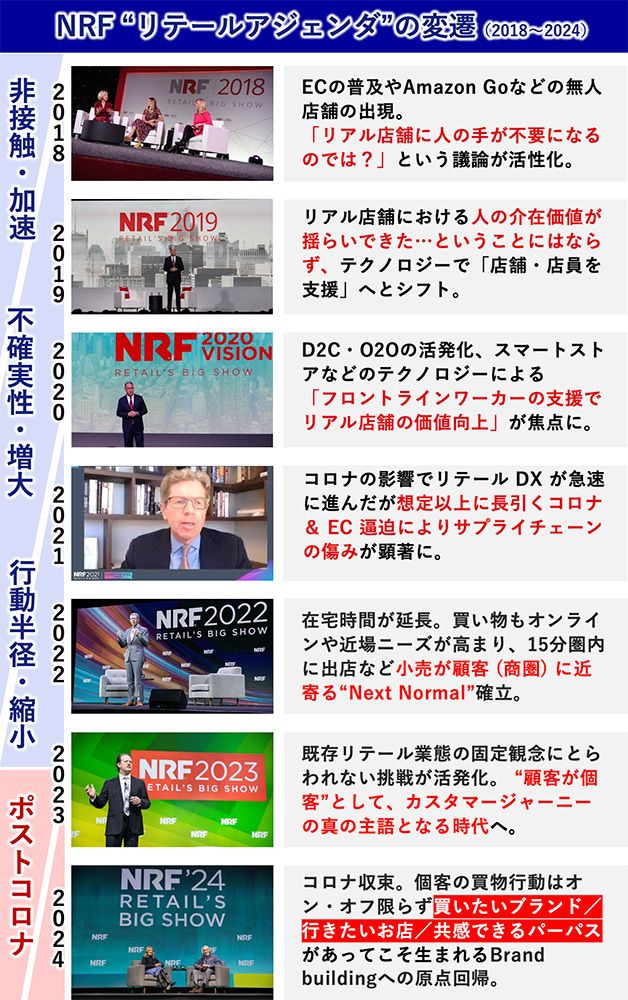
I believe no one anticipated the pandemic crisis entering this picture before 2020, yet it is also true that "Retail DX" advanced as a result.
Pre-COVID vs. Post-COVID. By categorizing keywords discussed within NRF into Pre-COVID and Post-COVID and arranging them chronologically, we can plot the following progression.
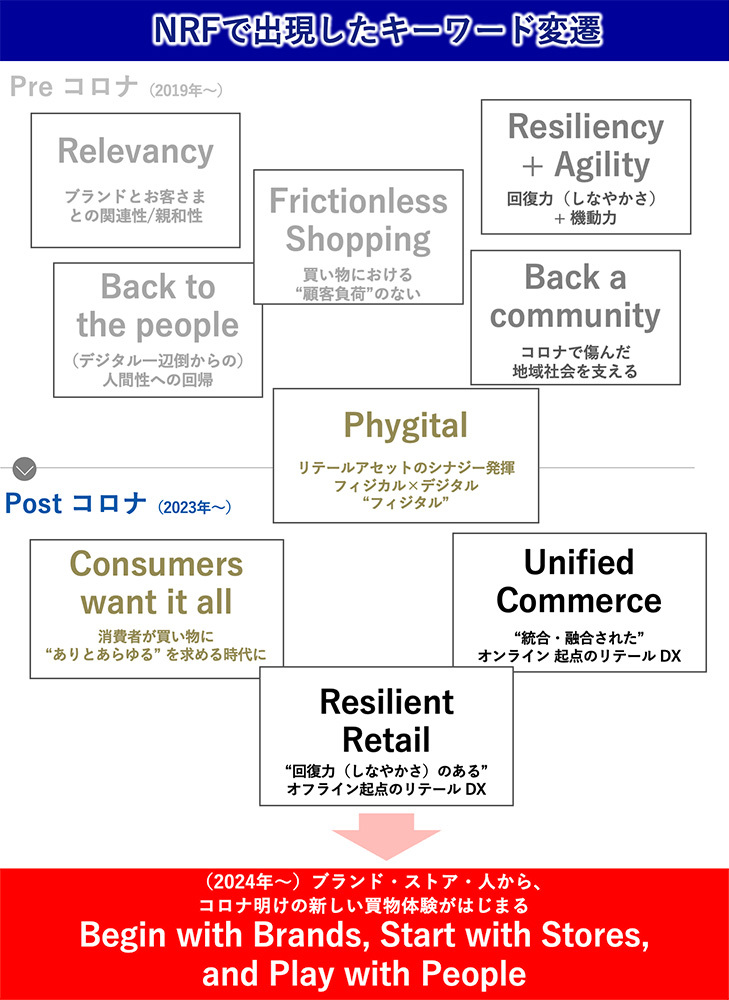
Below, we aim to structure this further and organize the transition chronologically.
Changes in the Relationship Between Retailers and Customers (2019–2022)
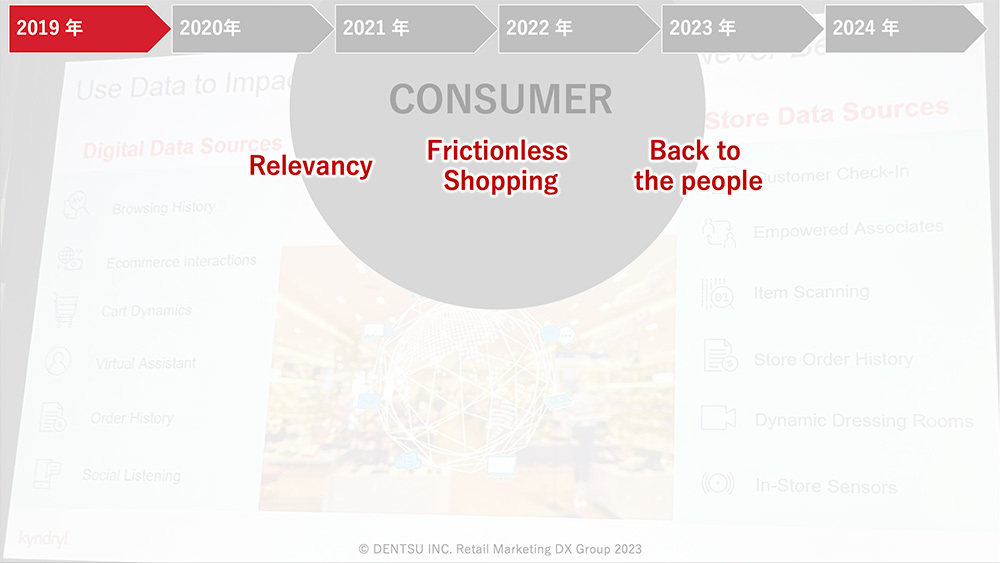
① 2019–2020
Technology and digital solutions returned to their roots in enhancing CX (Customer Experience), particularly through the advancement of e-commerce, by resolving inconveniences and negative experiences in consumers' shopping behaviors. However, COVID-19 shifted the future direction of Retail DX toward EX (Employee Experience), focusing on offline retailers with physical stores and employees who support community lifelines (who are also customers).
➁2020–2022
After a pandemic that lasted over three years longer than anticipated, both the business side and the consumer side began to reap the benefits of Retail DX. Offline retailers leveraged their physical assets, while online retailers capitalized on their digital assets. Each built upon their respective strengths, advancing Retail DX continuously with agility and speed. 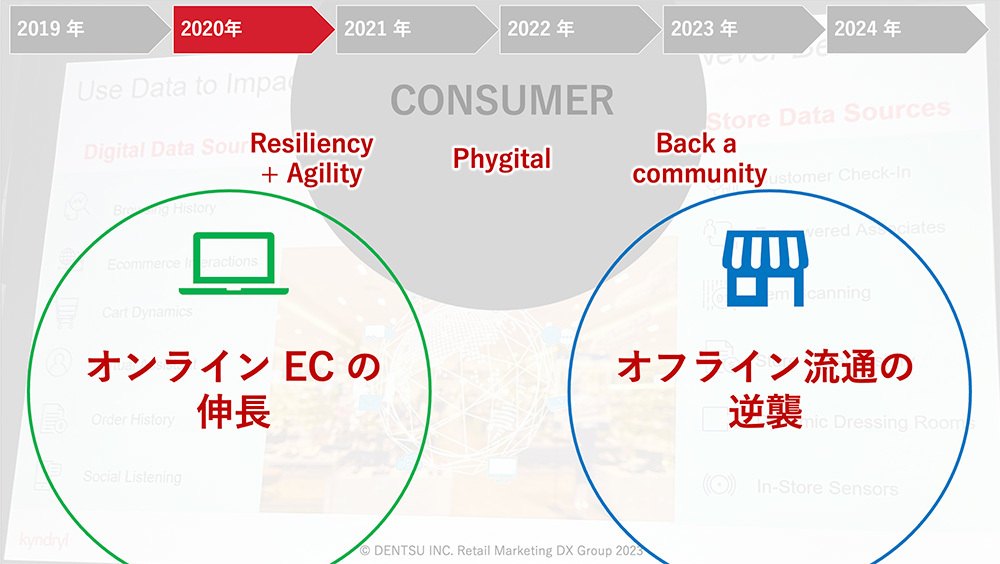
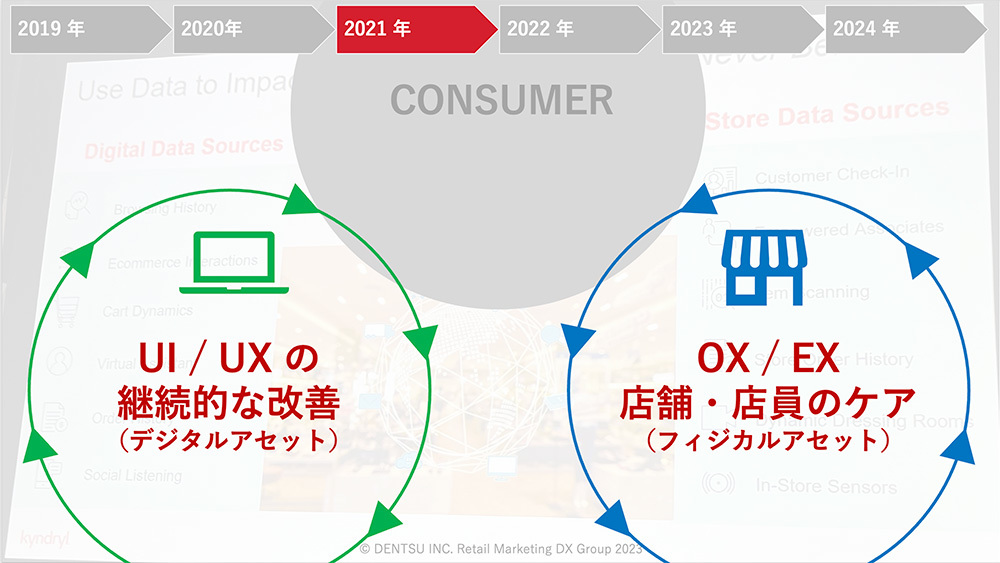
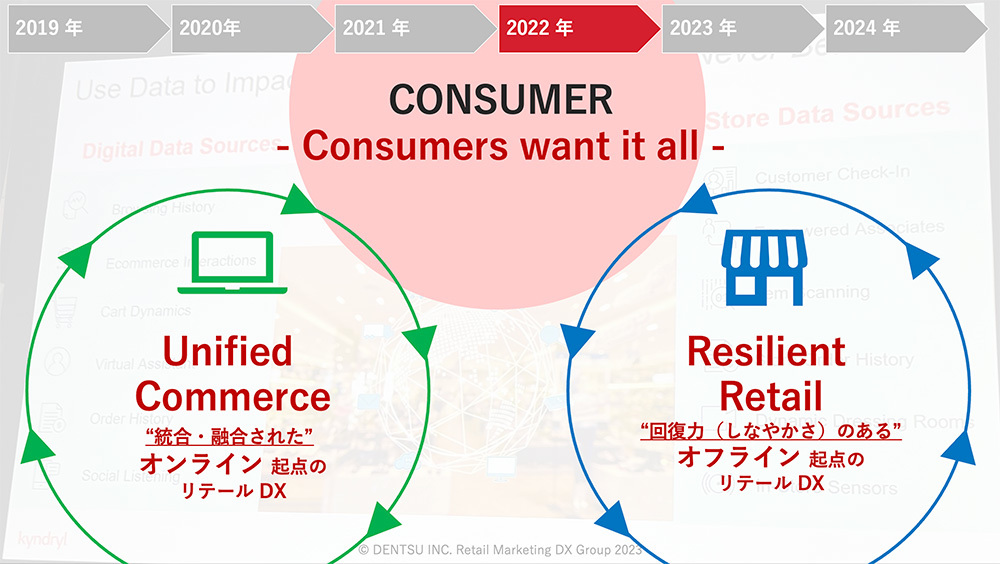
During this process, consumers grew accustomed to these shopping environments, becoming more discerning and demanding. Meanwhile, businesses refined their retail DX efforts, often involving selection, consolidation, and restructuring.
③2023
As a result, a consumer society structure emerged that was truly customer-centric, rather than channel-centric (online/offline, O2O, omnichannel...) .The term "phygital" (physical × digital), describing this state (adjective), became a tangible concept.
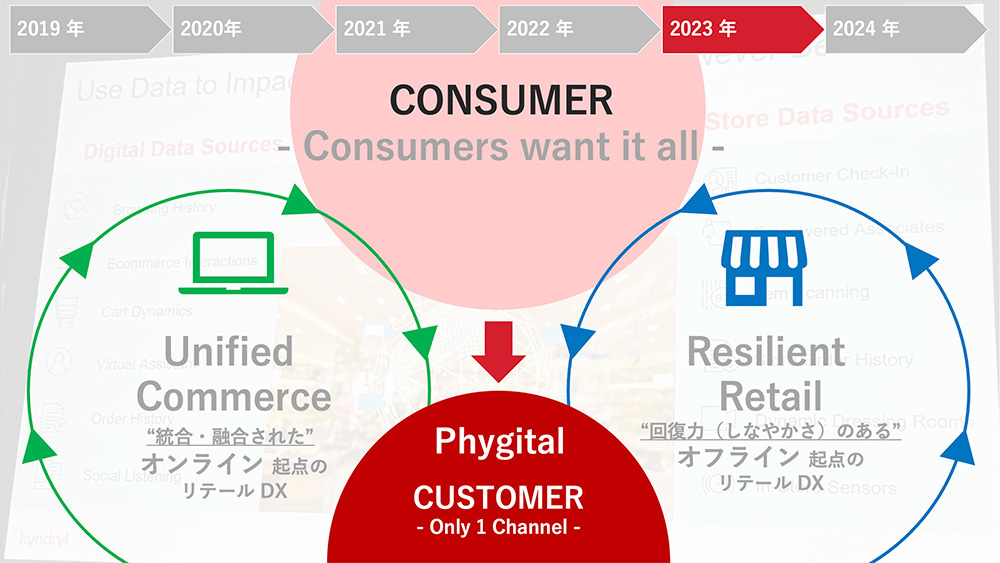
As COVID-19 subsided, suppressed demand chains were unleashed. Compounded by inflation and global instability, this also brought new supply chain constraints to the surface. Yet, various companies have strived to make their value chains resilient and adaptable. The fastest responders have been the "retailers" in the broadest sense—those that transcend the distinction between online and offline—who, as lifeline companies, have supported the foundations of society and daily life. The key players here are Amazon (plus Whole Foods Market) and Walmart. 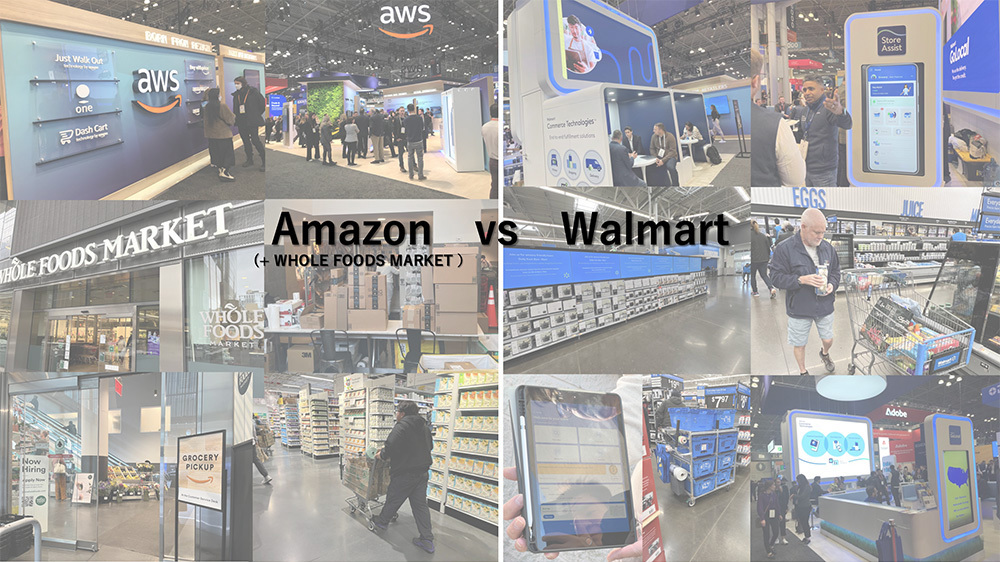
④2024
As the end of the pandemic comes into view, customers increasingly seek purpose and meaning in their consumption. Consequently, upstream players in the "manufacturing, distribution, and sales" value chain—manufacturers and wholesalers—will face demands for brand transformation surpassing even the 20th-century mass marketing era.
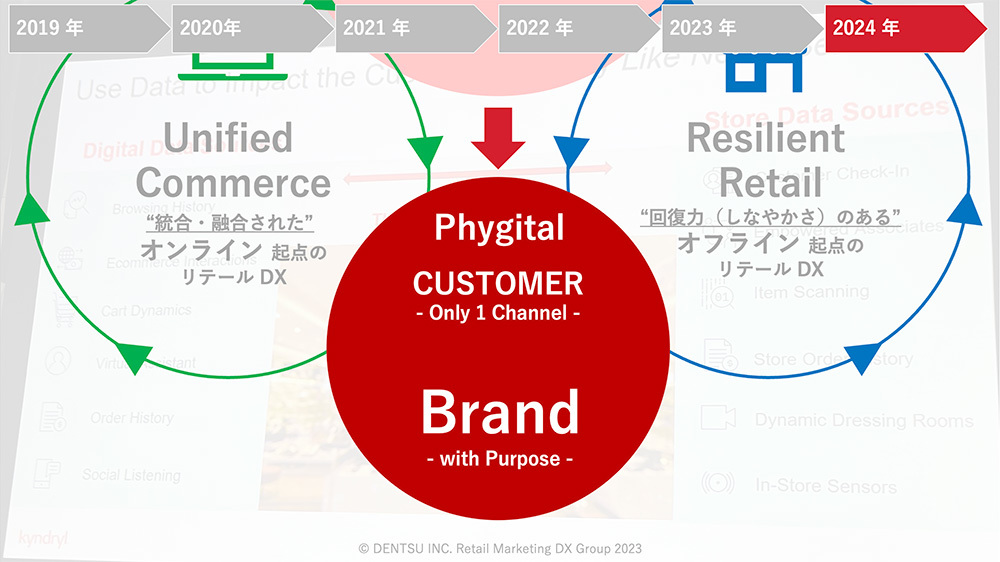
The drivers for this will be three key elements: (1) Strong, distinctive brands with purpose, (2) Stores capable of delivering 21st-century experiences and entertainment, and (3) Treating people not just as consumers, but as individual customers.
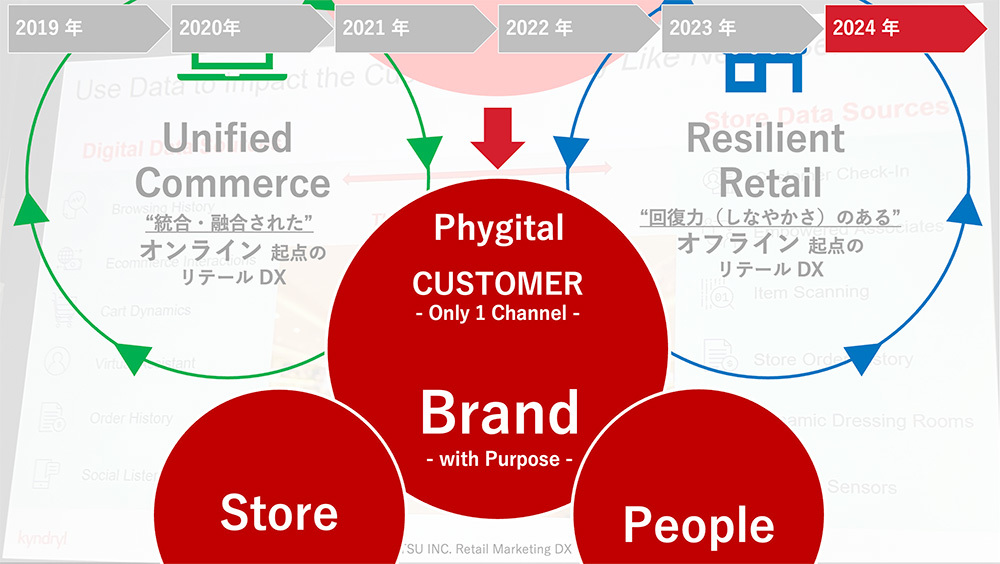
Could this framework be established from 2019 to 2024?
The "hidden agenda" revealed on the final day of NRF2024
A common experience at many conventions. You listen to several keynotes, take countless photos of the exhibition hall displays, observe society around town, and manage business networking—then it's over... Fatigue sets in, the enthusiasm of the first day starts to fade, and suddenly it's the final day.
NRF2024 was no exception. Yet, during the final day's closing keynote, we discovered an essential agenda for the retail and commerce industry—a theme also crucial for us at Dentsu.
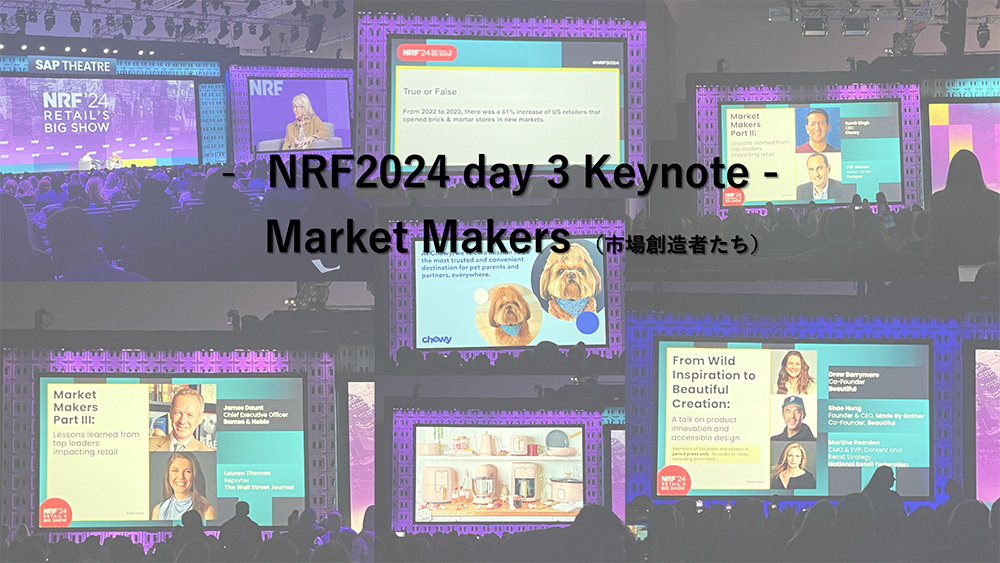
The keynote's title theme on the final day: "Market Makers. "
"Market Makers" means building brands not just for business targets, but also for communication targets—aiming squarely at society itself. This involves engaging with a broad range of stakeholders, alongside reliable partners who resonate with and enjoy the journey.
What distinguishes this from the branding boom of the early 2000s is that this purpose-driven brand building creates not just brands, but (new) markets themselves. We believe the retail sector faces the challenge of leveraging its strengths while engaging consumers (customers) and the "manufacturing, distribution, and sales" ecosystem to build markets.
I believe that one solution lies in our vision at dentsu, "IGP (Integrated Growth Partner)" , which commits to creating new markets and realizing this vision by accompanying our clients and partner companies. I intend to continue exploring how to achieve this vision, while maintaining our relationship with NRF.
Starting next time, we will deliver reports on each day's keynote speeches.

Was this article helpful?
Share this article


Newsletter registration is here
We select and publish important news every day
For inquiries about this article
Author

Hitoshi Kimura
Dentsu Inc.
Retail Marketing Division
Senior Producer