Note: This website was automatically translated, so some terms or nuances may not be completely accurate.
 From the Front Lines of Today's Most Notable Video Media [1/2]
ABEMA Prime × PIVOT Producer Discussion ~ Why are "Video Media" gaining support?
Video media is booming right now.
The pioneering news program "ABEMA Prime" (hereafter Abepla) is entering its eighth year since launch, attracting a large audience of viewers in their 20s and 30s. The business video media "PIVOT," launched in 2021, has rapidly increased its recognition. Both media also distribute content via YouTube channels, with subscribers exceeding 1.5 million (as of April 16, 2024).
Why are these news and business video media gaining such support? How should companies engage with video media?
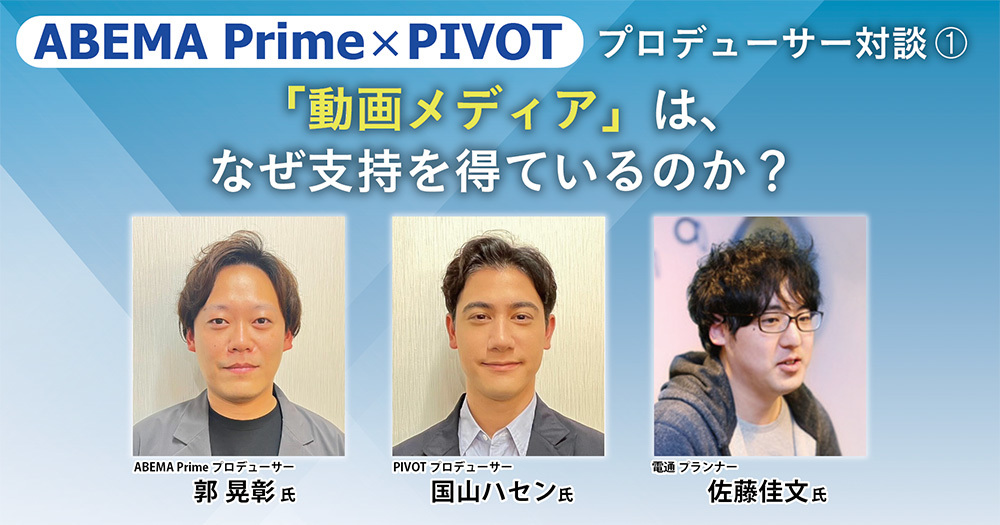
We welcome Abepla producer Akira Guo and PIVOT producer Hassen Kuniyama as guests. Yoshifumi Sato, a planner at Dentsu Inc. handling corporate PR and promotions, interviews them over two installments. In the first part, we explore why video media is gaining support, discussing the evolution of both platforms and key points in program creation.
Read the second installment here
ABEMA Prime × PIVOT Producer Dialogue: How Should Companies Engage with "Video Media"?
Rather than just "watching," viewers are enjoying content in their own style, such as "listening."
──You two have long been friends and serve as producers for ABEMA Prime and PIVOT, respectively. Today, we'd like to hear your thoughts on the theme of "video media." First, could you briefly share the evolution of your respective media platforms?
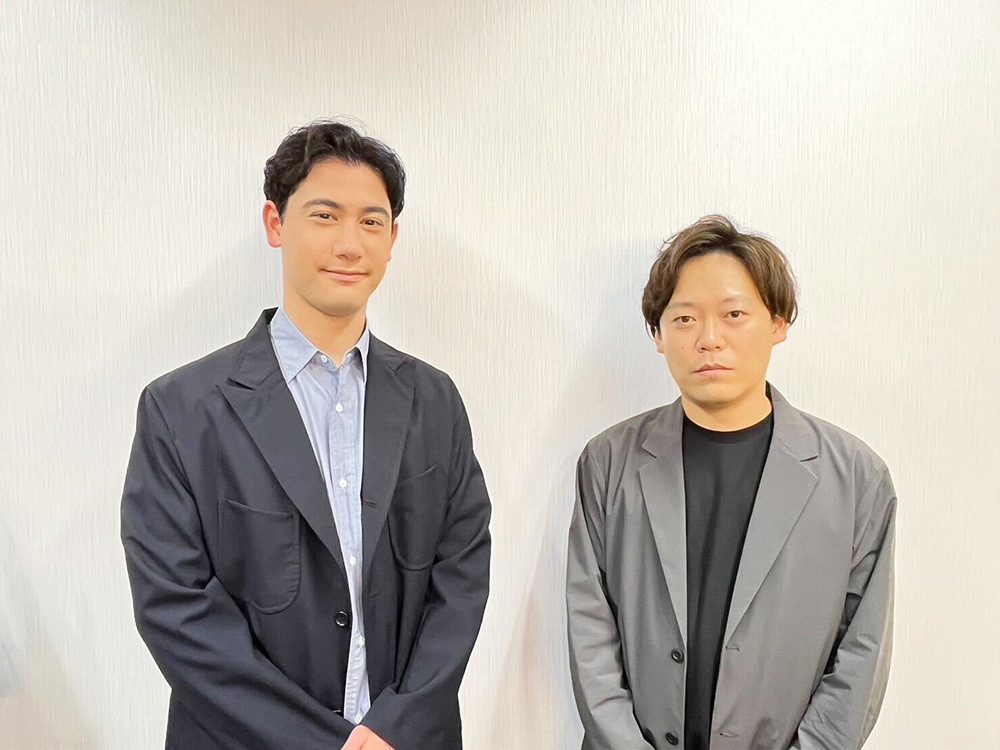
Guo: ABEMA Prime is a news program that launched simultaneously with the new future television platform "ABEMA" (originally AbemaTV) in 2016. Back then, there was no culture of watching news videos online, so we were pioneers in a new genre.
Later, terrestrial broadcasters began focusing on online distribution, NewsPicks started video streaming, PIVOT emerged, and competitors increased. Now, news-related video content across various genres has appeared. The pandemic also solidified the habit of watching videos on smartphones, which is a major factor in the video media boom.

Kuniya: PIVOT is a business video media platform launched in June 2021. We invite leading executives and experts as guests, delivering daily learning content on management, finance, careers, and business skills.
Although it's called a video media platform, initially, text and video content were roughly half and half. We later adopted a strategy to pivot fully toward video. The full-scale launch of our YouTube channel in June 2022 became a major turning point for PIVOT. The channel surpassed 100,000 subscribers within six months of its June 2022 launch, and cumulative views reached 18.9 million. As of April 16, 2024, the subscriber count stands at 1.54 million.
Guo: PIVOT's decision to go all-in on YouTube by showing full content instead of just digests was really impressive.
Kuni: We had previously focused distribution solely on our app. As a latecomer to video media, we urgently needed to boost awareness. Thanks to YouTube distribution, many people became aware of PIVOT.

──What are the defining characteristics of video media?
Guo: The pace and speed of speech are faster, allowing a lot of information to be delivered in a short time. It's not a simple comparison, but for news programs, I'd say the information volume is about 1.5 times greater than terrestrial broadcasts.
Kuni: I definitely feel that. The speaking tempo is faster than terrestrial broadcasts. Compared to my days as a TBS announcer, I feel like I speak about twice as much.
Guo: Many people listen while doing other things, right? We hear that people listen to Abepla during commutes or at the gym.
Kunioka: It seems many people listen to PIVOT during their commute too. Perhaps because we deliver learning content, user interviews often reveal they "listen rather than watch."
Kaku: Viewers' engagement with the media also has distinct characteristics. With video media, some watch at double speed, others skip parts. I might get in trouble for saying this, but while Abepla airs live on weekday evenings, we don't expect people to watch it live. We're fine with them watching it on-demand whenever they like. Live broadcasts have inconveniences – you can't rewind, skip, or watch at double speed.
Kuni: Viewing live broadcasts as inconvenient is a fresh perspective. It's true that in this day and age, viewers want to skip parts that don't interest them. Being able to watch whenever you want, in your own style, is a major feature of video media.
Learning and Entertainment: Key Points in Program Production
──What do you focus on when producing programs?
Kaku: Initially, we thought about covering themes terrestrial broadcasters wouldn't touch. But as competitors increased and we considered how to differentiate from other media, we recognized ABEMA Prime as a terrestrial-oriented medium. So, rather than niche themes unknown to the public, we started thinking about how ABEMA Prime could approach themes typically covered by terrestrial broadcasters.
Kuni: At PIVOT, we firmly establish the target audience image for each program. For example, "ANGELS," the real investment documentary featuring Keisuke Honda, targets a fairly young demographic with a strong interest in entrepreneurship. A key characteristic of PIVOT is that the viewing audience varies significantly by program.
Kaku: Recently, the distinct personalities of the programs handled by Mr. Kuniyama, Mr. Sasaki Norihiko, and Mr. Takeshita Ryuichiro have really come to the fore, haven't they?
Kuni: I don't have as much economic knowledge as Sasaki or Takeshita, but after considering what I could contribute, I decided to increase the entertainment and interview elements in my show. I consciously aim to be a role model for people around my age who are still learning and eager to acquire knowledge. This approach has worked well, and the number of people supporting my show has grown.
Kaku: Watching your show, I get the impression you tackle topics you're personally passionate about. Whether it's building financial literacy, becoming a fluent English speaker, or diving into education—your eagerness to learn really comes through.
Kunioka: I'm kind of abusing my position by learning while making the show (laughs).
Guo: Abepla focuses more on entertainment than learning. It's about having frank discussions on various topics together.
Kunikyama: When I appeared on Abepla before, I noticed it tackles some pretty serious, even difficult topics quite naturally.
Kaku: That's right. As part of the show's style, we consciously aim to have more guests to create a relaxed, well-to-do gathering-like atmosphere where conversation flows easily. For example, we planned a show based on an ad campaign Sato-san worked on for Kai Corporation, a cutlery maker. Their "#ShaveFreedom" campaign promoted living without being bound by body hair. We used this topic to create a show debating whether to shave body hair. It's a sensitive subject, so it's hard to discuss with just a few people. But having more participants creates time for reflection and makes it easier for everyone to voice their opinions.
Kuni: Your casting is always very diverse, isn't it?
Guo: We aim to showcase diverse opinions, perspectives, and values, so we try to include participants from various generations.
──Is casting heavily focused on the main target audience of 20s and 30s?
Kaku: Not to that extent. While we want to feature younger people, it's not something we're overly fixated on. Sometimes, just having young people doesn't provide viewers with meaningful insights. Having respected figures in their 60s or 70s adds depth to the content and makes the differences in opinion more clearly visible.
──Watching PIVOT, there are moments where you think, "Wow, they cast this person!" It feels like you have a wide range of connections. How do you approach casting?
Kuni: It's each producer's judgment. Takeshita-san is knowledgeable in academic fields, Sasaki-san has connections in economics. I handle entertainment, for example. For casting, we reference social media, and we especially check books quite thoroughly.
Kaku: I also review books and other video media. Our greatest strength is having 70 commentators and regular cast members with diverse backgrounds—varying titles, ages, nationalities, and professions. These individuals act as our think tank, recommending people, topics, books, and concepts. It's immensely helpful for casting.
How do you ensure reliability and ethical standards?
──Ethical standards and the reliability of information in online media are frequently questioned. What precautions do you take regarding this?
Kaku: AbePura is a program produced by TV Asahi's news division, adhering to terrestrial broadcast standards and tone/manner. It's fundamental that we don't state things we can't verify, don't disseminate information to stoke anxiety, present both sides on controversial topics, and fact-check information.
Kuni: When selecting guests for PIVOT, we thoroughly research their track record. We never choose people solely because they might go viral or boost views. Additionally, we monitor comment sections on video sites and news sites. Do you check them, Guo?
Guo: I do look at the comment sections on YouTube and Yahoo!
Kunioka: We believe comment sections reflect viewer sentiment. They help us gauge how our cast members are perceived by viewers and gauge their fan base.
Guo: Especially with YouTube comments, you really feel the writer's intent.
Kuni: That's why I don't think it's necessarily bad when comments get heated after we release a program. When that happens, we analyze the cause, share it with the production team, and work to build viewers' trust in PIVOT.
Online media shouldn't aim to be mass media
──How do you view existing media like terrestrial broadcasts and newspapers?
Guo: During the FIFA World Cup Qatar 2022, I truly felt the power of terrestrial broadcasts. While ABEMA also generated significant buzz, terrestrial broadcasts still reach an enormous audience. It made me appreciate anew the incredible strength and appeal of a system that can deliver information simultaneously and free of charge to the entire nation, allowing everyone to watch at the same time.
Online media is expanding, but I strongly believe it shouldn't aim to become mass media. We shouldn't focus on everyone in the world; instead, we need to create content that resonates with specific targets—"the people we want to reach." It's about specific demographics, not the masses. How do you view existing media, Kuniyama-san?
Kuni: Existing media still have many unique strengths and will maintain a certain level of power going forward. Newspapers offer vast amounts of information with high accuracy, and while live TV viewership is declining, platforms like TVer for TV program videos show real potential.
Guo: People often say the line between the internet and TV is blurring, but I think it's better to maintain the distinction: TV is passively watched by large audiences, while the internet is actively chosen and consumed. And I believe the internet side needs to be conscious of this. If online media gains the same kind of power as existing media, it would have to operate under the assumption that everyone is watching, increasing the number of things it must consider. I feel that would diminish the unique playfulness that defines the internet.
──What are your thoughts on the future of video media?
Guo: With the rise of media distributing news, educational, and informational content, I feel things are becoming increasingly similar. While emerging online media like ABEMA have shaped the video market, I believe each platform now needs to reclaim its unique identity.
Kuni: That's right. We're also discussing how to evolve PIVOT. We want to adopt a global perspective to share more international news and broadcast Japanese content overseas. Japan's media, including terrestrial broadcasters, feels very domestic-focused, but expanding globally could lead to exciting developments.
──Thank you very much. Next time, we'll discuss the theme "How Companies Engage with Video Media."

Was this article helpful?
Share this article


Newsletter registration is here
We select and publish important news every day
For inquiries about this article
Author
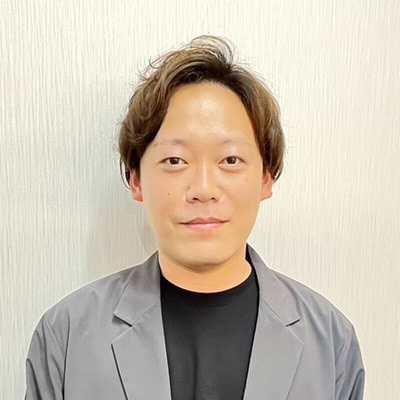
Kaku Akiaki
TV Asahi Corporation
ABEMA Prime Chief Producer
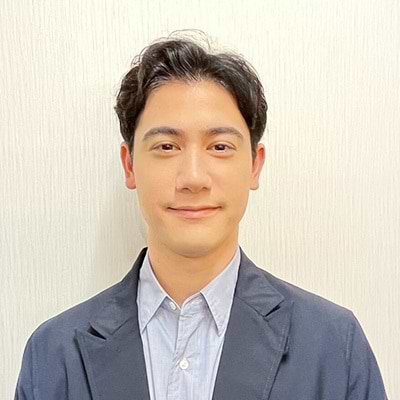
Kokuyama Hassen
PIVOT Co., Ltd.
Producer
Yoshifumi Sato
Dentsu Inc.
3CR Planning Bureau
Planner