Note: This website was automatically translated, so some terms or nuances may not be completely accurate.
 What Data Privacy Means for Companies Today [1/1]
Privacy considerations become corporate value. Consumer awareness survey on data utilization

Harada Shun
Macromill, Inc.

Yuya Ichio
Dentsu Digital Inc.
Amidst the trend toward user privacy protection, changes in laws and restrictions on identifiers like cookies imposed by browser providers are compelling companies to utilize customer personal data. However, from the consumer's perspective, many likely feel uneasy about their data being used by companies.
"How can we get consumers to feel comfortable providing their data?"
In this era of data utilization, this is likely a common concern for all companies. While legal compliance is a fundamental prerequisite, it alone is insufficient. Companies must holistically consider various elements: understanding new digital advertising technologies, grasping consumer insights, and implementing risk assessments and governance, including Privacy Impact Assessments (PIAs).
Within the Dentsu Group, we have formed specialized data privacy teams aiming to balance corporate data utilization needs with consumer privacy protection.
This series focuses on "consumer insights," delivering real voices on corporate data utilization based on survey results.
This installment features Yuya Ichioka of Dentsu Digital Inc. explaining the results of a consumer awareness survey on data utilization conducted with 3,000 respondents. Additionally, Toshi Harada of Macromill shares insights on solving corporate challenges in data privacy.
<Table of Contents>
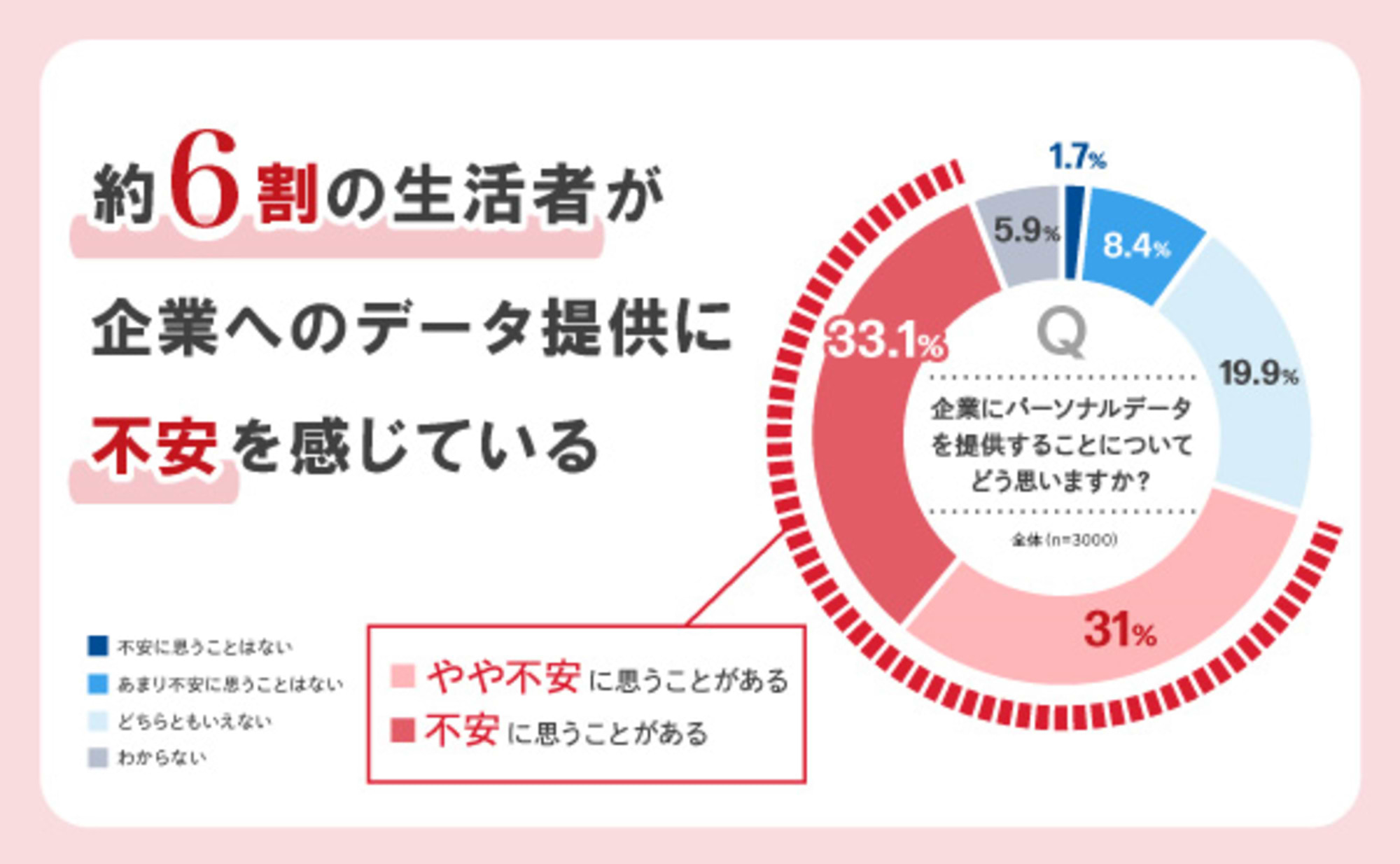
▼Approximately 60% of consumers feel uneasy about providing data to companies
▼Are companies' privacy protection efforts sufficient?
▼Privacy policy read rates are only 20%. What countermeasures exist?
▼Privacy is closely intertwined with corporate branding strategies
▼Data utilization in a new era where consumer privacy protection is paramount
▼Here's the "formula" to solve companies' data privacy challenges!

Approximately 60% of consumers feel uneasy about providing data to companies
First, we investigated how much unease consumers feel about providing data to companies.
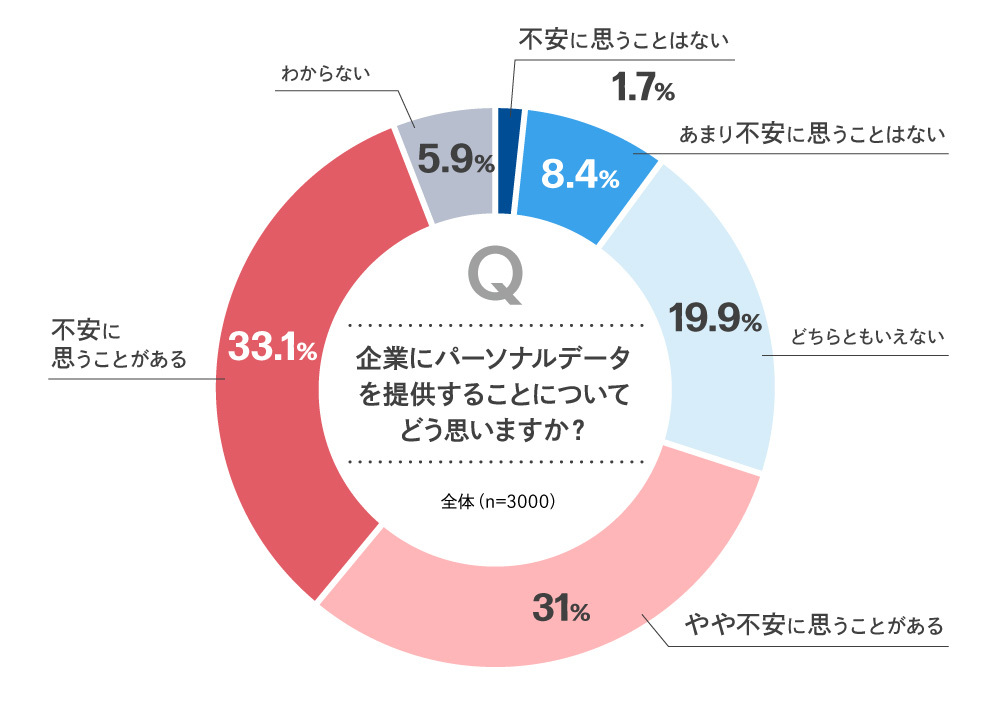
The results show that while 10.1% of consumers responded "I don't feel uneasy" or "I don't feel very uneasy," a total of 64.1% responded "I sometimes feel uneasy" or "I feel uneasy."
Comparing by gender, women tended to feel more uneasy, while by age group, unease increased with age.
Responses to other questions also revealed that consumers' acceptance of data provision and their level of concern varied depending on consumer attributes, the company's purpose for using the data, and the specific data items being provided. This sense of unease appears to be shaped by complex conditions. Later, Mr. Harada from Macromill will explain these consumer concerns:
Are companies' privacy protection efforts sufficient?
When asked, "What do you think about companies' privacy protection efforts?", the following responses were obtained.
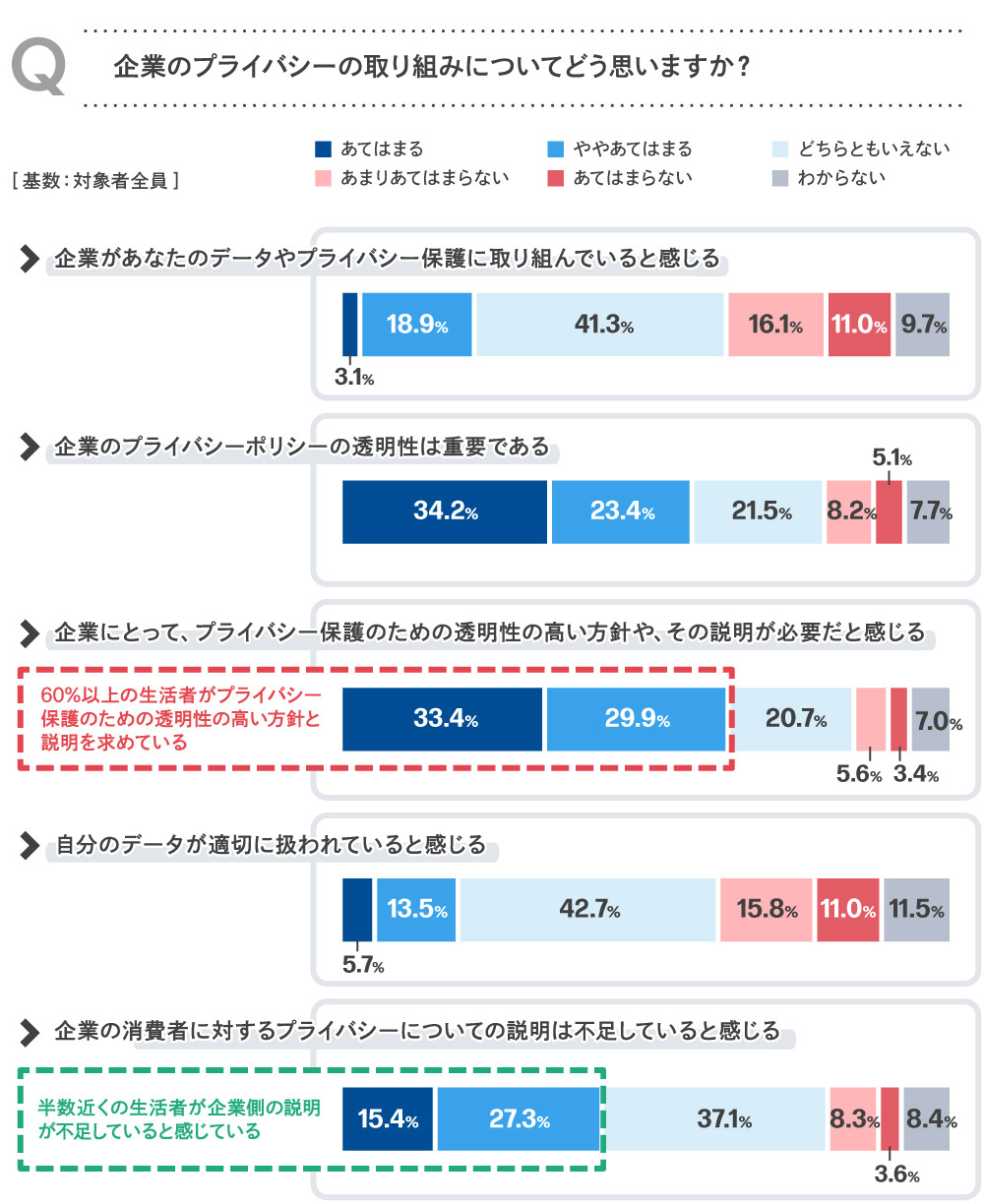
Approximately 60% of consumers want companies to provide transparent policies and explanations for privacy protection.
This indicates that companies' privacy protection efforts are either insufficient or not reaching consumers. Let's consider why.
Only 20% read privacy policies. What's the solution?
The most common method for communicating a company's privacy protection efforts to consumers is the "privacy policy." In response to recent regulatory changes, many companies have revised their privacy policies.
But how many consumers actually read these privacy policies?
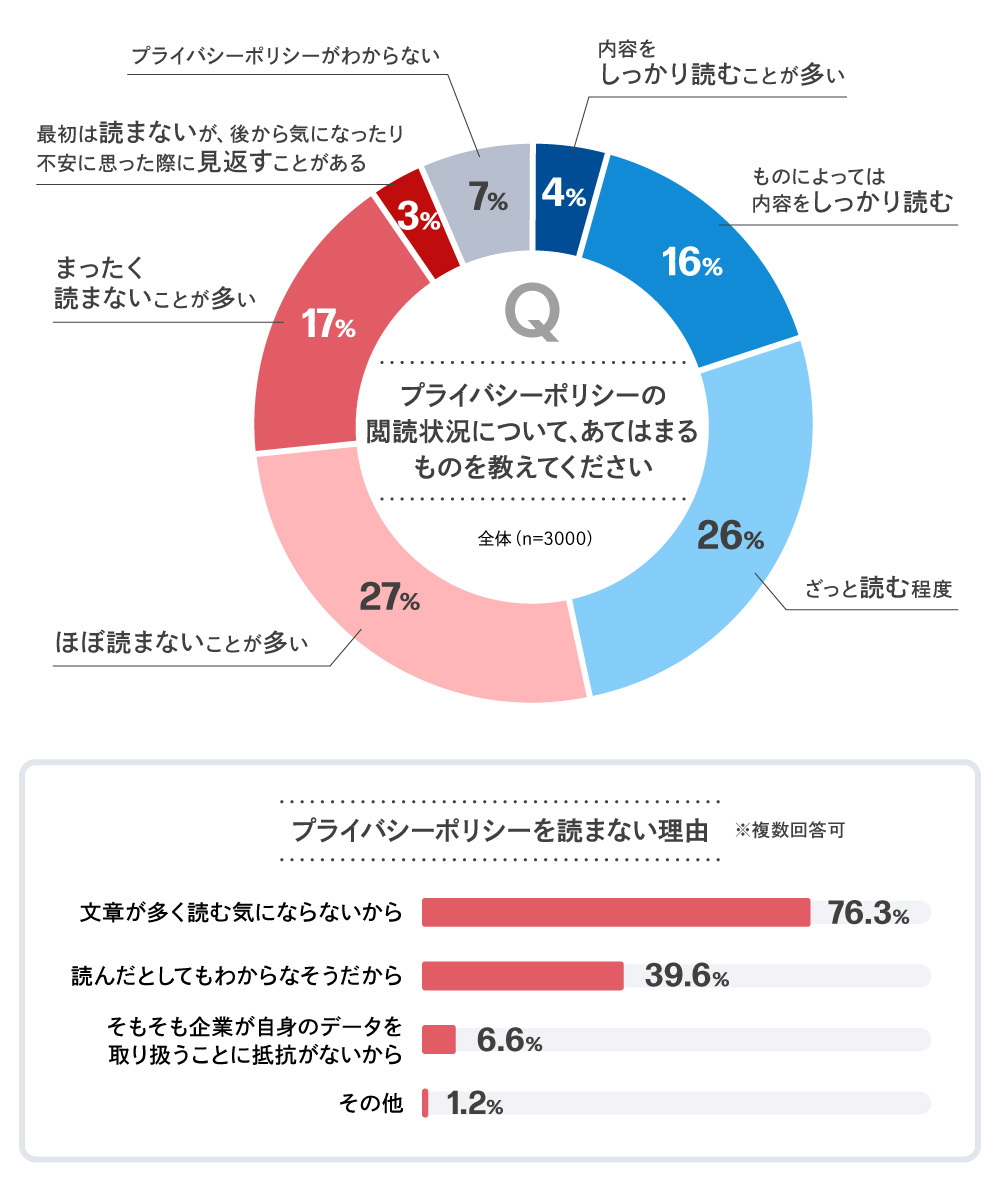
Research shows only about 20% of users read privacy policies, with the majority skipping them. Common reasons cited include "too much text" and "seems hard to understand even if I read it."
This means that no matter how compliant a company's privacy policy is with the law, crucial information—such as the purpose of data use, the content of user consent, and the company's privacy protection efforts—is not reaching consumers.
This creates anxiety among consumers, such as "I don't recall agreeing to provide my data" or "My data is being used without my consent," potentially leading to a loss of trust in the company.
Beyond privacy policies focused primarily on legal compliance, it is essential to clearly communicate the purpose of data use and the consent process to contribute to consumer peace of mind. One potential solution is establishing a "Privacy Center."
A Privacy Center is a webpage that clearly explains and supplements a company's privacy protection policies and data usage purposes—information that is difficult to convey through privacy policies or terms of service—using diagrams and illustrations to make it easily understandable for consumers.
Recently, more companies have established Privacy Centers, making it a common practice. This allows consumers to understand how their data is being used and, if necessary, set up data opt-out (revocation of consent for data use).
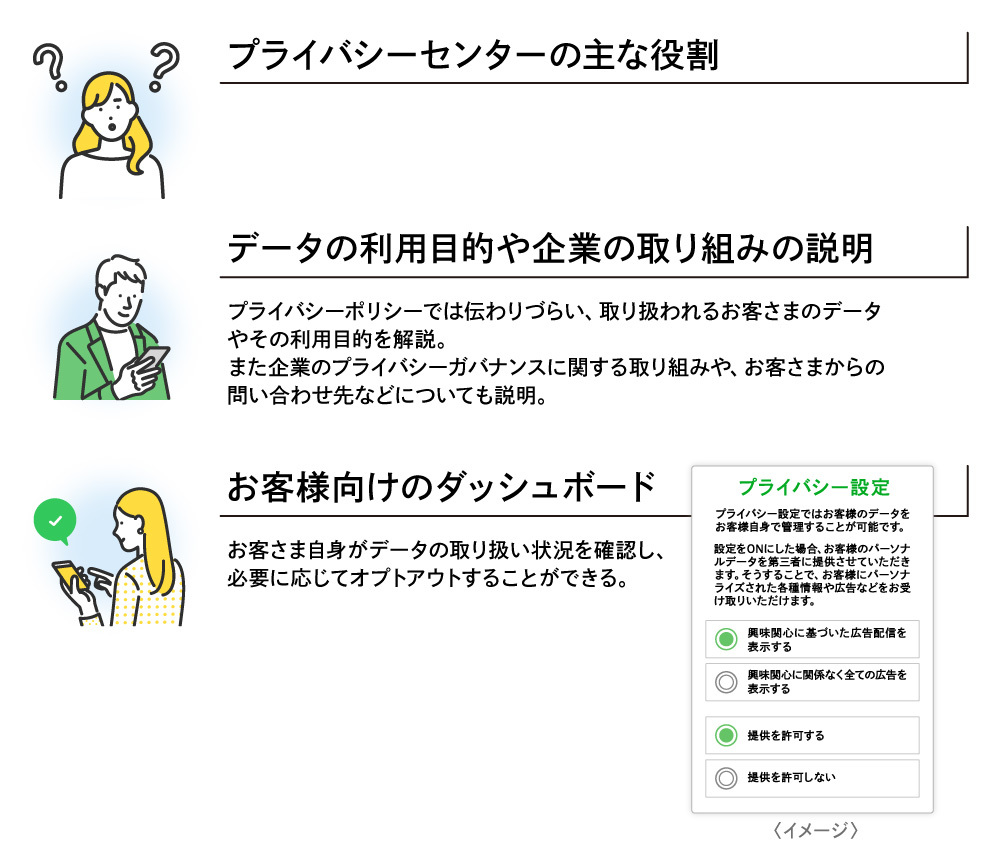
The Privacy Center can clearly convey, using illustrations, detailed data usage methods and purposes that are difficult to communicate in a privacy policy, as well as the company's messages and guidelines designed to earn customer trust and encourage them to entrust their data.
A survey on privacy centers found that nearly half of consumers responded that they are "easier to understand and read than privacy policies."
To ensure consumers feel secure entrusting their data to companies and to utilize data only after obtaining clear consent, diverse approaches are necessary.
Privacy Centers are one such means. Dentsu Group also supports companies in revising and establishing privacy policies, as well as introducing Privacy Centers to explain matters clearly to consumers.
Privacy is closely linked to corporate branding strategies.
Finally, to examine whether privacy protection initiatives enhance consumers' trust and favorability toward companies, we presented specific company names to monitors and surveyed whether "a company's privacy protection efforts increase favorability toward that company."
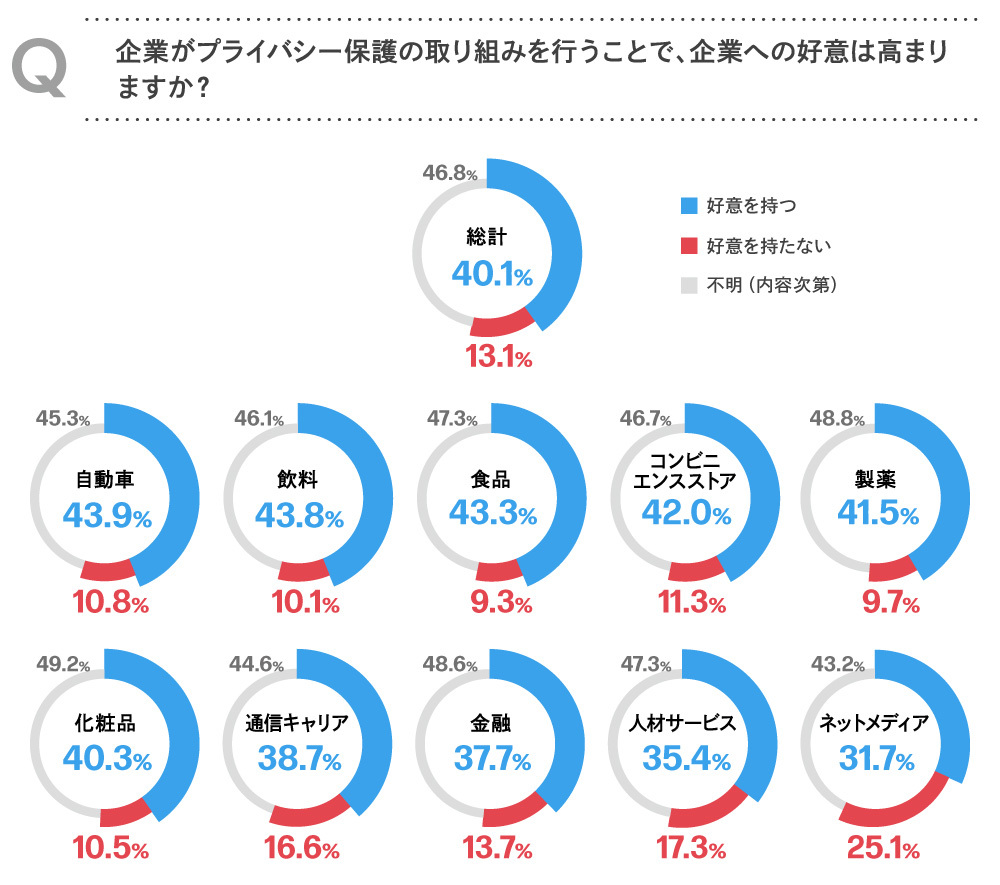
Examples of privacy protection initiatives include:
■Providing explanations to consumers through privacy policies and privacy centers
■Conducting PIAs (Privacy Impact Assessments)
■ Managing consumer consent using tools like Consent Management Platforms (CMPs)
■Implementation of Privacy-Enhancing Technologies (PETs)
Survey results indicate that implementing privacy protection initiatives led 40.1% of respondents to "view the company favorably," 13.1% to "not view it favorably (their view remains unchanged even with initiatives)," and 46.8% to be "unsure (depends on the details)."
Privacy protection initiatives are not yet sufficiently established in Japan, and consumer awareness remains low. This makes it difficult for consumers to visualize companies' privacy protection efforts, resulting in a large undecided segment (consumers who answered "can't say" or "don't know"). However, excluding the undecided segment, the number of consumers who "feel favorably" is more than three times greater than those who "do not feel favorably."
Privacy protection efforts are often viewed merely as defensive measures to comply with laws and regulations. However, they should be considered as a branding strategy to enhance a company's favorability and trustworthiness.
Moving forward, Dentsu Inc. and Dentsu Digital Inc. plan to examine the relationship between privacy protection measures and various metrics companies set as KPIs, such as "purchase intent," "continued usage," and "corporate image," broken down by industry sector.
※CMP (Consent Management Platform): A tool used to obtain consent from users of web services and other platforms for the collection and use of data ( ). Also known as a consent management platform.
Data Utilization in a New Era Prioritizing Consumer Privacy Protection
As we've seen, relying solely on traditional methods—presenting consumers with confusing privacy policies, unilaterally obtaining "consent," and then utilizing data—can potentially have a negative impact on companies. In other words, it's a "negative."
However, it has also become clear that implementing privacy protection initiatives tends to increase consumer goodwill toward companies. Sincere privacy protection efforts that genuinely engage with consumers are not merely about turning negatives into zeros; they are also positive branding initiatives that enhance consumer goodwill.
Privacy protection is a crucial element for building trust with consumers and also holds the key to unlocking new possibilities in data marketing.
Dentsu Inc. and Dentsu Digital Inc. are committed to providing comprehensive support for companies to utilize data while respecting consumer privacy.

Here is the "equation" to solve corporate data privacy challenges!
Here, we introduce the "Consumer Acceptance Equation" proposed by Macromill's Harada.
For over a decade since the dawn of Japan's online advertising industry, I have worked to advance data utilization in digital marketing while simultaneously protecting consumer privacy.
Some of my past activities include participating in the translation project for Dr. Anne Kaboukie's "Privacy by Design," operating the DDAI Common Opt-Out Site, developing and providing our proprietary DMP Privacy Dashboard, and importing and selling GDPR-compliant CMPs (Consent Management Platforms).
For this Dentsu Inc. and Dentsu Digital Inc. survey, Macromill independently conducted research and developed a framework that Dentsu Inc. and Dentsu Digital Inc. endorsed and utilized.
The well-known privacy rule for online advertising is "Notice and Consent" (recently sometimes referred to as "Notice and Choice").
Since we use data pertaining to individual consumers, it is essential to properly inform them and obtain their consent or allow them to opt out.
In other words, it is essential for companies to provide consumers with "transparency" and "control" regarding data usage. Traditionally, privacy policies and terms of service fulfilled these functions. However, as explained in the first part by Mr. Ichioka, these policies are now dysfunctional, often not read by users or understood by them.
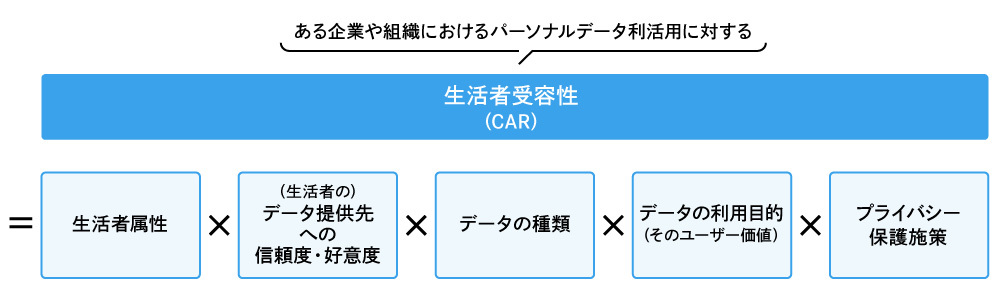
Now, please look at the diagram above. In my proposed "Equation for Consumer Acceptance in Personal Data Provision," I hypothesize that five elements influence "Consumer Acceptance Rate" (CAR). For reference, CAR refers to the degree to which consumers consider it acceptable for companies or organizations to utilize their data.
1.Consumer Attributes
2.Trust/Favorability Toward Data Recipients
3.Data Type
4.Purpose of Data Use
5.Privacy Protection Measures
This hypothesis posits that consumer acceptance significantly varies based on the "attributes" and "trust/favorability toward data recipients" of consumers, which precede corporate data utilization. This acceptance is influenced by the "type of data" and "purpose of use" that companies wish to utilize, as well as the "privacy protection measures" proposed by the companies.
Among these elements, "privacy protection measures" relate to transparency and control.
Macromill's survey revealed that while awareness of tools enhancing transparency and control, such as Privacy Centers and CMPs, remains low, a certain percentage of consumers expressed willingness to provide data when these tools are implemented, indicating high consumer expectations.
These tools can alleviate user concerns by providing clear explanations during site or app visits, help users envision the benefits of data sharing, and enable data utilization aligned with their preferences. Though often overlooked, privacy centers and CMPs are crucial components of the "customer experience."
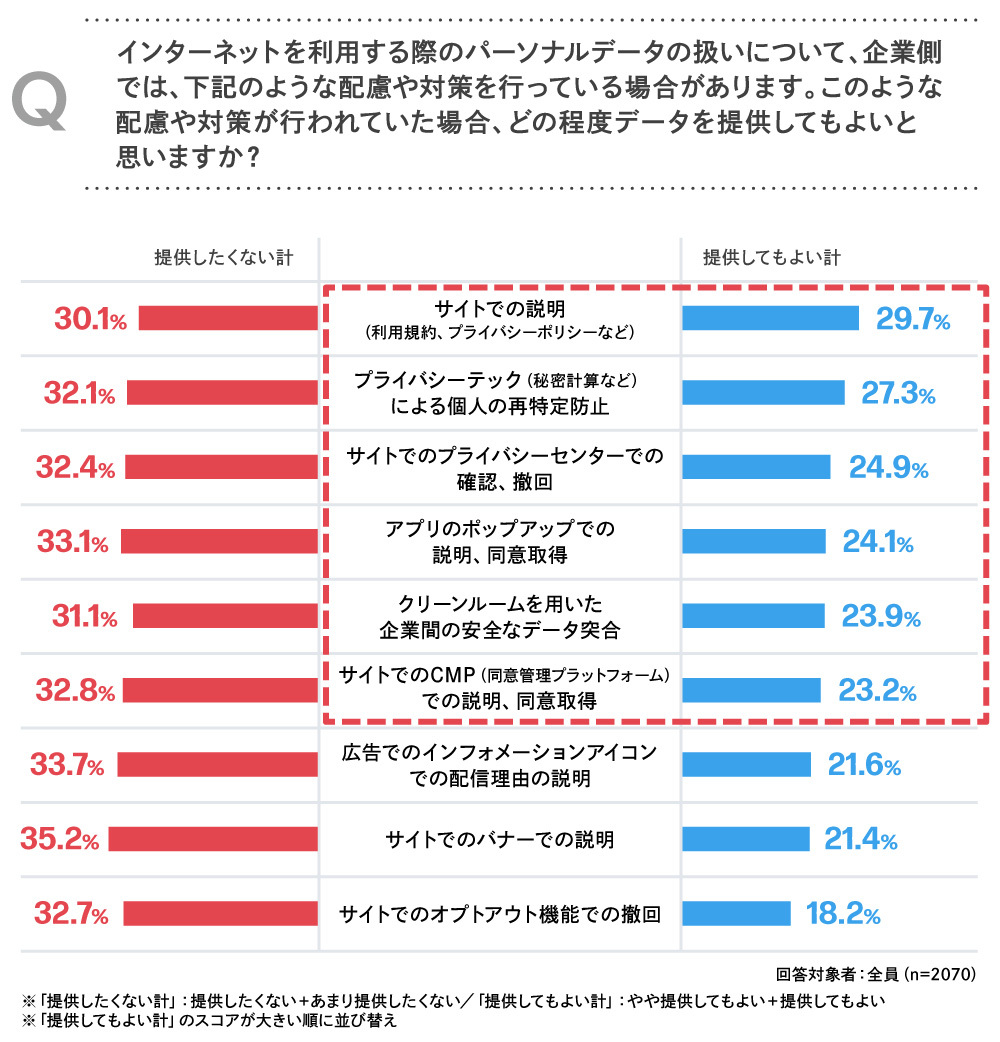
Furthermore, while not directly visible to consumers, privacy tech solutions like "secure computation"—enabling analysis of encrypted data—and "data clean rooms"—enhancing security in inter-company data sharing—are also recognized as important.
Clearly communicating these privacy measures is expected to further improve consumer acceptance.
This survey by Dentsu Inc. and Dentsu Digital Inc. provided valuable insights into the current consumer mindset. Moving forward, I expect further research will be conducted to measure the privacy protection levels specific to each client. As survey results accumulate, I hope they will help clarify how much consumer acceptance can be improved by each privacy protection measure.
The extent to which corporate branding and CRM activities—which constitute "trust and favorability toward data recipients"—influence consumer acceptance is precisely where the Dentsu Group excels. Therefore, I have high expectations for the completion of the "consumer acceptance equation."
[Survey Overview]
Survey Name: General Public Awareness Survey on Data Usage
Respondents: 3,000 men and women aged 20–69
Target Area: Nationwide
Survey Method: Online survey
Survey Period: December 25–29, 2023
Survey Sponsor: Dentsu Inc.
Survey Contractor: Dentsu Macromill Insight, Inc.

Was this article helpful?
Share this article


Newsletter registration is here
We select and publish important news every day
For inquiries about this article
Author
Harada Shun
Macromill, Inc.
Business Planning Department, CRM/CX Business Unit Business Management Headquarters
Unit Leader
Yuya Ichio
Dentsu Digital Inc.
Strategy Division, Solution Strategy Department 1
Consultant