Note: This website was automatically translated, so some terms or nuances may not be completely accurate.
"I finally started enjoying my work" – The career turning point for a mother of three and Dentsu Inc. Creative Director
※This article is an edited version of a piece originally published on Business Insider Japan on July 12, 2024.

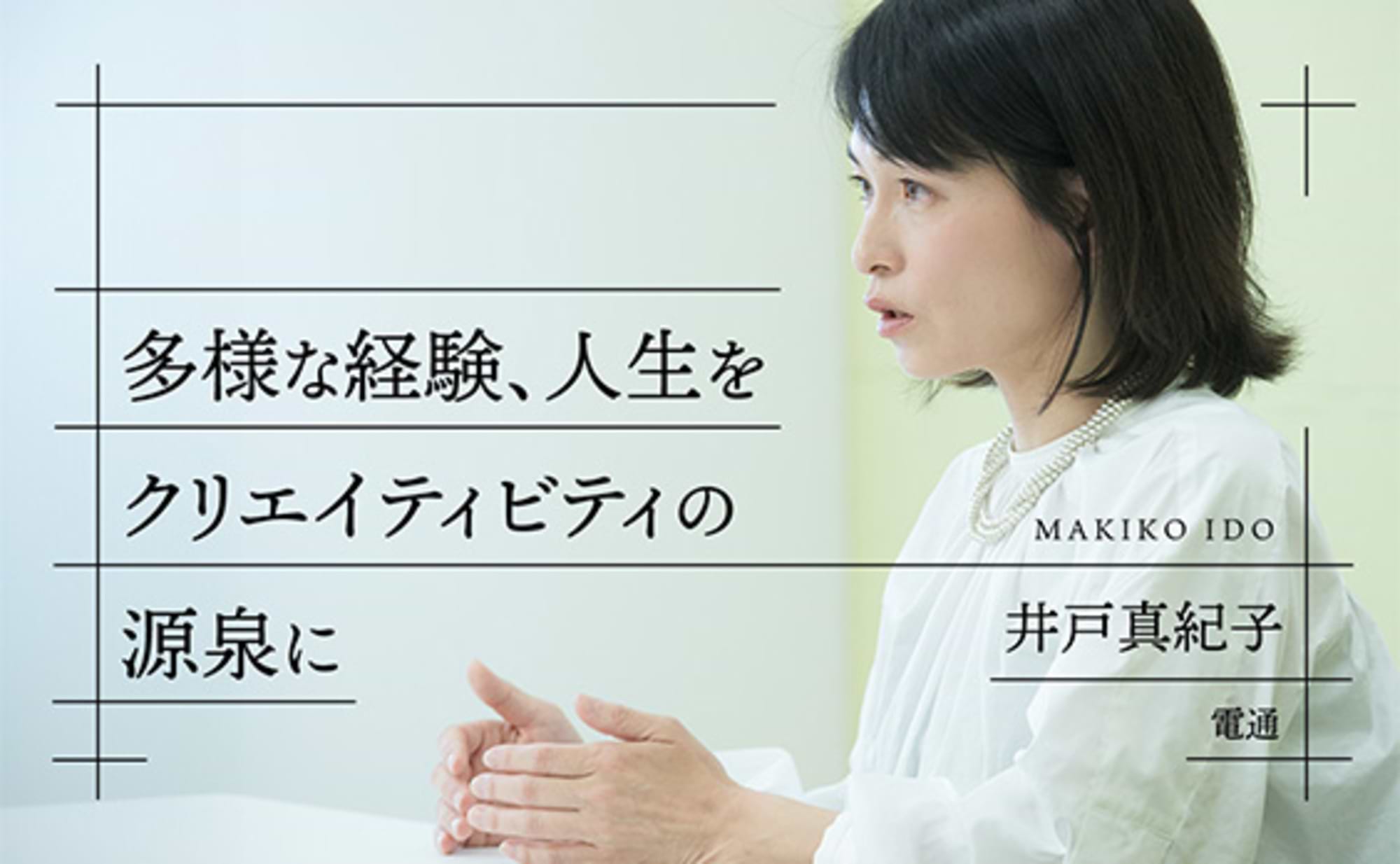
Creativity that enriches society. Its source lies in "bringing together diverse experiences and lives." This is the perspective of Makiko Ido, at Dentsu Inc.
As a Creative Director, she belongs to Dentsu Inc.'s cross-organizational "Future Creative Center" while also managing as the Head of Future Creative 5 Department within the Creative Planning Division 5.
How does her own parenting experience influence her creativity? And how can diversity translate into organizational strength? Business Insider Japan's Co-Editor-in-Chief and Brand Director, Nozomi Takasaka, interviews Ms. Ido, who launched her division's DEI promotion project.
Time constraints allowed me to revisit my work philosophy
──I understand you're a Creative Director at Dentsu Inc. while also raising three children.

Makiko Ido (hereafter, Ido): Yes, I've given birth three times and have boys in fourth grade, second grade, and kindergarten.
At Dentsu Inc., within the Creative Bureau, I handle end-to-end planning from strategy formulation to output, providing a wide range of solutions from communication to new business and product development, and content creation.
At the same time, as a department head, I manage a team of five members. Since returning from maternity leave, every day has been a learning curve, and I keenly feel the daily challenges of working within Japanese society while raising children.
──I have two children myself, so I understand that difficulty. I imagine your working hours are inevitably more limited compared to before having children. Has your perspective on work changed?
Ido: For me, it's like my pre-childhood life was a "past life" (laughs). My perspective on work and life has completely changed. The biggest shift came after having my third child. Right before returning to work, I took a step back to reevaluate my career. I knew juggling work with raising three kids would get even tougher, so I asked myself: Why do I work?
When I sorted through my past jobs, asking myself, "What work will I remember lying in my coffin?" I rediscovered that I find fulfillment in work where I feel I've made even one more person happy or shifted society even 0.01 millimeters in a better direction. That realization sharpened what I seek from my work.
Parenting experience is a strength. Juggling both is a prime opportunity for skill development.
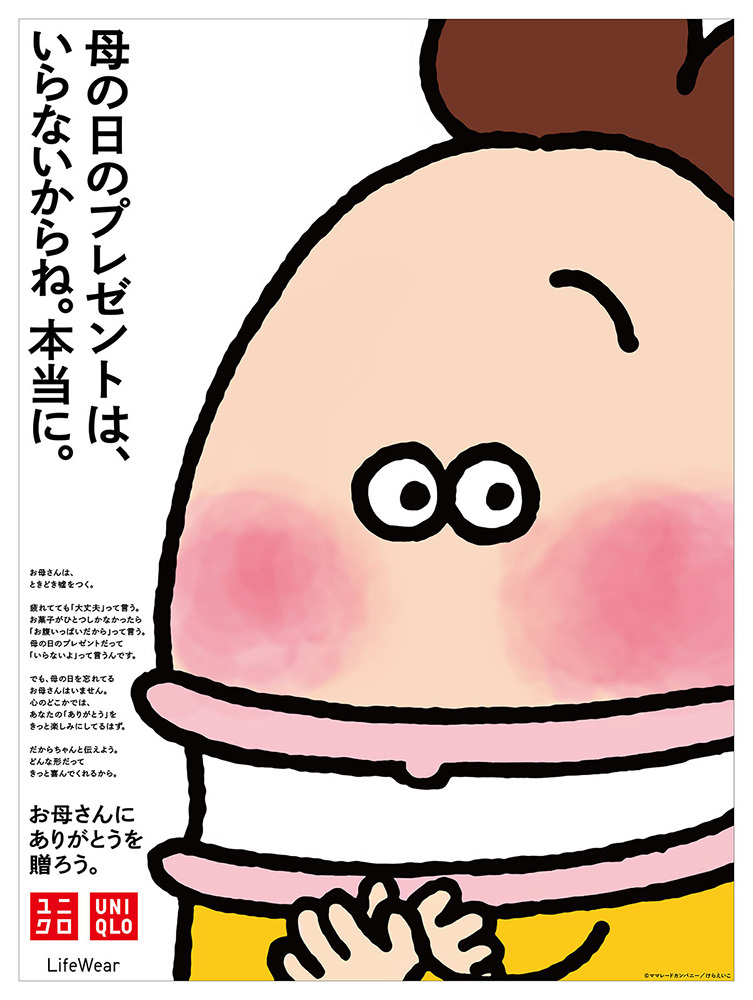
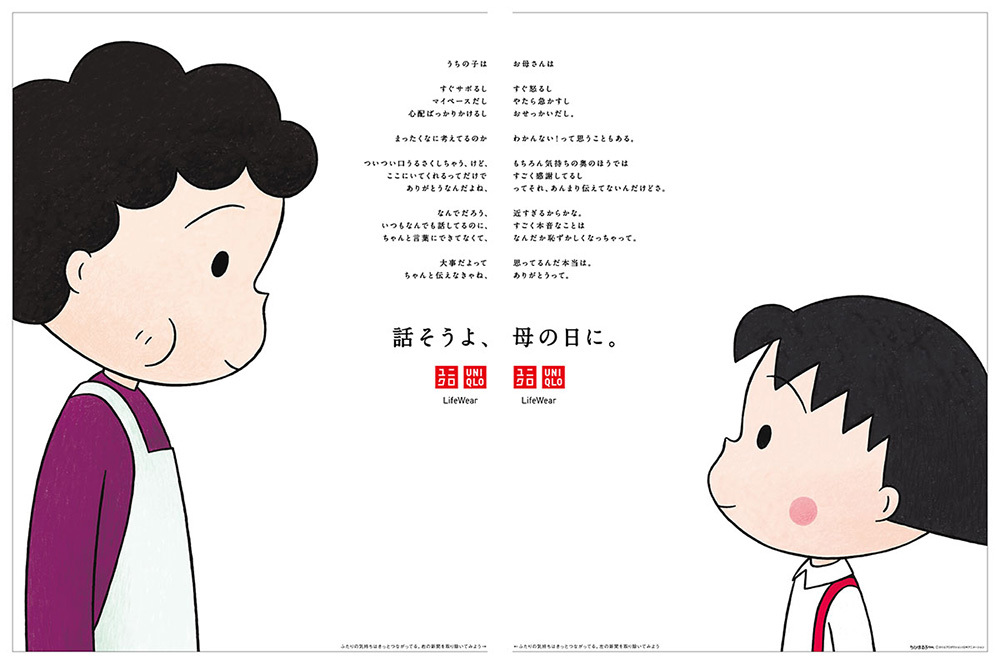

──How about in terms of output? The UNIQLO Mother's Day campaigns (2022, 2023) you worked on resonated deeply, expressing the true feelings of many mothers. Do you feel your parenting experience informs your work?
Ido: Yes, absolutely. For the 2022 UNIQLO Mother's Day campaign, the newspaper ad featuring characters from "Atashinchi" became a hot topic. The post with the most likes on Twitter (now X) garnered 250,000 likes. The 2023 "Chibi Maruko-chan" newspaper ad sparked discussion even overseas, resonating across borders. Campaigns like Otsuka Pharmaceutical's Calorie Mate, supporting dual-income families' mornings, and Nepia's free diaper exchange service, hailed as "divine service!", also generated significant buzz. All these were projects I worked on after the birth of my third child.
──I see.
Ido: But honestly, until after my second child, I hesitated to talk about my parenting experience. I tended to approach work with the attitude of "nothing has changed since before childbirth." I was fixated on what I felt I'd lost by balancing work and childcare. I couldn't work like I did before marriage, I had less time for input, and I couldn't keep up with trends or the latest knowledge...
──I completely understand.
Ido: But starting with my third child, I shifted my mindset to focus not on what I'd lost, but on what I'd gained. For instance, regarding input, even if I couldn't attend seminars or training, I reframed it: my entire current life had become input. I consciously brought what I gained from that into my work.
Interacting with children who are pure instinct helps deepen my understanding of human nature and supports people's growth. Conversations with people I meet through parenting are opportunities to learn about the realities of everyday life.
The Calorie Mate concept came from a casual chat with mom friends about "What do you feed your kids for breakfast?" It struck me that even as dual-income families increase and mornings get busier, parents' instinctive concern for their children's nutrition and love remains unchanged.
Beyond that, as I've connected with more people—like neighborhood grandmothers and school teachers—I've made discoveries I never would have before having children. Consciously bringing these insights into my work has started to yield results.
──It's true, children create new connections with people in the community and childcare workers you wouldn't have had before. Since your work involves sending messages to society at large, it seems like you can fully leverage those experiences. But why were you able to shift your mindset, especially since you tended to focus on what you'd lost until your second child?
Ido: Right after returning to work with my third child, I was invited to a planning meeting focused on the theme of "work."
But I felt like Urashima Taro, just emerging from my maternity leave bubble—I couldn't speak about work in Japan or anyone else's work situation.
So, I brought ideas rooted in the unique perspective gained precisely from working while raising children. The response to the project was incredibly positive—perhaps the best I've ever received since joining the company.
Seeing that reaction made me realize for the first time that "child-rearing experience isn't a handicap; it's a strength. " Now, I'm convinced that child-rearing experience is equivalent to overseas experience or secondment experience.
When I became a department head, I got an unexpected reaction from male employees...
──I hear you became a department head after returning from maternity leave for your third child.
Ido: About a year after returning, I was offered the position of department head. When I heard the offer, there was a long silence (laughs). Balancing work and childcare was still very challenging, so I thought, "I might be ready for it eventually, but not now."
But after consulting with my superiors, I received encouragement and advice. The bureau chief also said, "We'll provide the necessary support," which helped me become more positive about it.
──How did you actually feel after becoming a department head?
Ido: Surprisingly, it was interesting. The view you get within the company organization broadens, and I find it rewarding to be able to commit to organizational management and the growth of my team members.
What surprised me was the response from male employees raising children. Among male employees under 40, more are splitting childcare duties equally with their wives. But many male supervisors grew up in an era where shared childcare wasn't yet commonplace. These younger employees worried about how they might be perceived but found it hard to discuss.
Hearing comments like, "We're glad someone like Ms. Ido became our department head," made me realize anew that having a female manager who is also a parent holds meaning for male employees too.
Developing solutions to advance DEI through creative power
──After that, you developed a DEI promotion package within your company. What led to that?
Ido: One of our bureau's goals was "increasing the proportion of female managers." However, after becoming a manager myself, I realized that to increase this proportion, we needed to address structural and cultural issues. Furthermore, a World Economic Forum report stated it would take 134 years to close the gender gap. This sparked a desire within me : "I want to take the first step toward resolving this at breakneck speed using the power of creativity!"
So, I created a DEI promotion solution package for companies, leveraging the management reform expertise from the Future Creative Center where I work. Furthermore, I started a project to implement this within my own department. At the intersection of my dual missions as Creative Director and Department Head, I'm trying to advance DEI initiatives for both society and my own department.
──What exactly are you doing?
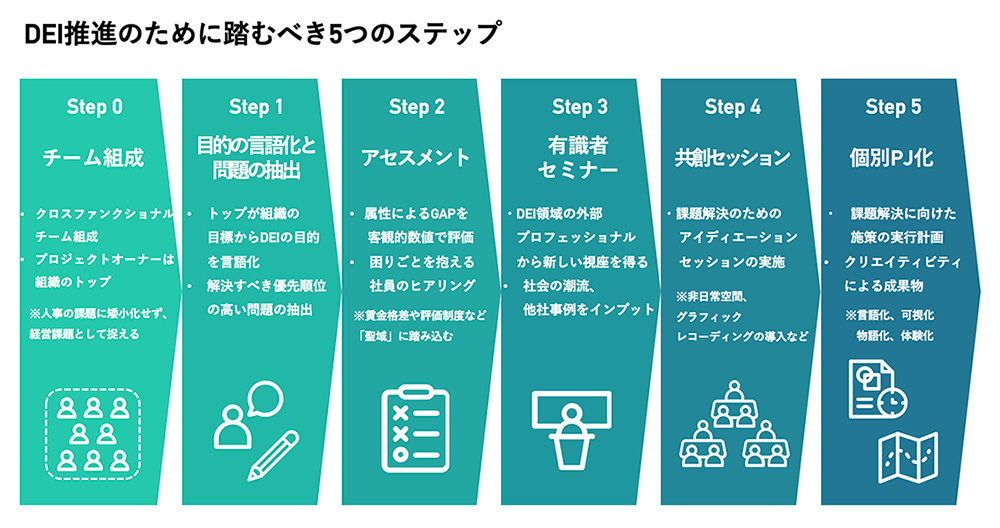
Ido: First, we articulated the purpose of DEI promotion and identified high-priority issues. Then, we thoroughly listened to the voices of frontline employees managing childcare or caregiving responsibilities, as well as retirees. We conducted a full-department awareness survey and analyzed evaluation gaps to thoroughly identify challenges. When we reported the findings, there were reactions like, "I never imagined our own employees felt this way."
──So it was surprising to learn that employees juggling childcare or caregiving were struggling?
Ido: Supervisors find it difficult to pry into private matters, while subordinates worry about how it might affect their evaluations and hesitate to speak up themselves. That's precisely why the sentiment seemed to be, "I sensed balancing childcare/eldercare was tough, but I didn't realize it was that serious."
Furthermore, DEI is a topic where there's a significant gap in awareness between those directly affected or highly conscious of it and those who aren't. Therefore, for the ideation session to develop solutions for advancing DEI, we deliberately invited all managers to participate, not just the project members.
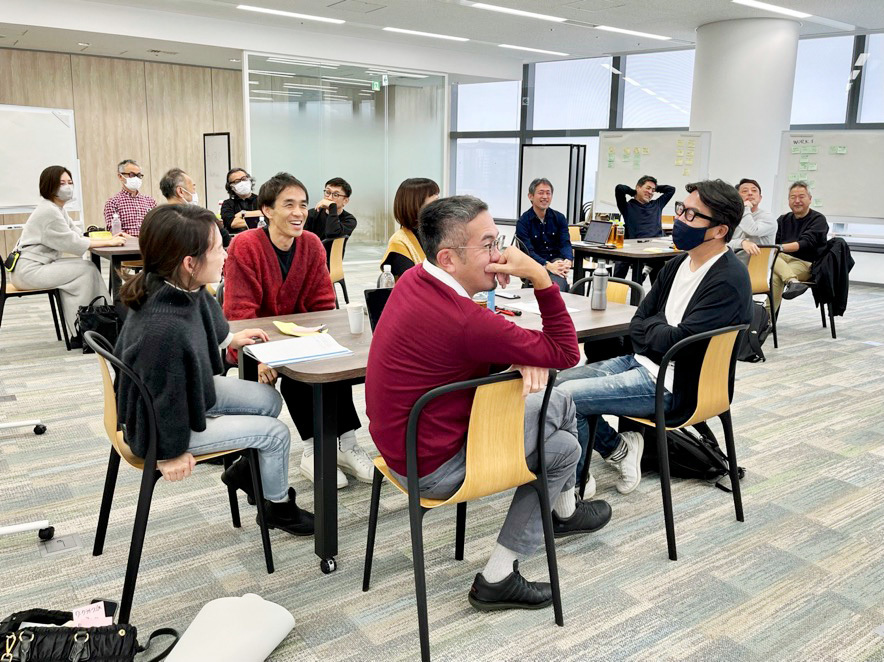
By opening it up rather than keeping it closed, numerous perspectives and solutions emerged that the project members alone couldn't have found. We even received feedback like "interesting" and "rewarding," which became a catalyst for the project to expand further.
Currently, five creative directors active on the front lines are each leading teams to plan actions around five themes deemed essential for DEI advancement.
──It's easy to think, "They seem busy, so maybe we should just move forward with those who are interested," but involving diverse people is key, isn't it? I hear you also invited Keiko Hamada, former Editor-in-Chief of Business Insider Japan, for an exchange of opinions during this process.
Ido: Yes. Having been captivated by Ms. Hamada's lecture several years ago, I felt she was the perfect person to consult on this topic. We had a 90-minute exchange where she shared insights so rich and varied, it felt like an incredibly dense hour and a half.
──What words left the strongest impression?
Ido: She immediately hit the nail on the head by asking, "Aren't you evaluating employees based on their working hours?" She shared numerous examples from other companies, sparking thoughts like, "Other companies are that advanced?" and "Dentsu Inc. should come up with even better initiatives."
──Do you feel confident about implementing this within your own division?
Ido: As we advance DEI, we're hearing voices saying, "I feel hopeful about the company's future," and "I want to do something to make the company better." More people are getting involved with DEI, and I feel a new momentum is building.
Furthermore, what started as a project for our bureau of about 100 people has now expanded into an initiative for the entire Creative Department, and the project continues to grow.
──When people think of Dentsu Inc., they inevitably imagine "long working hours" and "having to give up on childcare." Changing that image is quite difficult, isn't it?
Ido: That's precisely why I believe Dentsu Inc. taking on this challenge is meaningful. If Dentsu Inc., which is perceived this way, can change, it might become a catalyst for societal change—people thinking, "If even Dentsu Inc. could change..."
Creativity is born when diverse experiences come together
──What exactly is the strength of an organization that can bring together diverse experiences?
Ido: James W. Young's "How to Think Up Ideas," first published in 1940, states that "an idea is a new combination of existing elements." The more unexpected the combination, the more interesting it is. I see great potential in the new combinations born from diverse experiences and life backgrounds, and in the creativity sparked by team diversity. I've often felt this power firsthand. The moment ideas emerge from human interaction is an indescribable thrill.
──Amid talk of AI replacing administrative work, creativity will likely become essential across many professions going forward. That's when diversity truly shines. Yet, on the flip side, we face challenges like a lack of top-level commitment or resistance from those holding vested interests who dislike bringing in diverse talent.
Ido: In our project, we first had top leadership articulate the purpose of DEI advancement in alignment with business strategy. By having them recognize the value of DEI within the business itself—rather than treating it as a vague obligation—the project gained significant momentum.
Another interesting approach might be to experience a state where DEI is already being promoted. During an ideation session gathering all managers from our division, we intentionally invited female managers from other departments to create a 30% female representation. Male managers then remarked, "We realized how biased our meeting spaces had been until now," and "We finally understood what it means to have more perspectives." Experiencing it firsthand often brings many realizations.
──So it's about making them understand that DEI benefits aren't exclusive to women. It's often said that workplaces where women thrive are also better for men.
Ido: That's right. However, we shouldn't aim to uniformly conform to one side. Instead, we should strive to create a workplace culture where everyone—regardless of gender—can work comfortably and find happiness. Only then can we truly achieve diversity.
──Exactly. I think sharing messages like yours, Ido-san—enjoying both parenting and work, and how parenting becomes a strength in your job—creates a positive cycle.
Ido: Lately, I've heard younger employees—both men and women—say things like, "I can't work past 6 because I need to pick up my child," or "I want to prioritize my hobbies after 5." I think that in about ten years, when that generation becomes managers, many of the issues we're discussing now will likely resolve themselves naturally. My task now is to ensure that generation can envision a career path leading to management and to bridge this decade to the next generation.
I find excitement and potential in new experiences and life itself right now. As the Dentsu Group aims to be the world's most creative company, I want it to be the world's most diverse workplace where everyone can easily unleash their abilities. And I believe Japan too can become more vibrant if it becomes a society where diverse people can easily unleash their abilities.
[After the Interview]
"I was telling everyone that nothing had changed for me after having my second child."
This was a comment Ms. Ido made midway through the interview. She herself felt she should be that way, and those around her expected it too. I felt this phrase encapsulated the pressure working mothers feel.
However, after the birth of her third child, Ms. Ido stopped declaring "Nothing has changed." The turning point was realizing that her perceived weaknesses could actually become strengths. Precisely because her work involves connecting with people, her entire life experience becomes input.
Lack of time for input, physical constraints limiting networking... These limitations aren't exclusive to working mothers; everyone faces them. I believe this is the fundamental reason why companies should pursue DEI.
(Interviewer: Nozomi Takasaka, Co-Editor-in-Chief & Brand Director, Business Insider Japan)
(Business Insider Japan Brand Studio)

Was this article helpful?
Share this article


Newsletter registration is here
We select and publish important news every day
For inquiries about this article
Author
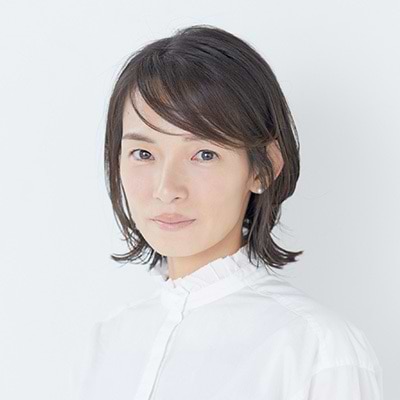
Makiko Ido
Dentsu Inc.
5th CR Planning Bureau / Future Creative Center
Executive Creative Director / Department Manager