In today's information-saturated world, timing is more critical than ever for ads to truly resonate. The key lies in the concept of "moments"—those fleeting instances when consumers' emotions and actions naturally peak.
To address corporate challenges while creating points of connection with society, we explore communication approaches focused on "moments in newspaper advertising." A specific case study is UNIQLO's newspaper ads for Mother's Day and Father's Day.
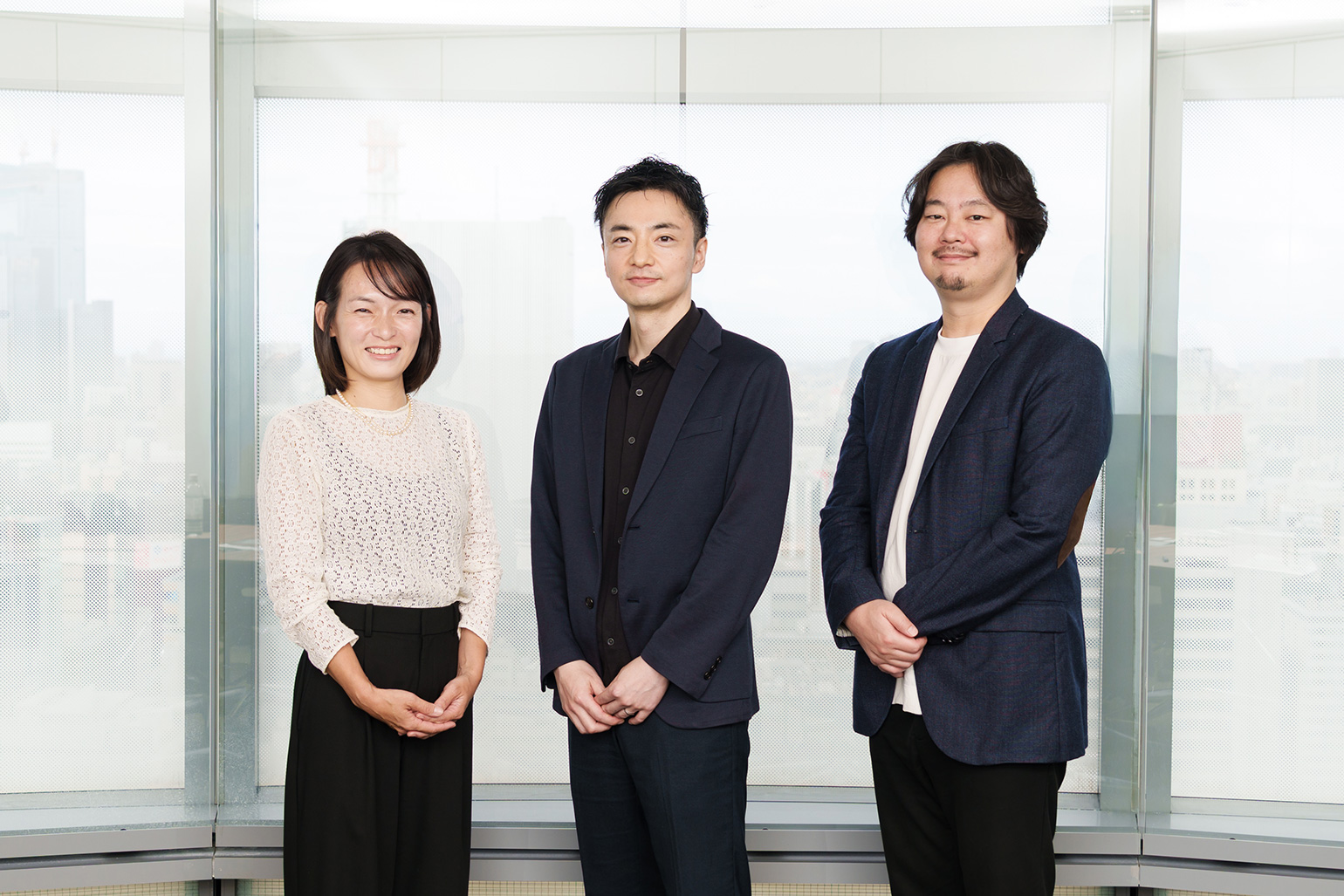
Mr. Nobuaki Hattori of Dentsu Inc. views the contemporary value of newspaper advertising through the lens of "moments." Mr. Hattori, Mr. Taro Sugihara of Yomiuri Shimbun (which published UNIQLO's ads), and Ms. Makiko Ido of Dentsu Inc. (UNIQLO's creative director) discuss the potential of "moment communication" in newspaper advertising.
Reaching the "Here and Now": What is Moment Communication Leveraging Newspaper Characteristics?
Hattori: A moment refers to the "right now, this instant" when consumers' feelings of "I want to..." or "I have to..." naturally intensify. When a specific product or service aligns perfectly with this timing, it can dramatically boost purchase or usage intent.
While we engage in creative work daily across various media, including newspaper advertising, we feel the daily newspaper is a medium exceptionally suited for moment communication. Newspaper advertising once commanded presence through its overwhelming reach, but today's era demands more than broad distribution—it questions "when, what content, and how" it is delivered. Within this context, we believe focusing on the newspaper's inherent "ability to accurately capture the right timing" is the essence of moment communication.
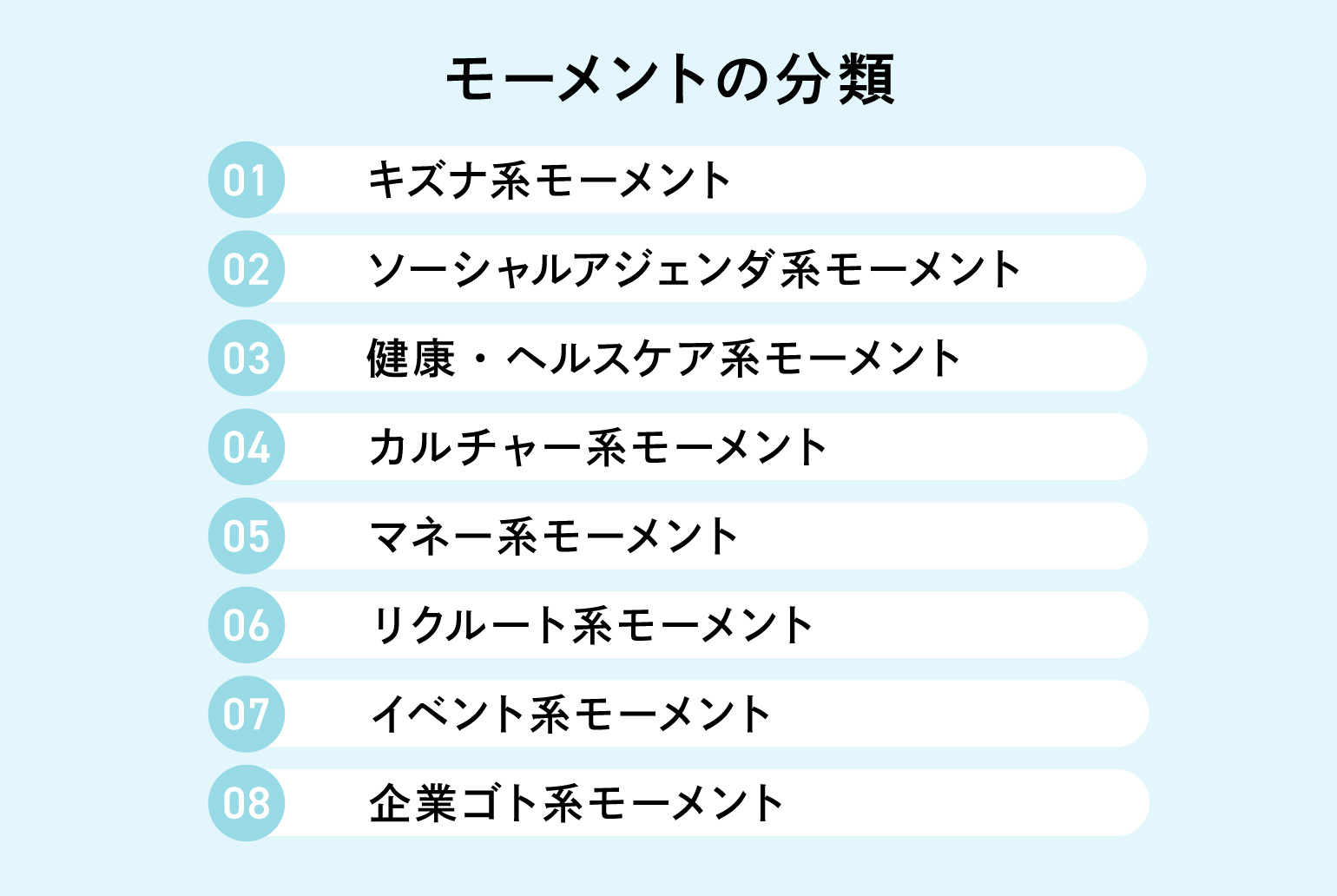
Hattori: We have organized the concept of moments into eight distinct categories. For example, "Social Agenda Moments" include instances like International Women's Day on March 8th, when public interest in social issues surges dramatically. By aligning their messaging with such moments, companies can spark waves of resonance among readers and on social media, achieving highly engaging communication. We have seen numerous successful examples of this approach.
Sugihara: When I first heard about this "moment" theme, I honestly imagined a highly immediate concept like "micro-moments" used in direct mail or digital advertising, feeling it was somewhat distant from newspaper advertising. But as I examined the actual cases and background, I came to feel it has very high affinity with newspapers.
I believe newspapers possess the power to create "trigger moments" (instants when a target audience's purchasing desire peaks). For example, advertisements placed around anniversaries or milestone occasions can move readers emotionally and become catalysts for action. As a medium that encourages such purchasing and behavioral shifts, newspapers play a significant role, don't you think?
Ido: Newspaper advertising isn't just about conveying information; it can deliver messages that resonate with the entire nation when the mood is naturally elevated. This is the strength of newspapers and also an opportunity for our advertisers.
Sugihara: At Yomiuri Shimbun, we've also explored ways to deliver messages fitting for anniversaries and milestones, beyond just advertising. As a medium delivered daily to subscribers, it becomes integrated into people's daily rhythms, creating an environment where information is readily received. When newspaper advertising functions effectively within this context, it creates moments where it can deeply resonate with readers.
Hattori: That's precisely why I believe it's crucial to systematically organize what moments exist and, together with the newspaper media, consider the optimal approach tailored to each company's challenges and timing.
UNIQLO Achieves Record Impressions on Official SNS Accounts from Newspaper Ads: Behind the Scenes of the UNIQLO "Mother's Day & Father's Day" Campaign
Hattori: Next, as a concrete example of leveraging moments in newspaper advertising, I'd like to introduce UNIQLO's "Mother's Day/Father's Day" campaign, which captured a "bond-building moment." Since some readers may be hearing about this for the first time, could Mr. Ido, who served as Creative Director, first give us an overview?
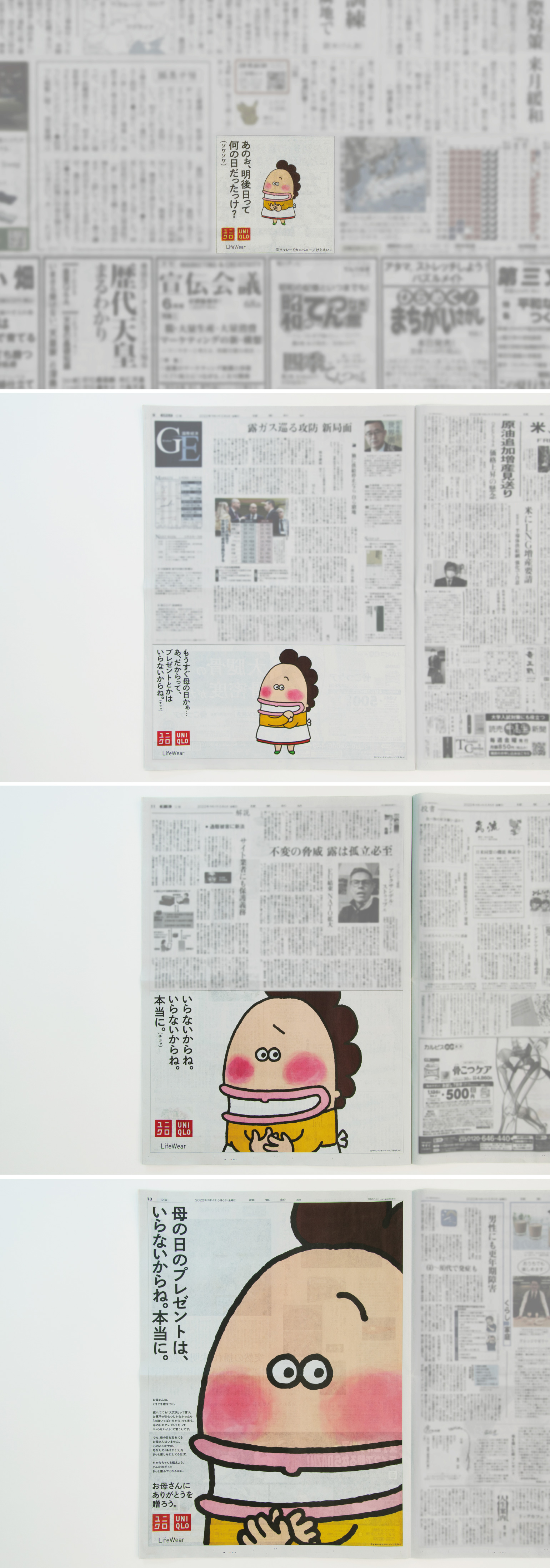
Ido: This initiative involves placing newspaper ads a few days before Mother's Day and Father's Day, now in its fourth year. UNIQLO initially approached us with the challenge that their products weren't frequently chosen as gifts for these occasions. They also needed to reach customers nationwide within a limited budget. Our proposed solution was to use newspaper ads as a starting point to spread the conversation.
Newspapers offer not only direct reach to readers but also potential for social media sharing and spillover effects to other media like TV. With many successful precedents already, our clients readily agreed.
For the first year, we featured the mother from the manga "Atashinchi." A four-page newspaper ad depicting her true feelings—"I actually look forward to Mother's Day gifts, but I tell my kids I don't need them"—generated significant buzz. ( Related article here )
Hattori: This is a project that gets a huge response every year, isn't it? Please tell us about this year's campaign.
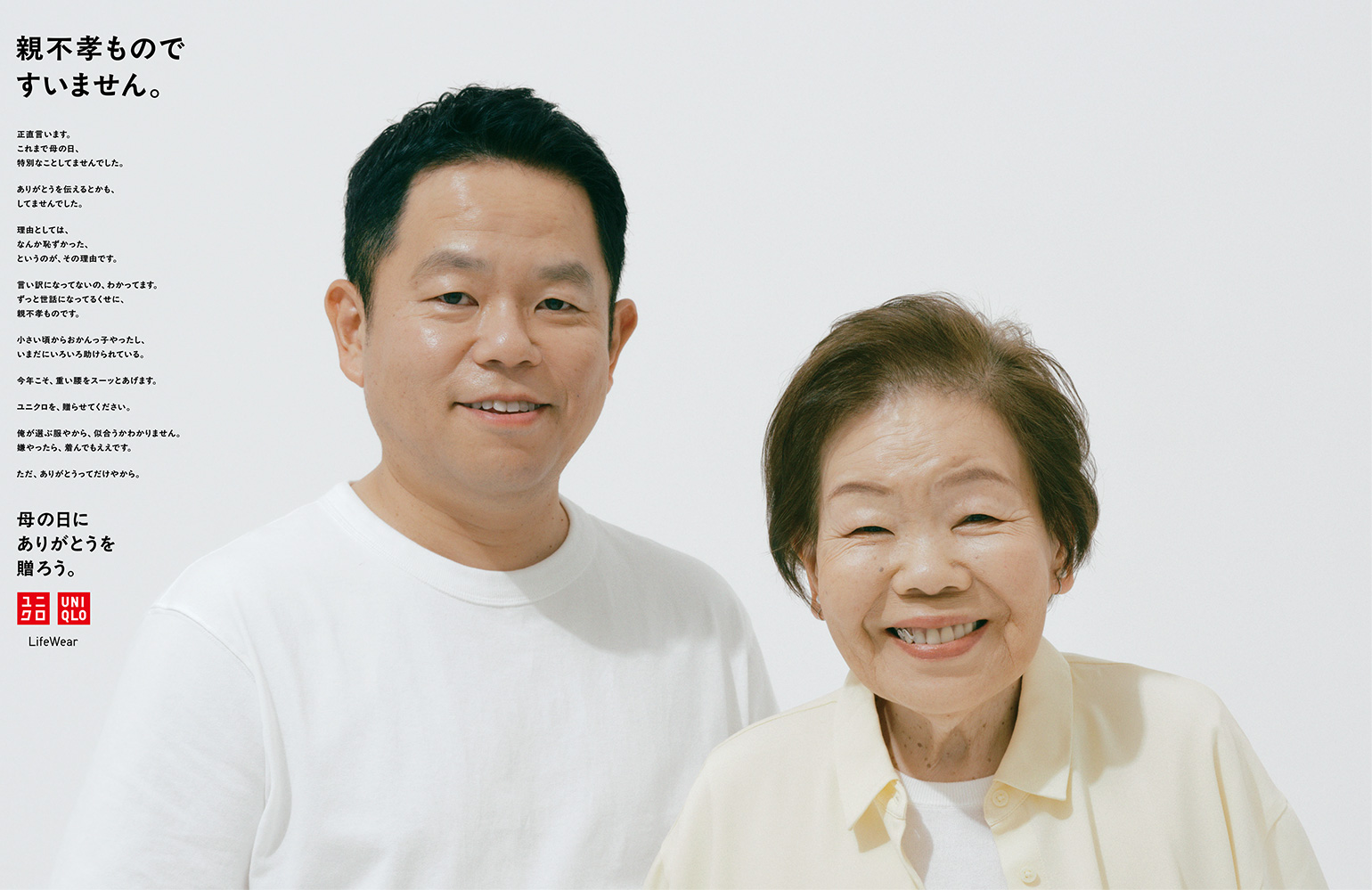
Ido: This year, we featured comedian Diane's Atsuhiro Tsuda and his mother. The ad features the catchphrase "Sorry for being such an ungrateful son," alongside Tsuda shyly expressing his gratitude to his mother.Actually, it was originally planned as a newspaper ad only. However, the person in charge at UNIQLO expressed the desire that "we don't want the ad content to be fictional." So, we had Tsuda-san actually select a gift from UNIQLO products and documented the entire process of him giving it to his mother. We developed it into a multi-dimensional campaign that was also featured on UNIQLO's owned media.
Sugihara: The pairing of Tsuda-san and UNIQLO must have really resonated with viewers of "Detective Tsuda" on "Wednesday Downtown," right? As a viewer myself, I burst out laughing the moment I saw the newspaper ad. I actually got quite a few comments from acquaintances saying, "Hey, Tsuda-san was in the Yomiuri Shimbun!" Since Tsuda-san's mother also appeared on the show, the synergy between the newspaper ad and the TV program added real depth, didn't it?
Ido: For Tsuda's fans, seeing him featured in the newspaper medium itself seemed to bring them joy. We saw many posts on social media saying things like "Tsuda-san in the newspaper!" I've felt this since the "Atashi no Chichi" campaign four years ago – the fact that "◯◯ is in a newspaper ad" becomes newsworthy itself, sparking discussion among fans and across TV and web media. I think this kind of reaction is something unique to newspapers, a medium with such history and prestige.
Sugihara: We actually received a lot of feedback from readers. Alongside comments like, "Carnations are the standard for Mother's Day, but I realized clothing is also an option," and "I thought this ad showed that Mother's Day gifts don't have to be just carnations; it's good to have various choices," we also saw reactions leading to behavioral change, such as, "I got interested and searched for 'UNIQLO Mother's Day,'" and "I hadn't considered shopping at UNIQLO for Mother's Day, but now I want to think about it."
Ido: On social media, reactions to the ad's body copy were also striking. Many posts said things like, "I cried," or "It made me think of my mom, and I decided to give her a gift this year." It really reinforced how newspapers, as a medium, can be a place where the ad's message is received as something to read and engage with.
Hattori: That reaction might be unique to a medium where the experience of "reading text" is deeply ingrained.
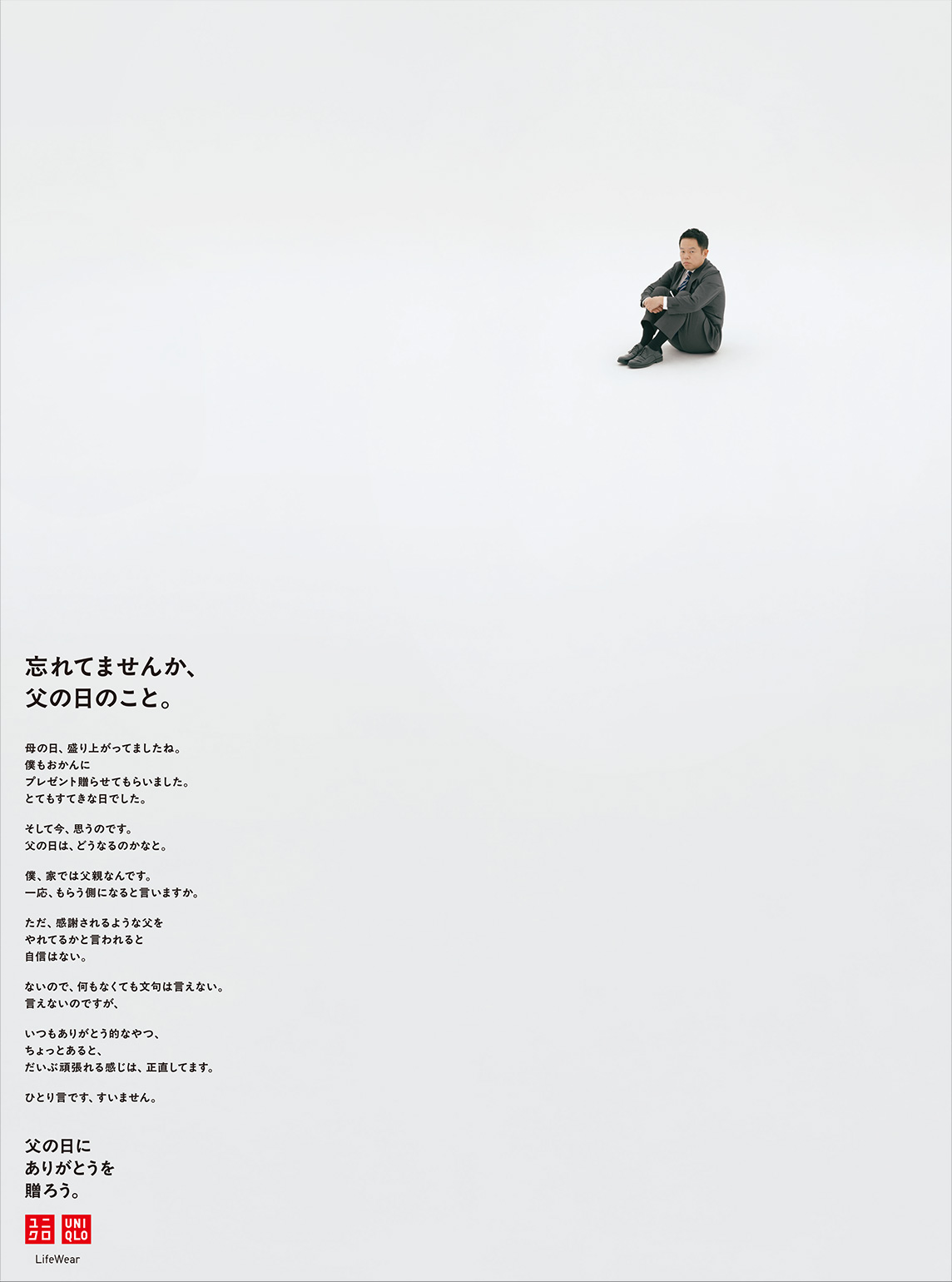
Sugihara: The Father's Day ad was wonderful too. Especially the visual of Tsuda-san sitting cross-legged in a small corner of the page – it made me chuckle, yet also conveyed a poignant sense of fatherhood. The use of newspaper space was truly masterful.
Ido: This year, since Mother's Day had such a vibrant campaign, we deliberately kept Father's Day more subdued. We thought this would allow people to enjoy the newspaper ads in a different way than Mother's Day. I understand this year's Mother's Day and Father's Day initiatives were hugely significant for UNIQLO, both in terms of owned media response and business results.
Expanding the Value of Newspaper Ads Through SNS Integration
Ido: Not just for UNIQLO's Mother's Day and Father's Day ads, but whenever a newspaper ad runs, we monitor SNS activity from the morning onward. Readers open their morning paper, are surprised, and immediately take photos to post. Looking at those posts, I was somewhat surprised to see that many of the reactions came from people in their 30s and 40s.
Sugihara: I believe social media is precisely what expands the value of newspaper advertising. Through sharing, the ad's message now reaches audiences beyond the readers themselves.For example, fans of Tsuda-san learn via social media that she's in a newspaper ad. They then look at the newspaper their parents subscribe to, take a photo, and share it. Seeing these shared posts, people who aren't direct readers notice, "Tsuda-san is in it!" They engage with the ad and further spread it. Against this backdrop, the Yomiuri Shimbun has launched a service called "Yomi Buzz," attempting to visualize the effectiveness of such newspaper ads.
Ido: The number and quality of those "starting points" – where people instinctively take a photo and share it – directly impact how widely it spreads on social media, right?
Hattori: It's true, the compatibility between SNS and newspapers is outstanding. In the sense that you can snap a photo of the page and post it immediately, I think it has a structure that is very "prone to becoming a starting point."In today's era where information explodes and much gets overlooked, it goes without saying that capturing attention is crucial. It's not just about flashy visuals; the key lies in whether there's a "mood" or "entry point of interest" that resonates with consumers' consciousness.
An ad asking, "Why not give a gift for Mother's Day?" resonates precisely because of its timing. When society is naturally in "Mother's Day mode," delivering the perfect message ensures it gets noticed and received, rather than being ignored.
Sugihara: Newspapers are precisely the medium suited to capturing that intersection of mood and timing. Many readers open the paper as part of their daily routine, viewing the information within as having value – something trustworthy and "worth communicating right now." That's why ads, too, aren't just sales pitches; they're more likely to be received as words meant to be delivered at this very moment.
Hattori: I believe the "immediacy" of newspapers holds value distinct from the immediacy of online news. For instance, sensing shifts in the atmosphere—like a sudden temperature rise or a major societal event—and deciding to deliver a specific message at precisely that moment. That's a strength unique to newspapers, rooted in journalism.
Staying attuned to society and businesses in the "now." The potential and role of newspaper advertising × moments
Hattori: Based on what we've discussed so far, could you tell us what the Yomiuri Shimbun has been doing from a "moment" perspective, and how it plans to approach this going forward?
Sugihara: As a medium, newspapers have long created trigger moments by aligning with social milestones like anniversaries and commemorative dates. For example, since publishing the "Yomiuri Women's Supplement" in 1914, we have continuously provided information for women. In recent years, we have also strengthened our editorial and advertising initiatives around International Women's Day.
In disaster prevention, we operate the information site "Bousai Nippon" and raise awareness through print advertisements on Disaster Prevention Day. For this year's Osaka-Kansai Expo, we participated as the sole Silver Partner among newspapers, continuing our outreach through special feature advertisements and on-site initiatives.
In fact, at the previous Expo in 1970, we also led the global public call for the unified logo in the Yomiuri Shimbun, taking on the role of designing moments for national events. Reflecting on this journey, we feel we have consistently presented "social agenda-driven moments" that respond to societal challenges and concerns.
However, it's undeniable that media choices have increased in recent years, relatively diminishing the newspaper's influence. Precisely because of this, the Innovation Division I belong to and YOMIURI BRAND STUDIO aim to create more multidimensional moments. We plan to do this by co-creating with the diverse resources of the Yomiuri Shimbun Group's various companies—such as Nippon TV Network Corporation, Yomiuri Land, and the Yomiuri Giants—as well as external partners.
Hattori: Newspapers have been instrumental in nurturing Japanese culture, haven't they? Contributing to the establishment of professional sports leagues, organizing music events for global artists—they've consistently supported cultural growth across various genres. It's clear once again that you possess the resources and network to lead in cultivating Japanese culture.
Sugihara: Thank you. However, I believe we must ensure this doesn't become merely a story of the past. We need to update our role to fit the times and seriously confront the challenge of designing compelling communication for today's readers and consumers. That's why redefining newspaper advertising through the lens of "moments" was such a valuable opportunity for us.
Hattori: Personally, reviewing recent newspaper ads made me realize just how diverse these moments truly are. At the same time, I believe today's society faces numerous challenges, and it's not necessarily an optimistic era. In this context, companies are increasingly being held accountable for their stance and responsibility toward society.
That's precisely why it's crucial to clearly communicate a company's identity and value to consumers. As a platform for such communication, I feel the role of media like newspaper advertising—with its history, trust, and above all, its longstanding connection to the spirit of the times—will only grow more significant going forward.
At Dentsu Inc., we're seeing an increase in consultations not just about the direct goal of "selling products," but also about more fundamental communication needs: "We want to enhance our corporate value," "We want society to understand our company's philosophy," or "We want to clarify our direction for the future." Determining when and how to convey these corporate aspirations and visions to the world is crucial. In answering this question, we consider newspapers to be an extremely reliable partner.
Sugihara: The "Eight Moments" you've organized this time are highly practical, and we're already utilizing them in our fieldwork. Moments that demand communication are always present in daily life—corporate anniversaries, social events, timely current affairs. I feel that properly capturing these moments can further elevate the value of newspaper advertising. We intend to actively pursue such possibilities moving forward.
The information published at this time is as follows.
After handling advertising sales for central government ministries, local governments, publishing, and healthcare, and managing intellectual property legal affairs at the group headquarters, he was seconded to Yomiuriland, where he worked on planning and area development. He has held his current position since 2025.
After assignment to the 4th MP Bureau, worked in strategic planning-related departments. Assigned to the CR Planning Bureau in 2012, gaining practical experience in the media × creative domain, including concurrent roles at Media Services / Radio,TV Division. Assumed current position in 2024.
After working in the Marketing Bureau and Strategic Planning Bureau, he moved to the Creative Bureau. He provides comprehensive planning from strategy to creative, delivering a wide range of solutions including communication, new business/product development, and content development.