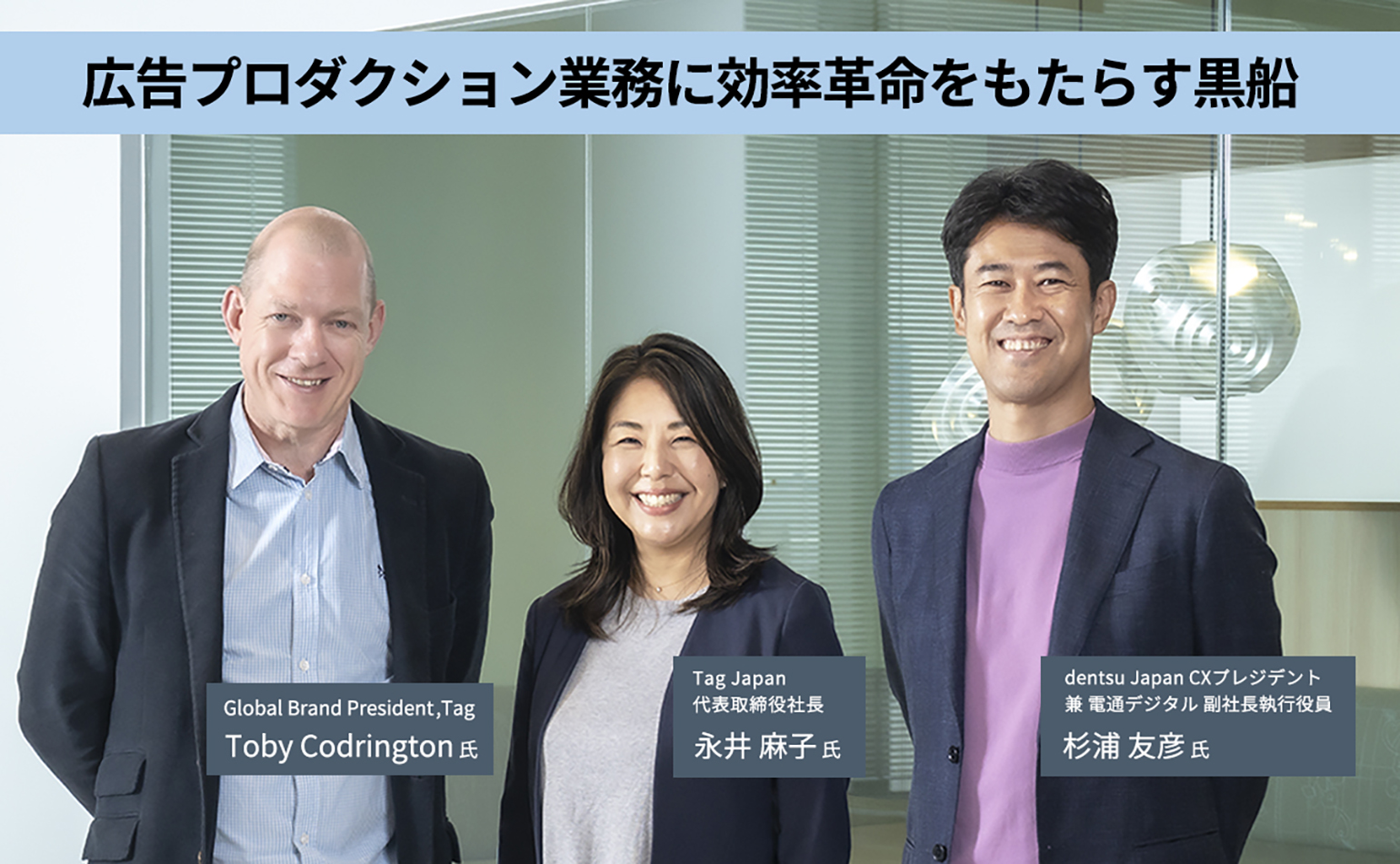
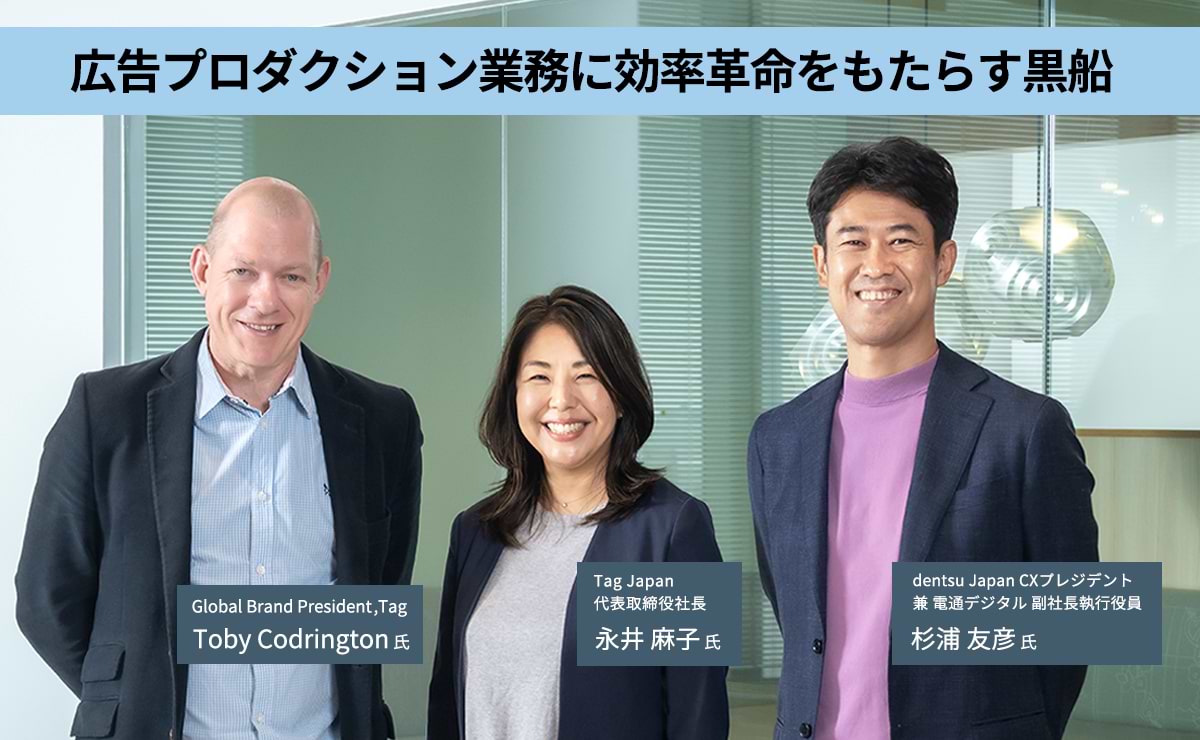
In recent years, the channels through which companies connect with customers—such as digital advertising and retail media—have continued to expand. Simultaneously, in an era demanding real-time and personalized customer experiences, advertising production requires "high speed, high volume, and high quality." Within this context, maintaining a consistent brand worldview and narrative is also crucial. The Dentsu Group is promoting global production optimization by welcoming Tag, a global production company headquartered in the UK, into its group. Key personnel from the domestic Dentsu Group (dentsu Japan) and Tag discussed the services created through the synergy between the two companies and their future outlook in the AI era.
A revolution is underway that fundamentally overturns the conventional wisdom of the marketing industry
——Please tell us about the challenges facing today's marketing industry and the transformation generative AI is bringing about.
Sugiura: The marketing industry faces multiple challenges, including the explosive growth of media and channels, and labor shortages in production processes. Previously, it was standard practice for brand managers to interact individually with various advertising and production agencies, meticulously creating one-off creative assets for a limited number and variety of channels like TV commercials, digital banners, and print materials.
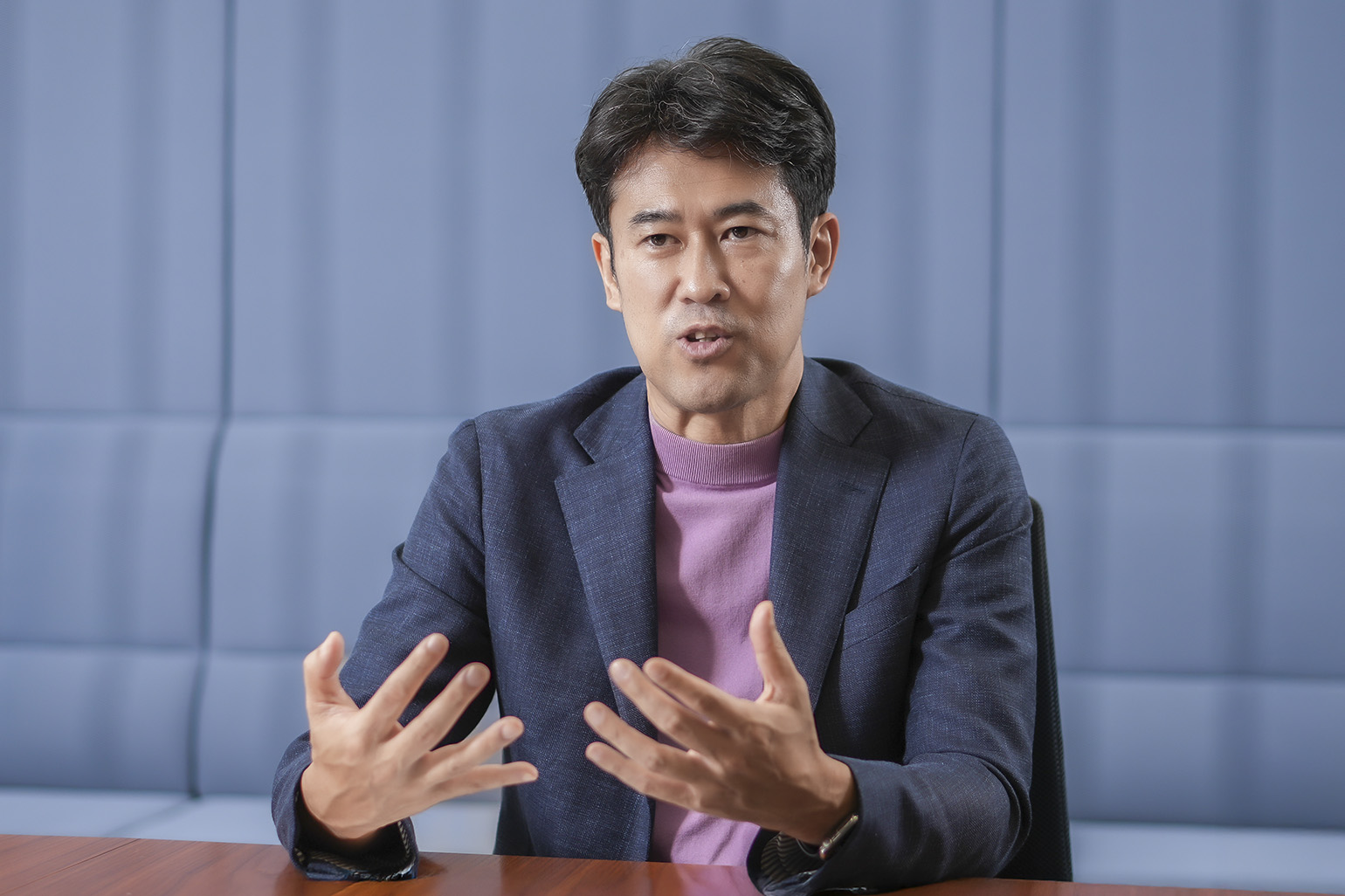
Tomohiko Sugiura, President of CX at dentsu Japan and Executive Vice President of Dentsu Digital Inc.
Today, however, the situation has changed dramatically. In digital alone, the number of channels has surged—websites, banner ads, video ads, social media posts, eDMs, and more. Of course, there are also TV, newspapers, magazines, flyers, transit ads, and in-store POP displays. While diversification is rapidly segmenting customer targets, market trends are also changing at a dizzying pace. We must now create vast quantities of creative assets in a timely manner, tailored to all channels and targets, and deploy them swiftly.A level of transformation that fundamentally changes marketing conventions is required. The trump card for this is generative AI.
Codrington: "The need to create high-quality content faster, cheaper, and in greater volume is universal." For nearly 50 years, Tag Worldwide Holdings (hereafter Tag) has met global customer needs in the marketing field. With sales offices in 19 countries and approximately 2,500 specialists, Tag provides services across more than 120 markets.Today, it is the marketing partner of choice for many of the world's leading advertising clients. A major challenge in leveraging generative AI for marketing is that no single solution can address all needs.
We must understand client challenges and combine multiple AI tools to solve them. Orchestrating this integration is our critical mission. Tag invested early in AI technology and has built extensive expertise. We also deeply understand global client needs. We expect joining the Dentsu Group will multiply this value many times over.
Global Brand President, Tag Toby Codrington
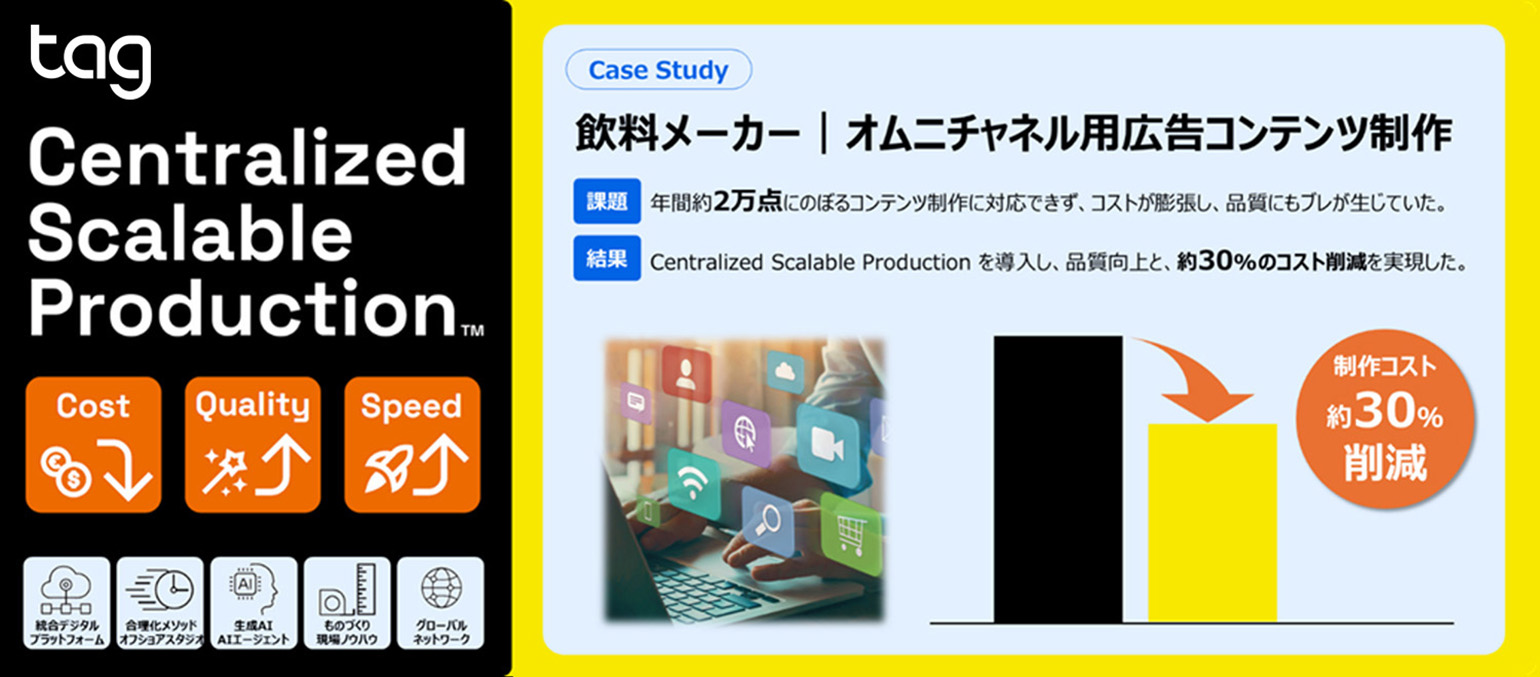
Nagai: A defining characteristic of Japanese clients is their demand for high-quality creative work. The Dentsu Group has a proven track record of meeting this high standard. However, client needs are simultaneously diversifying, globalizing, becoming more personalized, and requiring real-time responsiveness.The Dentsu Group now requires a significant leap forward unlike anything before. Tag champions "Centralized Scalable Production," enabling real-time marketing across over 120 global markets through a single point of contact. By leveraging Tag's international business expertise, AI utilization technology, and global customer base, we believe it can play a major role in driving the transformation the Dentsu Group seeks.
Integrating upstream to downstream into a single process, streamlined with generative AI
——How are you planning to transform global content production using generative AI?
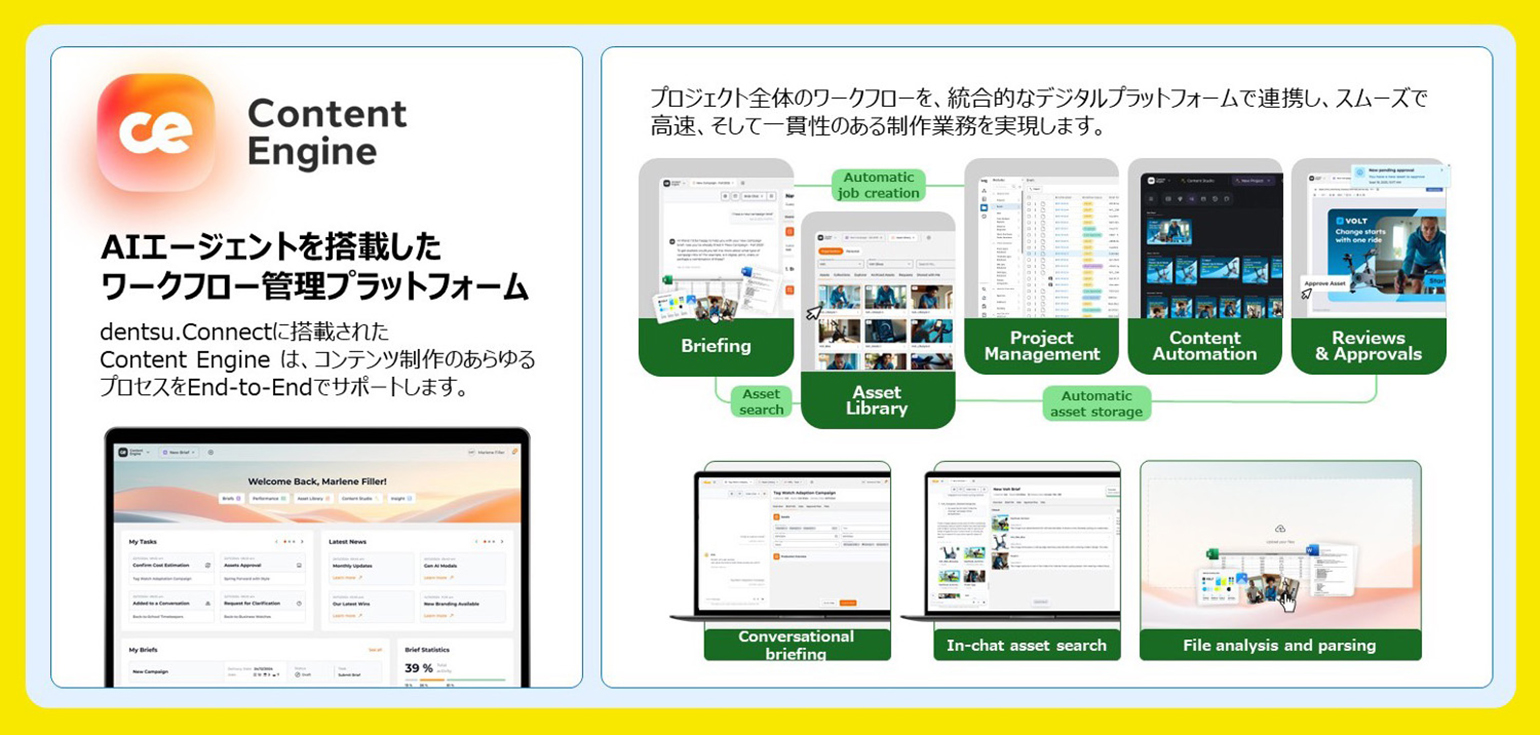
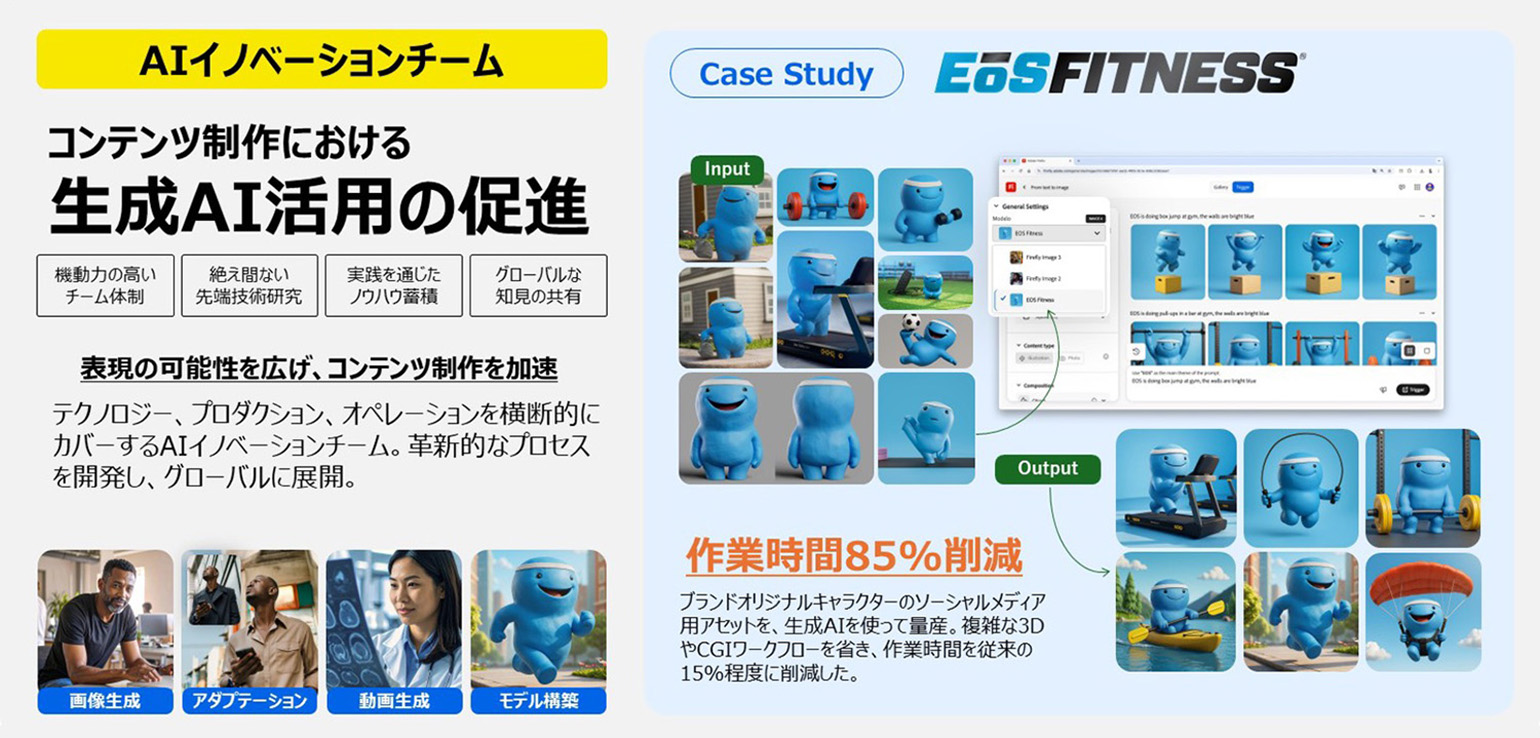
Codrington: We are developing "dentsu.Connect," a marketing management tool deployed on the Dentsu Group's integrated platform, aiming to evolve the entire agency workflow using generative AI. First comes the briefing. We extract content production requirements from briefings with client companies, translate them into multiple languages, and share them with members worldwide.We connect this to "Content Engine" to rapidly and automatically generate a large volume of creative variations. We are also developing mechanisms to gather feedback on the response to creatives released to the market, feed this back into production, improve the content, and return it to the channels. A DAM (Digital Asset Management) system implementing generative AI will advance specialized learning for each channel, automatically optimizing content.
Content Engine: An integrated digital platform that seamlessly connects content production workflowsLeveraging generative AI enables significant efficiency gains
Sugiura: In Japan too, dentsu Japan is deploying generative AI across the entire marketing process, from upstream to downstream, under the "AI for Growth" concept.While Japan's marketing industry has some unique aspects compared to the global landscape, the major trends remain consistent worldwide. Historically, roles were divided with agencies handling upstream tasks and production companies managing downstream. Today, however, there is a demand to connect everything—from initial planning and direction through downstream content production, channel deployment, feedback analysis, and improvement—into a single process, streamlined using generative AI.
Codrington: Tag's "Global Delivery Center" established in India serves as the core of Tag's global operations due to its production capabilities, technical expertise, and high cost efficiency. With over 1,000 creators and specialized staff, it efficiently provides services like content production, technology development, and channel activation to clients worldwide.It is also heavily involved in the utilization of generative AI. This year, the "India-Japan Desk" was launched to handle production work for Japanese clients, and delivery operations are steadily increasing. Staff proficient in Japanese are permanently stationed at the "India-Japan Desk."
Tag India office. The "India-Japan Desk" handles operations for Japanese clients.
Sugiura: How do we address the global demand for quality, cost, speed, and scalability through content refinement and generative AI? That is our transformation challenge. Even when leveraging generative AI to produce content quickly and in large volumes, we cannot compromise on quality. It's not simply a matter of "producing a lot and circulating it widely."
To mass-produce content, we must first establish robust master templates that guarantee quality. Furthermore, content generated by AI cannot be released directly to the market; it requires final review and refinement by human creators. Since leveraging the Global Delivery Center, we've seen significant progress in cost and speed.
Nagai: The technology to deliver products with consistent quality and speed to clients worldwide is unique expertise developed by Tag, a company with extensive global business experience.Our teams operate across global time zones, effectively running on a three-shift system. This ensures consistent quality regardless of who handles the work. Our Global Delivery Center in India is the result of rigorously pursuing and institutionalizing this system. Its 1,000 members produce tens of thousands of assets weekly, delivering them worldwide.
Sugiura: Producing items with consistent quality regardless of who handles them, meticulously addressing language and cultural differences, and ensuring flawless delivery to every country—this requires robust technology and systems. dentsu Japan is now striving to learn extensively from Tag .
Fusing the technologies and know-how of both companies to establish a new production model
—What value will the synergy between dentsu Japan and Tag create?
Sugiura: By welcoming Tag into the Dentsu Group, we will first strengthen our capabilities in the marketing execution domain, centered on production. We see three main synergies.
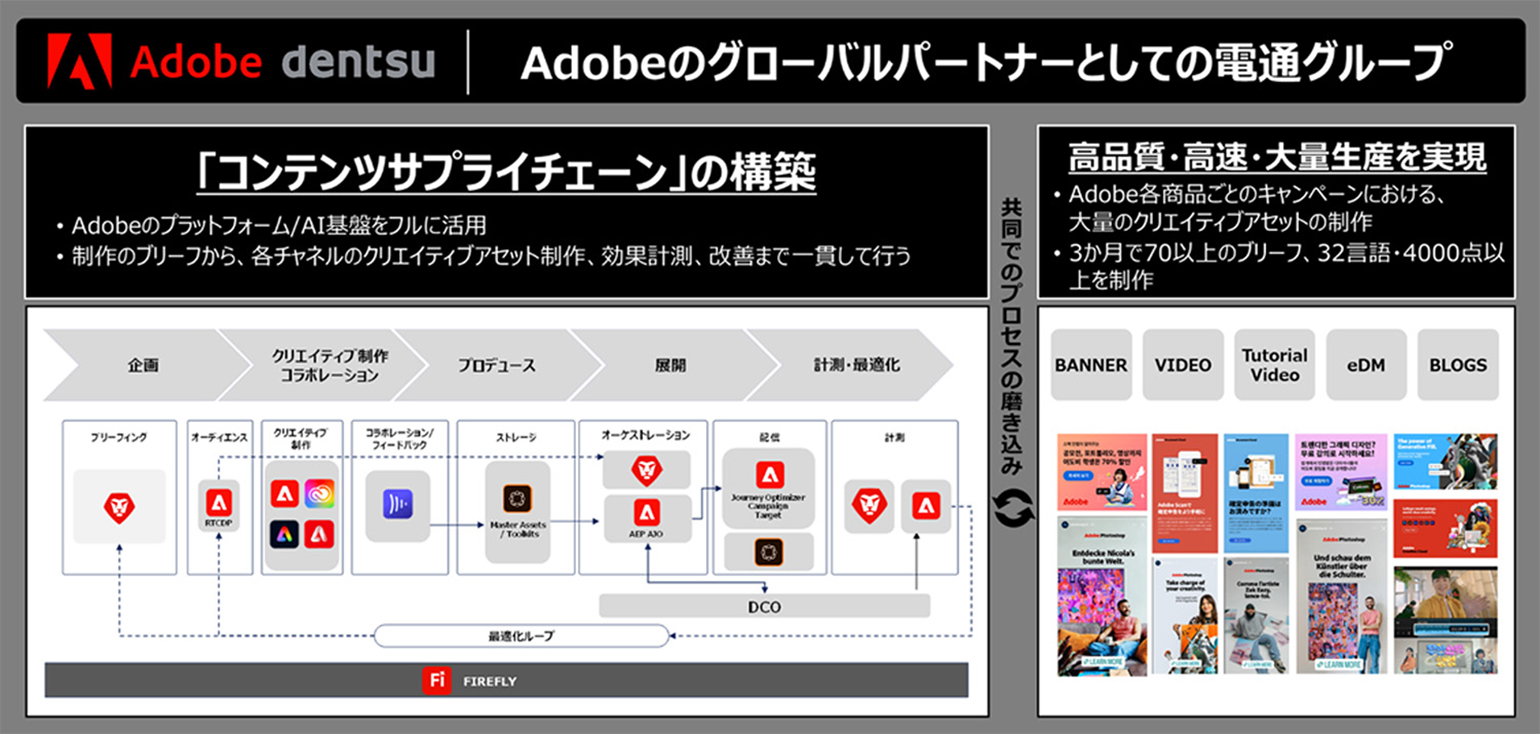
First, the realization of Tag's "Centralized Scalable Production" will accelerate significantly. By merging the Dentsu Group's extensive creative production know-how with Tag's operational capabilities for globally deploying large volumes of content, we will drive further efficiency and growth in creative business on a global scale. A key enabler in this effort is the global partnership between the Dentsu Group and Adobe.As you know, Adobe is the unparalleled provider of industry-standard tools in the creative domain. As a global partner of Adobe, Dentsu Group supports companies implementing and utilizing Adobe's Creative Cloud and Experience Platform product suites, helping them enhance the efficiency and quality of their marketing activities through these tools.Particularly in optimizing the production and management of creative assets—which are diversifying and increasing in volume while also demanding shorter lead times—and in advancing creative production using AI, we combine Adobe's technological foundation with Dentsu Inc. and Tag's operational expertise. This enables us to provide even stronger support for building our clients' "content supply chains."
Furthermore, Adobe itself is promoting similar activities globally within its own marketing operations. As a global agency, the Dentsu Group supports and partners with Adobe in its marketing activities, both operationally and in driving results.
Adobe and Dentsu Group's Global Partnership
The second synergy is for the Japanese market. We are challenging ourselves to see how much we can streamline, accelerate, and achieve cost-effectiveness in production and supply by leveraging Tag's Global Delivery Center. Inbound tourism from overseas has significantly impacted the Japanese economy in recent years.We are advancing projects with the Global Delivery Center to create inbound advertising tailored to multiple languages and cultures. For example, we have established a system for a certain manufacturer client that can reliably produce over 100 assets in just two weeks, delivering tangible results. We are establishing a highly reliable model and will expand this to many more clients going forward.
Third, we are integrating dentsu Japan's AI technology with Tag's AI technology to build the world's most advanced AI-native end-to-end marketing process. dentsu Japan, centered around Dentsu Digital Inc., has been advancing AI R&D (research and development). We are exploring how to fuse this with Tag's expertise to create the ultimate solution.Japan has a strong commitment to quality, and our clients also possess unique values. Simply bringing in successful overseas examples won't lead to success. We believe the attempt to fuse both companies' technologies is globally advanced and can aim for an unprecedented dimension.
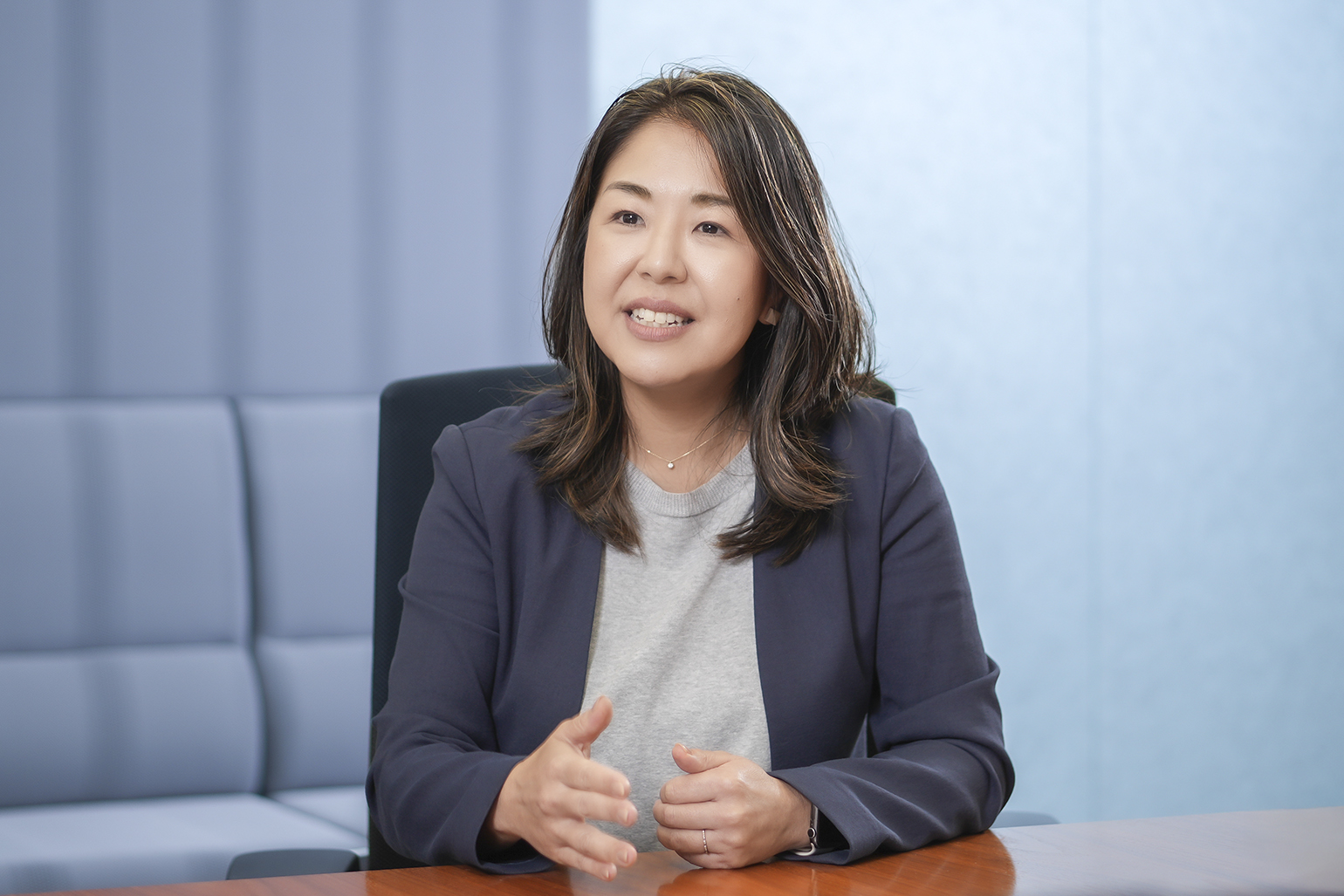
Tag Japan President and CEO Asako Nagai
Nagai: At Tag Japan, we began an initiative last year to provide cross-functional support for the massive content production needs of pharmaceutical companies.Traditionally in the pharmaceutical industry, a single agency would handle everything from upstream strategy development to downstream production for a single drug brand. Tag Japan's approach is to provide comprehensive support for the downstream production of all drug brands, stabilizing quality while simultaneously accelerating speed and reducing costs.
The healthcare domain requires highly specialized expertise. Therefore, in the Japanese market, we provide services in collaboration with the team at dentsu health Japan Inc., professionals in the healthcare field. The Dentsu Group comprises approximately 140 specialized companies. By combining the expertise and know-how of each company, we believe we can offer broader support.
Cordrington: I see two key synergies. First, Tag can assist Japanese companies in their global expansion. Tag's client base includes many global corporations, enabling consistent strategy execution worldwide. With extensive experience across diverse countries and channels, they can deliver communications that maintain brand consistency while respecting each country's culture, language, and consumer trends.The partnership between dentsu Japan and Tag means Japanese companies now have a reliable pathway to enter any market worldwide.
The second is the reverse: supporting global clients entering the Japanese market. Japan possesses its own unique language, culture, and market dynamics. By collaborating with dentsu Japan, which deeply understands the Japanese market, we have enhanced our competitive advantage.
Globally, "retail media"—marketing within physical stores—is expanding rapidly. This field has vast potential, with some predicting it will become the largest media market in the near future. Tag possesses overwhelming expertise and strength not only in digital but also in deploying physical materials like POP displays, flyers, and fixtures. Here too, we expect the synergy between the Dentsu Group and Tag to yield significant results.
——Please share your outlook for the future and a message for Japanese marketers.
Codrington: We have programs to support Japanese companies expanding globally. Working closely with dentsu Japan's client leads, we develop content with a deep understanding of market-specific targeting. We will leverage Tag's large-scale, globally expanding platform to its fullest potential.
Nagai: We believe many companies in Japan face the challenge of wanting to expand their marketing but struggling to accelerate it. From Japan to overseas, and from overseas to Japan. As a rare group of companies capable of executing high-quality, large-scale, two-way marketing, we will support the growth of each of our clients.
Sugiura: The trend of delivering massive amounts of content in a more personalized form—high quality, high speed, high volume, low cost—is an irreversible need. Achieving this through generative AI and refined processes is something dentsu Japan absolutely must accomplish. We will establish a new production model by leveraging the global network and expertise of our new partner, Tag.
After the Interview
Tetsuo Katsumata, Publisher, Nikkei Cross Trend
The marketing field is experiencing the most significant impact from the transformation brought by AI.With the diversification of consumer values and communication channels, the need for "high-quality content delivered faster, cheaper, and in greater volume," and increasingly globally, has become a pressing challenge for marketers at business companies. In this regard, the collaboration between the Dentsu Group, advancing comprehensive solutions with overwhelming momentum in the AI×Marketing field, and Tag Inc., which has accumulated expertise in AI-powered creative production from an early stage, is highly anticipated.
Through discussions between the two companies, future points of focus have also emerged. The question is whether simply using AI to create content faster, cheaper, and in greater volume is sufficient. When considering consumers as the starting point, high "quality" is an unavoidable necessity, and it remains a crucial perspective for many brands. The discussions confirmed that as AI utilization advances in creative fields, the competitive arena will inevitably shift towards "quality."
President, Dentsu Japan CX; Executive Vice President, Dentsu Digital Inc. Visiting Researcher, Columbia Business School's Center for Information Technology and Innovation (CITI), 2009. Participated in launching Dentsu Fuse and Dentsu e-marketing One, overseeing web consulting and online advertising ROI management.Primarily engaged in customer acquisition support for financial/insurance and e-commerce companies, as well as e-marketing strategy planning and PDCA operations for the IT and automotive industries. Concurrently led the development of unique digital marketing optimization tools, including methods for mass advertising × web integrated analysis, online advertising planning optimization, and attribution analysis. Served as President and CEO of Nextedge Dentsu Inc. in 2013.