
Note: This website was automatically translated, so some terms or nuances may not be completely accurate.
 Ten people, ten ways of thinking [13/13]
──Risa Tanaka, please share your tips for "accepting others' perspectives."
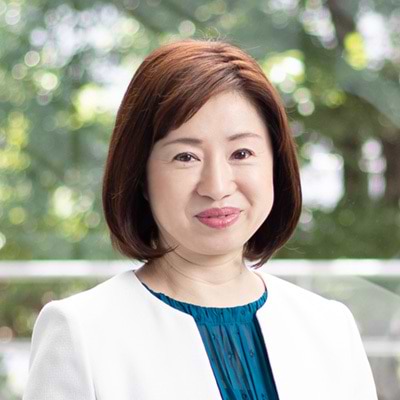
Risa Tanaka
Advanced Education Organization Graduate School of Business Design
When we want to immerse ourselves in thought or try to squeeze out ideas, each person needs their own unique "companion" (= indispensable item). For the great detective Sherlock Holmes, it would be his beloved "pipe" and "violin."
This series invites various individuals to share their own "personal companions for thought" (each unique to the individual). We hope you'll enjoy discovering the "unexpected side" of these figures while engaging in "thought about thinking."
(Web Dentsu Inc. News Editorial Department)
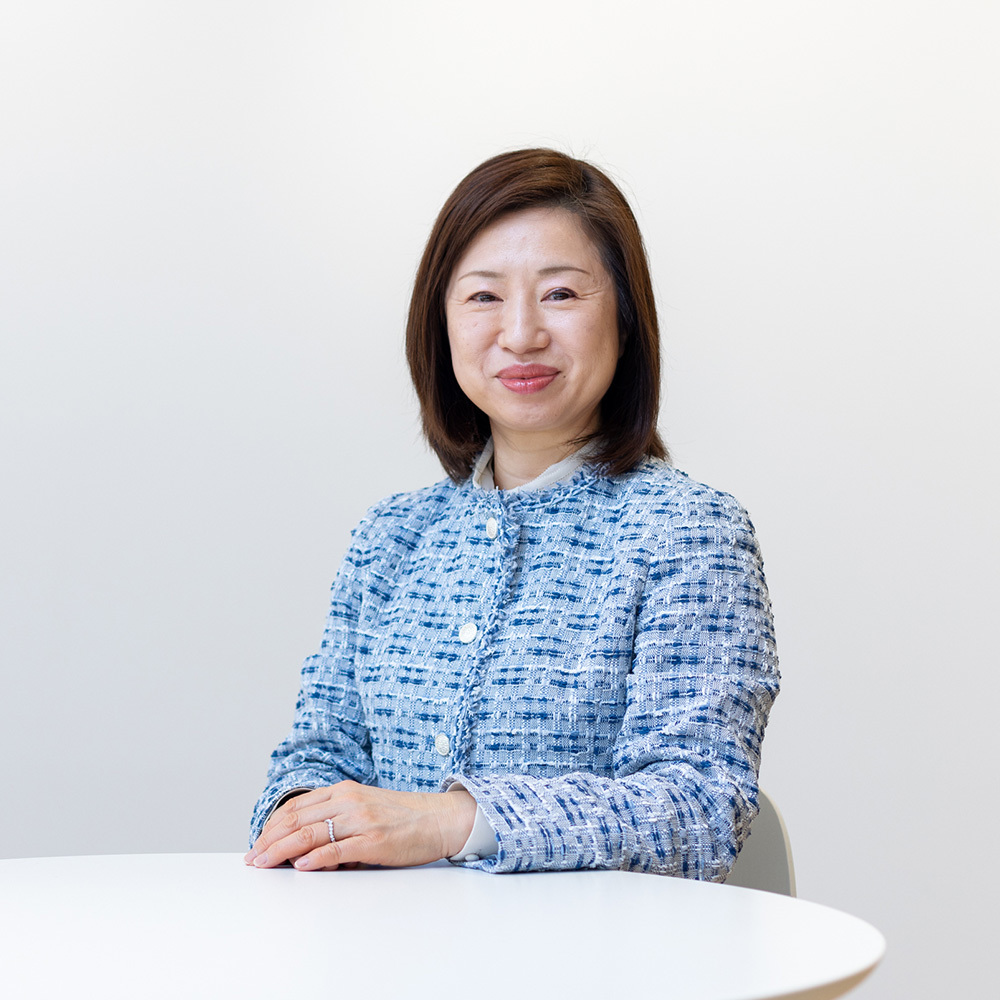
People who say unexpected things are important.
──We had the opportunity to speak with you about the "Dentsu Advertising Award SDGs Special Prize" for Web Dentsu Inc. ( article here ), which led to your appearance in "Thought Companion" this time. Thank you for joining us.
Tanaka: Thank you for having me.
──Mr. Tanaka, you served as Editor-in-Chief of the magazine "Senden Kaigi" for over 20 years. Many business professionals, especially those involved in marketing and public relations, are likely familiar with your name. Could you first tell us about your main work at present?
Tanaka: Currently, I serve as President of the Graduate School of Business Design at the Advanced Education Organization, a school corporation established in 2012 with approval from the Minister of Education, Culture, Sports, Science and Technology. I focus on enhancing the university's value by creating an environment where graduate students can pursue their individual challenges through evolving educational systems and course programs, and by fostering collaborative research with industry, government, and academia across Japan.
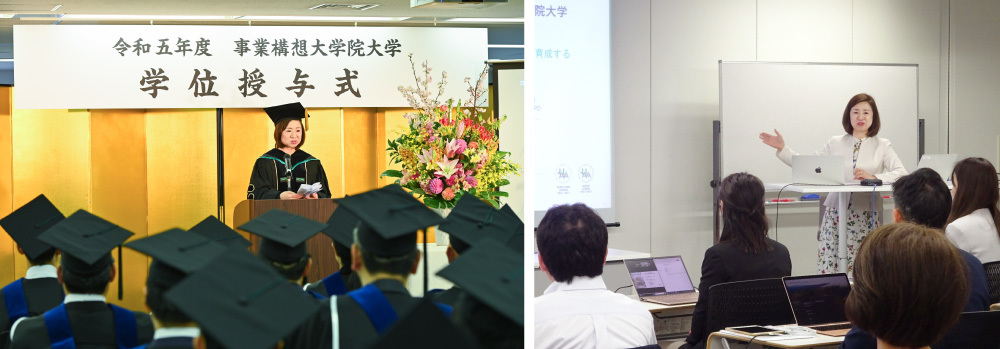
──Are all the graduate students working professionals?
Tanaka: That's correct. Some want to start their own businesses immediately, others want to take on new projects within their companies, and some want to support entrepreneurship. The group is diverse, including sole proprietors, company employees, local government officials, school teachers, doctors, accountants, and media professionals active in advertising agencies and newspapers.
──So there are many different types of people.
Tanaka: I teach a course called "Business Concept Case Studies." We invite guests active in various fields to give lectures, followed by discussions with graduate students where we clarify themes. CEOs of listed companies, entrepreneurs, artists, and others participate not just as speakers but as university lecturers.
Others, like individuals fighting to revitalize local shopping districts or those who founded NPOs to tackle social issues, share concrete stories about lessons learned from failure and growing alongside partners and supporters. The graduate students, who approach these sessions with genuine commitment, ask sharp and creative questions. It's gratifying that the guest speakers consistently describe this time as stimulating.
──Graduate students with diverse backgrounds engage in discussions with innovators possessing rich experience. It seems like all sorts of chemical reactions could occur.
Tanaka: Graduate school is also a place to encounter new intellect. I believe the ultimate happiness lies in meeting people with different perspectives, those who come up with ideas you never imagined, and being able to hear their stories. I feel our university exists within such a space and time.
──The lecture you just mentioned seems about meeting diverse people to "expand your toolkit." As someone active in multiple fields, you yourself seem to have quite an extensive toolkit.
Tanaka: Is that so? (laughs). I worked as an editor for a long time, and through that work, I had the chance to meet many outstanding creators, promoters, writers, salespeople, and others. Seeing firsthand that there are infinitely more talented people than myself, I realized it was more enjoyable to learn from various individuals, experience their brilliant work firsthand, and upgrade myself, rather than just pushing through with sheer determination to grow.
Being exposed to fascinating people and getting inspired allows you to become a new version of yourself. It feels wasteful to keep that joy locked inside, so I've always felt a role for myself in introducing interesting people to the world through media, connecting people, and acting as a kind of medium myself. Seeing things from multiple angles is truly important. If you only think within your own framework, you tend to arrive at similar conclusions using the same thought processes. Encountering that "Oh, that's how it works!" kind of surprise is precious.
The Key to Accepting Others' Perspectives
──That said, changing your own way of thinking or perspective takes quite a bit of courage, I think. There's also that feeling of "wanting to value my own thoughts." On the other hand, I completely understand that it's important to listen to various people's opinions, as you mentioned. How can we reconcile these "180-degree opposing stances"?
Tanaka: It is difficult, isn't it? But I don't think we need to think in terms of 180 degrees. Fundamentally, it's easier not to cling too tightly to your own opinion. It creates space within yourself, and it's enjoyable. In meetings, some people ask those expressing different opinions, "Why do you think that way?" While that's a valid approach, I try not to ask such questions myself. Instead, I wonder, "Why did this person think that way?" and focus on imagining their background and thought process.
—You don't ask them, you imagine?
Tanaka: Where did this idea come from? What are their interests or obsessions? What are their non-negotiables? Instead of jumping to conclusions or assumptions, I try to imagine their worldview. Then, even if they say something completely opposite to my own view, the image I've created in my mind connects to their words. Through discussion, I might even find myself liking them a little more.
──I see.
Tanaka: I rarely see conversations deepen after asking "Why do you think that?" and getting "Because of this." If hearing the answer just makes you think "Oh, that's how it is," then maybe you don't need to ask.
Everyone is different, so I value individuality. I'm not someone who recommends things to others much, but sometimes you meet people who push their ideas really hard, right? Like at meals, saying "Put this much soy sauce in, and eat it like this," or "First, try it this way. Just try it, even if you think you're being tricked." Those kinds of people are really interesting, aren't they?
──(Laughs). Is there a trick to thinking like Tanaka-san?
Tanaka: Hmm. People say they should "be flexible and listen to others' opinions," but it's hard to actually do that. So, I think it's necessary to consciously check whether you're stuck in old ways of thinking or closed off in your own shell.
Curiosity about people trumps everything
Tanaka: I was born in Tsu City, Mie Prefecture. Apparently, ever since I was a kid, I'd often say, "I'm not someone who'll just stay here forever!" People around me thought I was "weird" or "always saying strange things." I only found out as an adult that I was considered such a dangerous character (laughs).
Back then, living in the countryside meant limited access to information. I think I became interested in Tokyo and, by extension, the world, through books and media, wanting to see a broader world. Still, looking back now, it wasn't really something you'd go out of your way to tell people.
──Hearing that story, I get the sense you valued your own thoughts quite strongly even as a child.
Tanaka: Well, yes. Family and relatives would often tell me things like, "You should go to this high school," "You should study this field in college," or "This is the best path for your future," all with high expectations. But I'd think, "Why is my future already decided?" It seemed a bit strange to me.
──I see. That was an interesting childhood anecdote. Hearing you talk so far, I feel that something like "curiosity about people" is important, both in work and in life.
Tanaka: Exactly. The one thing I really dislike is when people label someone as "this kind of person." I believe everyone has their strengths and roles, and I'm not fond of forcing people into rigid molds.
At the same time, during my editing days, I'd ask prominent figures, "I'd like you to write a piece on this theme this time." Their managers would initially give me a skeptical look, but I'd explain why I wanted to hear their thoughts on this topic and what I hoped to convey to readers. As a result, they'd often say, "It sounds interesting, I'll do it."
Later, they even commented, "This has opened up a new area of expertise for me." Since then, even when I receive work requests and wonder "Why me?", I try to see it as an opportunity to expand my abilities through others' guidance and take on the challenge. If it fails, it's shared responsibility!

What is Risa Tanaka's "Thought Companion"?
──Now, getting to the main topic, what is your "companion for thought," Ms. Tanaka?
Tanaka: "Clear files." They're transparent, colorful, and I really love them.
──Clear file folders? You mean, the stationery kind?
Tanaka: I love stationery stores. Even when I'm on business trips to other regions, I pop into them if I have time. I especially love stores that combine bookshops and stationery shops. Clear files are usually colorless and transparent, but seeing all the different sizes, thicknesses, numbers of pockets, and colors makes me excited. They're also a must-buy souvenir item at museum and aquarium gift shops, so I always get one. I don't have a consistent theme for what I choose—it ranges from warlords to flowers.
──Clear files as companions for thought... What do you mean by that?
Tanaka: I use them to hold work documents or jot down ideas that pop into my head. While national advisory boards and administrative meetings have become quite paperless, I still occasionally receive important materials on paper. I write down things that stood out during the meeting on that paper.
I often jot down sudden ideas or observations in a notebook, but things heard on the spot, comments from other professors, or fleeting thoughts are a race against time, so I scribble them in notebooks or memo pads. Among these, if I truly don't want to forget a particular idea, I might slip the entire memo-filled notebook into a clear file. When lecturing or writing articles for magazines, I believe it's essential to accurately credit the source of information. I also want to reliably safeguard intellectual property like content holders' ideas.
Putting them in a clear file and storing them on my shelf that same day gives me a little sense of satisfaction, like "I encountered new ideas again today." Later, when I take them out, I can revisit them while recalling the time they were made.
For me, clear files are less about organizing materials and more about serving as a tool for accumulating new ideas, insights, and my own thoughts encountered each day.

──A tool for accumulation.
Tanaka: I'm usually pretty distracted, and my periods of concentration are really short. Juggling multiple things at once has become my style. Even during roundtable discussions, I find myself worrying about things like someone running out of water or the room getting a bit too warm. If I start thinking about this and that, I get even more distracted and end up leaving things scattered everywhere. So, slipping things I notice or think about into a clear file gives me a sense of relief, even if I don't look at them later.
—A sense of security, huh.
Tanaka: Outside of work, things like pamphlets I get while traveling. Also, handkerchiefs. Putting them in a clear file just makes me feel secure.
──Handkerchiefs! You put things other than paper in them?
Tanaka: About a year ago, my son collapsed on his way to school in the morning because he wasn't feeling well. I was at home when the fire department called, and I was shocked... A stranger who was commuting came to his aid first. They took the ice pack from his lunch box, wrapped it in a handkerchief, and applied it to my son's head. I immediately rode in the ambulance to the hospital, so I only heard about this person later from my son. I wanted to return the washed handkerchief and thank them, but I never found out who they were. So, I keep it in a clear file. To remember my gratitude to my benefactor and my resolve to help anyone I see in trouble.
──I see. I feel like I'm starting to understand what's important to you, Mr. Tanaka. Doesn't keeping things like that mean your house gets flooded with clear files?
Tanaka: I try to organize things at the start of each month. I don't keep things with the intense determination to never lose them. I don't overthink it; I just keep things that catch my eye. The things that stay with me feel fated, like the heavens are telling me, "Treasure this." I don't really have any particular attachments, you know. Not to food, drinks, or possessions. Things I happen to encounter and grow fond of hold some meaning for me—it's like fate, serendipity.
──Serendipity. "The ability to discover unexpected value from chance encounters and seize good fortune," right?
Tanaka: At work too, sometimes when I arrive at a job site, it's a world completely different from what I imagined, and I wonder, "Why am I even here?" Of course, I do my job properly, but deep down, I find myself enjoying these strange "encounters." For me, clear file folders might be where I clip and store the "joy of these encounters" in my memory.

Was this article helpful?
Share this article


Newsletter registration is here
We select and publish important news every day
For inquiries about this article
Back Numbers
Author
Risa Tanaka
Advanced Education Organization Graduate School of Business Design
Chancellor