Note: This website was automatically translated, so some terms or nuances may not be completely accurate.
 NRF2025: The Paradigm Shift in Retail and Commerce for the Post-COVID Era [1/5]
Story, Memory, History ~ Brand, Store, People, Post-COVID and Beyond

A quarter-century into the 21st century, five years after the pandemic began. Held in January 2025, this milestone 115th NRF drew over 40,000 attendees from 100 countries. With more than 175 sessions led by over 450 speakers, the event surpassed previous years in scale and success. With a second APAC event in June and the inaugural EU event in September, NRF is now held three times a year. I feel it is steadily establishing itself as a global convention on par with CES, SXSW, and MWC (additionally, this year's timing allowed me to extend my trip beyond the East Coast in NY to the West Coast in LA, experiencing the latest retail and commerce environments).
When participating in these overseas conventions and conducting on-site inspections, I place particular emphasis on the following four action processes:
① "Walk": Sharpen your senses and practice the purchasing experience as a consumer.
➁ "Listen": Prioritize absorbing the passion of prominent executives and the venue's energy over language comprehension
➂ "Observe": Step inside booths, not just walk by; maintain a third-party perspective while touching and trying products
④ "Encounter": Engage indiscriminately with peers and competitors, both during and outside the event, inside and outside the venue
Following this approach, our NRF2025/US inspection can be summarized numerically as follows.

Now, let's delve deeper into each of these four perspectives in order.
NRF2024 report:https://dentsu-ho.com/booklets/630
① "Walking" ~ Shops & Stores Edition
(1) Amazon
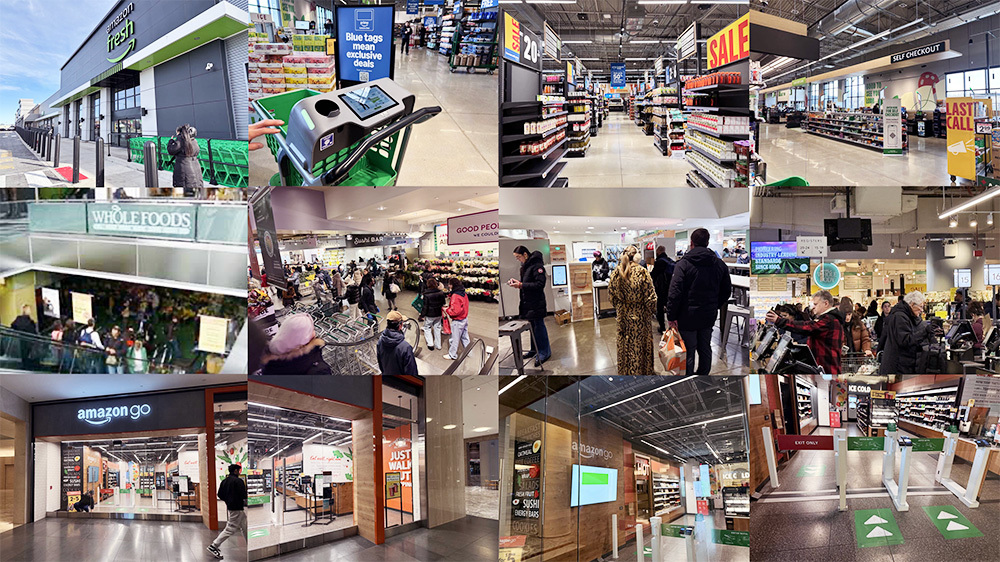
This time, I ventured out to the NYC suburbs and visited an Amazon Fresh store for the first time. I was fascinated by the latest checkout carts and the store filled with neatly arranged electronic shelf labels (though the adjacent hard-discounter grocery store, ALDI, seemed busier). Inflation impacts not only Japan but the US as well. Amidst this, Amazon's bold approach stands out : leveraging synergies with Whole Foods Market (acquired post-pandemic) for in-store e-commerce returns , and implementing the unmanned store solution (Amazon Just Walk Out) for Starbucks . This demonstrates how an online-born company is aggressively offering three distinct formats in the offline space.
(2) Walmart
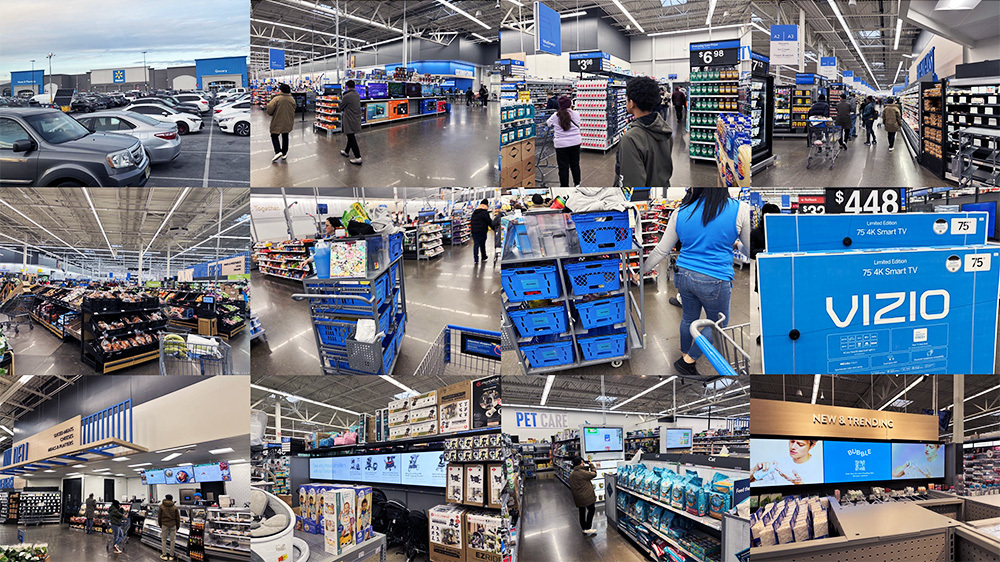
At the stores visited this time, I couldn't help but feel that Walmart+ retail media—leveraging large in-store screens and extensive signage rather than just the app interface—has reached a certain level of maturity. Their placement directly above the large display areas for pet food and strollers likely reflects a deliberate strategy. Furthermore, the impact of their acquisition of smart TV maker VIZIO, completed late last year, cannot be overlooked. It's surprising enough that a general merchandise store (GMS) is selling its own private brand TVs, but might we soon see remote controls featuring a dedicated "Walmart button"? Beyond simply expanding retail media within the real (staff) and physical (store) domains, I sense a glimpse of their ambition to deepen customer touchpoints from in-store to in-home.
➁ "Listen" ~ Keynote & Featured Session Edition
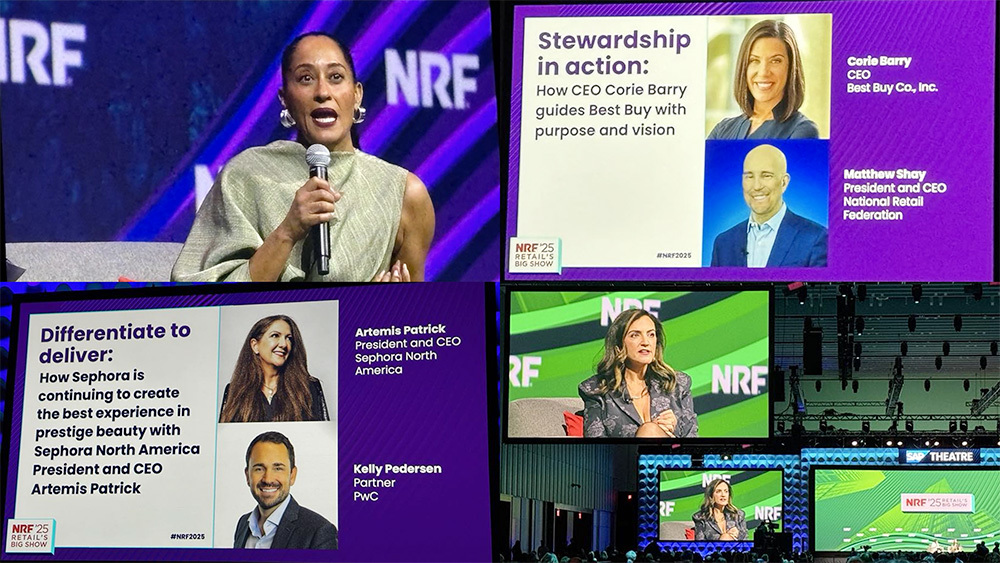
The opening keynote featured three AI use cases from NVIDIA executives: ① L'Oréal's Production Studio: A generative AI program boosting speed and quality in advertising creative production; ② Lowe's Digital Twin: Optimizing operations, OJT, and customer flow simulations across all stores using AR integrated with wearable devices; ③ Walmart's Smart Forecasting: Integrated supply chain optimization through immediate response to store-specific demand fluctuations and achieving optimal inventory levels. However, personally, I was deeply impressed by the leadership of the many female CEOs on stage, including those in their 30s and 40s—often younger than myself—and their startup spirit, which reaffirmed the strength of entrepreneurship in the US.
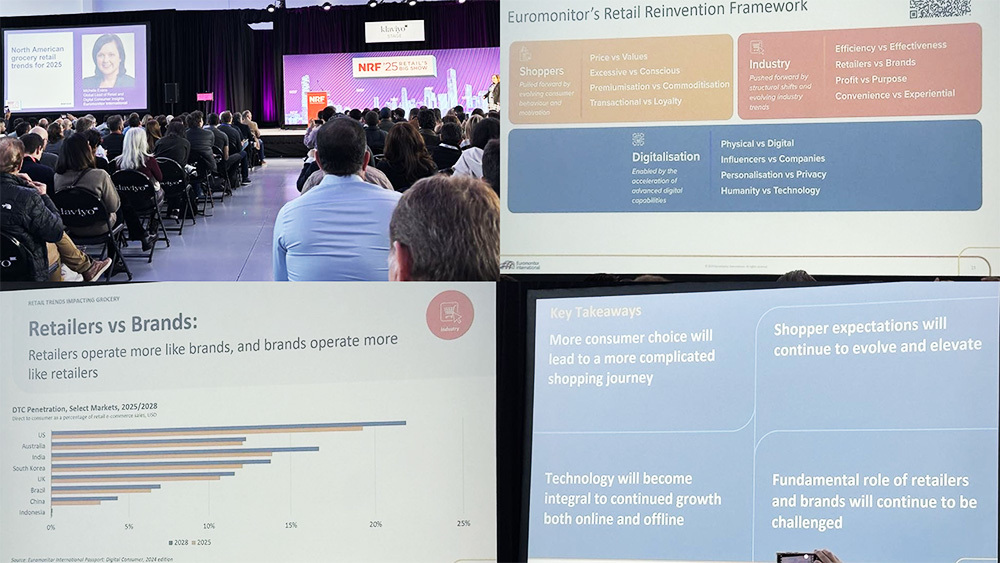
Among the featured sessions presenting research facts and case studies in small-to-medium venues, "North American Grocery Trend for 2025" stood out. It analyzed trends in grocery stores (GMS primarily selling food), the main battleground of the overseas retail market. It divided the sector into "Customer Side" and "Business Side," organized frameworks across multiple comparison axes, and concluded that as the pandemic brought digitalization to grocery shopping, expectations for brands and shopping experiences will only rise in the post-COVID era. Particularly intriguing was its assertion that "retailers will become more like brands (manufacturers), and manufacturers (brands) will become more like retailers." As I'll organize later, I perceive this less as disruption and more as a mutual thawing (detente) progressing bidirectionally.
③ "Observe" ~ Technology & Solutions at Expo
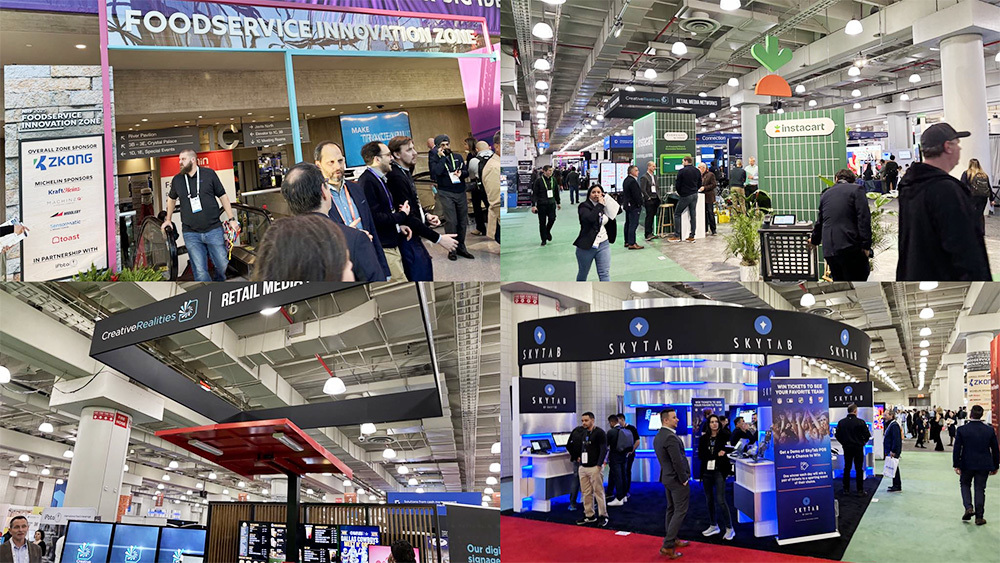
The Expo featured over 1,000 large exhibits. The main venue structure remained unchanged with three key areas: the Innovators Showcase introducing various cutting-edge technologies like AI, augmented reality, machine learning, facial recognition, and robotics; the Startup Hub packed with startups; and the Foodservice Innovation Zone, which has gained prominence since the post-COVID era. The hallmark of this zone's exhibits lies in technologies that are instantly understandable, intuitive, and easy to grasp—such as mobile ordering and semi-automated drive-thru systems. Simultaneously, it's worth emphasizing that in the U.S., the term "retail" encompasses not only what Japan refers to as retail stores but also the entire foodservice business domain.

As platform providers in the retail commerce space frequently mentioned in this report, we have "GAMS" (Google/Amazon/Microsoft/Salesforce) rather than GAFA. While their names differ—Gemini, Rufus, Copilot, Agentforce—all four companies consistently showcased their AI technologies built on their respective cloud platforms and presented case studies from client companies. This alone underscores that AI is no longer a future technology but a necessary condition for establishing competitive advantage on the business side. It also highlights that the consumer environment where these technologies are socially implemented—whether in online e-commerce or offline stores—is already sufficiently provided to the customer side. Couldn't we say that NRF 2025 made these points crystal clear?
④ "Encounter" ~ Out Convention (Off-site sessions during NRF) Edition
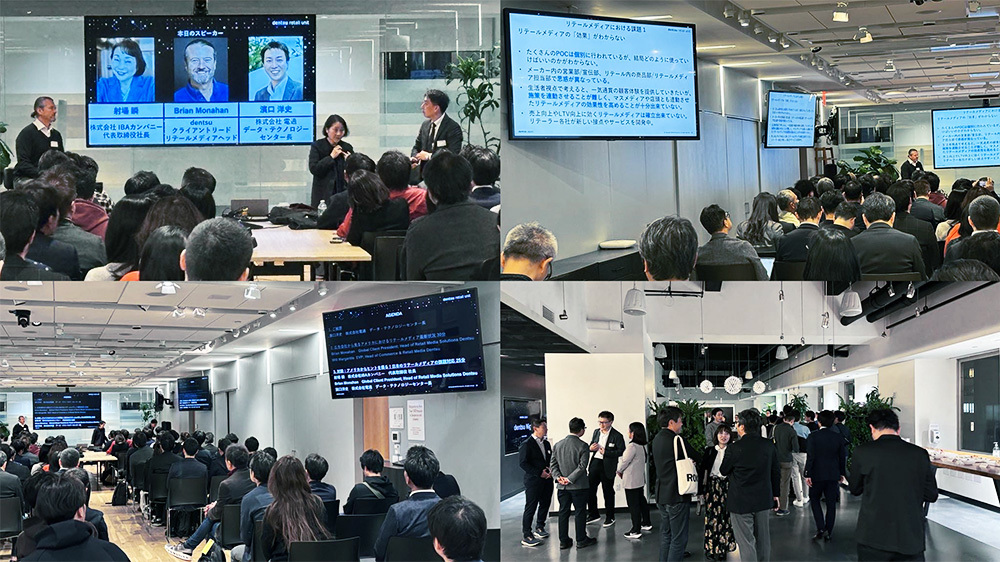
Finally, as in previous years, the Dentsu Group held an offsite study session and business networking party at the Dentsu USA office. Nearly 100 participants attended, including retailers, manufacturers, and solution vendors. Speakers included Hiroshi Hamaguchi, MD (Director) of the Dentsu Data Technology Center. Brian Monaghan (Head of Retail Media Solutions at Dentsu Inc. USA), and Mr. Iba from IBA Company. The event featured discussions on North American retail media trends and breaking news from NRF 2025, fostering lively information exchange in a relaxed yet energized atmosphere. The follow-up seminar held in Japan at the end of February was also well-attended, reaffirming the high level of interest in retail media within Japan.
⑤ "Summary" ~ AI Infrastructure Enters Social Implementation Phase
Building on the four perspectives outlined above, summarizing this year's retail and commerce environment as presented at NRF 2025 : "In 2025, as consumer marketing transforms into customer marketing across all products and merchandise, customers have become more discerning about their shopping environment—stores, staff, brands... Retailers and manufacturers, as sellers and salespeople, are responding based on AI implementation, and the barriers between the two are dissolving. " The following is a chronological reorganization of this, including the period before COVID-19.
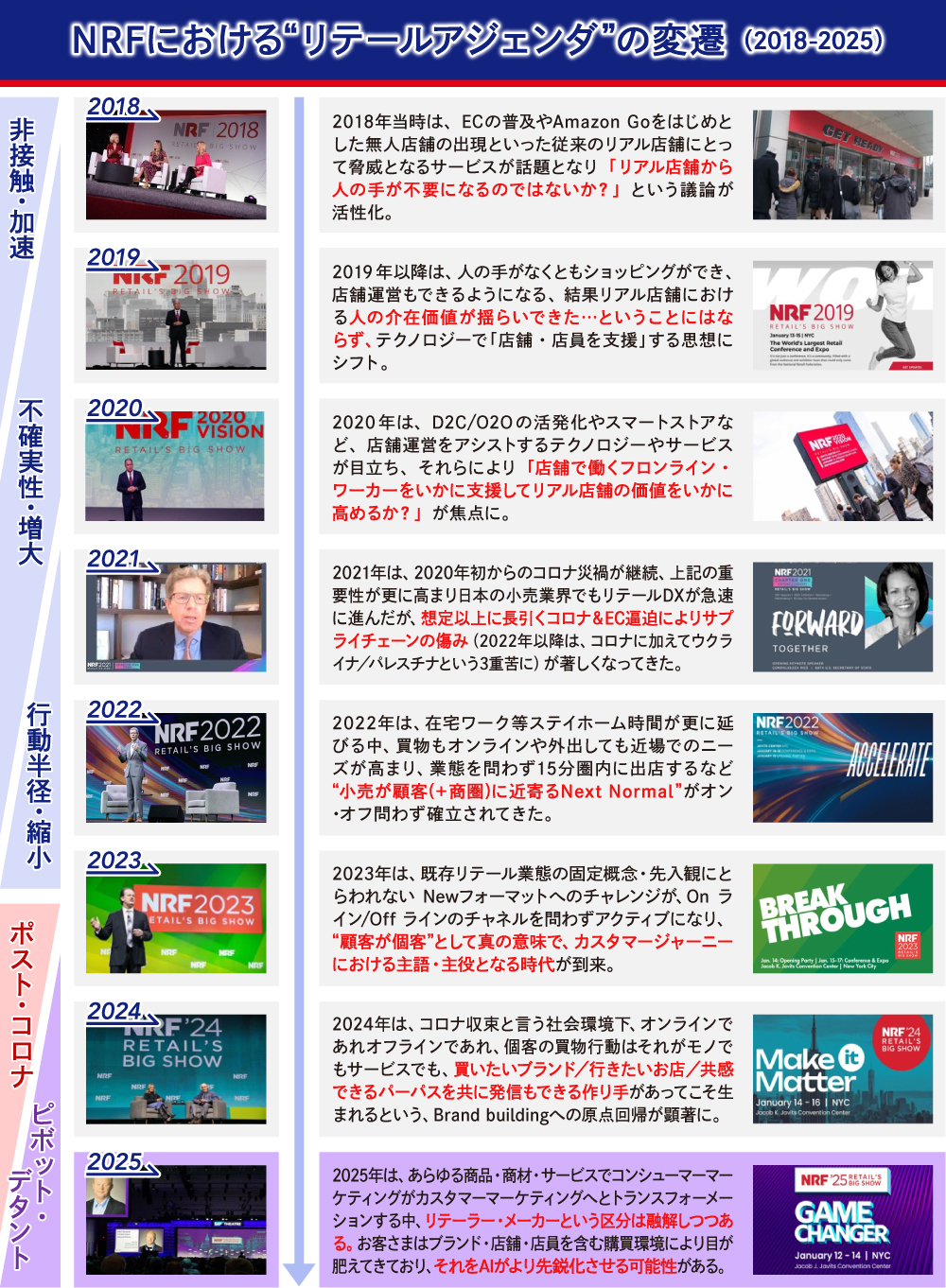
2024 saw a trend of creating a second monetization engine by pivoting core company assets rooted in their primary business —symbolized by the keyword "retail media "—leveraging their strengths to expand into other business areas. In contrast, 2025 featured 'detente'—the melting of traditional industry boundaries between manufacturers and retailers—where players like major retailers' private brands or emerging D2C Inc. brands succeeded. This enabled companies to exceed their inherent roles within the value chain and meet customer expectations. The driving force behind this was AI, this year's title word: "GAME CHANGER."
What retail agenda will be proposed at the second NRF APAC in Singapore this June? We can't take our eyes off this increasingly exciting convention.
NRF2024 report:https://dentsu-ho.com/booklets/630

Was this article helpful?
Share this article


Newsletter registration is here
We select and publish important news every day
For inquiries about this article
Author

Hitoshi Kimura
Dentsu Inc.
Retail Marketing Division
Senior Producer