Note: This website was automatically translated, so some terms or nuances may not be completely accurate.
 NRF2025: The Paradigm Shift in Retail and Commerce for the Post-COVID Era [2/5]
"Possibilism" ~ The New Possibilities for Retail Commerce in the AI Era Emerge Not from the US, but from APAC (Part 1)
The NRF Retail's Big Show, the world's largest retail convention hosted by the National Retail Federation (NRF), takes place every January. The second edition of its APAC version was held at Marina Bay Sands Hotel in Singapore from June 3rd to 5th. How will the cutting-edge trends in retail commerce shift going forward? Hitoshi Kimura, who supports BX/CX for the retail industry within the Dentsu Group and has been conducting time-series observations since 2020 before the pandemic, will present.
Introduction
NRF APAC 2025 (hereafter APAC2025) concluded with even greater scale and success than last year. The opening emphasized the "possibilities" and "potential" of the APAC region within the retail commerce sphere. While attention in the US often focuses on mega-global brands, the power of the three-pronged approach of "Digital, Data, and Technology" led to
① The unique and diverse approach to DX and branding by APAC retailers—still largely unrecognized in the global market—was presented as an antithesis.
② The driving force behind this is the fourth power—AI—which is increasingly becoming a default component alongside the "digital, data, technology" trio.
③ Paradoxically, as these conditions mature, the value of customer experiences (CX) that consumers took for granted before COVID—the mutual connection between staff and customers, the physical space of the store, and the unique, real-time experience— has significantly increased in relative importance.
These APAC-specific "Retail Commerce Agendas" are largely rooted in the region's diverse history, culture, society, ethnicity, religion... and other perspectives, wouldn't you agree? Of course, this includes Japan. In this report, following the above points,
Part 1: Reviewing NRF APAC 2025 – The Potential of Retail Commerce in the AI Era
Part 2: Store Visits Across APAC – Taiwan / Singapore / Malaysia
to deliver detailed insights to you.
The Potential of Retail Commerce Revealed Through Speeches

This unfamiliar term "posibilism," raised in the opening speech on the first day, originates from French political activism and was later proposed by American socio-economist Albert O. Hirschman. It refers to a stance of "gradually moving toward an unseen new society." Put more simply, it's the idea that, especially at times or in societies undergoing major paradigm shifts, it's better to believe in the possibilities for the future drawn out by bottom-up approaches from citizens and the front lines, rather than top-down approaches from government or management. The author sees parallels between this and the "AI-permeated modern era."
Furthermore, the theme for APAC 2025 is "Retail Unlimited." The opening keynote highlighted the following data as indicative of the inherent potential within the APAC market itself:
● APAC has a population of 3.5 billion, accounting for 55% of the world's population.
● By 2030, two-thirds of the world's mainstream consumer base is expected to be concentrated in this region.
● In Southeast Asia, the e-commerce market has grown at an average annual rate of over 20% for the past five years.
● South Korea became the first country globally to exceed a 50% e-commerce penetration rate.
Furthermore, it was highlighted that APAC-originated retail trends —such as super apps, live commerce, and SNS-linked purchasing—are increasingly exerting a strong influence on global markets and consumer behavior. How will AI impact this landscape?
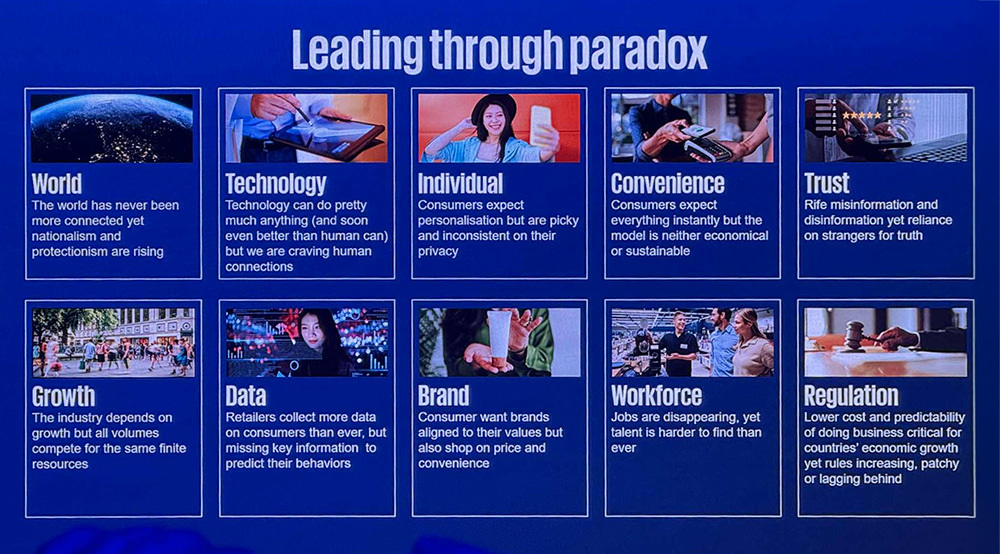
The presentation highlighted various "paradoxes" across 10 areas, including: "A labor market where human-mediated work is decreasing, yet finding the necessary talent is becoming harder"... She listed various "paradoxes" across 10 domains, impressively explaining that solving these contradictions lies in AI, particularly the potential of Agentic AI—highly autonomous AI with decision-making capabilities —which was frequently mentioned at the venue.
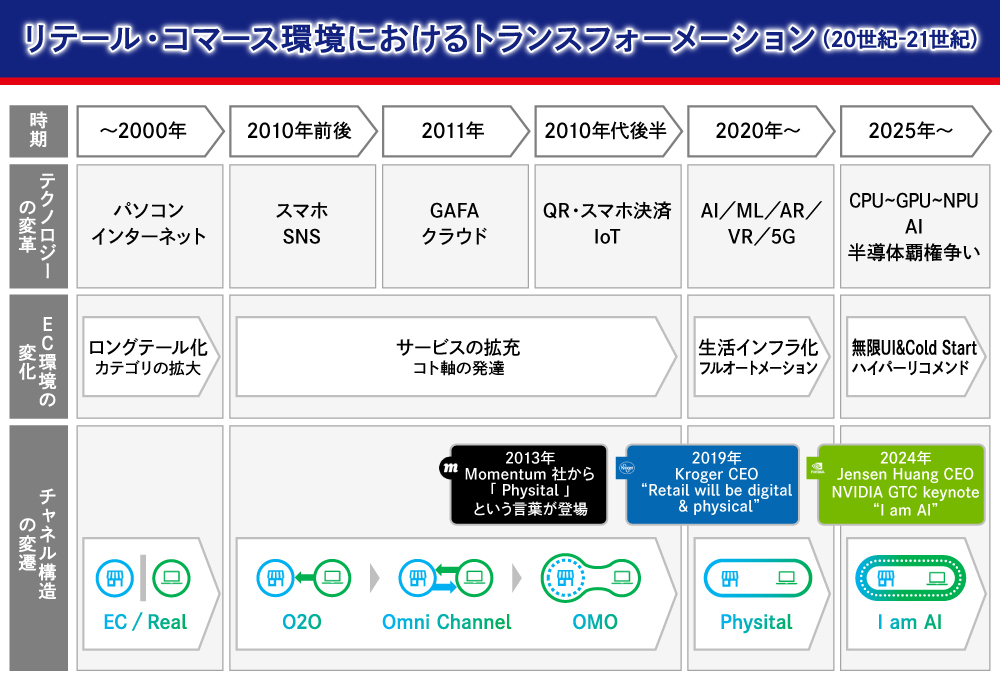
This resonated strongly with the AI solutions discussed at the event. Walmart's inventory management and supply chain visualization, and Lowe's digital twin-powered employee OJT programs. Below is a timeline summarizing the technological transformation × e-commerce environment changes × channel structure evolution in retail and commerce by 2025. Only a little over half a year has passed since then, yet the pace of this evolution is also rapid. It would not be an exaggeration to say we have now reached a point where we can say, "Agentic AI is everywhere," moving beyond the era of "I am AI."
Throughout the three-day event, each day featured presentations by executives with strong leadership driving Retail DX and BX in APAC. Below are the sessions that left the deepest impression.
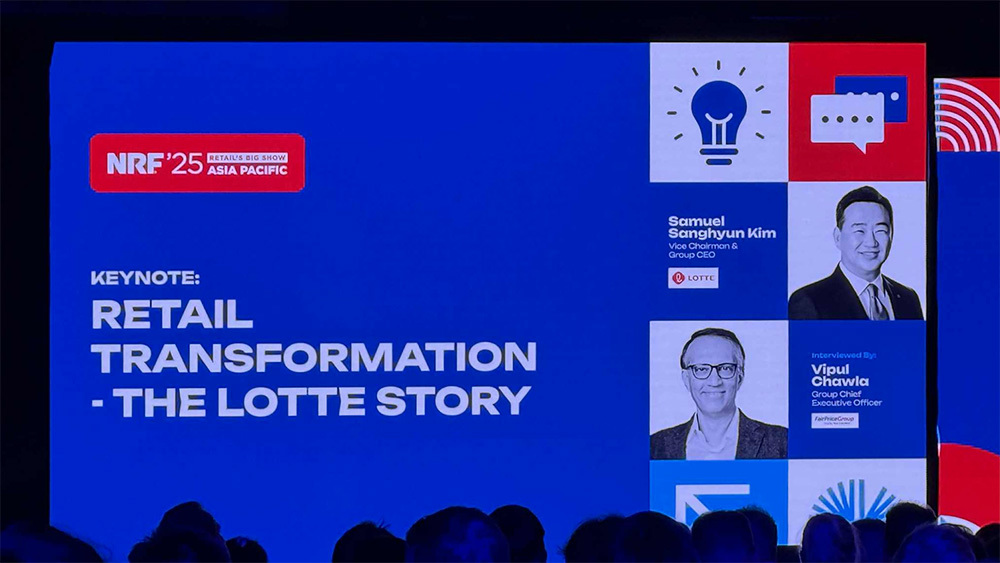
Day 1: LOTTE
LOTTE may be familiar in Japan primarily as a confectionery manufacturer, but globally, it is renowned as a pioneering retailer originating from Korea and operating across APAC. As covered in our previous APAC 2024 report, their approach to Retail DX extends beyond urban, advanced online supermarkets powered by Ocado. Among their diverse portfolio of businesses, Duty Free Shops—capturing the heightened purchasing moments of "Before, During, and After Travel"—are particularly noteworthy from a CX perspective.
Day 2: Royal Selangor
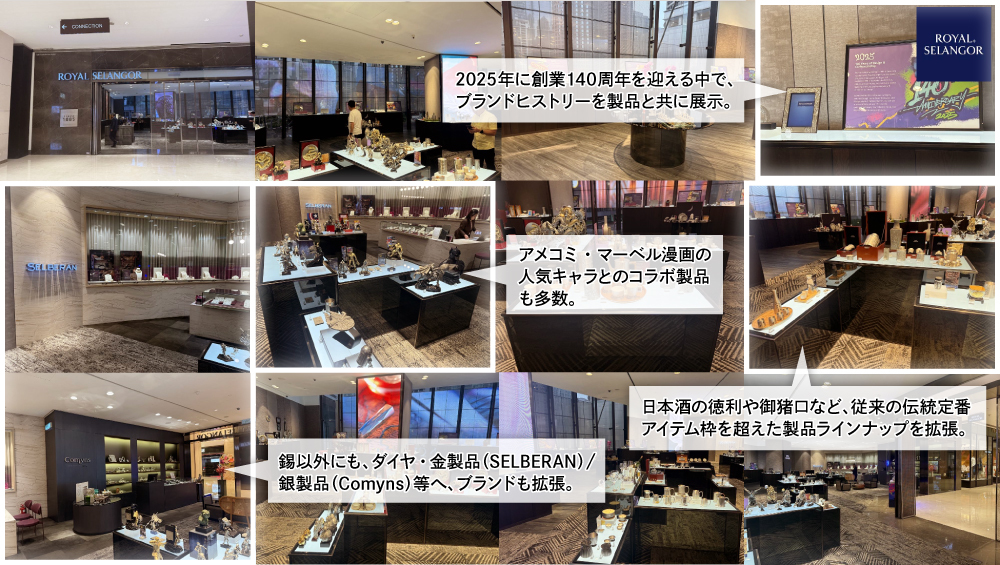
Royal Selangor, founded in 1885 and celebrating its 140th anniversary this year, is a Malaysian royal warrant holder and pewter crafts manufacturer. Amid rising cross-border e-commerce demand, like the Thai silk brand Jim Thompson previously featured, Royal Selangor aims to break away from its global branding as a souvenir for travel and business trips. What was impressive was their focus on local marketing in Malaysia, their base, through product development utilizing content IP, while preserving their existing brand value.
Day 3: GOLDEN ABC
GOLDEN ABC, a leading apparel company founded in 1986 that drives the Philippine fashion retail industry, owns original brands such as Penshoppe, Oxygen, and MEMO. While family-run, it is a forward-thinking company with a vision to "become Asia's most respected fashion brand," actively incorporating AI and other emerging technologies. However, CEO Alice Liu concluded by stating: "Growth isn't just about entering new markets, it's about staying rooted in who we are even as we continue to evolve." This sentiment may hold significance for any company pursuing growth, regardless of country or industry.

What holds true for all these companies is that they pivoted their businesses while maintaining a healthy, positive founding family leadership. They leveraged the four pillars (data, digital, technology, and AI) without becoming dependent on them, all while keeping their core foundation—their respective origins (each country's unique culture, society, ethnicity, religion...) and respect for those origins—firmly anchored.
Reference: Story, Memory, History ~ Brand, Store, People, Post-Corona and Beyond
Notable Booth Exhibits
Prominent booth displays within the venue seemed to emphasize in-store hardware solutions and technologies, perhaps reflecting the new CX pursuit needs of the AI era mentioned earlier.
VUSION (Electronic Shelf Labels)
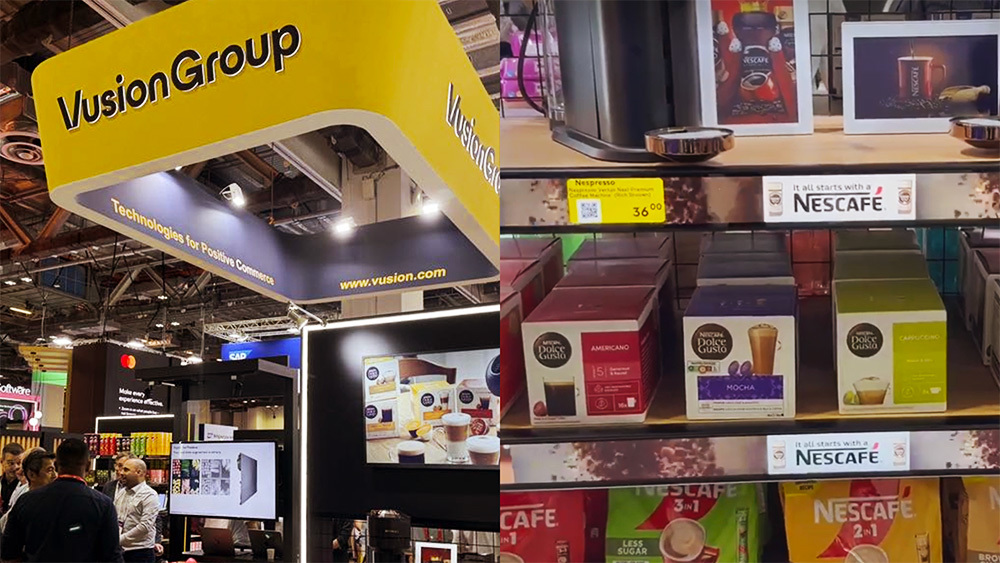 By leveraging AI-powered predictive capabilities in its evolved electronic shelf labels, the company aims to maximize sales and improve gross profit margins, differentiating itself from the cost competition of Chinese and Korean players.
Amazon (3D AI Holographic Display)
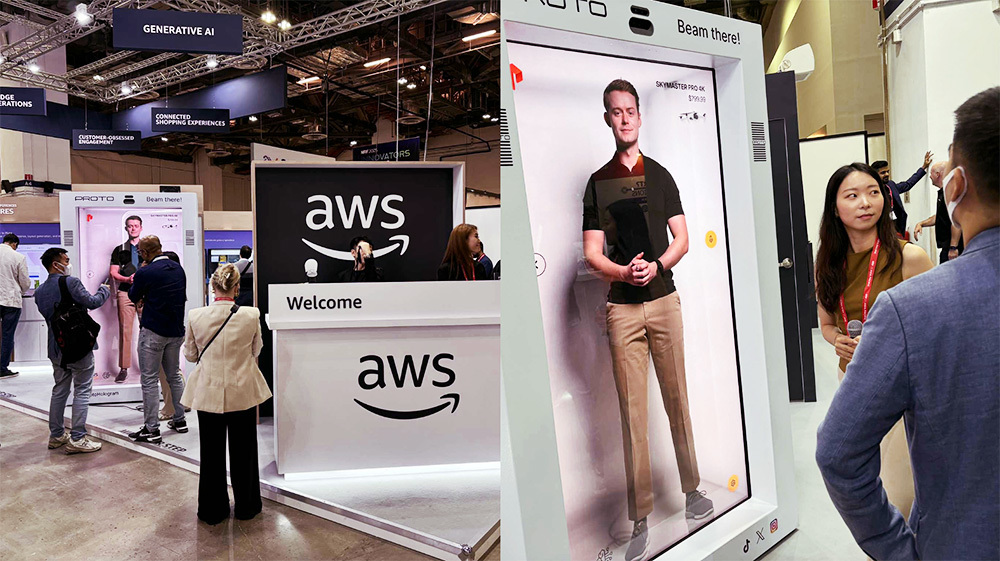 Reverse-applies Immersive Commerce from apparel e-commerce to physical stores. Using Spatial Computing technologies like VR/AR/3D, it provides speed and smoothness for pre-purchase try-ons, facilitating customer-to-staff interactions and eliminating pain points.
SONY (AI Camera with Edge Computing Processing)
 A co-creation solution leveraging Sony Semiconductor Solutions' imaging & sensing expertise and Microsoft's cloud captures customer profiles through AI photo analysis. Based on in-store customer movement data, it suggests improvements like optimizing store flow and zoning to boost ROI.
FairPrice (Self-Checkout Cart — Store of Tomorrow —)
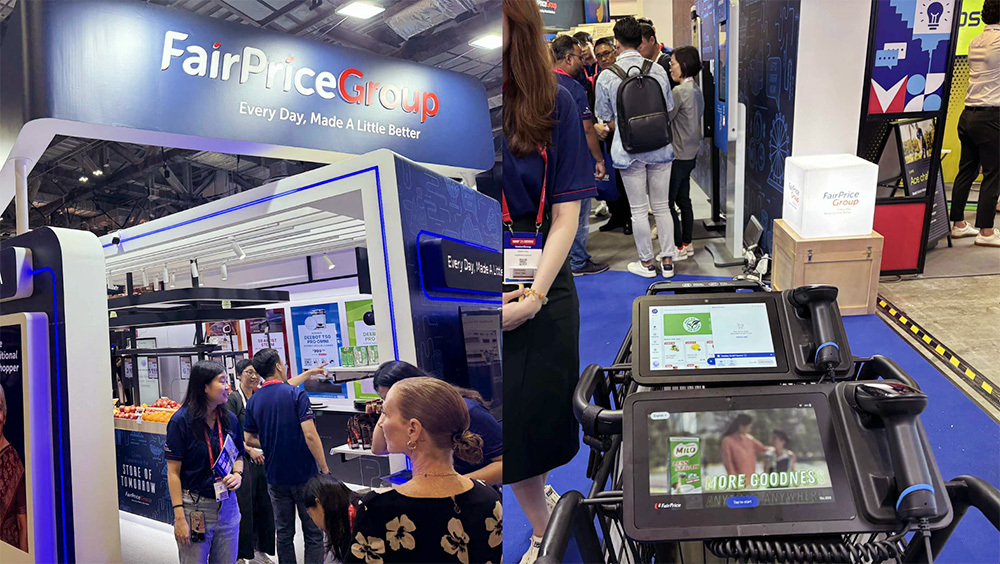 Unlock via app QR code. Built-in weight sensors and scanners recognize items in the cart. Light sensors trigger alerts for unauthorized registrations. Touch panel payments are possible, and purchase information is automatically reflected in the app.
Dentsu Group's Challenge
This marked the Dentsu Group's second overseas convention exhibition. Similar to last year, we collaborated with Dentsu APAC and domestic Dentsu Group companies. Tag Inc. once again oversaw the booth design, resulting in a unified group effort showcasing our solutions.
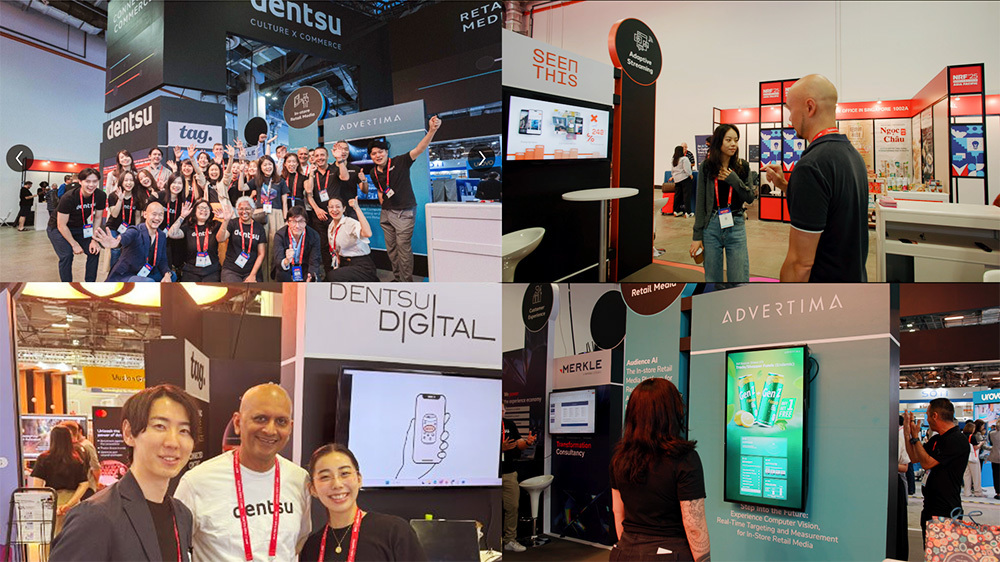
The Dentsu Group's booth concept evolved from last year's "Infinite Commerce" to "Commerce × Culture." While the market definition of "APAC" is a recent term, it's the cultural diversity that cannot be fully captured by this label alone that represents APAC's potential. If this potential can become the global standard for retail commerce in the post-COVID, AI era, then perhaps we played a small part in demonstrating that within the venue.
From Possibility to Potential. In the second part, we will explore the diversity potential of the massive APAC market within the global consumer society. This will be done through the lens of retail store visits and fieldwork, encompassing not only Singapore and Malaysia visited this time but also Taiwan from last November.

Was this article helpful?
Share this article


Newsletter registration is here
We select and publish important news every day
For inquiries about this article

Author

Hitoshi Kimura
Dentsu Inc.
Retail Marketing Division
Senior Producer