Note: This website was automatically translated, so some terms or nuances may not be completely accurate.
 NRF2025: The Paradigm Shift in Retail and Commerce for the Post-COVID Era [3/5]
"Possibilism" ~ The New Possibilities for Retail and Commerce in the AI Era Emerge Not from the US, but from APAC (Part 2)
As 2025 rapidly approaches its final stretch, do you know what milestones the numbers "250 years," "80 years," and "60 years" represent?
The United States will mark a major milestone on July 4, 2026: its 250th anniversary. To celebrate, new landmarks will be unveiled and global events held across the country from this summer through early 2026. For Japanese people, this year also marks "80 years since the end of the war." Japan, which once experienced rapid economic growth to become the "world's second-largest economy," now sees its share of global GDP standing at roughly 1:7 compared to the rest of Asia. Interest in Japan from Asia is reportedly declining rapidly these days. Finally, Singapore gained independence from Malaysia on August 9, 1965, marking its 60th anniversary this year. This is a special milestone year celebrating "SG60." 2026 will also mark the 60th anniversary of diplomatic relations with Japan. Various exchange programs will be implemented under the theme "Co-imagine, Co-create, Co-evolve."
This year marks various milestones. Comparing the social environments of the above countries observed during the author's visit to the NRF Retail's Big Show (hereafter NRF) using the now-standard?! 4-Letter Framework yields the following analysis.
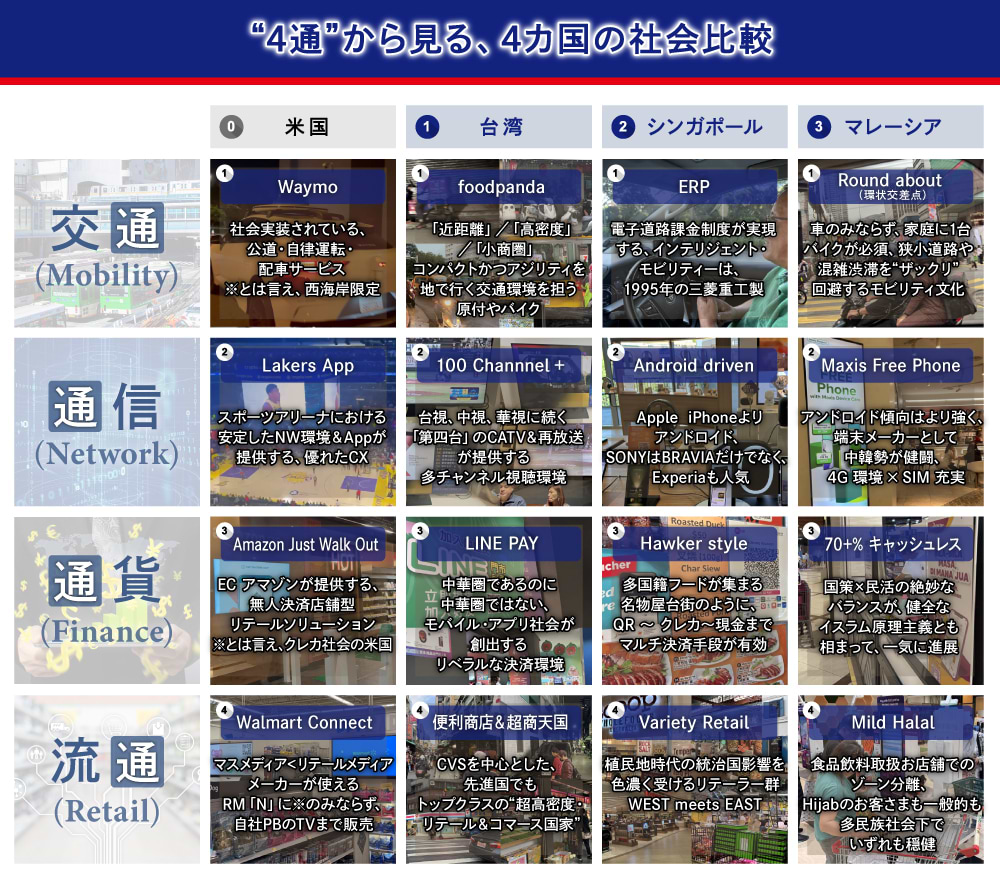
As mentioned in Part 1 As mentioned in Part 1, attention in the retail and commerce sector is currently shifting from the advanced retail DX of major US global corporations to the "possibility potential" of the APAC region. This Part 2 report will concisely cover the retail and commerce environments in Taiwan, Singapore, and Malaysia—countries reaching significant milestones—by introducing store visits conducted since last November.
(1) Store Visits in Taiwan
Taiwan is a retail powerhouse characterized by ultra-high density and small commercial zones, centered around countless specialty shops and traditional markets. Surrounding these, the "Four Major CVS Chains" served as the starting point for development. Particularly reflecting its strong "medicine and food share the same origin" culture, specialty shops for Chinese herbs and dried goods remain vibrant, indicating relatively high awareness of the medical and beauty categories.
①CVS: Hi-Life (萊爾富便利商店)
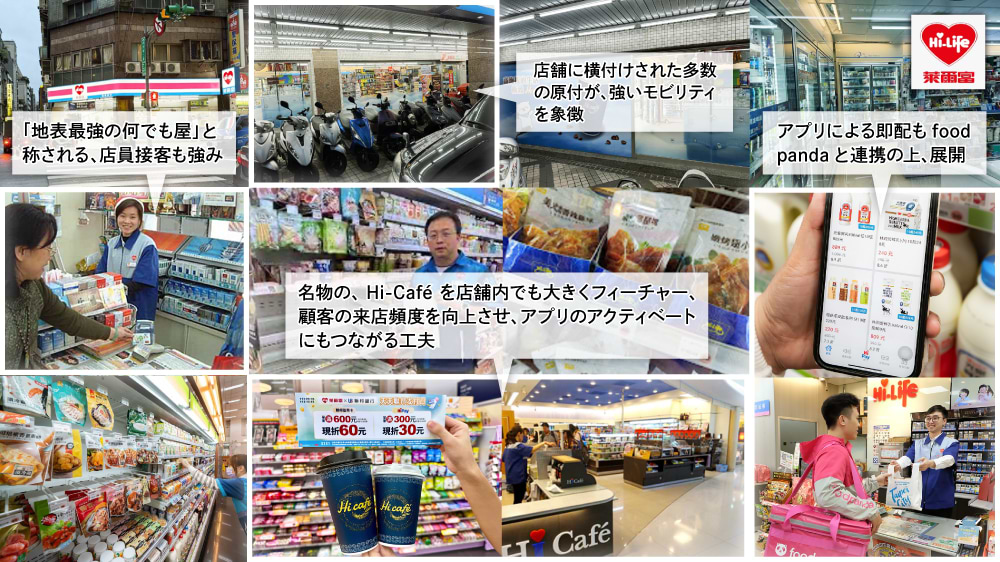
A Taiwanese-origin CVS chain forming one of the four major chains alongside 7-Eleven, FamilyMart, and OK Mart. They pioneered many services, such as installing rest areas (now eat-in corners) within stores, initiating coffee pre-purchase discounts (where paying for multiple cups upfront grants discounts, and showing the receipt later allows free coffee), and handling 4℃ fresh food products.
➁ Brand Flagship Store: DAYLILY / Taiwanese Herbal Medicine
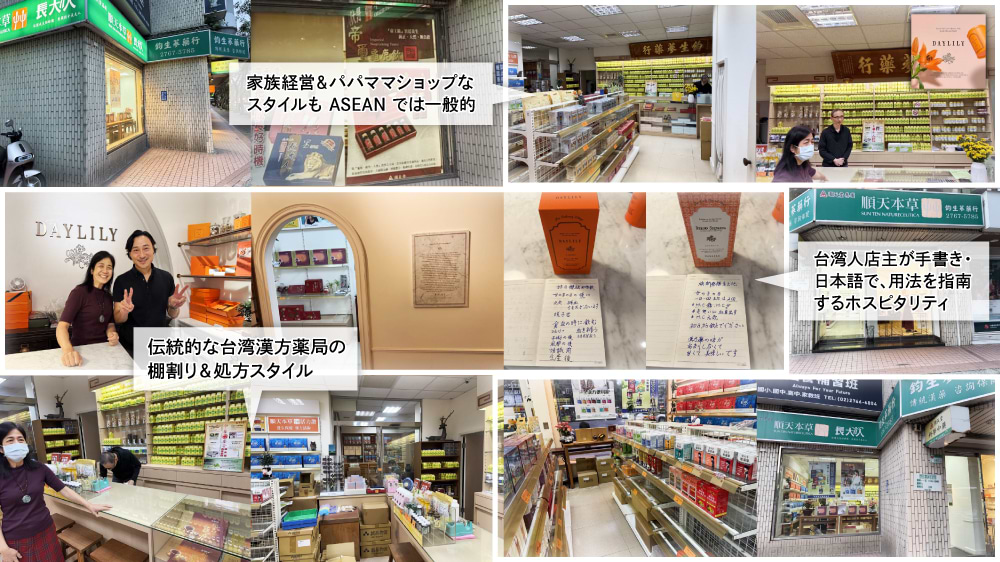
Taiwan is famous for traditional wholesale districts like Dihua Street, known for tea leaves, Chinese herbs, dried goods, and fabrics. Standalone Chinese herbal pharmacies are also common. Among these, the Taiwanese herbal brand DAYLILY—founded by Taiwanese and Japanese co-owners who were classmates—starts with D2C Inc. Its popularity stems from its blend of "learning from the past to understand the present" (stylishly modernizing traditional Taiwanese herbal store interiors) and "East-meets-West" (hiring Japanese designers to make packaging and colors pop, appealing to Japanese tastes), coupled with the warm hospitality unique to a family business.
➂ Supermarkets (SM): PX Mart (全聯福利中心)
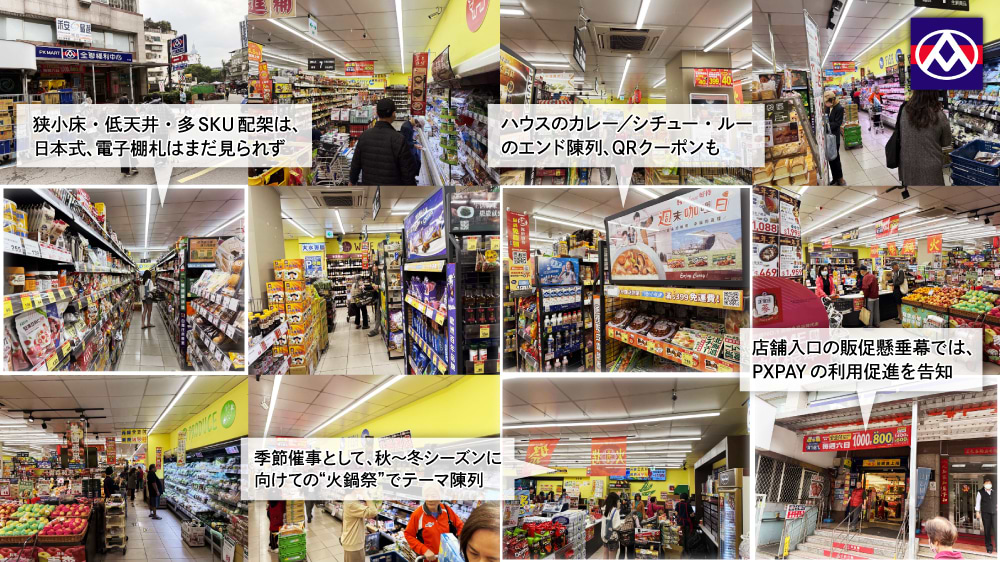
In August 2025, PX Mart (formerly RT Mart, a joint venture between Taiwanese conglomerate Runtai Group and a French company) completed its acquisition by PX Mart. Under the leadership of Mr. Hsu, who is well-versed in Japanese retail distribution and successfully established the Japanese CVS format in Taiwan, the company leveraged its nationwide scale and network to rapidly advance retail DX during the COVID-19 period. It has become Taiwan's undisputed No. 1 retailer in both name and reality.
(2) Store Inspection in Singapore
This year marks 60 years since the Chinese ethnic group in Malaysia gained recognition for its separation and independence. Coupled with rapid modernization, the mature retail and commerce environment has achieved a unique development that could be termed "SIN-Retail." This development is supported in part by Japanese department stores, emerging players like DON DON DONKI, and Australian companies.
① Brand Flagship Store: BACHA COFFEE
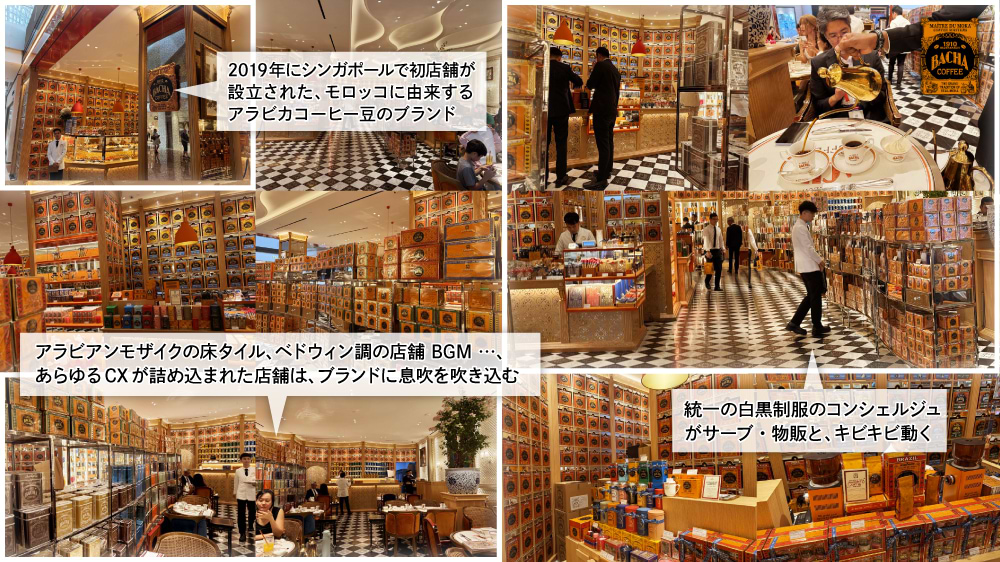
Founded in 1910 within the Dar El Bacha Palace in Marrakech, Morocco, this high-end coffee brand exclusively handles Arabica beans as an homage to the legendary café frequented by figures like President Roosevelt and Charlie Chaplin. Produced in 2019 by Taha Bukhtie, CEO of V3 Gourmet Group, which also owns the renowned TWG tea brand. Expanding globally from Singapore, it will open a flagship store in Ginza in 2025.
➁ Mall: Raffles City (LUMINE)
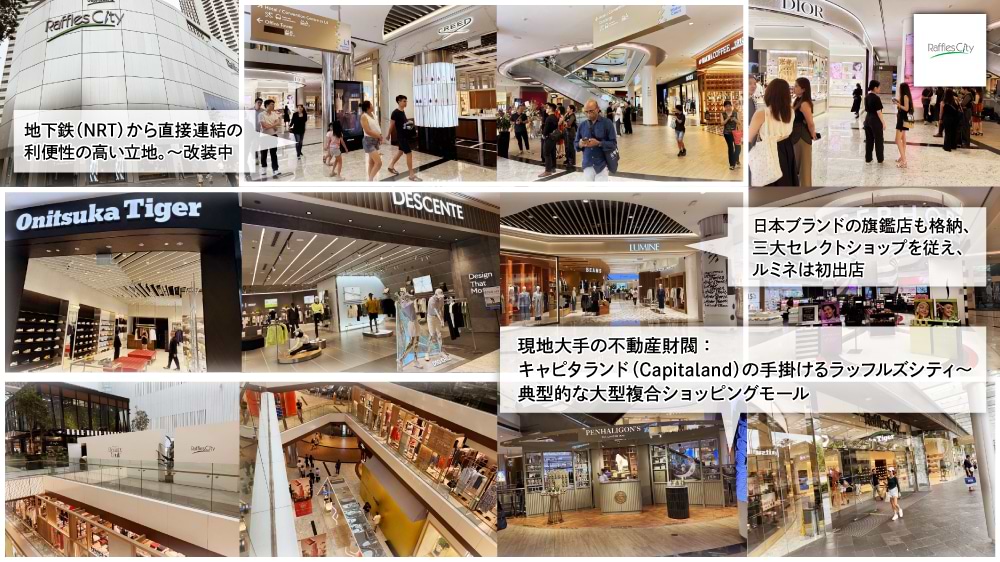
Opened August 26, 2024. As the first global flagship store expanding from Japan overseas, it features a shop-in-shop format. It showcases select shop brands representing Japan's unique fashion and food culture, alongside traditional crafts from across Japan that highlight exceptional craftsmanship. It also houses Southeast Asia's first BLUE BOTTLE COFFEE store.
➂ Discount Store: DON DON DONKI

First opened in Singapore in 2017, it leveraged the convenience of "24-hour operation" for localization. Its inclusion of a dining space called "MARCHE," allowing shoppers to enjoy meals while shopping, became a key differentiator in Singapore. Utilizing its unique supply chain, it offers a rich variety of distinctive products, clearly positioning itself as a "Japan Brand Specialty Store."
(3) Store Inspection in Malaysia
A consumer society and economy driven by "mega-mall culture." Influenced by the hot and humid climate, many customers visit stores primarily to cool off—a "cool share" mentality—more than for shopping, seeking economical and ecological relief from the heat. While led by Malays, the mature "mild halal" environment within a multi-ethnic, multi-religious society is characterized by diverse sales floors and a tolerant shopping environment.
① Discount Store: AEON BIG
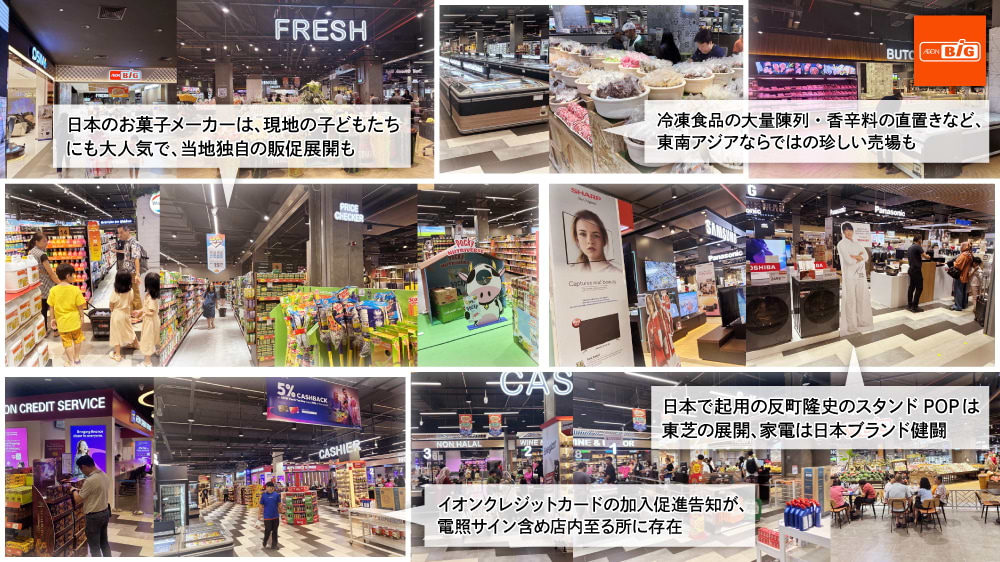
Aeon's discount store in Malaysia, with a strong focus on food. Launched in 2012 after acquiring Carrefour's (France) Malaysian operations. This large-scale store offers one-stop shopping for daily necessities and home fashion. Killer items include private brands like Top Value and popular deli items like locally adapted sushi. Recently, the focus has shifted from urban to suburban locations.
② Mall: IOI City Mall
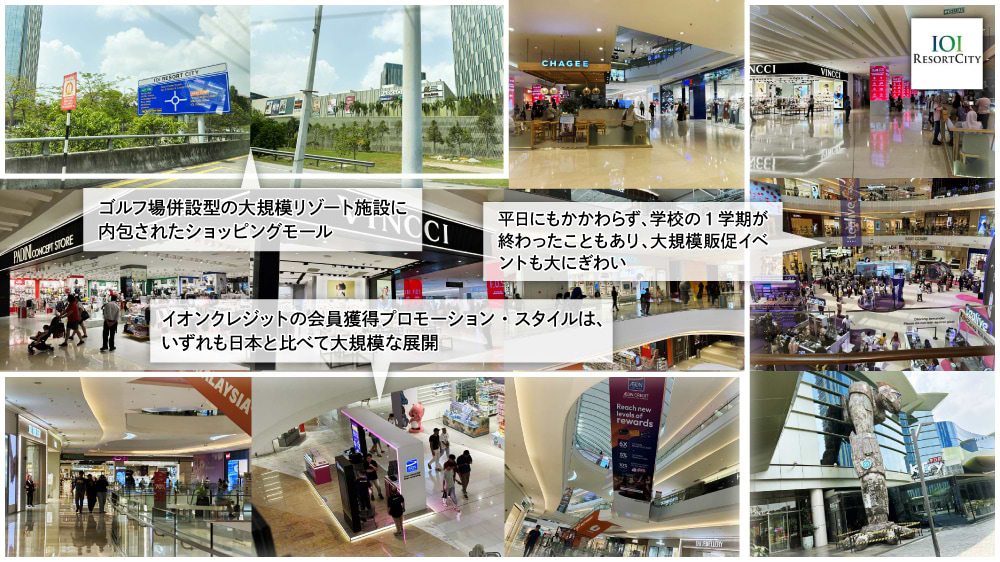
One of Malaysia's largest malls, located in the Putrajaya area. It features entertainment facilities like a cinema, skating rink, go-kart track, and the indoor theme park "District 21." As a resort city with a golf course nearby, it represents a successful local example of large-scale development (mixed-use developments incorporating residential towers are trending across APAC). It houses AEON stores and high-end brand shops, attracting a diverse customer base ranging from tourists to locals seeking dining experiences.
➂ Grocery Store: JAYA GROCER
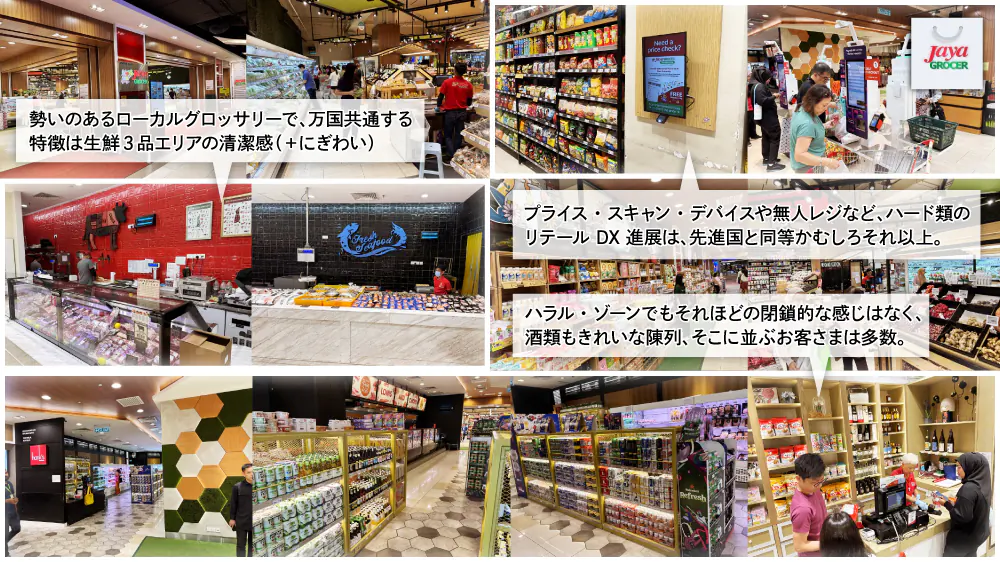
Founded in 2007, this is Malaysia's most dynamic premium grocery store chain, operating around 50 outlets nationwide. Grab acquired it in December 2021 as part of its strategy to enter the delivery and retail sectors. Beyond halal compliance, it offers fresh produce and daily necessities, plus a dedicated Japanese food section, making it popular among Japanese residents in Malaysia.
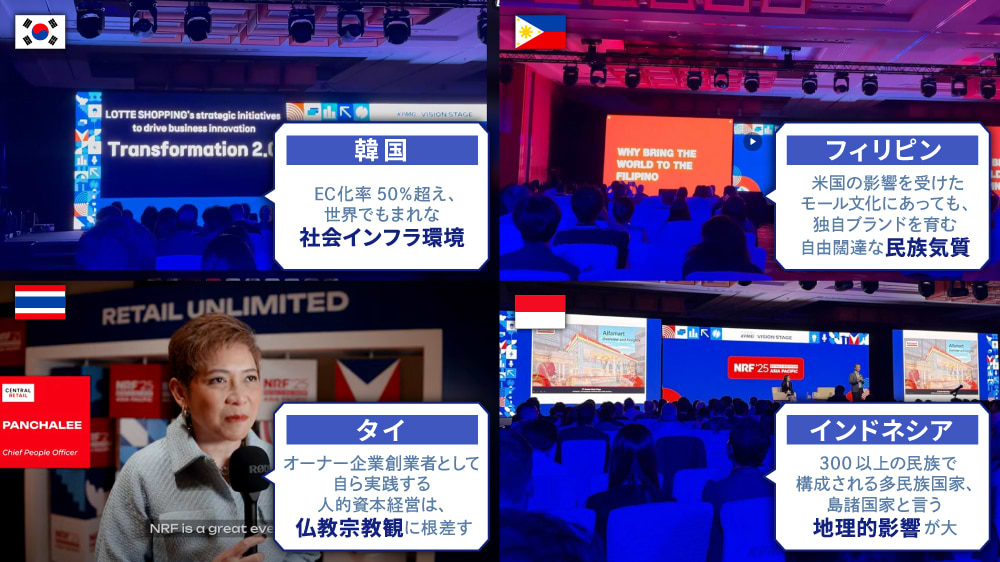
"Commerce×Culture" in Korea, Philippines, Thailand, and Indonesia
Beyond the three countries where fieldwork was conducted—Taiwan, Singapore, and Malaysia—key insights from keynote speeches by top retail executives representing four leading APAC nations at this convention reveal the "Commerce×Culture" dynamics in Korea, the Philippines, Thailand, and Indonesia can be summarized as follows.
Implications for Japan's Retail and Commerce Environment
What do you think? Drawing on Singapore and Malaysia from the seven countries we've overviewed, here are four implications for Japan's retail and commerce environment, which arguably possesses the highest degree of uniqueness within APAC.
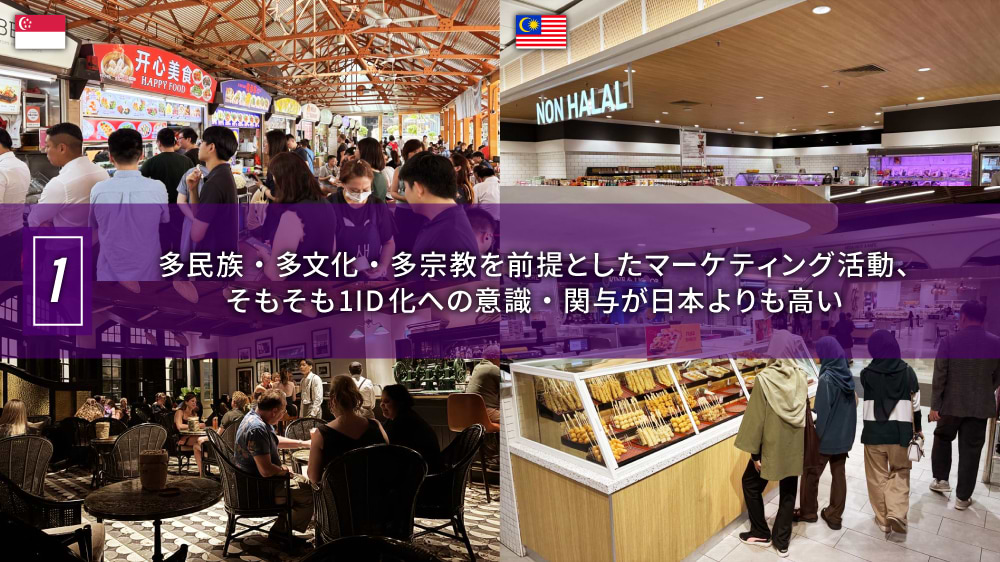
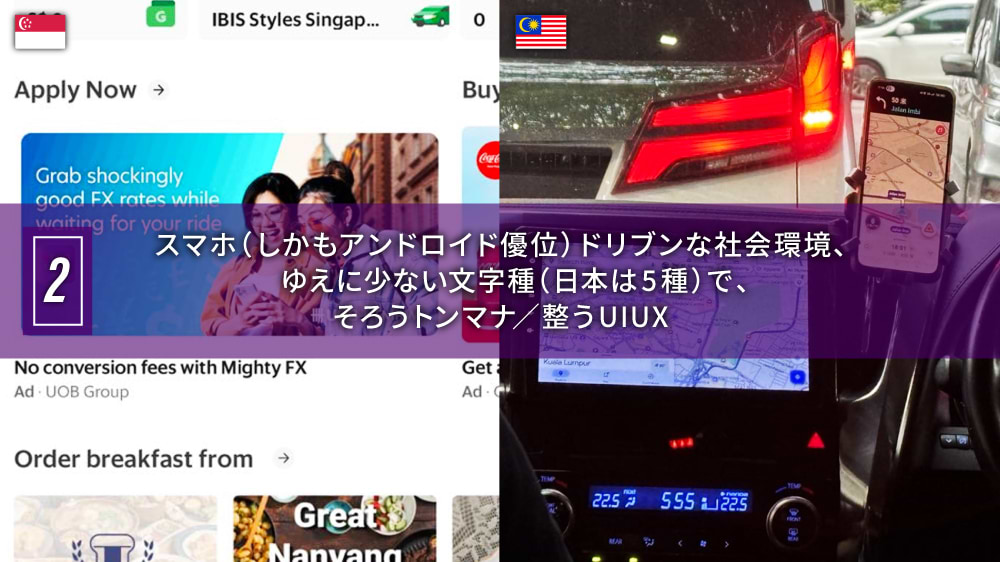
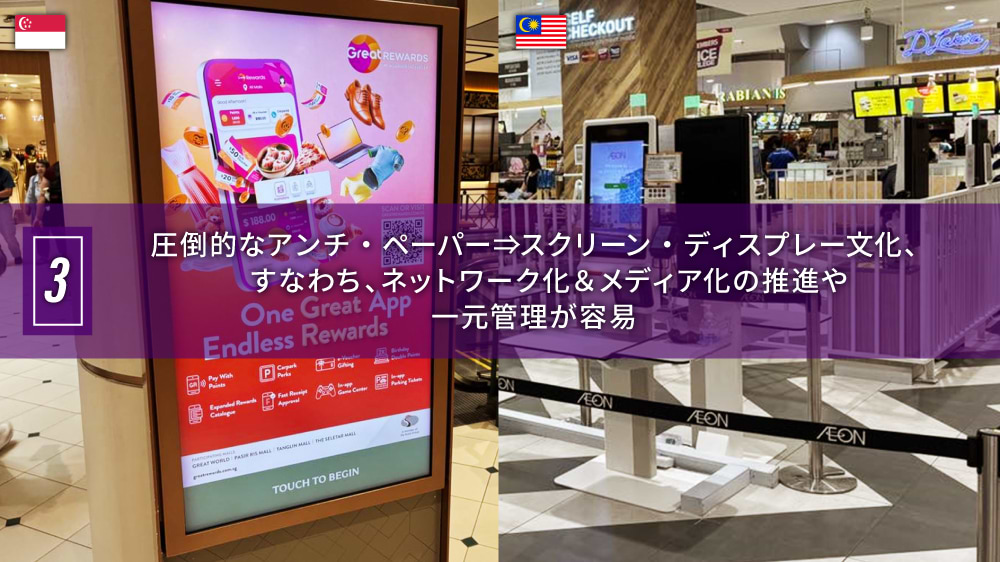

Finally, here are the impressions of someone who managed the APAC headquarters for a major retail distributor until a few years ago.
"Singapore left me with the impression that not only retail and digital are evolving, but lifestyles are advancing by leaps and bounds. Simultaneously, in Malaysia, I felt strongly that the government-led and private-sector initiatives to survive are effectively managed through robust process control.
I truly felt that Japan's 'it'll probably work out somehow' approach poses a real danger for the future. In that sense, I fear that if Japanese companies participate in NRF APAC, they won't be evaluated positively unless they can offer concrete, future-oriented proposals for consumers in each country, not just simple solutions."
Our journey to explore new possibilities unique to APAC, alongside Japanese retailers, distributors, and manufacturers, has only just begun.
Next time, from APAC where "Culture × Commerce" intersect, we'll bring you coverage of the NRF EUROPE 2025 convention—finally held for the first time in Paris, France this year—along with insights from our European store visits.
The information published at this time is as follows.
Was this article helpful?
Share this article


Newsletter registration is here
We select and publish important news every day
For inquiries about this article
Back Numbers


Author

Hitoshi Kimura
Dentsu Inc.
Retail Marketing Division
Senior Producer