
Note: This website was automatically translated, so some terms or nuances may not be completely accurate.
 Aogaku and Partner Companies Launch "Creating the Future" Lecture Series with Dentsu Inc.! "AOGAKU PROJECT DESIGN CENTER" Activity Report [3/3]
"Everyday insights" create an exciting future! The potential of "Project Design" co-created with Aoyama students
In September 2024, a seminar co-creating corporate futures through project design launched at Aoyama Gakuin University's Faculty of Culture, Media and Society and Dentsu Inc.'s Future Creative Lead Office. Titled "AOGAKU PROJECT DESIGN CENTER," Aoyama students tackled project design alongside partner companies Shunkado, BEAMS, Amuse, and Dentsu Inc.
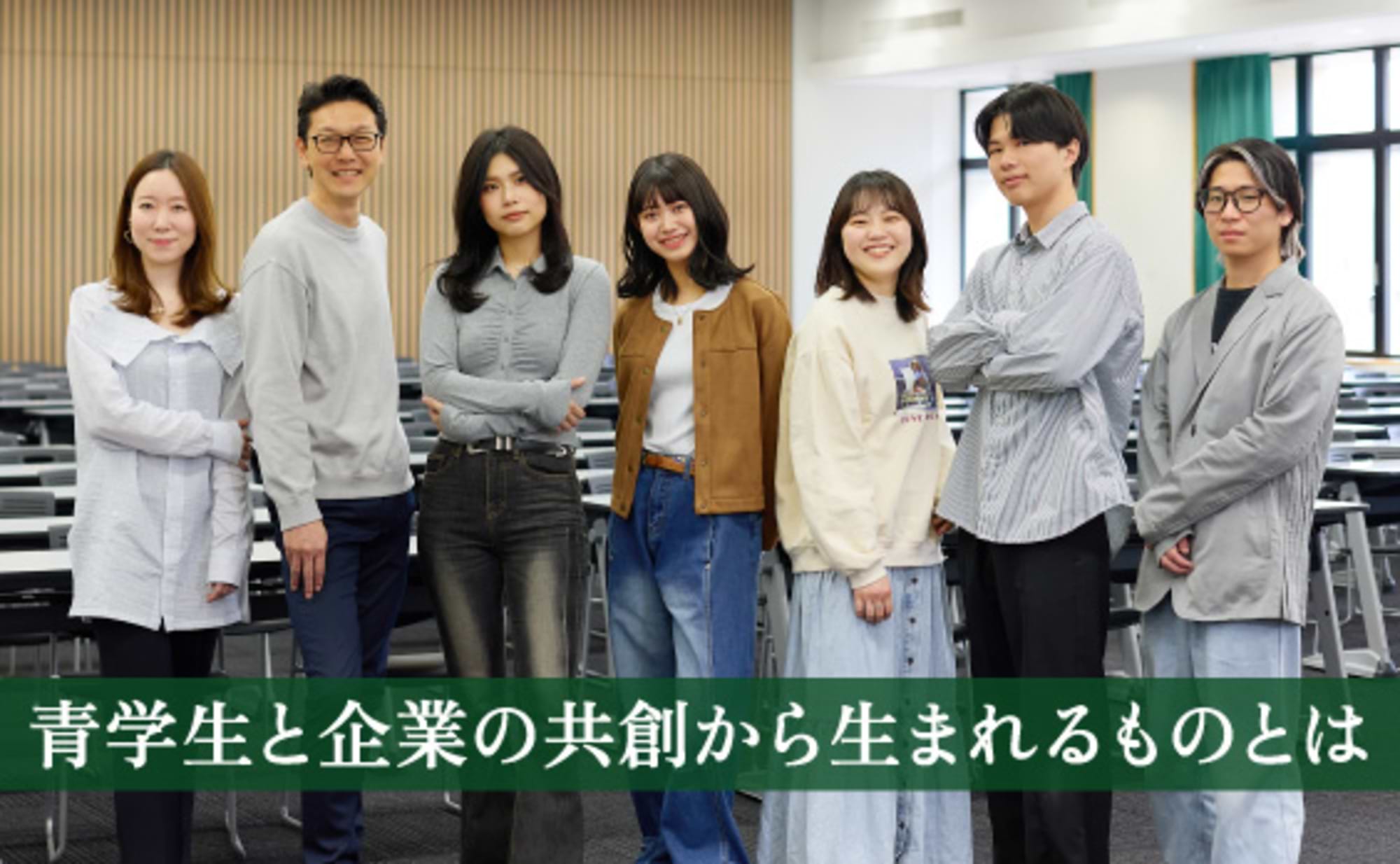
What did they learn and gain from this co-creation seminar? And what kind of ideas for the future were they able to generate? This time, project member Keimi Funabiki interviewed four Aoyama Gakuin University seniors from the Morishima Seminar: Waka Uchiyama, Naho Irijima, Nanami Okura, and Ryuzaburo Saito, along with Dentsu Inc. planner Masaharu Noguchi. They discussed reflections on past activities and outlooks for future endeavors.
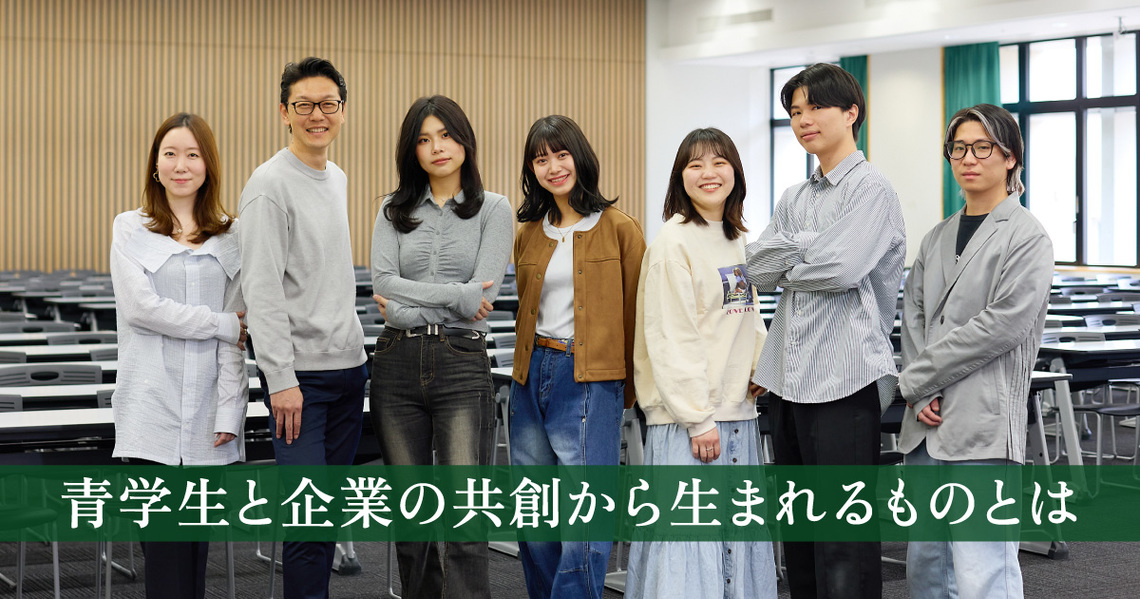
The BEAMS Team: How Casual Local Chats Became a Project
Funabiki: Today, we've gathered two members each from the BEAMS team and the Shunkado team. Since each team's activities differed, I'd like to start by looking back on each team's work and hearing your overall impressions of the seminar and memorable events. First, could we hear from Mr. Okura and Mr. Irijima of the BEAMS team?
Okura: What particularly stuck with me were the projects we learned about in the seminar lectures: "TUNA SCOPE," which uses AI to assess tuna quality, and Isehan's recruitment approach, "Face Recruitment, Here We Go," where applicants express their individuality. Learning these projects were born from questioning everyday "norms" made me start thinking differently myself—asking "Why do I take this for granted?" and approaching ideas from the opposite angle.
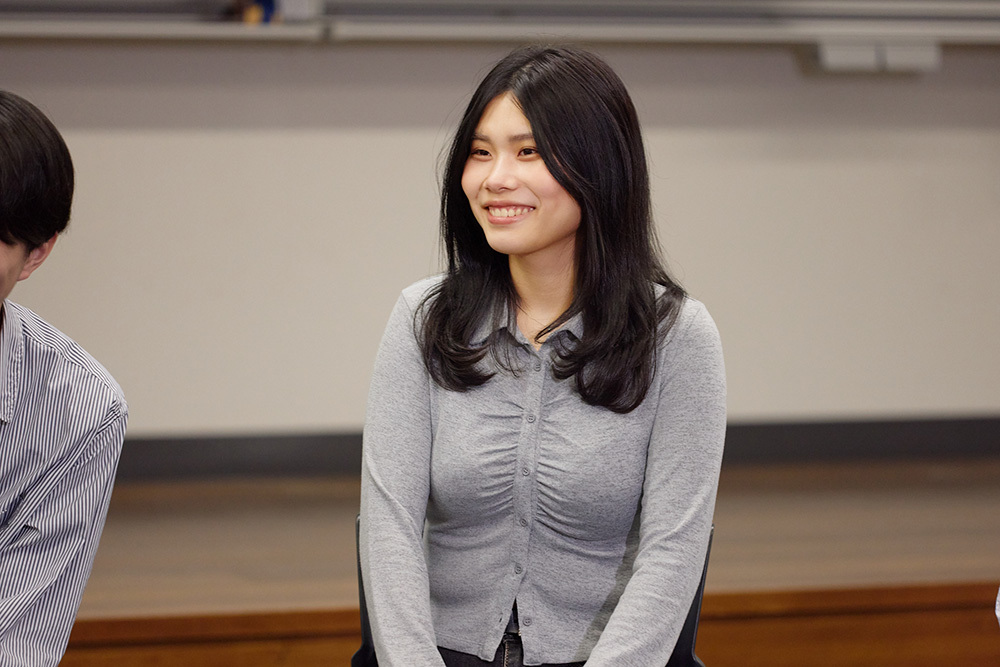
Irijima: The BEAMS team is planning and exhibiting "Nagoya's Great!" for the Great Nagoya Exhibition event, aiming to highlight and showcase Nagoya's positive aspects. I've always been interested in regional revitalization initiatives and participated in local projects since high school. Working on the "Great Nagoya Exhibition" with not only the local government but also companies like Dentsu Inc. and BEAMS, alongside the project members from Aoyama Gakuin University, was an incredibly interesting experience. It allowed me to work on a much larger scale than my high school activities. Furthermore, the circle of activity kept expanding, and we built the project while sharing our mutual passion ("likes") with all members. I felt we were able to work in a warm atmosphere.
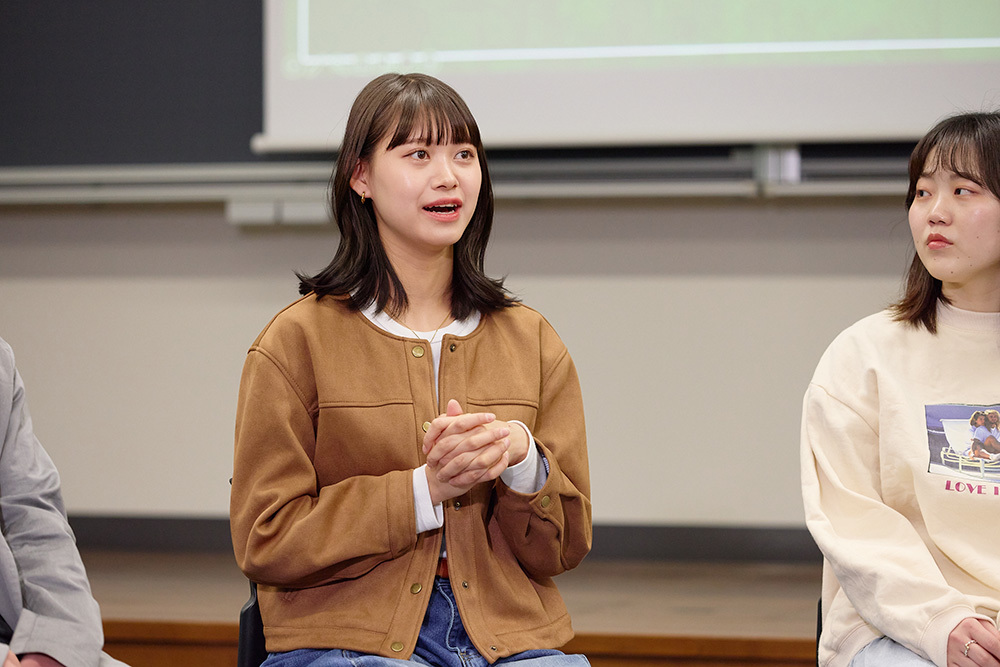
Funabiki: Within the BEAMS team, how were Okura-san and Irijima-san involved in the project?
Okura: In the beginning, I intentionally made a point to speak up a lot. Seeing that members seemed hesitant to voice their opinions, I thought if I took the lead and raised my hand, it might create an atmosphere where it felt easier for them to speak up. As the activities progressed and members started speaking up more actively, I then consciously focused on listening to their ideas and then offering my own perspective from a slightly different angle.
Irijima: What stood out about our involvement was how a conversation at a drinking party sparked the launch of "Iijyan Nagoya." One time, a few friends from regional areas happened to gather for drinks, and we got really into talking about our hometowns. A friend from Nagoya initially said, "There's nothing in Nagoya," but as he heard everyone else boast about their hometowns, he started saying, "Nagoya has this, and that too!" and began talking about its charms. When I shared this story in the seminar, it grew into a hypothesis: perhaps approaching Nagoya from the "outside" could draw out the pride and affection of those on the "inside." I think this came from becoming more attuned to everyday, casual conversations after the lectures.
The Shunkado Team: Harnessing Members' Strengths to Generate Ideas
Funabiki: Next, I'd like to ask Uchiyama-san and Saito-san from the Shunkado team about memorable events.
Uchiyama: We participated in the "Enshu Japanese Chestnut Project," one of Shunkado's initiatives, as the "Enzukuri Lab." Our theme is "Turning Japanese Chestnuts into Connections," and we work to promote Japanese chestnuts both domestically and internationally. To gradually increase awareness, we're initially targeting students, working towards collaborations like selling special menu items in the cafeteria. Furthermore, we're advancing the project aiming to expand our "circle" beyond Aoyama Gakuin University to include other universities and the wider community.
What stood out to me was discovering my friends' strengths through this activity. Recognizing these strengths helped us become closer, fostered mutual respect, and ultimately built a team with strong unity.
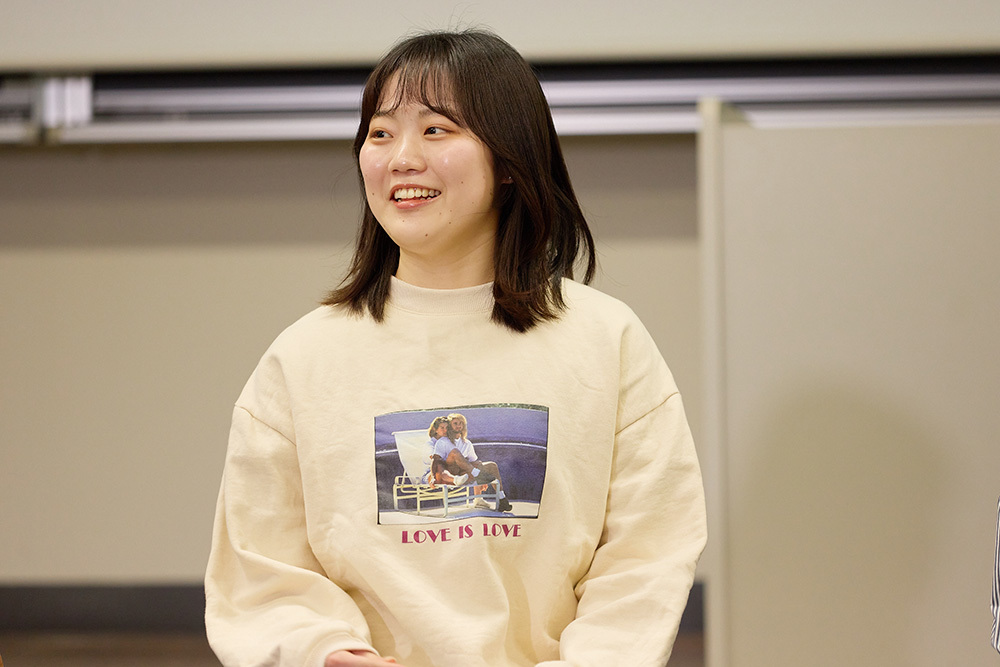
Saito: I also strongly felt that we discovered the true strengths of our team members. For example, someone who can drive discussions forward by focusing on the core concept of a plan, someone who can generate lots of ideas, or someone like Uchiyama-san who excels at design. What impressed me most was how the activities really brought out each member's unique appeal.
Another thing that left a deep impression on me was the phrase from the lecture: "Think about things starting from everyday questions." Since then, I've started jotting down little observations from daily life. For example, "How does my mother, who's from Niigata, know the condition of salmon roe just by looking at the package?" or "How do left-handed people get through ticket gates?" I feel this attitude of valuing such small questions really came alive in the idea generation for the Shunkado team's activities.
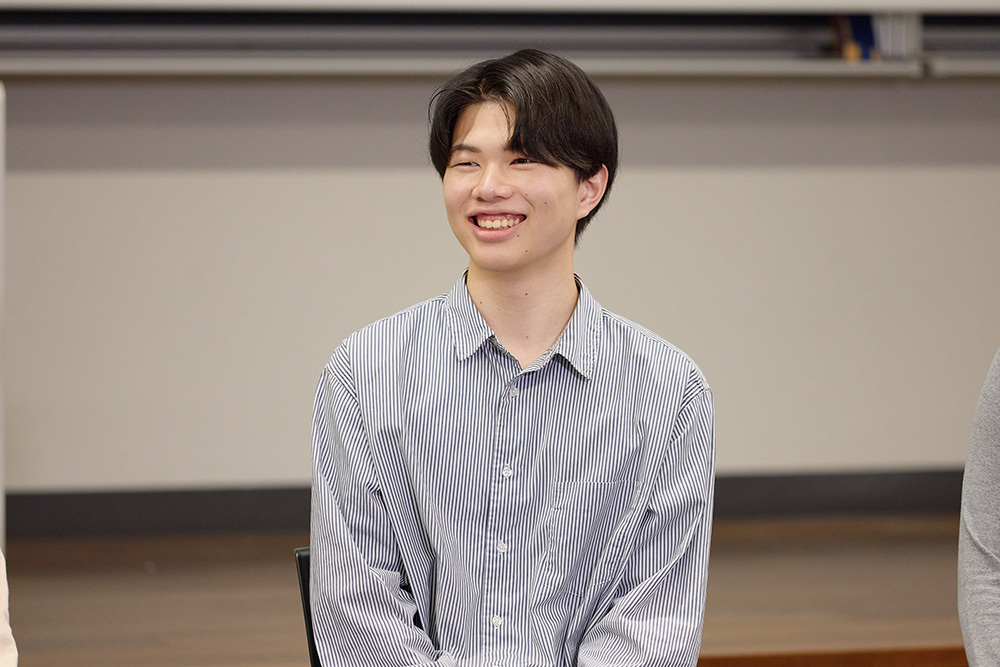
Funabiki: Mr. Noguchi was closely involved with the Shunkado team's efforts. From your perspective, how did the team's activities appear?
Noguchi: From my perspective, what stood out about the Shunkado team was how they clearly divided roles based on each member's strengths. You could say they split into a producer team and a production team, working to generate good ideas even within limited time. I sensed a strong sense of trust in the members and a commitment to responsibly seeing their own parts through. Incidentally, it seemed to me that Uchiyama-san's approach gradually changed during the activities. How did you yourself feel about that?
Uchiyama: At first, I was completely focused on just coming up with ideas. But gradually, I started thinking more about "how to make these ideas resonate with others." From there, I realized it was more important to propose ideas that would take root in everyone's hearts, rather than just self-centered ideas. I think I started suggesting ideas that could really engage everyone.
Saito: That's true. During our idea discussions, Uchiyama-san's input often steered things in a better direction, and I'm truly grateful for that.
Sometimes we'd spend three or four days straight discussing things as a team. But after going through that intense process and finally completing the "Enzukuri Lab" statement, we truly understood the difficulty of generating ideas. That made the shared sense of accomplishment—"We did it together!"—all the more powerful.
Noguchi: An environment where members can freely say things like "What about doing it this way?" or "This is great!" fosters good communication and gives everyone that satisfaction of "We created this idea together." I think we managed to move the project forward through a really good process.
Funabiki: Watching from the very first meeting, I never imagined either the BEAMS team or the Shunkado team would become so capable of such lively discussions. I had the impression that many Aoyama students are quite serious, so I thought they might be a bit rigid. But as the sessions progressed, they became less hesitant to voice their opinions in front of others. Especially in the latter half, I felt their individual personalities blossom at an accelerated pace. I could really sense the team's agility increasing as a consciousness emerged to fulfill roles based on each member's strengths.
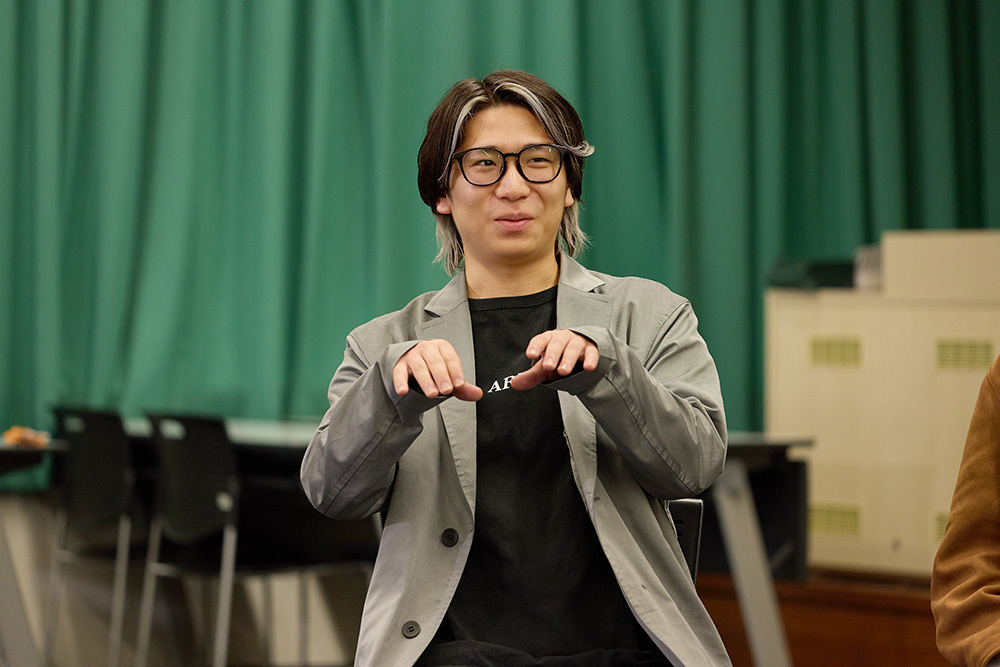
A perspective on ideas unique to Aoyama students, solving the challenges surrounding us today
Funabiki: I'm delighted to hear both teams gained significant learning and experience through their activities. Now, based on what you've learned, I'd like us to brainstorm "future projects" together for next term's challenges.
Take Ginza, for example. Does Ginza feel like a distant place to you? What ideas come to mind for making it feel more accessible?
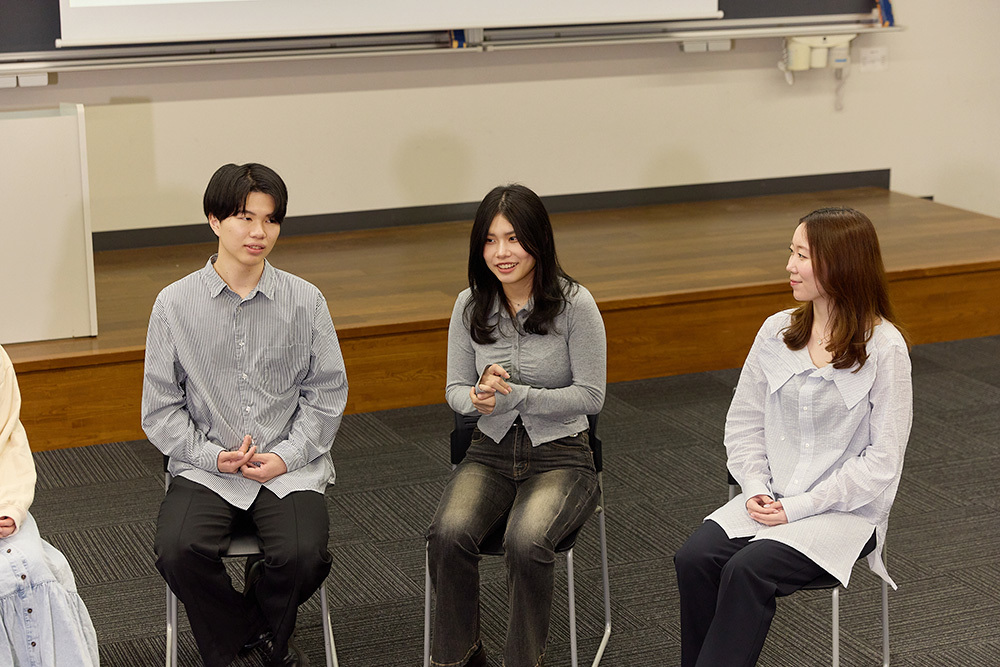
Irijima: Ginza has many high-end shops, making it feel inaccessible for students. It's seen as a place where you have to dress up and feel a bit out of place when you go.
Uchiyama: It's definitely a high hurdle, but if you have something you're passionate about and can talk about with enthusiasm, you might feel more confident going there.
Noguchi: For instance, as part of the Japanese Chestnut Project, how about planning an event to launch "Chestnut Makeup" from Ginza?
Uchiyama: That kind of opportunity could spark students' interest in Ginza. Plus, we ourselves could go with confidence, thinking, "I'm here in Ginza to promote the Japanese Chestnut Project."
Funabiki: For students, Ginza is currently a place they lack the confidence to visit. So, being in Ginza equates to a state of confidence. That makes me realize everyone in Ginza must have incredibly high self-esteem. I think the value of Ginza, which adults casually stroll through every day, can actually be recognized from that perspective. If we share a common understanding of Ginza's charm and value and dig a little deeper, new projects will start moving forward.
Noguchi: Building on that, combining the Japanese Chestnut Project with makeup could create an initiative that boosts self-esteem enough to make young people feel comfortable visiting Ginza. It's fascinating to imagine a project born from Ginza and Japanese chestnuts that actively cultivates young people's self-esteem.
Funabiki: Finally, let's briefly consider media. In our future lecture plans, we're thinking about initiatives to promote content created by newspapers and TV stations. What ideas come to mind?
Okura: From the perspective of targeting young people, I believe leveraging social media is key. To do that, we might need to be creative about tailoring content for each platform. What kind of content would grab the interest of young people who frequently use TikTok? What about Instagram? I think it would be good to add elements from the perspective of students who use these platforms.
Funabiki: Speaking of social media, you mentioned to the BEAMS team that you were gathering job-hunting information on TikTok, and they listened with interest, right? Why did you decide to look for job-hunting information on TikTok in the first place?
Okura: Actually, I didn't set out to look for it. I was just casually researching job hunting online when TikTok started showing me job-hunting content like "Tips for Self-Promotion" and "Industry Top Rankings." That's when I thought, "Oh, people are posting job-hunting info on TikTok too," and it sparked my interest. I started paying attention to gathering information through social media.
Even people who feel a high barrier to actively searching for content might become interested in something that just happens to appear on their feed. That could shift their mindset to "I want to see more, so I'll look it up!"
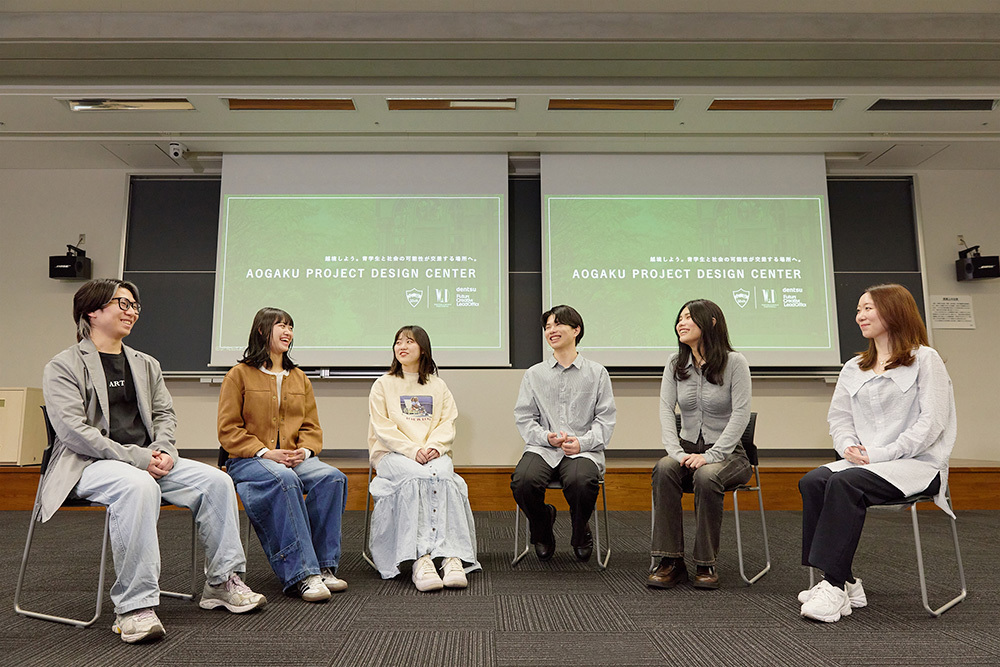
Noguchi: That's true. If platforms like TikTok can stream short program clips and create a path where interested users access the full program or newspaper, it opens up possibilities for content creators to implement social media strategies aimed at boosting viewership.
Exciting projects design a new society
Funabiki: I think this roundtable discussion truly brought to life the learning process of generating new ideas from everyday observations. Finally, could each of you share what you'd like to pursue next, applying what you learned in the lectures?
Irijima: To be honest, I lacked confidence before joining this seminar. But after experiencing how a casual conversation at an izakaya developed into a project, I gained confidence that even someone like me, who's just lived an ordinary life, has unique qualities and value that can move others. I believe this applies to everyone, so I want to work on initiatives that spread the message that "everyone has value" more widely.
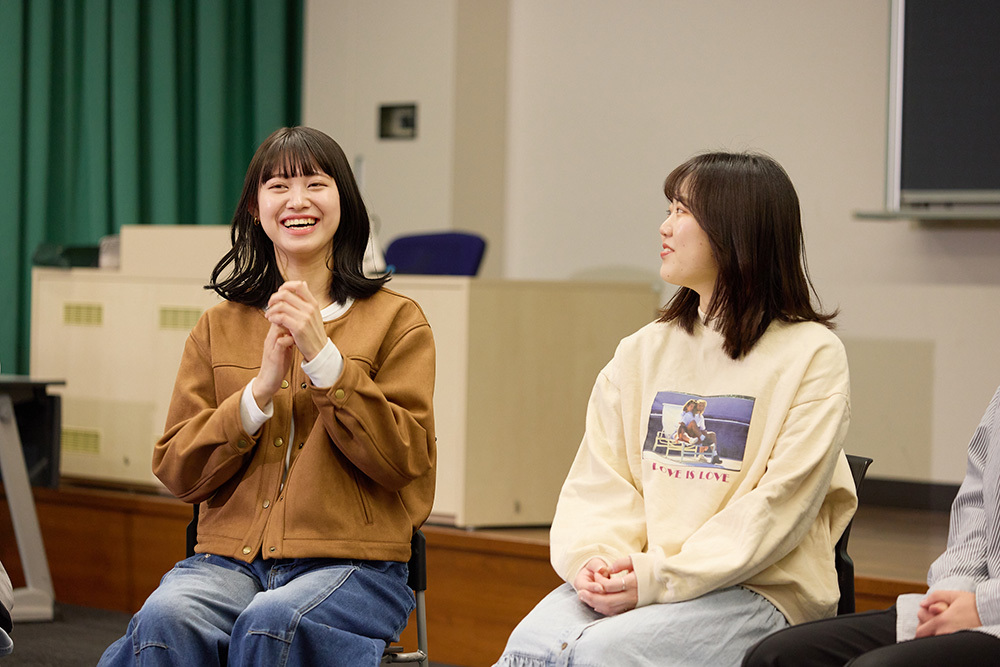
Uchiyama: Through this activity, I've come to believe it's okay to value my own individuality. A big reason I feel this way is because, through this project, many people—including those from Dentsu Inc.—shared their insights and perspectives with us students. Learning from everyone has given me a little more breathing room in my daily life and a more relaxed, positive mindset—like, "Things will probably work out somehow."
Saito: Working alongside staff from Dentsu Inc. and Shunkado, I truly felt I absorbed how to leverage each project member's individuality and strengths to move things forward together. Building on this experience, what I now want to pursue is a "project that fosters a sense of unity among everyone." I hope to create a project that approaches content like music or sports – something that can bring people together across race and language barriers.
Okura: Engaging with each person's individuality and values made me feel my own potential and the scope of what I can tackle expanded tremendously. Even things I previously thought were "maybe impossible" or "too difficult," setting limits for myself, can be achieved by leveraging my teammates' individual strengths and working together. Through this experience, I've come to think, "Let's just try everything first." What I want to pursue next is a project that shines a light on lesser-known charms of Japan and widely communicates them both domestically and internationally. To achieve these future goals, I want to hone skills that allow me to utilize each person's individuality and expand my network and scope of activities even further than now.
Funabiki: The idea that it's okay to value individuality, and not to close off your own possibilities—that's wonderful. While this was a six-month course focused on learning project design, I'm also very happy to see how much your self-esteem has grown. Building confidence is the most fundamental foundation for entering the workforce, and I believe it ultimately leads to respecting others. I'm deeply moved that this course helped cultivate everyone's self-esteem and became an opportunity for mutual respect. Noguchi-san, did you learn anything from the university students through this course?
Noguchi: Watching everyone create interesting things by leveraging their individuality, I was reminded that project design isn't just about the project itself, but also about building the motivation that allows members to perform at their best. Things created with high motivation lead to deep empathy. I was able to recall that perspective, and I think I absorbed it myself through working with everyone.
Funabiki: Approaching challenges with the mindset of "How can we enjoy tackling this?" leads to work that excites others. This initiative helped me remember that myself. I want to make this a fundamental principle again for next year. Finally, Professor Morishima, could you share a few words?
Professor Morishima: Students inherently possess great potential, but I often felt they weren't aware of it in their daily lives. However, through this seminar, I believe the students gained unexpected insights. They experienced how casual conversations at an izakaya or everyday anecdotes about TikTok were received with surprise and empathy by adults. This likely became a success story for the students – the realization that "my ideas reached professionals at BEAMS, Shunkado, and Dentsu Inc." Experiencing how ideas born from daily life can develop into major projects was a significant learning moment: "I have potential too!"
Funabiki: I believe that by continuing to expand our network of interactions with diverse people and accumulating experiences generating various ideas, we can imaginatively craft narratives for the future society. Through the activities of Project Design, I aim to further develop next semester's course into one that shapes a new society. Thank you for today.

Was this article helpful?
Share this article


Newsletter registration is here
We select and publish important news every day
For inquiries about this article
Back Numbers
Author
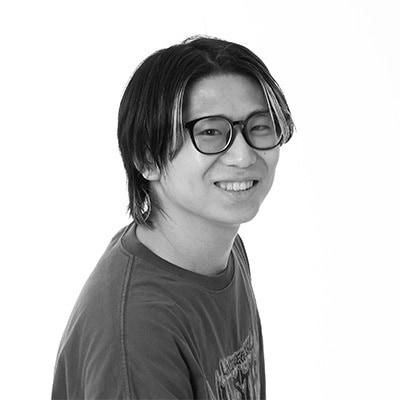
Masaharu Noguchi
Dentsu Inc.
Future Creative Center / Creative Planning Division 4
Planner / Art Director
Funabiki Keimi
Dentsu Inc.
Second Marketing Bureau
Planner