Note: This website was automatically translated, so some terms or nuances may not be completely accurate.
 Aogaku and Partner Companies Launch "Creating the Future" Lecture Series with Dentsu Inc.! "AOGAKU PROJECT DESIGN CENTER" Activity Report [2/3]
Shunkado's New Challenge with "Unagi Pie"! Connecting Japan with Japanese Chestnuts. Aogaku Students Connecting Together to the Future.

Shiori Imanaga
Shunkado Co., Ltd.

Kitazume Noi
Aoyama Gakuin University
Ozone Ippei
Dentsu Inc.
Funabiki Keimi
Dentsu Inc.
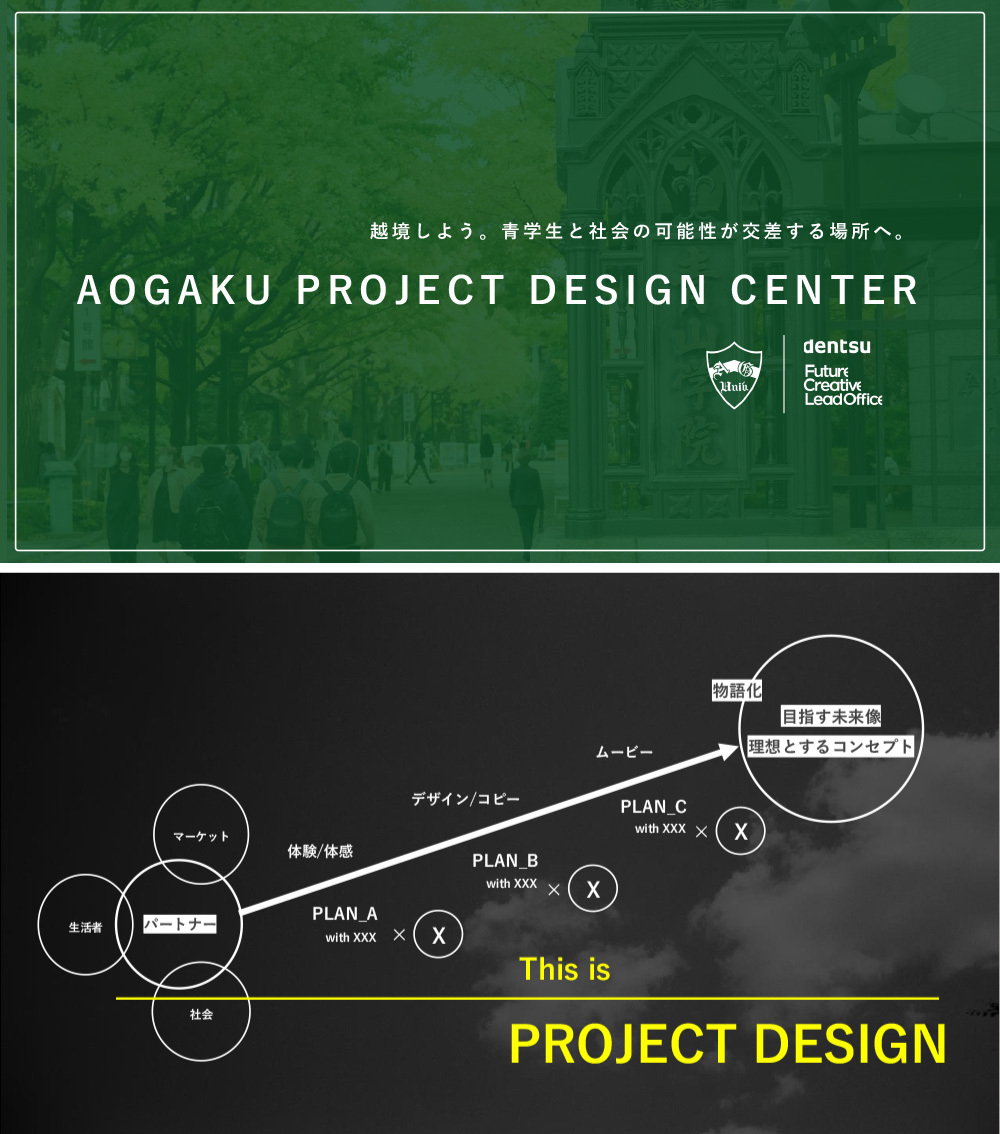
In Fall 2024, Aoyama Gakuin University's Faculty of Culture, Media and Society and Dentsu Inc.'s Future Creative Lead Office launched a course titled "AOGAKU PROJECT DESIGN CENTER." This course explores co-creating corporate futures through project design. Using the project design mindset, what kind of future can be envisioned by partner companies, Aoyama students, and Dentsu Inc.? A new challenge has begun.
The first partner company is Shunkado, known nationwide for its "Unagi Pie," based in Hamamatsu City, Shizuoka Prefecture.
Celebrating its 138th anniversary, Shunkado is a creative company that places "community development" at the core of its business. It collaborates not only within Shizuoka Prefecture but also with regions, companies, and universities across Japan, bringing together diverse ideas and aspirations to drive projects forward.
One such initiative is the " Enshu Japanese Chestnut Project." It originated when the company encountered the value and challenges of Kakegawa chestnuts during the confectionery-making process. This project now involves Japanese chestnut-producing regions and companies nationwide. It was relaunched in February 2025 as the "Japanese Chestnut Council," evolving into an endeavor to convey the value of Japanese chestnuts throughout Japan and the world.
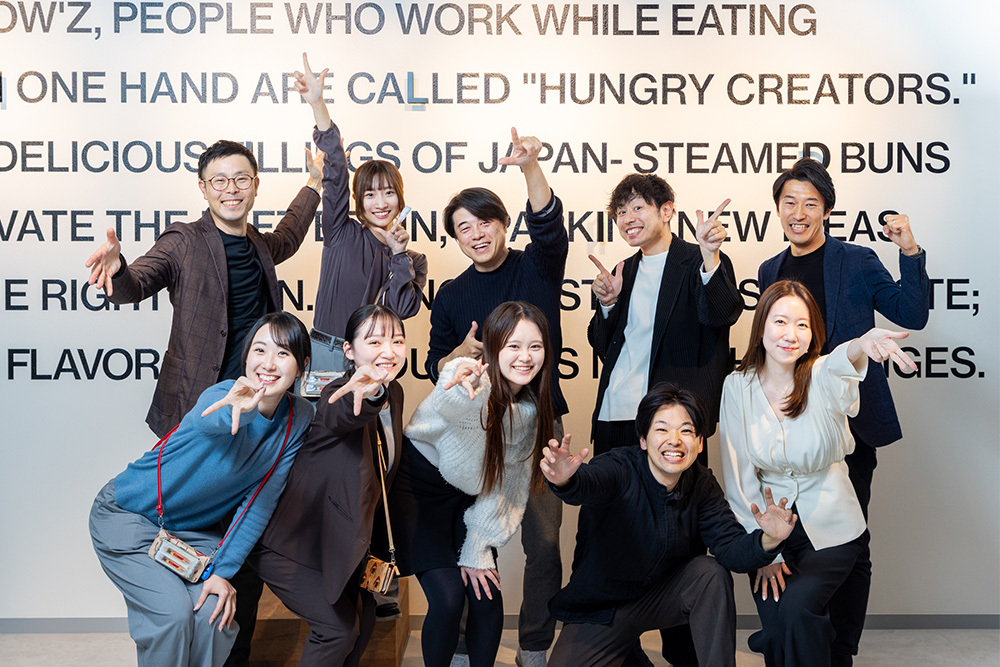
The "HOW'z" store, which opened in Harakado (Harajuku/Jingumae) in the fall of 2024, also carries forward the spirit of this project.
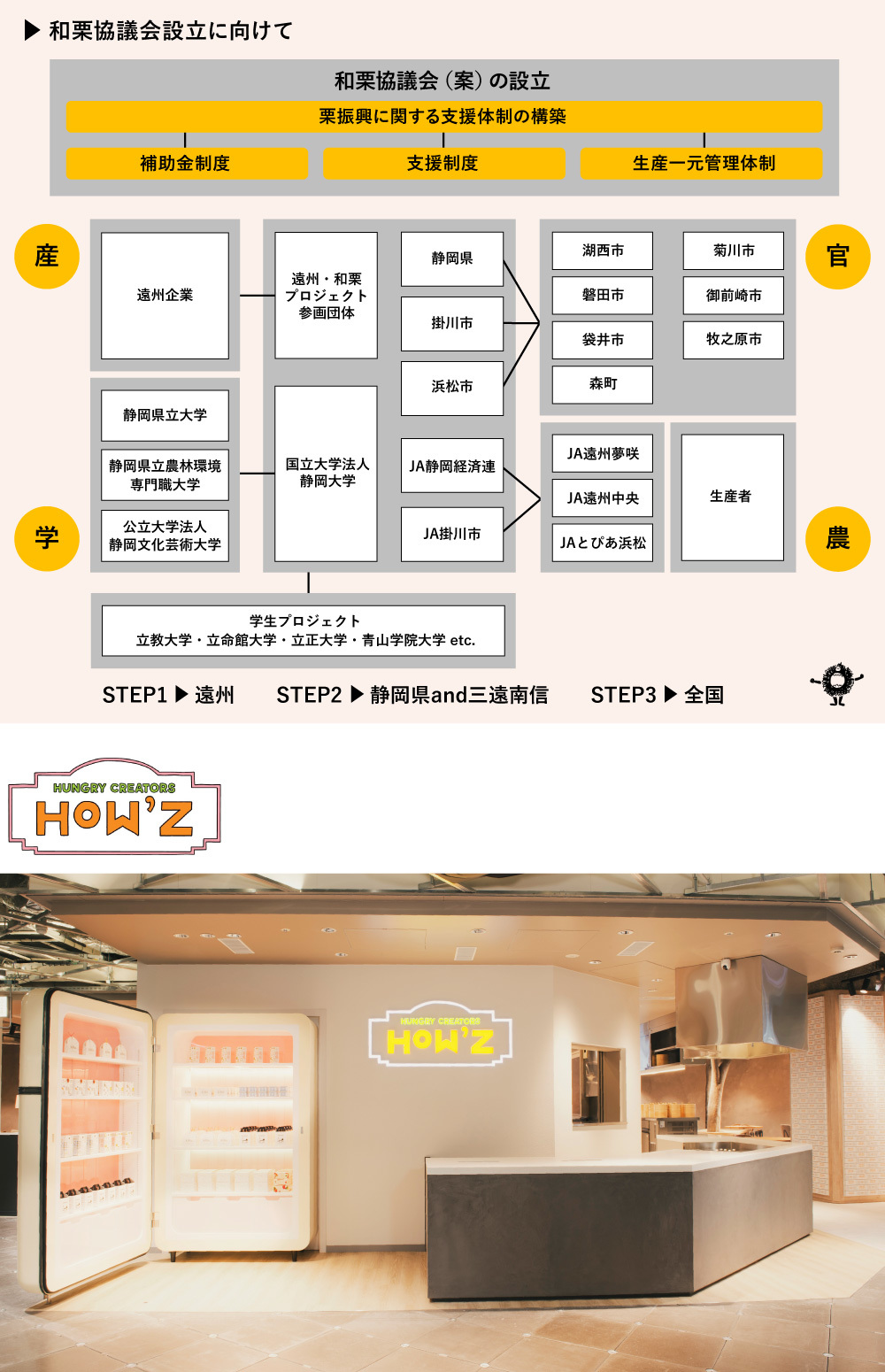
This is the beginning of a story born from the encounter between Shunkado, which continues to create innovative projects, and the "AOGAKU PROJECT DESIGN CENTER."
Shared direction sparked the beginning of our connection
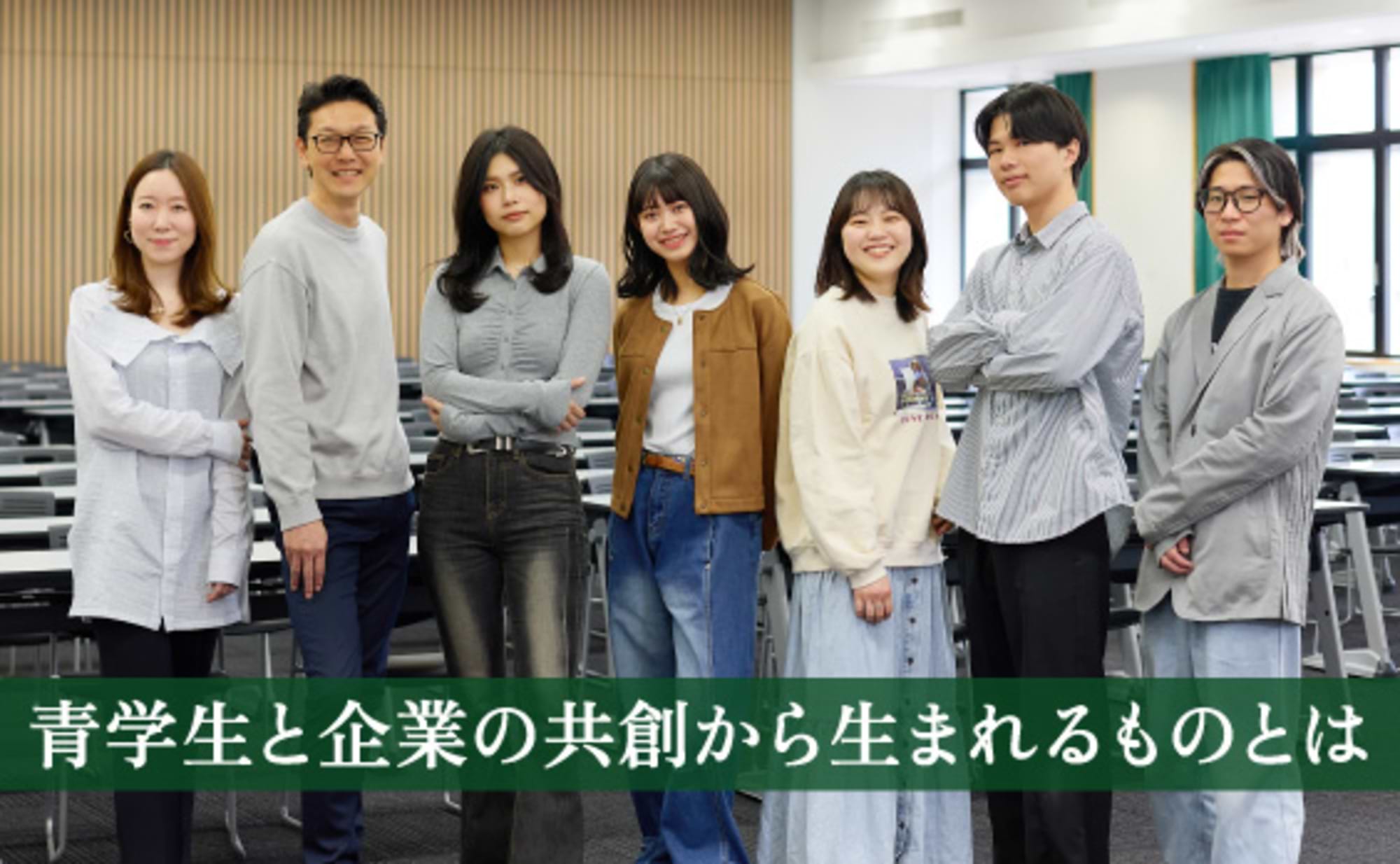
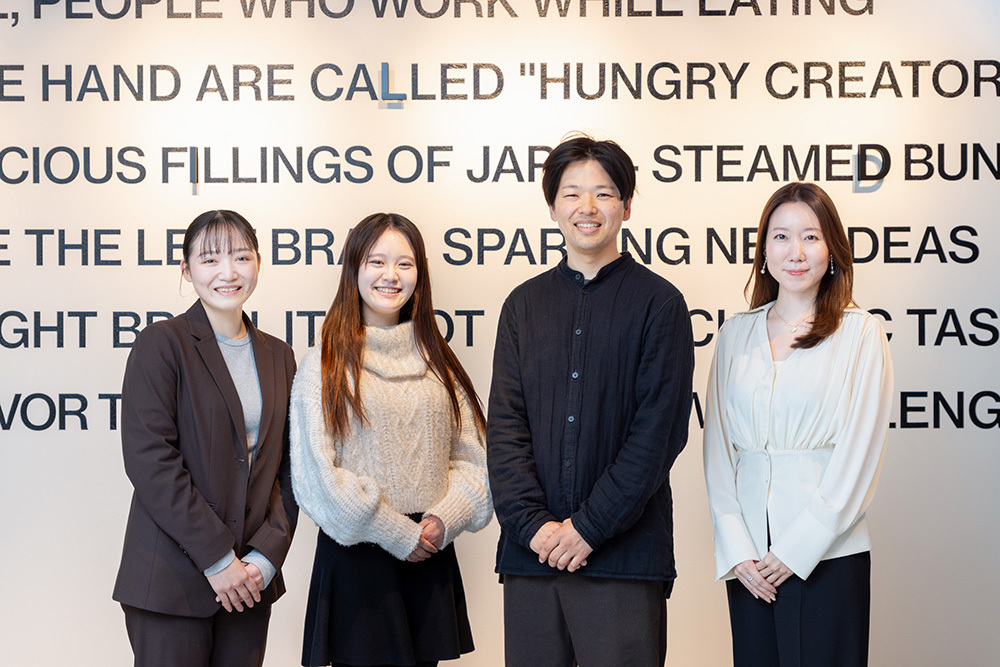
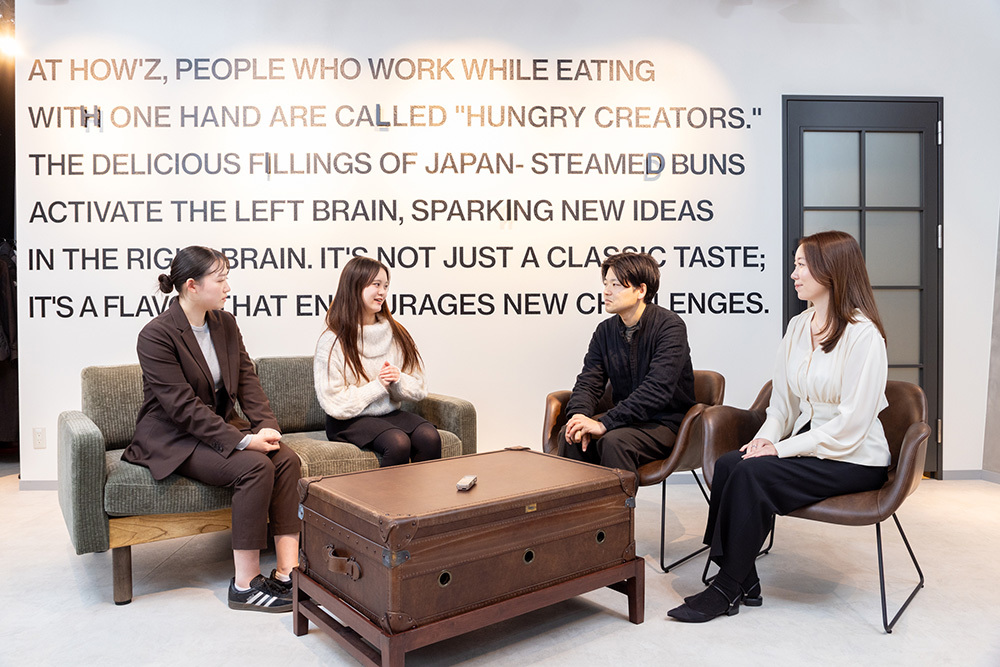
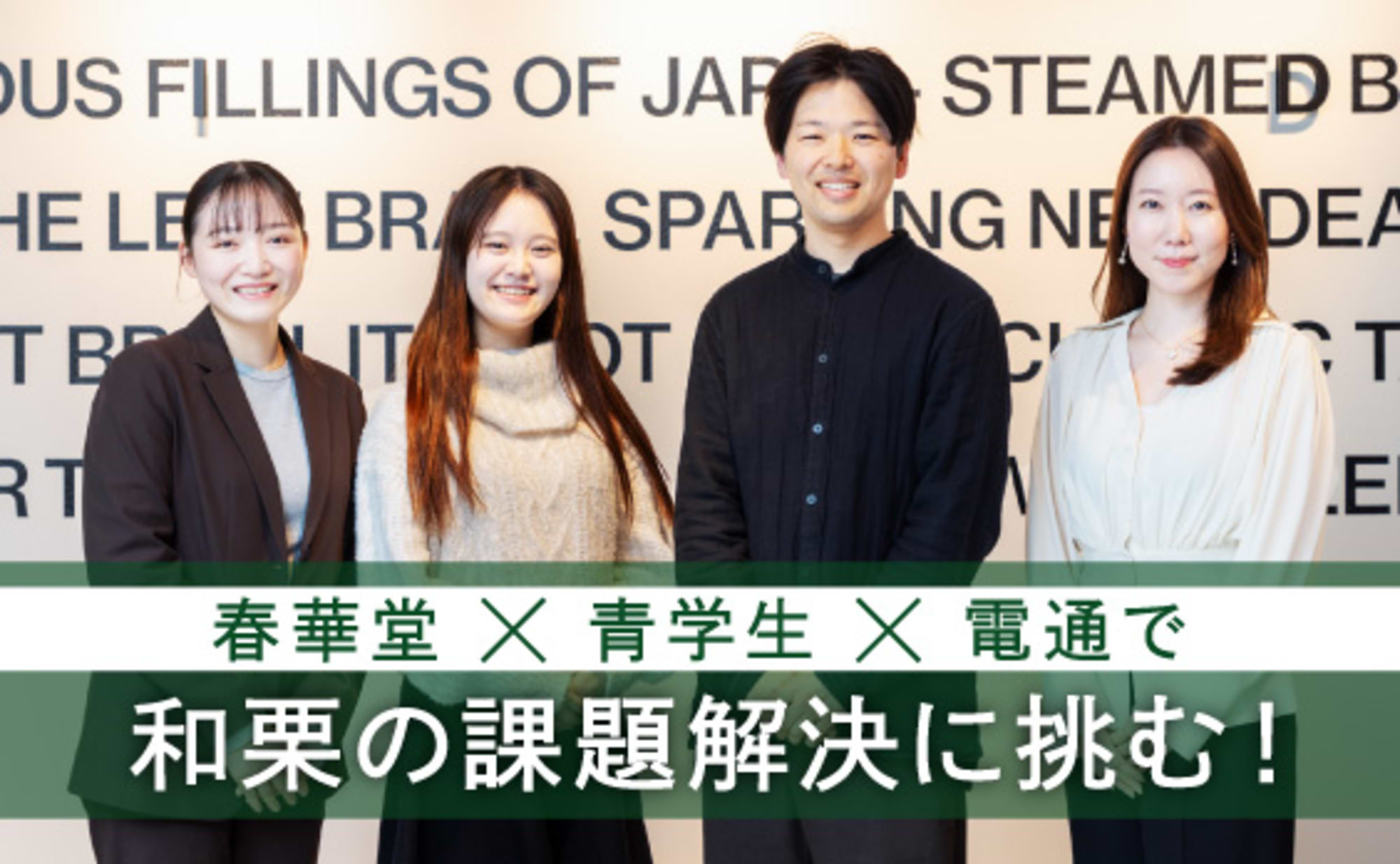
Here, we interview Shiori Imanaga from Shunkado, who participated in the project; Noe Kitazume (a third-year student at Aoyama Gakuin University) from the Morishima Seminar; and Ippei Osone from Dentsu Inc. Future Creative Lead Office. Project member Emi Funabiki asked them what discoveries emerged after the seminar sessions.
At HOW'z, Harakado's pop-up store in Tokyu Plaza Harajuku
Funabiki: First, I'd like to ask Mr. Imanaga. Could you tell us the background behind your participation in this project?
Imanaga: I was introduced to Mr. Osonoe from Dentsu Inc. around July 2024. When I shared the story of the "Enshu Japanese Chestnut Project" promoted by Shunkado, we hit it off, and that's when I heard about this project.
I heard that the project with Aoyama Gakuin University isn't meant to be a one-off but rather something to be sustained long-term. Since we also value continuing the "Enshu Japanese Chestnut Project" into the future, I felt a connection and decided to participate.
The "Enshu Japanese Chestnut Project" was launched after hearing that Japanese chestnut production in Kakegawa City, Shizuoka Prefecture, was facing extinction due to a lack of successors. As a confectionery maker, we wanted to see what we could do. We are undertaking various initiatives through public-private partnerships, aiming to create a "sustainable development business" that passes on high-quality Japanese chestnuts to future generations.
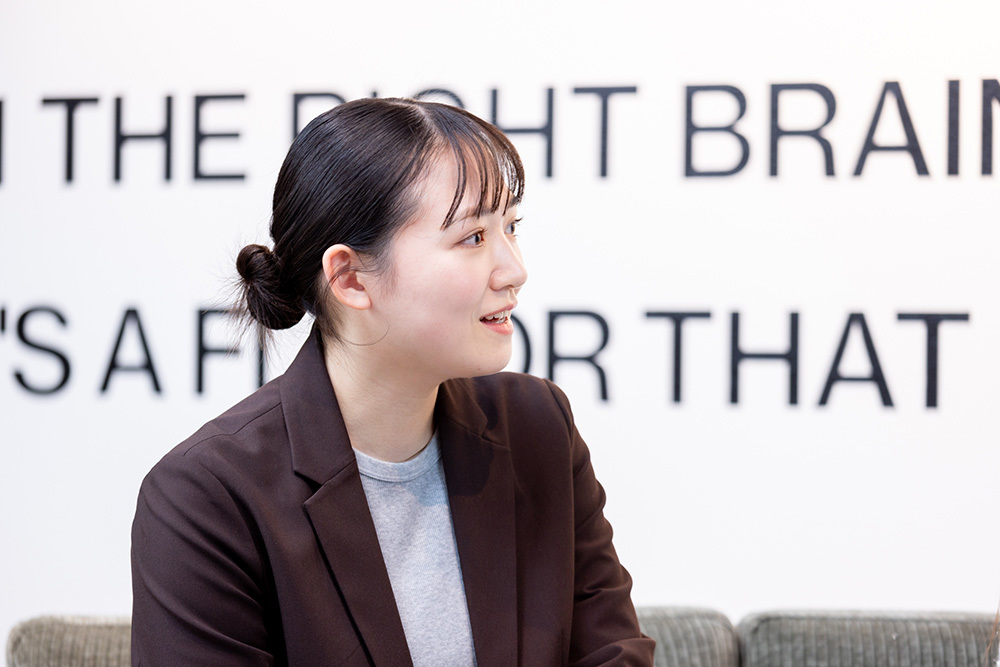
Ozone: Of course, I knew Shunkado was the company behind Unagi Pie. But when I heard about the "Enshu Japanese Chestnut Project," I learned how they create value by involving various public and private entities. It felt exactly like what our FC Department is trying to do, so we decided to partner with Shunkado first and foremost.
Funabiki: You promote projects that cherish connections with the community. The more I learn about Shunkado, the more I become a fan. Mr. Kitazume, did participating in this project change your image of Shunkado?
Kitazume: My initial image was strongly tied to Unagi Pie. But I discovered they offer a wide variety of confections and are involved in many ventures beyond just confectionery. This expanded my perception of Shunkado significantly. As we progressed with the project and learned about their goals and aspirations, I felt our connection naturally deepened through this shared bond.
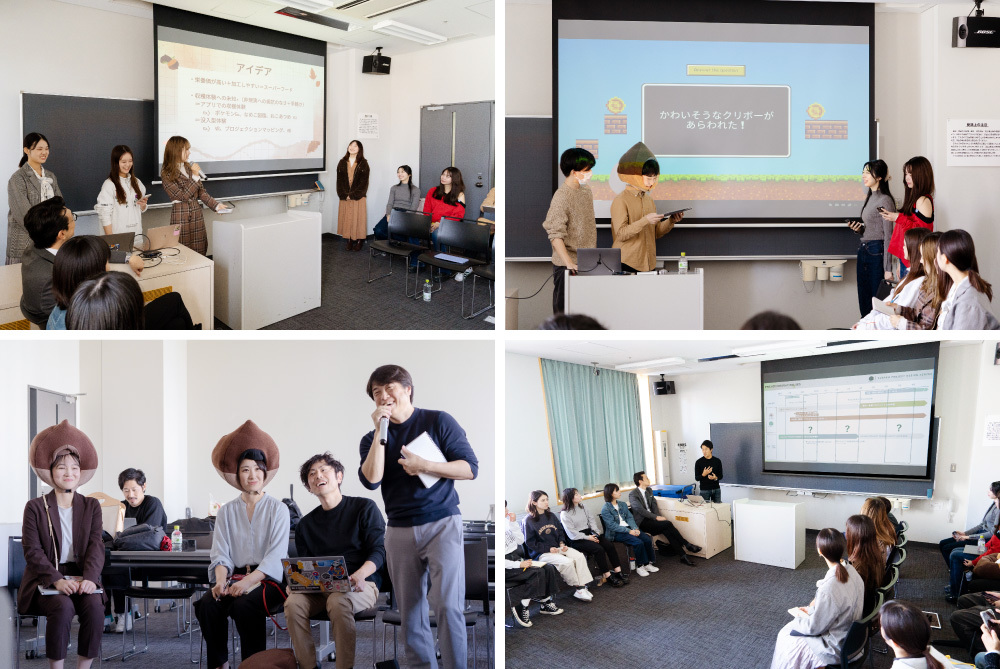
What kind of ideas emerge from the students' fresh, unfiltered perspective?
Funabiki: What were your impressions after hearing the students' actual presentations?
Imanaga: Most of our past initiatives focused on agriculture and town revitalization. But the students brought fresh perspectives, like "Marron Eye," "Chestnut Carry Bags," and "Big Surprise Objects" – ideas rooted in fashion. These proposals from a completely new angle have been incredibly educational for us.
Funabiki: They really offered ideas with that uniquely student-like, unfiltered perspective, didn't they? I doubt they'd ever seriously considered Japanese chestnuts to this extent before. What was the process leading up to the presentations like?
Kitazume: It was pretty chaotic (laughs). Since everyone was eager to tackle this challenge, we were all trying too hard. At first, many ideas felt overly "smart," leaving us with a sense that something was missing. But without any coordination, we started hearing things like, "I bought some chestnut sweets the other day..." or "I bought some sweets from Shunkado..." Japanese chestnuts gradually permeated our daily lives, and that became the catalyst for our ideas to deepen.
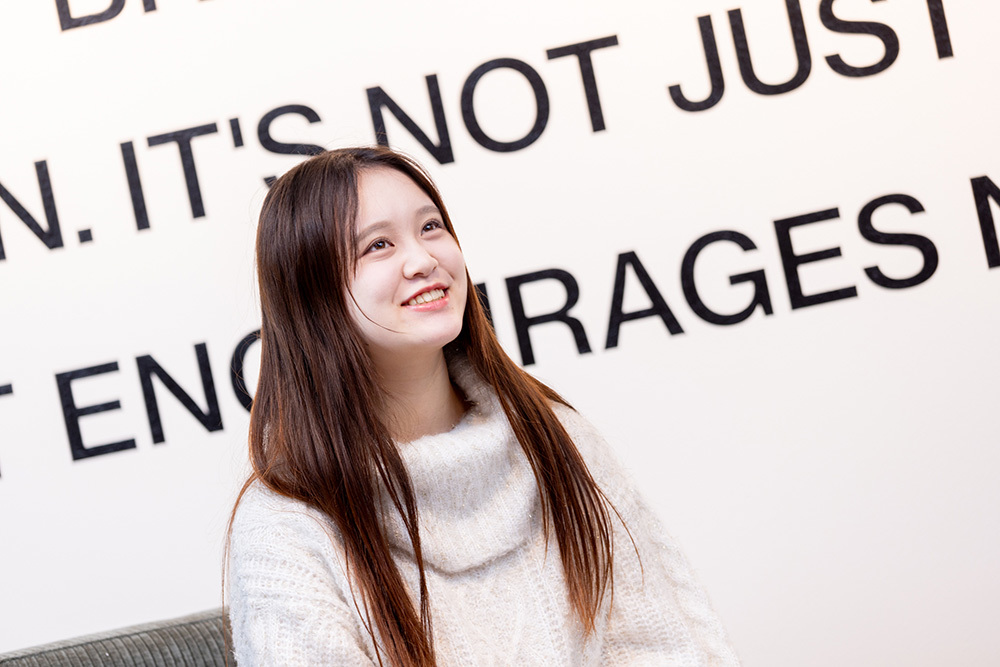
Ozone: Earlier, in a lecture by Yoshikawa from the FC Department, we were told, "While it's good to think about societal issues, let's also value the desires, discomforts, and direct stories we hear from people around us." Looking at the students' ideas, it was interesting to see how personal observations came together—like "We have a chestnut tree at home, and when I tried peeling one..."
Each idea was compelling—from pure observations like "chestnuts are cute in color and shape," to turning negatives into positives, like "they're hard to peel but give a sense of accomplishment when you do," or "they're fragile but easy to process into various things."
Funabiki: Exactly. I was also surprised at how quickly they absorbed what they heard in the lecture and came up with ideas. It was a presentation that showed they had prepared well and had the potential to become a full-fledged project.

A positive cycle of co-creation is forming, where ideas are layered through dialogue
Kitazume: Since this project started, the relationships within the seminar have changed. Students who were close tended to stick together, but now they're talking with those they hadn't spoken to deeply before. We're learning about each other's backgrounds and sensibilities, and it's becoming an opportunity for our relationships as seminar members to take a step forward. Right now, I talk more with my seminar members than with anyone else at the university.
Ozone: That's wonderful to hear. The planning process itself has become quite engaging, hasn't it? At its core is Shunkado's passion for Japanese chestnuts. We build upon the ideas conceived by the students, with the FC Office adding creative perspectives. The meetings where all three parties come together, combining our respective strengths to create something new, are incredibly enjoyable. Because it's enjoyable, everyone at Shunkado looks forward to the next meeting, and the students feel motivated to think more deeply. It's created a positive cycle. Continuing this process should lead to excellent outcomes. Since we build ideas through dialogue, it feels less like any one person's idea and more like a collective creation, which is great.
Also, they did a "skit presentation," and the students were really good at creating a fun atmosphere.
Funabiki: I think it's partly due to Professor Morishima's personality and how the seminar is structured, but there was this welcoming atmosphere, this sense of acceptance, right from the start.
Imanaga: We also do icebreakers in various places, but I felt the Morishima Seminar members created a soft, easygoing atmosphere that made it very comfortable.
Ozone: That icebreaker from Shunkado really made a big impact, didn't it? They shared so many chestnut puns, I wondered how many they had in their repertoire. They created an atmosphere where it felt easy to share ideas.
Connecting students through Japanese chestnuts, building a long-lasting project
Funabiki: While the seminar sessions ended, we felt it would be a shame to stop after just the presentations. So the project continues, with monthly meetings and such. When the students visited HOW'z, we heard about a new cocktail they'd created. The name for that cocktail was also decided based on ideas submitted by the students.

Funabiki: What are your thoughts on the ongoing exchange with the students?
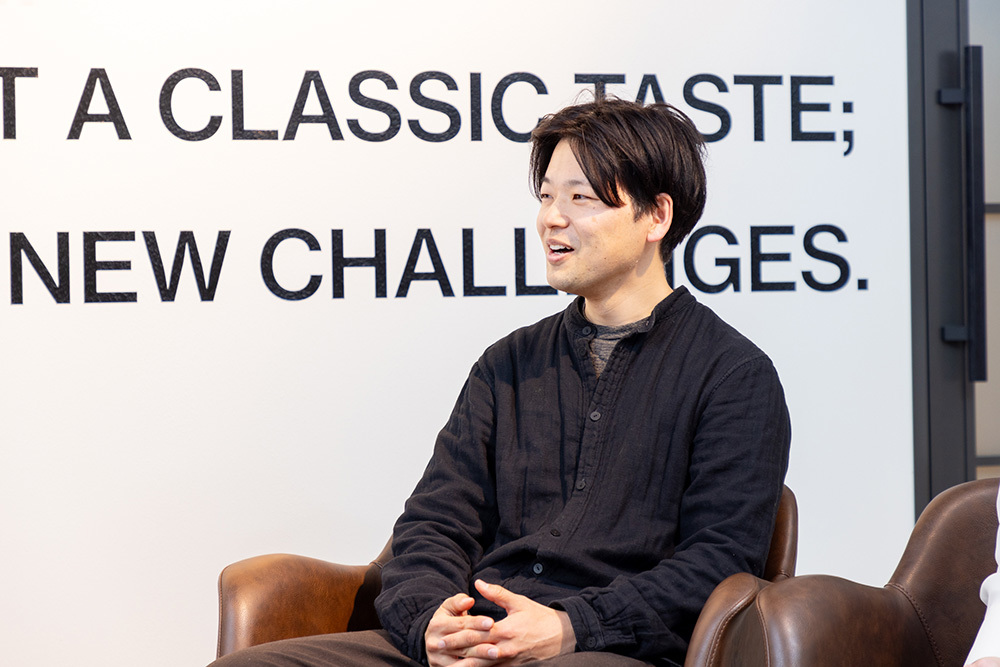
Imanaga: Frankly, I'm delighted that the students are actively thinking about ways to promote Japanese chestnuts. It really makes me feel that "if given the chance, they'll take an interest." While we usually operate locally, engaging with students in Tokyo has given us new perspectives. I hope it also becomes an opportunity for the students to discover the appeal of rural areas. I'd love for them to visit Hamamatsu or Kakegawa at least once and meet the chestnut farmers.
Kitazume: In our seminar, we actually discussed wanting to try hands-on farming experiences. For us too, opportunities to engage with local companies are rare, and internships often end up being entirely online. So we truly feel this is a valuable experience.
Ozone: Learning is important, but taking that next step to think together helps make it personal. Getting hands-on experience is even better. I think this is what increasing the connected population is all about.
Funabiki: Finally, could each of you share your future outlook from your perspective?
Imanaga: Moving forward, I hope we can strengthen our collaboration with the students. Of course, we want to fully execute this Aoyama Gakuin project, but I also envision taking it further—to the point where students connect through Waguri, brainstorm ways to revitalize rural areas, and actively share those ideas.
Kitazume: We also feel it's rare to work together with such passion and unity like this. Pursuing something purely because it's enjoyable, regardless of job hunting, allows us to discover ourselves and understand society – that's an immense asset. I hope this becomes a long-lasting initiative, expanding to include younger students joining the Morishima Seminar and eventually reaching other students too.
Ozone: Moving forward, we want to keep putting out outputs, even small ones. Each output involves more people – those who participated, those who learned about it, farmers, and others – and the project grows from there.
While solving corporate challenges is important, I also want to focus on society and think about "how we can create an exciting future." That's what the "AOGAKU PROJECT DESIGN CENTER" aims to be. Moving forward, I hope to gain more supporters and companies who share this vision, expanding our community.

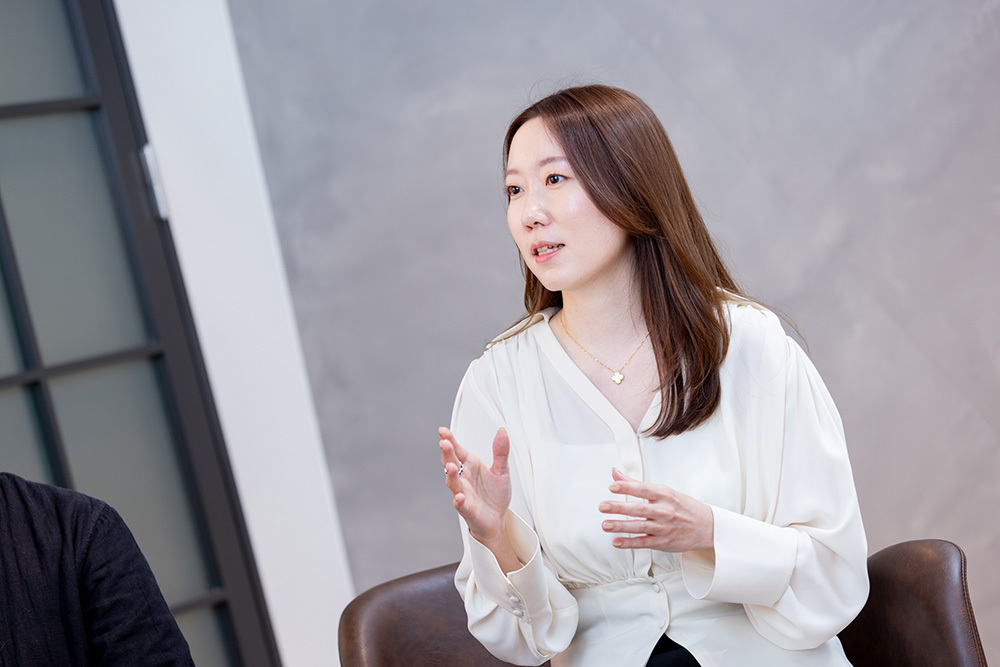
Was this article helpful?
Share this article


Newsletter registration is here
We select and publish important news every day
For inquiries about this article
Back Numbers
Author
Shiori Imanaga
Shunkado Co., Ltd.
Regional Strength Creation Office
Kitazume Noi
Aoyama Gakuin University
Faculty of Integrated Cultural Policy
Ozone Ippei
Dentsu Inc.
Future Creative Lead Office Project Design Department
Project Designer
Funabiki Keimi
Dentsu Inc.
Second Marketing Bureau
Planner