Note: This website was automatically translated, so some terms or nuances may not be completely accurate.
 Survey Reveals "Signs of Food Trends for 2025" [3/3]
Wanting to live healthily. That's why they eat late-night snacks—Late-night snacking habits among women in their 50s and 60s—
Dentsu Inc.'s "Food Lifestyle Lab" (hereafter Food Lab) tracks trends in Japanese eating habits and considers their future implications. This series unravels emerging food trends based on data from the Food Lab and other surveys.
Suddenly, but what image comes to mind when you think of "late-night snacks"? You might first think of "something eaten by young people who tend to eat whatever they want whenever they want" or "something strongly associated with 'unhealthy' things like all-nighters or cup noodles."
Yet, a new trend is emerging in this "late-night snacking." According to the "Food Lab Survey 2024" conducted last year, "the rate of women in their 50s and 60s eating late-night snacks on weekdays more than doubled from 2022 to 2024." Furthermore, it became clear that the group driving this trend is "those who consider themselves healthy."
This article delves into this fascinating finding and examines the "late-night snacking habits of women in their 50s and 60s."
<Table of Contents>
▼Weekday late-night snackers among women in their 50s and 60s more than double in three years!
▼Today's Women in Their 50s and 60s: "They Eat Well, Work Hard, and Play Hard"
▼ ForToday's Women in Their 50s and 60s, Late-Night Snacks Are a "Little Reward"
▼The rejuvenation of women in their 50s and 60s makes the late-night snack culture an even more noteworthy market
Women in Their 50s and 60s Eating Late-Night Snacks Almost Every Weekday More Than Doubled in 3 Years!
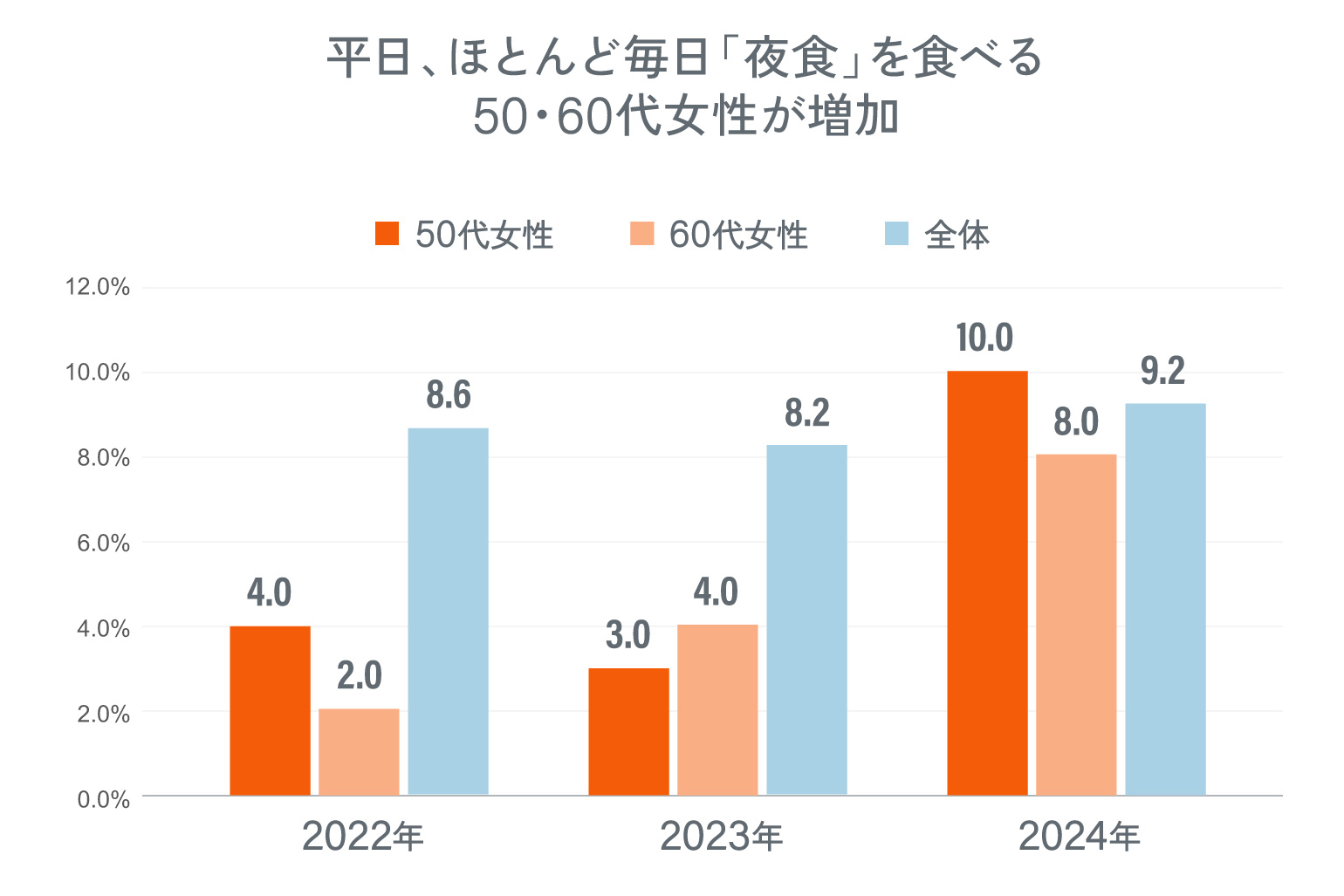
Analysis of the "Food Lab Survey 2024" revealed that, as shown in the graph below, the percentage of women in their 50s eating late-night snacks almost every weekday night has increased 2.5 times over the last three years, while for women in their 60s, it has quadrupled. For reference, looking at the entire survey population shows almost no change from 2022 to 2024, highlighting the sharp increase specifically among women in their 50s and 60s.
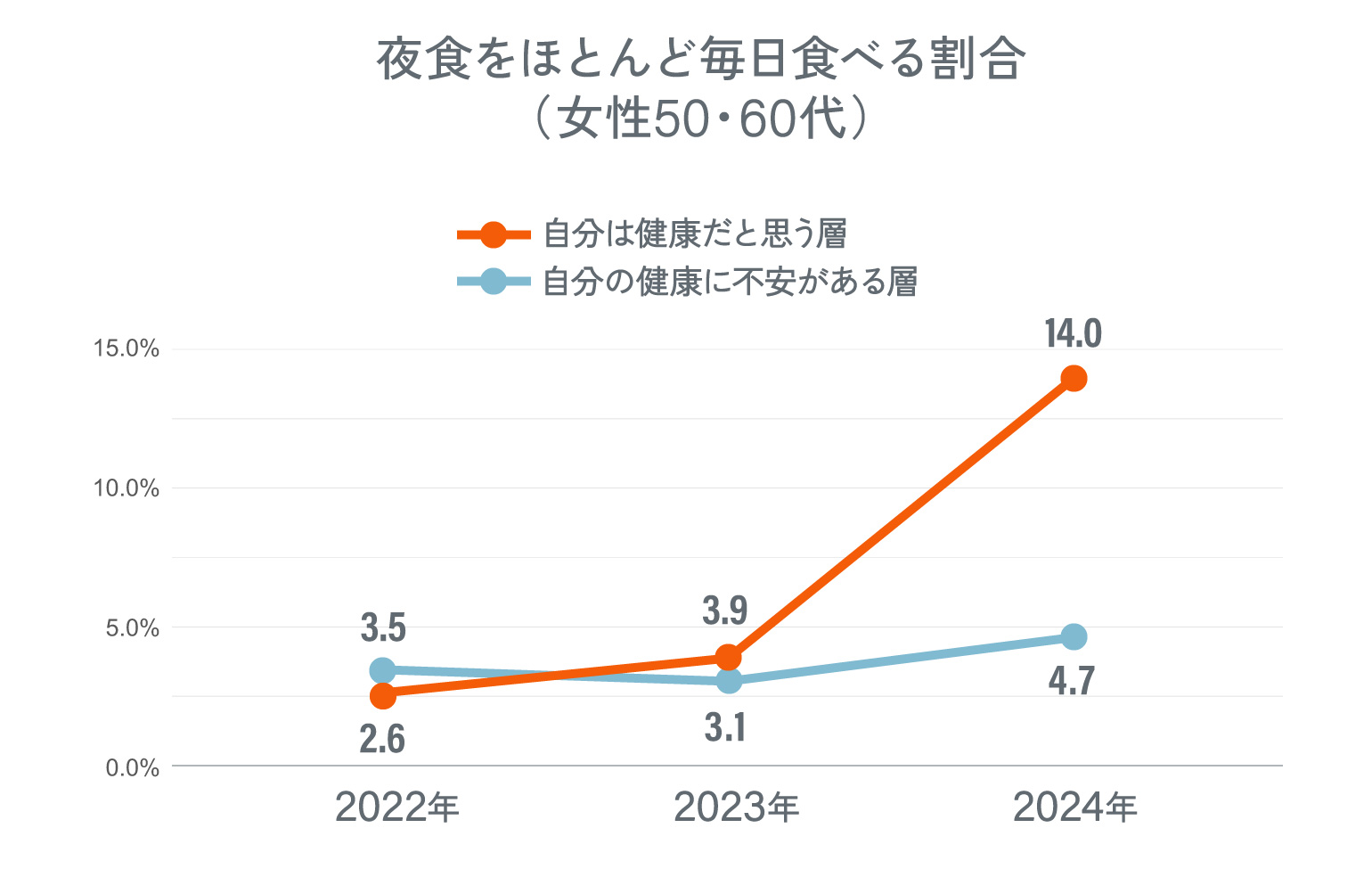
To further explore this trend, we narrowed the analysis to women in their 50s and 60s and segmented them based on their responses to the question "Do you consider yourself healthy?" Analyzing the trends over the last three years within these segments revealed that among those who "consider themselves healthy," the rate of eating weekday nighttime snacks increased more than fivefold over the three years. Notably, it rose by a full 10 percentage points from 2023 to 2024.Conversely, the late-night snacking rate among those "concerned about their health" showed little fluctuation, highlighting the strong link between "health perception" and "late-night snacking." To understand the background, we believe the mindset and values of "today's women in their 50s and 60s" hold the key.
Today's 50s and 60s Women: "Eat Well, Work Well, Play Well"
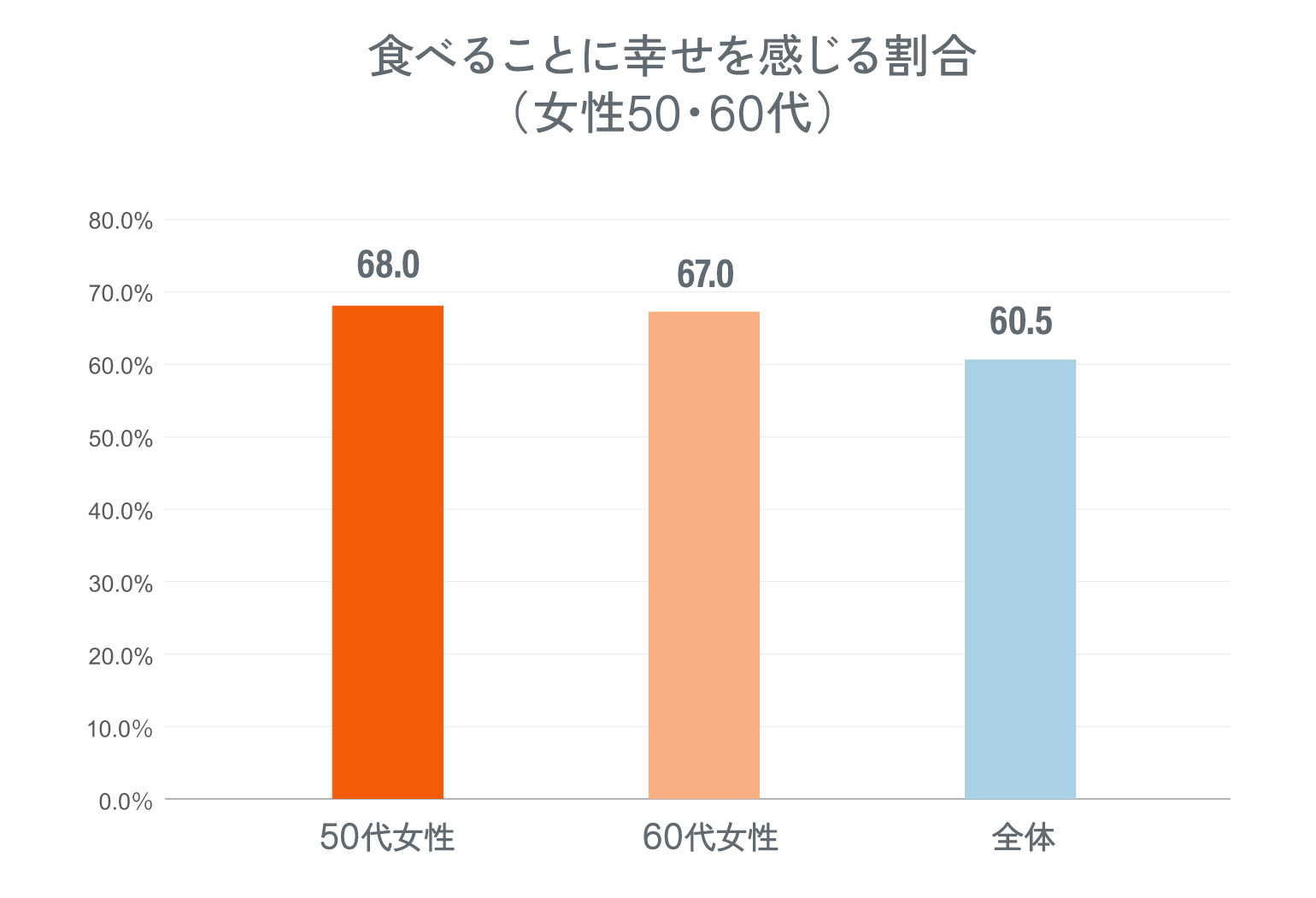
2024 was a year of significant change for the "50s and 60s" demographic. This is because most of the "baby boomer junior generation," born between 1970 and 1974, entered their 50s, while many of the "new humans" and "bubble generation," born around 1960 to 1970, reached an age where retirement is in sight or celebrated their 60th birthdays.The "Food Lab Survey 2024" revealed that a defining characteristic of this group is that they tend to find happiness in eating more than other demographics.
Furthermore, the Ministry of Internal Affairs and Communications' Basic Survey on Social Life shows that women in their 50s and 60s have seen a larger increase in time spent resting and relaxing compared to the overall population, while time spent working also shows an upward trend. Regarding sleep duration for women in their 50s and 60s, it increased slightly in 2021, possibly due to the pandemic's impact, but the increase was smaller compared to the overall population. Women in their 60s showed a long-term decreasing trend.
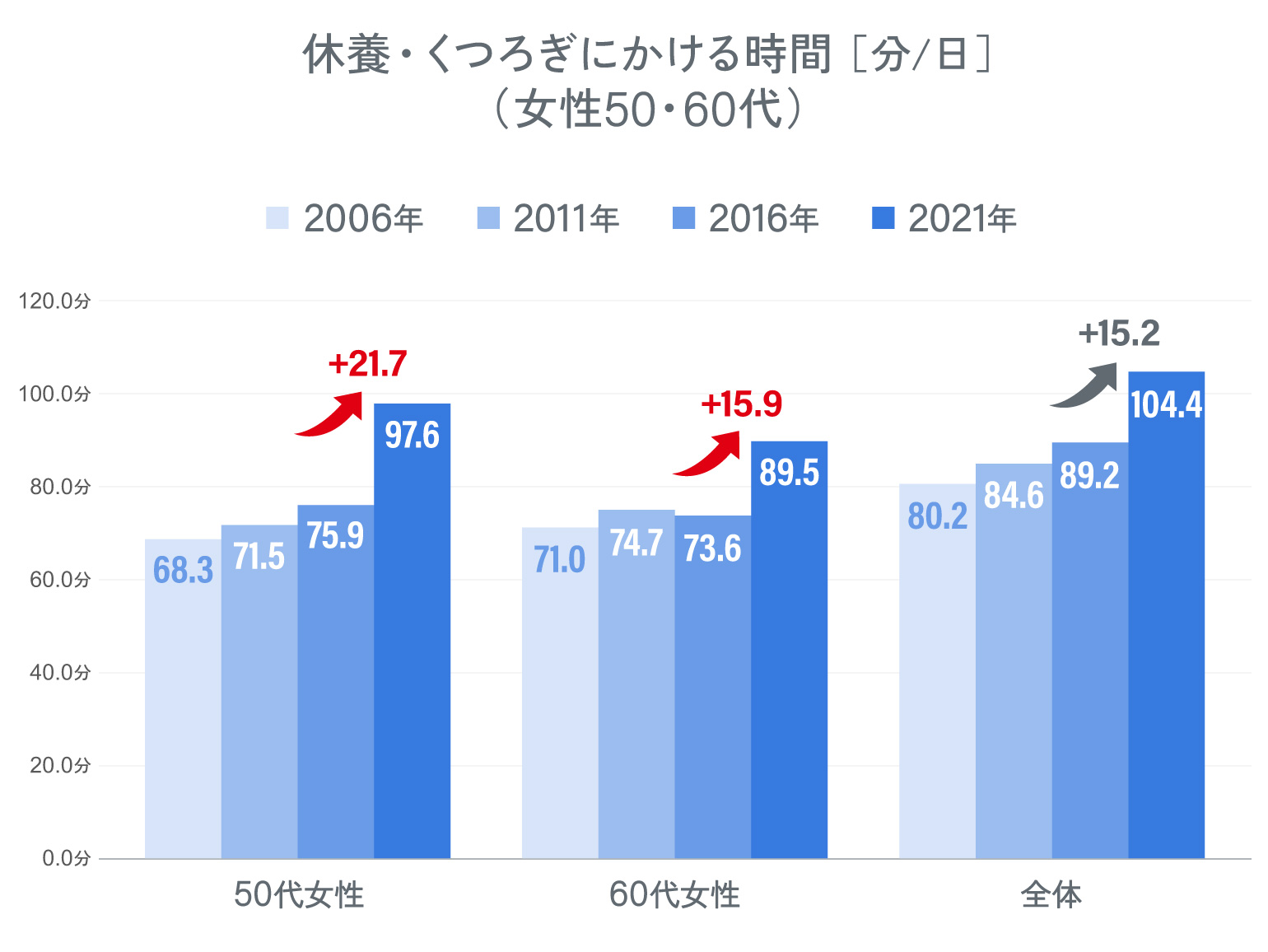
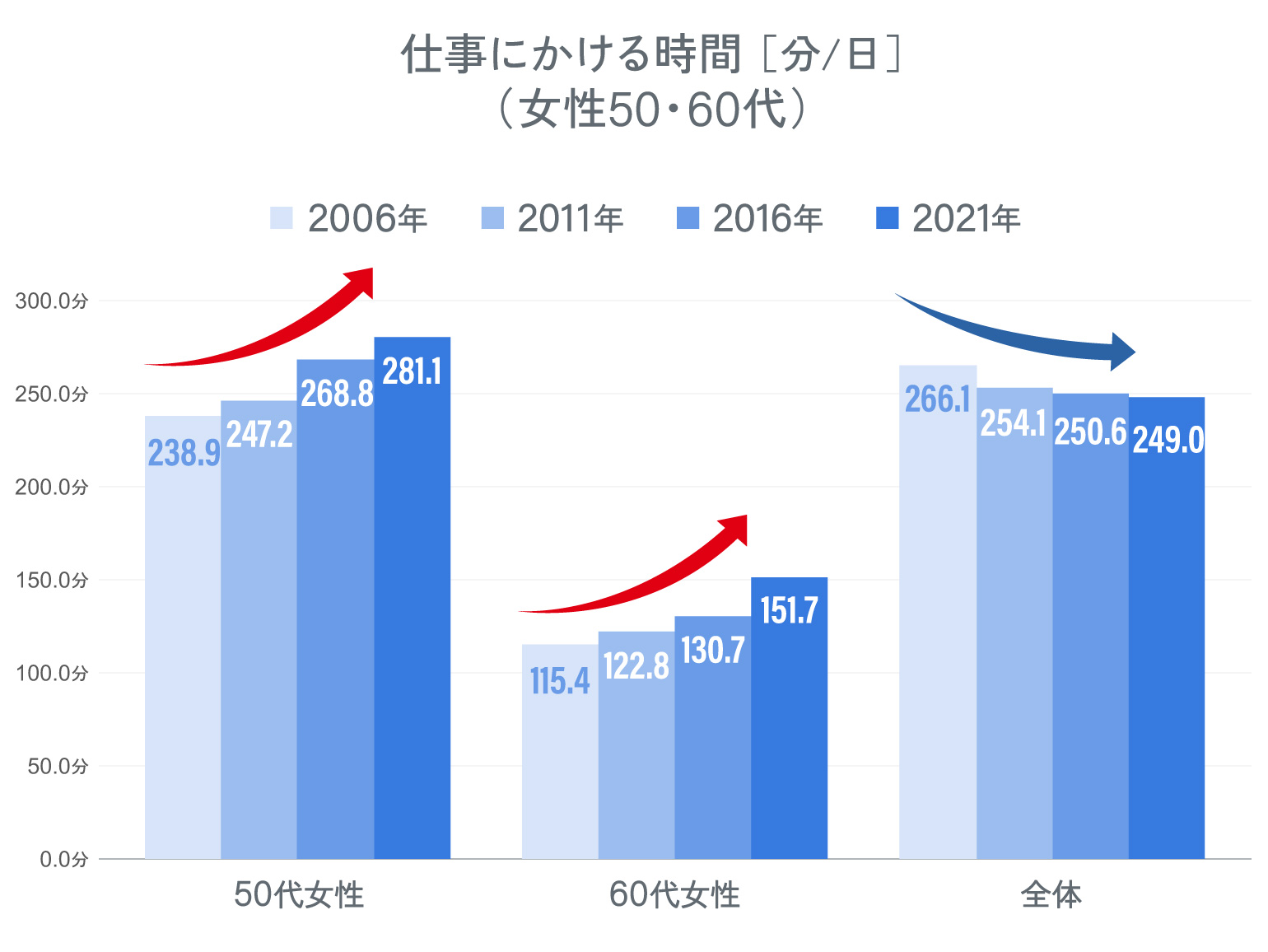
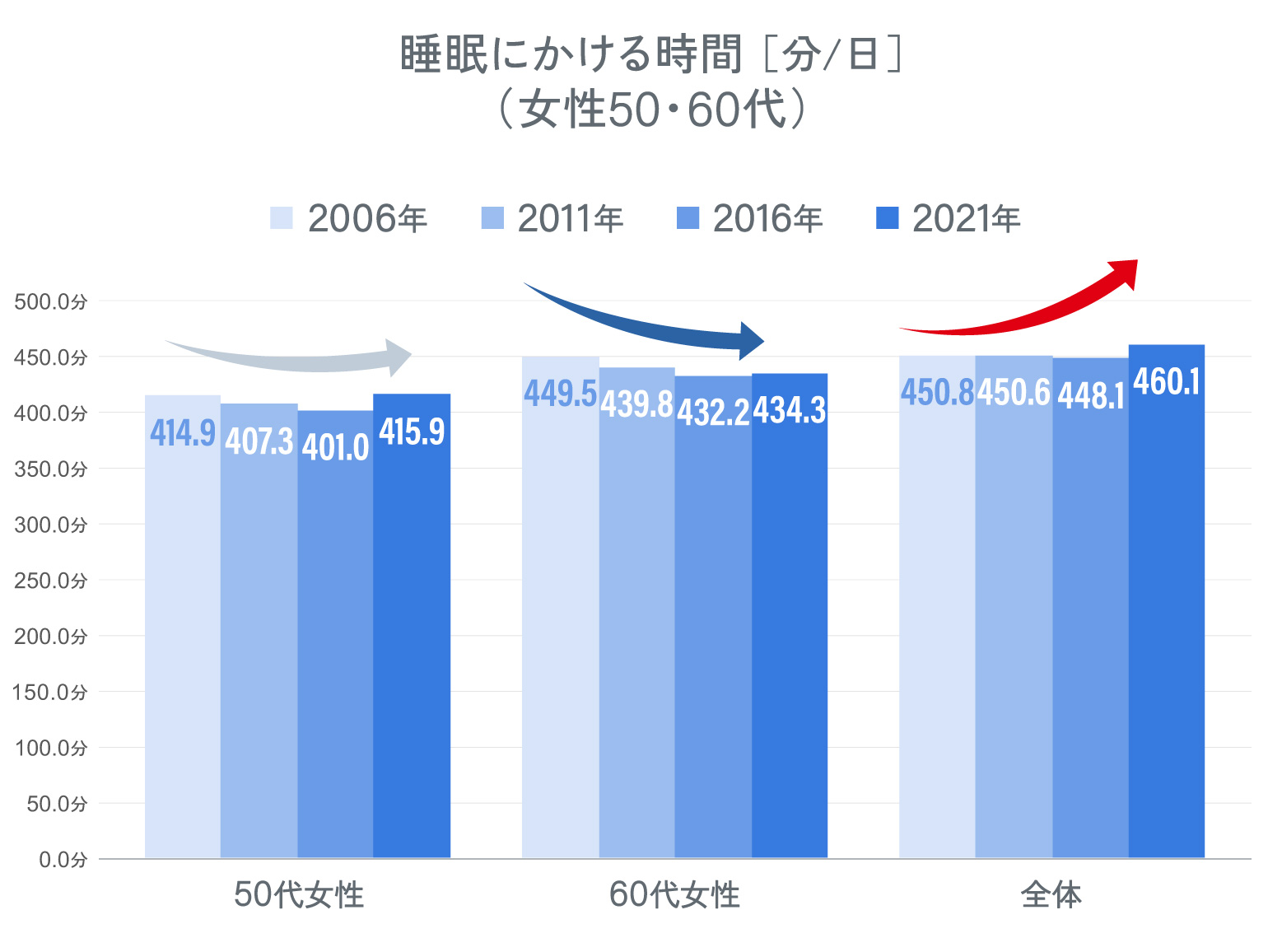
Based on the results of the Food Lab survey and the Basic Survey on Social Life, the image of today's women in their 50s and 60s suggests they "eat well," "work well," and "play well." In other words, they seem to seek "fulfillment during their waking hours." While ensuring a certain amount of sleep, they likely place greater importance on "how actively they can spend their waking hours."
And precisely because they hold these values, enjoying private evening time with a late-night snack is perceived as a "healthy way to spend time that satisfies both mind and body." Consequently, health-conscious women in their 50s and 60s are likely driving the trend toward late-night snack consumption.
For today's women in their 50s and 60s, a late-night snack is a "little treat."
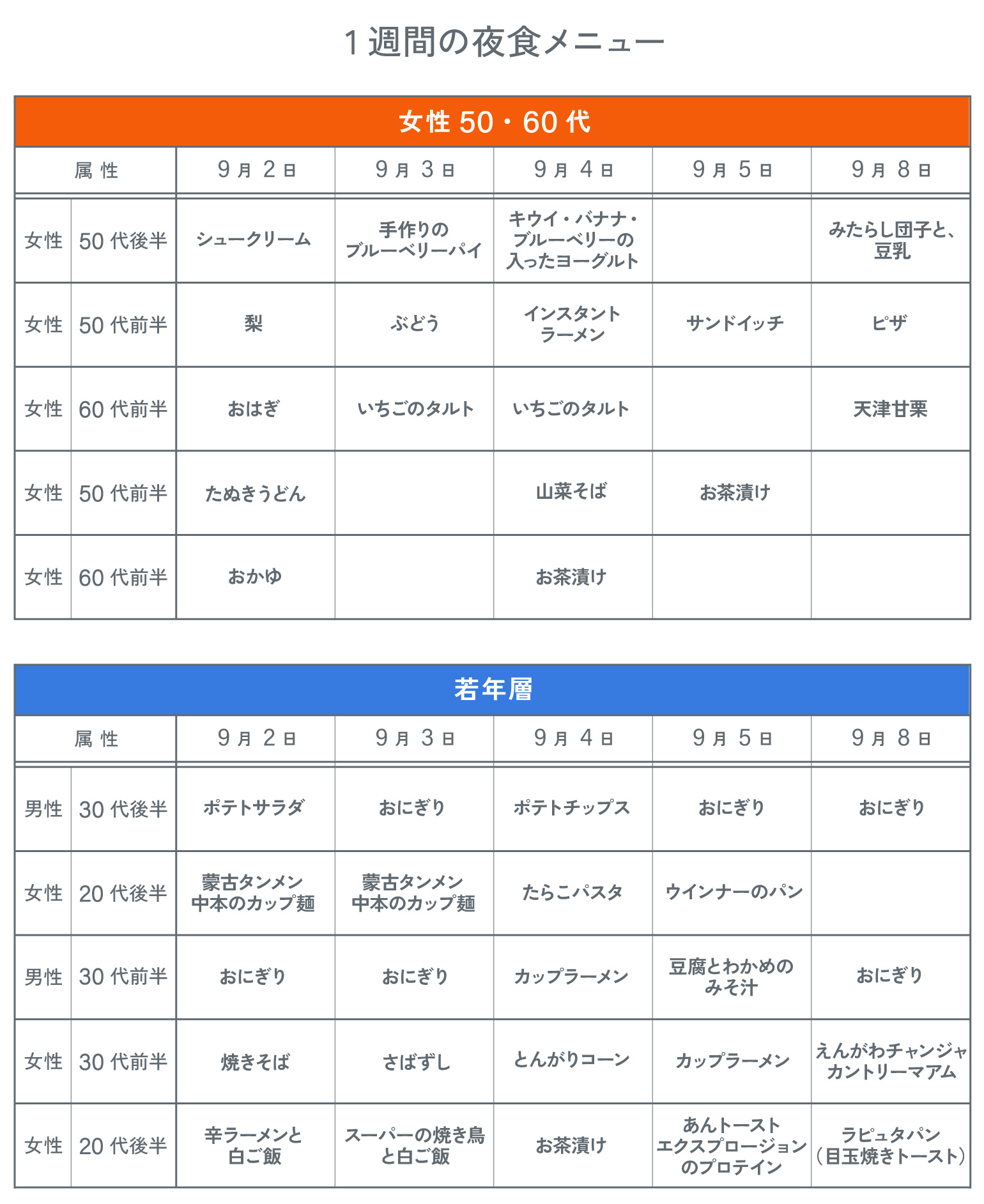
So, what exactly are they eating for these late-night snacks?We asked five women in their 50s and 60s who frequently eat late-night snacks on weekdays, and five women in their teens to 30s, about their weekly late-night snack menus. While younger women frequently mentioned cup noodles and rice balls, some women in their 50s and 60s cited foods like "homemade blueberry tart" and "strawberry tart" – items that feel like "a little treat."
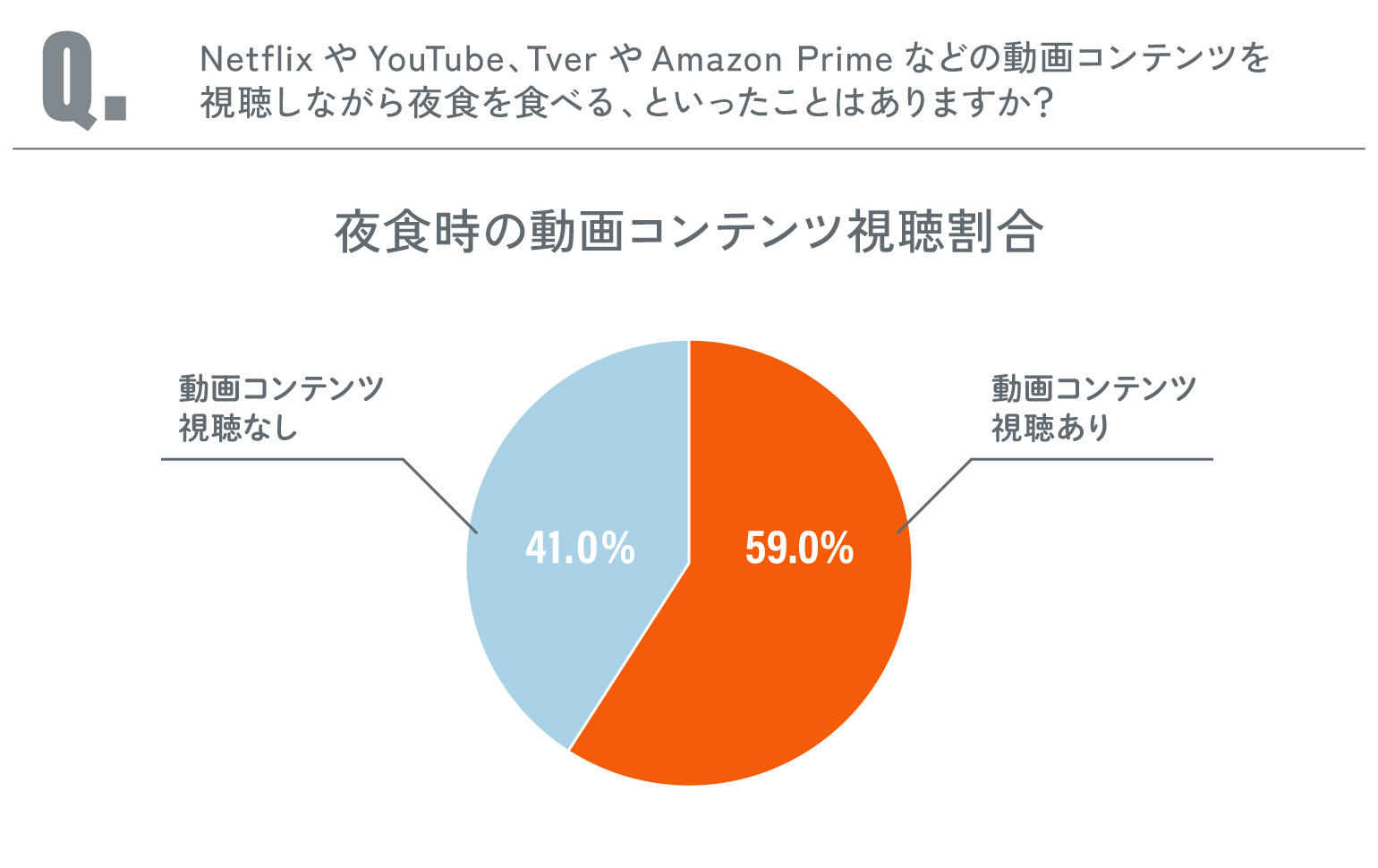
Additionally, another qualitative survey revealed that over half of women in their 50s and 60s "watch video content like YouTube or Netflix while eating a late-night snack." The culture of video viewing, which has rapidly spread in recent years, has permeated not only younger generations but also women in their 50s and 60s.After working hard during the day, these women focus on "how to make the most of" their brief evening breaks. They likely spend their nights indulging in their favorite dramas or movies while enjoying light sweets.
The nighttime snack culture is gaining even more attention as a market due to the rejuvenation of women in their 50s and 60s
So far, we've examined the background behind the increasing number of women in their 50s and 60s eating late-night snacks. They prioritize "making the most of their waking hours," and it appears they enjoy their private evening time while eating these "little treats" like desserts or snacks. From the perspective of emotional fulfillment, late-night snacks seem to be a kind of support for their well-being.
Incidentally, in the current food market, "soup meals" (※) – which can serve as either a main dish or a side – are becoming a trend. Products like these, which offer "lower calories than carbohydrates" and "customizable menus," are expected to see further growth as one type of "modern late-night snack for women in their 50s and 60s" introduced here.Furthermore, for other foods like sweets, product development targeting the position of "late-night snacks for women in their 50s and 60s" could lead to acquiring new customers.
With more active women in their 50s and 60s today, "late-night snacks" could very well be the harbinger of future food trends.
*Soup Meals: A general term for soups that serve as a complete meal, replacing both the main dish and side dishes. They come in various types, such as hearty varieties packed with ingredients, types meant to be poured over rice, and dishes transformed into soup. Recently, products like "Drinkable Grilled Fish Soup" (Acecook) have appeared, recreating the flavor of grilled fish.
【2024 Consumer Survey on Eating Habits: Survey Overview】
・Purpose: To understand consumer awareness, actual practices, satisfaction levels, and trends regarding Japanese dietary habits
・Target Area: Nationwide
・Subject Criteria: Ages 15–79
・Sample Size: 1,300
・Survey Method: Online survey
・Survey Period: August 23–26, 2024
・Survey Agency: Dentsu Macromill Insight, Inc.
Was this article helpful?
Share this article


Newsletter registration is here
We select and publish important news every day
For inquiries about this article
Back Numbers
Author

Masuda Kento
Dentsu Inc.
Data Marketing Division, Growth Consulting Division 2
Associate Planner