This series introduces Dentsu Inc.'s internal projects and people who work based on their personal interests and passions, under the theme "Turn Your Passion into Power."
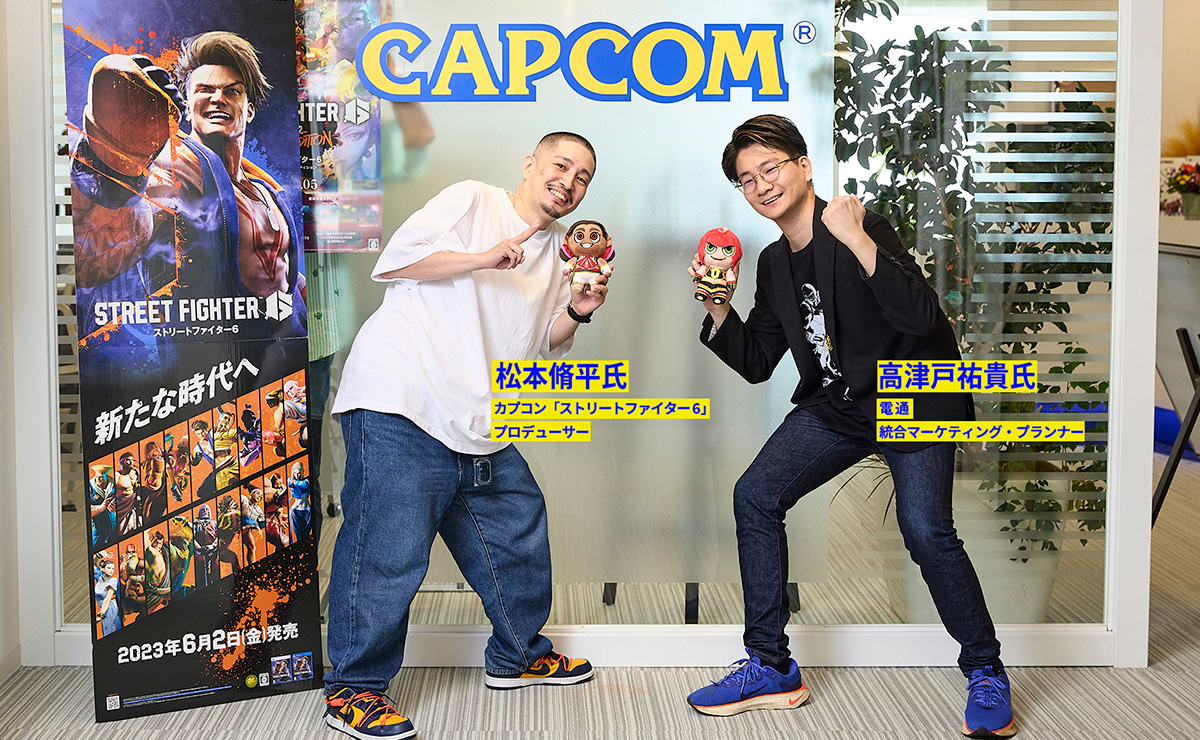
This installment highlights the "Sleep Measurement e-SPORTS CUP <SLEEP FIGHTER> Supported by Driell," an e-sports tournament that generated buzz as an unconventional collaboration between Capcom's "Street Fighter 6" and SS Pharmaceutical's sleep-improvement medication "Driell."We spoke with the masterminds behind this project—Capcom producer Shuhei Matsumoto and Dentsu Inc.'s Yuki Takatsudo—about the potential of harnessing passion as a driving force in work.
"Sleep Measurement e-SPORTS CUP <SLEEP FIGHTER> Supported by Driell" An e-sports tournament first held in August 2024. Popular game streamers divided into teams and competed in "Street Fighter 6." The tournament introduced a rule requiring participants to "measure their sleep," with penalty points deducted if they failed to meet the standard. The first tournament recorded a total of 4.79 million streams (※) and approximately 59.45 million impressions on social media.The second tournament recorded 7.09 million views (※), approximately 89.81 million impressions, over 50 UGC video submissions, and over 5.7 million views, generating significant buzz.
(※) Combined figures for related pre-event and main event streams
Why Mr. Takatsudo Fell in Love with Street Fighter
──This time, we'll hear how Mr. Takatsudo's passion connected to his work at SS Pharmaceutical, and how Mr. Matsumoto applies his own passion to his job. First, could you tell us about your usual work responsibilities?
Matsumoto: At Capcom, I'm a producer for the Street Fighter series and other fighting game titles. I joined mid-career in 2012, initially working in development HR, where my role was to implement systems and HR initiatives across development teams. I transferred in 2016 to become an Assistant Producer for Street Fighter, and around 2017, I started taking primary responsibility. Most recently, I've been the Producer for Street Fighter VI (SFVI).
──What does the job of a game producer entail?
Matsumoto: It may vary by company and title, but for me, it involves defining "who we're delivering the experience to and what kind of experience we're delivering." I work with the director to establish the core concept. Then, I secure the budget, design the foundation for marketing and promotion, and share the direction with teams both inside and outside the company to move things forward. The actual production is handled by the director and the development team, so my role is more like a "jack-of-all-trades" for the overall design and driving the project forward.
Takatsudo: You originally worked at a trading company, right?
Matsumoto: Yes. My previous job was in sales at a trading company, handling fasteners like bolts and nuts. My role involved proposing products from various manufacturers based on customer needs and challenges. When I accompanied a manufacturer's representative on sales calls, I witnessed firsthand the intense passion they had for their own products. I realized that unless you make it your own, you can't generate that level of passion, and that's when I decided I wanted to work for a manufacturer. Capcom was one of the manufacturers I encountered during my job search.
Takatsudo: At Dentsu Inc., I handle integrated marketing planning, primarily focusing on media marketing and media planning. My main responsibilities involve designing optimal budget allocations using statistical approaches based on data covering reach and attitude changes from mass media to digital. I also design and manage KPIs to ensure clients' business PDCA cycles run smoothly.
For the SS Pharmaceutical Driell project, I leveraged my experience with influencer campaigns to lead the planning. Ultimately, I launched an event format utilizing "Street Fighter 6," successfully connecting my personal passion—gaming—to my work.
──How did you first encounter games, Takatsudo?
Takatsudo: Since I was 2 or 3. Apparently, when my family was playing "Donkey Kong 2" on the Super Famicom, even as a toddler, I'd say "Let me try!" and clear difficult sections (laughs). Since then, I got pretty much every home console released, and battling my brother and friends became a daily routine.
──Did you play the Street Fighter series all along?
Takatsudo: People often assume so, but I actually hadn't played any fighting games before—Street Fighter VI was my first. I happened to watch a tournament featuring a streamer I liked, and I was moved by the sheer passion radiating from the screen. That's what sparked my desire to try it.
──What drew you to Street Fighter VI?
Takatsudo: Honestly, I always felt fighting games had a high barrier to entry.Complex command inputs, specialized controllers, the unique arcade culture... But SF6 was different. What hooked me first was the "drama" of the tournaments. A streamer I often watched, who was usually strong, was genuinely nervous during that tournament I mentioned earlier. The stories of participants who'd practiced relentlessly, and the drama of victory or defeat decided in the heat of the moment—just watching it made my heart race.
And the game's "wide accessibility" is also appealing. Introducing the "Modern Control" system in Street Fighter VI, which makes special moves easier to execute, significantly lowered the entry barrier. Yet, it still has depth where you improve the more you dive in. I bought a good controller, practiced after work, and found it fun when that effort paid off. I even told a friend, "I'm living my youth at 30," because I'm truly engrossed in it like a club activity.
──Have you always loved games, Matsumoto-san?
Matsumoto: I wasn't the type who was good at games, so honestly, I wasn't that into playing them. But generationally, I was right in the middle of the Street Fighter II boom. I always had casual exposure, playing at candy stores or department store game corners. If anything, what hooked me was the "characters."I loved the unique character designs and stories of Ryu, Ken, Guile, and others. It was fun learning about their world through the games. Because of that, I've kept playing the Street Fighter series all along.
The unique "SF6 × Doriell" collaboration. Design that naturally expands "likes" is the key to success!
──Please tell us how the "Sleep Measurement e-SPORTS CUP <SLEEP FIGHTER> Supported by Doriell" project came about.
Takatsudo: I've been involved in influencer marketing for a long time, but I felt there were limitations to the one-way, ad-like approach using "#PR" tags. Around that time, I came across a scene during a live stream by a streamer I liked where they were spontaneously talking about skincare and sleep—not because it was part of a campaign. Seeing the comments section filled with viewers' empathy made me think, "I want to create a space where people naturally want to talk passionately."
Streamers have strong affinity with gaming, and since I know about games myself, I built the project's core around the "streamer × game" combination and prepared several proposals. With the support of senior colleagues who believed in this potential and backed me up internally, I got the opportunity to pitch to Doriell. As a result, they highly valued the concept, leading to its consecutive implementation in 2024 and 2025.
──So SS Pharmaceutical didn't specifically request the "streamer × game" angle?
Takatsudo: Correct. For SS Pharmaceutical's sleep improvement medication "Driell," under the slogan "Challenge yourself, start by sleeping," we launched the "Active Sleep Project" to support enriching daily life and overall well-being through proactive pursuit of quality sleep. This proposal was one idea considered as part of influencer strategies within that campaign.
When developing the concept, we pondered how to translate "sleep × performance." Rather than the conventional contexts like sports, business, or beauty, we deliberately chose people who don't sleep as the subject. Gamers really don't sleep (laughs). Even though they know they should sleep, they often prioritize the enjoyment gained from staying awake, the fun time right in front of them, or the desire to practice, leading them to neglect sleep. That's precisely why we thought introducing the "sleep" theme there would resonate strongly.
SS Pharmaceutical's world-first sleep deprivation simulator controller, "NEBUCON." It lets users physically experience the performance decline caused by sleep deprivation through game controller operation.
──After the project was approved, how did you collaborate with Capcom?
Takatsudo: We needed Capcom, the IP holder, to grant permission and provide supervision. Since the project itself was quite unconventional for the industry, with some wondering if it was just a gimmick, I was honestly nervous when proposing it. However, the Street Fighter team gave us a very positive response. The fact that a project centered on something they loved was deemed interesting by the "original creators" themselves became a huge tailwind.
Matsumoto: My first impression was "This is super cool!" And it wasn't just fun—the connection and design between each element—the Drielle product, the sleep theme, and the Street Fighter tournament—felt exquisite and incredibly well-crafted. While corporate-involved events are common, this one had a distinct "non-ordinary appeal" in the best sense.
──Are corporate × esports projects rare?
Takatsudo: While sponsorships are common, I felt there were few examples where a brand's worldview was embedded directly into the tournament format itself. That's precisely why we designed rules based on Driell's worldview, like "measuring sleep time and sleep scores beforehand before competing on the day."
Matsumoto: In Street Fighter 6 marketing too, we fundamentally didn't want it to be just a one-off #PR livestream. The ideal is creating a state where streamers genuinely want to keep playing. In that sense, Takatsudo-san's design and philosophy aligned perfectly.
Takatsudo: By setting the tournament as a goal, participants not only practice for it but also proactively work towards achieving quality sleep. While it's part of the promotion, we structured it to motivate participants' "effort."
──I imagine many people watched, including those at the venue, online viewers, and those watching the archive. What was the reaction from SS Pharmaceutical?
Takatsudo: They were particularly surprised by the community's warmth. The fighting game scene welcomes newcomers and sponsors alike, so comments like "Thank you, Driell" flowed naturally. They seemed genuinely impressed by that. They were also surprised by the venue's energy, the positive atmosphere, and the sheer scale of the response.
Furthermore, by incorporating elements that naturally drew attention to the Driell brand and the "Active Sleep Project," we confirmed positive results in the metrics we tracked (mentions and attitude changes).
Matsumoto: I thought the natural flow design was excellent. Beds were set up at the venue; reserve players waited there, and players wore pajamas. The theme of sleep came into view effortlessly.The rule design was also brilliant. Starting a week before the tournament, participants tracked their sleep duration and scores, gaining an advantage the better their sleep quality. Through each participant's livestreams leading up to the event, fans could either worry, "Are you sure you don't need more sleep?" or cheer them on, saying, "You're practicing hard while getting proper rest!" This made it fun even before the matches began.
Takatsudo: We wanted to create drama leading up to the tournament itself. Streamers broadcast their practice and sleep routines, and fans watch empathetically. Through this process, both streamers and fans feel like they're running together toward the big day.
Matsumoto: Team practice also fosters a sense of camaraderie like a club activity. During this process, viewers get to know the personalities of participants they didn't know before, and they find more favorites. The great thing is that this builds a foundation for enjoying the actual event even more beforehand.
Takatsudo: As a result, interest spreads—in Doriell, in Street Fighter 6, and even in the streamers themselves. I feel we designed it to naturally expand various forms of "liking."
Not stopping at just "liking" it. What mindset is needed on the planning side?
──Is Takatsudo-san's deep love for Street Fighter 6 a major source behind this meticulously crafted design that captures fan psychology and the driving force behind the project?
Takatsudo: Of course, it's a driving force. But I also believe there's another perspective we mustn't forget. While the desire to recommend something you love certainly pushes you forward, having the mindset of a planner is equally essential.
During university, a close friend told me, "Just because you love theme parks doesn't mean you can join the operating company. Sometimes, it's actually better for the company if you just stay a fan." That stuck with me. That's precisely why I'm careful not to create plans that just cram in my own "likes." I meticulously design how to make others like it. I was once on the receiving end of such mechanisms myself, so I placed great importance on carefully considering the path that leads to liking something.
Passion is the engine that drives things forward, but cramming in ego is different. I've always been conscious of drawing the line between what works as a business and what works as a mechanism to make people like something.
Matsumoto: That's an incredibly important point. I've always believed that unless you thoroughly consider how the other person's emotions and actions will move, things won't spread. Takatsudo-san's plan had that perspective embedded from the start. That's precisely why I felt its appeal had "depth." The root is the same: because you like something, you think about "why did I come to like this?" and "how will the other person feel?" as a set. It's because you can do that that you were able to properly propose this project.
Takatsudo: Precisely because I love it, I was able to carefully craft the trigger that makes others fall in love with it too. It makes me truly grateful to be involved with something I love.
──When I interviewed someone who appeared in this series before, they also said, "I want to keep my passion as a hobby, not turn it into work."
Takatsudo: Personally, I distinguish between "making the passion itself my job" and "using the passion to do my job."At Dentsu Inc., my work falls into the latter category—leveraging my passions to solve client challenges. Doing this project actually made me appreciate it even more. We designed "Street Fighter 6" and Doriell to be loved by more people, and I witnessed it spreading firsthand. The circle of involved members naturally expanded, with more stakeholders and collaborators saying, "This is fun, I want to be part of it." It created a chain reaction of happiness.
──I imagine many young people in the game industry also want to work because they love games.
Matsumoto: I think how you refine that "love" depends on your role. For specialists like programmers, designers, or sound engineers, it's crucial to first hone your skills in one specific area. However, even slightly extending your awareness into surrounding fields can dramatically broaden your creative horizons. For those aiming to be producers, it's even more vital to cultivate a wide-ranging curiosity. For example, try articulating why something you don't like is popular, or why you personally can't bring yourself to like it.By repeatedly training yourself to understand others' perspectives, you'll start to see approaches that resonate with diverse audiences.
Additionally, in my case, my previous sales experience proved invaluable. I had to relentlessly consider how to get more people to play the interesting games developed by the team. I feel this perspective is essential for roles in production, branding, marketing, and promotion.
Takatsudo: I think "liking" something is perfectly fine as the core. But when turning it into work, it's crucial to be aware of and choose between two styles: pursuing that core passion to its limits, or looking around its periphery to build bridges.
Broadening the base, deepening the depth. Affirming each person's passion.
──To "turn passion into power," is it beneficial to have both perspectives: the deep dive and the broader view?
Matsumoto: I agree. I believe this process allows you to grow even more passionate about your interests. As I mentioned earlier, I wasn't originally the type who loved all games. The reason was simple: they were too difficult. I played the "Street Fighter" series for quite a while, but I couldn't master the controls well. I'd get frustrated and hit a wall. That was me.
But stepping back and looking at the bigger picture, I realized there must be others feeling the same way. Discussing this with the director, we introduced the Modern Control Scheme for "SF6." This was never intended as a simplified mode for beginners; our goal was to broaden the base while maintaining depth. As a result, more people kept playing. I believe we created a wider receptacle for that "passion," helping the brand endure over time.
Takatsudo: Hearing that made me realize "liking" doesn't equal being skilled. I'm certainly not a skilled player myself, but I absolutely love games. I wasn't even playing the "Street Fighter" series when I started planning it, but I loved watching the tournaments. There was a genuine thrill there, and that's what led to my work.
Matsumoto: I totally get it. There's no single form of "liking" something. Take the "Street Fighter" series: there are people who "love playing it," "love the world and characters," "love watching matches," "love drawing illustrations," "love cosplaying," etc. It's not about which "liking" is more or less common; every single one is equally important and genuine. That's precisely why, in both game design and brand communication, we consciously strive to affirm each person's unique "liking."
Takatsudo: Exactly. For me, it started with "loving to watch matches." From there, it expanded to enjoying playing. I think the key is finding "what exactly do I love about this?" Loving cameras doesn't mean you'll take great photos, and loving cooking doesn't mean you'll become a master chef. If you start from what specific element draws you in, your love will naturally broaden.
Matsumoto: As a game developer, we're naturally thrilled when people play our games. That's why we want the entry point to be as wide as possible. When each person's "passion" is affirmed, the community grows. As a result, the brand is loved for the long term. That's how we see it.
Producer of "Street Fighter 6". Joined Capcom mid-career in 2012. Formerly a sales representative for a trading company specializing in fasteners like bolts and nuts. Currently serves as producer for "Street Fighter 6" and Capcom's fighting game titles. Actively appears in media to promote the titles. Enjoys HipHop music and spicy foods.
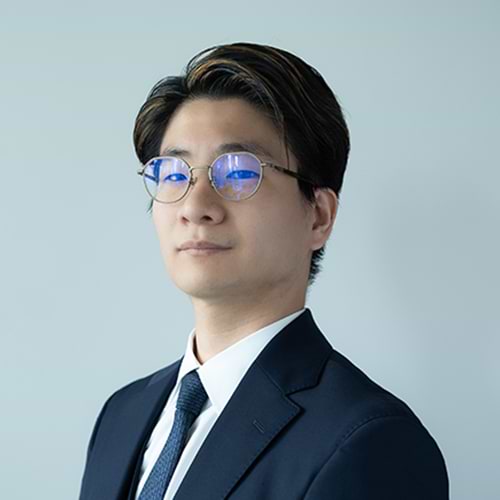
Yuki Takatsudo
Dentsu Inc.
Connection Planning Department
Integrated Marketing Planner
Connection Planning Department, Integrated Marketing Planner. An integrated marketing planner who executes a wide range of activities—from strategy formulation to planning individual initiatives, PDCA framework development, and data analysis direction—across diverse fields spanning mass media to digital marketing, with a focus on media planning. Has experience on secondment at Dentsu Digital Inc., capable of planning both branding and direct campaigns. Recipient of advertising awards including the PR AWARD and AD FEST.

 Turn Your Passion into Power—Starting "BUKATSU"! [5/7]