Interview video discussing the initiatives of both companies
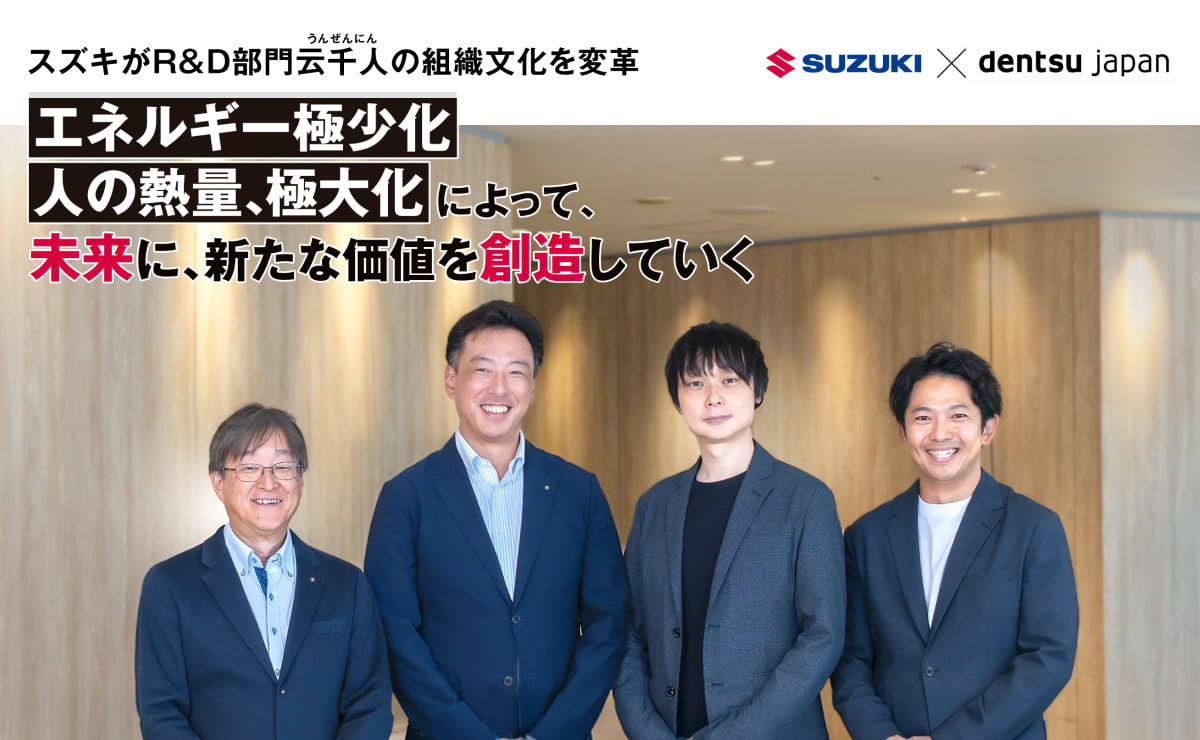
Many Japanese companies face challenges related to "organizational culture" and "human resource development." This concern is particularly acute in the manufacturing sector, where the passion of frontline workers directly impacts product quality.Suzuki’s R&D division was facing precisely this barrier. Seeking a breakthrough, the company launched the “Suzuki Future R&D Project” in collaboration with Dentsu Inc. and DENTSU SOKEN INC. They are tackling the transformation of organizational culture to draw out the passion and value of each individual employee. Four key figures leading the project discussed the background and progress of their efforts.
Researching and Developing the Future Itself with Great Passion
Yamahara: One of the issues I’m frequently consulted on by many executives is the challenge of transforming corporate culture. In the manufacturing sector in particular, there are quite a few executives who feel a sense of urgency, believing that “in order to create new value—whether in products, services, or business ventures—the corporate culture and the people must change first.”
Kato: Suzuki’s R&D division faced the same challenge. When I returned to the Design and Development Department as Head of Technology in April 2023, the designers seemed to have lost some of their confidence. Development work is inherently a series of challenges, and failure is inevitable. Despite this, an atmosphere of excessive fear of failure had taken hold. I felt we had to do something about this.
Yamahara: I clearly remember when I first met you in September 2023, and how candidly you shared those thoughts with me. What kind of organization was the R&D department?
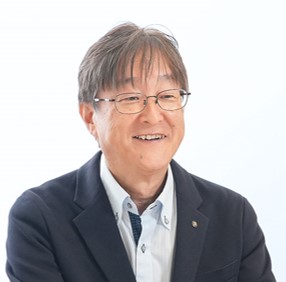
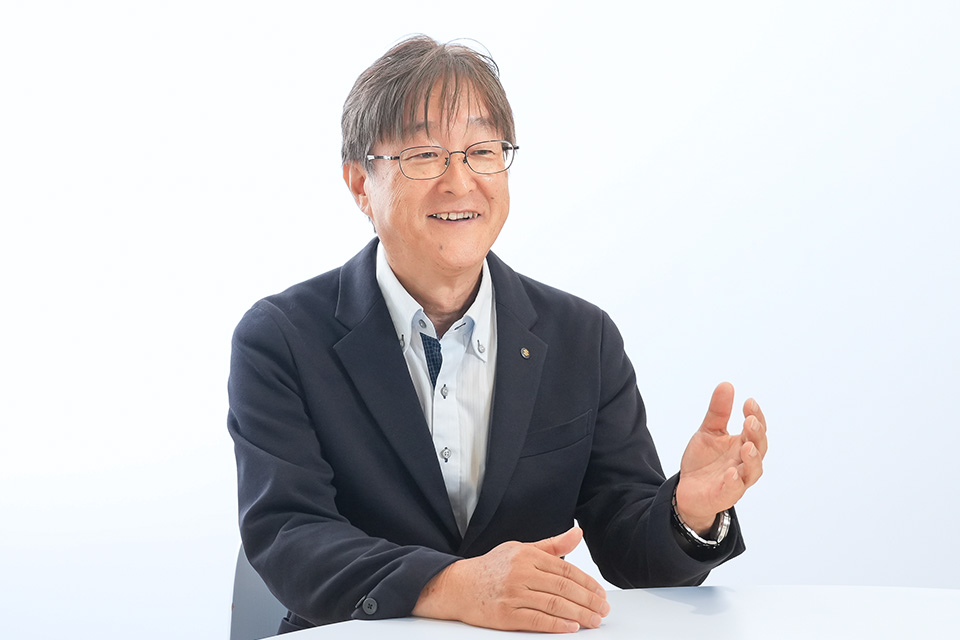
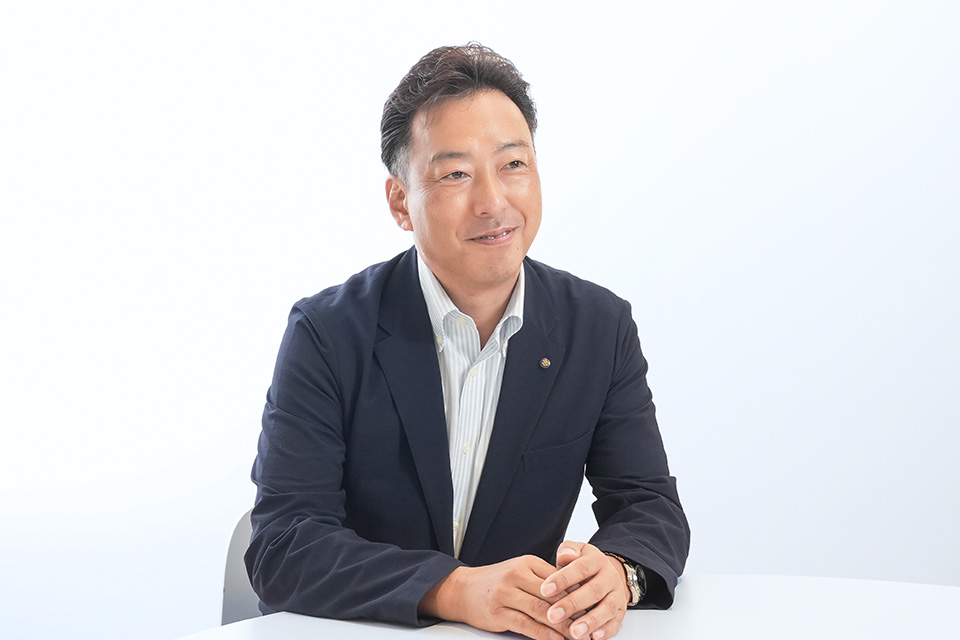
Katsuhiro Kato, Executive Vice President and Head of Technology, Suzuki
Kato: For me, having joined Suzuki because I loved motorcycles and cars, the work of developing engines—the very heart of those vehicles—was incredibly rewarding. Looking around, everyone was completely absorbed in their work, and I believe the design and development department at that time was brimming with energy.
Since then, thanks to everyone’s support, Suzuki has continued to grow, and the company has expanded rapidly. Consequently, I can’t deny that there’s a sense that individual autonomy and the speed of decision-making have been compromised. Additionally, in our case, there were issues requiring a review of inspection processes from the past, and I believe that an excessively high level of compliance awareness—in a positive sense—was also a contributing factor.Of course, compliance is the most important thing for a company, but if that leads to the loss of our free-spirited corporate culture and our spirit of challenge, it defeats the whole purpose. We need to clearly distinguish between what must be preserved and what needs to be changed.
Yamahara: In fact, according to external survey data, Suzuki scores higher than other companies in terms of the growth environment for young employees, and also has a high score for legal compliance. On the other hand, I felt there were challenges regarding mutual respect and connections among employees, as well as the openness of communication within the company.
Kato: Even young engineers who joined the company with passion eventually find their work becoming “just a job” and lose sight of its “rewarding nature.” I went through the same experience when I was young, so I understand it well. That’s precisely why I wanted to do something about it and consulted with Dentsu Inc.
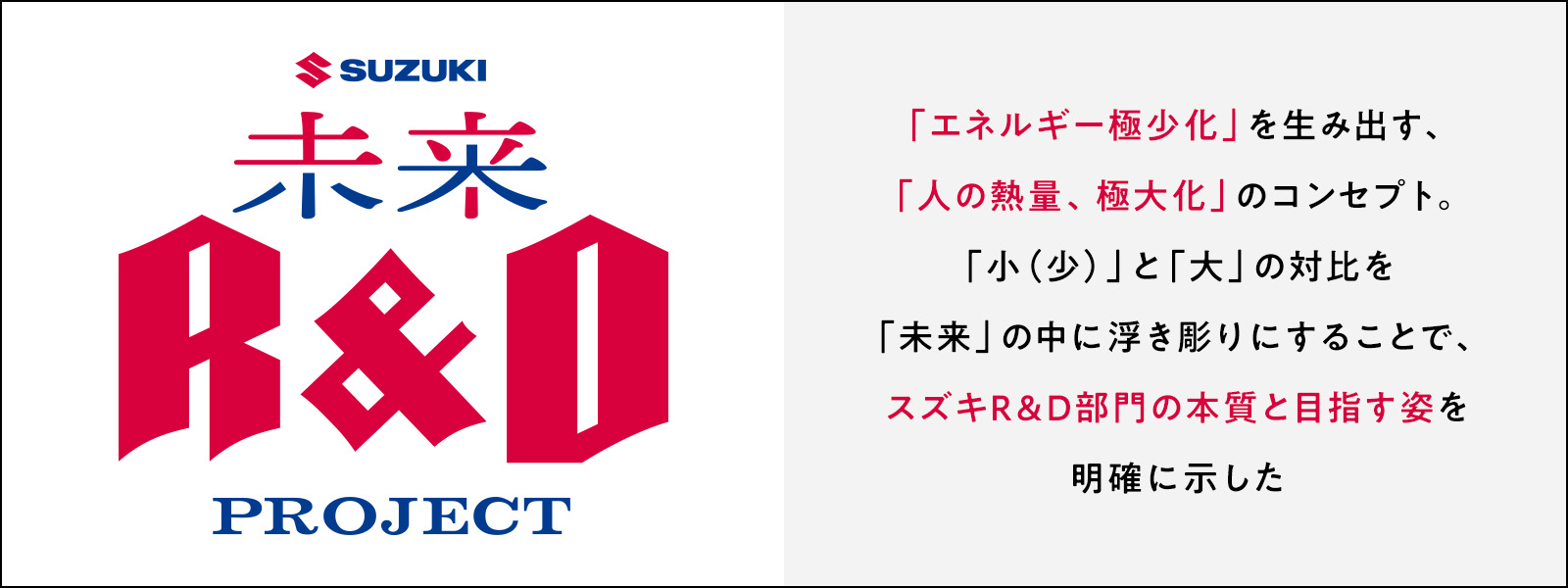
Yamahara: Thank you. In response to your consultation, we proposed the “Suzuki Future R&D Project” in 2024. This project aims to transform the R&D department’s mindset, behavior, and habits to realize Suzuki’s technological strategy of “minimizing energy consumption,” and to evolve into an organizational culture where new challenges and value continue to emerge. The name embodies the meaning of “conducting R&D on the future itself” through manufacturing.
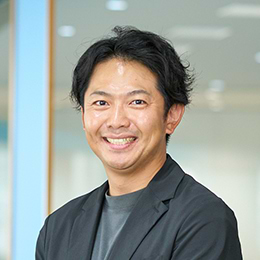
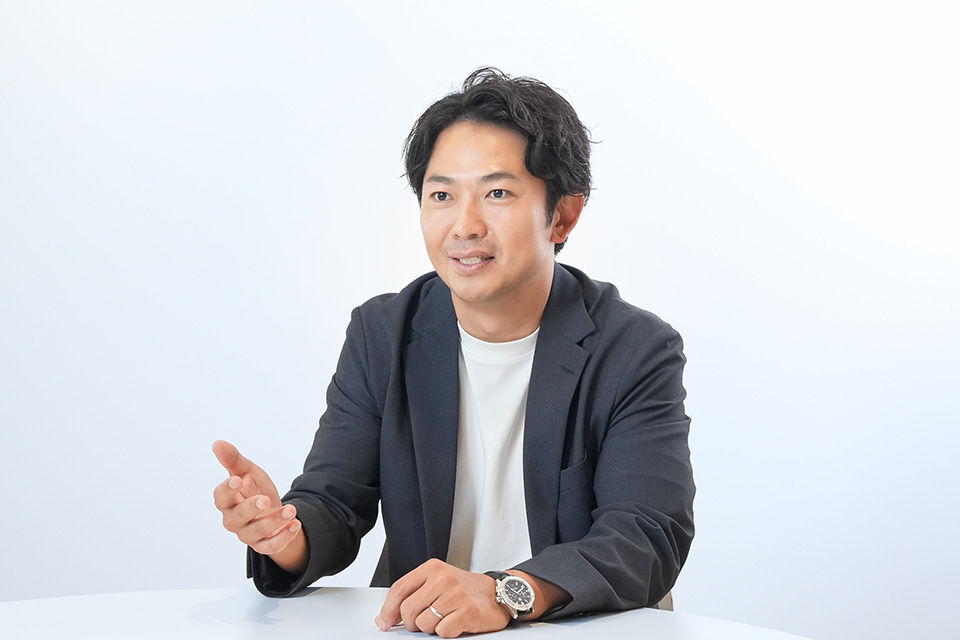
Shin’go Yamahara, Director, Business Transformation Division 2, Dentsu Inc.
Yamahara: To kick off the project, we conducted one-on-one interviews with approximately 50 division heads and department heads within the company, as well as sessions with section chiefs and team leaders, to thoroughly discuss challenges and ideas for the future.
We analyzed all the feedback that emerged and ultimately consolidated it into 12 major clusters of challenges, but at that stage, they were really just “a set of challenges that any company might face.”
Fujimoto: When we first reported and discussed this with Mr. Kato and Mr. Kadono, their initial reaction was that it was “pretty much what they expected.” Based on that, we moved on to deeper, more concrete discussions, such as “symbolic episodes that represent Suzuki’s culture” and “the specific reasons why Suzuki’s culture developed that way.”
Yamahara: This is something that often happens in corporate culture projects: when you summarize challenges based on interviews, they tend to boil down to general issues that you’ve heard about at any company. However, when you dig deeper into the reasons behind those challenges, the true challenges unique to that company begin to emerge. The extent to which we can uncover the various barriers—the “invisible walls”—that have become second nature to employees is crucial for the substance of the subsequent project.
In Suzuki’s case, the company has historically valued “creating great value within a small organization.” However, as the company has grown in size, there has been an increase in situations where these inherent strengths cannot be fully realized.
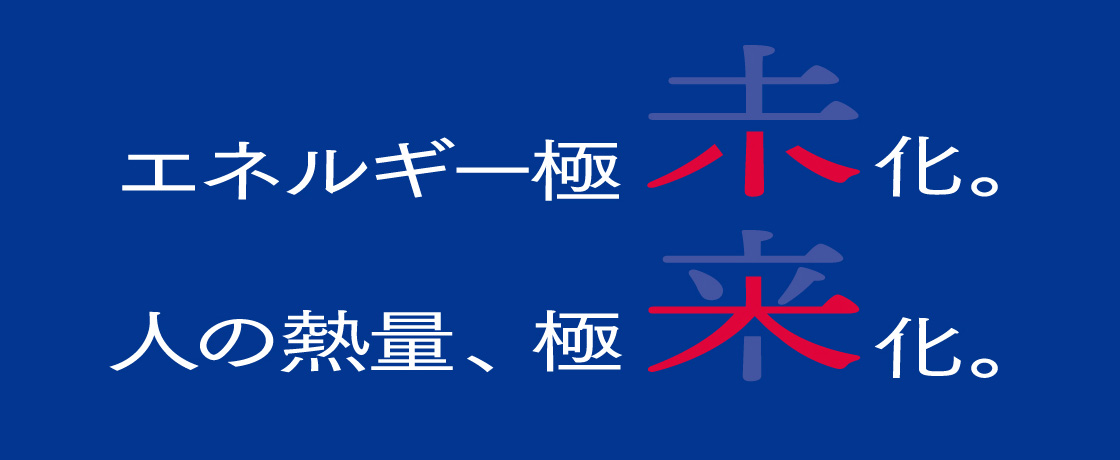
Now, the company is evolving into an agile, lean organization where people work closely together—even on a large scale—to create even greater value for society. We incorporated this “small and large” motif into the concept of “Minimizing energy consumption. Maximizing human passion,” as well as into the development of the logo.
Core Concept of the Future R&D Project
Kakuno: I joined the project immediately after returning from my posting in India, and I was truly struck by its content. The concept that overlays Suzuki’s development spirit of “minimizing energy” with “maximizing human passion,” and the logo that incorporates “small” and “large” within the character for “future”—these elements perfectly expressed the vision of what Suzuki should be and how we will build the future from here.
Kato: What’s amazing about Dentsu Inc. is their ability to skillfully extract the essence from casual conversations and anecdotes and put it into words. We were truly grateful that they were able to organize and articulate even the parts we couldn’t quite put into words ourselves.
It’s difficult for us to articulate tacit knowledge and corporate culture on our own. I think what was great about Dentsu Inc. was that, through their deep insight and thorough communication with many members—including our own employees—they were able to clearly identify the essence of our company.
Kakuno: The project name and logo aren’t just slogans; they’ve become the starting point for changing each individual’s mindset. I’ve come to realize firsthand that the creativity and communication strategies for capturing people’s hearts—cultivated in the advertising field—can also be leveraged for corporate culture transformation.
It’s not just about making changes. It’s about evolving what makes Suzuki unique.
Fujimoto: I believe corporate culture consists of things that “should be changed” and things that “must not be changed—things that must be preserved.” I think the latter can be called the company’s DNA. Please tell us about the corporate culture Suzuki has cultivated.
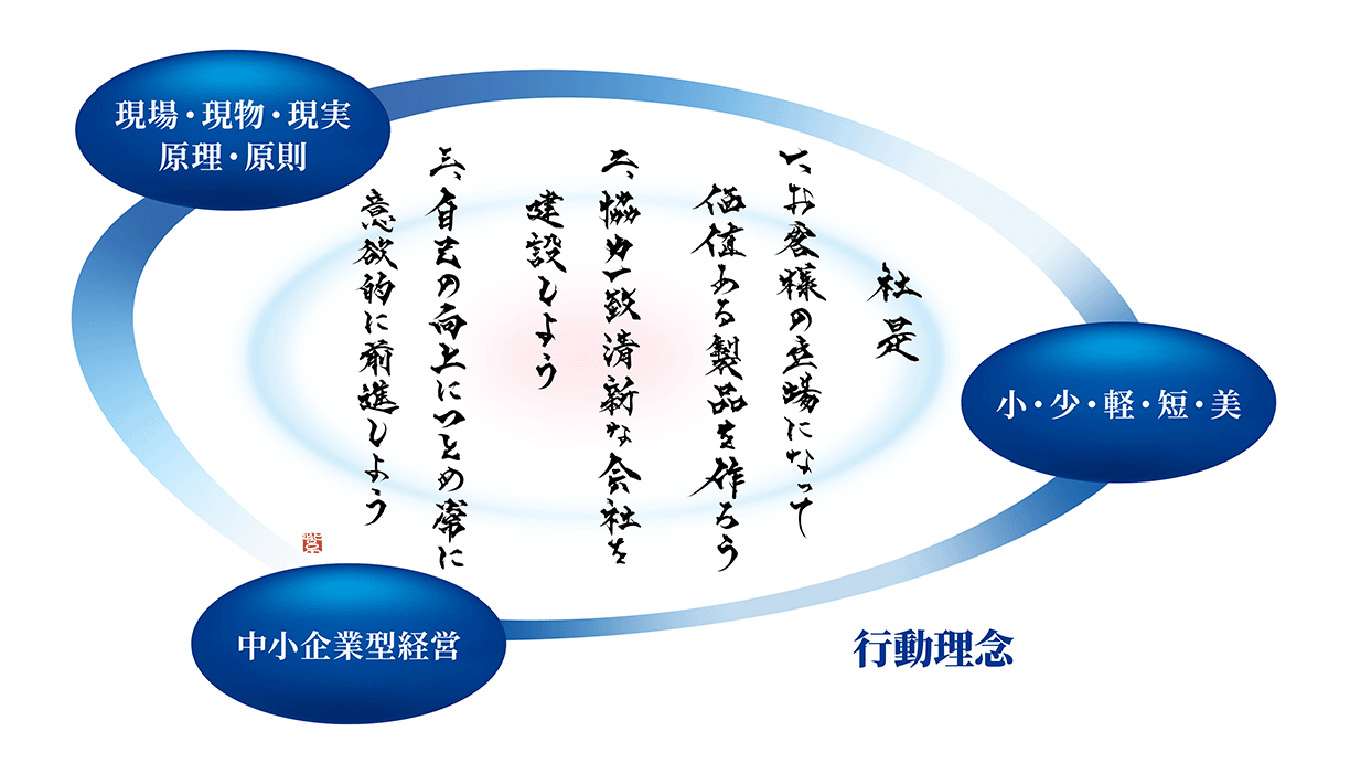
Suzuki’s Corporate Creed and Code of Conduct
Kato: We must reflect on Suzuki’s core values and steadfastly preserve and nurture them. This means nothing less than mastering “Small, Few, Light, Short, and Beautiful*.” This development philosophy embodies the founding principle of providing only what is necessary, in a refined form—without excessive ornamentation or superfluous features.
*“Small, Few, Light, Short, Beautiful” represents the spirit of efficient, high-quality manufacturing and serves as the foundation of Suzuki.
Fujimoto: What we have prioritized in this project is how to achieve transformation rooted in “the Suzuki way.”
Yamahara: Naturally, you two know best about “the essence” and corporate culture. But from an outside perspective, it is precisely within the things Suzuki takes for granted that great value lies hidden. We believe our raison d’être is to uncover that value from the nuances of your words and behaviors, and translate it into language and systems.
Kato: Your approach to uncovering these elements is sharp, and your expression of them is excellent. Dentsu Inc. has provided us with many insights that really made us sit up and take notice.
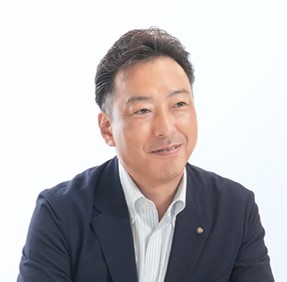
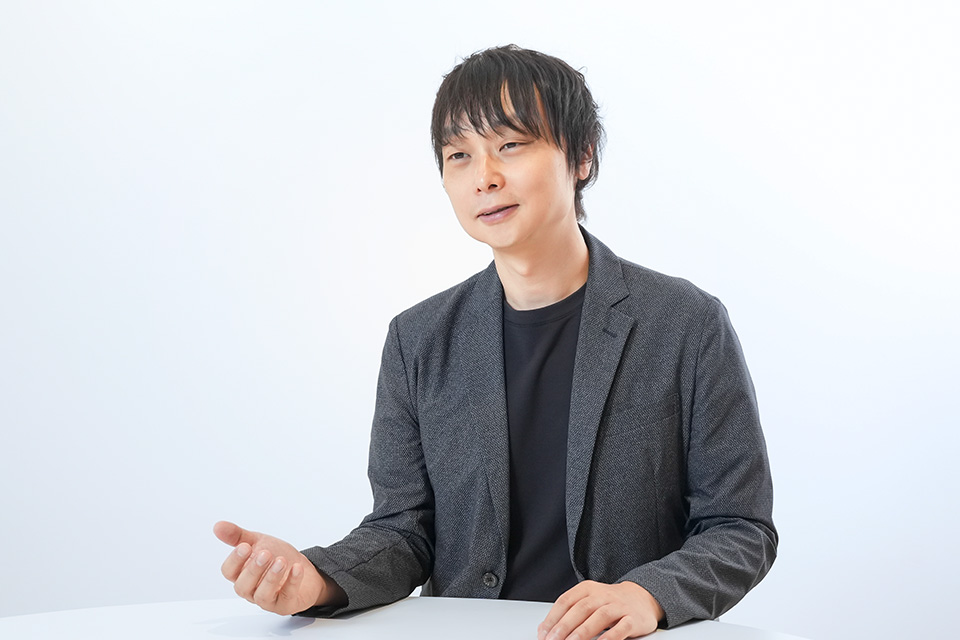
Taku Kakuno, Managing Executive Officer and Head of the Technology Strategy Division, Suzuki
Kakuno: Suzuki’s corporate slogan is “By Your Side.” We believe it is essential to return to the fundamentals of development in order to stay close to our customers and deliver the value they truly need.
Kato: The importance of returning to our roots applies not only to the development front lines but also to organizational development. The goal of the “Suzuki Future R&D Project” is to create an environment that ignites engineers’ passion and maximizes the use of that energy in manufacturing. As a first step toward this, we are implementing a “report card” system to visualize the value of our engineers. By clarifying each individual’s strengths and goals, we hope to make their daily work more rewarding.
Fujimoto: When the value created by individuals is made visible and their intrinsic motivation is drawn out, the perspective on manufacturing shifts toward the customer and society, and the range of ideas expands. By combining the values of these engineers, a value-creating organization is born. As the organization changes, the value of our human resources also increases further. The aim of the “Suzuki Future R&D Project” is to further accelerate this virtuous cycle.
Kakuno: As our perspective broadens, the sense of accomplishment gained through challenges becomes deeper and more significant. I personally have high hopes that if this impact spreads across various areas and creates a chain reaction, it will spark an extraordinary chemical reaction.
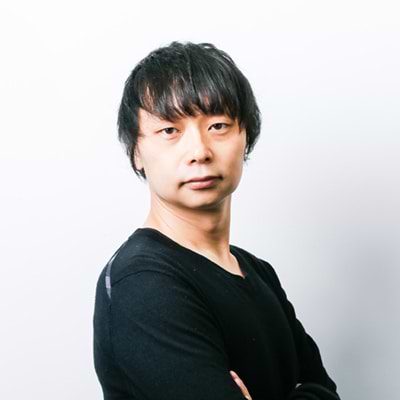
Shinichiro Fujimoto, Senior Business Producer, Dentsu Inc. Business Transformation Division
Creating mechanisms to boost organizational energy and internal initiatives to encourage challenges
Fujimoto: It’s been about a year and a half since the “Suzuki Future R&D Project” was launched. What kinds of initiatives have emerged within the company, and what changes have taken place?
Kakuno: First, we selected a core group of about 10 people to drive the project internally. What we discovered then was that there were quite a few employees who wanted to “make the company better.” Signs of transformation were already there. We started by working with them to create posters and brainstorm ideas for initiatives, and we’ve launched several projects.
Kato: While we have a team that is serious about transforming the organization, this initiative is still in its early stages. Changing corporate culture takes time. Even so, I feel that a positive shift is steadily beginning to take hold.
Fujimoto: Through repeated discussions with Mr. Kato, Mr. Kadono, and the 10 core members, we explored ways to build mechanisms that would boost employee enthusiasm and revitalize the company.
We discussed strategies and tactics for various organizational culture transformation initiatives—such as “What activities boost organizational engagement?” and “What specific actions can foster mutual respect among employees and strengthen vertical and horizontal connections?”—and worked together to formulate concrete action plans.
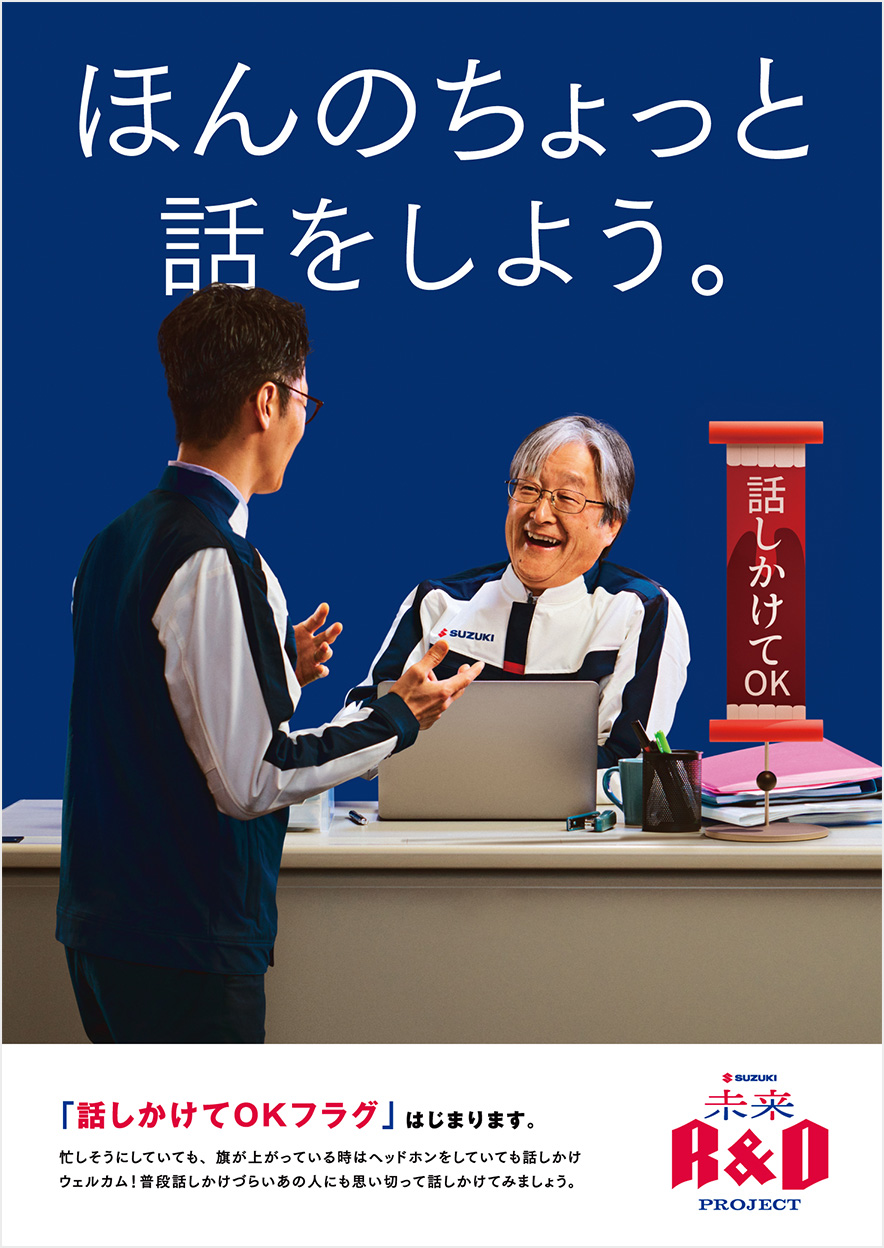
Kakuno: There are various internal organizational culture transformation initiatives we created together with Dentsu Inc., and one example is the adoption of the “It’s OK to Talk” flag and “Internal Office Hours.” We launched these to enhance communication between supervisors and subordinates and foster interaction across different departments. While they may seem like small actions, many employees visit every time, and we can see that the atmosphere has started to change.What matters isn’t what is discussed there, but creating an atmosphere where people feel they “can talk about anything.” To achieve this, it’s crucial for us to take the lead in demonstrating a welcoming attitude.
I believe that Suzuki’s true strength lies in the closeness of our relationships. As reflected in our corporate motto, “Cooperation and Unity,” we have a deeply rooted culture where people naturally collaborate across departments and positions. However, in recent years, I’ve noticed a tendency to hesitate in taking on new challenges out of fear of risk, and I felt we were losing that authentic Suzuki spirit.
One of our internal organizational culture transformation initiatives: poster creation
Kato: “I’m afraid of getting scolded” or “I don’t want to fail”—those were the kinds of thoughts people used to have. As a result, a trend of avoiding challenges and quietly letting things slide had become prevalent. We cannot demonstrate the true essence of Suzuki this way.
Fujimoto: The R&D team members also mentioned that by strengthening both vertical and horizontal connections, we can not only improve operational efficiency but also more easily lead to new discoveries and the creation of value, didn’t they?
Kato: Of course, since we’re all human, there are bound to be likes and dislikes. But to thrive within an organization, we need to make an effort to find common ground. Sometimes, when you actually get closer to someone, you find you’re surprisingly compatible, and that can lead to new collaborative creations. I believe it’s our job to encourage that.
Kakuno: As a result of implementing these measures over time, I get the impression that there are more people smiling around the office lately. In meetings, there are more positive comments, and an atmosphere has emerged where people say, “That’s a great idea” or “Let’s give it a try.”
Yamahara: I’ve always believed that creativity is unlikely to emerge in an organization that lacks psychological safety. It takes far more courage to voice creative ideas than to simply state the obvious. That’s precisely why a sense of security must exist within the team. With that foundation in place, anyone can feel confident sharing unique opinions and ideas, and I believe that when these ideas connect, they generate even greater value.
Fujimoto: Finally, could you share your thoughts on this initiative and a message for our readers?
Kato: A company is built by people. No matter the era, a company where people work with a sense of purpose is ultimately strong. To transform into such an organization, management must first change their mindset—it’s not enough to simply place expectations on the front lines. I believe that when top leadership takes the lead and takes action, employees and the organization will gradually change.
Kakuno: Even among the core members, there are many employees who have been driven by Mr. Kato’s “genuine commitment.” The top leadership’s sincerity truly comes through. He is proactively reaching out to various people, listening to their challenges, and beginning to implement concrete measures. He is seriously committed to both “manufacturing” and “developing people.” That spirit is starting to spread among the employees. I believe that extending this throughout the entire organization will lead to the next wave of value creation unique to Suzuki.
Yamahara: I believe these initiatives under the “Suzuki Future R&D Project” will surely resonate deeply with and offer new insights to executives who are driving corporate cultural transformation.
Managing Executive Officer, Head of Technology Strategy Division
Shingo Yamahara
Dentsu Inc.
Director of Business Transformation Division 2
Provides advisory services across the Business Transformation (BX) domain, including formulating mid-term management strategies, developing and executing corporate transformation plans, and supporting new business creation for corporate executives. Assumed current position in January 2024.
After 9 years in the media sector and 6 years in sales, currently engaged in producing and consulting for corporate business transformation. Primarily involved in new business development and DX support for large-scale clients, branding support, organizational culture transformation support, and talent development support. Currently leading business development for AI marketing transformation support at dentsu Japan.