Note: This website was automatically translated, so some terms or nuances may not be completely accurate.
 NRF 2026: The Latest & Cutting-Edge Report on the Retail and Commerce Sectors [2/2]
“Sporting Marketing” ~ Retail & Commerce Are Moving Toward “Marketing That Excites” (Part 2)
In Part 1, we compared the business models and retail media strategies of two leading U.S. sports retailers: the brick-and-mortar-focused “Dick’s” and the online-focused “Fanatics.”In this article, I will delve deeper into the topic. Drawing on a wide range of other keynotes and sessions from NRF 2026, I aim to explore the retail paradigm shift in the post-COVID and AI-driven era, outline the outlook for the next quarter-century, and derive new perspectives and viewpoints for Japanese retail marketing.
Latest Global Trends in Retail Media
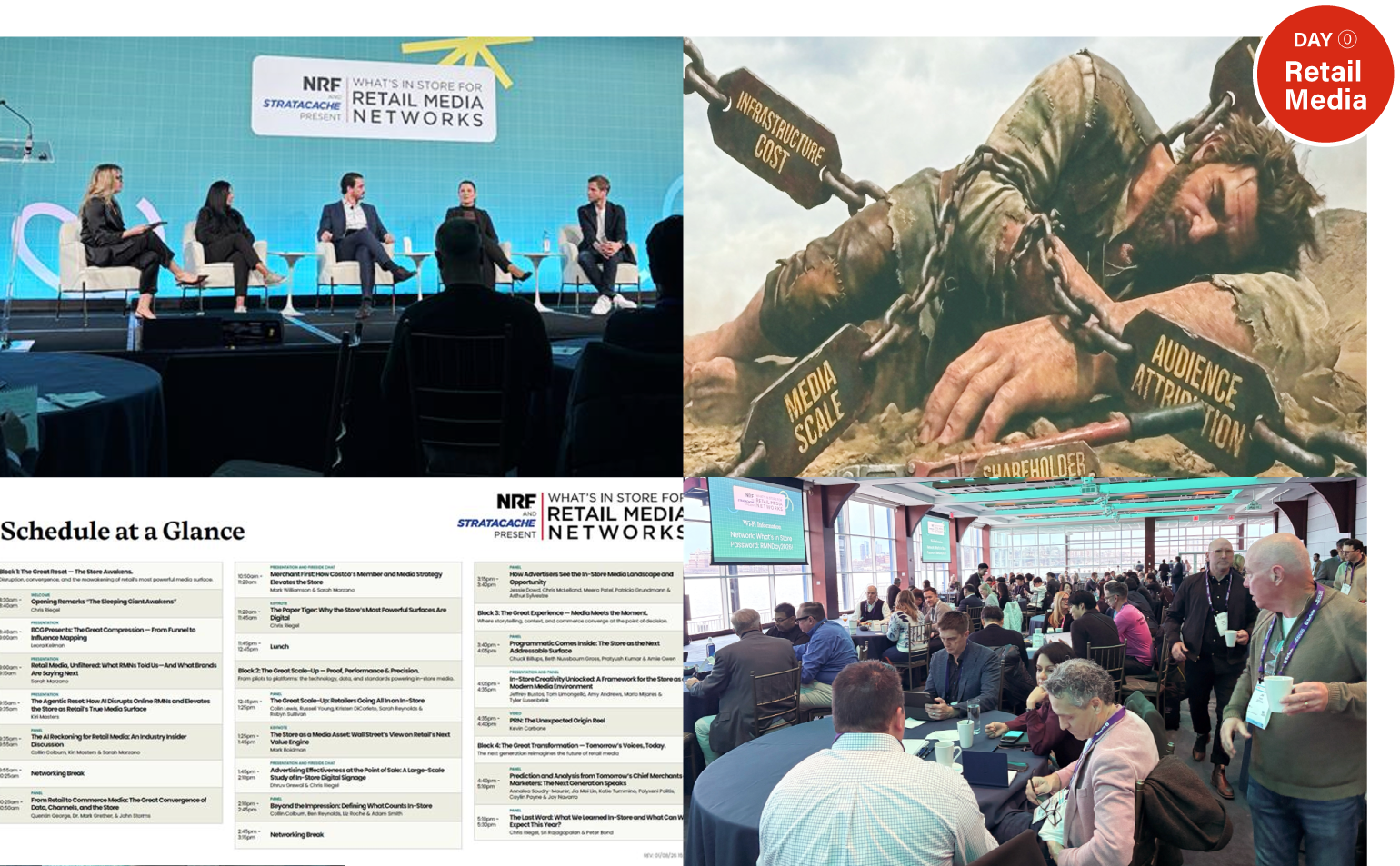
In recent years, NRF has held a closed-door session dedicated to retail media on "Day 0," the day before the main event.This year, project members from Dentsu Retail Marketing Inc.—established in January 2026—attended. A diverse range of companies also participated, including retailers, manufacturers, e-commerce players, broadcasters, consulting firms, system integrators, and retail tech startups. Notably, there were many Japanese participants, reflecting the high level of interest in this field.
The main topic of discussion was the oligopoly in the U.S. online retail media market, where Amazon was noted to account for 80% of the market.The discussion also centered on the potential of offline (i.e., in-store) retail media as a counterbalance to this dominance. This is perhaps because, in the post-COVID era where there are no restrictions on visiting stores, and because marketing activities utilizing technology and digital tools in physical stores—which were previously difficult to implement—will become easier than ever in the “with AI” era.
Given these circumstances, it was striking to note that while U.S. speakers referred to this as a “sleeping giant” and suggested that practical business applications are still in their infancy, participants from Europe and Japan frequently expressed the view that their own countries are more advanced in this area and that they would have liked to see more in-depth discussion.
However, regardless of their respective perspectives, there was undoubtedly a consensus among everyone present that “moving forward, we must integrate in-store retail media with the more established online retail media and consider them holistically; otherwise, monetization as a client business will be uncertain. The establishment of measurement methods and common, unified metrics is still in its early stages.”
Furthermore, in my own work within this field, I often discuss with my team the social and cultural peculiarities of the APAC retail environment—such as the diverse range of business formats, the broad spectrum of products handled, and the high density of information within stores that are relatively small compared to those in Europe and the U.S.—which symbolize the complexity of retail media strategies there. I often refer to this as “Physical (Store) is difficult.”Personally, I believe that in order to “establish” and “expand” the retail media business in the Japanese market, we need to consider three additional “perspectives” in addition to the points mentioned above.
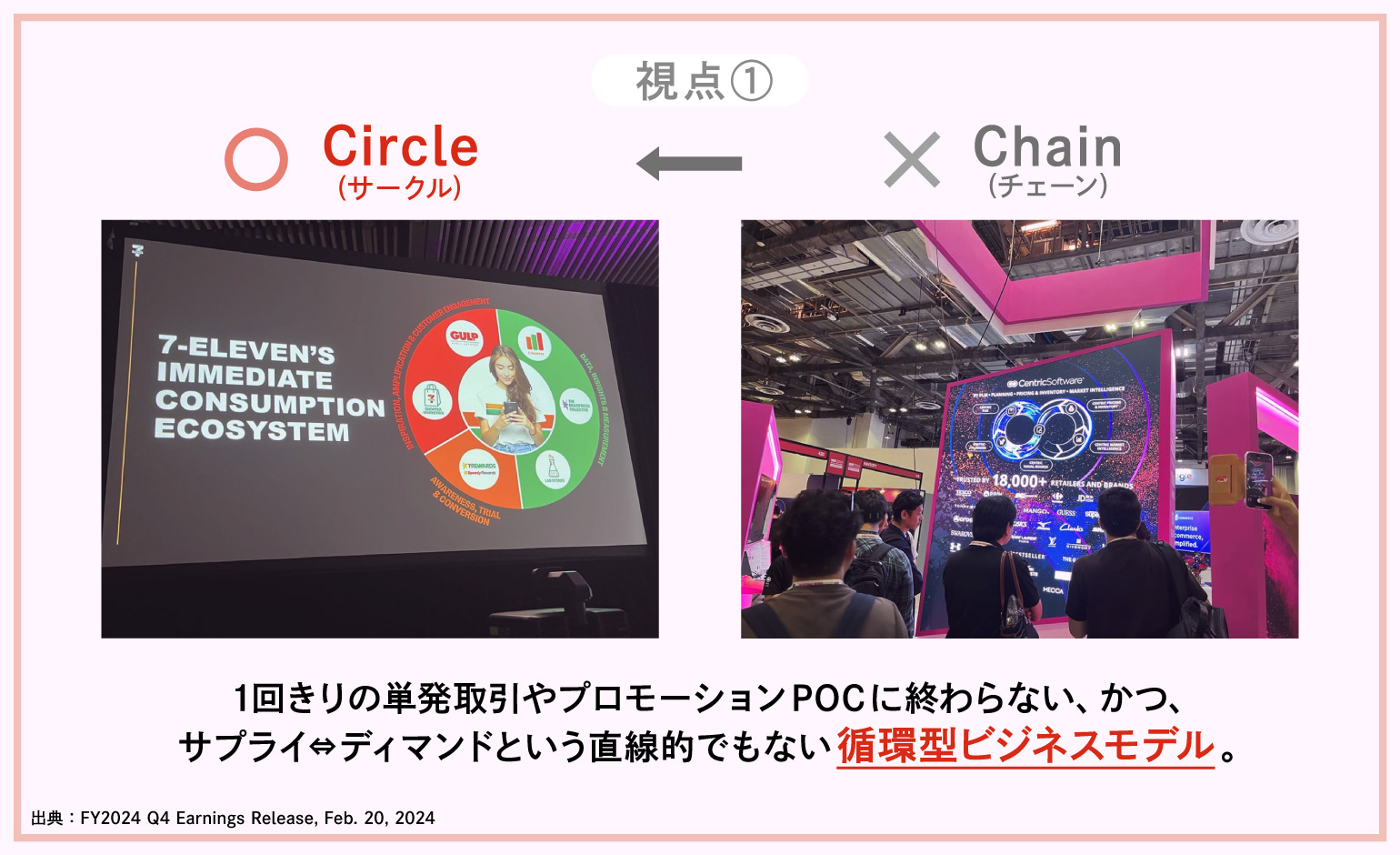
Traditionally, marketing has generally relied on horizontal division of labor and linear business models that connect these functions. However, looking at presentation materials and exhibition content, am I the only one who feels that such displays have become less common in recent years? In terms of customer relationships, the shift is moving “from a value chain to a value circle,” and it goes without saying that the two companies introduced in Part 1 are the most straightforward examples of this.
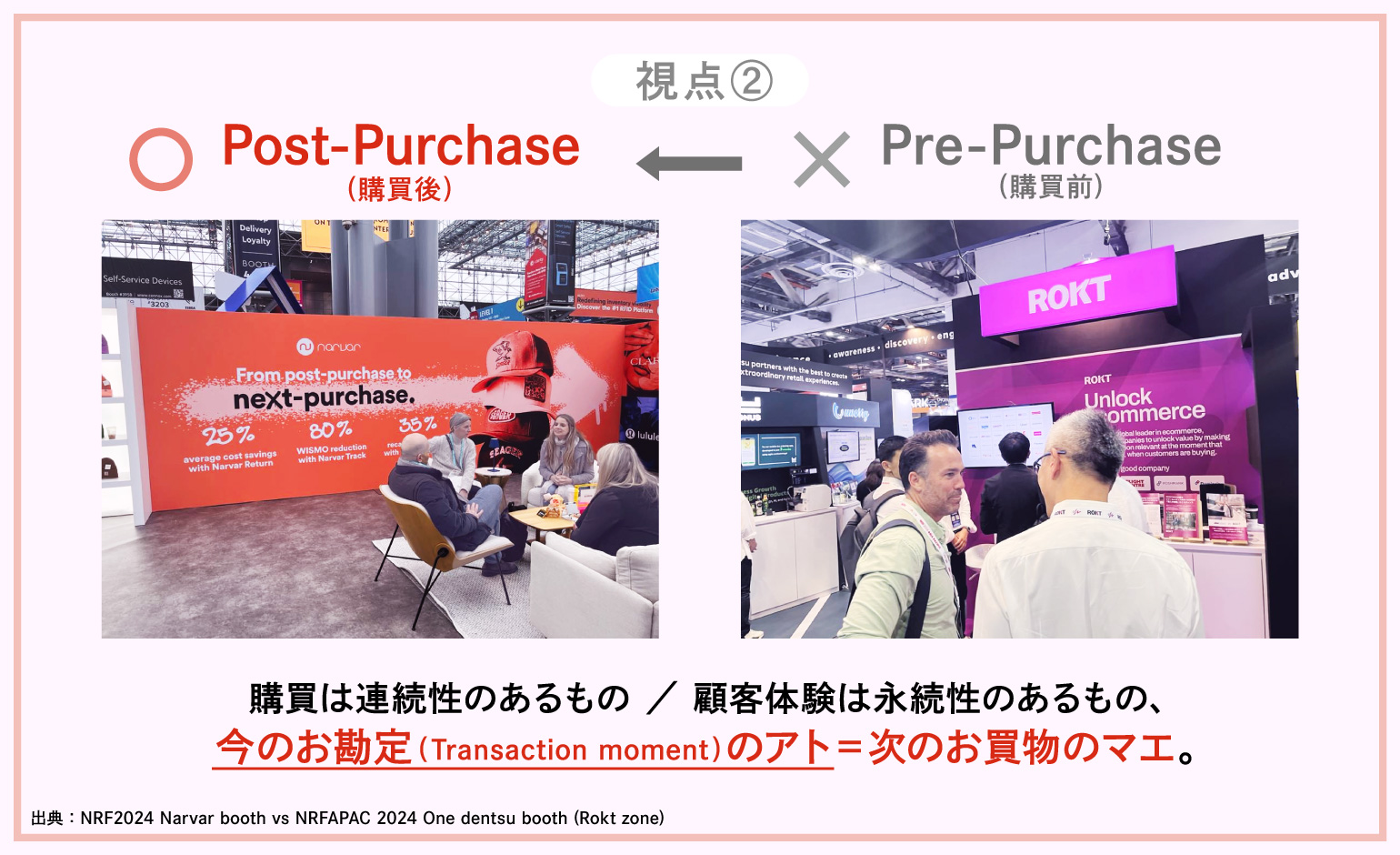
Recency theory, the Three-Hit Theory, Reach Max… Traditional advertising models and media planning have always aimed for the “before” on the timeline. This may sound like a Zen koan at first glance, but if we assume the continuity of the customer experience—as discussed in Part 1—it is crucial to understand that “post-purchase becomes before, and before becomes post-purchase.”
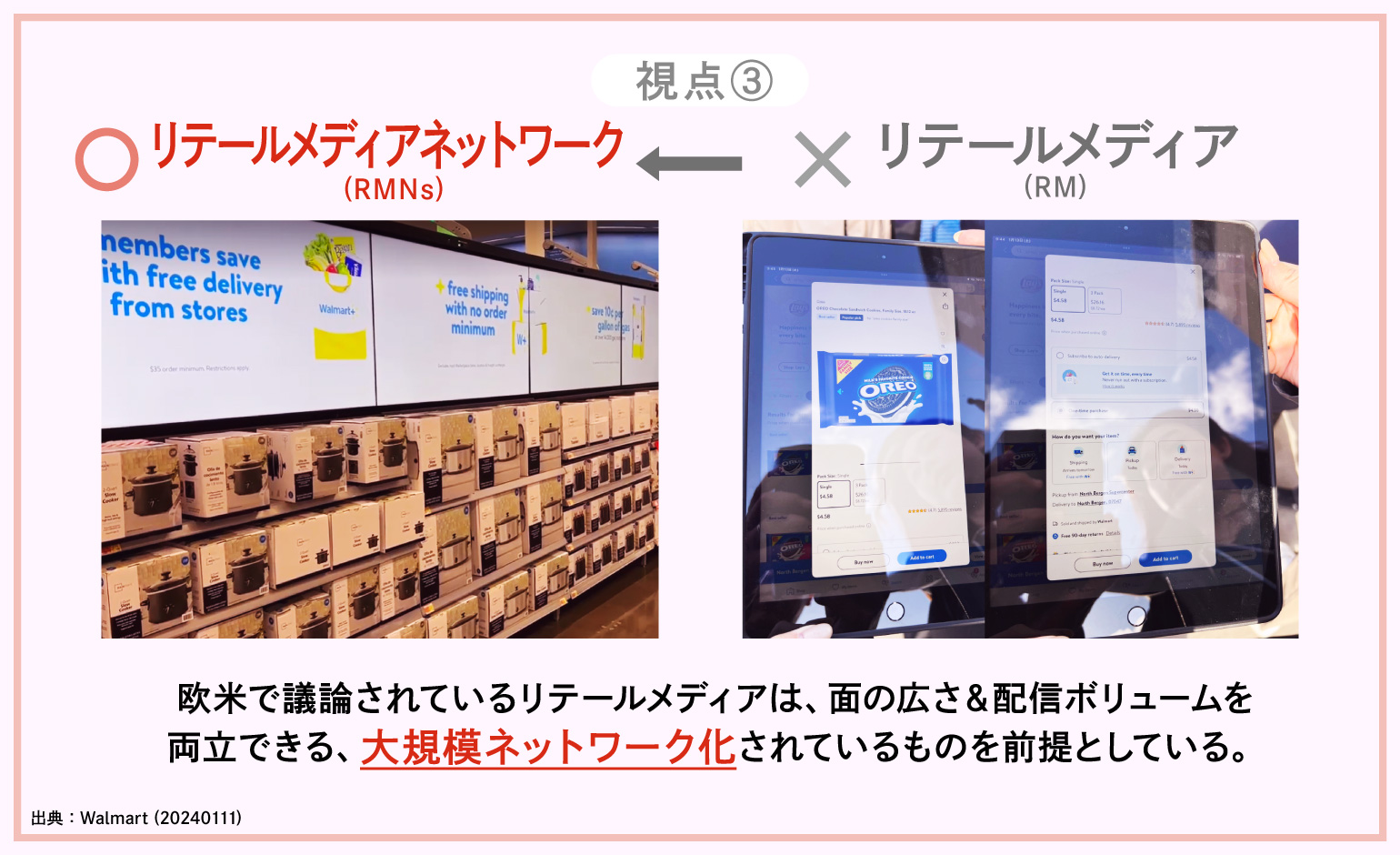
And finally, the point I want to emphasize most: stores with larger floor space than in Japan, in-store environments with limited visual clutter, fewer staff members per customer than in Japan, and high e-commerce penetration rates... The retail media (RM) in these foreign markets, built upon such retail and commerce environments, are “RMNs (Retail Media Networks).”As mentioned earlier, these networks not only bridge online and offline channels but also span multiple distribution channels, resulting in service offerings that major manufacturer clients can utilize in actual business operations—not just as proof-of-concepts.
I intend to launch these RMNs—not as mere proof-of-concepts or passing fads, but with a firm commitment to societal implementation—as the “sixth medium” following the four major media outlets and digital advertising, while thoroughly incorporating Japan’s unique “perspective.”Japan’s diverse range of retail formats, the sheer number of SKUs per store, and the high level of customer service provided by store staff—I believe that the sum of all these elements constitutes the CX of Japan’s retail industry, or rather, the world-renowned “omotenashi” hospitality. “Physical is difficult”—precisely because of this, I firmly believe that once RMNs are established in Japan, this business model will undoubtedly prove highly viable in overseas markets, starting with the APAC region.
Now, I’ve gone on a bit about retail media—or rather, RMNs. I’ve summarized my observations from fixed-point and time-series analyses covering the period from 2020 to 2025 in previous articles, so please refer to those. Moving forward, I’d like to introduce other notable topics from NRF 2026 through the four “perspectives” I’ve previously outlined in my articles.
NRF 2026 Topics from Four "Perspectives"
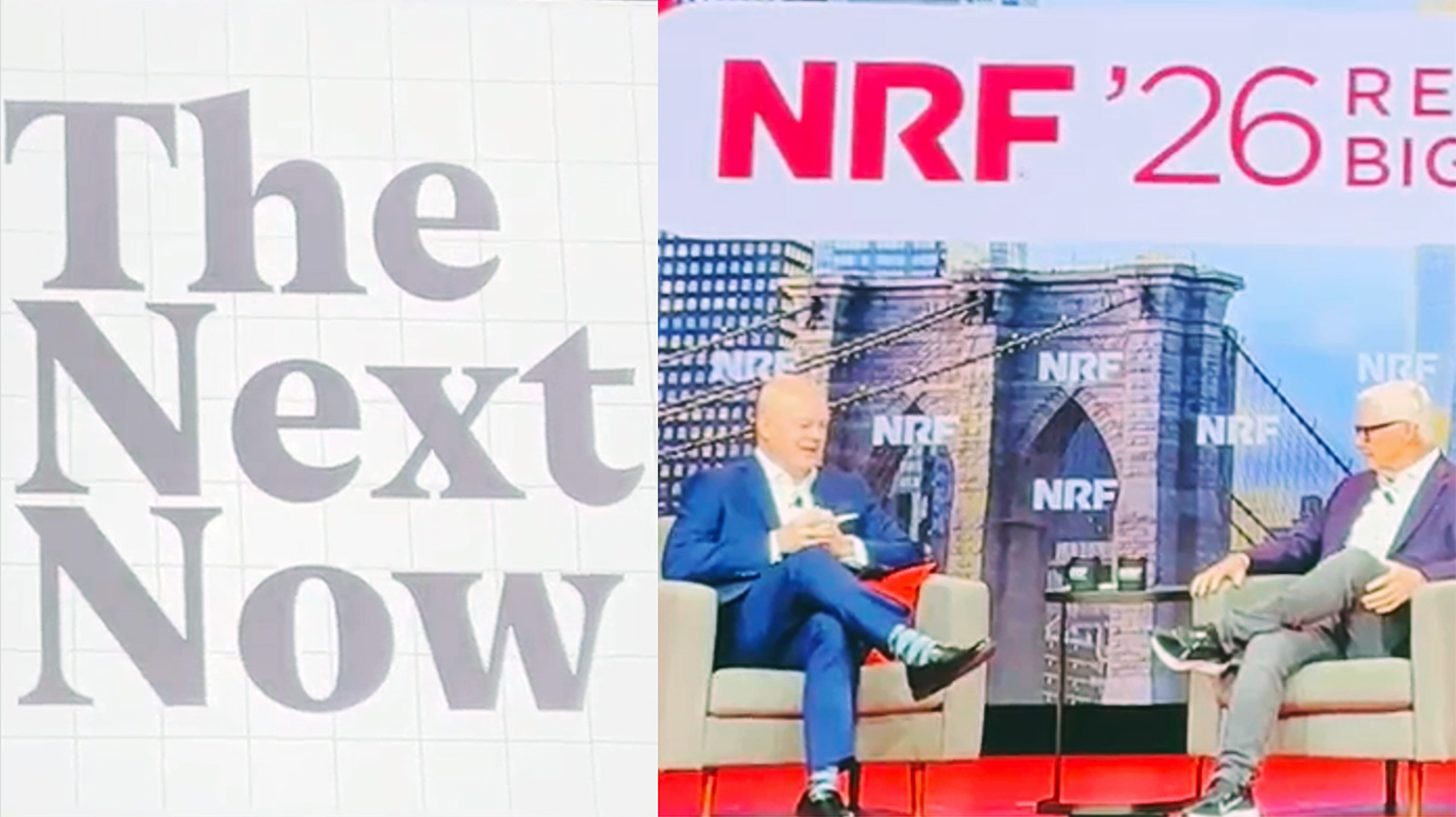
① Agenda: The Next Now
In 2026, we are witnessing a paradigm shift in the retail and commerce sectors through the societal implementation of Agentic AI, from both the business and customer perspectives (Not new, but now). We must spare no expense in investing in AI and strive to create Human-Centric CX to provide people with genuine peace of mind and value, especially during challenging times.
② Transformation: Physical AI & Robotics AI
While we expected the momentum from CES to carry over directly to NRF, accelerating the technological shift from Agentic AI to Physical AI, the exhibits at the Expo were limited to a humanoid robot at the Verizon booth. This highlights that there are still many areas in this field where we must focus on improving the Employee Experience (EX) as a “People Business.”
➂ Keyword: Agentic Commerce (Three components announced by Google)
1. From “Search” to “Do”: Evolving into an entity that “completes tasks (such as shopping)” on the user’s behalf.
2. “UCP” (Universal Commerce Protocol): An open API that transcends the retail sector to handle payments and inventory checks on the user’s behalf.
3. “Native Checkout”: Search for products on Gemini → Purchase products from participating companies without leaving the site.
④ Structure: Shift in Focus from Amazon to Google
The contrast between Amazon (plus Whole Foods) and Walmart, which had driven the post-COVID retail and commerce landscape, has shifted as AI (particularly Agentic AI) has advanced rapidly. This has led to Amazon replacing Google in this dynamic, while fostering a new atmosphere of harmony between the two companies. However, this shift will further elevate the relative importance of the three core values: Store, Brand, and People.
The impact of point ④ in particular is significant and has been featured in articles across various sectors. In the schematic diagram below, which I have been using in articles for several years, wouldn’t this represent a structural shift from the bottom right (Amazon + Whole Foods) to the left side (Google)?
That said, even if there are changes in the players, structure, and relationships within the retail and commerce environment, the components required to engage with customers in the “one ID” era remain unchanged. It goes without saying that AI will also enhance the relative value of these components. Looking back on the three-day keynote through the lens of ① Store, ② Brand, and ③ People, the highlights are as follows:
Keynote Highlights Viewed Through the Lens of ① Store, ② Brand, and ③ People
The scope of what AI can do is constantly expanding. Conversely, what is it that no AI can do?
It is the very nature of every “retail business model” itself—one in which the business side (employees and store staff) and the customer side (both first-time and regular customers) build a direct relationship as LTV, based on the three essential elements that cannot be replaced by AI: “Real (Time),” “Physical (Store),” and “Mutual (People).”And I believe this encompasses not only CVS, GMS, DGS, and department stores... but also restaurants, cafes and bars, hotels, airlines, and even theme parks.If we define “Retail Landscape 2026” as a departure from the traditional Japanese translation and concept of “retail” as merely the distribution and retail industry, then “retail media”—which has been treated as little more than a business buzzword—should also be updated to “RMNs” to align with this new landscape.
Online media, whose value has increased absolutely due to the serendipity of the COVID-19 pandemic. Offline media, whose value has increased relatively due to the inevitability of life post-pandemic. And looming on the horizon is RMNs (≠ Retail Media)—a higher-dimensional evolution achieved by the fusion of both through Agentic AI and Physical AI. With this definition, I would like to conclude my report on this year’s first NRF 2026.
Next time, I’ll bring you coverage of NRF APAC 2026. Stay tuned!
Was this article helpful?
Share this article


Newsletter registration is here
We select and publish important news every day
For inquiries about this article
Author

Hitoshi Kimura
Dentsu Inc.
Retail Marketing Division
Senior Producer
After joining Dentsu Inc., assigned to the Kansai Branch Marketing Bureau, engaged broadly in planning across marketing, media planning, account planning, and promotion/communication domains.From 2008 at the Tokyo headquarters, he served as account manager for financial clients (including megabanks), public sector accounts, and major telecommunications carriers. After handling digital and marketing projects for major domestic retailers from 2013, he currently leads BX/DX support for "Japanese retail distribution" as an expert in a BX-specialized department, delivering numerous presentations. He assumed his current position in January 2024.