Note: This website was automatically translated, so some terms or nuances may not be completely accurate.
 NRF 2026: The Latest & Cutting-Edge Report on the Retail and Commerce Sectors [1/2]
“Sporting Marketing” — Retail & Commerce Are Moving Toward “Marketing That Excites” (Part 1)
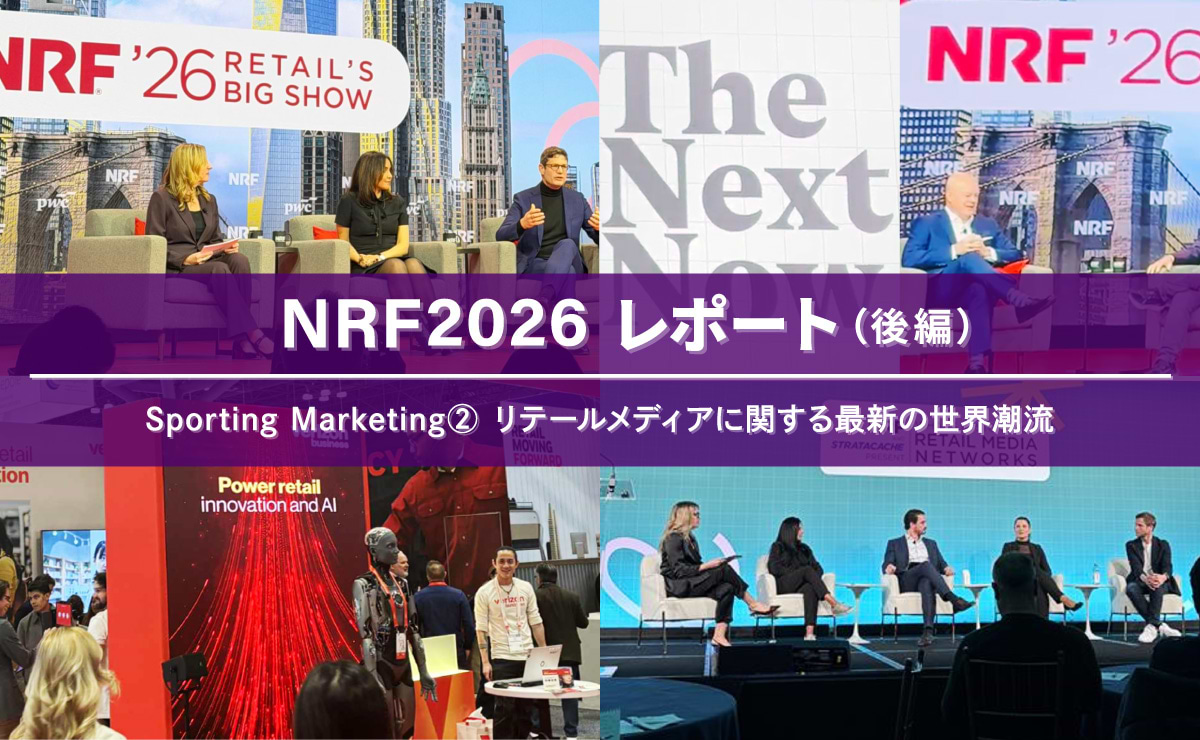
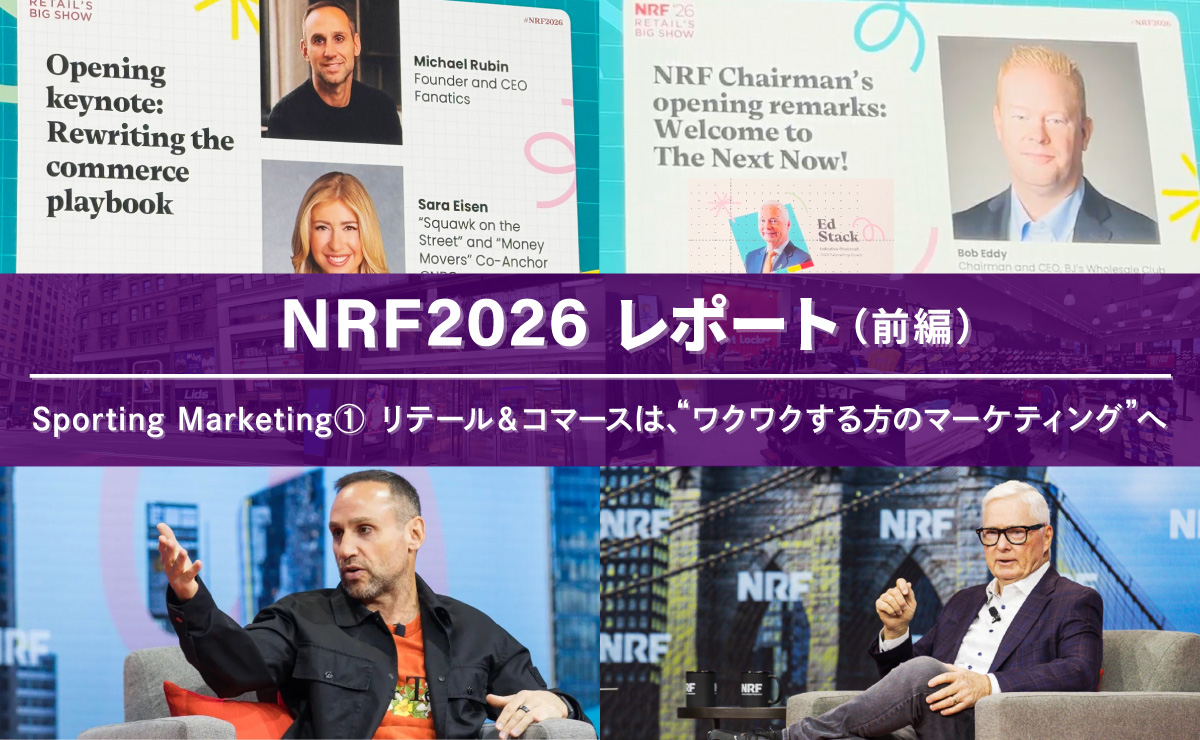
The first event of 2026 was “NRF 2026: Retail’s Big Show,” held in New York City.Held from January 11 to 13, this NRF event served as an opportunity to reaffirm the paradigm shift in retail in the post-COVID and AI-driven era. If asked about the most notable keynotes, nearly 100% of attendees would likely cite Google and Walmart.
I will save the discussion on the much-talked-about “Agentic Commerce” for the second part of this report. In this first part, I would like to introduce the opening keynotes from “DIK’S” and “Fanatics.”
This report, presented in two parts, is brought to you by Noriaki Kimura, who has attended the NRF more than 10 times since 2020 and supports BX and DX initiatives for the retail industry at Dentsu Inc.
Introduction
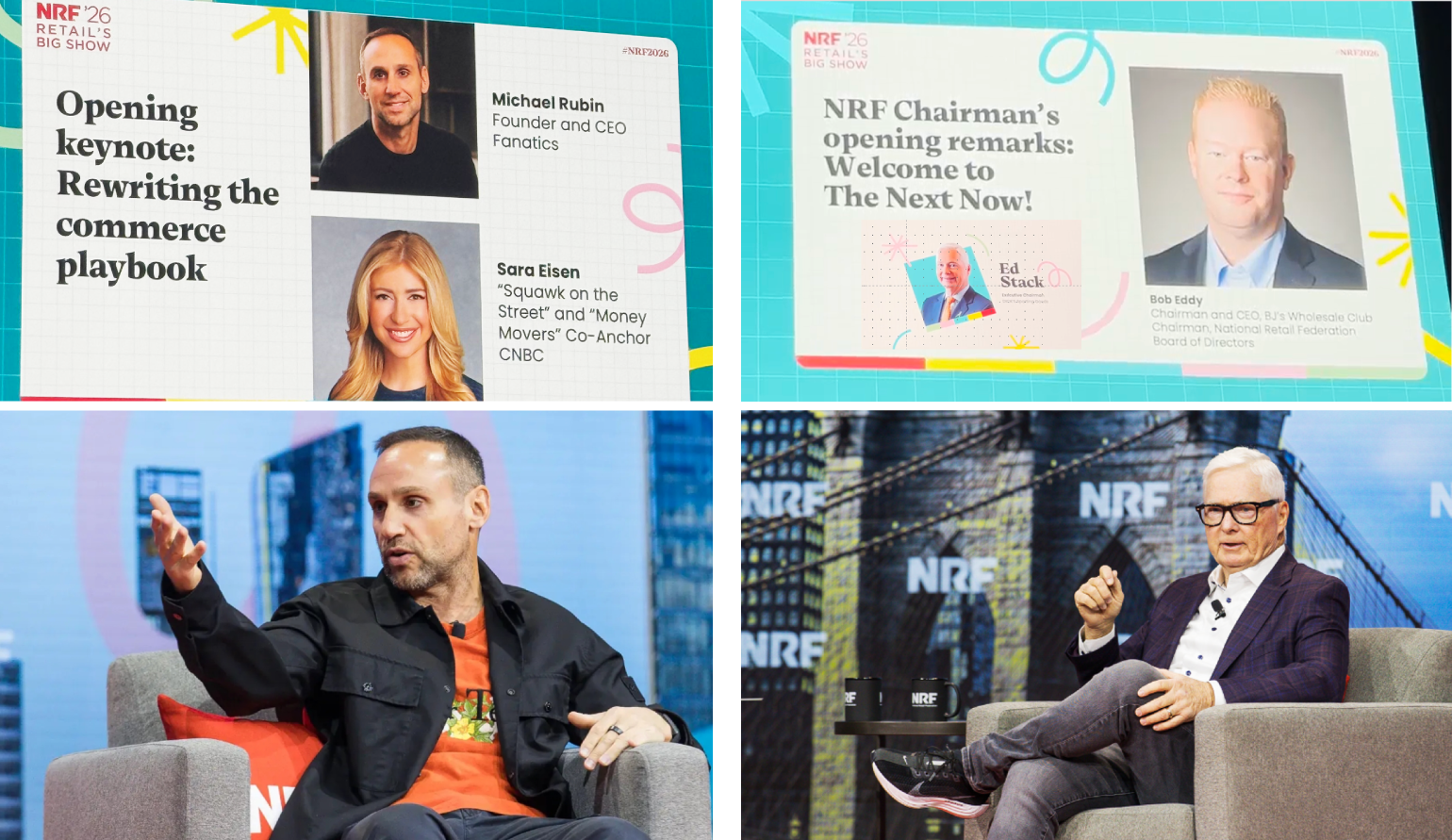
2026 is packed with major international sporting events, from the Milan-Cortina Winter Olympics to the WBC and the FIFA World Cup North and Central America in June. At NRF, the agenda was set with sports retailers featured on Day 1 of the opening session.As mentioned in a previous report, Ed Stack of Dicks, a long-established sports retail chain with over 70 years of history that was also named an MVP Retailer in 2024, has assumed the role of NRF’s new Executive Chairman this year.
Withstanding concerns from Wall Street investors during the COVID-19 pandemic, he opened the massive experiential flagship store, "House of Sport," and made it a resounding success. He is the man who has understood the paradigm shift in retail and commerce more clearly than anyone else, and who has proactively strengthened the three key elements—store, brand, and people— that we highlighted as crucial in our previous report.Dicks also made headlines by acquiring Foot Locker, the sneaker specialty chain that owns the sneaker shop “Atmos.”
On the other hand, Fanatics is still too young to be considered a long-established player in the sports retail category. Led by Michael Rubin, this company—though founded just over a decade ago—is a U.S.-based enterprise that manufactures and sells some of the world’s largest sports licensed merchandise (apparel and goods), having received investment from SoftBank Group’s Masayoshi Son.It employs a “vertically integrated” business model, handling everything from in-house manufacturing to sales—primarily via e-commerce—for official merchandise ranging from the four major sports leagues (MLB, NBA, NFL, and NHL) to renowned professional and collegiate sports teams worldwide. Its strength lies in agile marketing and merchandising that quickly responds to fan demand; perhaps it would be easier to understand if I mentioned that they are actually the ones producing the WBC merchandise.
"Fanatics of the System" and "Dicks of the Strategy"
If we organize each company’s business activities alongside their recent business developments, we can summarize them as follows.
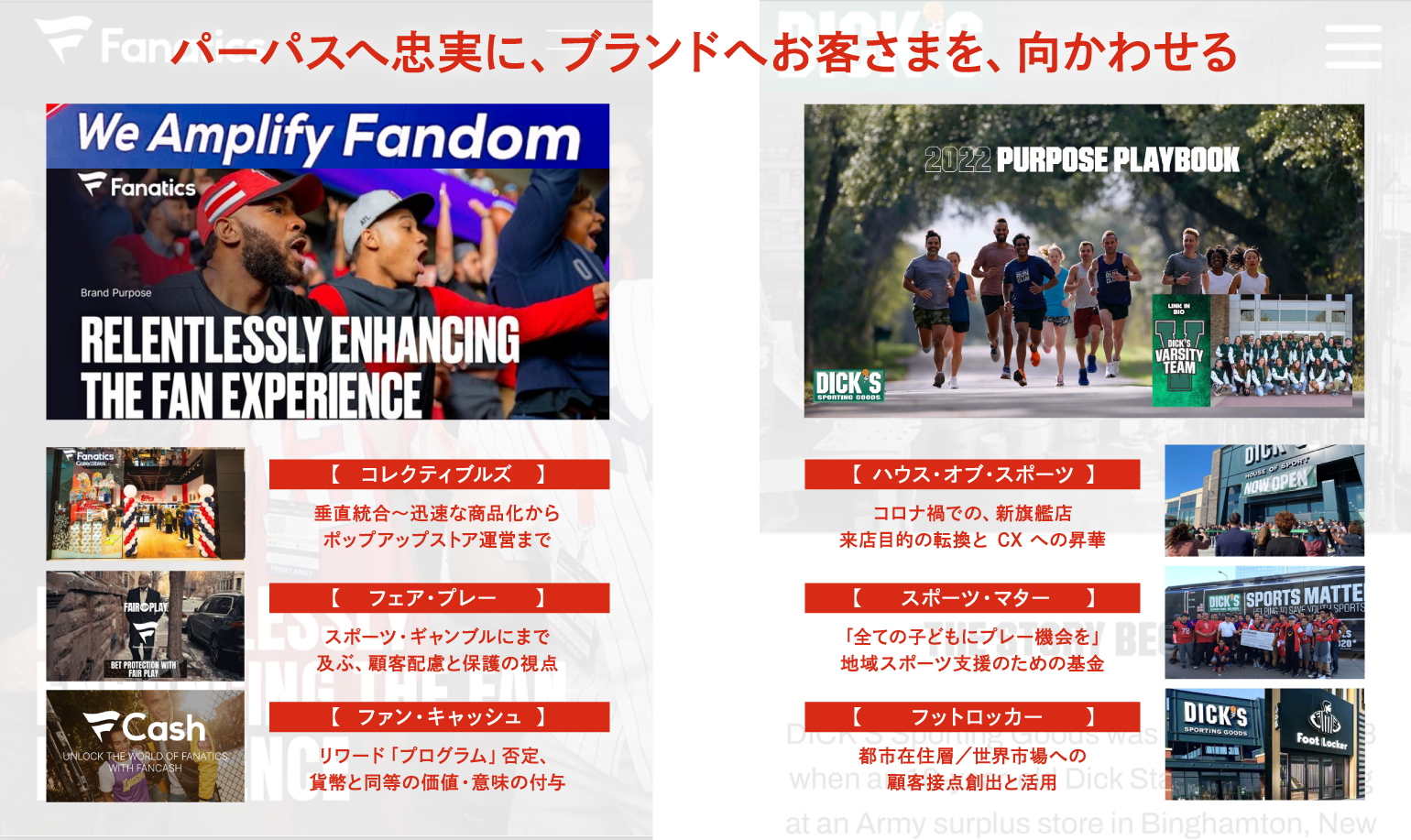
In their presentations, both CEOs emphasized the “paradigm shift in retail commerce” and “how to engage with customers in the era of the single customer ID”—trends that have accelerated rapidly following major societal changes such as the post-COVID era and the rise of AI.
The CEO of Fanatics stated, “Loyalty works better when it travels; if rewards move across products, you reduce churn and the cost of launching the next thing,” arguing that loyalty programs are most effective when they span products and services—a perspective that also reduces customer churn and the costs associated with launching new products and services. He thus emphasized the necessity of building continuous relationships with customers rather than relying on one-off transactions.Additionally, the CEO of Dixx stated, “Physical retail can still grow, but only if the store earns time, not just transactions,” emphasizing that physical retail—which involves physical stores and staff—still has room to grow, but only to the extent that stores can encourage customers to spend time there, not just make purchases. He thus stressed the need to create stores that people “want to visit,” rather than just “go to buy.”
The emphasis is on “systems” and “mechanisms” that powerfully draw customers toward the brand, while remaining faithful to the company’s purpose in line with the current era. Underlying both of these is a model that views customer relationships—once established—as both enduring and dynamic. The following summarizes these points alongside key insights from the two CEOs.
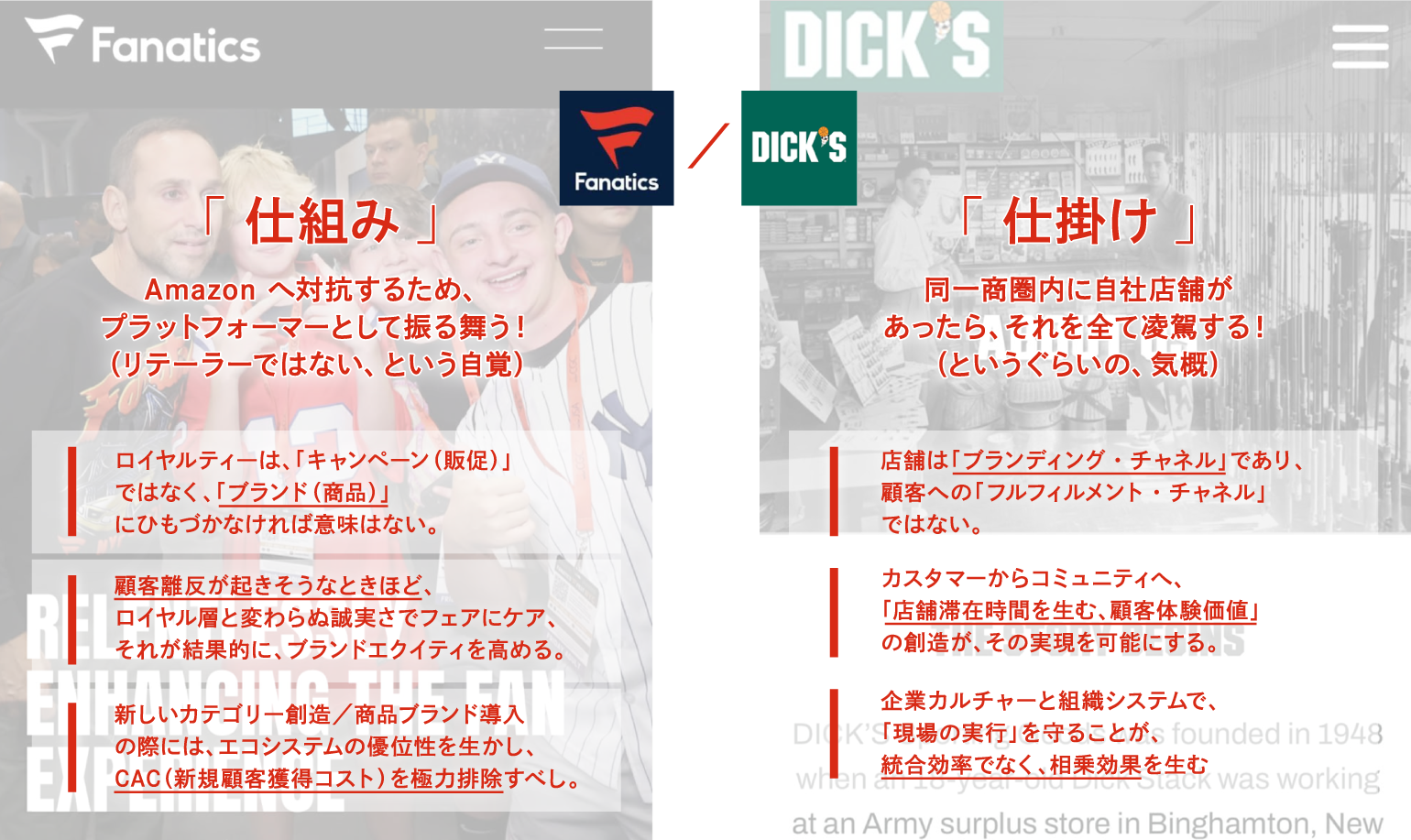
Fanatics, which is online-first, and Dick’s, which is offline-first. This contrast within the sports retail sector is reminiscent of the contrast between Amazon (including Whole Foods) and Walmart in the general merchandise (GMS) sector, as discussed in a previous report.
Retail Media Strategy Comparison: Fanatics and Dick’s
Furthermore, at this year’s NRF 2026, we had the opportunity to hear both Fanatics and Dick’s Sports explain their retail media strategies both on and off the exhibition floor, so please allow us to share our insights.
① In Convention
A featured session titled “Elevating Retail Experiences in the Digital Age: Building the Future of In-Store Media.” Outform, a global retail innovation agency that provides end-to-end services—from consulting, design, and engineering to manufacturing—primarily in the in-store space, presented its collaboration with Dick’s.House of Sport is a new flagship store format that breaks away from the traditional model of “stacking products high.” It was particularly impressive to hear them explain the importance of creating a dynamic store environment that directly and immediately appeals to customers’ emotions, citing the keyword “cinematic retail.”
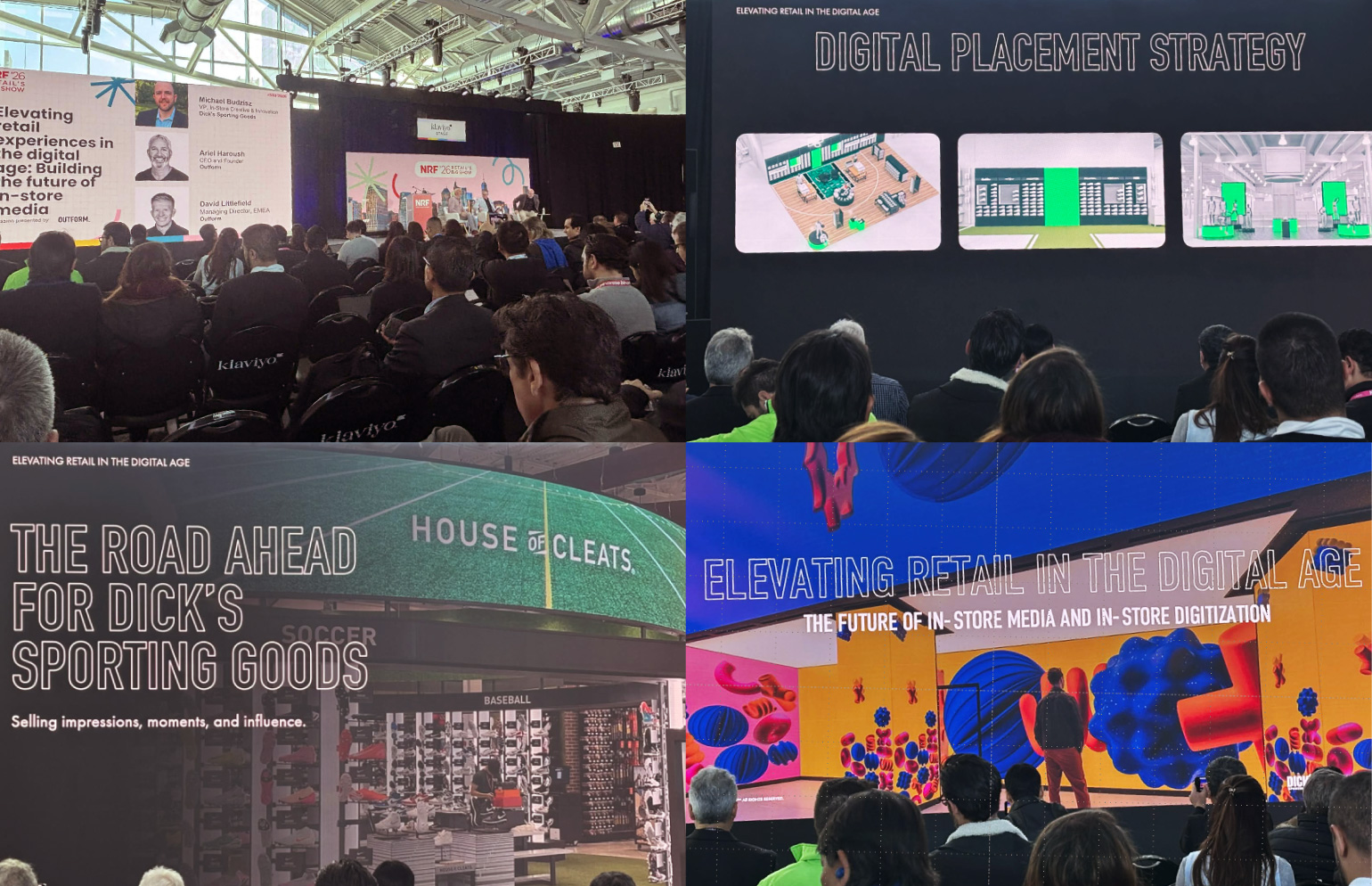
For example, the "Lift-and-Learn" technology automatically displays the product’s story or technical details on a screen behind the customer when they pick up an item. It was fascinating to see how this "mechanism" uses a combination of RFID, weight sensors, and optical sensors to detect product movement, allowing customers to make informed purchasing decisions without needing face-to-face assistance.
Above all, in the use of in-store retail media, while maintaining a “rough” scale—more like a zone than a specific corner (a decision made in the POC phase that this level of detail is sufficient)—they are strengthening the brand story of the product in question by focusing on “Relevancy” (a frequently used keyword at NRF).It embodies a “simplicity” that thoroughly pursues the combination of “What is the appropriate context × content to support customer decision-making?” I feel this approach challenges the current state of Japanese retail marketing, which tends to fall into overly detailed “local optimization.”
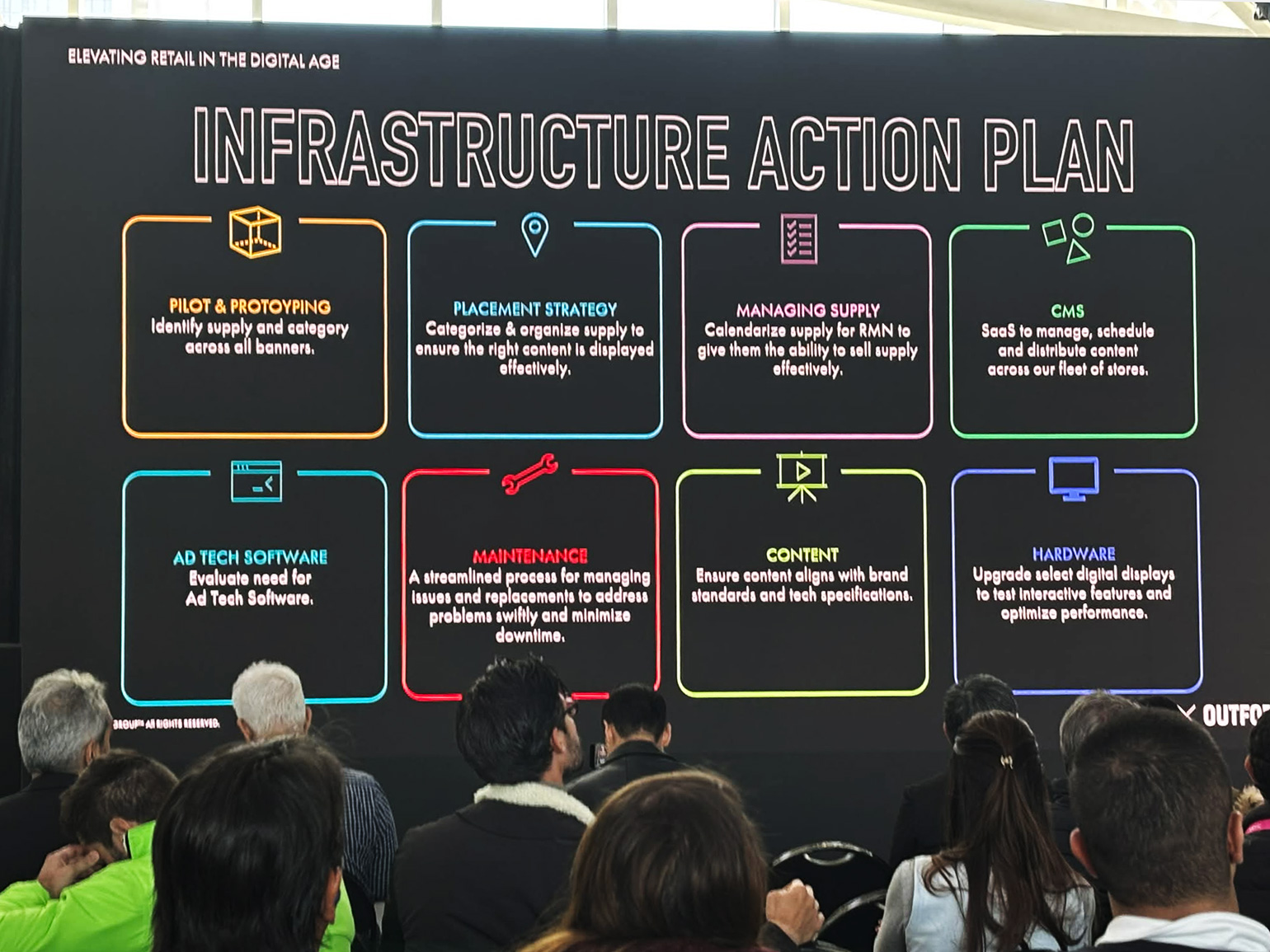
②Out Convention
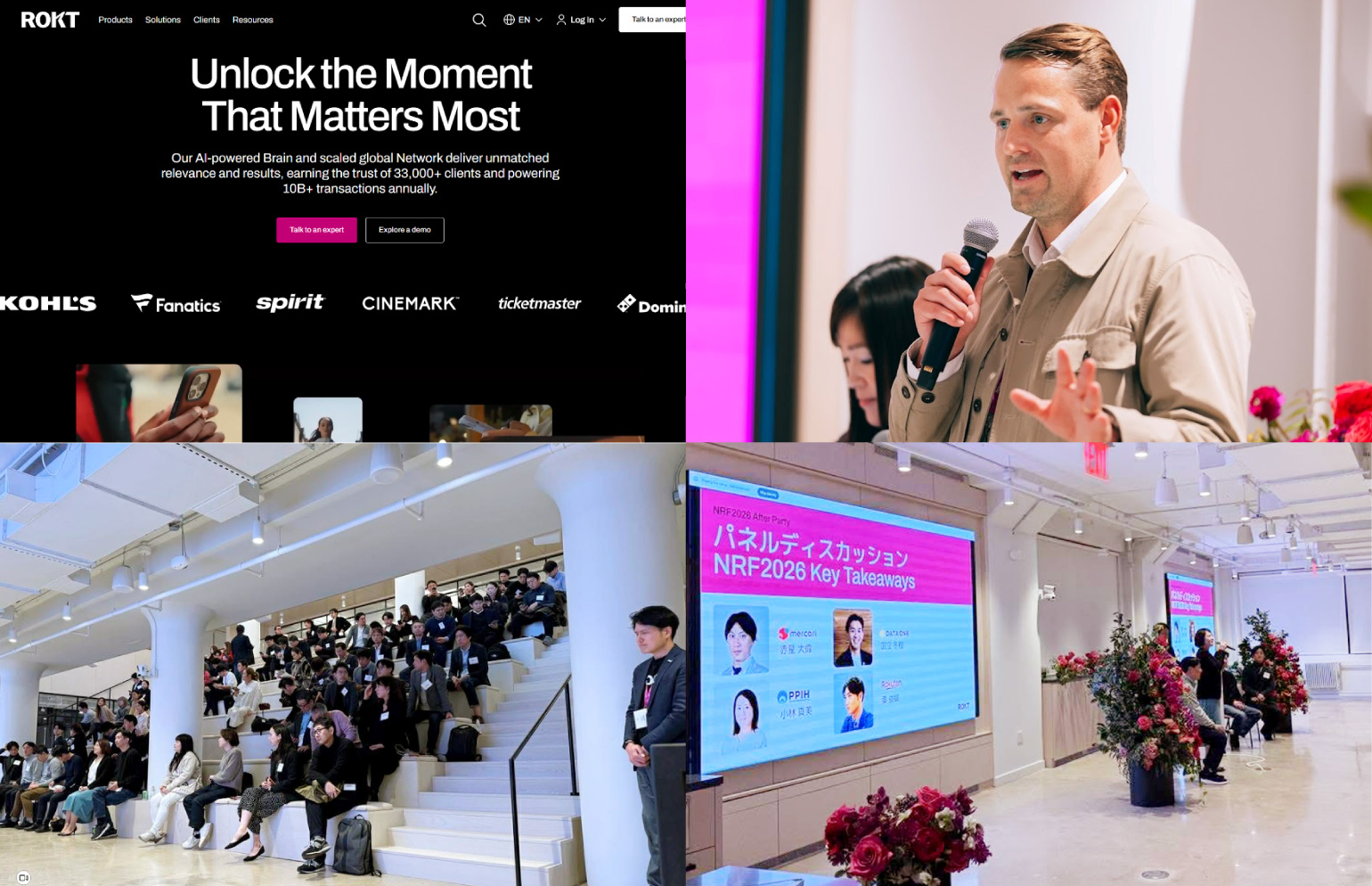
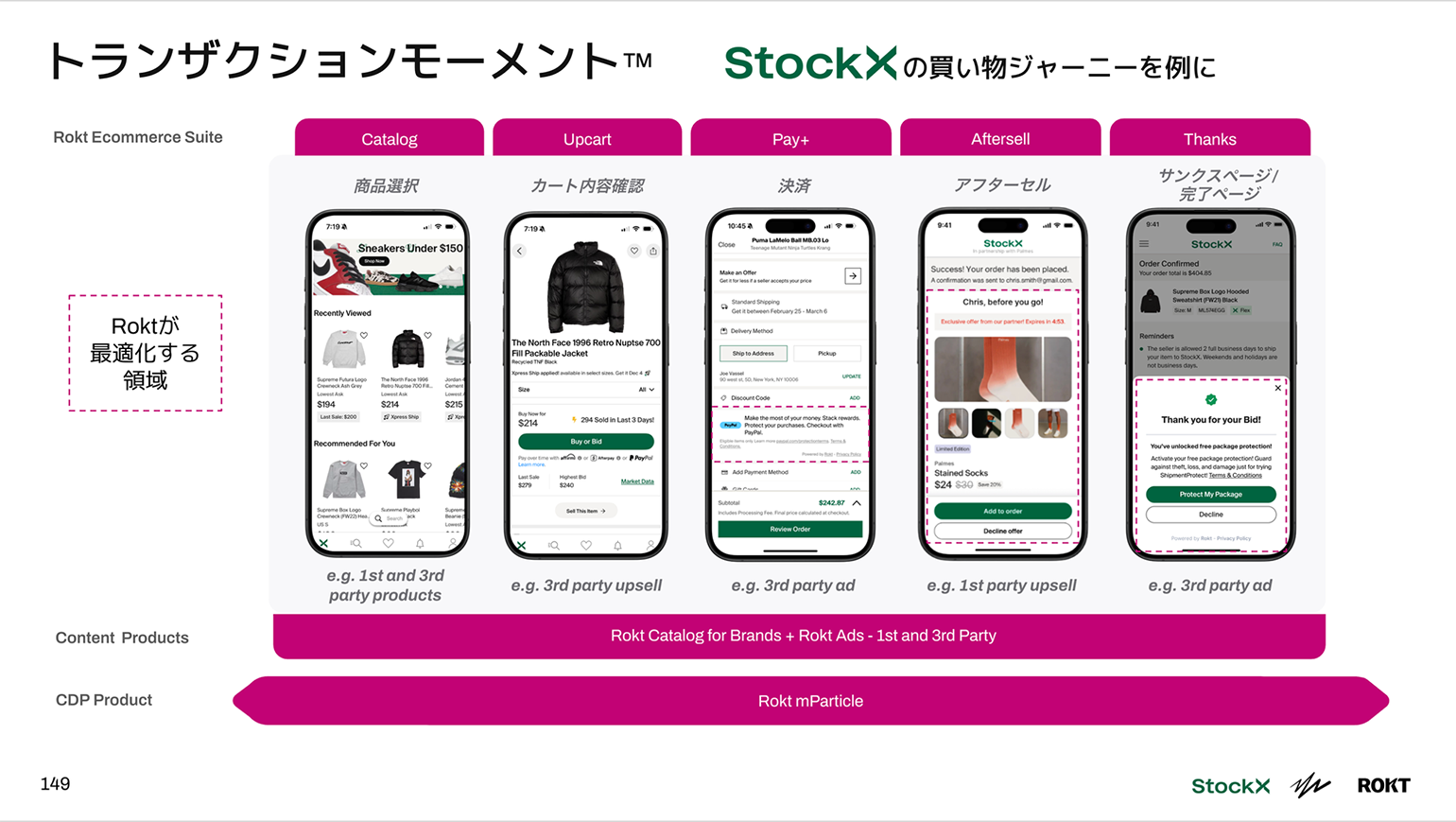
Titled “Unlock the Moment That Matters Most—The Transaction Moment™,” this was a business networking session held off-site with “Rokt,” a U.S.-based e-commerce technology company with which we engaged in several joint business networking sessions throughout the NRF event.The company, which has been adopted by over 50 major e-commerce firms in Japan, offers three solutions optimized for “the moment after purchase.”
"Rokt Thanks" displays highly relevant third-party offers on the post-purchase thank-you page, while "Rokt Pay+" generates ancillary revenue by placing ads for payment services on the payment method selection screen."Rokt Catalog" is a system that transforms a company’s own e-commerce site into a marketplace, enabling it to be used as a sales channel for other companies’ products and services. In all cases, AI determines the optimal display for each user in real time, allowing revenue opportunities to be expanded in a natural way. Fanatics has also adopted "Rokt Thanks" and "Rokt Pay+" to enhance personalized experiences for sports fans worldwide and generate ancillary revenue.
In Conclusion: Retail Media as a “Catalyst” in Marketing
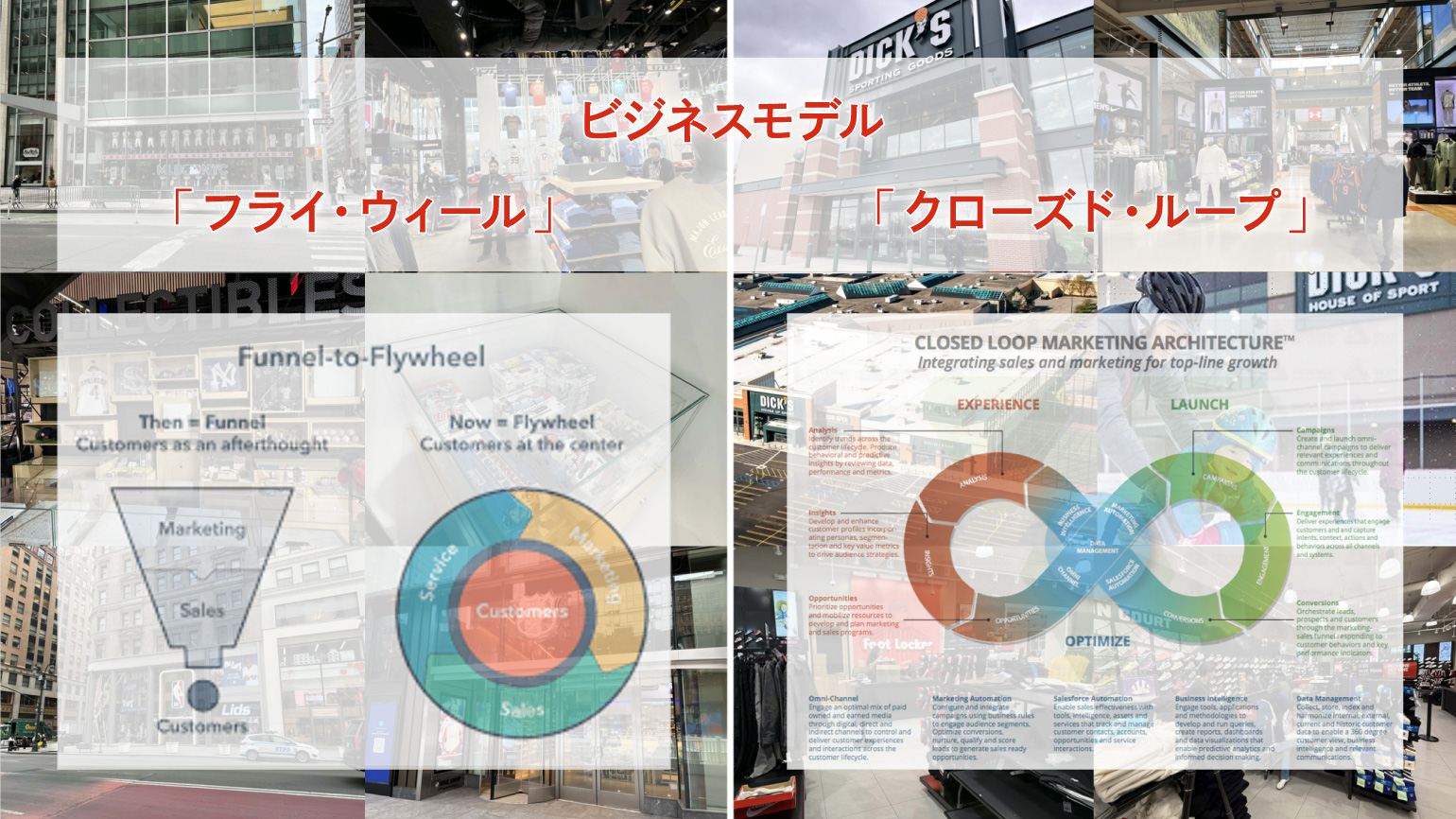
What did you think? As we mentioned, the goal is to “stay true to our purpose and drive customers toward the brand.” Fanatics excels at a “Flywheel” model—a mechanism unique to online-originated companies that focuses on building continuous, fandom-rooted relationships with customers.Dicks excels at a “Closed Loop” model—a strength unique to companies with offline origins—that focuses on creating customer experiences rooted in grassroots connections, from local stores to the wider community.Although their origins differ, both companies aim to place a single ID at the center of their strategies and achieve “①: Improvement of mROI” and “②: Enhancement of LTV” based on true customer-centricity.
Furthermore, the defining characteristic of each company’s retail media strategy is that it functions as a catalyst within the customer journey—not in a forced manner, but naturally—and, far from compromising the customer experience (CX), actually amplifies it, thereby achieving the “chemistry” of “① Business Goals × ② Customer Value.”
In Part 2, I’d like to delve a bit deeper into retail media—including the content of the closed sessions held during the event—while also touching on other topics, to provide a comprehensive recap of NRF 2026.
Was this article helpful?
Share this article


Newsletter registration is here
We select and publish important news every day
For inquiries about this article
Author

Hitoshi Kimura
Dentsu Inc.
Retail Marketing Division
Senior Producer
After joining Dentsu Inc., assigned to the Kansai Branch Marketing Bureau, engaged broadly in planning across marketing, media planning, account planning, and promotion/communication domains.From 2008 at the Tokyo headquarters, he served as account manager for financial clients (including megabanks), public sector accounts, and major telecommunications carriers. After handling digital and marketing projects for major domestic retailers from 2013, he currently leads BX/DX support for "Japanese retail distribution" as an expert in a BX-specialized department, delivering numerous presentations. He assumed his current position in January 2024.