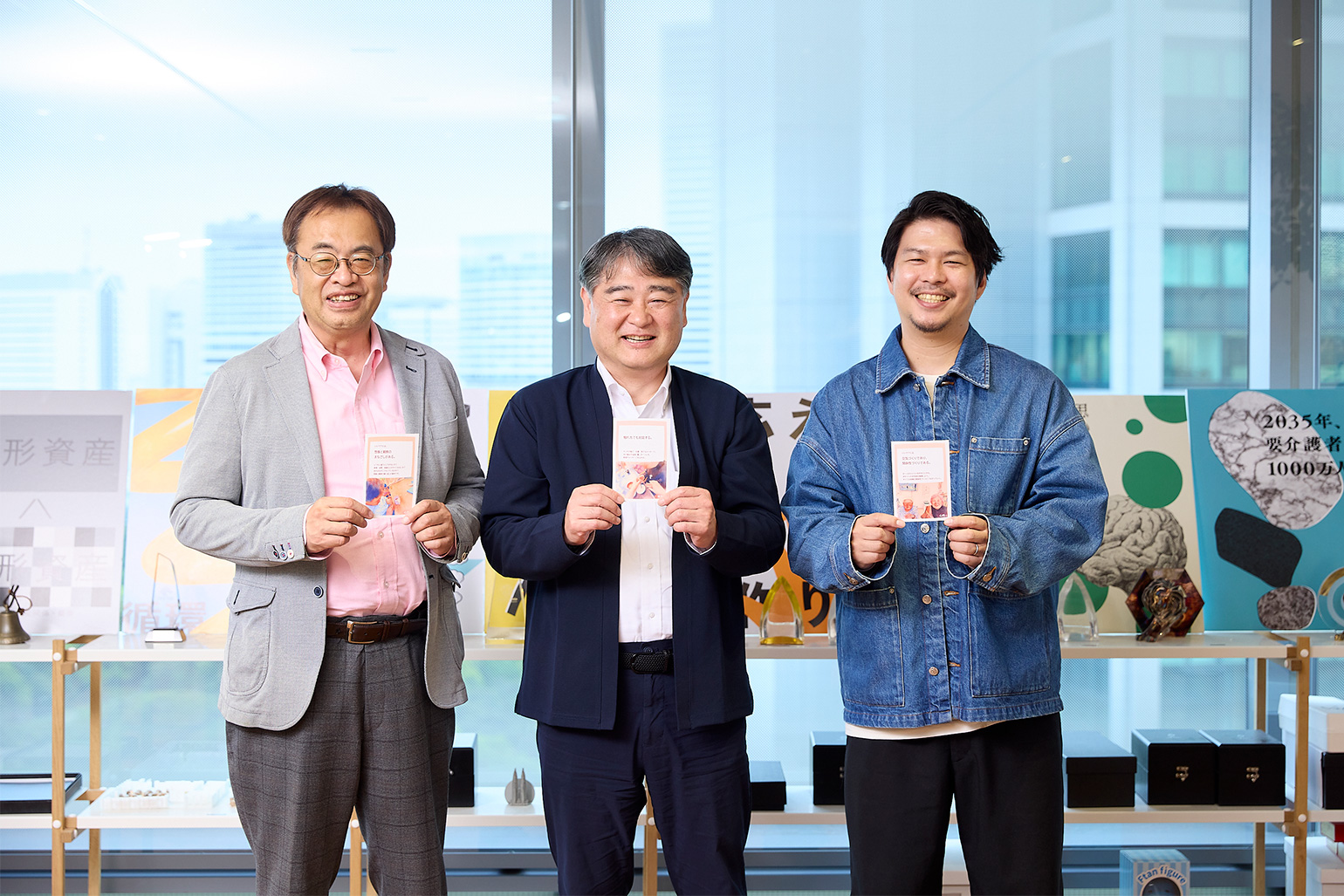
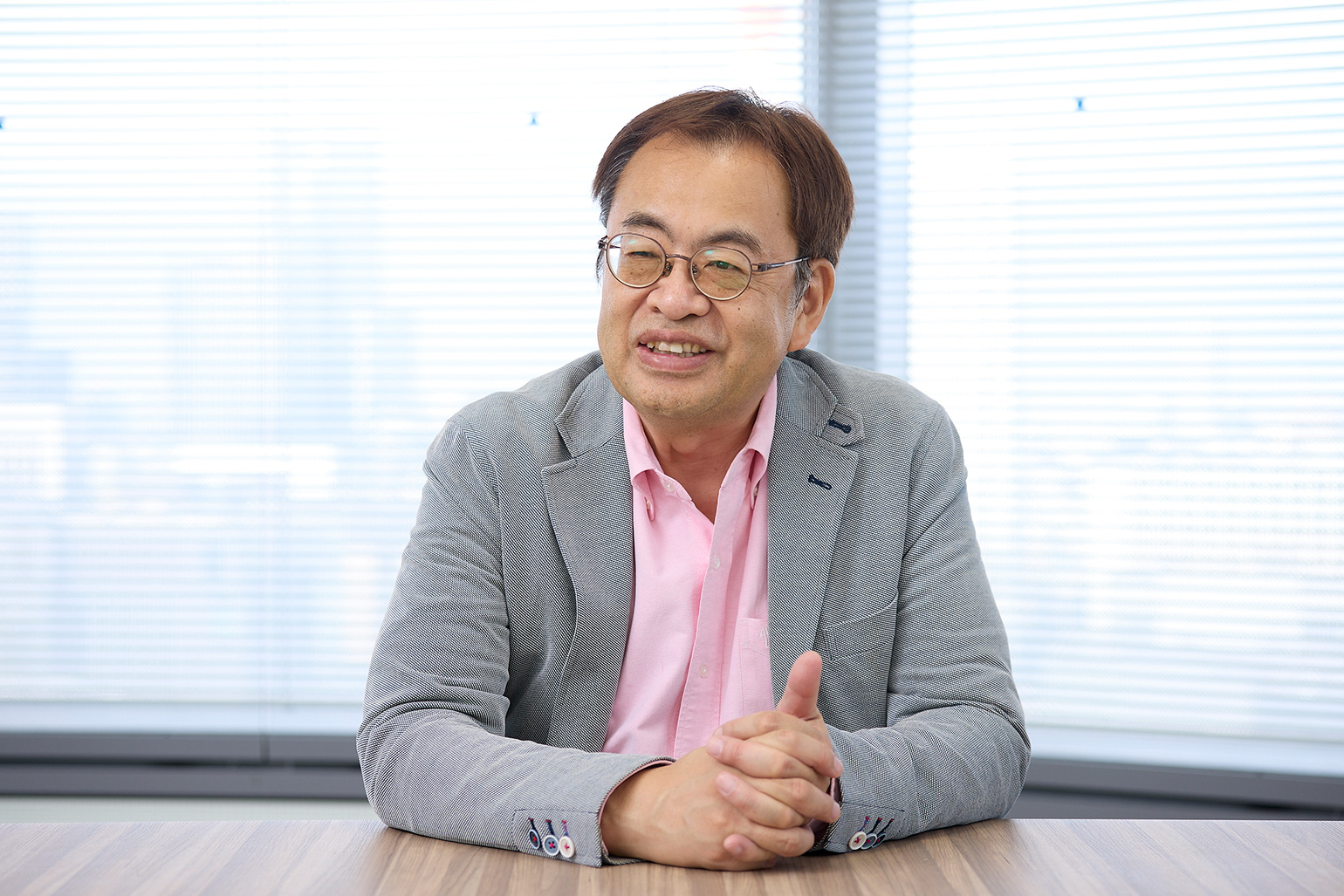
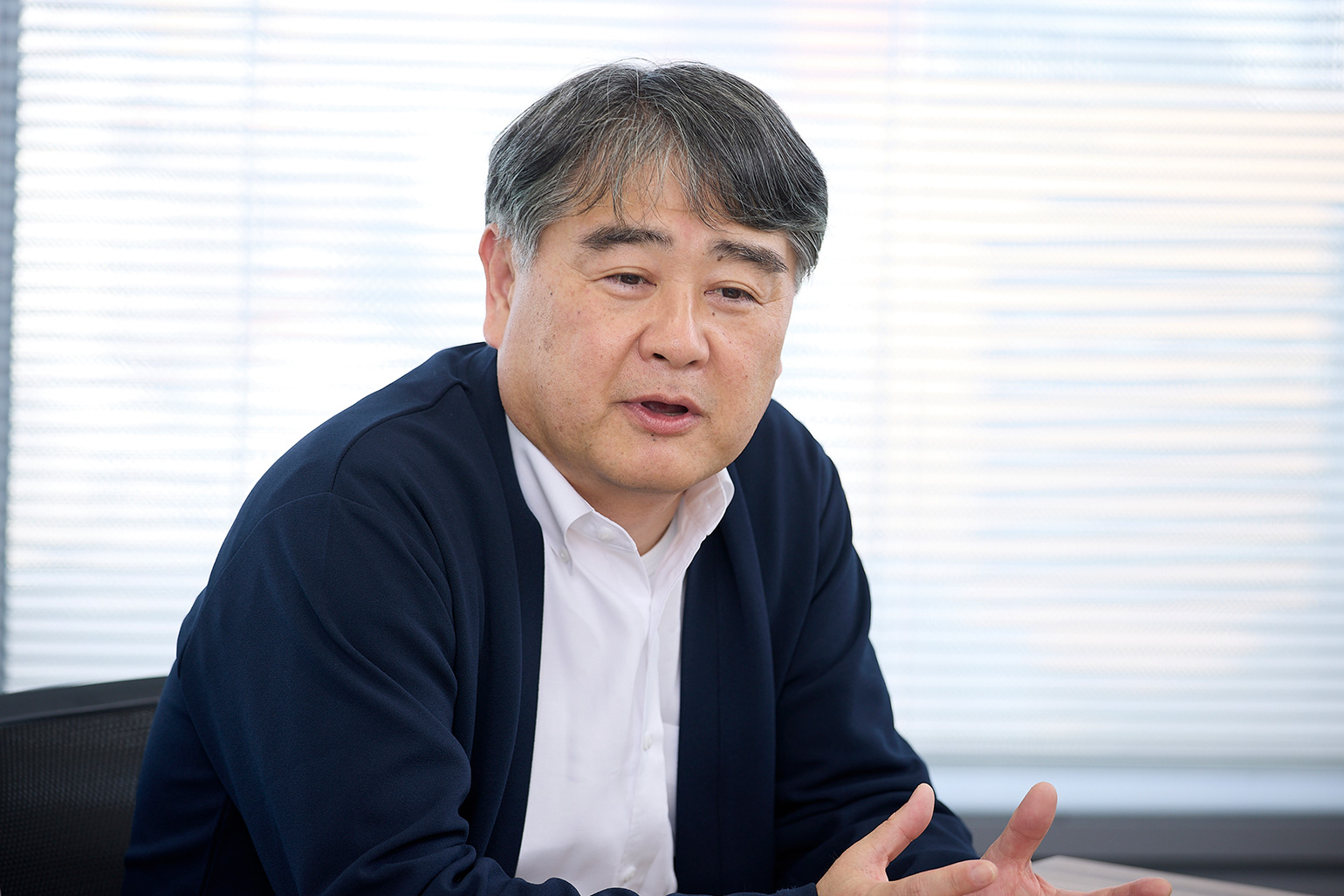
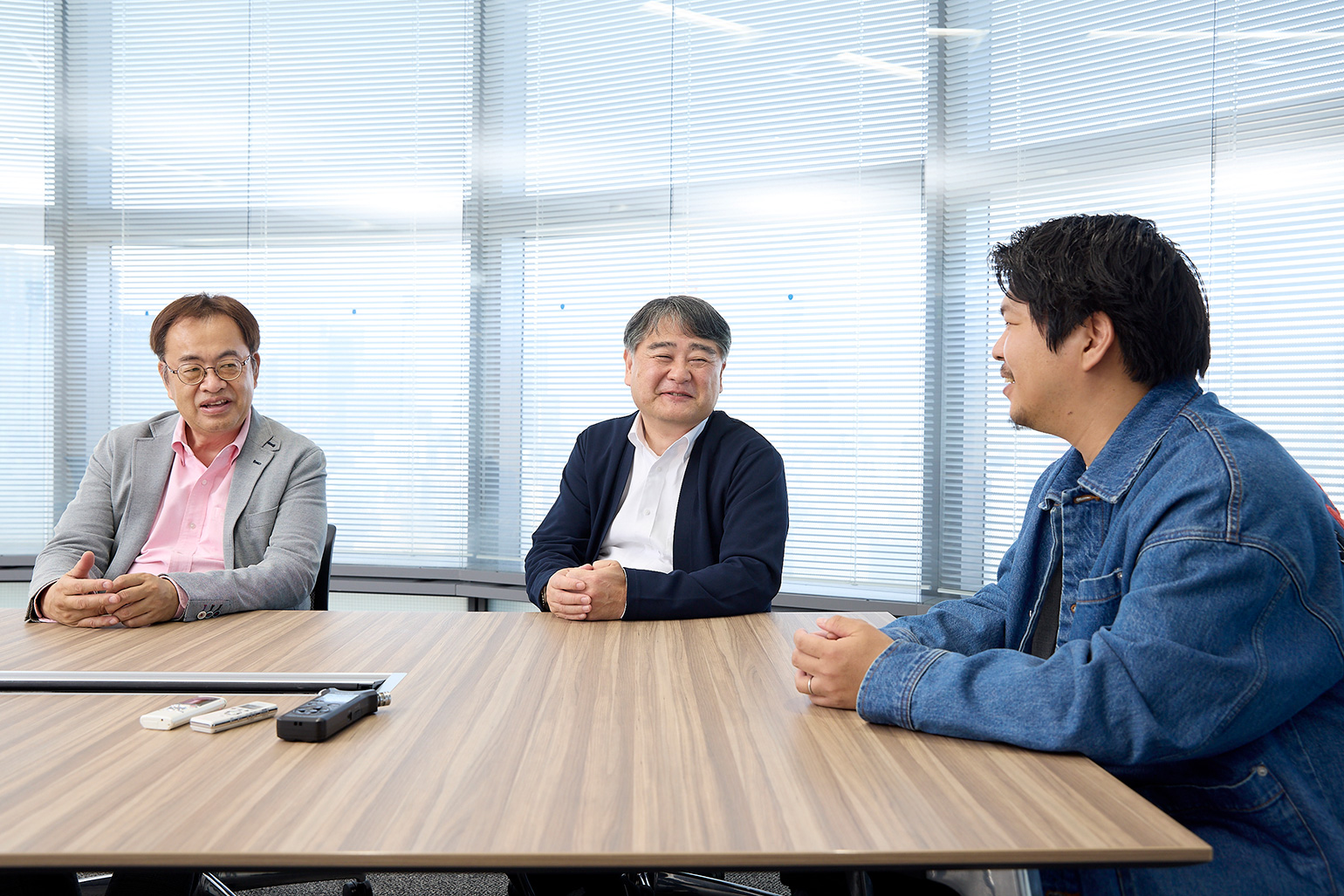
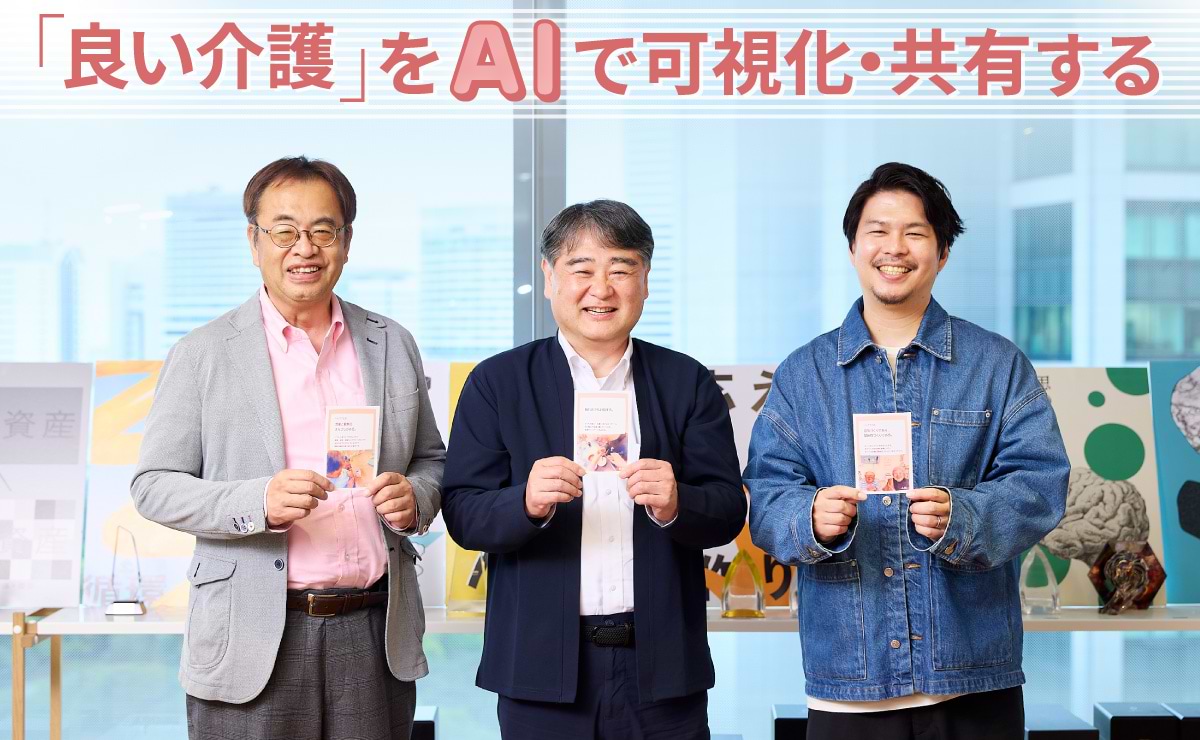
From left: Naofumi Kuroiwa, Chairman of the National Association of Small-Scale Multifunctional Home Care Providers; Takahiro Yamakoshi, Secretary General; and Motoki Kobashi of Dentsu Inc.
As society ages rapidly, the shortage of skilled personnel in the care sector is becoming increasingly severe.
The front lines are so busy that there is no time to keep care records. Since care know-how cannot be put into words, work has become dependent on individual staff members. In caregiving, the physical movements involved in assistance, the way staff speak to residents, and their philosophy differ depending on the staff member and the resident. There is a great deal of tacit knowledge, making it difficult to share the skills and experience of care staff...
Amidst this situation, an initiative has begun to use AI to model the “tacit knowledge” of what constitutes “good care.” Care staff wear smart glasses to record video and audio from their perspective. By analyzing this footage with AI, significant insights into “good care”—which had previously been impossible to articulate—have emerged.
We spoke with Naofumi Kuroiwa, Chairman of the National Association of Small-Scale Multifunctional Home Care Providers; Takahiro Yamakoshi, the Association’s Secretary General; and Motoki Kobashi of Dentsu Inc., who has sought to transform the care industry through creativity, to hear about the project’s objectives, the response it has received, and their vision for the future.
What is Small-Scale Multifunctional Home Care?
It is an all-in-one, community-based care service that combines the benefits of facility-based care and in-home care. A single facility provides seamless “day care,” “overnight stays,” and “home visits” 24 hours a day, 365 days a year, allowing residents to remain in their familiar communities. Approximately 110,000 people use this service at over 5,300 facilities nationwide.
We Want to Provide Care That Supports What Users Want to Do
Naofumi Kuroiwa
――Please tell us how you and Mr. Yamakoshi came to be involved in small-scale multifunctional home care.
Kuroiwa: I’ve been involved in elderly care for about 30 years. There were people who needed help bathing but couldn’t get into the tub, or who couldn’t eat their meals… Through my interactions with these individuals, I developed a desire to help them “spend their daily lives in a home-like environment while building strong, trusting relationships with others.”
So, I opened a facility called a “Takurōjo” by repurposing a small, traditional Japanese house as-is. This was the initial spark that led to the current National Association of Small-Scale Multifunctional Home Care Providers (hereinafter referred to as the Association).
Yamagoshi: The “Takurōjo” that Mr. Kuroiwa refers to is a care facility centered on “day care,” where the elderly can spend their time freely, just as they would at home. It began as a grassroots movement nationwide in the 1980s and spread rapidly across the country through the 2000s. Around that time, I came to support the activities of the Takurōjo and have been working alongside Mr. Kuroiwa in an administrative capacity.
Kuroiwa: I established the Liaison Council, of which I am the chairperson, in 2006. Building on the legacy of Takurosho, and in response to the institutionalization of small-scale multifunctional home care—which offers an all-in-one approach combining “day care,” “overnight stays,” and “home visits”—we are working with care providers nationwide to promote higher-quality care.
Yamagoshi: And I serve as the secretariat director of the association. From the moment I took office, I felt it was my mission to model the “good care” that Mr. Kuroiwa and his team practice on the front lines, so this initiative has become the first step in fulfilling that mission.
Kobashi: Indeed, seeing a facility that actually delivers that “good care” was so impactful that it changed my life. I’ll talk more about that later.
――How did the project titled “Visualizing and Articulating Good Care with Smart Glasses and Generative AI” come about?
Yamagoshi: The idea originated from a news program I watched about three years ago. It featured the use of glasses-type wearable devices—so-called smart glasses—to pass down agricultural techniques. The segment showed students wearing smart glasses while working in the fields, with experienced farmers in a remote location guiding them on how to tend the crops by viewing the footage from the students’ perspective.
Agriculture is the quintessential “tradition-based” profession where mastering skills takes time and relies heavily on experience and intuition. Yet, to think that real-time remote instruction was possible! Seeing that made me wonder if smart glasses could be used to train care workers in the nursing and welfare sectors as well—that was the starting point. However, the idea of using AI to analyze video footage was born during a session with Dentsu Inc.
──What led Dentsu Inc. and Mr. Kobashi to get involved in this initiative?
Kobashi: I am a communication creator at the “Dentsu Inc. Future Creative Center (FCC),” which uses creativity to take on the challenge of building a future that transcends the boundaries of advertising.I visited a care facility in January 2025. I visited the Fukuoka Dementia-Friendly Center and “Nagomi no Ie Shikata,” a facility affiliated with the network. Seeing the care provided by the staff there firsthand had such a profound impact on me that it changed my life.
What I mean is this: in caregiving, there is a tendency to focus on what residents “cannot do,” leading to a style of care that often involves “making them give up” or “getting them used to things.” However, what the staff at this facility were doing was identifying what residents “can do” and “want to do,” providing a style of care that “supports their motivation.”
For example, since many residents in care facilities have mobility issues, designing rooms with tatami mats is difficult from the perspective of care efficiency and safety. Yet, to fulfill the residents’ wish to “live just as they always have,” the facility includes a relaxing tatami area. What’s more, the residents relax on the tatami mats as if it were the most natural thing in the world.
I also heard a story about a resident with dementia using a stove to fry pork cutlets in oil. Under normal circumstances, I imagine the use of open flames and cooking with oil would often be restricted, but the staff members there devised ways to make cooking possible and put them into practice. Age or dementia simply aren’t reasons to give up on anything.
This is just one example, but I was truly struck by the sight of them supporting and making a reality of each resident’s “I want to do this.” That’s what led me to this project—I felt I simply had to learn from their expertise.
Two Key Concepts: “The Bonus Point System” and “Supporting Motivation”
Takahiro Yamakoshi
――To begin with, what challenges did the caregiving industry face when you first took on this project?
Kuroiwa: First, the aging workforce and shortage of personnel in caregiving are serious issues. Especially now, as the number of young staff members is declining, what we need to do is create an environment that is attractive enough for young people to take pride in their work and boast about it to their family and friends. And second, I believed it was important to establish a system of mutual recognition where staff members can acknowledge each other’s work.
Yamagoshi: To achieve that, we need to visualize and articulate what constitutes “good care.” However, caregiving involves a great deal of flexible, on-the-spot response that cannot be standardized, making it very difficult to share best practices.
Furthermore, as Mr. Kobashi mentioned earlier, another challenge in the care sector is the strong tendency to think in terms of a “deduction-based approach”—that is, “identifying what the resident cannot do and providing assistance for those specific tasks.” This is particularly true for elderly people with dementia, as the list of things they cannot do continues to grow. But precisely because of this, I felt we should shift to a “point-based approach” to care—one that focuses on “discovering what makes that person unique and working together to fulfill their hopes.” I believe that is exactly what care should be.
Kuroiwa: To address these challenges, we launched this initiative with Dentsu Inc., utilizing technologies from different fields: smart glasses and AI. We never imagined we’d end up using AI (laughs), but it turned out to be a truly successful project.
Kobashi: Thank you! I believe we’ve created a new initiative that aligns perfectly with the vision and philosophy of Mr. Kuroiwa and his team, who have long been dedicated to care that supports the “motivation” of those we serve.
――Specifically, what kind of approach did you take?
Kobashi: This initiative is divided into two phases. In “Phase 1,” we had all staff members at approximately 20 facilities across Japan—from Hokkaido to Kagoshima—provide care while wearing smart glasses. We then fed the recorded first-person perspective videos into “Google Gemini,” an AI tool pre-optimized with prompts, to generate detailed care records.
We recorded video and audio from diverse perspectives, regardless of the care staff’s age, region, or nationality. We fed a total of 159 videos—amounting to over 100 hours—into the AI, and with today’s AI capabilities, it can transcribe and document them in a surprisingly short amount of time. Along with these records, the staff members hold “reflection meetings” while watching the recordings together.
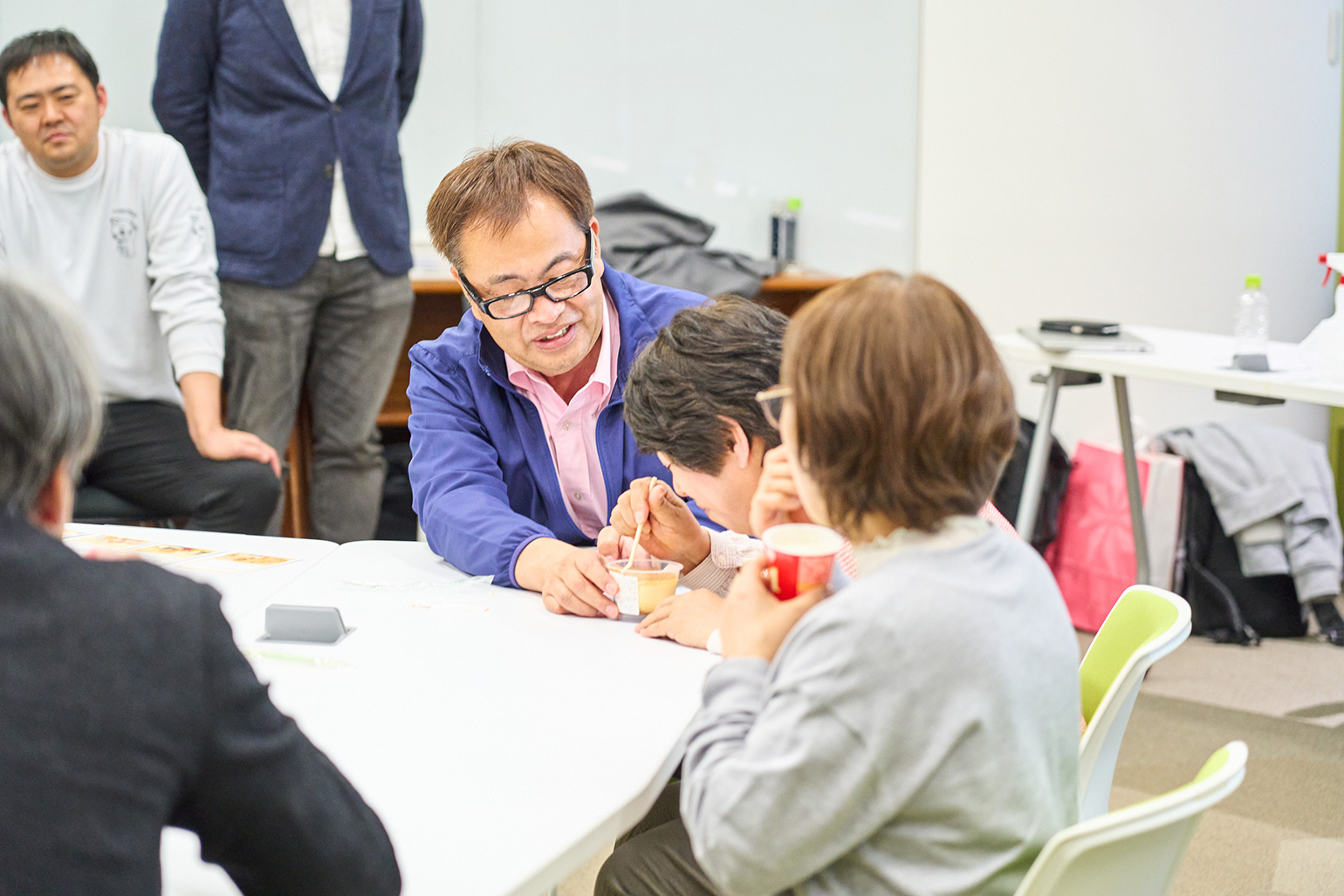
At the report session for this initiative, Mr. Kuroiwa demonstrates care while wearing smart glasses, alongside members from affiliated care facilities.
Kobashi: Furthermore, we developed a system that uses AI to automatically generate interview questions for staff members to delve deeper into the care process—questions like, “Why did you speak to the resident at that specific moment?” or “Where did you look to anticipate the danger?”
The key lies in the process of customizing existing AI to specialize in “analysis and interviews in care settings.” Yusaku Wakazono, a Creative Technologist at Dentsu Lab Tokyo, not only planned the smart glasses and AI integration but also crafted detailed prompts for Gemini.
We believed that using these AI-generated interviews during care review meetings would provide valuable insights into articulating “what constitutes good care.” This approach yielded results that exceeded our expectations.
──What kind of results did you achieve?
Kuroiwa: Above all, this initiative was extremely well-received by the staff on the front lines. They were pleased that simply wearing the smart glasses served as a substitute for care records, but what really surprised me was the AI-generated interview. The AI accurately captured the “points where staff members had put in extra effort.”
It was striking to see the faces of the staff members as they watched the footage from their own perspective and spoke about their unique approaches and thoughts in front of everyone—they were all smiling with such pride.
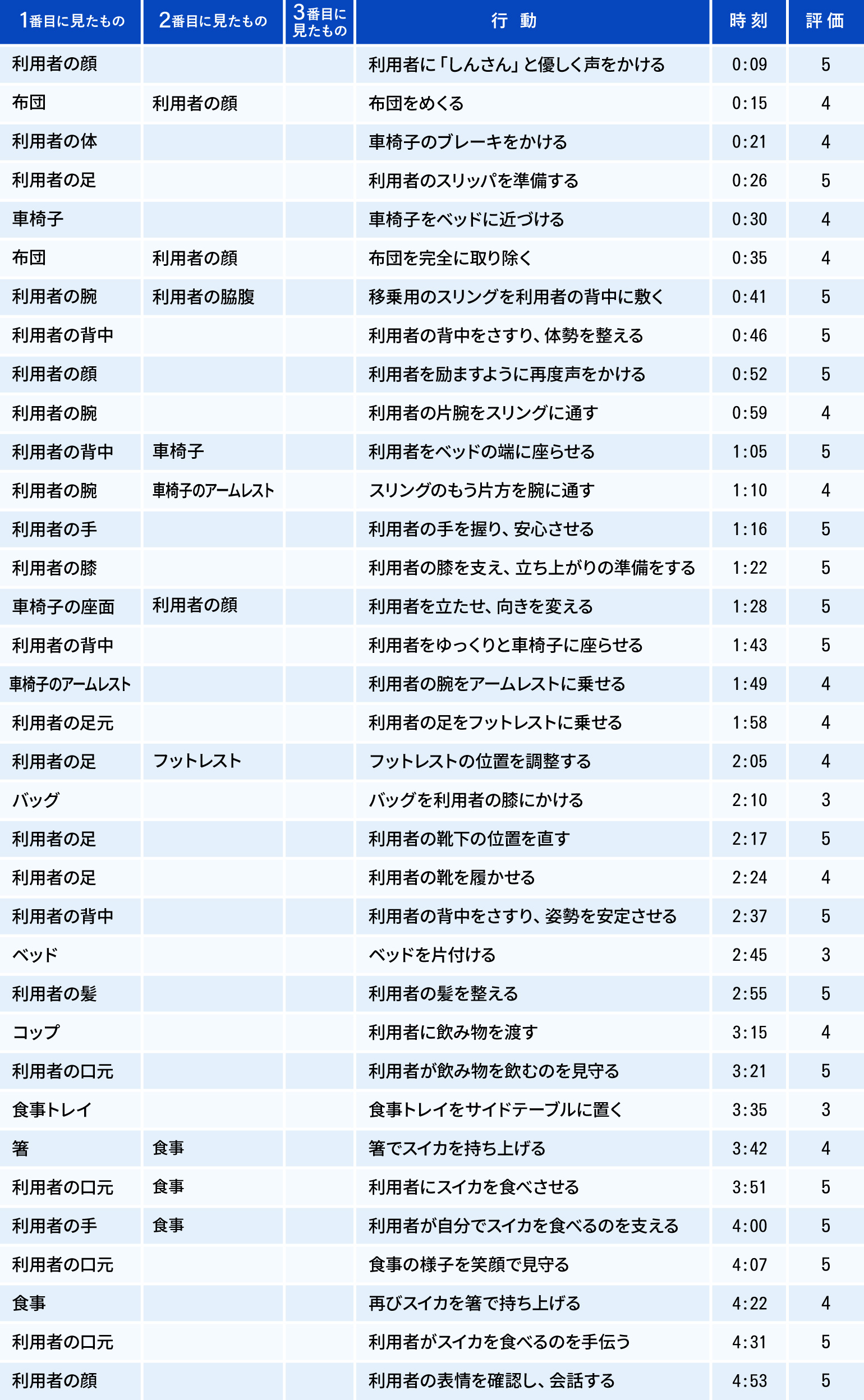
This summary, generated by analyzing footage recorded with the smart glasses, presents three key points and the corresponding actions in chronological order, making it effective as a care record.
Kobashi: By having staff members engage in “reflection” using video and AI, we’ve been able to share examples of “good care” that hadn’t previously been visualized or articulated. As Mr. Kuroiwa mentioned, this has created an environment where staff members can take “pride” in their caregiving. This initiative has been well-received at member facilities across the country. Additionally, while this isn’t the primary objective, it’s naturally appreciated for its role in automating care records.
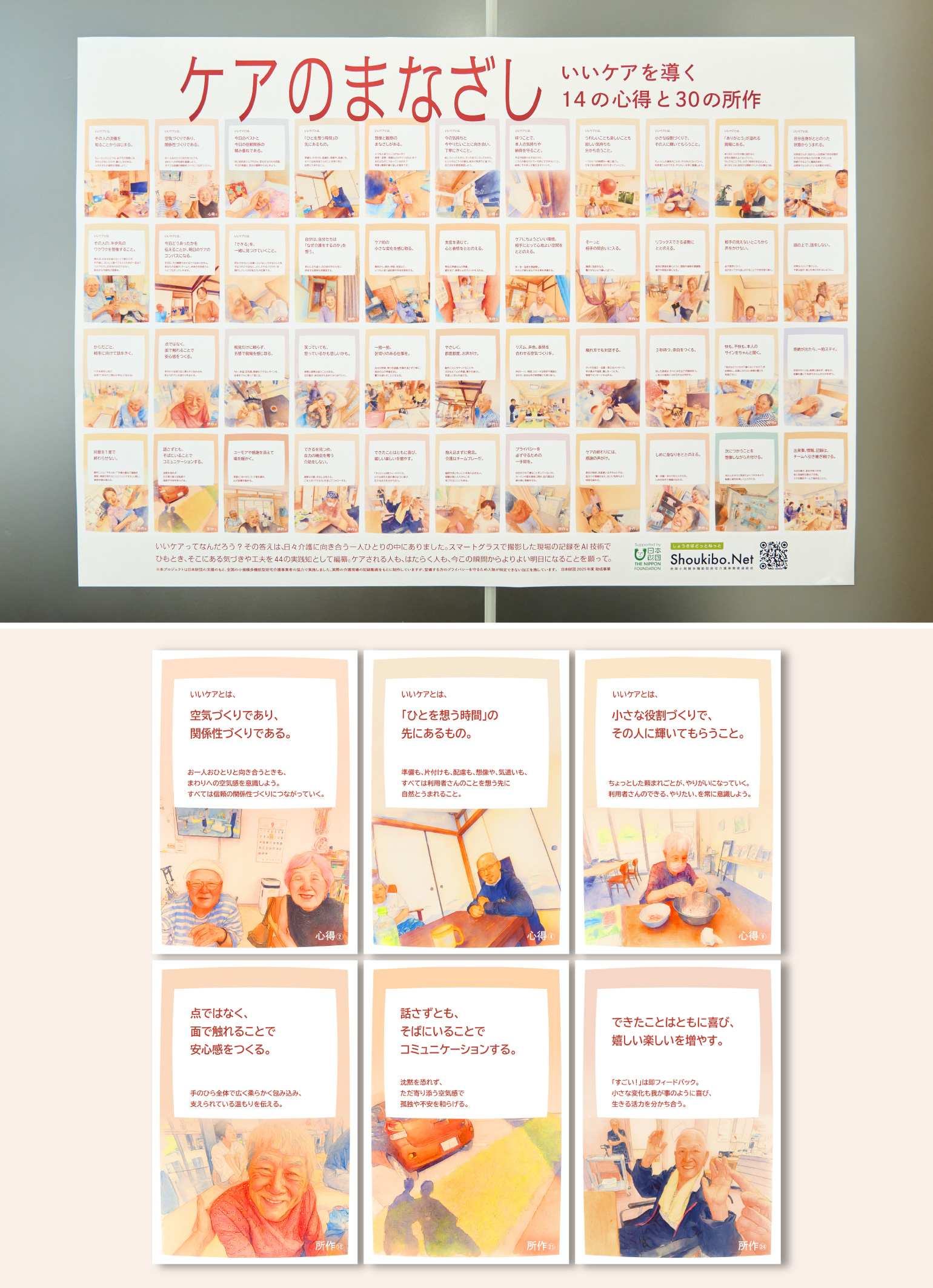
However, this initiative doesn’t end there. After Phase 1 concluded, we created “Care’s Gaze,” a card-based tool that illustrates the “14 Principles” and “30 Practices” for delivering good care through illustrations and text. We also developed the “Good Care Exploration Program,” a training program that utilizes this tool.
Improved care quality, a sense of fulfillment, and smiles from service users… results that bring so much
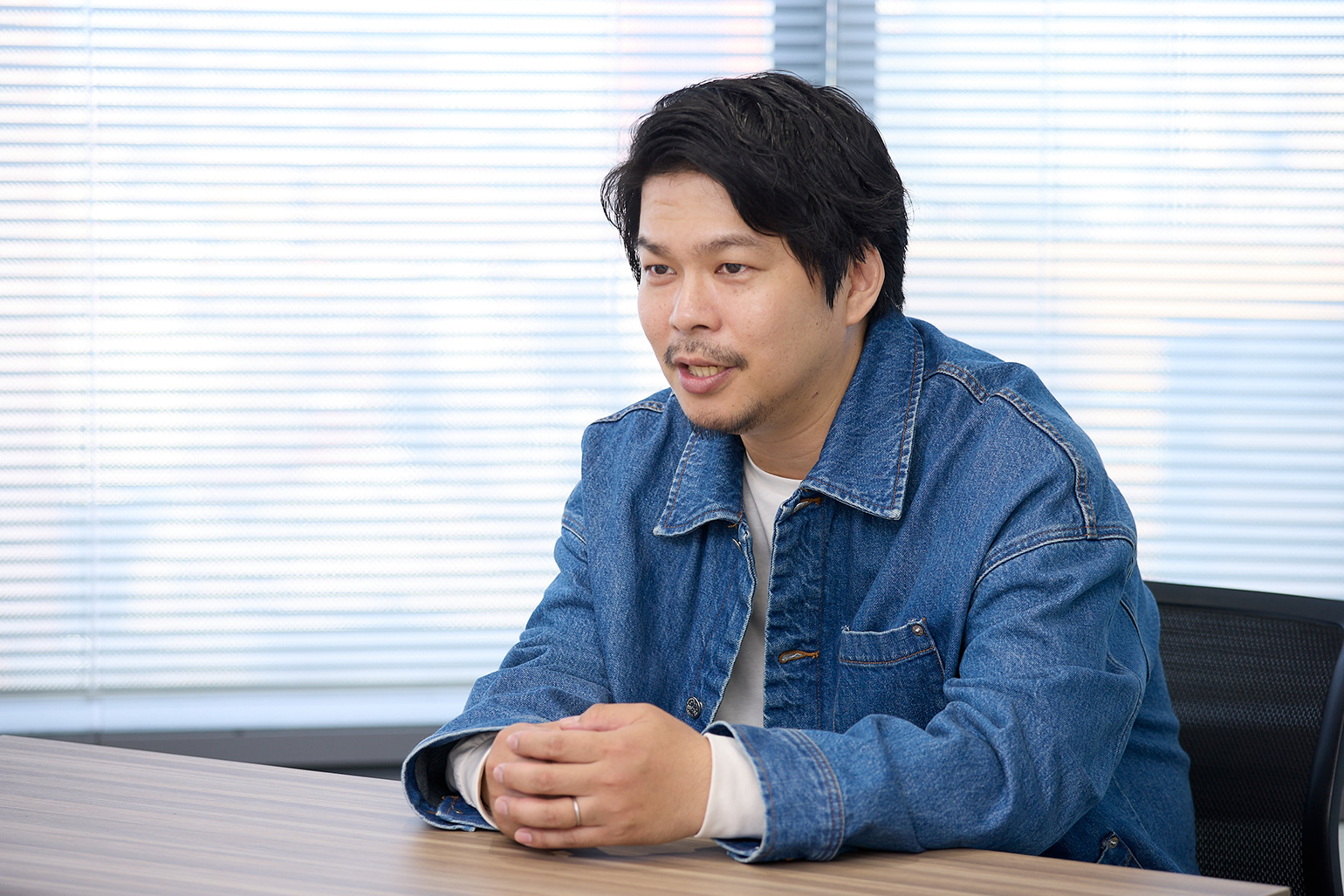
Motoki Kobashi
――What exactly is “The Careful Eye”?
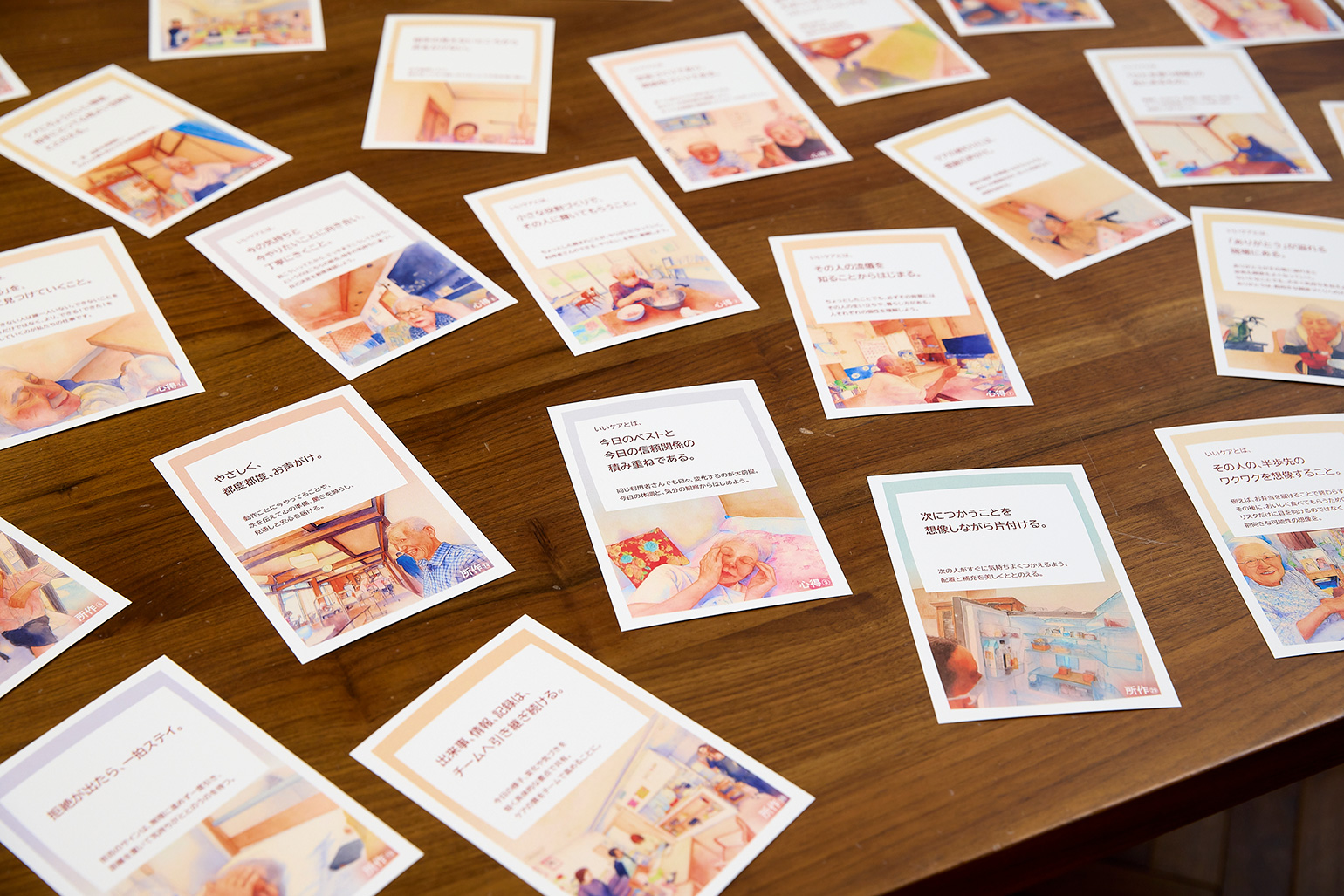
Yamagoshi: It is a card-based tool that compiles 44 scenes symbolizing “good care,” selected from a vast amount of footage recorded with smart glasses, along with key points on “actions and principles” for each scene, presented through illustrations and text.
Kobashi: In creating the “Gaze of Care” cards, we utilized AI for video extraction, illustration, and copywriting, while also incorporating feedback from project members to pack in plenty of “on-the-ground insights.”
The top section covers “Mindset,” and the bottom section covers “Practice.” While generative AI was used in the creative production of these cards, human creators also contributed their expertise.
Kuroiwa: This tool is designed to be used during meetings. For example, you could lay the cards out on the table, select one, and set a shared goal like, “This week, let’s focus on this specific action to provide good care.”
Kobashi: Personally, my favorite card is the one that says, “Even if they’re smiling, they might be angry or sad.” I think the mindset of staff members who try to sense the true emotions of residents—emotions that aren’t visible on their faces—offers profound lessons even outside the caregiving industry.
From a creative perspective, I wanted to express the “atmosphere” that Mr. Kuroiwa often talks about. The smell of food during meals, the sense of security felt even without exchanging words… I’ve visualized “the staff’s gentle, warm gaze” by incorporating elements like these.
Kuroiwa: I believe it has truly become a tool that allows you to sense even the atmosphere. Thanks to that, the pilot test of the “Good Care Exploration Program”—a model training program utilizing “The Gaze of Care” conducted in “Phase 2” of the project—was extremely fruitful.
――What kind of changes did this pilot program bring about at each facility?
Yamagoshi: The biggest change was seeing more smiles on the front lines. There were veteran staff members who were able to share tacit knowledge—knowledge they hadn’t even realized was important themselves—with the rest of the workplace. And there were new staff members who were praised in front of everyone for “doing a great job with this aspect of care.”
Not only did this boost the motivation of all staff members—both veterans and newcomers—without distinction, but by making these insights visible, we also discovered many new things, such as, “Oh, they were doing that?”
Kuroiwa: By visualizing the perspectives of various staff members, sharing them with everyone, and acknowledging each other’s strengths while learning from one another, I believe communication within the facility has become smoother, and our teamwork and sense of unity have improved.
Yamagoshi: Furthermore, the benefits of AI-powered simultaneous interpretation were evident in our communication with foreign care workers, who are now an indispensable part of our workforce. We’ve received feedback from member facilities across the country expressing a desire to continue actively utilizing this tool.
Using AI for “Well-being” Rather Than “Efficiency”
――Please share your thoughts now that you have completed the development of “The Careful Eye” and the “Good Care Exploration Program.”
Kuroiwa: The greatest achievement was that, even while using AI, a shared understanding emerged among care workers nationwide that “our goal is not efficiency, but well-being.”
Instead of thinking, “If they can’t do it themselves, it’s faster to just do it for them,” we ask, “What should I prioritize in my care, keeping the person’s dignity as the top priority?” I believe this has been a valuable experience for us to reflect, both individually and as a team, on “how we should conduct ourselves as human beings.”
Kobashi: When people hear about using AI in caregiving, I think many imagine efficiency gains, cost reductions, or even the use of robotics to replace human workers. Of course, providing care efficiently is important, but that’s not the only thing that matters to everyone on the front lines.
I, too, place the highest priority on the fact that we were able to create significant added value together—value that goes beyond mere efficiency through AI. Above all, seeing the smiles on the faces of the residents and staff makes me happy. I believe the idea of “happiness over efficiency” will become a guiding principle for how I approach my work and life moving forward.
Kuroiwa: We, too, are very pleased that Mr. Kobashi and his team have provided us with a fresh perspective. In care settings, the relationship can easily become polarized between the “observers” (staff) and the “observed” (residents). However, residents also have feelings such as, “I don’t like being watched all the time,” and “I want to do what I can on my own.” Through “The Gaze of Care,” we were able to make those feelings visible as well.
Yamagoshi: It was a meaningful project, especially as a new challenge for us. I was truly amazed to see members who had said, “I’ve only ever typed text on a computer,” using AI to enhance the quality and humanity of care. I feel that this year marked the first year of that challenge.
Kobashi: I, too, learned so much from this experience. In particular, the story Mr. Kuroiwa shared during the final session about an 81-year-old female staff member was very memorable and will stay with me forever.
Kuroiwa: You’re referring to the staff member who obtained her national certification after turning 60 and has been working at my facility for nearly 20 years, right? She says “thank you” very often in her daily life, and during the AI-assisted interview, she was asked, “You say ‘thank you’ so many times—why is that?”Her response was, “The very fact that I am able to provide care is something I am deeply grateful for.” Everyone present was moved and exclaimed, “I see!” I truly believe that this kind of sentiment lies at the heart of “good care.”
――Please tell us about your future plans.
Yamagoshi: First and foremost, I’d like to see “The Careful Gaze” put to use in many settings. Anyone can download it for free. I believe this initiative is effective not only in the field of caregiving but also for people in other fields who face the challenge of “not being able to visualize tacit knowledge.”
Kobashi: That’s true. Since these are perspectives we want to cherish in “human interactions” beyond just caregiving, we can recommend them to everyone, right? As Mr. Yamakoshi said, I think this approach can be applied in other fields where tacit knowledge is difficult to share. For example, isn’t there potential to visualize and articulate the tacit knowledge held by “parents raising children,” “teachers at schools and cram schools,” and “sales professionals”?
Kuroiwa: As the Liaison Committee, we also hope to build on this initiative. To that end, we plan to continue collaborating with Dentsu Inc. and professionals from diverse industries to absorb a wide range of ideas. While cherishing every encounter, we aim to carry out initiatives that serve as a touchstone for creating a “society where we recognize each other’s strengths.”
Kobashi: Through this project, I’ve become a huge fan of everyone’s organizations. I look forward to continuing to learn from you all, and I hope we can work together to bring greater happiness to Japan’s long-term care industry. At the same time, I hope to create new forms of richness and added value through further cross-industry collaboration.
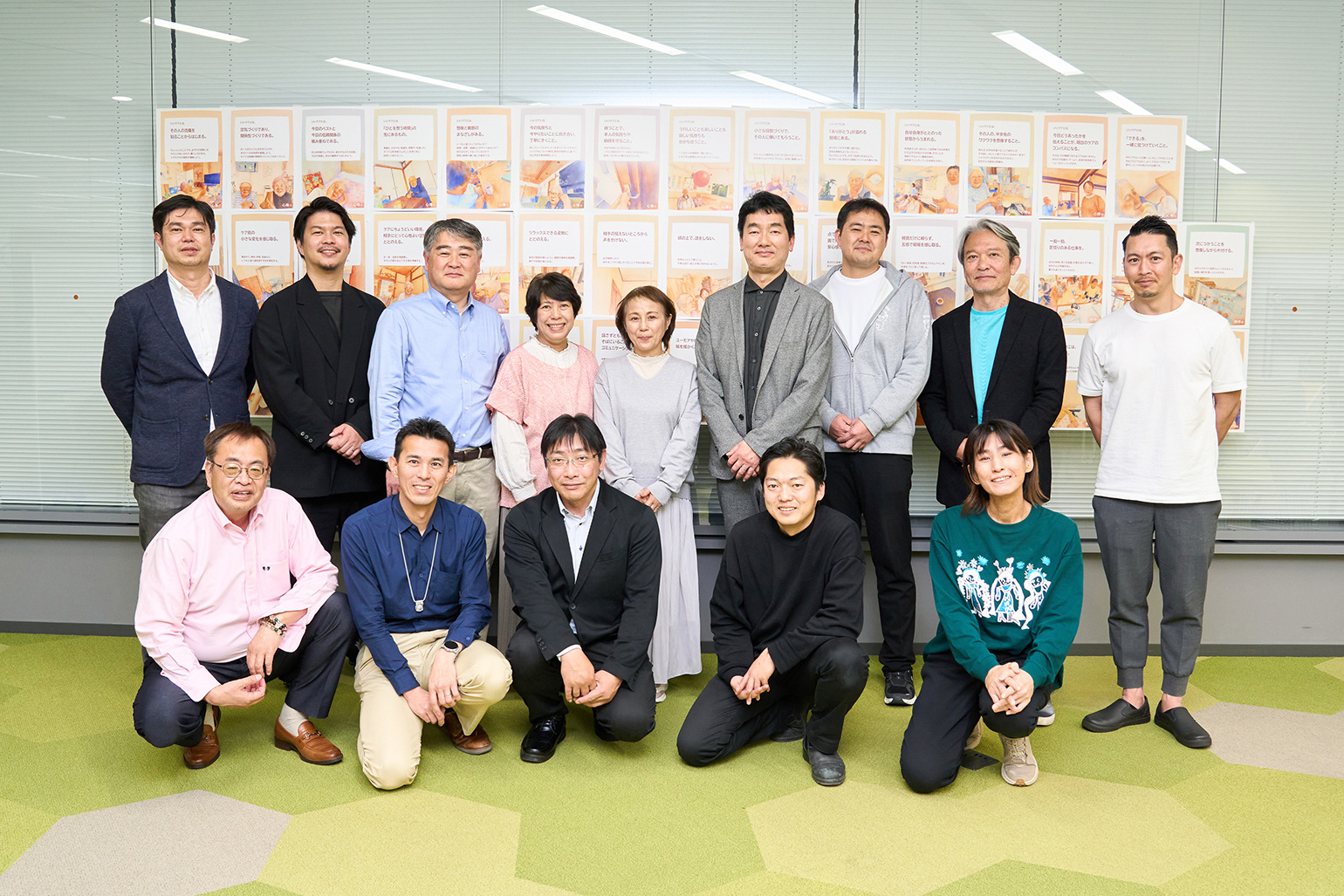
At the debriefing session for this initiative held in March 2026. A commemorative photo featuring the project planning members who actually conducted a “review session” using smart glasses and Gemini, along with members from Dentsu Inc.
General Incorporated Association: National Association of Small-Scale Multifunctional Home Care Providers
Chairman
I manage nursing care facilities and housing support organizations. While we struggle through the gritty, day-to-day challenges, we’re supported by many colleagues and strive to provide care that helps people live their lives to the fullest until the very end. Currently, I’m excited about experiments using AI and smart glasses to visualize what “good care” looks like on the front lines. I hold various titles, but my spirit is always “Yoka Anbe.”
Takahiro Yamakoshi
General Incorporated Association: National Association of Small-Scale Multifunctional Home Care Providers
Secretary General
After working at the Tochigi Prefectural Council of Social Welfare to support citizen and volunteer activities, I gained hands-on experience in community settings such as community-based senior care centers and resident-participatory home welfare services. Subsequently, at Tohoku Fukushikai Sendan no Mori, I gained practical experience in small-scale multifunctional homes and unit care, exploring approaches to daily living support within the community. Drawing on these experiences, I continue to work alongside service providers nationwide to address their challenges.
Motoki Kobashi
Dentsu Inc.
Future Creative Center / Creative Planning Division 6
Communication Creators / Copywriters
True to the name “Genki,” we are communication creators who aim to “energize” people, society, and the world by freely expressing ideas—beyond advertising—through words, video, systems, and agendas. We have received numerous awards for both advertising and non-advertising work.