
Note: This website was automatically translated, so some terms or nuances may not be completely accurate.
 TV Content Social Value Project [2/2]
Why were young people in the Reiwa era so captivated by a romance drama set in the Showa era? —An analysis of Fuji TV’s “Nami Urarakani, Meoto Biyori”

Yuri Ishikawa
Dentsu Inc.
Why were young people in the Reiwa era so captivated by a romance drama set in the Showa era?
As we saw in Part 1, "Waves Gently, A Perfect Day for a Couple" continued to be rewatched even after the finale, with viewers repeatedly savoring the heart-fluttering moments of its iconic scenes, and the discussion even expanded to include ideals of marriage. However, this cannot be fully explained by a mere retro boom or nostalgia-driven consumption. Rather, we believe that underlying this phenomenon is a sense of fatigue toward modern romance itself.In this article, the DENTSU DESIRE DESIGN FUKAYOMI team—which examines current consumer desires through media—explores the views on romance and values in the Reiwa era as revealed by this drama.
*This article is content from VR Digest+, with some editing.
About the DENTSU DESIRE DESIGN FUKAYOMI Team
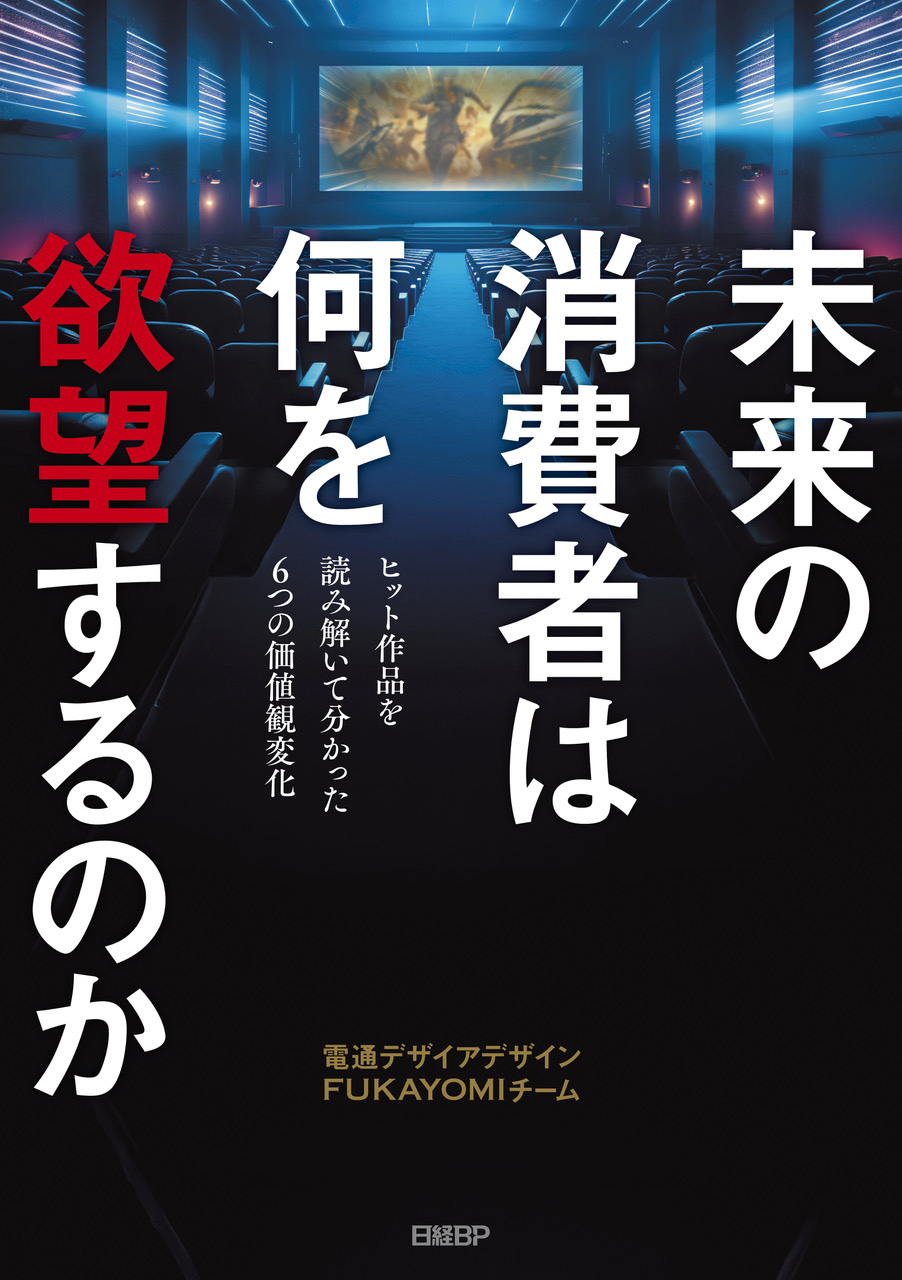
One of the subcommittees of "DENTSU DESIRE DESIGN*," a project team dedicated to consumer research.FUKAYOMI is Dentsu Inc.’s proprietary methodology for analyzing hit films, TV dramas, and anime to predict shifts in consumer values and future desires. Based on the influence of hit content on consumer values, the team compiled a book titled “What Will Future Consumers Desire?—Six Value Shifts Revealed by Analyzing Hit Works,” which was published by Nikkei BP Co., Ltd. on July 26, 2025.
<Table of Contents>
▼Is Romance in the Reiwa Era Too Rational and Exhausting?
▼Is Reiwa-era romance too “correct” to be exhausting?
▼Clumsy Romance Captures Viewers’ Hearts
▼The Equality Depicted in "Gentle Waves, Married Life"
▼Shifting Values Among Viewers of This Work
▼A New Trend That May Emerge in the Future: “Interlocking Asymmetry”
Is Reiwa-era romance too rational—and exhausting?
In the Reiwa era, the spread of dating apps and similar services has expanded romance into a “market.” Relationships that once relied solely on emotion are now evaluated based on overall suitability as a partner. In other words, factors such as conversational skills, empathy, physical appearance, financial stability, and long-term planning are now scrutinized, and romance has transformed into a competition of abilities that follows a process of self-promotion → comparison → optimization → selection.Furthermore, there is a shared sense that “the more wonderful a person is, the sooner they disappear from the market,” and it feels as though romance is taking on the appearance of an “early exit game” rather than the formation of long-term relationships. The author believes that romance, which should begin with emotion, has been transformed into an endeavor optimized by rationality.
Is Reiwa-era romance too “correct” to the point of exhaustion?
Fatigue exists not only in the “market” but also within romantic relationships themselves. The premises of Reiwa-era romance are gender equality, independent individuals, no dependence, and fairness. When it comes to marriage, since daily life cannot be sustained by emotions alone, we often see relationships where partners continuously negotiate household chores, finances, careers, and child-rearing through a give-and-take dynamic. The author believes that underlying this is a modern ethical consciousness that “neither party should be exploited.”Is one person in the relationship bearing all the burden? Are they taking on an excessive share of the work or emotional load? To prevent such imbalances before they arise, roles and responsibilities must be constantly made visible and kept equal, don’t you think?
While this is an extremely important step toward a society of gender equality, it also means that maintaining a relationship now requires constant negotiation and optimization—making the pressure to sustain a romantic relationship significantly greater than before.
People are exhausted by the “market” and exhausted within their relationships. I feel that this two-stage exhaustion is giving rise to relationship fatigue, a more cautious attitude toward marriage, and a general sense that it’s “too much trouble.”
Of course, not all romantic relationships are like this, and I believe there are various other reasons influencing people’s caution toward romance and marriage. However, I suspect there are quite a few people who genuinely feel that this value of acting “rationally and correctly” has become stronger than it was 10 or 20 years ago.

Clumsy Romance Captures Viewers’ Hearts
In this era of double fatigue, *Nami Uraraku, Meoto Biyori* depicted a relationship that required neither skill nor strategy. There was no maneuvering, no self-promotion, no comparison shopping, and no need to prove one’s love. The relationship grew not through special events, but through the accumulation of ordinary, everyday moments. I believe what this series presented was a “relationship that doesn’t require modern, rational dating skills.”
More importantly, I believe the key lies in the fact that this relationship “worked precisely because it was clumsy.” There are no witty remarks or perfect courtship. Rather, they struggle to communicate, misunderstand each other, yet never drift apart. It is through this repetition that their bond deepens. In an optimized dating market, this process would likely be deemed inefficient. However, viewers likely found a sense of authenticity there that cannot be obtained from overly optimized romance.
From the perspective of the rational view of romance in the Reiwa era, the two characters striving to nurture their relationship despite their clumsiness were received as fresh and endearing, strongly fostering immersion and empathy for the series. In other words, “Gentle Waves, Married Life” functioned not merely as a romantic drama, but as a place of healing in an era “weary of modern, rational romantic expectations.”
The Equality Depicted in “Gentle Waves, Married Life”
The most important aspect of this work that I would like to highlight here is the redefinition of “equality.” The couple portrayed embodies the so-called Showa-era roles—a structure where “the man works outside the home, and the woman takes care of the household.” From a modern perspective, this is an asymmetrical model that, in some cases, might even appear to be an unbalanced relationship.
What is interesting, however, is that viewers—including younger audiences—did not reject this as a mere outdated view of gender roles. Rather, they recognized and positively embraced the determination within Takashi to take on the responsibility of protecting Natsumi, Natsumi’s sense of autonomy in taking pride in supporting Takashi, and the mutual respect that arises from their relationship.
In other words, I believe the image of an equal marriage depicted in *Nami Urarakani, Meoto Biyori* was one in which each partner contributed in “areas only they could handle,” and within that, mutual respect, gratitude, and affection were born.
The marital relationship in this work depicted the following conditions: recognizing that the other’s role is indispensable to daily life; a constant exchange of words expressing gratitude and respect; and both partners being aware that they are active participants in the relationship. In this state, the relationship is not hierarchical but rather on equal footing. In other words, the equality depicted here was not based on “what each person did or how much they did,” but rather on “how indispensable their presence is to one another.”
Changing Values Among Viewers of This Work
Modern views on marriage often idealize a relationship in which two independent individuals jointly manage their lives. This perspective holds that distributing roles and responsibilities as evenly as possible—such as how much each partner works, does housework, and shoulders burdens—is a prerequisite for an equal relationship.
However, *A Gentle Wave, A Married Couple’s Fine Day* presented a different model of relationship. The two do not necessarily shoulder the same amount of tasks. Their roles are asymmetrical, and the burdens are not equal. Yet, the reason the relationship does not appear imbalanced, I believe, is that a natural dynamic has emerged in which each partner’s actions support the other’s life, and that sense of support is reciprocated as gratitude and respect.
In other words, this work depicted equality not as something established by “what tasks are shared and in what proportions,” but rather by “how much one feels the other’s presence supports one’s own life.” It presented a shift in values that finds equality not in the perfection of the individual or the precision of task division, but in whether love and respect circulate within the relationship. Wasn’t that one of the aspects of this drama?

A New Trend That May Emerge in the Future: “Interlocking Asymmetry”
Let’s delve deeper. Based on what we’ve discussed so far, the more we strive for equality through an equal division of roles, the more likely it is that the relationship will be fraught with constant negotiation and comparison. While this ensures equality, it can also become a factor that wears down the relationship.
As a reaction to this, I propose “harmonious asymmetry” as a view of marriage that may gain support in the future.
This does not refer to a state where roles and burdens are equal in quantity, but rather a state where partners share the contributions essential to sustaining their life together on different levels.
What matters is not the equal distribution of tasks, but whether mutual support is established across the entirety of daily life. It is not a 50:50 split, but a “100:100 complementary relationship” where each partner gives their all within their own domain. Here, the relationship is built on interlocking rather than comparison.
This complementary relationship is not a return to the rigid gender roles of the past, where “men were for the outside world and women for the home.” Rather, it is the opposite. Precisely because we live in a modern era where gender equality is gradually becoming the norm—where anyone can work in the same fields and shoulder the same responsibilities—I believe we are now exploring new ways of supporting one another that go beyond that.
The future vision of equality is shifting from “always standing side by side in the same state” to “maintaining balance within the relationship as a whole, even while containing imbalances.” Isn’t it this dynamic equilibrium that will come to be valued as a sustainable relationship that is less likely to lead to burnout?
Finally, let me summarize my thoughts. The reason “Gentle Waves, A Perfect Day for a Couple” resonated with me is not simply because it’s retro or because it’s full of heart-fluttering moments. It’s because, in an era weary of “rational love” and “politically correct love,” it presented yet another model.Even if you’re clumsy, don’t say much, or don’t share an equal division of tasks, a good relationship can still flourish as long as gratitude and respect for one another arise within the relationship and the two of you are in balance. This work is urging us to update our values regarding romance and marriage—shifting from “individual equality” to “relational equality.” If you read between the lines, that’s the message that emerges.
Was this article helpful?
Share this article


Newsletter registration is here
We select and publish important news every day
For inquiries about this article
Author
Yuri Ishikawa
Dentsu Inc.
Marketing Consultant