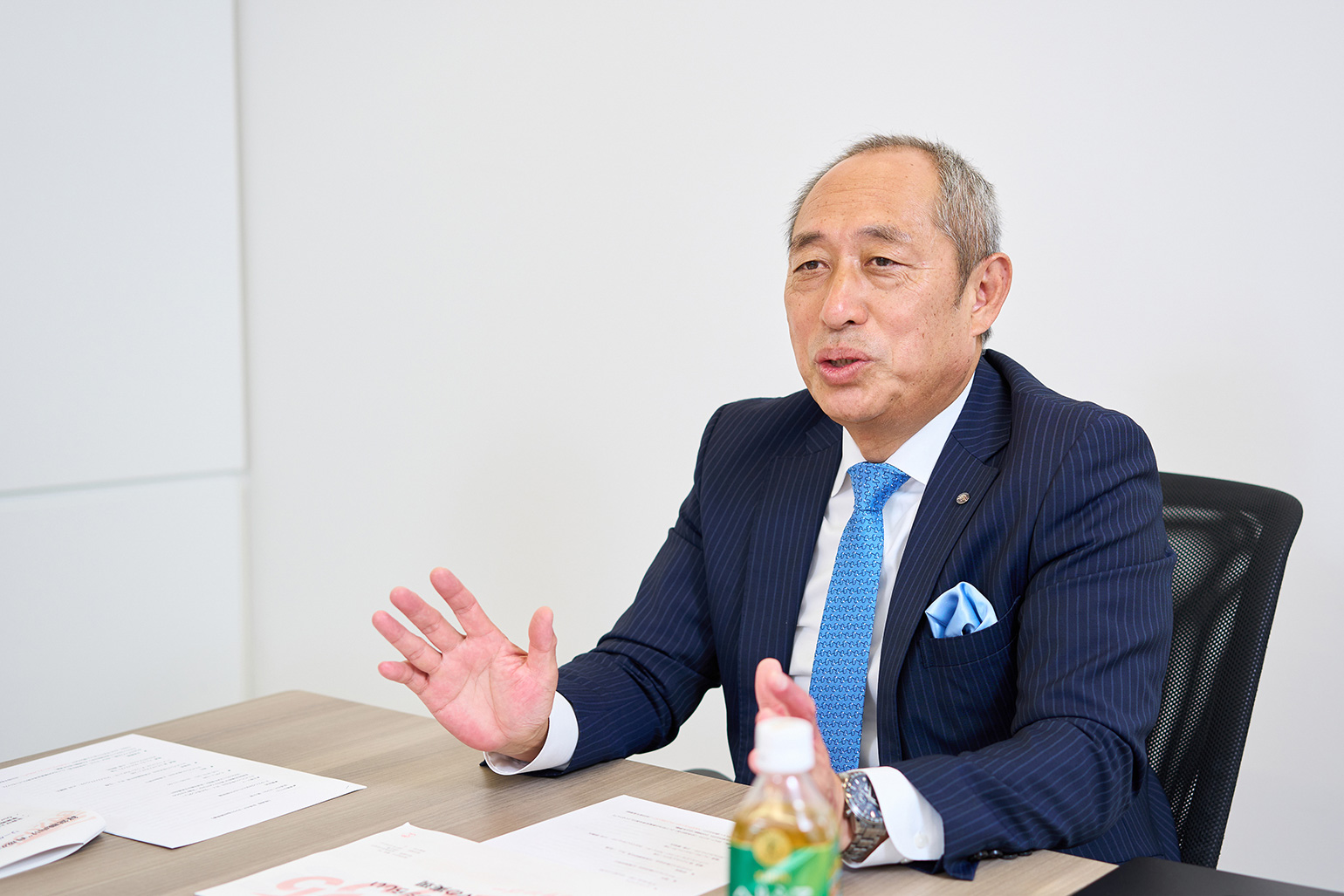
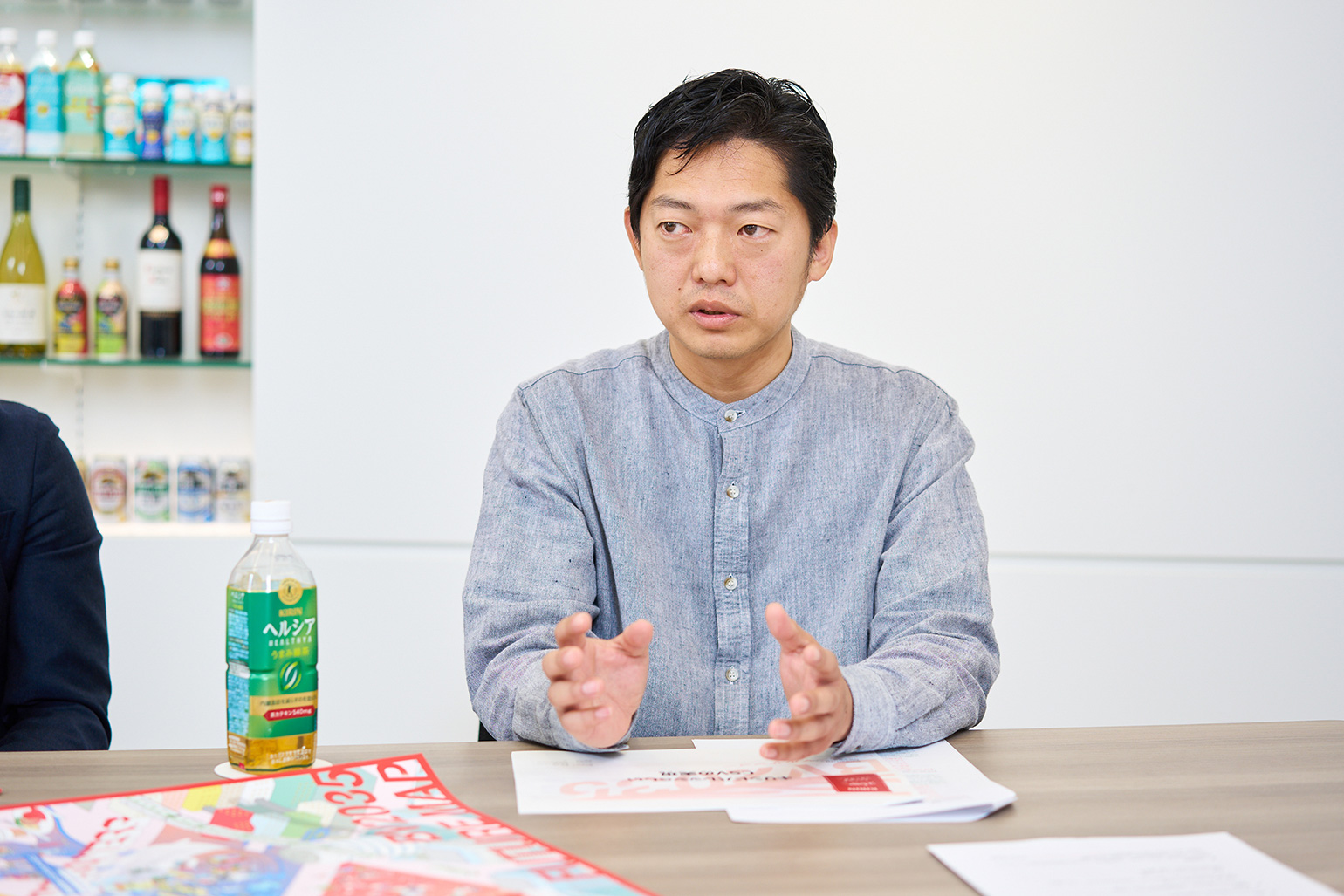
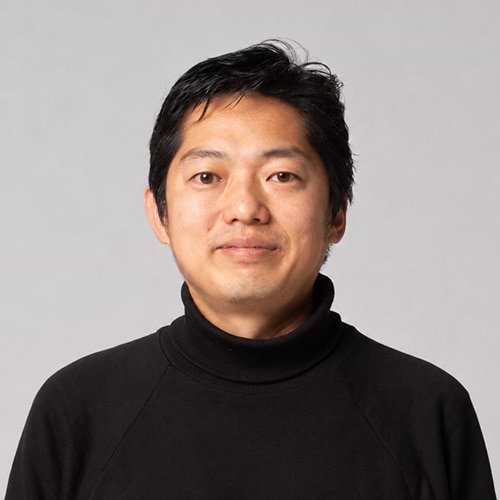
Kirin Beverage President Kazuhiro Inoue speaks. A long-term management vision is not something to be “proclaimed,” but something to be “set in motion.”
This series delves into the essence of business transformation by speaking with top executives who are breaking down all forms of bias and driving internal change as architects of their own organizations.
In this installment, we interviewed Kazuhiro Inoue, President of Kirin Beverage, who unveiled the long-term management vision “BV2035 (Viva Ni-maru-san-go),” which aims to make the company a “leading health science company offering delicious beverages” by 2035.
President Inoue’s primary focus is not on “formulating a long-term management vision,” but rather on a single question: “How can we kickstart transformation within the company?” To instill the BV2035 vision in employees, he commissioned Dentsu Inc. to produce a transformation kickstart video and a “FUTURE MAP.”
In this article, Dentsu Inc. Senior Transformation Producer Tomoyasu Katagai and Creative Director Takaaki Koshiba asked President Inoue what it means to “initiate transformation” as a business leader.
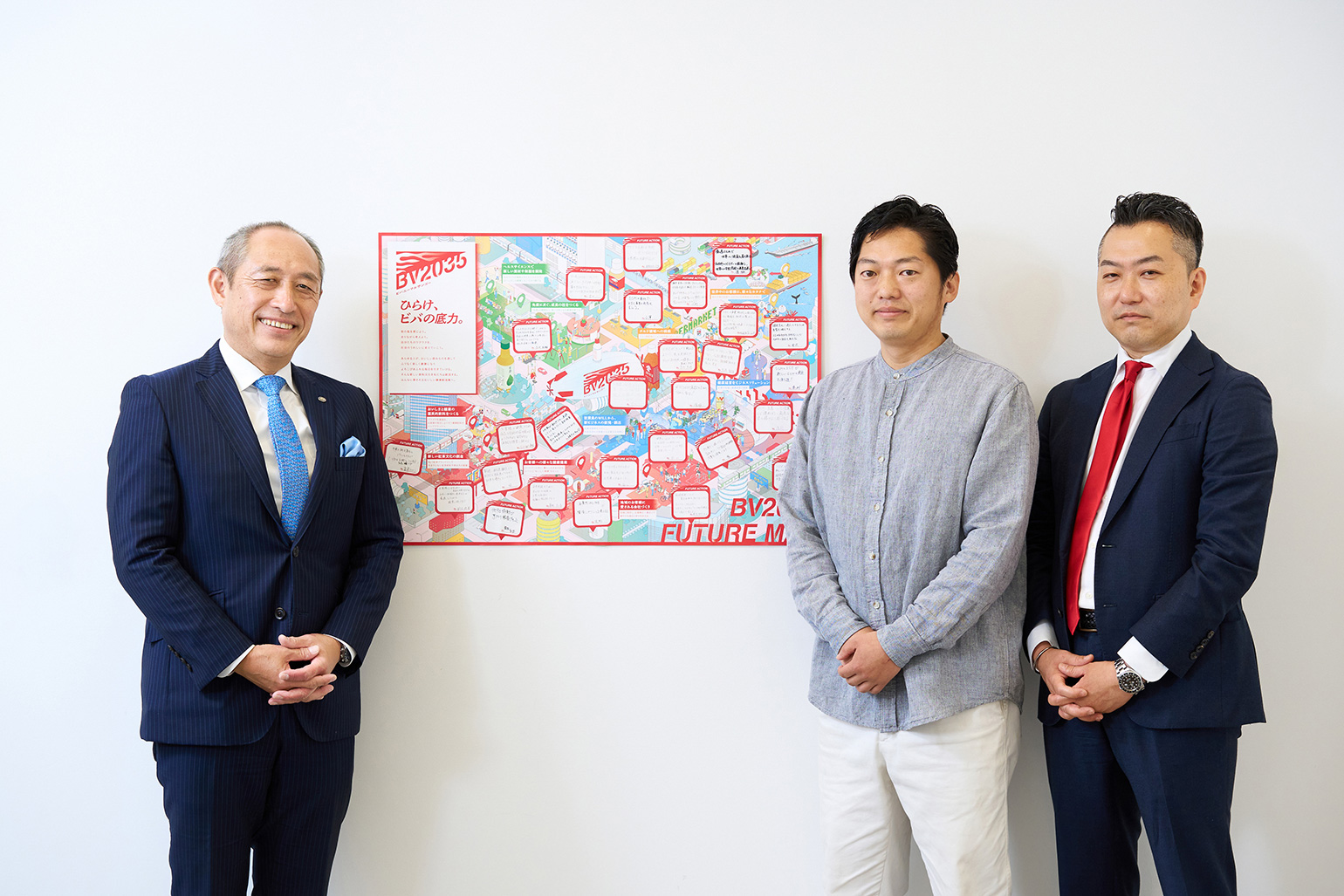
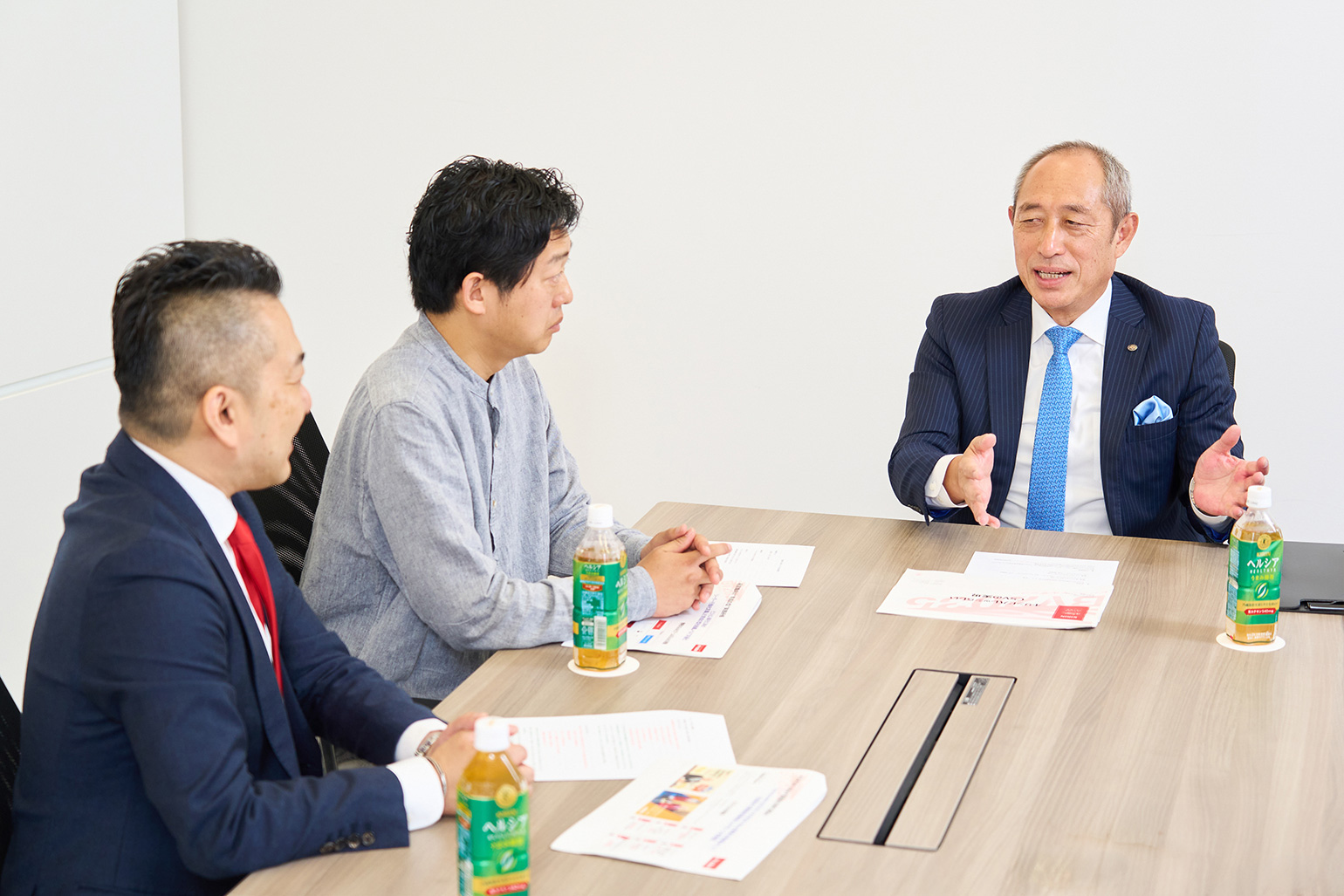
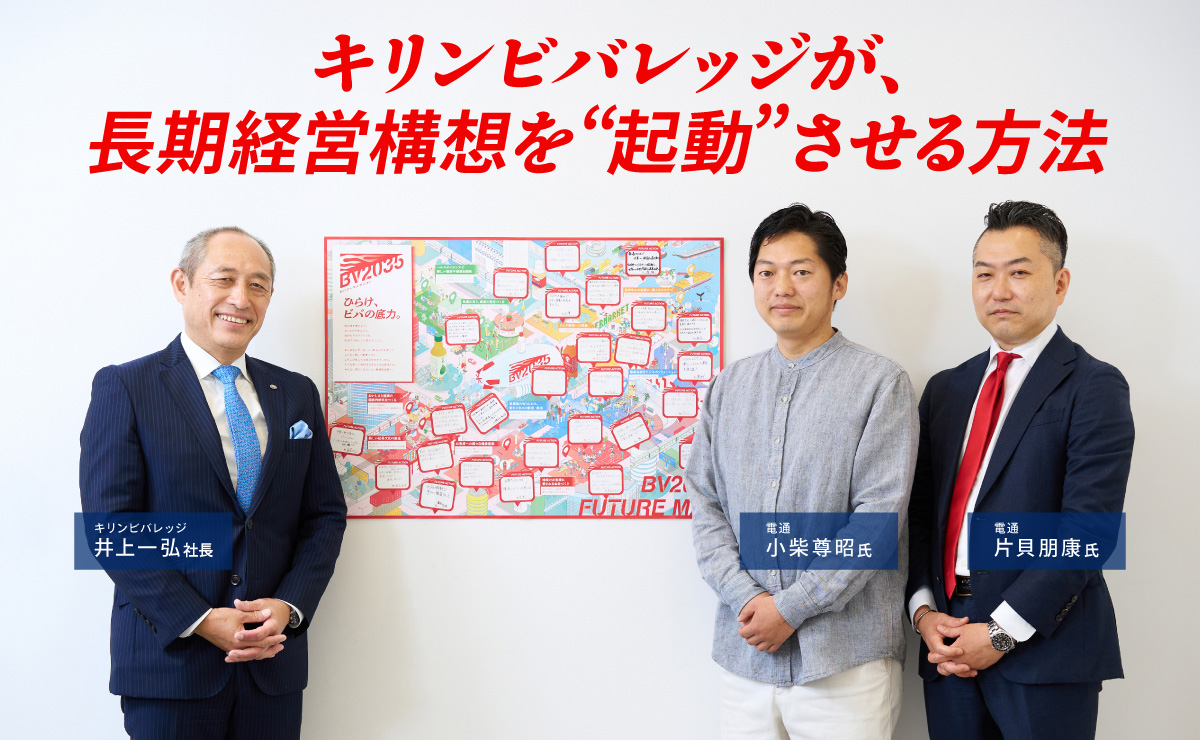
(From left) Kazuhiro Inoue, President of Kirin Beverage; Takaaki Koshiba of Dentsu Inc.; and Tomoyasu Katagai of Dentsu Inc.
We needed to share our vision for 10 years from now with every corner of the organization
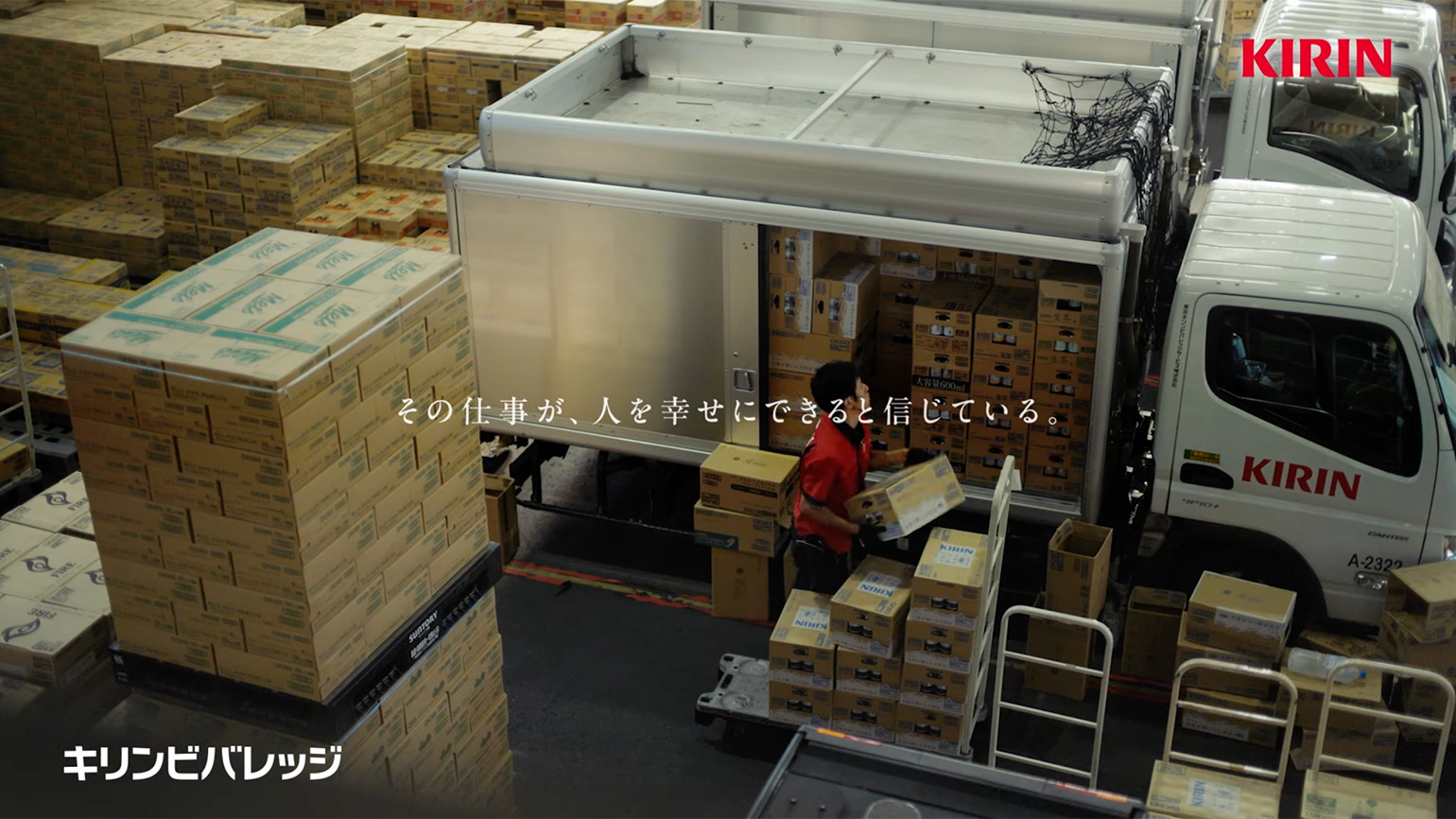
Kirin Beverage’s Long-Term Management Vision “BV2035” Video. Click the image to watch the video
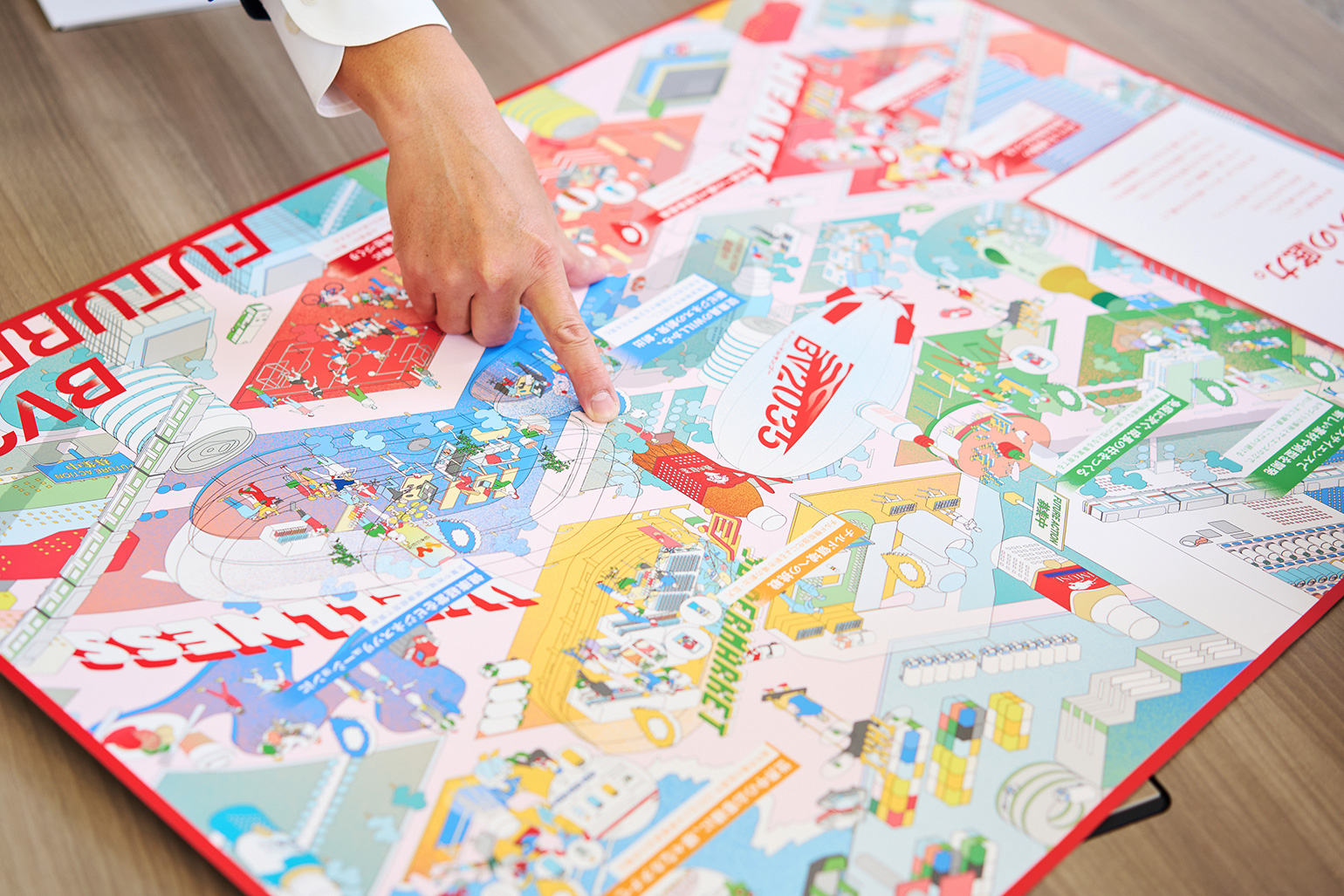
Katagai: In 2025, to coincide with the announcement of the long-term management vision “BV2035,” Dentsu Inc. assisted in the production of a transformation launch video and the FUTURE MAP, which depicts the future we aim to realize on a single poster. First, President Inoue, could you please introduce what BV2035 is all about?
Inoue: It is a long-term management vision that looks ahead to the next 10 years for Kirin Beverage and outlines the direction we should take. With the beverage industry facing an increasingly challenging environment and global conditions becoming more unstable, we asked ourselves, “How should we operate as a beverage manufacturer?” and sought to define the vision we want to achieve 10 years from now.
To that end, we decided to rethink our brands by taking the Kirin Group’s CSV (Creating Shared Value)—that is, “creating value that can be shared with our customers and society”—as our central pillar.
Katakai: So, looking ahead to 2035—that is, 10 years from now—you needed to present a vision that all employees could share.
Inoue: That’s right. Kirin Beverage has the following purpose and vision:
Purpose: “Delivering delicious health to our customers’ everyday lives.” Vision: “Becoming a leading health science company through delicious beverages.”
In other words, this means firmly establishing the health science field as our growth driver and providing solid solutions for our customers’ mental and physical well-being. Furthermore, this vision is a goal that all employees are focused on—it represents the kind of company we want to be by 2035. To work toward this goal, we commissioned Dentsu Inc. to create a transformation launch video and the FUTURE MAP.
Koshiba: Thank you very much. From the very beginning of our discussions right up to now, what I’ve consistently felt is the presence of President Inoue—a leader with such clear passion. To me, he’s “Mr. Inoue, the Source of Passion.”
Inoue: People do tell me I’m a bit overbearing, though (laughs).
Koshiba: When you first approached us, you very clearly articulated the challenge: “We have a solid vision and strategy, but they aren’t getting through to our employees on the front lines.” We focused solely on creating the video and FUTURE MAP so that each and every employee could see themselves reflected in them and become “passionate” as a result.
Something that serves as a “guiding principle” for all employees
Inoue: You’re absolutely right. No matter how much we proclaim our purpose or vision, it’s meaningless if we can’t spark transformation in each and every employee. In that sense, I believe both the video and the FUTURE MAP were created to help employees make the company’s future their own personal concern.
Katakai: When you commissioned Dentsu Inc. to create the transformation-triggering video, could you tell us what elements President Inoue considered most important?
Inoue: Above all, the focus had to be on frontline employees. Otherwise, the frontline would just think, “Headquarters is just doing something on its own.” It wasn’t about a video that simply explains strategy from the top down; what mattered was how to make the vision feel personal to them and turn it into a driving force. So, for example, we asked them to include plenty of footage of frontline employees actually at work in the video.
By doing so, I wanted to show employees nationwide that we’re truly listening to their voices and bringing everything together in one direction to create a powerful force. Since we’ve had such a great video created, I intend to make the most of it.
Katakai: It truly makes me happy to see the FUTURE MAP and the Transformation Kickoff Video being put to practical use on the front lines—in factories, various departments, and everywhere else. I was deeply moved to see that what we created is actually making a difference in everyone’s work. When I saw the FUTURE MAP on the cover of the Long-Term Management Plan, I almost cried.
Inoue: Whether it’s the FUTURE MAP or the video, I tell our employees to use them for “decision-making.” Since we’ve clearly defined our destination for the next 10 years, if they ever lose their way along the path, I want them to watch the video again, look at the FUTURE MAP, and make their decisions based on that. We created these tools to serve as a foundation for on-the-ground decision-making. And it’s crucial that this isn’t a top-down effort—rather, each and every employee must take ownership and drive the transformation with a sense of resolve.
Can’t a vision be conveyed through words alone? The reason we created the video
Katakai: As we took on this project, right from the initial orientation, there were plenty of hints about the worldview that President Inoue and Kirin Beverage are aiming for—concepts like “fighting spirit” and “positive attitude.” Or rather, the answers were already laid out for us.
In particular, President Inoue placed great importance on the condition you mentioned earlier: “something to trigger transformation among frontline employees.” Was the concept of triggering employee transformation something you’d been sensing on a regular basis?
Inoue: That’s right. To a certain extent, this is unavoidable—there’s always a gap between the top leadership and the front lines, isn’t there? Ideally, if front-line employees could all speak with one voice about what the management team has envisioned and act without wavering, that would be the shortest path to realizing the management vision, wouldn’t it? But in reality, it’s like a game of telephone—the message inevitably gets distorted. By the time it reaches the front lines, the words have already changed.
A vision is, by its very nature, visual—it’s a mental image. No matter how much you explain it in words, the vision each person envisions will vary. That’s why we needed the video and the FUTURE MAP. When people see the visuals with their own eyes, everyone’s understanding stays consistent, doesn’t it?
Katakai: That’s true. President Inoue, even while acknowledging that some aspects don’t get across, places great importance on dialogue with the front lines, doesn’t he? I was surprised to see how many opportunities you’ve created for dialogue with the front lines.
Inoue: As a leader, I have to pick up on what the people working hard on the front lines are currently struggling with or thinking about. Doing so gives them energy. I’m conscious of serving as that kind of lubricant. It’s the leader’s role to create an environment where everyone working at this company feels, “This is nice,” “I’m happy here,” or “I’d like to try something like this.”
Katakai: From the perspective of frontline motivation, it’s important for feedback to reach management through a bottom-up process, isn’t it?
Inoue: However, conversely, with top-down communication, there were inevitably times when we felt, “It just isn’t getting through.” That’s unavoidable. Due to the nature of their work, frontline staff aren’t necessarily looking at the entire value chain from the very beginning. But right now, they’re doing their very best with the tasks right in front of them. After all, that’s how roles are divided. For that reason, we consulted with Dentsu Inc. to convey through visuals what’s hard to express in words.
Packed with “voices from the front lines” rather than a top-down approach
Katakai: To summarize what we’ve discussed so far, it’s precisely because the video incorporates so many voices from the front lines—rather than being a top-down directive—that all employees are able to take ownership of the transformation and drive it forward.
Inoue: Exactly. To put it another way, “initiating” means “participating.” I refer to an organization where employees actively participate and commit of their own accord as a “bustling organization,” and I conveyed to Dentsu Inc. that this is the kind of buzz we wanted to create. By the way, by “bustling,” I mean a feeling where all the employees look genuinely happy, are lively and energetic, and are moving about with vitality.
Koshiba: I see. So, on a gut level, how “bustling” is it right now?
Inoue: We can’t reach a high level overnight, so I’d say we’re at about a 60 out of 100 (laughs). But since we announced BV2035, I feel like that “buzz” has really started to take off. That’s because we involved the front-line staff, incorporated their thoughts, and created it together.
Koshiba: When I interviewed everyone who appeared in the video, I spoke with each person one-on-one to hear their thoughts directly. As we were creating it, I kept thinking that rather than just showing “what the company envisions,” I hoped to convey “the future everyone sees and the passion behind it.” In that sense, I think we were able to embody the concept President Inoue mentioned: “listening to the voices from the front lines and creating it together.”
Inoue: That’s right. By the way, when it comes to a vision, it really takes root when you actively share it with others, rather than just passively receiving it. For example, everything a sales representative needs when making a proposal on the front lines is woven into the video and the FUTURE MAP. We designed it so that people would naturally “use” it. By sharing our vision, I want each and every employee to take ownership of it.
When I visit clients, I always make sure they watch the video first. They invariably say, “What a bright and positive company you have,” so I can start the conversation by saying, “Right? That’s exactly the kind of company we are” (laughs).
Koshiba: Actually, even compared to videos from other companies, the intonation of the narration and the energy of the music are quite “bold,” aren’t they? (laughs)
Inoue: Exactly. Speaking of music, the first version I saw had a rather mellow closing track. We had that fixed, didn’t we? (laughs).
Katakai: This transformation launch video is packed with voices from the front lines—what kind of feedback have you been getting from employees who’ve seen it?
Inoue: We definitely hear a lot of positive feedback about how they’re happy that their own voices are being shared as the company’s voice. On the other hand, since we didn’t use all the footage we shot, the other day when I went to the factory, I got scolded: “I’ve watched it over and over, Mr. Inoue! When am I going to appear?” “My hands aren’t even in it!” (laughs). I kept saying, “Sorry, sorry.”
Katakai: President Inoue, you don’t even appear in the video for a single second (laughs). But it’s a sign of a good relationship that employees feel comfortable saying that to you.
Inoue: This is actually quite a key point, and it ties in with what I mentioned earlier about “top management must act as a lubricant.” It’s not that I’m particularly gentle, but it’s important for employees to feel like, “Let’s just bring anything to the president first and see what he says.”
Also, in terms of employee feedback, the fact that we focused on “vending machines”—one of Kirin Beverage’s founding pillars—was well-received by our veteran employees. They noted, “Mr. Inoue hasn’t forgotten about vending machines.” It’s not just vending machines; everyone has their own ideas about what constitutes this company’s valuable management resources. If that’s the case, I think expressing those ideas in terms of their greatest common denominator can turn them into a single, powerful force.
FUTURE MAP: Visualizing Employees’ “Will”
Katakai: What did you find particularly effective about the FUTURE MAP?
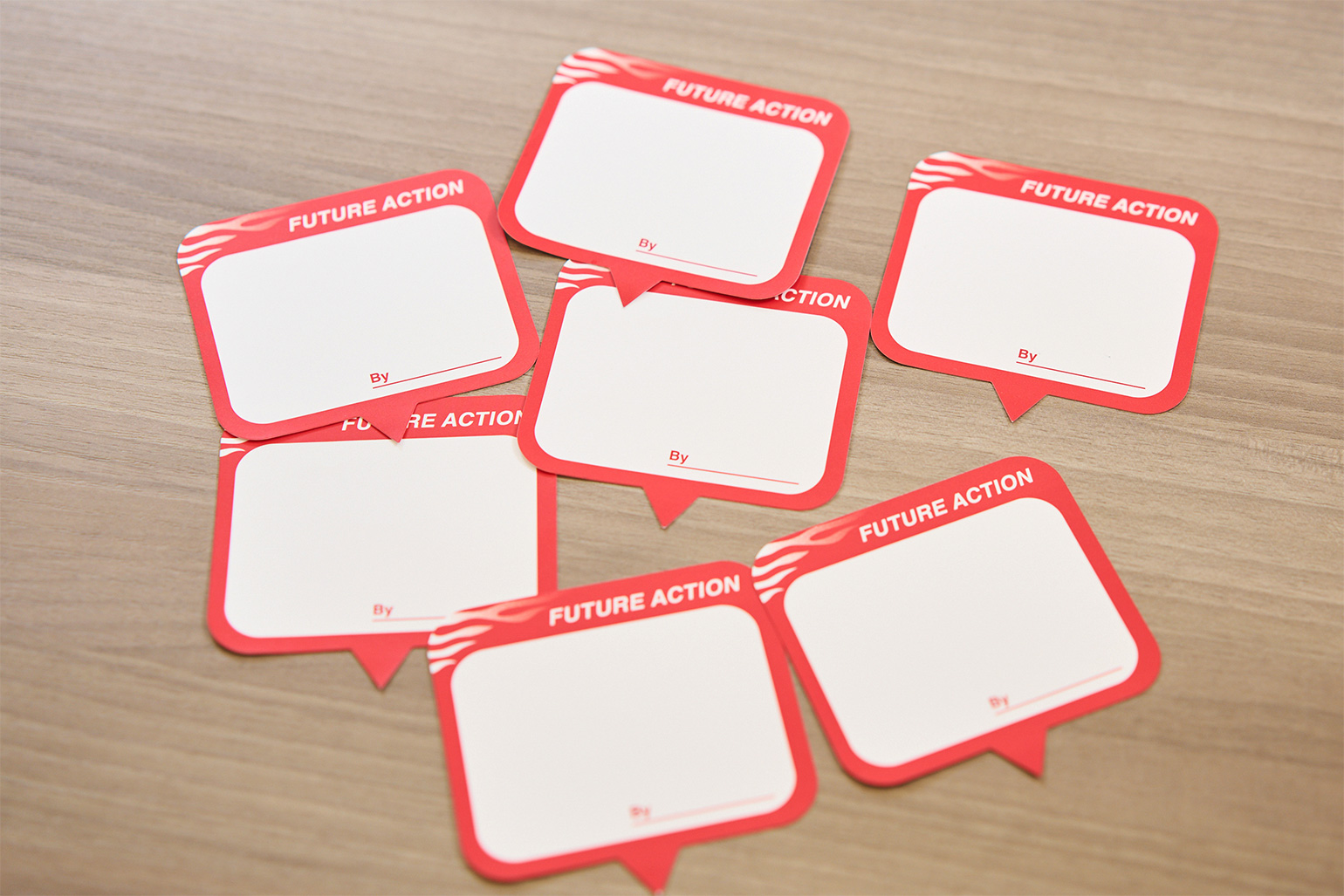
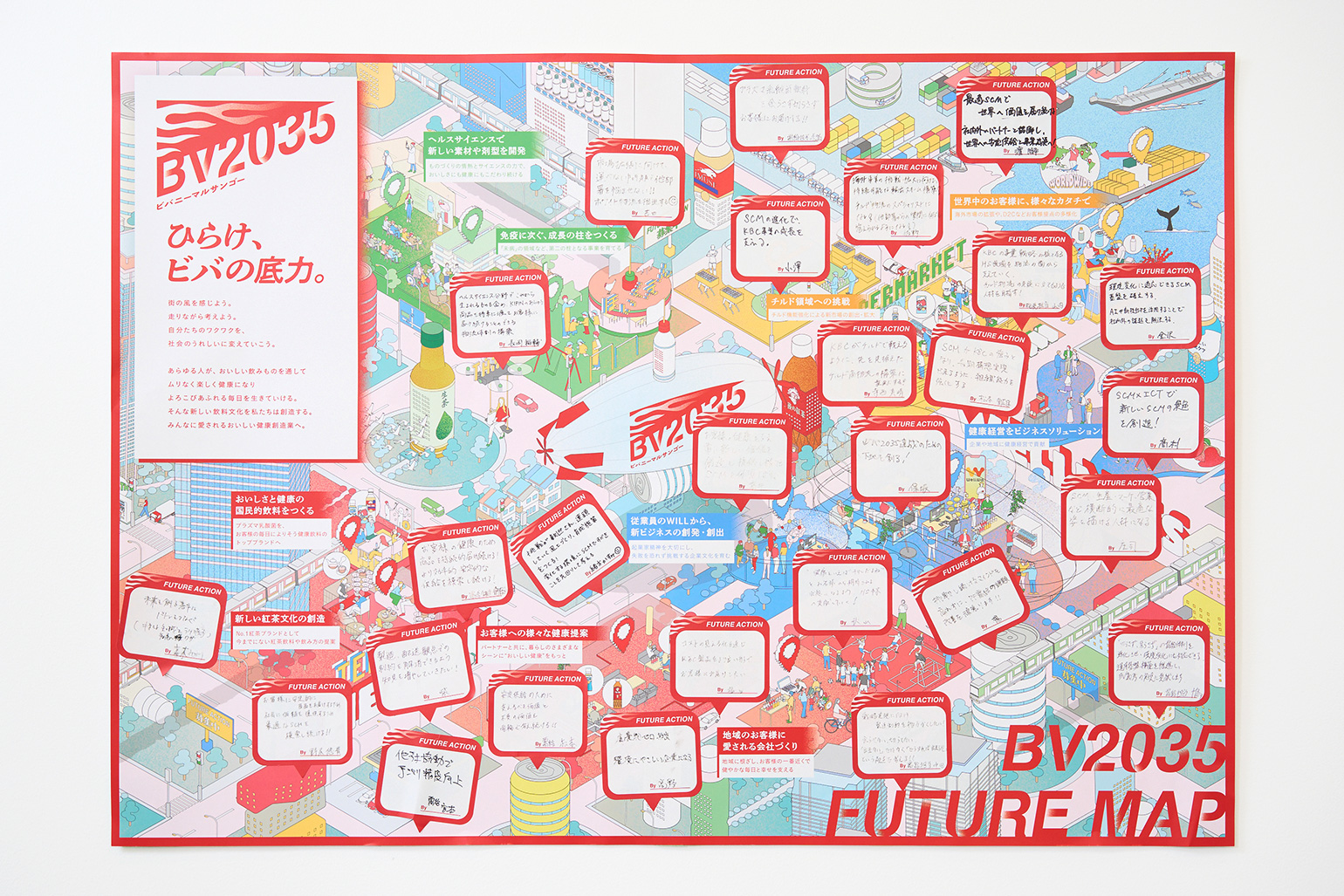
Inoue: Just like with the video, I requested that it be designed so each employee could take personal ownership of it. As a result, we created an “unfinished future map” that is completed when employees post their own ‘Will’ on it.
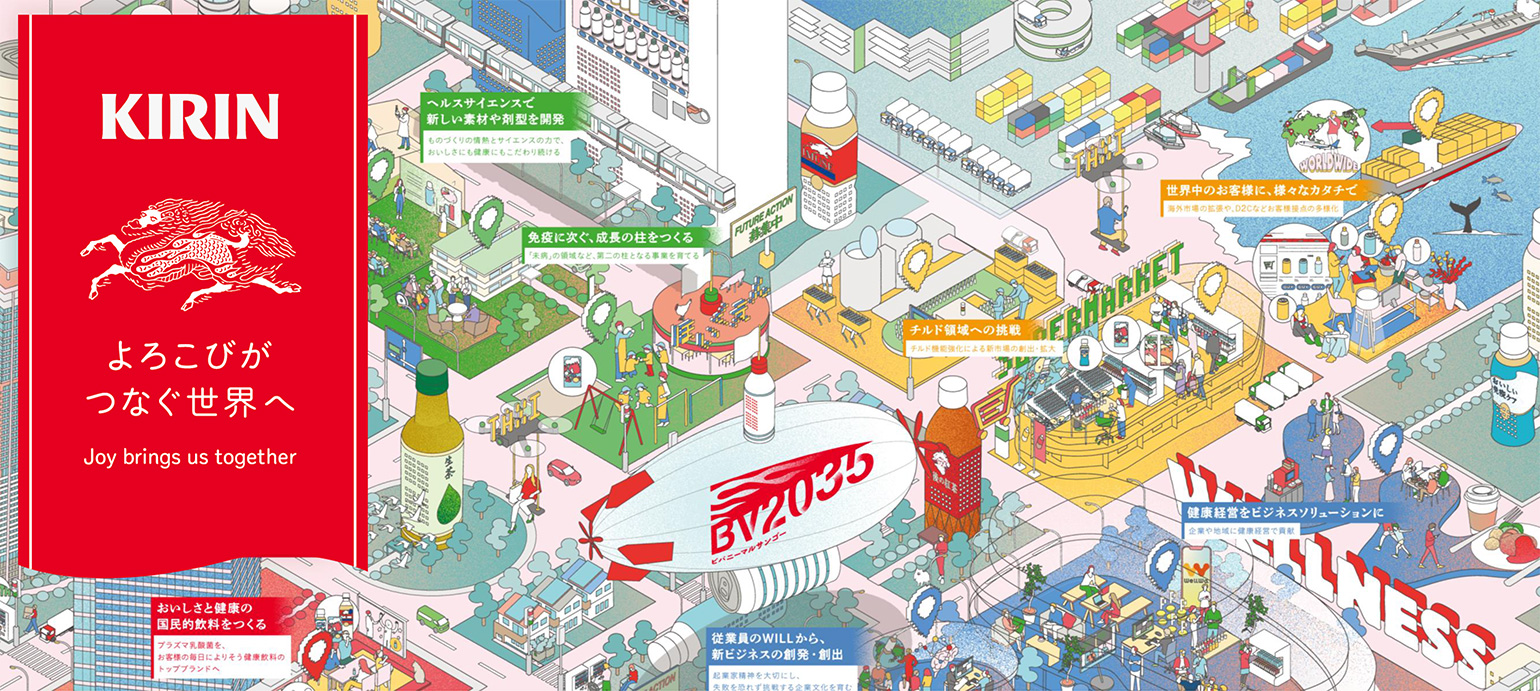
What I liked about the FUTURE MAP was that the framework was very easy to understand. The basic structure follows the “upward-sloping” trend favored by veteran employees. At the origin in the lower left are our current strong brands, such as “Afternoon Tea” and “Nama-cha.” These are trending upward toward the future. Moving to the upper left, “Health Science”—a new value proposition—shines in green, and there are new business ventures in the lower right as well. I really liked how this structure was neatly divided into four quadrants.Also, as you’d expect, there’s a vending machine here too.
Koshiba: What we prioritized in proposing and creating the FUTURE MAP was not just drawing it on our own, but co-creating each scene one by one with everyone’s input. Each scene is based on a strategic business objective, and we worked with everyone to consider how society would specifically change if those business objectives were actually implemented in the real world.
Katakai: This is what emerged when we visualized the long-term management vision proposal you provided. Plus, since you gave us the keyword “excitement,” our starting point for generating ideas was to paint an exciting vision of the future—specifically, how society would change in 10 years thanks to Kirin Beverage.
Inoue: You just mentioned “co-creation.” Whether it was the video or the FUTURE MAP, this wasn’t a process where we simply “placed an order and had it delivered,” was it? For this project, we appointed project leaders and promotion coordinators from each of our corporate divisions and on-site teams to facilitate discussions, including on the messaging.
Katakai: That’s right. Even without Dentsu Inc., people from all over the country gathered for meetings and discussed ideas. I think this truly is a transformation-kickoff video and FUTURE MAP created by Kirin Beverage employees nationwide.
Koshiba: Building on that, Dentsu Inc. took that passion and channeled it into creative work that really brings that energy to life. The director in charge this time had an incredible drive to capture people’s passion and filmed by staying closely immersed in the field throughout the process. I think we all—myself included—did our best to transform everyone’s passion into something tangible.
Inoue: We consulted with Dentsu Inc. on various matters right from the conceptual stage, and we’re always truly grateful for their support. I think one of Dentsu Inc.’s strengths is that they’ve created a structure that makes it easy to consult with them. We look forward to continuing to work with you in the future.
Katakai: Thank you very much! From our perspective, the job should have ended with the delivery of the video and posters, but in reality, it hasn’t—and I’m incredibly proud that it “continues” in the real world. I’m looking forward to seeing the video and posters continue to make an impact at Kirin Beverage’s sites all the way through 2035.
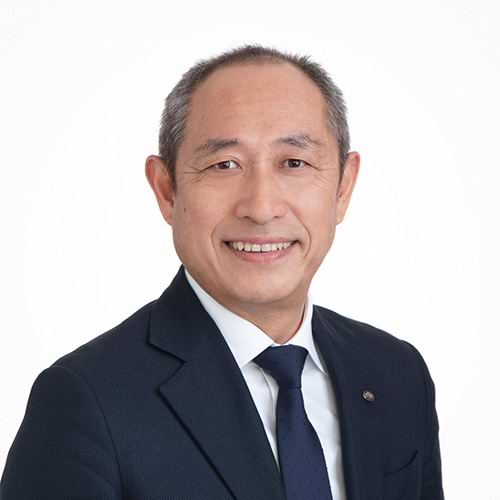
Born in January 1966 in Saitama Prefecture. After graduating from the Faculty of Economics at Aoyama Gakuin University in 1988, he joined Kirin Brewery Company, Limited. In 2003, he became General Manager of the Tokyo Metropolitan Distribution Division 3, Tokyo Metropolitan Region Headquarters, Alcoholic Beverages Sales Division; in 2015, General Manager of the Marketing Department at Kirin Brewery; and in 2021, Managing Executive Officer and General Manager of the Distribution and Sales Division, Marketing Headquarters. In 2024, he was appointed President and Representative Director of Kirin Beverage.
Tomoyasu Katagai
Dentsu Inc.
第3ビジネスプロデュース局
Senior Transformation Producer
He develops resonant BRAND ACTIONS through a consistent narrative spanning strategy to execution. To expand his scope of activities, he joined Drill Inc. in 2012 and has held his current position since 2025. A business producer who is passionate about soccer and entertainment, he also handles creative direction. He has won numerous advertising awards, including a Gold Lion at the Cannes Lions.
After working at Dentsu Future Creation Group, he joined his current organization. Focusing on “people-centric” transformation, he supports corporate organizational and talent revitalization as well as regional development. His motto is to use creativity that amplifies people’s passion and to manage sustainable projects aimed at solving social issues. As his life’s work, he also practices “Photo-Revolution,” an approach to problem-solving that harnesses the essential power of photography.
Kirin Beverage President Kazuhiro Inoue speaks. A long-term management vision is not something to be “proclaimed,” but something to be “set in motion.”

 Architect of Transformation [17/17]