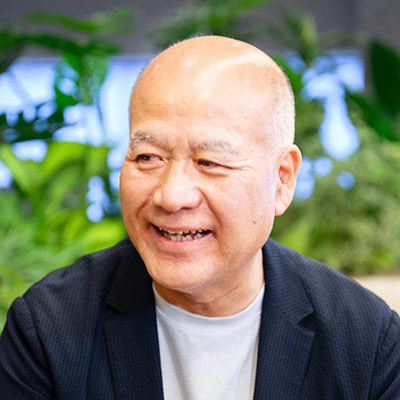
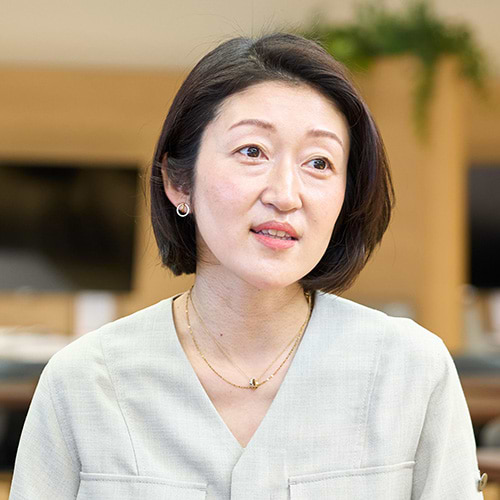
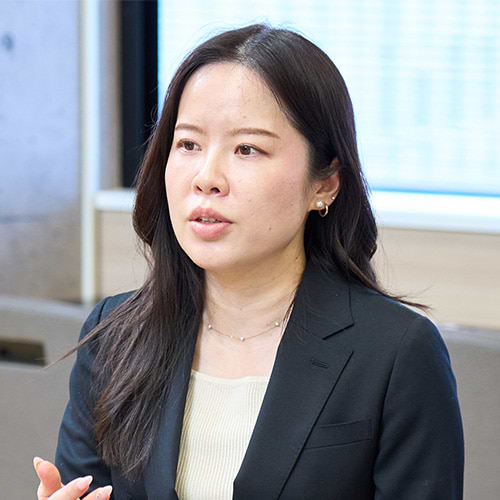
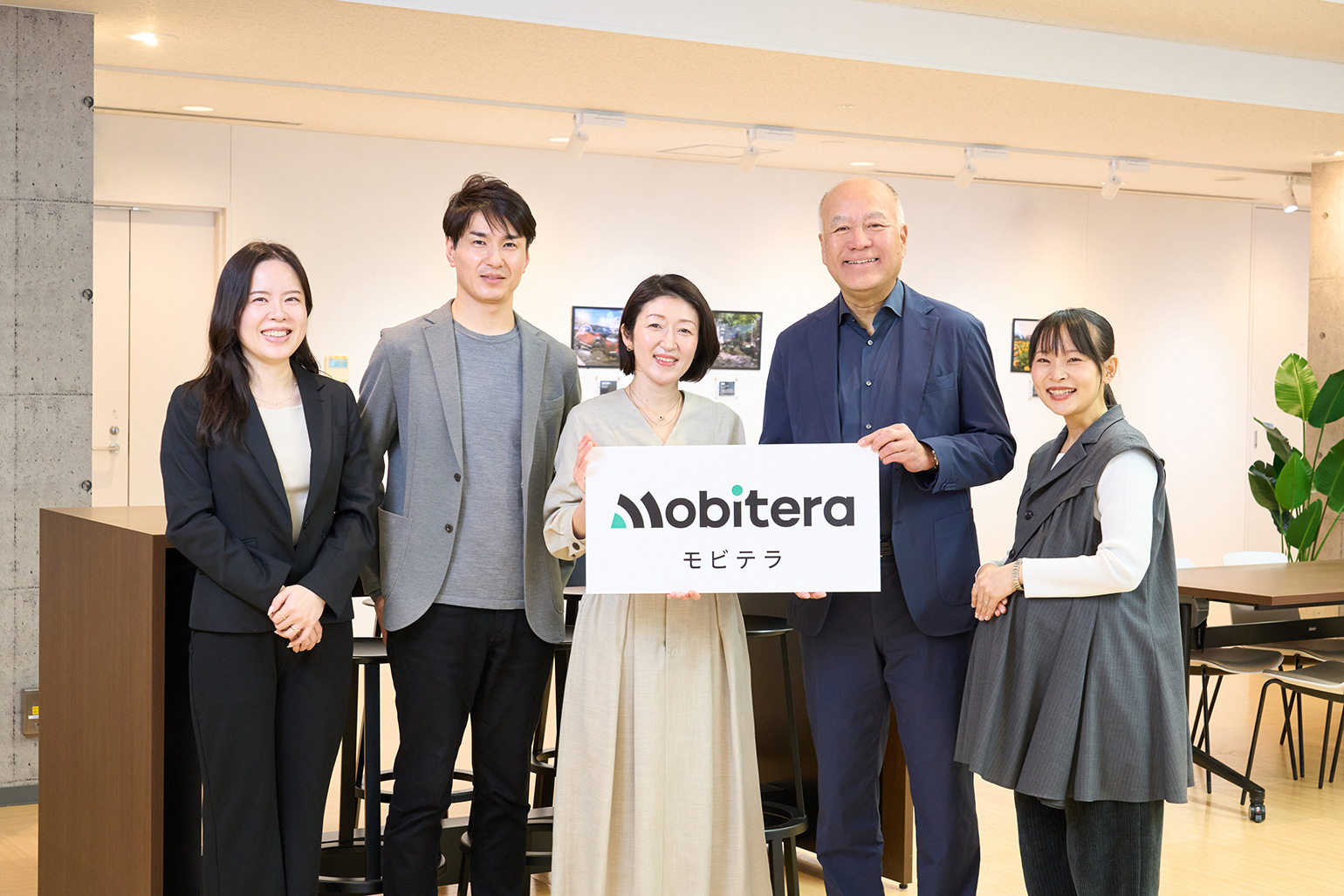
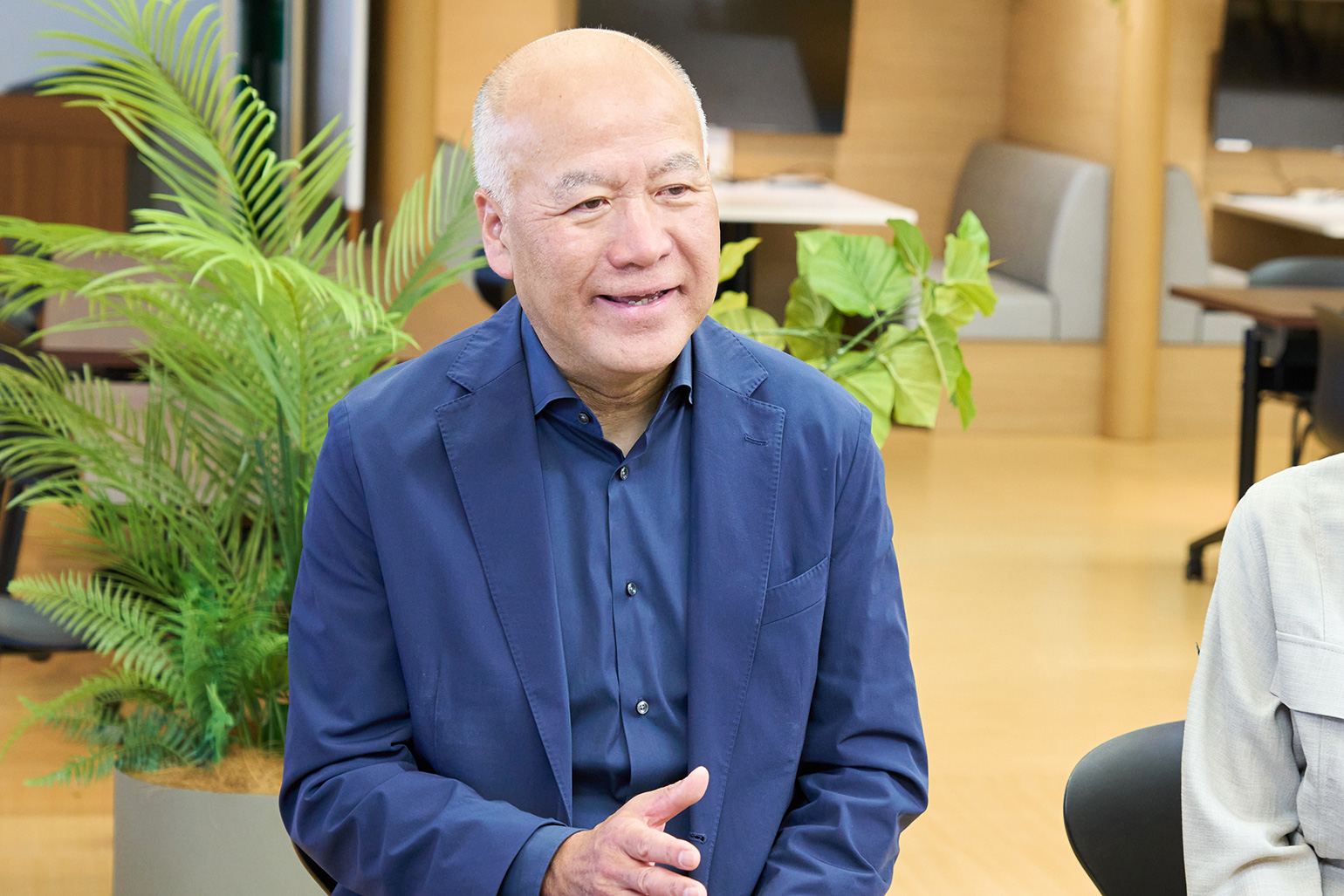
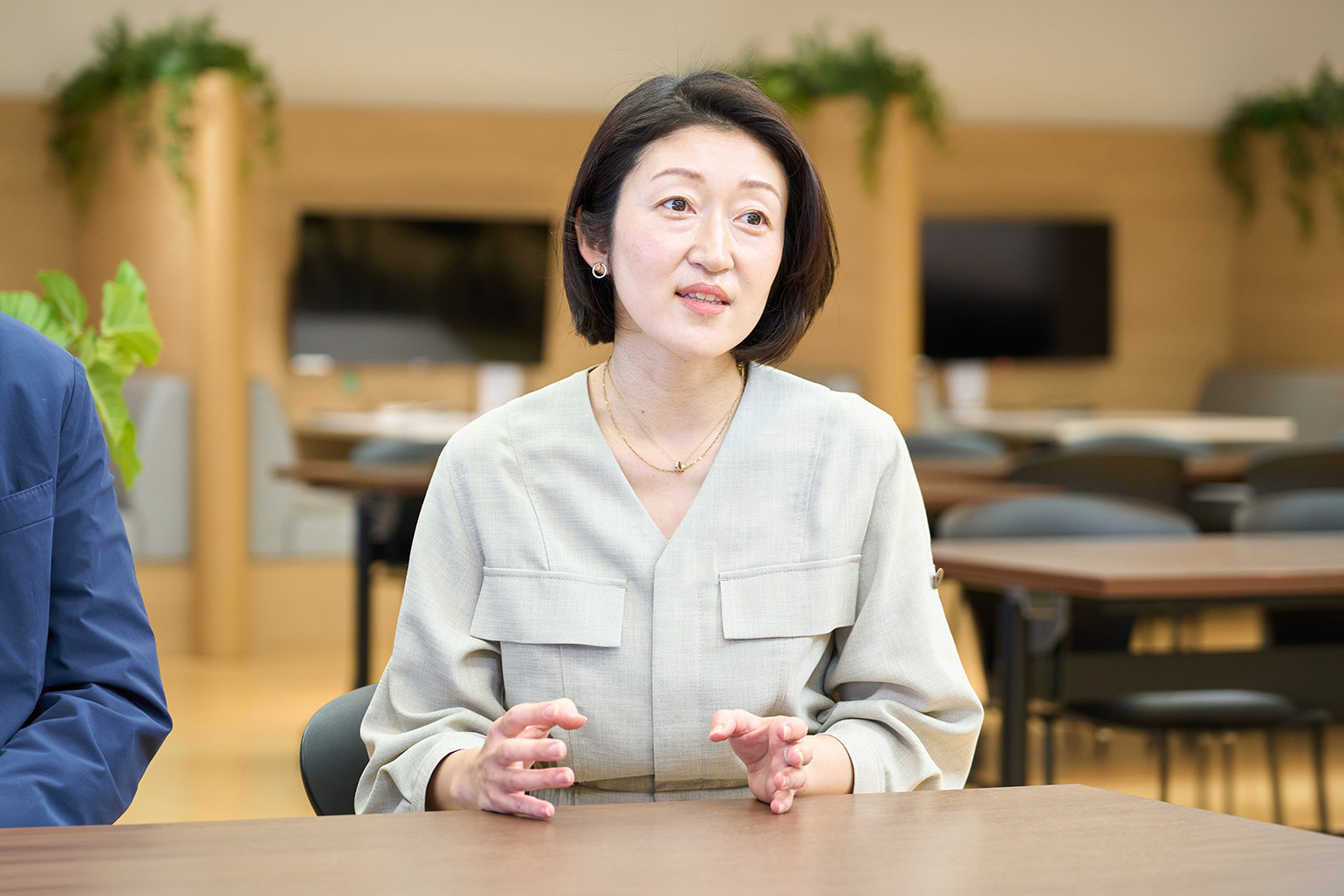
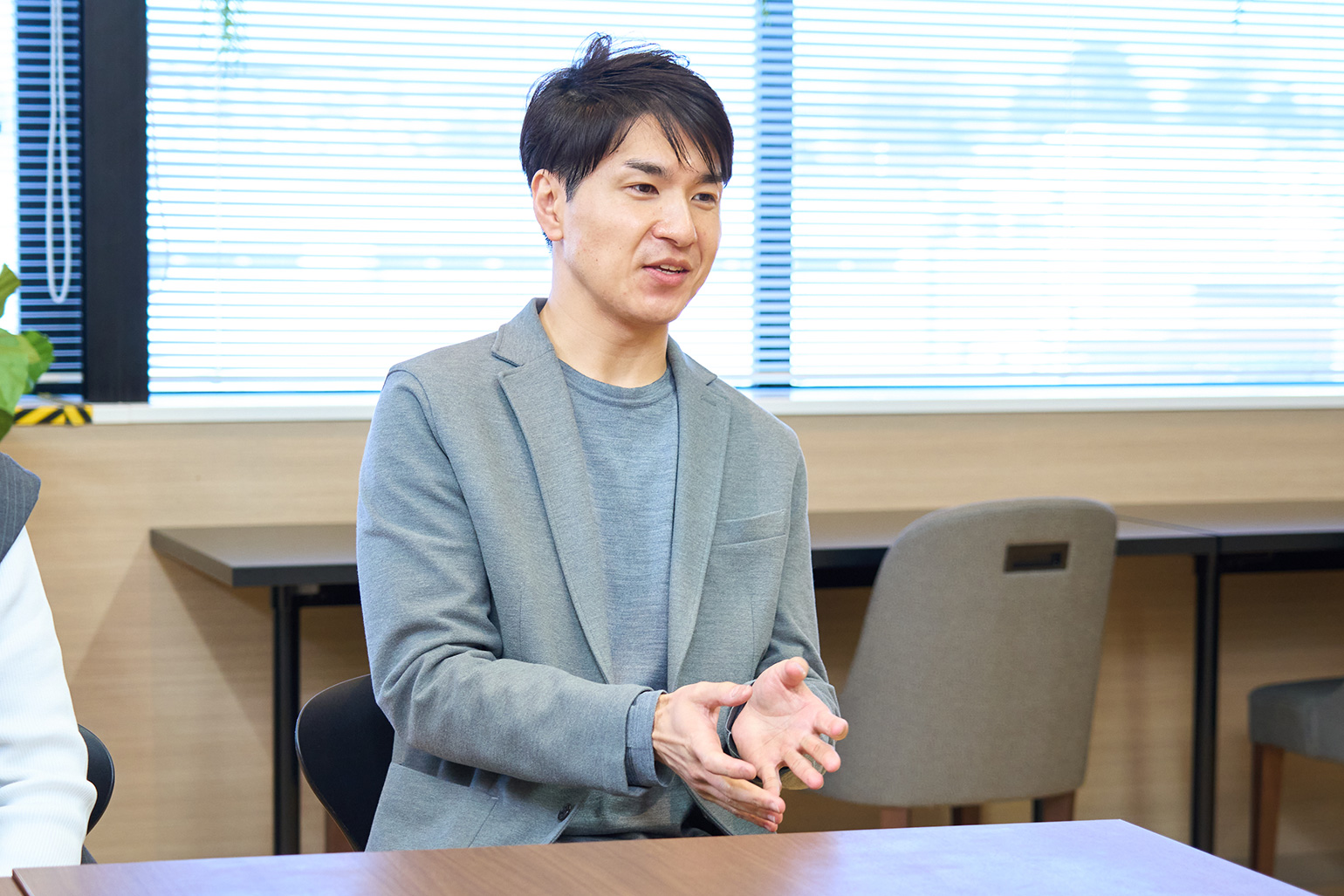
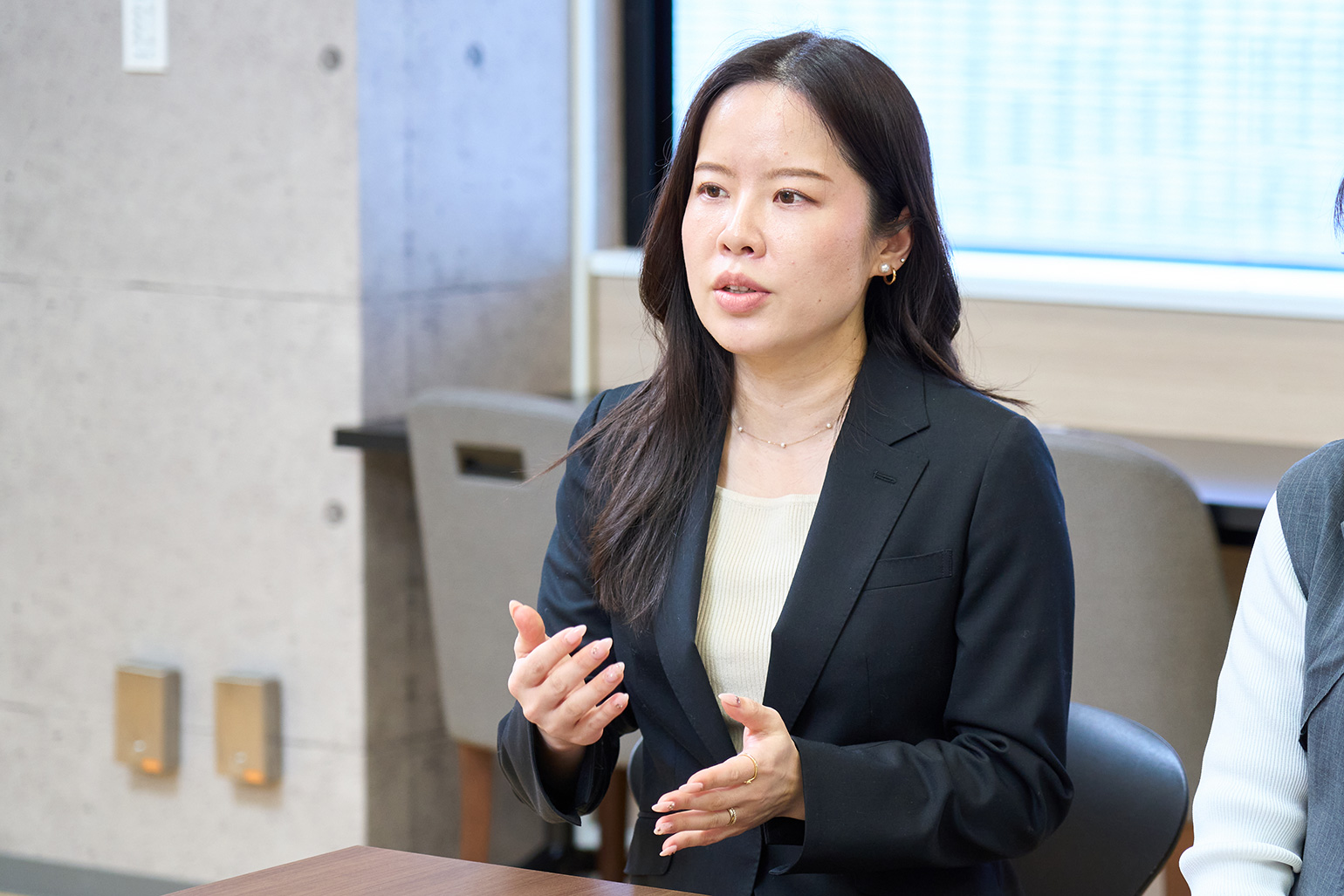
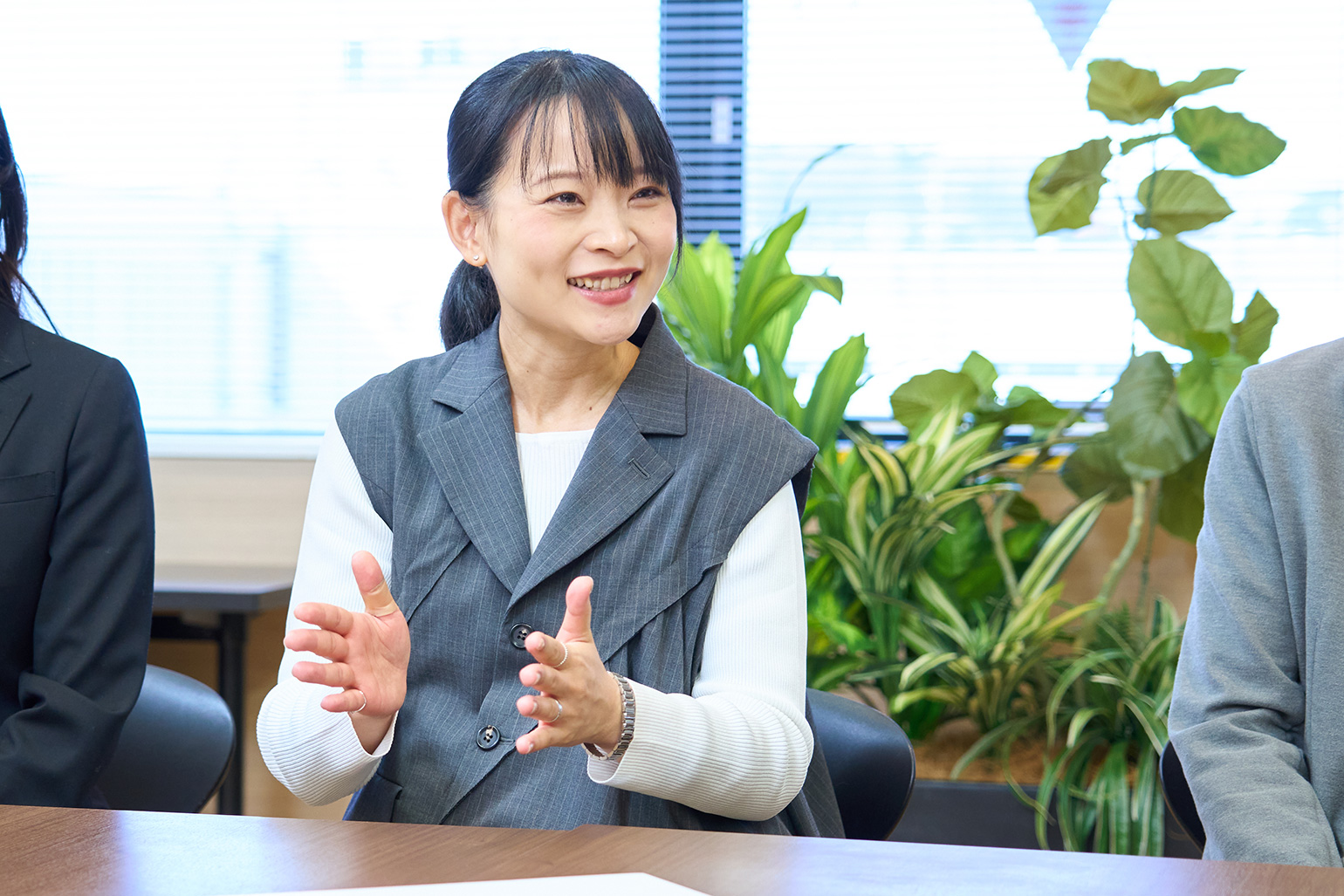
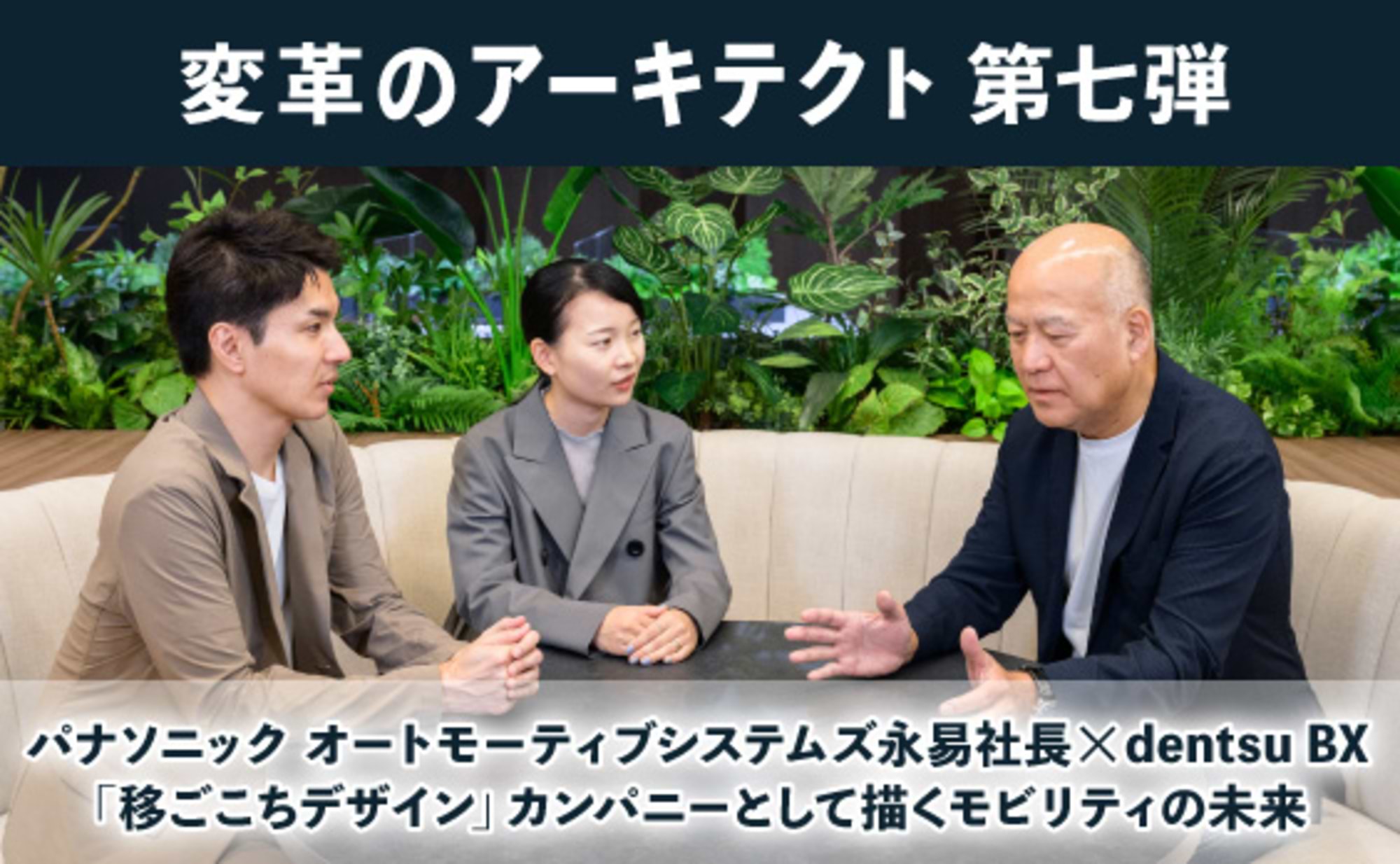
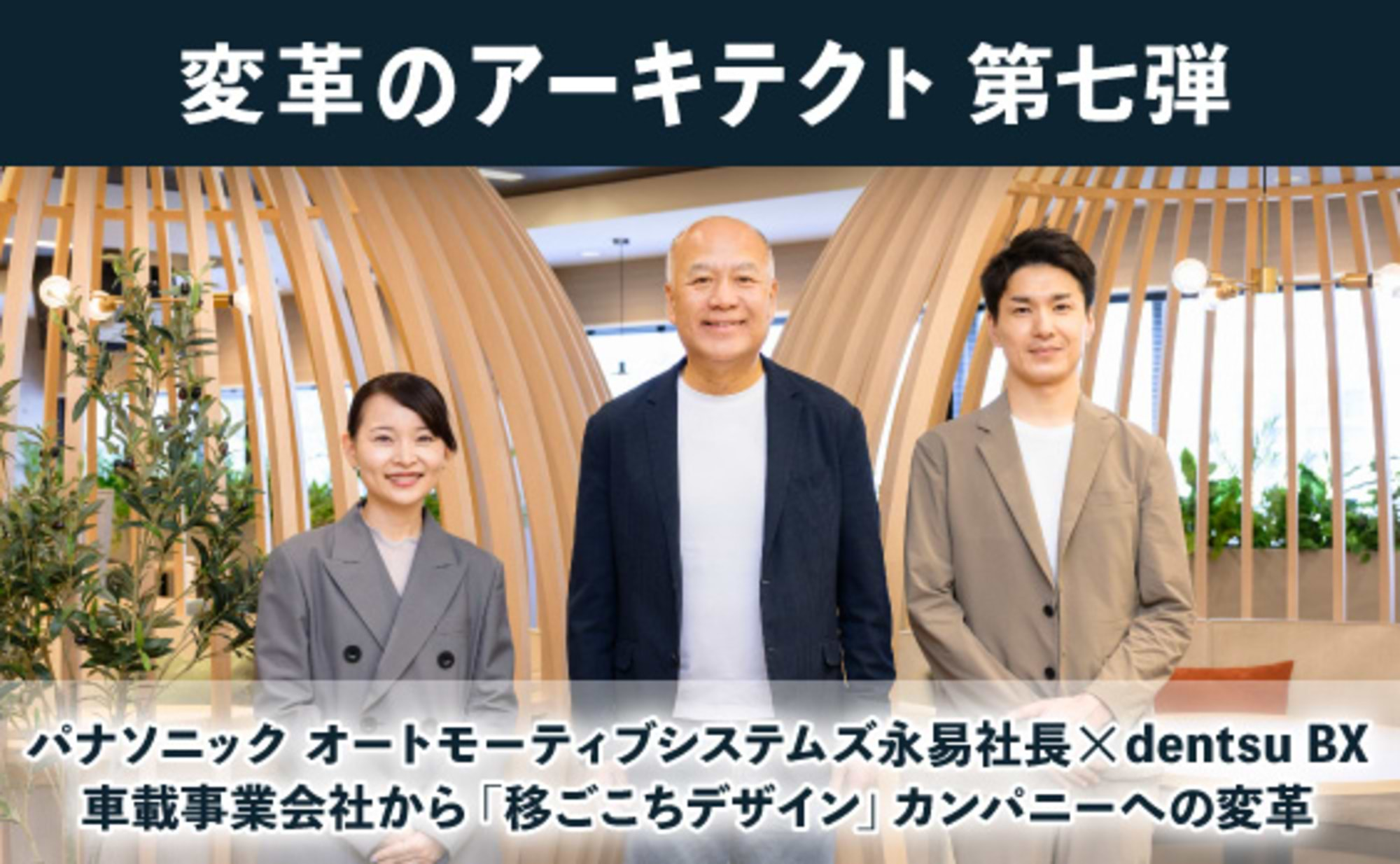
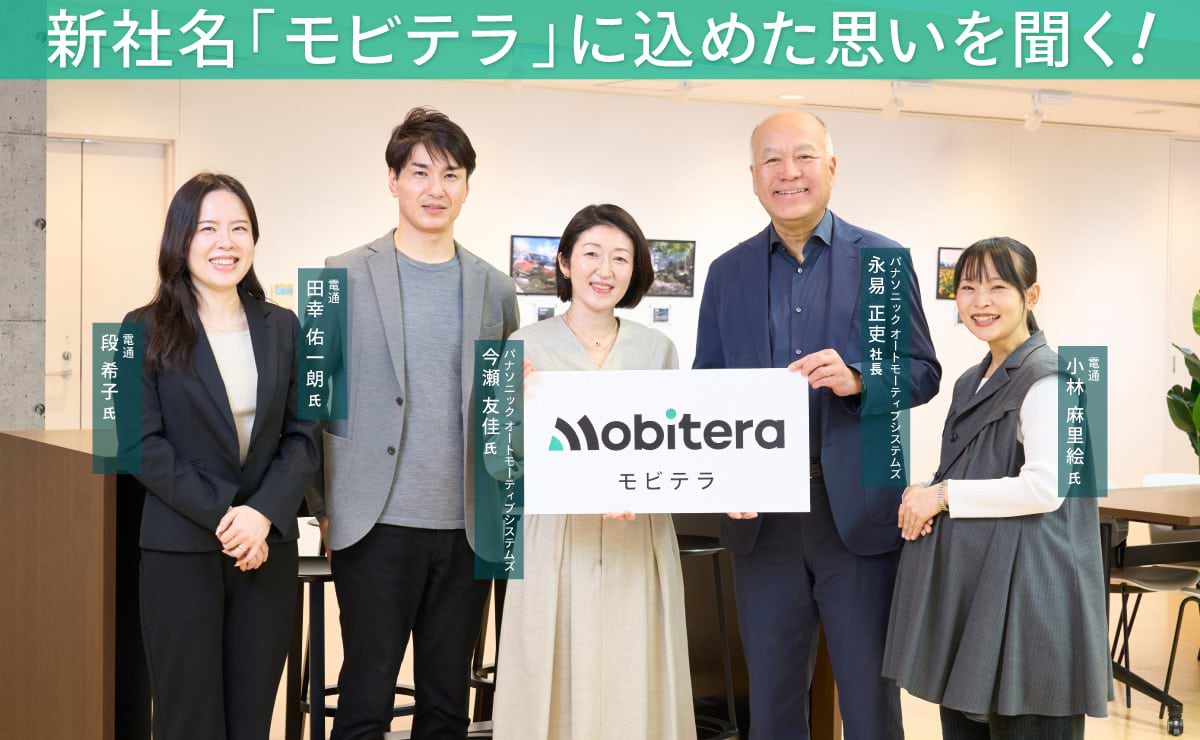
(From left) Dentsu Inc. Keiko Dan and Yuichiro Tago; Panasonic Automotive Systems’ Yuka Imase and President Masashi Nagayasu; Dentsu Inc. Marie Kobayashi
This series delves into the essence of business transformation by speaking with top executives who are breaking down all biases and driving internal business change as architects.
Our guests this time are Masashi Nagayasu, President of Panasonic Automotive Systems—who also spoke about the vision of “Transition Design” in our 2025 series ( Part 1 and Part 2 )—and Yuka Imase, Head of the Corporate Communications Office.
Established in 2022 following the Panasonic Group’s transition to a holding company structure, Panasonic Automotive Systems has leveraged its strengths in the automotive and mobility sectors to continuously deliver new value to the “in-car mobility experience.” In December 2025, the company announced that it would change its name to “Mobitera” in April 2027.
We spoke with Mr. Nagayasu and Ms. Imase—who are driving transformation in both name and substance through this name change and business restructuring—along with Dentsu Inc. Director Yuichiro Tago, Copywriter Marie Kobayashi, and Creative Planner Kiko Dan, who are supporting them as partners in this transformation.
A once-in-a-century period of radical transformation. Toward a “second founding” for the future
Tako: Starting in April 2027, Panasonic Automotive Systems will change its name to “Mobitera.” First, President Nagayasu, could you please explain the background behind this name change?
Nagae: For many years, we have operated our automotive and mobility businesses as part of the Panasonic Group. However, following our partnership with the Apollo Group, we were reborn as a fully independent company starting in 2024. We view our independence from the Panasonic Group as, in a sense, a “second founding.” We wanted to demonstrate our determination to move forward toward the future, both internally and externally.
It has been approximately 90 years since Konosuke Matsushita launched the automotive business. As we mark our independence, we decided to adopt a new company name to reflect our determination to move forward into the future.
The automotive industry is said to be undergoing a “once-in-a-century transformation.” Taking this name change as an opportunity, we intend to focus even more intently on “solving social issues through mobility.” We also aim to go public (IPO) in the future.
Tako: Along with the new company name, we also created a new corporate logo that incorporates our story and its origins. Mr. Imase from the Corporate Communications Office joined us in the logo design process, didn’t he?
Imase: I joined the project once the direction of the company name had largely been decided, but I felt that our stance, vision, and values—as we aim for independence and an IPO—were strongly reflected in the name. When designing the logo, I focused on capturing the sentiments that President Nagayasu and the management team had invested in this name, and on creating something that employees—who will carry this name and logo forward—could take pride in.
Tako: When considering the new company name, what criteria did President Nagayasu have in mind?
Nagae: I didn’t specify any detailed conditions, but what I prioritized was a name that “concise yet accurately expresses our business.” I wanted to convey our determination to become the world’s leading “Migrating Experience Design” company. Additionally, since our previous company name was long, I wanted a short, memorable name. I also placed importance on it being a name that would work globally.
However, I felt it would be better to first ask Dentsu Inc. to freely propose ideas and listen to them with an open mind. In return, I decided that I would not make the final decision unless it was a name I truly believed in and could genuinely love. A company name is that important; if I don’t fully buy into it myself, I cannot communicate it with confidence to people both inside and outside the company.
After many twists and turns, we settled on the name “Mobitera,” and I am truly grateful to Dentsu Inc. From the very beginning, they didn’t just focus on the company name; they worked with us from the creation of our vision and values, accompanying us every step of the way. As a result, they were able to engage in the company name development process with a deep understanding of who we are as a company—our culture, values, and the “personality” of our organization.
Tako: Thank you for your kind words. For this project, we first established our criteria and formed a team that included a diverse range of members with global perspectives and expertise. Could Mr. Kobayashi, the Dentsu Inc. copywriter who was a key member of the company name development team, tell us about the creative approaches you took?
Kobayashi: Since we had to address various conditions this time, we started by broadly exploring all possibilities. For example, we began by exhaustively examining every possible combination of three-letter abbreviations, carefully identifying each pattern that could meet the prerequisites. In the end, we generated over 1,000 proposals, including those that were not ultimately adopted.
Above all, our top priority was how to embody in words Panasonic Automotive Systems’ philosophy of “being close to people’s hearts.” Through our collaboration, I had come to feel that this very “authenticity” is the source of the “comfort” they provide. That is why, for the new company name, we placed the utmost importance on leaving “room” to pour our hearts into it. To test this, we submitted all name proposals accompanied by a statement.
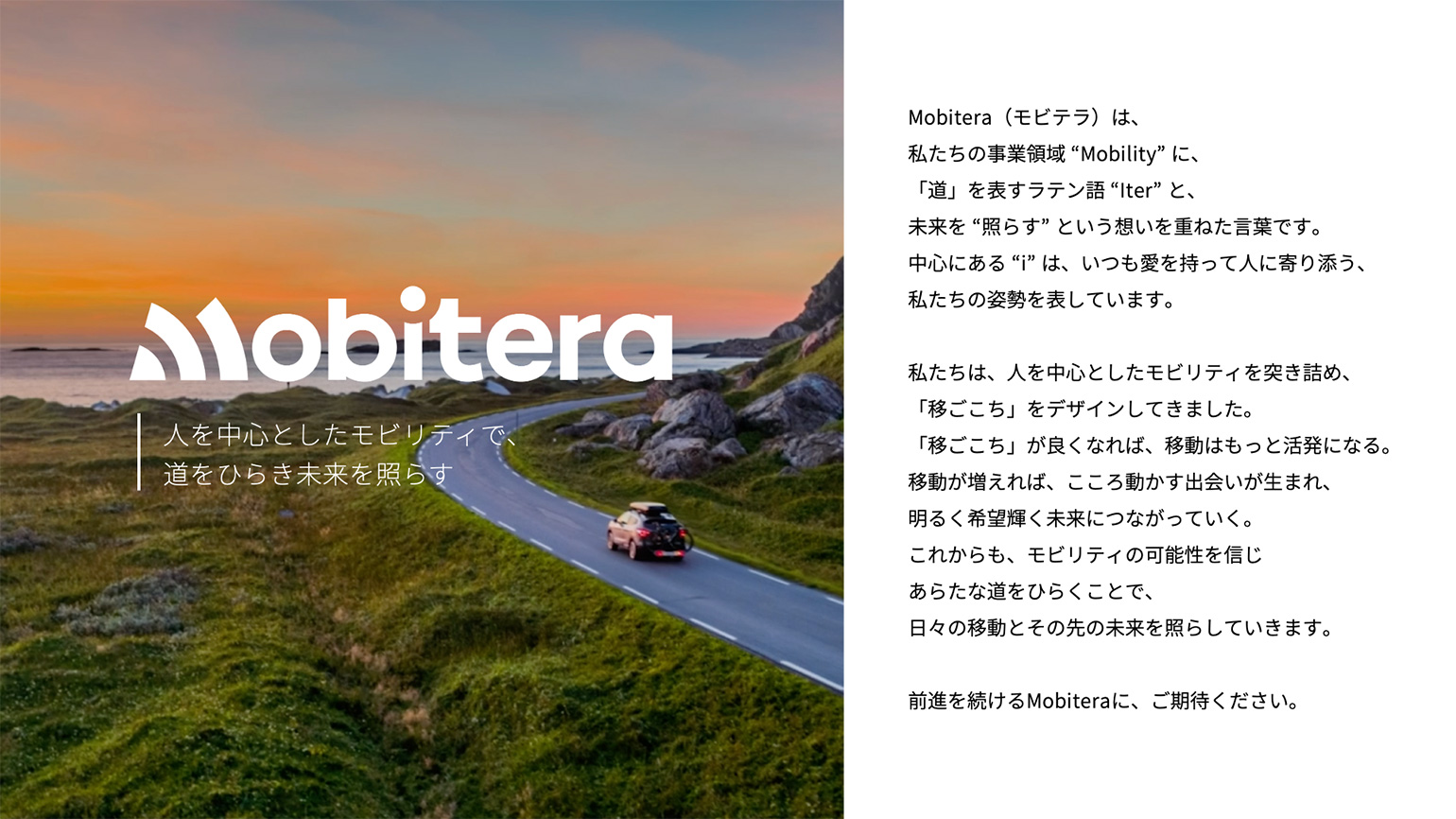
The “Mobitera” statement. Dentsu Inc. attached a statement to every proposed company name
Tako: Mr. Dan, also from the Dentsu Inc. team, leveraged his multilingual skills to handle interactions and communication with the global team. What approaches did you take during the company name development process?
Dan: To deeply understand the “character” of Panasonic Automotive Systems and accurately capture what they wanted to convey, we placed great importance on gathering diverse input. For example, I was particularly impressed by the time when the entire team visited the Panasonic Museum in Osaka to experience firsthand the vision of the founder, Konosuke Matsushita.
We also increased our reliance on non-verbal communication through visuals, in addition to direct dialogue with employees. By incorporating such a wide range of perspectives and information, we aimed to make our final output richer and more meaningful.
Tako: That’s right. Whenever we were stuck, we used “returning to our roots” as our motto and visited the Konosuke Matsushita Historical Museum and the Matsushita Archives in Kyoto to reconnect with the spirit of Konosuke Matsushita.
Dan: Returning to our roots allowed us to reset our thinking time and time again. I also think it was beneficial that all members—not just the copywriters—shared their perspectives, keeping in mind the breadth of our input and output. I truly feel that by increasing the breadth and volume of our input, we were able to improve the quality of our output.
Refining Mobitera within myself
Tako: There were truly many discussions leading up to the final decision on the company name. We made four major rounds of proposals; for the first round, we presented about 30 ideas and received some harsh feedback...
Nagae: It wasn’t just a matter of “choosing a company name that met the criteria” based on logic; whether it moved the listener’s heart was also a crucial criterion. For example, the phrase “Transition Design” clicked instantly—it was a perfect 100-point vision. Similarly, it was important for the company name to move people’s hearts at first impression. In that regard, to be honest, none of the initial proposals really clicked with me.
Mr. Kobayashi explained the concept and origin of each one to me, but I’d already made up my mind. That’s just how important a company name is. I also have a responsibility to our future employees, so I felt I couldn’t compromise.
Tako: During the second round of proposals, there were some ideas that made me think, “This might work,” but even those weren’t selected, and I thought, “Oh, this is a bit of a problem.” That’s why I decided to go back to the drawing board and visited Osaka and Kyoto. Also, to broaden our perspective, I deliberately loosened the criteria a bit and considered combining various ideas to expand the scope of our options.
Kobayashi: When I spoke with your employees earlier, they mentioned that a hallmark of Panasonic Automotive Systems’ work ethic is “always being sincere in sales interactions and clearly communicating even when it’s hard for the other party to hear.”
I felt that the feedback we received this time was a testament to your genuine commitment as a business partner and a sign of your high expectations. That’s why it served as an opportunity for me to reaffirm my resolve: “We absolutely must deliver a solution that fully satisfies you.”
Tako: After much deliberation, you decided on “Mobitera.” President Nagayasu, what was your impression when you first saw “Mobitera”?
Nagae: It was the strongest and best proposal among the options, but to be honest, it wasn’t an instant decision like when I saw “Igotokochi Design.” I scrutinized it very carefully compared to the other strong proposals. I thoroughly considered the story and origin, tested it repeatedly until I was convinced, and honestly, I kept refining it until I was personally satisfied with the company name and the meaning behind it.
For example, I entered various spellings—such as “Mobitera,” “Mobitera,” “MOBITERA,” and “mobitera”—into my smartphone, checked them over and over, and only made the decision when I felt, “Ah, that’s it.” So, “we polished the name Mobitera” is the most accurate way to describe it.
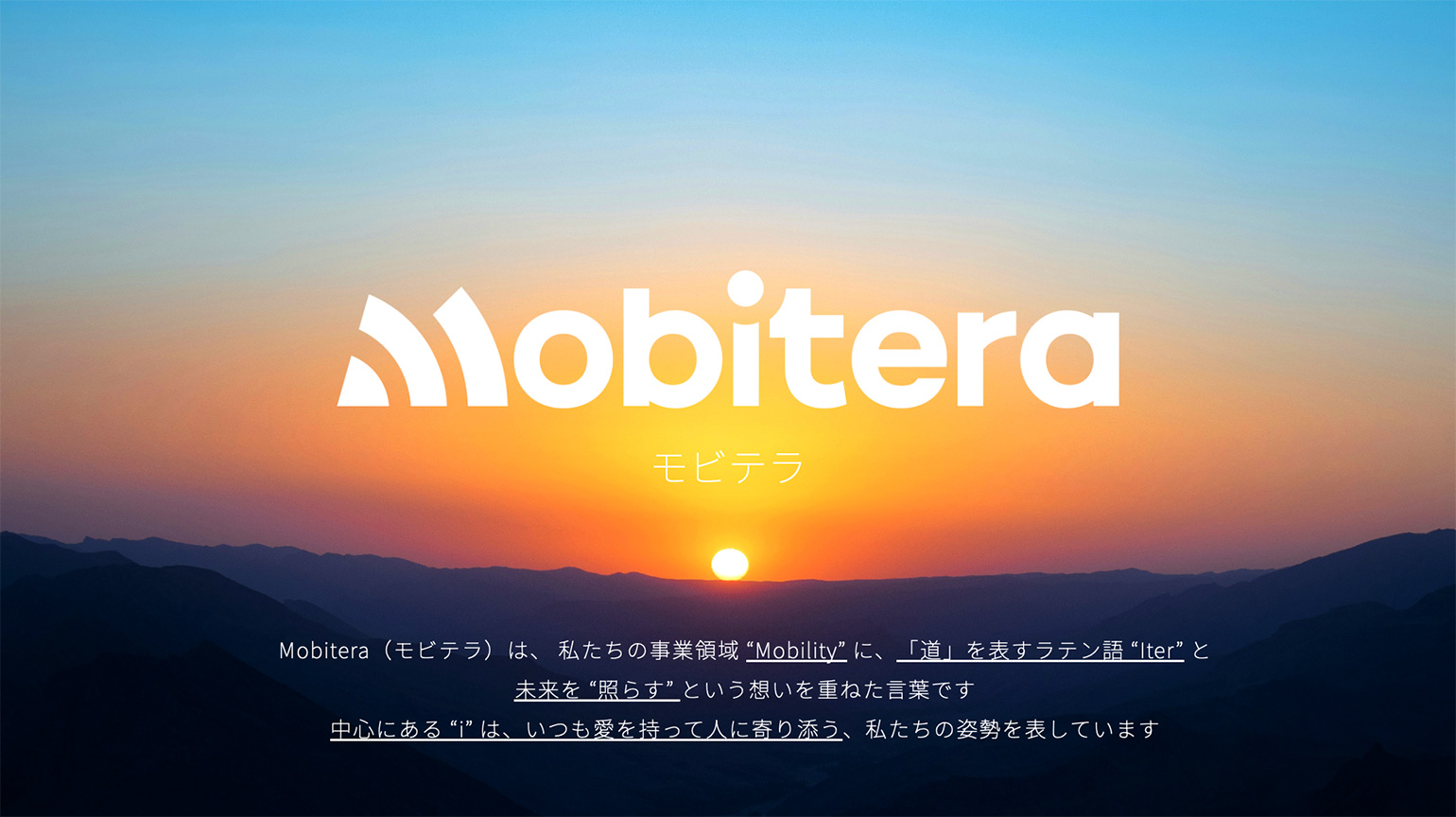
Kobayashi: As part of that refinement process, we proposed several stories and origins for the company name, and you selected the one that felt most fitting.“Mobitera” contains “iter,” the Latin word for “path,” representing the founder’s philosophy of “the path”—a principle that remains unchanged even as the company name evolves. It also incorporates the Japanese meaning of “to illuminate.” Furthermore, the “i” symbolizes a human silhouette and “individual,” embodying our commitment to “staying close to each and every person” from a global perspective. In this way, we breathed life into the company name.
Nagae: Indeed, the central “i” was a significant element. I believe our strength lies in “people.” I was delighted that the “i” represents both “people” and “love,” incorporating the phrase “always standing by people with love”—a principle I’ve personally held dear. However, I didn’t give any specific instructions from the start, such as “please include the letter ‘i.’” I wanted to avoid stifling creativity by setting too many conditions.
The more you use it, the more you discover. The company name and logo are like a “large vessel.”
Tako: Mr. Imase, what was your first impression when you heard the company name?
Imase: I had a neutral impression of the company name itself, but I really resonated with the story behind it. While it’s most important for employees to feel a sense of attachment to the name, I feel it’s a name that grows on you the more you use it.
Dan: I feel that the company name “Mobitera” and the logo hold immense potential as a “vessel” for containing and nurturing the corporate brand. I co-created the logo with Art Director Ippei Iwahara, and as Mr. Imaise mentioned, we made various “discoveries” during the development process, so I feel it will continue to deepen in character over time.
Tako: It sounds like both the company name and the logo will grow alongside the company.
Nagae: There really are “discoveries” to be made with this company name. Even without me explaining it, customers often point out to me, “Mobitera has this meaning too, doesn’t it?” For example, they might say, “It contains ‘bit’ and ‘it,’ right?” or “Does ‘tera’ refer to the Earth?” People enjoy it through all sorts of creative interpretations.
And actually, our employees feel the same way. In the initial survey, not many people intuitively said, “This is great!” But the more you chew on it, the more flavor comes out—or rather, the more “discoveries” you make. I think our employees are slowly going through the same process I did as I came to truly appreciate “Mobitera.”
I hold town hall meetings at factories across the country, and as I answer questions in those settings, the employees come to truly understand the story and origin just as I did. I want to continue creating opportunities to explain the story and origin moving forward.
Tako: In that sense, we really do need to communicate the story behind the logo, don’t we?
Nagae: This logo embodies both what we “will not change” and what we “will transform.”The fact that our founder is Konosuke Matsushita will never change, so the “path” is included to signify our commitment to carrying on his management philosophy. At the same time, it embodies our determination to embark on a second founding and move forward into the future. The “M” in the logo expresses the idea that “while there are many paths to take, each of us chooses our own future and walks that path—and that path is always illuminated.”
For internal communication, the one-page statement and the video you created have been extremely helpful.
Tako: When designing the logo, we held workshops to delve deeply into the “personality” and behavior of Panasonic Automotive Systems. As we explored these aspects, the specific font and letter spacing naturally took shape.
Imase: That activity was really effective. We did something similar when we created our “Design for a Sense of Movement” vision, but this time, while creating the logo, it was a great opportunity to re-examine our brand personality and develop not only the logo but also the brand guidelines together.
Tako: From your perspective, Dan, as the lead on the logo development, were there any particular challenges or aspects you were especially particular about?
Dan: Actually, since we had a solid story behind the logo, I didn’t face any major difficulties. The fact that only the “M” and the “i” are different colors represents the concept of “illuminating.” In particular, the central “i” has a green dot, and the fact that the bottom bar is slightly notched very subtly expresses the idea of being “illuminated.” I think this effectively captures Panasonic Automotive Systems’ sincerity, their consumer-first approach, and the aspect of not asserting their presence too strongly.
Imase: Everyone noticed right away that the “i” in the center looks like a human silhouette, didn’t they? Personally, I find the “M” that illuminates the road very striking.
Nagae: What I think is particularly well done is that when you write “Mobitera,” the “i” should normally be positioned to the left rather than in the center. However, by ingeniously arranging the “M” in the logo design, the “i” ends up in the center. This is a brilliant design.
Tako: The subtle expression of the theme “illuminating and being illuminated” through elements like the green “M” and “i” is also a key point, isn’t it?
Dan: I feel that this delicate design embodies a certain Japanese sensibility.
We produced a video depicting a diverse group of people experiencing a sense of "transition."
Tako: The president mentioned the video earlier, but we produced that video together with Mr. Imaise as well. Looking back on it now, what are your thoughts?
Imase: Since the video is the first thing employees see, I wanted to create something emotional that they could really connect with. Specifically, that video is very “people-centric.” By incorporating many expressions of people experiencing that “sense of movement,” I believe we created a video that conveys our determination to “deliver this ‘sense of movement’ to the world.”
Kobayashi: The video opens with the scene “Going to meet. Going to feel.”, but no cars appear at all in this part. I wanted to convey that, for Panasonic Automotive Systems, mobility is ultimately a means to achieve “a better life.” The parts “to meet” and “to feel” take center stage, while “going” is positioned as the supporting element.
Also, various “paths” appear throughout the video, and we’ve layered the idea that “there isn’t just one path—there are infinite paths.” By depicting multiple paths—mountain roads, rainy roads, and paths in the sky—we expressed the idea that we are not a predetermined path, but rather a presence that walks alongside each individual’s unique journey.
Imaze: That said, the video production process had its share of twists and turns, didn’t it? For this project, we incorporated feedback from our overseas team and members with a global perspective. As a result, we gained insights from viewpoints that we, as Japanese people, might have overlooked. For example, they suggested emphasizing the diversity of the characters featured in the video.
Nagae: I also offered a few suggestions regarding the video, and we made adjustments to the timing of the company name reveal and how it syncs with the narration. The repetition of “I’m coming to see you…” was initially more frequent than it is now, but we carefully curated it down.
Imaze: We really did narrow it down. The way “iter” is presented also incorporates input from the president. We also paid close attention to how the narration was delivered. Since this is the first video where viewers will hear the company name “Mobitera,” we had the narrator try out multiple patterns of emotion and intonation for that part. As a company just getting started, we aimed for the optimal tone to convey brightness and youthfulness.
Dan: I was also in charge of creating the motion logo (*1) this time. When considering the sound logo (*2) for the motion logo, I discovered that the pronunciation of “Mobitera” sounds like the intonation rises. Therefore, we were able to smoothly develop the sound logo by keeping that upward-rising pronunciation in mind. Through that experience, I felt that the company name “Mobitera” is a vast “vessel” capable of continuously acquiring new charm.
*1 Motion Logo = A logo that expresses the brand’s worldview through movement
*2 Sound logo = Audio effects synchronized with the motion logo to evoke the brand through sound
Imase: I believe that by continuing to explain these subtle details, our employees will grow to feel an ever-deeper attachment to the brand. While communication from the president to employees is essential, seeing the brand featured in the media offers a different kind of experience, so I’d like to share our story through various channels.
Moving forward into the future while carrying on the philosophy of Konosuke Matsushita
Tako: Could you tell us again about the employees’ reactions to the new company name?
Imase: We received a variety of responses in the survey, but the logo in particular was very well received. Also, the fact that it embodies Konosuke Matsushita’s “Way” seems to be a source of comfort for our employees.
Nagae: Of course, many employees feel a sense of sadness or nostalgia about “no longer being Panasonic.” We must fully acknowledge that reality. Having been with this company for over 40 years myself, I naturally feel a sense of sadness as well. However, this name change is imbued with a strong will and determination that from here on out, we must truly build our future ourselves and solve problems on our own.
I also struggled with whether to retain “PAS” or “Panasonic” in the new company name. For example, we could have taken a phased approach—first establishing the Mobitera brand and changing the company name once it had taken root. Or we could have used a name like “Panasonic Mobitera” and set a transition period. But in the end, we decided to “change it all at once.” We wanted to clearly demonstrate our determination to embark on a second founding.
Tako: Finally, could you all share your thoughts on the future envisioned by the new company name “Mobitera” and the challenges we need to tackle?
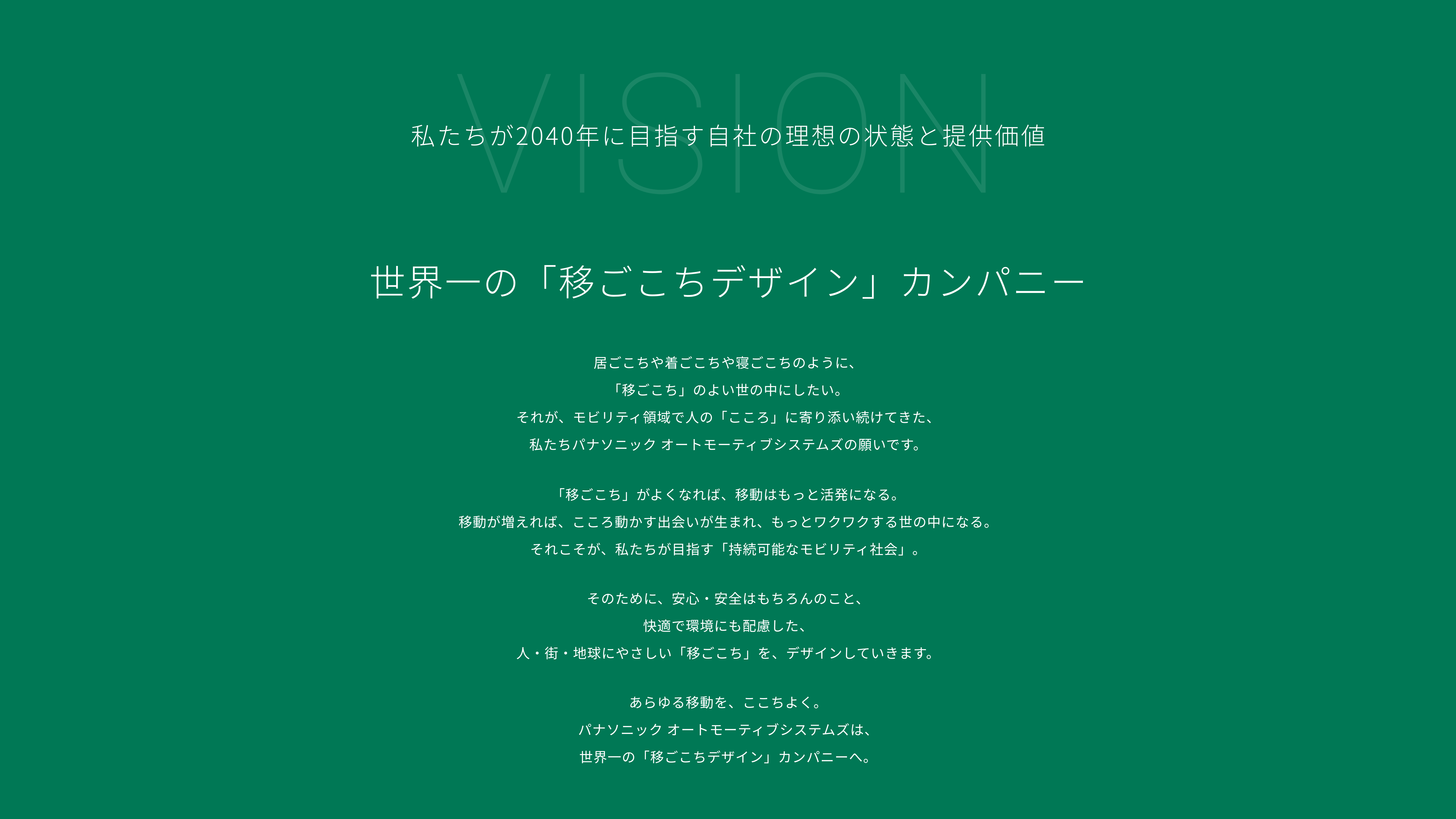
Nagae: We live in an era of rapid change, but our raison d’être in this environment boils down to “solving social issues related to mobility.” With 2040 as our target, we have set a vision to become the world’s leading “Mobility Experience Design” company. We aim to use our technology to make travel comfortable for everyone around the world.
Another key aspect is the founder’s philosophy. This remains a company and a business founded by Konosuke Matsushita. We will always return to those roots and place great importance on carrying on the spirit of Konosuke Matsushita.
Imase: As the head of public relations and corporate branding, I will focus on establishing the “Mobitera” brand. My priority is first our employees, and then our customers. I am fully committed to creating a brand that will inspire confidence in Mobitera’s future growth and transformation.
Tako: The Dentsu Inc. team will also fully support the mission described by Mr. Nagayasu and Ms. Imase. Moving forward, we are entering a phase where we will change—and drive change—not only through a name change but also by ensuring that our actions truly reflect our new identity. I believe it is crucial to conduct comprehensive branding that encompasses both the “name” and the “substance,” thereby raising expectations for Mobitera.
Kobayashi: I agree. What I’ve come to realize through my involvement is that “solving social issues related to mobility” is an endeavor that truly increases the overall happiness of many people. If the “experience of mobility” improves, the world will surely become a better place. I truly feel that. And I believe Mobitera is at the center of that. I would be delighted if I could contribute even a little to realizing that future through the power of words.
Dan: I believe that branding and design are fundamentally about helping to “make business operations run more smoothly.” I’m really looking forward to seeing how the public will receive the new company name and brand.
Born in 1962 in Ehime Prefecture. After joining Matsushita Electric Industrial Co., Ltd. in 1984, he held leadership positions in domestic and international sales divisions. He was appointed Managing Director of Panasonic and President of the Automotive Company in 2021, assuming his current position in 2022.
Yuka Imaise
Panasonic Automotive Systems Co., Ltd.
Corporate Planning Center
Head of Corporate Communications
After graduating, I joined a foreign-affiliated consumer goods manufacturer, where I worked in the R&D department before transferring to public relations. Since then, I have been responsible for brand and corporate communications, and joined Panasonic Automotive Systems in 2022.
Yuichiro Tashiro
Dentsu Inc.
Business Transformation Division 2
Head of the Transformation Partner 5 Division
Engaged in business growth support and transformation foundation production services originating from business and corporate transformation. Provides integrated design of necessary transformations for client companies, along with design and implementation support for practical actions spanning organizational, human resource, and branding domains.
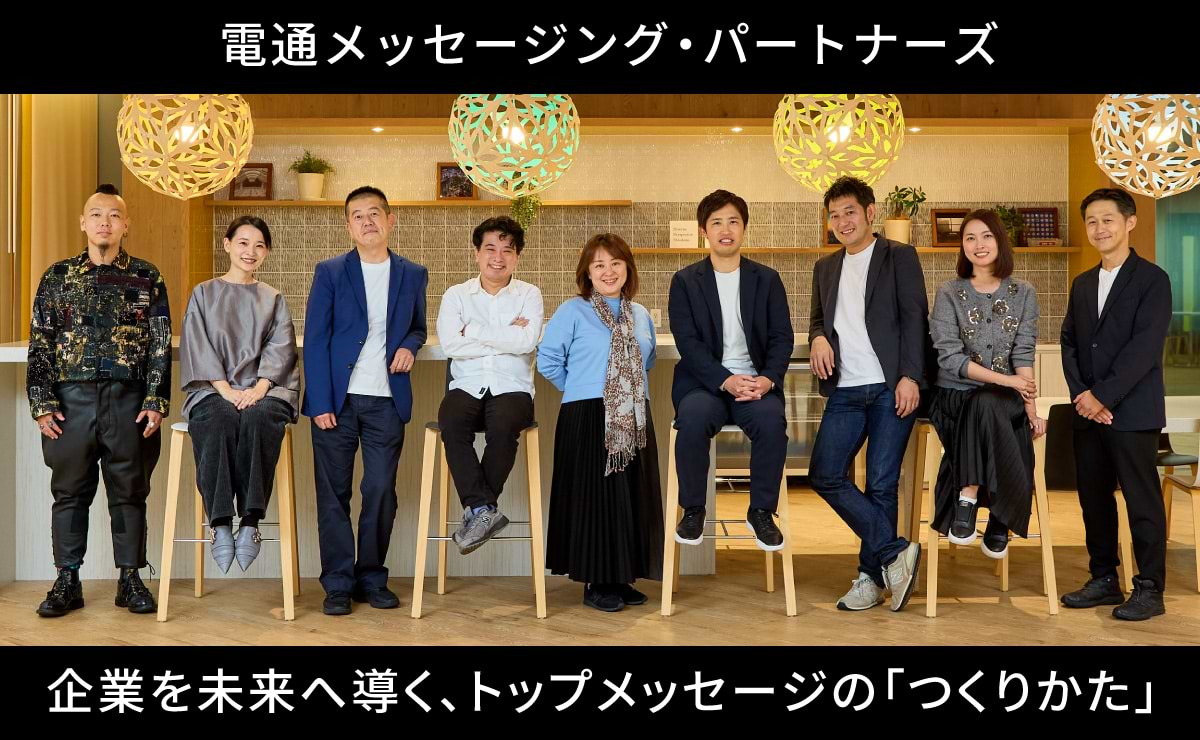
After joining Dentsu Inc., I transitioned from the branding division to the management × CR domain. I am responsible for corporate messaging—including taglines, visions, and top-level speeches—aiming for a future where corporate personalities shine. My work motto is "KPIs are tears." I also serve as a member of "Dentsu Messaging Partners," supporting the "power of words" for top management.
After joining Dentsu Inc., I worked in the overseas business and sales departments before focusing on the BX×CR domain, where I use creative power to support business transformation. I have been responsible for numerous corporate branding and corporate logo development projects, and I focus on expanding proposals and verifying their effectiveness with the aim of solving management challenges through creative solutions.

 Architect of Transformation [16/17]