Note: This website was automatically translated, so some terms or nuances may not be completely accurate.
 The Cutting Edge of "Messaging" That Supports the Power of Top Management's Words [3/4]
When Words Come Together, They Form a Map: How to Craft Top Management Messages That Guide Companies Toward the Future
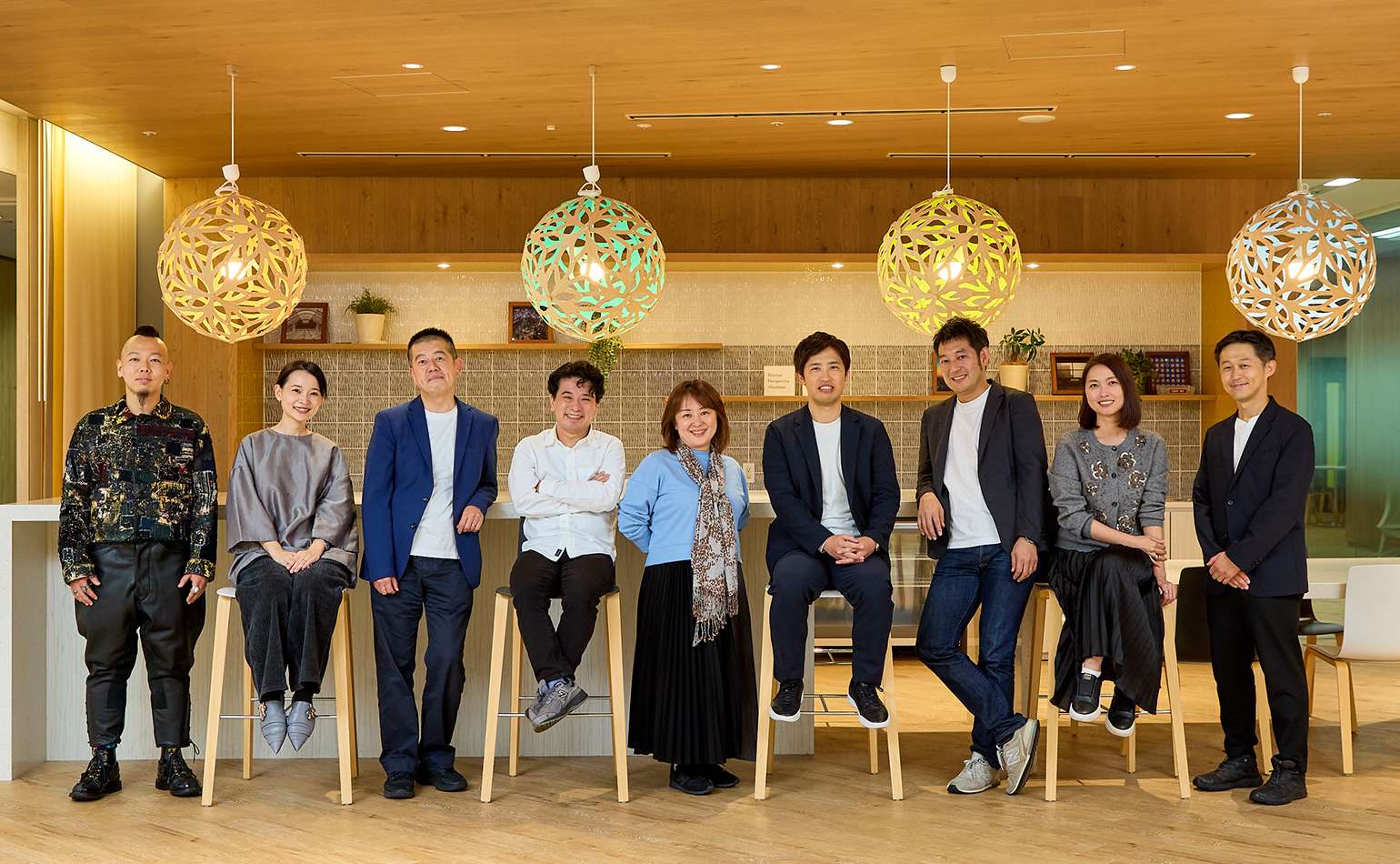
Hello. I’m Marie Kobayashi from Dentsu Inc. Messaging Partners. For this third installment of our series, our theme is “The Creation Process.”
How does a powerful top-level message that guides a company toward the future take shape as a single phrase—what sequence of steps, dialogues, and thought processes does it go through? I will carefully unravel that process.
At Dentsu Inc., we offer a variety of processes tailored to the specific circumstances of companies and their leaders. In this installment, we’ll introduce what could be called the standard approach.
Starting with a “Vocabulary Inventory”
The first step we take at the start of a project is a “word inventory”—a process of taking a bird’s-eye view of corporate language and organizing it. Why is this step so important? It’s because many companies are already “overflowing” with words.
There are many types of “top-level messages” in the corporate realm: corporate philosophy, vision, corporate slogans, codes of conduct, annual policies, CEO messages… Yet, it is actually not uncommon for these to be mass-produced without clear roles or purposes, ending up scattered and disjointed.
“Wait, our company has come up with a new slogan again?”
“Wait, aren’t we supposed to be using that policy anymore?”
“There are too many keywords; I can’t remember a single one.”…
Have you ever heard comments like these at your company?
Words are something that can be created without any special equipment or raw materials. That’s precisely why we tend to keep adding them without a clear design philosophy, resulting in none of them being taken seriously. This is a classic scenario for top management messages.
However, just as the words of a quiet person can strangely linger in our minds in everyday life, corporate messages aren’t necessarily better simply because there are more of them. Rather than focusing on quantity, we must ask, “Why does this phrase exist?” Only words backed by a clear rationale will grow into messages with lasting impact.
That is precisely why a “messaging inventory”—the process of gathering and reviewing the scattered pieces of messaging throughout the company—is essential as the starting point for messaging.
When we undertake this “inventory,” we often get asked this question:
“What is the correct structure for a corporate messaging framework?”
“What elements need to be in place?”
In response to these questions, we say:
“There is no single ‘correct’ structure for a corporate messaging framework.”
Of course, there are standard frameworks—such as “Mission, Vision, and Values”—so if one fits your company, feel free to use it, but you certainly don’t have to “fill in” every single element.
Some companies want to carefully map out every step of the journey, from the goal to the specific path; others prefer to set only a general direction and leave the rest to their employees. We believe that the final picture will naturally differ depending on the company’s circumstances—including its culture, history, the temperament of its employees, and the accumulated language used over time.
That is precisely why, as we review your existing “pieces,” we’ll ask where you see challenges and how much you wish to articulate in words, working together to conduct a “verbal inventory.” In speechwriting as well, we look back at past words to explore what kind of message is truly needed right now.

Revealing the outline of the “missing piece”
As we take stock of your current words and reexamine their relationships, the “missing pieces” gradually come into view.
For example,
“Even though the vision for the world we aim for is clear, we haven’t defined our own role within it,” or
“Our guiding principles are too lofty to translate into concrete actions,” or
“We lack specific messages tailored to our company’s current stage.”
These “missing pieces” in our vocabulary—the ones we’ve identified—become the “words we need to create anew or refine.”
Based on that, we’ll organize the necessary requirements for these pieces from several perspectives.
- Is the message intended for internal use? For external audiences? Or both?
- Is it intended for long-term use, or is it temporary?
- Should it be universal? Does it need to be catchy?
There are many points to consider, such as these.
Of course, many aspects become clear only after actually writing the words and creating concrete proposals, but by aligning our perspectives as much as possible at this “design philosophy” stage, we can create a truly effective and powerful top-level message.
Polishing the pieces through “interactive sessions”
Once the “design philosophy” is solidified, the next step is gathering materials. When shared information alone isn’t enough, we conduct interactive sessions to draw out your thoughts and feelings.
In these sessions, we provide various prompts to uncover the hidden words and insights within the company and its leaders, connecting the dots to form a cohesive narrative. While the approach to these sessions varies depending on the team members, I, Kobayashi, the author, place particular importance on two perspectives: “looking back” and “digging deeper.”
For a corporate message, this means going back to the company’s founding; for a CEO’s speech, it means exploring what inspired them to start this work in the first place. We “look back” even on details that might seem unrelated to the current theme.
We “dig deep” by going beyond official statements—such as the vision entrusted to current operations or the company’s aspirations for 10 or 100 years from now—and encouraging participants to share their unfiltered, honest thoughts.
Through these two approaches, we engage in repeated dialogue with top management and key personnel, meticulously gathering the raw materials that form the foundation of our work.
After these sessions, the perspective of “usability” becomes essential when finally shaping the “Top Message.” For taglines or visions, it’s about whether employees feel, “This is about us.” For speeches, it’s about whether top executives can speak their true thoughts in their own voices. It’s about whether the audience—starting with employees—can sincerely think, “That’s exactly what I wanted to hear.”
No matter how polished a single piece may be, if it doesn’t fit seamlessly when put into place, it won’t be used. Words that function effectively on the ground. Words you’ll want to repeat. Words that don’t constrain corporate activities but rather expand their scope. Words that become part of the company and are embraced as “our own”—this is the “messaging” we aim to create.

The assembled pieces become a “map to the future”
What we’ve shared so far is just one example of the “method” we use every day to craft top-level messages.
First, we carefully “take stock” of the words you already have. Next, we identify the “missing pieces” and meticulously align the “design philosophy” behind them. Then, through “interactive sessions,” we polish them into the perfect fit…
We believe that when these pieces of language, created in this way, are arranged with meaning, what emerges is “a map unique to that company.” It is not a “picture in a frame” that is rarely looked at and whose contents are soon forgotten, but rather “a map of our own”—one where the users take center stage and which is occasionally revisited as the company evolves. A message that is meticulously designed and crafted possesses such power.
It is difficult to change anything immediately with words alone. However, when employees walk forward guided by a “map” that serves as their anchor, the company can advance much further than it is today. We have witnessed this scene countless times.
As mentioned at the beginning, stringing words together isn’t particularly difficult. That’s precisely why corporate top messages often end up filled with clichés or trendy buzzwords. But we believe that’s a tremendous waste.
Just as we’ve entered an era where individuality is valued, every company should have its own unique origins, strengths, and appeal. As the first step toward making that “corporate personality” visible and allowing it to blossom into the future, a top message woven with “your own words” becomes a powerful force.
Where are you headed from here? What values will guide your journey?
When you need such a guidepost, please remember us at Dentsu Inc. Messaging Partners. We would be delighted to help you create your “map to the future” together.

Related Articles:
・Panasonic Automotive Systems President Nagayasu × dentsu BX: The Transformation from an Automotive Components Company to a “Mobility Experience Design” Company
・Panasonic Automotive Systems President Nagayasu × dentsu BX: Envisioning the Future of Mobility as a “Mobility Experience Design” Company
Dentsu Inc. Messaging Partners
Email:messaging@dentsu.co.jp
Click here for the detailed eBook on “Dentsu Inc. Messaging Partners”
https://www.d-sol.jp/ebook/sustainability-corporate-branding
Was this article helpful?
Share this article


Newsletter registration is here
We select and publish important news every day
For inquiries about this article
Back Numbers
Author
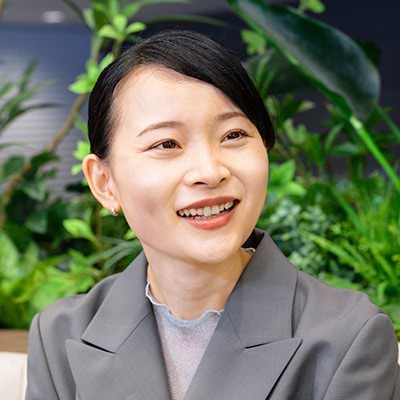
Marie Kobayashi
Dentsu Inc.
Business Transformation Division 2
Copywriter