Television, social media, and video streaming platforms—every day, we encounter images of wild animals through a variety of media. Their endearing appearances and astonishing behaviors sometimes move people and spark an interest in the natural environment. On the other hand, the way animals are portrayed in the media also carries the risk of giving viewers a false impression or, unwittingly, having a negative impact on animals and the natural environment.
Creative expression has the power to foster understanding of wildlife and inspire action toward coexistence. How can we unlock that potential and apply it to content?
To explore this theme, we interviewed members of the “DENTSU Ecosystem LAB”—which addresses various challenges related to ecosystem conservation and devises communication strategies to solve them—as well as members of the “Biodiversity Media Organization Rooting Our Own Tomorrows” (hereinafter ROOTs), which created and released “Guidelines for Animal Content” for the media in 2025.
What challenges do media outlets face when covering animals? And what is needed to harness the power of expression for a better future? We spoke with Satomi Kinoshita, Representative of the DENTSU Ecosystem LAB; Yoko Yasuka, Representative Director of ROOTs; Ayako Nagakura, Director of ROOTs; and Rion Sugiyama, Director of ROOTs.
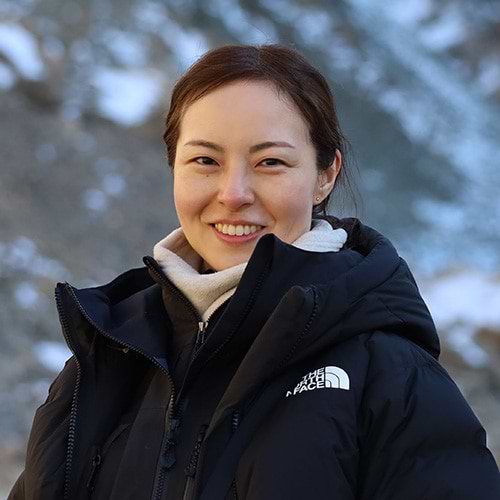
(From left) Satomi Kinoshita, Representative of DENTSU Ecosystem LAB; Ayako Nagakura, Board Member of ROOTs; Yoko Yasuka, Representative Director of ROOTs; and Rion Sugiyama, Board Member of ROOTs
Why Tackle the Challenges of Animal Content? The Experts’ Motivation
──First, could you tell us about your day-to-day work?
Yasuka: My background is in animal ecology, and I primarily conducted research on endangered species in Zimbabwe. I spent my childhood in Sakai City, Osaka, and through exposure to living creatures and nature via media content such as documentary programs, I realized my dream of “one day becoming a researcher in Africa.”
Through this experience, I came to realize the importance of the power that media holds in protecting nature and biodiversity, which led me to launch ROOTs in July 2025. At ROOTs, we research and visualize the relationship between biodiversity and media, and aim to use that evidence to support decision-making by media professionals and audiences, ultimately contributing to biodiversity conservation.Currently, I oversee all of ROOTs’ activities, ranging from planning and conducting research studies to collaborating with media professionals and researchers, and developing initiatives that translate these insights into actual content production.
Nagakura: I’m Nagakura, and I serve as a board member of ROOTs while working as a veterinarian. I’ve always loved animals—inspired by my childhood fascination with the world of wildlife seen on TV and the presence of the dog I grew up with. Excited by what I learned from books and television, I decided I wanted to become a wildlife veterinarian, and I’ve since worked as a government employee—first as a zookeeper and then in animal welfare administration.
As one way to take action from the perspective of animal welfare, I’ve been participating in ROOTs’ activities for about a year and a half. Although ecosystem conservation and animal welfare both deal with living creatures, there are rarely opportunities to discuss them together in the same forum. I believe one of ROOTs’ strengths is its ability to advance both of these areas simultaneously.
Sugiyama: I’m Sugiyama, and I also serve as a board member at ROOTs.I’m currently a first-year master’s student researching ecology. It was through a university course on wild bird observation that I first became aware of the richness of life around me. As my desire to learn more about and protect living things grew stronger, I met Ms. Yasuka through a program at another NPO. I was inspired by her work and decided to join. At ROOTs, I’m in charge of research projects, such as investigating and analyzing how animals are portrayed on television programs.
Kinoshita: I’m Kinoshita, the representative of “DENTSU Ecosystem LAB.” We are a creative unit dedicated to crafting communications that contribute to the conservation of biodiversity and the natural environment. One of the projects we’re currently focusing on is the “ SAVE OUR SYMBOLS CHALLENGE.” This initiative brings together companies that feature living creatures or nature in their company names, logos, or mascots, encouraging them to take on challenges that benefit the environment.
For example, last year, a panda mascot from a major corporation took the lead, bringing together several other companies that use animals or nature as their symbols to launch a campaign.During the campaign period, when customers used coupons to shop on participating e-commerce sites, 1% of their purchase amount was donated to zoos, research institutions, and conservation organizations both in Japan and abroad—all of which are working to preserve biodiversity from various perspectives. While it can be difficult to connect the general public with corporate sustainability initiatives, we believe that using animal characters as an entry point can help lower that barrier.
—What is the current state of wildlife coverage in the media?
Yasuka: I feel that, especially for younger generations, their points of contact with nature and wildlife are increasingly taking place through smartphone and TV screens rather than in actual natural environments like forests or the ocean. As was the case for me, nature programs watched during childhood can have a significant influence on career choices and the formation of values regarding nature. Depending on how the media portrays animals and nature, it can inspire many people to feel, “I want to protect nature” or “I want to become a researcher.” That influence is truly remarkable.
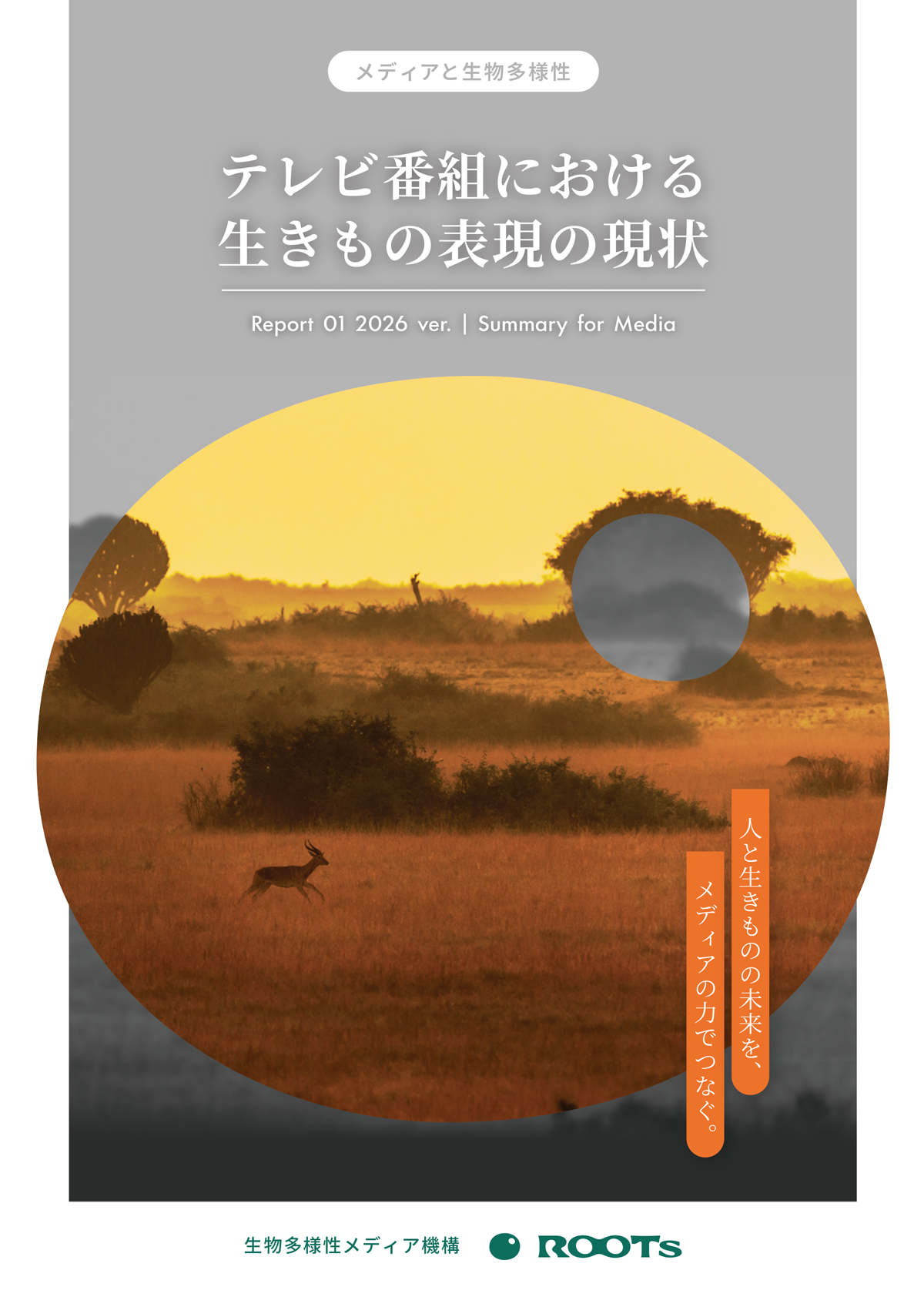
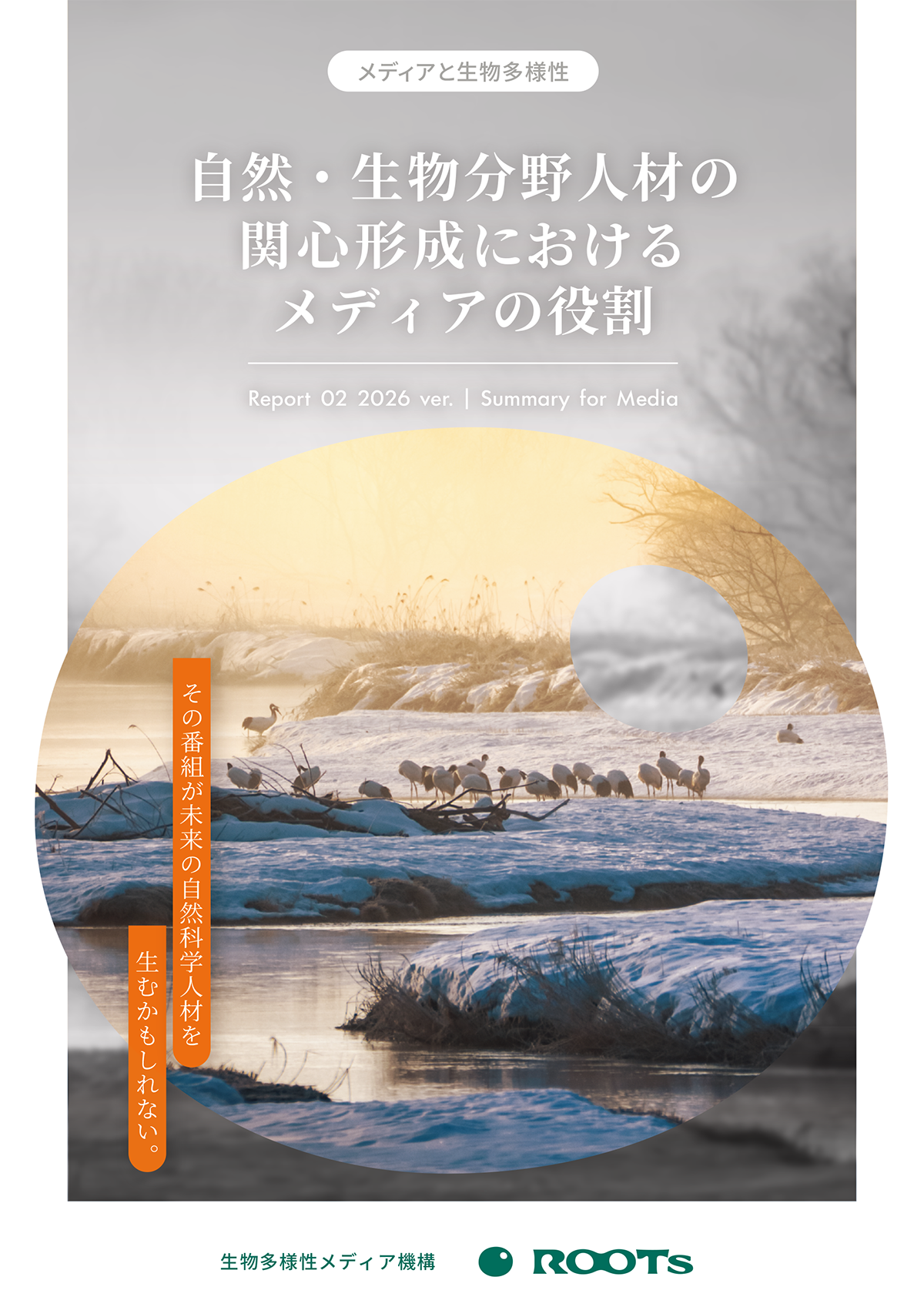
On the other hand, when the media covers animals, various decisions must be made behind the scenes. Within limited time frames, it is by no means easy to assess the full impact that such portrayals will have on living creatures and nature. That is why we at ROOTs are researching and visualizing how living creatures are depicted in the media, as well as how the media influences people’s interests and perceptions. We aim to feed these insights back into the production process to support decisions that lead to the creation of better content.In 2026, we published two reports: “The Current State of the Portrayal of Living Creatures in Television Programs” and “The Role of the Media in Shaping Interest Among Professionals in the Fields of Nature and Biology,” based on a survey of 216 researchers.
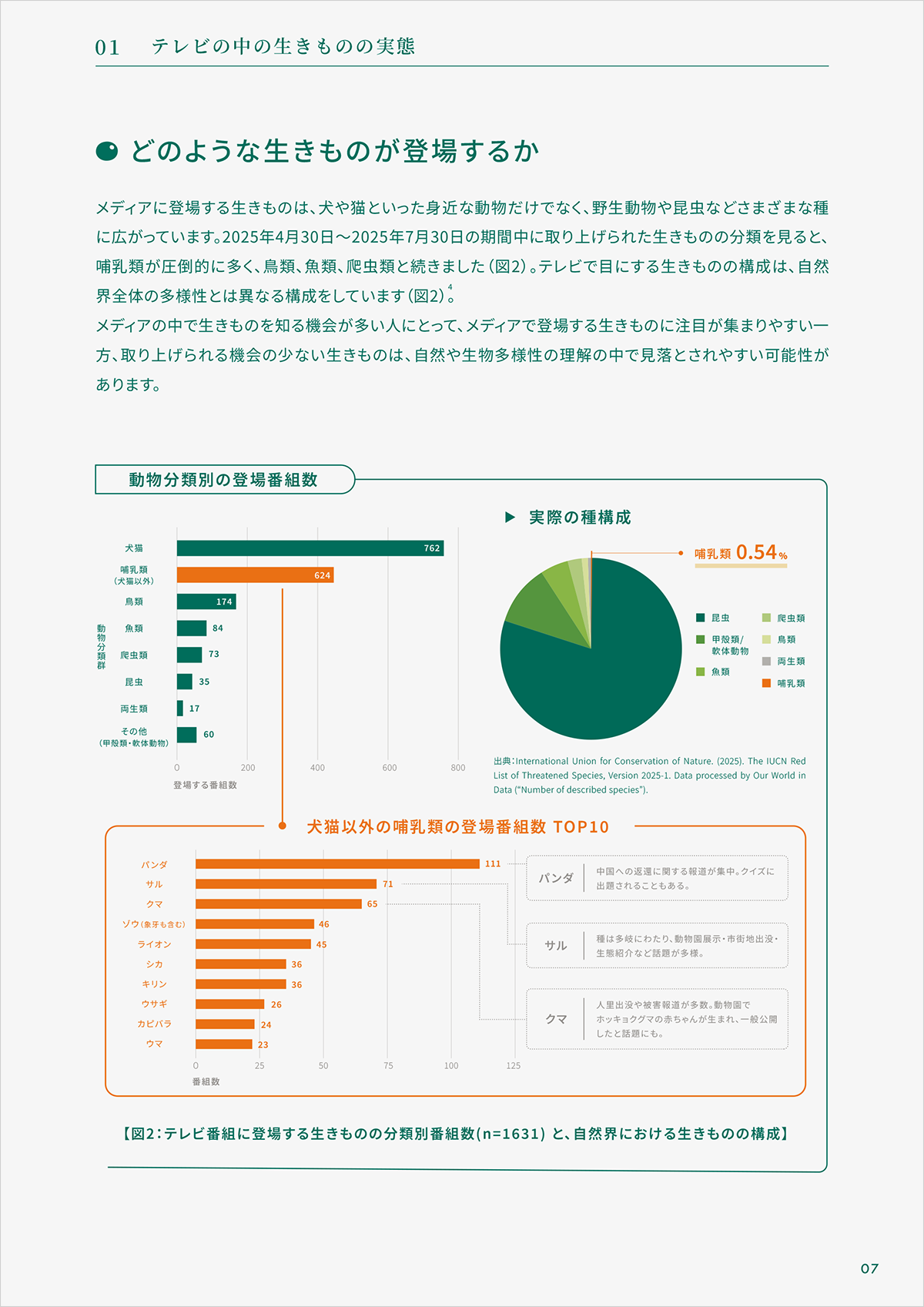
Sugiyama: The “Current State of Wildlife Portrayal in Television Programs” survey revealed that there are an estimated 6,470 programs featuring wildlife annually in terrestrial news broadcasts by major domestic networks.Looking at the survey period, mammals were by far the most frequently featured animals, with dogs, cats, pandas, monkeys, bears, elephants, and lions appearing most frequently. There is a particular tendency for animals that are the subject of public discussion—such as pandas and, in recent years, bears—to be featured more often. For people who learn about wildlife through the media, this makes it easy to focus on the species that are featured, while other species may be overlooked within the broader context of biodiversity.
Furthermore, while coverage often focuses on animals in captivity—such as those in zoos, aquariums, and animal cafes—or interactions with wildlife, there is a concern that while this fosters a sense of familiarity with animals, it can also obscure the appropriate distance that should be maintained from wild animals. However, creative content also has a significant positive impact on ecosystem conservation, and another study has revealed that many researchers deepen their interest in nature and living things through media exposure.
Yasuka: A recent example of highly topical content that’s still fresh in people’s minds is the series of bear sightings from last fall through winter and the accompanying reports of injuries to people. Since this is a high-priority issue involving people’s lives, it was crucial to convey the dangers and the current situation regarding the damage quickly and accurately.I believe another major role of the media is to provide an opportunity for viewers to consider the relationship between humans and wildlife—and to think about how they should act based on the information they receive. Bear-related reporting, in particular, was not just about individual bears; it became a truly significant catalyst for reflecting on people’s daily lives, their ways of living, and their relationships with wildlife within that context.
However, I believe there are limits to what the production team—which must gather and disseminate accurate information at a rapid pace—can do when it comes to determining whether that information is being communicated appropriately. That is why I believe experts like us can provide support by suggesting ways to portray these situations without causing misunderstandings or by introducing experts who can offer scientific and multifaceted perspectives.
Could That “Cuteness” Be an Animal’s SOS? The Science of “Animal Welfare” Invisible from a Human Perspective
──What specific risks or challenges do you perceive when it comes to the media providing accurate coverage?
Yasuka: When we examine how animals are treated, we generally focus on the following three elements:
1. What kind of creature it is (e.g., an endangered species, a wild animal, or livestock) 2. Where the filming takes place (in the wild, in a studio, etc.) 3. How the animals are treated in that environment
In the “Guidelines for Animal Content” we developed, we examine these risks from two perspectives. One is risk during the “production process.” This includes animal welfare concerns—such as whether bringing wild animals into a studio causes them undue stress—as well as the impact on the natural environment, such as whether rare plants are being trampled during location shoots.
The other aspect concerns the impact “after the content is released.” This refers to cases where viewers carelessly imitate actions depicted in the content, thereby causing negative effects on living creatures and nature. For example, after seeing an animal introduced as a “cute pet,” an uninformed person might decide they “want to keep it” and, unaware that it is an endangered species, purchase an individual that is being sold illegally. Such actions could ultimately lead to a decline in the wild population.
──From the perspective of animal welfare, are there any aspects of the current media landscape that concern you?
Nagakura: I often feel that information is driven primarily by “how humans perceive things”—such as what kind of interest humans have in animals, what’s currently trending, and what kinds of appearances are considered entertaining.
Animal welfare is a science that considers “how animals are feeling in this situation right now.” This cannot be understood from the human perspective alone; it is necessary to understand each animal’s ecology and habitat in order to determine whether they are feeling safe and relaxed in their current circumstances.
For example, a gesture like raising a paw—which humans might find “cute”—can actually be a defensive posture the animal uses to protect itself when it feels threatened. Many people are still unaware of this fact. If we could properly convey this background information, wouldn’t viewers stop wanting to see that “cute” behavior? I feel that, at present, there isn’t yet a well-established framework for how the media should go about obtaining this kind of information.
──Mr. Sugiyama, who compiled the report, were there any surprising points or insights you gained?
Sugiyama: First of all, I was surprised to learn that there are as many as 6,470 television programs featuring animals each year. Also, when analyzing the data, I was surprised to see a striking numerical disparity in the number of appearances by mammals—particularly dogs and cats. The return of the pandas became a hot topic during the survey period, and it was striking to see how clearly that influenced the number of times they appeared on TV.It reaffirmed my realization that what the media covers has a significant impact on people’s interests and emotions.
Excerpt from “The Current State of Animal Representation in Television Programs” ( Click here for the full report)
Kinoshita: I was surprised to see that animals were featured so frequently not only in wildlife programs but also in news and current affairs shows. Furthermore, the coverage is heavily concentrated on specific animals. I feel this demonstrates considerable influence.
From a production standpoint, if a particular trait of a wild animal is very interesting, it becomes easier to create content by portraying that trait in a catchy way. However, as Mr. Nagakura mentioned, there’s also a risk of depicting it without fully understanding the trait correctly.Furthermore, when listening to researchers, it becomes clear that many animal characteristics are actually not well understood, and there are often multiple theories. Based on these experiences, I realized there is also “fun in learning about ‘unresolved’ characteristics,” so I worked with LAB members to create picture books that convey the joy of thinking for oneself and letting one’s imagination run wild (Related Articles: Animals Edition / Dinosaurs Edition ). When we create content, we value incorporating these expert perspectives and maintaining a stance where, as creators, we don’t focus solely on generating buzz.
──What are your thoughts on the minimum level of knowledge and judgment skills that creators on the front lines should possess?
Nagakura: I don’t think it’s realistic to expect production staff to have specialized knowledge of animals. There are likely many situations where they must tackle themes outside their area of expertise within a limited timeframe. That’s precisely why the first essential “skill” is the ability to recognize that “we don’t know.” Building on that, it’s crucial to be aware of the influence our work has on people’s perceptions of and behavior toward living creatures.
With this awareness, they can move on to the next step of considering “what risks exist” and “what needs to be considered.” It’s also important to establish a system and mindset for consulting experts early in the planning stage when they can’t make a decision on their own. It would be disastrous to proceed with production while harboring doubts and then face a public backlash, so if anything feels unclear, please be sure to consult an expert. By combining their insights with our own, we believe we can help identify risks one by one.
Guidelines that support both “defense” and “offense” on the production front lines, without stifling creative expression
—Could you tell us about the guidelines that have existed both in Japan and abroad?
Nagakura: In Japan’s broadcasting industry, there are standards that serve as a foundation for production, such as the “Broadcasting Standards” of the National Association of Commercial Broadcasters in Japan and NHK’s “Broadcasting Guidelines.”The Broadcasting Ethics & Program Improvement Organization (BPO) also publishes opinions and views on specific cases. While these guidelines show great consideration for “ethics of expression”—that is, how viewers might feel when a program is broadcast—terms like “animals,” “nature,” and “living creatures” rarely appear. Although NHK’s guidelines include reminders during the production process—such as avoiding disturbance to habitats when filming in natural environments—these represent only a very small portion of the overall list of precautions.
In contrast, the BBC’s guidelines in the United Kingdom include a distinct section titled “Animals.”Not only do they address animal welfare during the production process, but they also go so far as to specify how viewers might perceive the content once it is broadcast. For example, it is explicitly stated that when using footage of one animal to follow another in a documentary, the presentation must be such that viewers are not misled. While ethical considerations regarding content are raised when issues arise in Japanese broadcasting, a thorough analysis that delves into how these standards apply specifically to animals has not yet been fully conducted.
──What are the key points of the guidelines created by ROOTs?
Yasuka: Guidelines like these may tend to be perceived by media professionals as a kind of “brake.” However, our hope is not that content depicting living creatures will disappear from the world, but rather that it will continue to grow. We created these guidelines not to force producers to “stop covering the subject” under the weight of scientific findings or societal concerns, but rather to serve as a navigation tool to help them avoid “pitfalls” during production.
We’ve designed them to be as practical as possible on the ground—avoiding technical jargon wherever possible—by including classifications of backlash risks, past case studies, columns on points to watch out for, explanations of basic concepts like the difference between animal welfare and ecosystem conservation, and checklists for use during the planning stage. This isn’t just about “defense” to mitigate risks; it’s also meant to support “offensive” creativity that brings out the fascinating, yet-to-be-discovered aspects of living creatures.
Kinoshita: If expert review comes after a project has been finalized, there’s a risk that the content will become dull due to comments like, “You can’t say that,” or “That’s not factually accurate.” On the contrary, through my experience with various projects, I’ve come to realize that involving experts from the planning stage allows access to a treasure trove of interesting topics that no one has yet discovered—and can even serve as a catalyst for creative ideas.
For example, an animal-themed quiz show that aired on a major network for about 15 and a half years had a veteran zoologist on staff. I believe the show became a long-running hit because the director worked closely with the expert, exchanging information as they created the content. It was wonderful to see both the expert and the cast members so passionate about animals, and I think children were drawn to seeing adults like that.
Yasuka: As Mr. Kinoshita mentioned, if we’re only involved for the final check, we often end up having no choice but to say “no”—such as “Please avoid this expression or line because it raises concerns”—regarding something that already exists. Instead, if you consult with us from the very beginning, I believe we can offer a variety of ideas, such as, “If you’re featuring that creature, here are some interesting angles you could explore.”
Wildlife Are Our “Neighbors”: A Future of Coexistence Unique to Japan, Shaped by Creative Power
—Finally, could you share your outlook for the future and the potential of wildlife content?
Sugiyama: Through my conversations with creators, I’ve come to realize that the production process itself holds great value. I hope to help create a world where the appeal behind the scenes—such as how we engage with wildlife and nature, and the new discoveries born from communication with researchers—is brought to light.
Nagakura: When we reframe things from the “perspective of living creatures”—specifically through the lens of animal welfare—we discover a wealth of excitement and the joy of “I didn’t know that!” I want both creators and viewers to experience that excitement even more. Personally, I plan to deepen my understanding of how to implement the concept of animal welfare in society and apply that knowledge to ROOTs’ activities.
Yasuka: I want to convey the excitement of living creatures to as many people as possible and expand the circle of empathy. The reason biodiversity has been so severely compromised lies in the accumulation of daily decisions made by each and every one of us. The information we’ve encountered up to this point forms the foundation of those decisions. The media has the potential to serve as the starting point for a major movement that gives back to nature the various benefits we’ve received from it. Moving forward, I hope to continue engaging in dialogue with media professionals and build collaborative relationships where we create content together.
Kinoshita: The “Animal Welfare Regulations” established by the Japan Association of Zoos and Aquariums (JAZA) explicitly state that “excessive anthropomorphism should be avoided” when disseminating information about animals. On the other hand, I learned from ROOTs that this is not mentioned in the guidelines of the World Association of Zoos and Aquariums (WAZA).
In some cases, this might include dressing animals in illustrations or photographs or having them speak through speech bubbles. Given that such points are explicitly stated in the regulations, it seems that anthropomorphic expressions are common in Japan, and there is a cultural climate that accepts them. I believe this sensibility is, in a sense, a positive manifestation of Japan’s satoyama culture.
Just as Japan has folktales in which tanuki and foxes transform into humans, I feel that the act of trying to understand others is what has led to a culture of “anthropomorphism.” Isn’t it precisely because the creatures of the satoyama were regarded as “neighbors” that Japan has become a country capable of producing such a diverse array of characters?
While adhering to established regulations is a given, rather than simply following rules originating in the West, there is potential to explore a unique form of biodiversity conservation by creatively incorporating this distinctly Japanese concept of coexistence (resonance). Together with experts, I’d like to explore what this “connecting creativity” truly means.
Yasuka: That’s right. Anthropomorphism is a very powerful entry point for helping people perceive living things as “something that concerns them personally.” At the same time, it can sometimes solidify images that are far removed from actual ecology. We need to leverage its power as an entry point while ensuring accuracy at the exit. How to design a way to balance these two is also a key focus for us.
I believe the concept of nature and people coexisting in harmony is a strength that Japan and other Asian countries with a “satoyama” culture can showcase to the world. The approach of separating human life from nature and establishing protected areas still plays an important role in protecting wildlife, but it has become clear that there are challenges that cannot be solved by this method alone. I think the time has come to present Japan’s unique perspective on nature to the world as one of the options.
My twin sister from Hyogo Prefecture. She's been a Yuming fan since childhood. At Dentsu Inc., she worked as a copywriter handling advertising communications for various companies. Leveraging her expertise and connections regarding endangered species, she's currently also handling animal-related projects.
Rooting Our Own Tomorrows, a General Incorporated Association
Representative Director / Ph.D. (Science)
Fascinated by the wildlife of the savanna, he earned a Ph.D. in Science, specializing in ecology and behavioral science. He has been involved in wildlife surveys and research both in Japan and abroad, particularly in Africa. He founded ROOTs in 2025. He also serves as Vice Chair of the IUCN Japan Committee.
Ayako Nagakura
Rooting Our Own Tomorrows, General Incorporated Association
Board Member / Veterinarian
As a veterinarian, she has worked at zoos and in animal welfare administration, and is currently active in exploring how to implement animal welfare in society. At ROOTs, she is responsible for developing guidelines and planning and supervising content from an animal welfare perspective.
Rion Sugiyama
Rooting Our Own Tomorrows, a General Incorporated Association
Board Member / Researcher
Inspired by birdwatching during college, I developed an interest in the richness of the natural world around us and its conservation; I am currently pursuing a master’s degree in ecology. As a researcher at ROOTs, I investigate and analyze how living creatures are portrayed in the media and the impact of such portrayals.

 Considering "Ecosystems × Business" [5/5]