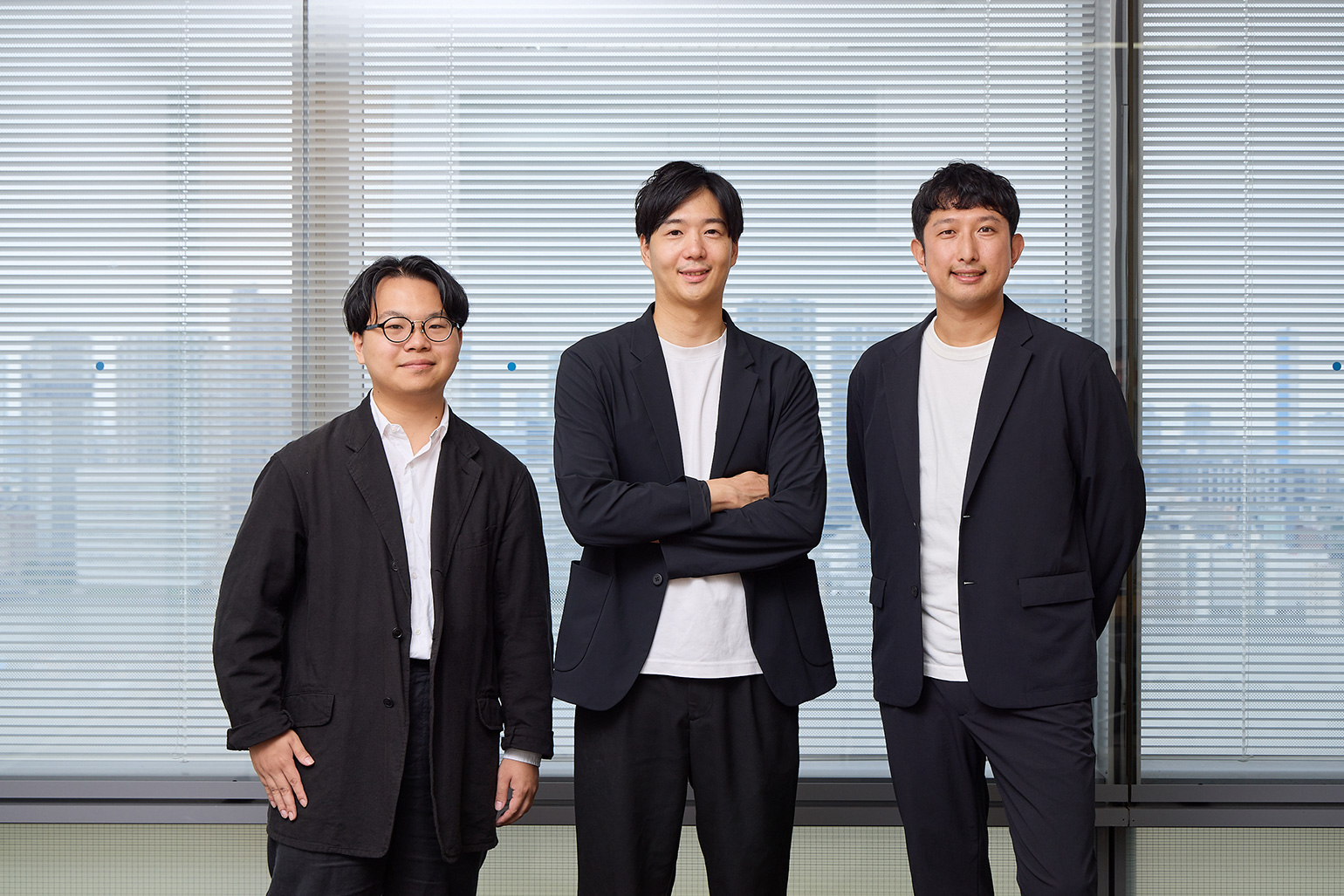
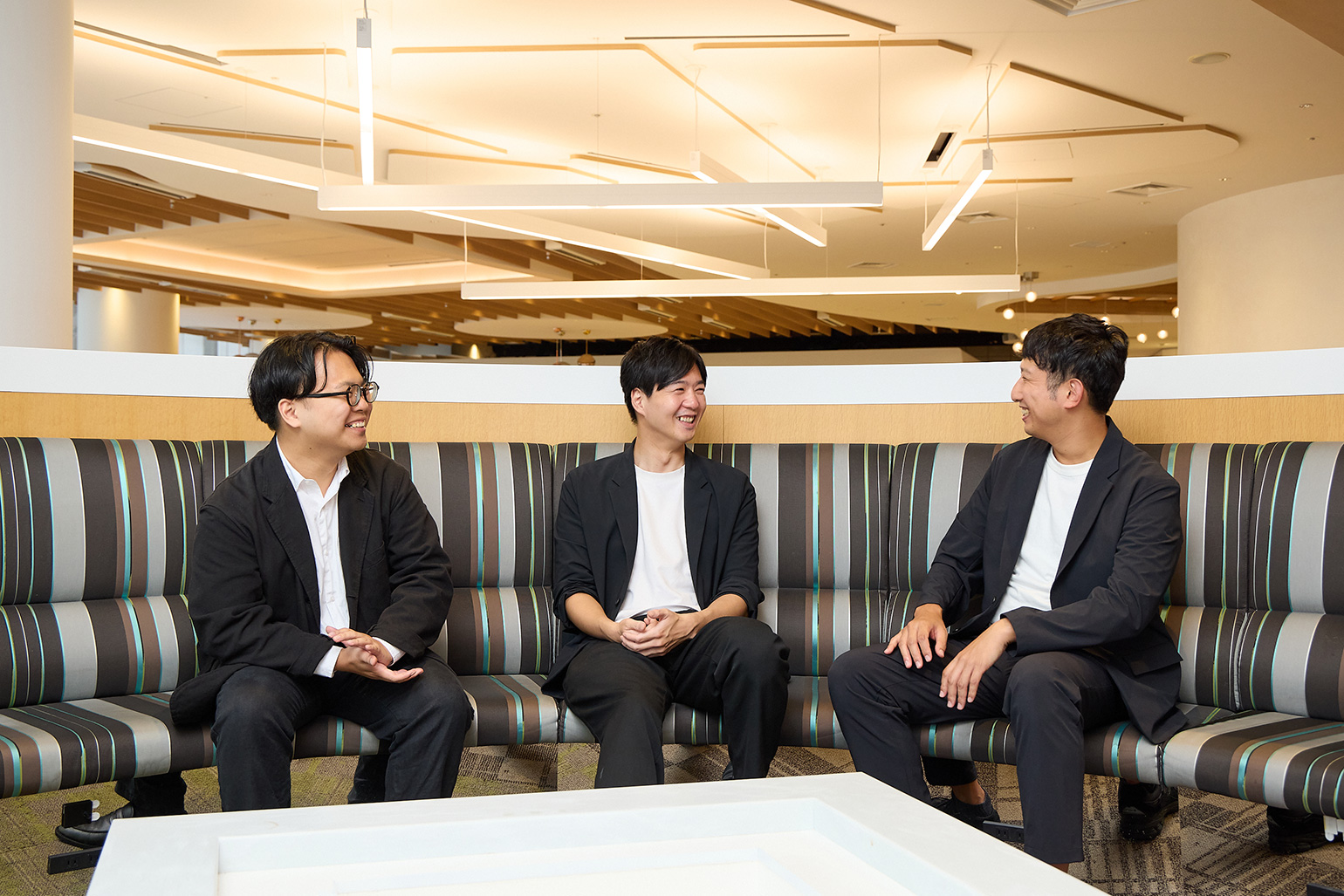
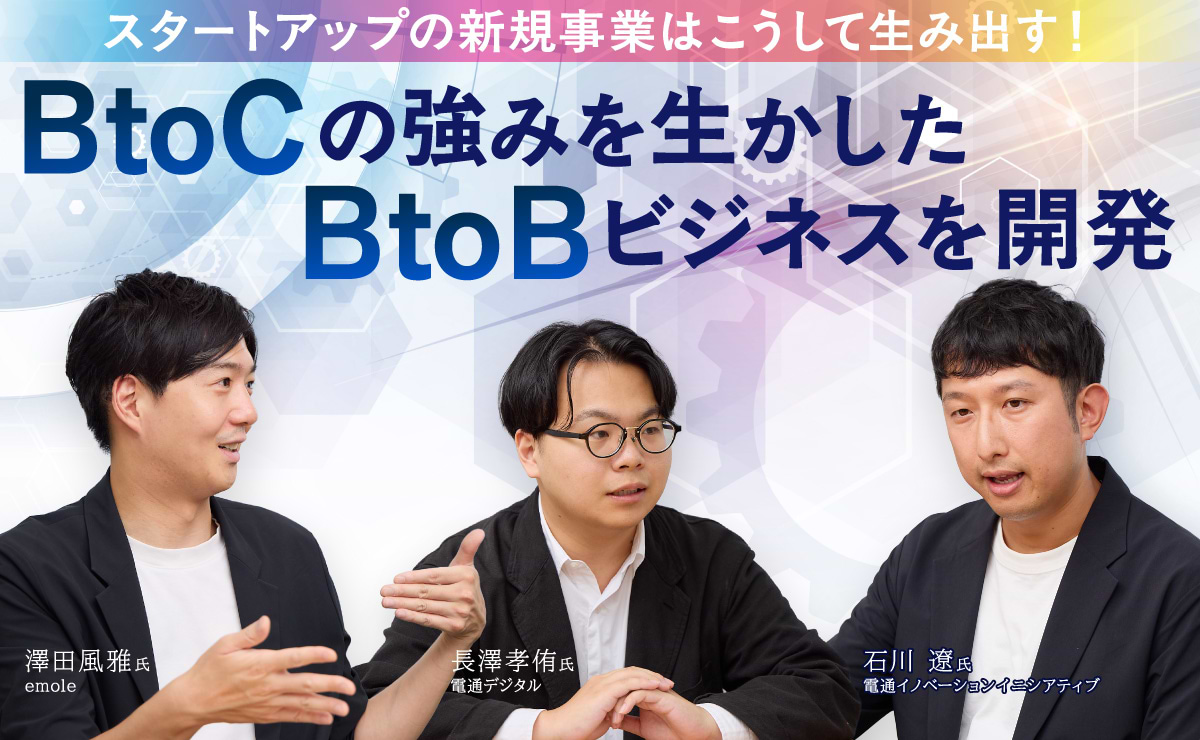
From left: Takayuki Nagasawa of Dentsu Digital Inc., Fuga Sawada of emole, and Ryo Ishikawa of the Dentsu Group
The short drama market is expanding rapidly worldwide. In Japan alone, the domestic market is estimated to reach approximately 150 billion yen by 2026 (*), showing momentum that is on the verge of catching up with the film market.
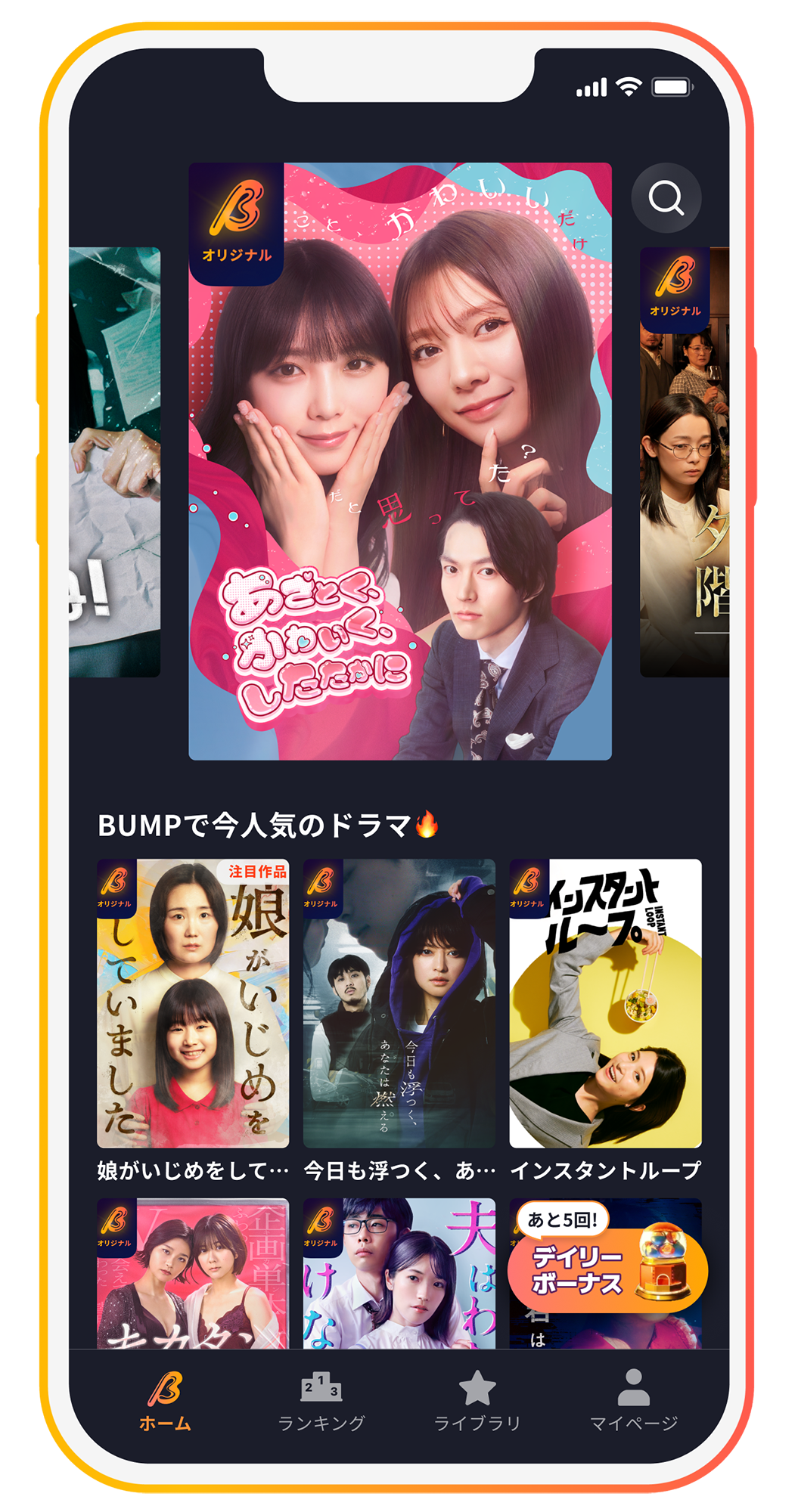
Leading this new market is emole, the operator of the short drama app “ BUMP.”
Since the app’s release in 2022, emole has grown to become the No. 1 player in Japan in a very short period. Recognizing its potential, the Dentsu Group made an investment in 2025.
However, the relationship between the two goes beyond that of a mere “investor” and “portfolio company.” By combining the Dentsu Group’s assets with emole’s business challenges, they are co-creating new solutions. A collaboration has begun in which the Dentsu Group acts as a “growth partner” to accelerate the startup’s growth.
For this article, we held a roundtable discussion with three key figures: emole CFO Fuga Sawada, Takayuki Nagasawa of Dentsu Digital Inc., and Ryo Ishikawa of the Dentsu Group’s Innovation Initiative (DII), who spearheaded the collaboration.
We spoke with them about the process by which supporting portfolio companies evolves into new business development, as well as the value generated by collaboration between major corporations and startups.
“Short Dramas”: An Inevitable Evolution Born of the Smartphone-Native Era
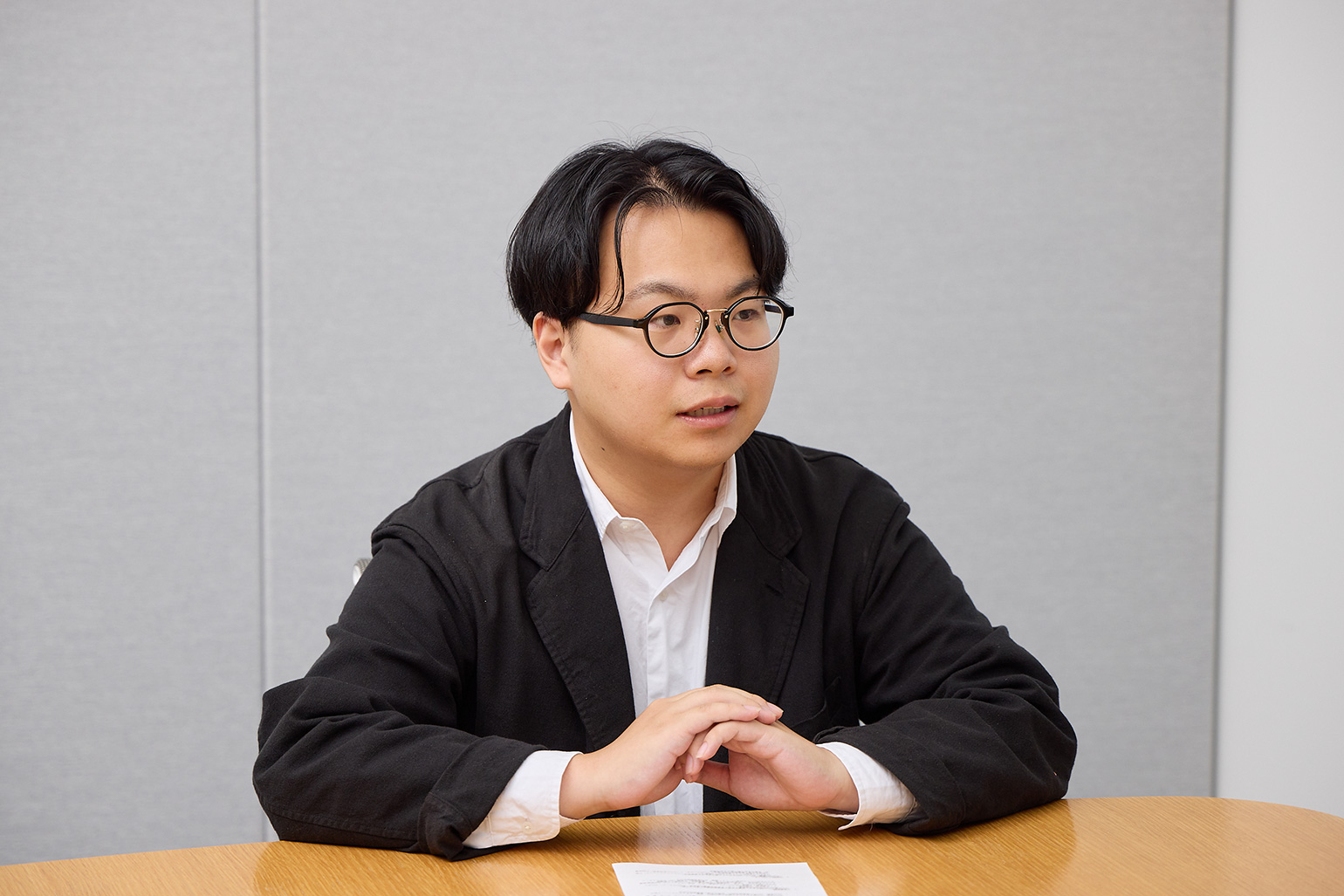
emole: Fuga Sawada
Ishikawa: Could you each please introduce yourselves and tell us about your business? Mr. Sawada, could you start by telling us about emole and the current state of the short drama market?
Sawada: I’m Sawada from emole. We operate the short drama app “BUMP.” When our CEO, Naomichi Sawamura, first released “BUMP” in 2022, there wasn’t yet an established term like “short drama,” so we tried to describe this new content format using phrases like “ultra-short dramas.”
In fact, around this time, short-form drama services emerged simultaneously all over the world. Behind this trend was the shift toward optimizing all kinds of content for smartphones. First, social games appeared in the early 2010s, and in the latter half of the decade, vertical-scrolling manga apps became widespread.
While the shift toward shorter video content came a bit later, we believe users’ readiness to enjoy short-form video had already reached a sufficiently high level. It was at that precise moment that short dramas emerged as professionally produced content (PGC: Professional Generated Content).
Ishikawa: I see. So short dramas were born as the next step in the evolution of content formats in the smartphone era. Moving on, what is the current status of “BUMP,” the short drama streaming app?
Sawada: “BUMP” is currently the No. 1* short drama app in Japan. With cumulative downloads exceeding 5 million, we’ve garnered significant support, particularly among younger audiences.
What sets us apart is that we’re a platform that distributes not only our own original productions but also a wealth of high-quality content from other companies. By attracting users with compelling BUMP originals while also offering a wide range of high-quality third-party content, we provide a highly satisfying short drama viewing experience.
A key factor in our growth is that our content is structured to “go viral on social media.” Within the short runtime of just 3 minutes per episode, we incorporate numerous powerful “hooks” right from the scriptwriting stage to captivate viewers and make them want to watch the next episode. We edit these hook moments into “clip videos” of about 20 to 30 seconds and post them on social media—and these “clips” are the key to our growth.
More than just teasers, these clip videos stand on their own as entertainment and are carefully crafted to make viewers strongly desire to see what happens next. By highlighting relatable scenes or, conversely, shocking moments that make viewers want to exclaim, “That’s impossible!” we stir viewers’ emotions and spark empathy or debate in the comments section.
This high level of engagement leads the algorithms of various social media platforms to classify the content as “high-quality,” causing it to spread to even more users. By intentionally creating this cycle, the cumulative number of views for our clip videos across social media has exceeded 7 billion (*3).
*1 No. 1 in downloads among “Japanese-developed short drama apps” (July 2025–June 2026 / iOS and Android combined / Target country: Japan / Publisher’s country: Japan / Source: AppTweak survey) *2 As of July 2026 *3 As of August 2026
From B2C to B2B! What Challenges Do Startups Face?
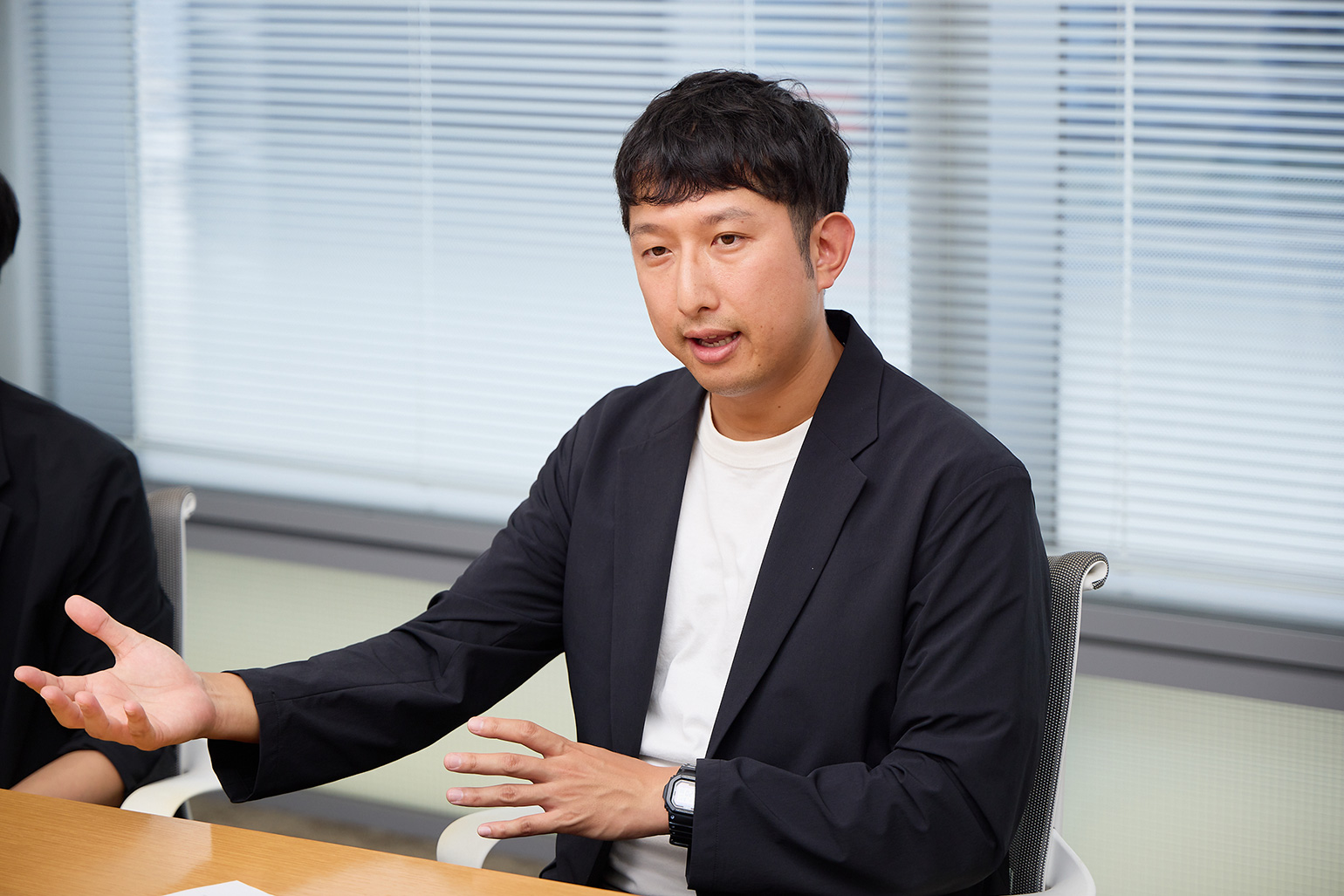
Takayuki Nagasawa, Dentsu Digital Inc.
Ishikawa: Thank you. This is truly a new media format that skillfully leverages the social media ecosystem. Next, could Mr. Nagasawa please introduce himself and tell us about your business?
Nagasawa: I’m Takayuki Nagasawa from Dentsu Digital Inc. Dentsu Digital Inc. is Japan’s largest full-service digital agency, and in this collaboration, we’re leveraging our existing expertise in short-form video operations.
I belong to the department that handles platforms such as TikTok. My main responsibilities include proposing and executing media products (advertising offerings) for clients, but I’m also responsible for developing new packages and solutions that set us apart from our competitors.
Ishikawa: Thank you. Finally, please allow me to introduce myself as well.I’m Ishikawa from Dentsu Innovation Initiative (DII). DII is the department within the Dentsu Group responsible for business R&D. We identify new technologies and service areas that have not yet been turned into solutions, drive business development, and foster partnerships with startups. One of our roles is to support promising startups like emole, systematize the insights gained through our hands-on involvement, and accumulate and disseminate this knowledge as part of the Dentsu Group’s expertise.
Now, let’s turn to the main topic of our collaboration. The Dentsu Group announced its investment in emole in March 2025. We made this investment because we saw tremendous potential in the short-form drama market—as Mr. Sawada mentioned earlier—as well as in emole’s unique know-how for “hacking” the social media ecosystem and its ability to plan and produce content that resonates with young audiences.
After the investment was finalized, through a series of monthly meetings with Mr. Sawada and his team, we began to identify the challenges emole would face in its next phase of growth. The key issue was how to extend the strengths cultivated in the B2C business into the B2B domain.
Sawada: emole was a content-first B2C company with BUMP as its core business. Even in the B2B space, we had experience producing branded content for companies prior to developing this package—including projects that generated over 60 million total views on social media—so we possessed ample production know-how.
However, these were one-off commissioned projects. To take the business to the next level, we needed to systematize this as an advertising product and provide it to clients on an ongoing basis, but we lacked both the know-how and experienced sales personnel in-house.
A New Solution Is Born from emole’s Production Capabilities × Dentsu Inc.’s Operational Expertise
Ryo Ishikawa, Dentsu Group
Ishikawa: In response to this challenge, we at DII formulated the following hypothesis: “Could we create a new business by combining emole’s content production capabilities with the Dentsu Group’s assets?”
Specifically, DII—which handles investment and business development—would lead the collaboration strategy, while Dentsu Digital Inc., with its strong media planning capabilities and robust sales network, would handle execution. Through this cross-group structure, we were able to create a framework where emole’s growth and the Dentsu Group’s new business development would complement each other.
We approached Dentsu Digital Inc. to realize this vision. Mr. Nagasawa, were there any specific challenges you were facing with the TikTok platform at that time?
Nagasawa: Yes. As Dentsu Digital Inc., we needed to increase the number of new “category entry points” to further expand our revenue from TikTok. Around that time, short dramas were trending on the TikTok platform, and the platform itself was strongly promoting them—as evidenced by the fact that they won the “TikTok First Half of the Year Trend Award” in 2024.
At the same time, there was a pressing need from clients as well. We heard comments like, “Traditional display ads get swiped past immediately,” and “We want to reach younger audiences with new formats beyond influencer campaigns.” We felt that short dramas could be a powerful solution to these challenges.
Since this format is popular with users, it’s less intrusive even when viewed as an ad, and the power of storytelling makes it more likely that viewers will watch until the end. Furthermore, content that resonates with viewers can be expected to spread organically, offering the potential to reach a broader audience beyond the ad’s target demographic.
In fact, data shows that 86% of Gen Z users have a positive impression of TikTok’s short drama ads, so this was truly a godsend.
The “TikTok Short Drama Ad Package,” Born from a Fast-Paced Co-Creation Process
Ishikawa: emole’s creative capabilities, the momentum of the TikTok platform, and the client’s marketing needs. These three pieces were brought together—and fit together perfectly—with DII and Dentsu Digital Inc. serving as the hub in this cross-group collaboration.
The process—from formulating a hypothesis to developing a solution—was extremely swift. We began concrete discussions in early 2026 and launched the “emole × Dentsu Digital Inc. TikTok Short Drama Ad Package” by the end of April that same year. What did emole focus on during this co-creation process?
Sawada: Since this was uncharted territory for us, we simultaneously recruited talent capable of fully driving our B2B business and worked with Dentsu Inc. to design the solution. Fortunately, the timing of hiring a producer—who came from a TV station background and could bridge the gap between content and business—coincided with the timing when our collaboration with Dentsu Inc. began in earnest. We assigned him to the project from his very first day, which allowed us to move full steam ahead with development.
Ishikawa: From the Dentsu Group’s perspective, it was crucial to create a solution that would give clients a clear vision of “what actually sells.” From pricing and plan details to the layout of the sales pitch, we sought a format that would be easy for Dentsu Inc. and Dentsu Digital Inc. sales representatives to present and for clients to review and evaluate.
We consulted with Mr. Sawada each time, asking, “Can we do this?” and I believe his ability to coordinate things so smoothly was a major factor in our success.
Nagasawa: The response from our media partner, TikTok (ByteDance), was also very positive and swift. Their encouragement—saying, “This is a great fit for TikTok, so please go ahead with it”—gave us the confidence that this would become a marketable package.
From a Startup That “Couldn’t Even Step Up to Bat” to Opening the Doors of Major Corporations
Ishikawa: Since launching the solution, Dentsu Digital Inc. has actually received a lot of inquiries, hasn’t it?
Nagasawa: Yes. We’ve been receiving inquiries from clients across a wide range of industries, including consumer goods, retail, and real estate. What’s particularly significant is that we’re seeing an increase in inquiries driven by the opposite trend we’ve seen in the past—clients saying, “We want to create short dramas, so we want to use TikTok.” This is generating incremental demand that likely wouldn’t have existed without this short-drama advertising package.
Sawada: For a startup like ours, the value of this partnership is immeasurable. To be honest, the reality is that if we tried to approach decision-makers at major corporations on our own, we’d be turned away at the door. No matter how highly we’re regarded in the startup community, from the perspective of enterprise decision-makers, we’re just an “unknown company”—we couldn’t even get a chance to pitch in the first place.
However, this time, thanks to Dentsu Inc.’s investment and our partnership, even though we’re an organization with no B2B experience, we were immediately given a seat at the table with prominent clients. And it wasn’t just that we were allowed to step up to the plate—we were actually taught how to swing the bat and managed to hit a home run. We’re truly grateful for this, and we appreciate that this is the kind of support only Dentsu Inc. could provide.
From “Investor” to “Growth Partner” Expanding the Ecosystem Together
Ishikawa: We’re delighted to hear you feel that way. This collaboration serves as a prime example for the Dentsu Group of how we can work closely with our portfolio startups to achieve everything from developing concrete solutions to expanding sales. We plan to systematize the know-how gained through this experience and apply it to supporting our other portfolio companies as well. What are your future outlooks?
Sawada: emole’s challenge lies not only in the “BUMP” service itself, but also in how we can expand the short-form drama industry ecosystem as a whole. To achieve this, we need to keep all the gears turning—content production, user acquisition, and ad monetization—but there are many things we cannot do on our own. Therefore, we want to continue this challenge together with the Dentsu Group, who provide us with insights, assets, and even an operational team.
Nagasawa: As the TikTok lead at Dentsu Digital Inc., my goal is not to treat short-form drama initiatives as one-off campaigns, but to establish them as a marketing method that brands can utilize on an ongoing basis. To achieve this, it’s essential to set up systems for brand lift surveys and effectiveness verification using data clean rooms, enabling us to implement the PDCA cycle. I look forward to collaborating with the teams at emole and DII to contribute to the growth of the short-form drama industry itself.
Ishikawa: Thank you both. I am confident that short dramas will firmly establish themselves as a contact point for reaching new users. We, too, want to go beyond being mere “investors” and further deepen our collaboration with emole as “partners” who co-create the business and accelerate its growth. Building on the trust between our two companies, I look forward to taking on new challenges together.
After graduating from the Department of International Relations at the University of Tokyo’s Faculty of Liberal Arts, he worked at YCP Solidiance, where he focused on private equity investments—primarily in the restaurant industry—and provided management support to portfolio companies. In 2021, he joined Eight Roads Ventures Japan, a global venture capital firm, where he led investments in and provided hands-on support to growth-stage startups, particularly in the consumer sector. He joined emole in April 2025 and assumed the role of CFO.
Takayuki Nagasawa
Dentsu Digital Inc.
Platform Division, PF3 Department, TikTok Group / Solutions Unit
After working in the mass media sector at Dentsu Inc., he was seconded to Dentsu Digital Inc. As the platform manager responsible for TikTok (ByteDance), he was actively involved in a wide range of activities to expand TikTok advertising, including advertising product development and analysis using data clean rooms.
After joining Dentsu Inc., he worked in the Business Production Bureau, where he was responsible for CPG clients and engaged in a wide range of communications-related tasks, with a focus on marketing strategy planning and execution. Following a period of study abroad, he was seconded to the Dentsu Group. He joined DII to engage in domestic and international startup investment and business development.