Note: This website was automatically translated, so some terms or nuances may not be completely accurate.
 Bring innovation to the financial business! [1/9]
"Strengthening Japan's Financial Sector" What exactly is financial innovation?
A major innovation is about to sweep through the financial industry. From mobile electronic payments to crowdfunding and P2P lending... We spoke with Tetsuo Iida of Dentsu Inc. International Information Services (ISID) about the trends in these new financial services, driven not by banks but by IT ventures and internet companies.

We want to transform the financial industry's business to make it better and more exciting!
――What kind of work do you do at ISID, Mr. Iida?
Iida: I'm involved in planning and developing new systems to spark innovation in the financial world. Originally, we focused on developing "traditional" systems for financial institutions like banks. But I realized that passively creating only what banks requested wouldn't transform the entire financial industry for the better or make it more exciting.
What our Financial Solutions Division aims for is "solving our clients' true challenges." To achieve that, we wanted to pursue creative financial services from the consumer's perspective, rather than just focusing on building backend systems.
――What exactly do you mean by "creative financial services"?
Iida: A relatable example would be "PayPal." PayPal is a credit card payment service using email accounts and the internet. Since the U.S.-based PayPal company mediates all transactions, there's no risk of sensitive card information being exposed to merchants. Another appeal is its lower fees compared to bank international money transfers. With bank services that route transfers through multiple branches, fees accumulate for each branch involved. PayPal, on the other hand, only charges its own fee. This significant benefit for users is precisely why it has gained such global popularity.
Other financial services are also emerging, such as P2P lending (Peer to Peer Lending/Social Lending), which connects "people who want to borrow money" with "people who want to lend money" online; investment services that publicly share projects in the planning stage to attract investors called "patrons"; and crowdfunding.
A defining characteristic of all these services is that they are driven by organizations that are not traditional financial institutions, such as internet-related companies and venture firms. Financial services that could not be realized under the leadership of traditional financial institutions are now being created worldwide.
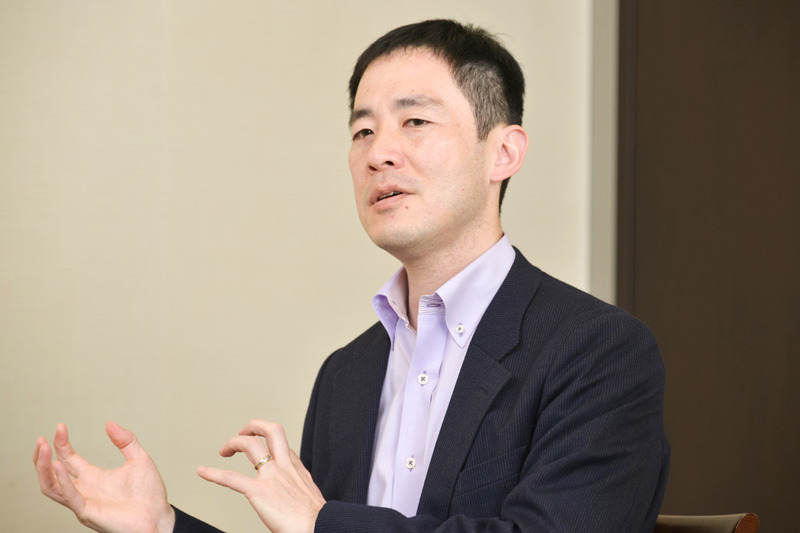
Why is it difficult for financial institutions to lead financial innovation...?
――Why is it difficult for financial institutions to lead financial innovation?
Iida: I believe the inherent rigidity of the financial system itself is the main obstacle. The financial systems provided by banks are, in essence, societal infrastructure. They must constantly protect individuals and businesses, and their safe and secure operation is taken for granted. To ensure ATMs never stop working and payment services never fail, they are designed to be conservative and extremely robust. Legal regulations are also becoming stricter every year, making it increasingly difficult for new and interesting innovations to emerge in this field.
Furthermore, Japan currently faces persistently high levels of "social anxiety about money." People burdened by tax hikes, those worried about retirement savings in an aging society, individuals trapped in low-income cycles due to economic inequality... Many citizens carry financial concerns, and the estimated 1,500 trillion yen in personal assets remain largely uninvested. This is precisely why defensive services like fixed-term deposits and secure loans are so heavily prioritized.
However, we believe this very situation presents an opportunity. By shifting focus slightly away from solely prioritizing safety and security, new value could emerge. Isn't there actually more room for challenge? We are convinced that by creating proactive services rather than defensive systems, we can breathe innovation into the world of financial systems.
Creating consumer-centric services through technology × marketing thinking
――Could you share key points for creating better financial services?
Iida: I'm sorry I can't offer specific tips... But above all, I believe it's crucial for organizations like ours, equipped with technology, to take proactive action. According to the Bank of Japan's Tankan survey, a full 46% of financial institutions' capital expenditures are IT-related. For general corporations, this figure is around 9%, clearly showing how dependent financial institutions are on technology. Internet companies, system integrators, and IT ventures must transform the financial system through technology. It's essential to propose improvements for the financial industry with this ambition.
Crucial to this is marketing capability. Analyzing what users want and planning and developing from the consumer's perspective is paramount. As mentioned earlier, financial institutions inevitably tend to provide services from the provider's perspective, mindful of regulations. They display explanatory notes everywhere—on ATMs, internet banking interfaces—to fulfill their duty of explanation and thoroughly avoid risk. To spark innovation in such an industry, the key lies in how organizations outside the system, with greater freedom to act, can bring ideas that truly stand in the user's shoes.
ISID is a somewhat unique systems integrator, combining technology honed through financial systems development with the marketing power of the Dentsu Group. Leveraging this unique position to spark innovation that revitalizes the entire financial industry would be incredibly rewarding.
(Continued in Part 2)
Was this article helpful?
Share this article


Newsletter registration is here
We select and publish important news every day
For inquiries about this article
Author

Tetsuo Iida
Dentsu International Information Services, Inc. (ISID)