
Note: This website was automatically translated, so some terms or nuances may not be completely accurate.
 Bring innovation to the financial business! [7/9]
The Power of Love Creates "Value Chain Finance"
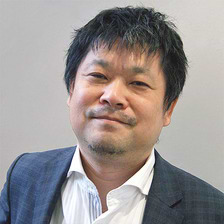
Hiroyuki Egami
Dentsu International Information Services, Inc. (ISID)
For over 20 years since the collapse of the bubble economy, Japan's financial industry has been hit by various "seismic shocks": tightening regulations stemming from the non-performing loan crisis, the structural economic problem of a rapidly aging and shrinking population, and the Lehman Shock. This time, we spoke with Hiroyuki Egami of Dentsu Inc. International Information Services (ISID), who, after 18 years in banking, now handles service planning and consulting for financial institutions. We heard about "Value Chain Finance," the approach to financial business he advocates as necessary for today's era.
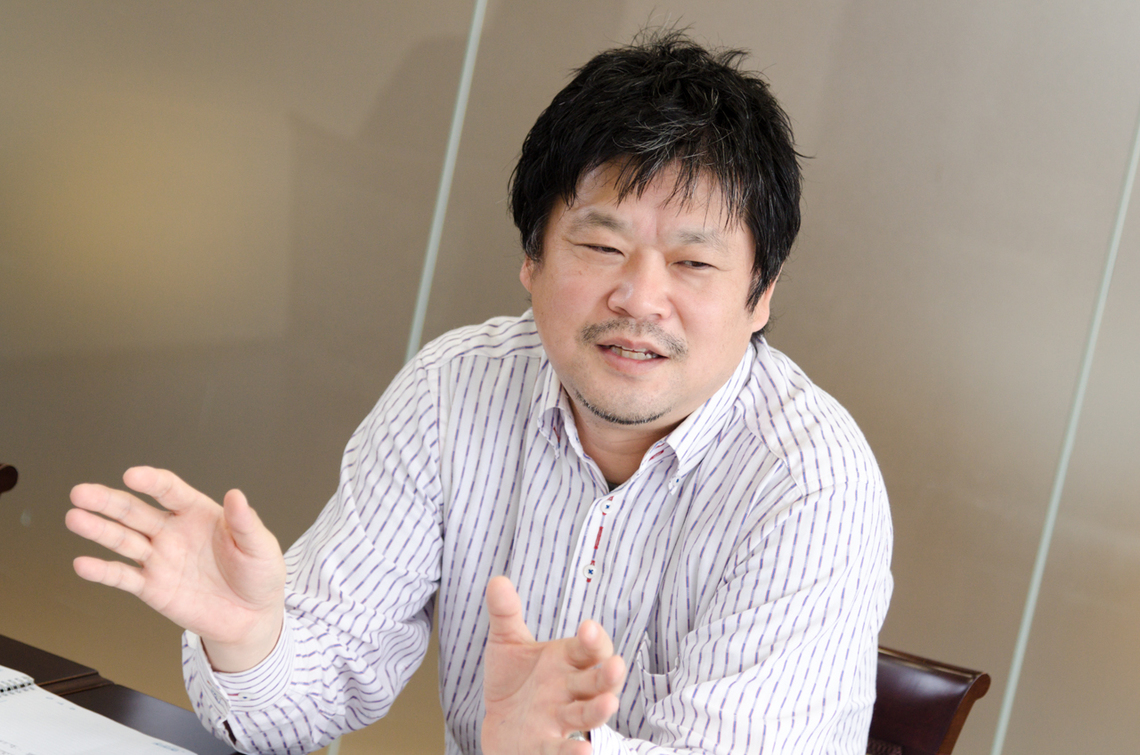
From Power Finance to Love Finance!
――What exactly is the Value Chain Finance you propose?
Egami: I define it as "a financial business model where companies visualize their value-creating structures (Value) and rebuild the connections (Chain) that shape that value, enabling companies and their supporters to mutually sustain growth."
There's a famous quote by Dr. King: "Power without love is violence, and love without power is impotent." This means that "love" and "power" are like the two wheels of a cart in life.
Financial institutions, with their "possession of money" and "lending of money," hold overwhelming power. Historically, many financial institutions have operated a "power" business model centered on controlling customers around themselves. Value Chain Finance, however, requires a shift in perspective. We believe it's necessary to create a financial business rooted in "love," one that contributes to the communities, companies, and people surrounding the financial institution. If the local community is the "body," then financial institutions are like its "heart." While the heart is a vital part, it is ultimately just one component of the body with a specific function. It's absurd to think about how the body should be for the sake of the heart. Instead, we should be thinking about how the heart should be for the sake of the body – what state it should be in and what functions it should perform.
What functions are truly necessary for the financial institutions, the heart, to serve the body, the local community? When we delve deeply into this question, it becomes clear that current banks are surprisingly doing things they don't need to do, while neglecting what they should be doing. Addressing these identified challenges one by one, creating profitable systems that stand alongside our customers, and growing together – this is the Value Chain Finance we aim for.
My 18 years as a banker led to this new financial business
――What prompted you to pursue value chain finance?
Egami: It stemmed from various dilemmas I felt during my 18 years in banking. Back then, I was more involved in power-based finance, control-based finance. I did work that was painful—where the bank profited even if the customer suffered—and there were situations where I couldn't lend money to those who truly needed it. I just couldn't shake that nagging feeling in my heart.
Finance is a field that profoundly impacts people's lives. Some become unhappy because they couldn't get a loan, while others find happiness by starting new businesses or buying homes thanks to loans. Financial institutions' actions can make people happy or miserable.
Lending money should inherently be a deeply rewarding profession. The satisfaction of providing customers with opportunities for change and growth is truly indescribable.
Deep within me lies a strong desire to shift finance from being solely based on power and control to one that also incorporates perspectives of "love" and contribution. Even during my time as a banker, I pondered, "How can we transform finance into a business where we profit together with our customers through contribution?" I believe that coming to this company and engaging in dialogue with numerous financial institutions and colleagues led me to discover the concept of Value Chain Finance.
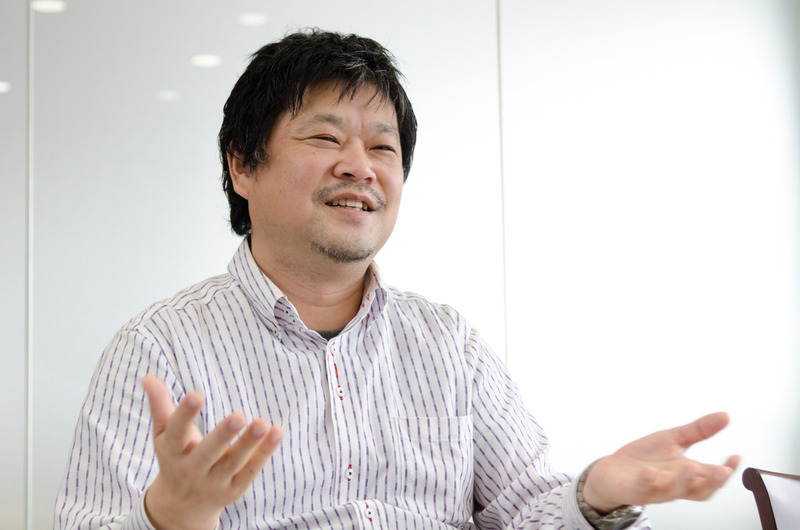
The kindness of many people cascades through money
—The idea that lending money could bring happiness hadn't really occurred to me. This is strictly from an individual perspective, not an organizational one, but lending money often carries this image of getting entangled in trouble... I think many people have a negative perception about lending.
Egami: Right (laughs). It's true that even if someone says "the lender becomes happy too," it might not resonate. Well, let me share a rather lovely story about lending money. It's a true story I heard from a friend.
A friend of my friend was heading to a speaking engagement in Osaka that day. He took a taxi from his home to Tokyo Station, but when he got out, he realized he'd left his wallet behind. With no time to go back, he frantically handed the driver his business card and said, "I'm so sorry. Let me pay you later." The driver replied, "It's fine." He was incredibly relieved, but then it hit him: he had no money for the trip to Osaka. So, what do you think he did? He decided to close his eyes, and the first person he saw when he opened them would be the one he'd ask for a loan. And that's exactly what he did. As luck would have it, the woman he encountered readily agreed, lending him several tens of thousands of yen.
――That's quite a sum...
Egami: After all, she had to make the round trip to Osaka. So, after the lecture ended safely, she invited the woman to dinner to express her thanks and return the money. At that meal, when the acquaintance said, "You really saved me back then. Thank you," the woman replied, "Oh no, I'm the one who was saved. Thank you for choosing me that day."
Apparently, when she shared the whole story at work, people told her she was "too kind" and "must have been taken advantage of," which really got her down. But when she got home and told her husband, he said sincerely, "It's wonderful you could do that. I'm so glad I married you." Later, at a family gathering, people kept telling her, "You're amazing! Not many people could do that."
Lending the money sparked a realization within the couple and brought about change among their relatives. The money itself served a purpose, bringing happiness to both the lender and the borrower. I think this is where the foundation of finance truly lies. When the other person is happy, you become happy too. When empathy and happiness are born, it creates a positive chain reaction. It might sound naive, but this fundamental aspect is incredibly important. Like Hanzawa Naoki? Well, since I couldn't become Hanzawa Naoki myself, I want to create a system where many Hanzawa Naokis can thrive (laughs).
Was this article helpful?
Share this article


Newsletter registration is here
We select and publish important news every day
For inquiries about this article
Back Numbers
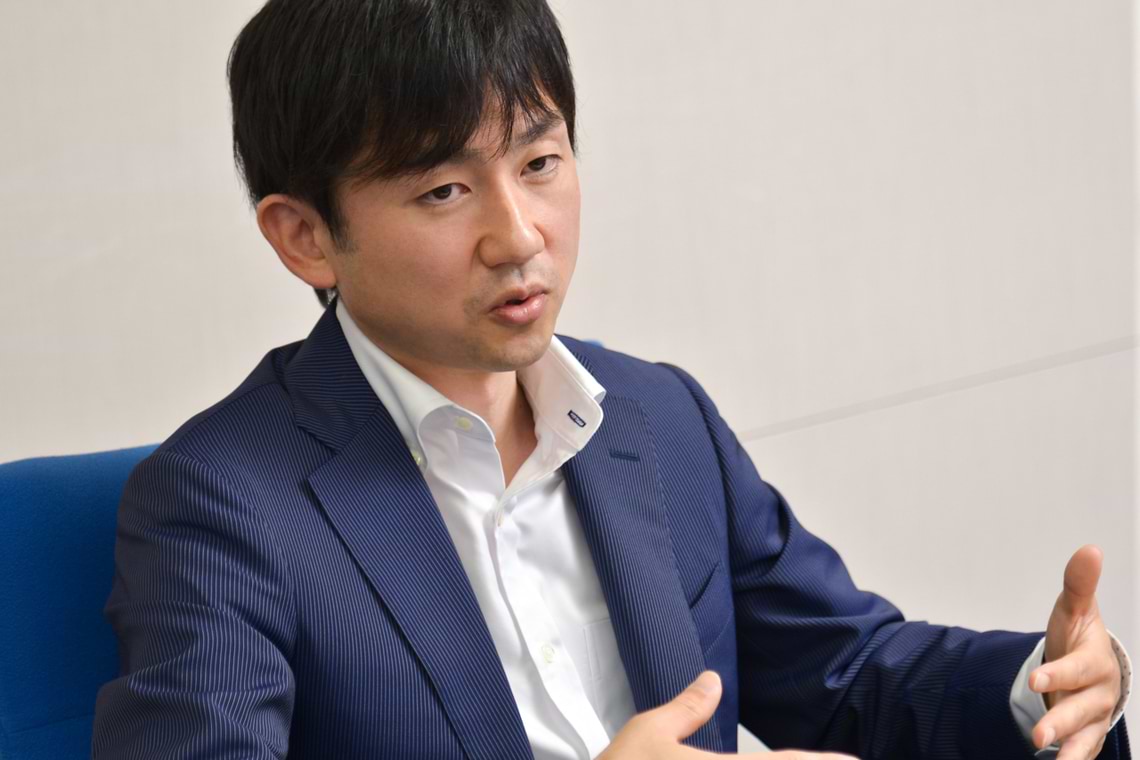
Author
Hiroyuki Egami
Dentsu International Information Services, Inc. (ISID)
Financial Solutions Division Financial Business Strategy Department VCF Group
Marketing Professional