
Note: This website was automatically translated, so some terms or nuances may not be completely accurate.
 Bring innovation to the financial business! [8/9]
What are the survival strategies for financial institutions in an "era without clear answers"?
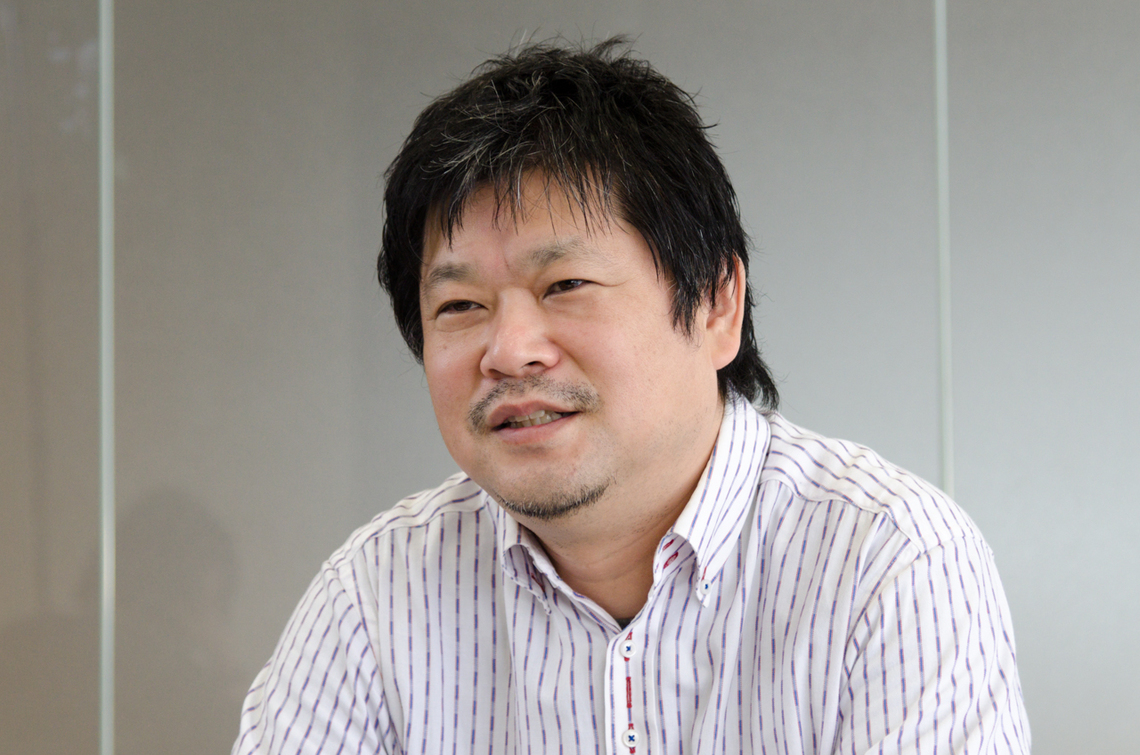
Hiroyuki Egami
Dentsu International Information Services, Inc. (ISID)
"Value Chain Finance" – where regional companies and financial institutions mutually support each other's growth. Continuing from last time, we spoke with Hiroyuki Egami of Dentsu Inc. International Information Services (ISID) about why Value Chain Finance is needed and the changes surrounding the financial industry.
"Power Finance" that underpinned the high-growth era
――In our previous interview, you mentioned the term "power finance." Why did Japan's financial business become power finance?
Egami: Those with money are always powerful, so power-based finance exists everywhere, not just in Japan. However, Japan originally had fertile ground for nurturing "love-based finance." There was a long-standing spirit of mutual aid within communities, rooted in Japanese culture, exemplified by institutions like the "mujinkō" (mutual aid associations), which were precursors to credit unions and credit associations. There was a foundation where locally rooted banks maintained close communication with small business owners and local residents, building warm relationships of trust, and working together to invigorate the community and society.
However, after the war, Western-style investment finance methods entered Japan, gradually shifting financial institutions toward "power finance" where they control customers.
During Japan's high-growth era, companies could guarantee profits through investment. Growth was consistently upward, production equaled sales, and adopting American management methods like supermarkets often led to business success. In other words, it was a state where a "success model" existed—a clear answer where imitating someone else was sufficient. In such times, even with financial institutions operating "power finance" centered on their own profits, both borrowers and lenders could grow. Businesses and consumers were desperate to secure the right to borrow money. Therefore, those holding "money" held the power. Even today, the foundation of the financial business model shaped during that era of financial growth remains unchanged.
Today's financial business, where complex problems intertwine multifacetedly
—What about the present? Has "power finance" lost its effectiveness?
Egami: Today is an era without clear answers, where numerous problems are intricately intertwined. Globalization has advanced, and competitors are no longer confined to domestic markets. Domestically, population decline is progressing, making sustained economic growth difficult to envision. There's no one left to imitate, and fewer people are willing to borrow money to do business. We are truly in a state that could be called a pioneer nation of challenges.
Since the financial business supports the real economy, it cannot grow in isolation. Consequently, the relative power of "money" is weakening. As this happens, the role financial institutions play becomes more complex. Customers, banks, and various stakeholders are intricately intertwined, all grappling with challenges within a stagnant economy. It becomes impossible to isolate a customer's problem and handle it in a vacuum.
This structure resembles child-rearing. If you scold children fighting over a game console as solely their problem, it won't resolve anything. Children's problems are also parents' problems. Treating it as just the children's issue won't work. Unless the parent changes, the child won't change.
Traditional financial institutions prioritized "power-based finance," managing customer problems strictly as the customers' own issues. That approach worked. But in today's Japan, a nation facing advanced challenges, it no longer suffices. Financial institutions are now actively involved in various issues as members of their communities and businesses. We must view these complex, open-ended challenges as "our own concerns" and consider how to act. Financial functions are like the heart pumping blood through the body of a community. We need to act with that awareness and affection, imagining how we should behave and what impact we will have.

Predicting Bankruptcy with 70% Accuracy!? The Evolving Financial System
――What do you think is necessary for financial institutions to change?
Egami: Business reform and a shift in mindset, I suppose. Bankers' work has grown increasingly complex with the changing times. They must handle, manage, and monitor vast amounts of data. With such diversified tasks, branch-level bankers are extremely busy. As things get busier, more and more tasks are created that involve just following rules mechanically. Living customers get processed as standardized data. While humans definitely create the data, we end up managing only the results produced, without focusing on the human consciousness or behavior within it.
Financial institution systems are quite advanced. In fact, there are programs that, just by inputting the numbers from financial statements, will output a figure like "This company has a 〇% probability of bankruptcy." Models with about 70% accuracy already exist. When that happens, people start relying on operations that produce the same result no matter who performs them, thinking, "Rather than relying on uncertain information or trusting my own judgment..." How to cut into this state is crucial.
――What about changing mindsets? Where should we start in shifting that awareness?
Egami: First, it might be good to let go of the fixed notion that "results must be delivered within a short timeframe."
Finance is a long-term stock business that grows alongside the community. But we can't predict future economic or societal shifts. So, we tend to overemphasize short-term flow businesses instead. Think of things like selling investment trusts or insurance, or the competition to underwrite more mortgages. It's like doping – it might show short-term results, but the more you consume, the more it damages your health.
Of course, bankers are working hard too. They strive to deliver results and achieve outcomes, fighting for survival. But the more they chase short-term gains, the fewer customers they retain for the long term. Ultimately, this corrodes the very soil of the local community that is their foundation. Therefore, building long-term relationships aimed at mutual happiness is essential.
Was this article helpful?
Share this article


Newsletter registration is here
We select and publish important news every day
For inquiries about this article
Back Numbers

Author
Hiroyuki Egami
Dentsu International Information Services, Inc. (ISID)
Financial Solutions Division Financial Business Strategy Department VCF Group
Marketing Professional